
Some of Florida’s rarest shrubs grow in sandy places most drivers pass without a second glance. A few survive only in small pockets of habitat, far from the rows of plants at a typical garden center.
Meet seven natives with unusual flowers, surprising habits, and strong ties to Florida’s wild landscapes. Some may be available from conservation-minded growers, while others are best admired through protected collections and habitat restoration work.
1. Florida Ziziphus
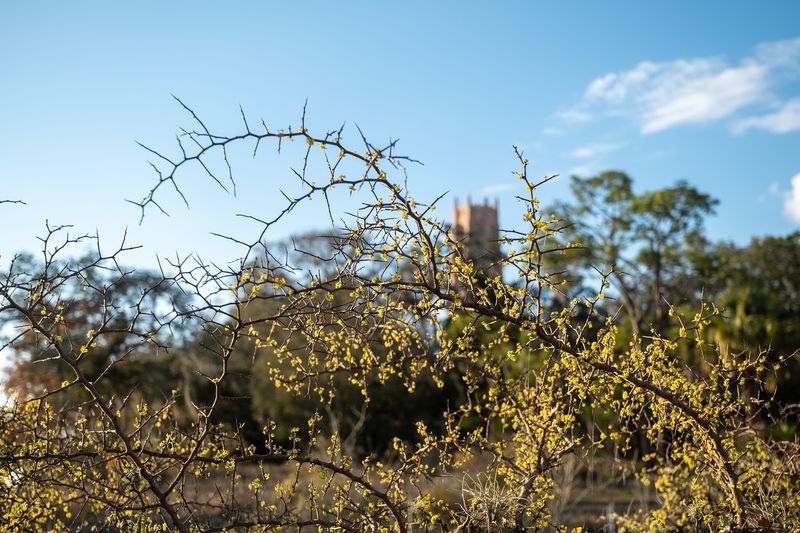
A shrub can disappear from scientific view without actually vanishing from the landscape. Florida ziziphus, Ziziphus celata, was known from an old herbarium specimen before living plants were rediscovered in the 1980s, making its story especially remarkable.
This thorny, woody native belongs to central Florida’s sandy uplands. Small, shiny leaves and tiny yellow-green flowers give it a quiet appearance, so its appeal comes more from its extraordinary history than from a showy bloom display.
Its biggest challenge is not simply having too few stems. Many stems can belong to the same genetic individual, and successful seed production depends on compatible plants flowering together, which makes recovery more complicated than planting a row of cuttings.
Florida ziziphus is federally endangered and is not a realistic choice for an ordinary foundation bed. Conservation collections, carefully managed introductions, and protection of remaining habitat matter far more than private demand for a rare specimen.
If you encounter one through a botanical garden or restoration program, think of it as a living piece of Florida’s natural history. Never collect wild plants, seeds, or cuttings, and treat any commercial offer as something that needs careful checking for lawful, documented origin.
2. Four-Petal Pawpaw

Forget the grocery-store idea of a tropical fruit tree. Four-petal pawpaw, Asimina tetramera, is a rare shrub of southeastern Florida scrub, where hot sand and open sunlight shape nearly everything that grows.
Its thick leaves and unusual, fleshy flowers make it look unlike the standard shrubs sold for front entries. The flowers develop reddish to maroon tones, and despite the common name, their petal number can vary.
Wild populations are restricted to a small part of southeastern Florida, especially Martin and Palm Beach counties. Development has removed much of the scrub it needs, leaving this federally endangered plant dependent on protected sites and active conservation.
For gardeners, the useful lesson is about matching a plant to its home ground. Four-petal pawpaw comes from sandy, well-drained habitat, not the rich, frequently watered soil people often create beside a house.
It is also a poor candidate for casual transplanting because pawpaws develop substantial root systems that resent disturbance. Enjoy this species at a managed natural area or botanical collection, and ask a reputable native nursery about more obtainable pawpaws suited to your county rather than seeking a wild specimen.
3. Rugel’s Pawpaw
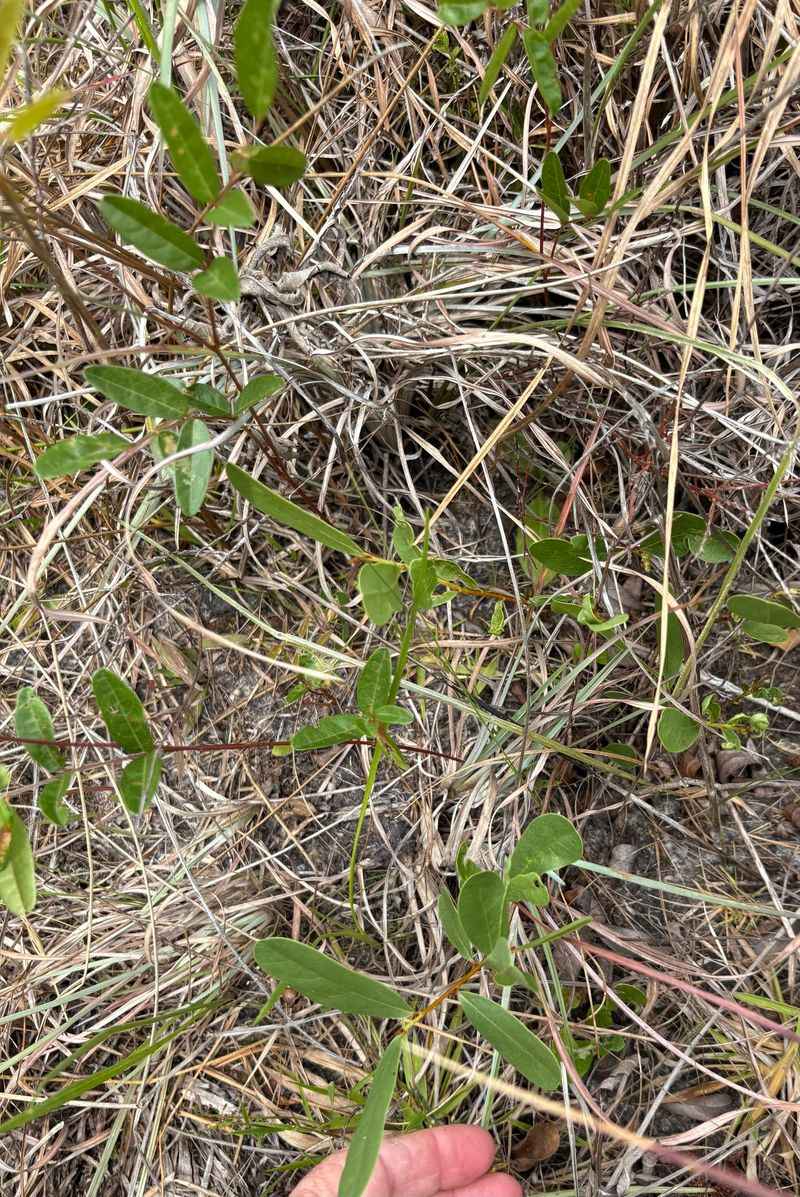
You could walk past this flowering shrub without realizing it barely reaches above the ground. Rugel’s pawpaw, Deeringothamnus rugelii, keeps a low profile, with short shoots rising from a much more substantial underground root system.
Its yellow flowers have narrow petals that give them a loose, almost spidery look. That combination of tiny stature and unusual blooms sets it apart from taller pawpaws and nearly every familiar landscape shrub.
This federally endangered species is associated with pine flatwoods in a limited part of Volusia County. Its habitat is not simply dry beach sand, so treating every rare Florida plant as a drought-loving scrub plant would miss an important difference.
Fire helps maintain the open conditions this pawpaw needs, and flowering often responds to burning. When shrubs and trees close in, a plant adapted to an open landscape can lose both light and room.
That relationship makes Rugel’s pawpaw a conservation story rather than a ready-made yard recommendation. Homeowners should never try to copy a prescribed burn without professional planning and required approvals; supporting managed preserves is a much better way to help keep its specialized habitat intact.
4. Apalachicola Rosemary
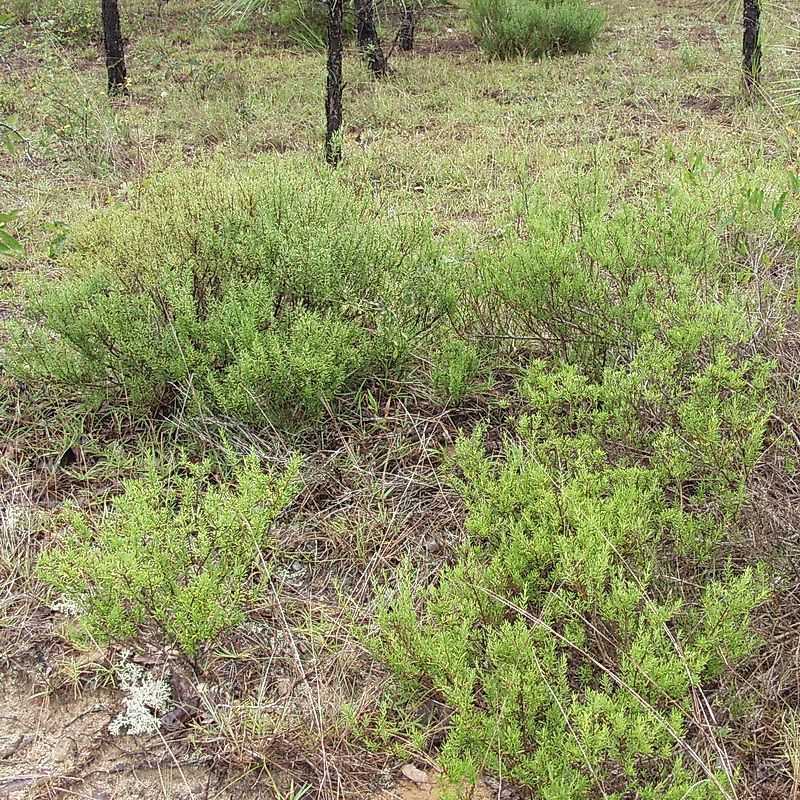
The name sounds like something you might tuck beside a kitchen door, but this is no ordinary cooking herb. Apalachicola rosemary, Conradina glabra, belongs to the mint family and carries narrow leaves that give it a rosemary-like appearance.
Small, pale lavender flowers reward a closer look, especially when their spotted throats are visible. Its fine branching creates a soft texture that explains why native-plant enthusiasts find the genus so appealing.
The wild plant has an exceptionally limited range in the Florida Panhandle near the Apalachicola River. It is federally endangered, and habitat changes within that small range have made its future uncertain.
Unlike a general-purpose hedge, this shrub reflects the conditions of open, sandy uplands. Heavy soil, frequent irrigation, and crowding by vigorous landscape plants are not sensible substitutes for the habitat that shaped it.
Some Conradina species appear in specialty horticulture, but a plant labeled simply as native rosemary is not necessarily this species. Ask for the scientific name and documented nursery propagation, and never assume that rarity makes a plant a good purchase; for Apalachicola rosemary, conservation value comes before garden novelty.
5. Short-Leaved Rosemary
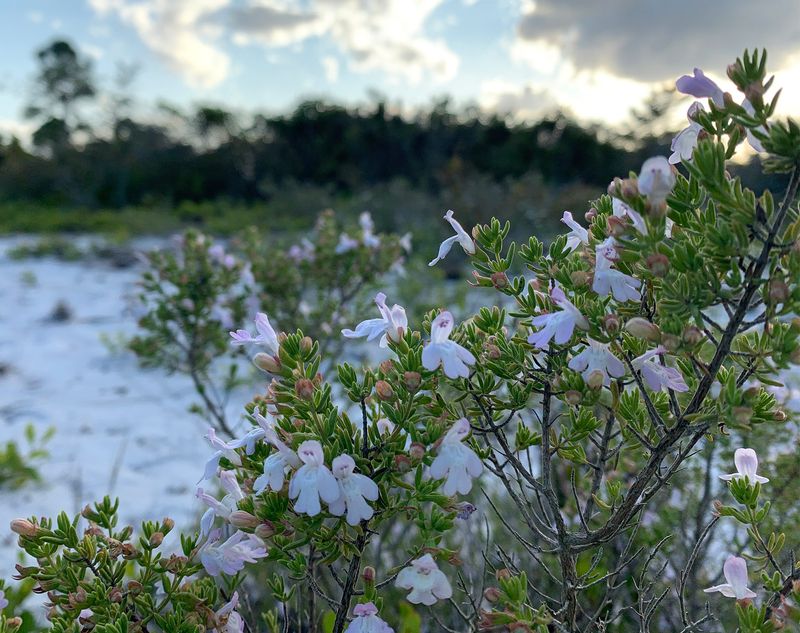
On Florida’s ancient sand ridges, small leaves can be serious survival equipment. Short-leaved rosemary, Conradina brevifolia, wears tiny, narrow foliage that suits a life in exposed scrub with fast-draining sand.
Its pale lavender flowers soften a twiggy evergreen framework. Look closely and the plant becomes much more interesting than its modest size suggests, with the fine foliage providing as much character as the blossoms.
Unlike its Panhandle relative, this federally endangered shrub is tied to central Florida scrub, including parts of the Lake Wales Ridge. That ridge holds remnants of ancient landscapes and supports many plants found nowhere else.
Open space is part of its habitat, not a landscaping flaw that needs filling. Dense mulch, rich compost, regular lawn irrigation, and shade from expanding trees can all move a garden away from the lean conditions associated with these scrub specialists.
If a specialty grower offers short-leaved rosemary, verify both the botanical identity and the source before considering it. Its close resemblance to other Conradina species makes a common-name label unreliable, and protecting intact scrub remains more valuable than adding a rare shrub to an unsuitable yard.
6. Ashe’s Calamint
A little mint-family shrub can carry a surprisingly strong sense of place. Ashe’s calamint, commonly listed as Calamintha ashei or Clinopodium ashei, belongs to the sandy scrub landscapes of central Florida.
Small aromatic leaves and delicate, pale lavender flowers give it a softer look than many tough scrub plants. It deserves attention for that contrast: a plant can look dainty while being adapted to sun, heat, and lean sand.
Ashe’s calamint is listed as threatened in Florida, though its legal status differs from the federally endangered species elsewhere on this list. That distinction matters because rare does not mean every species faces the same risks or has the same protections.
Among these seven shrubs, it is one a gardener may have a more realistic chance of finding through a specialist native nursery. Availability still varies, and ordinary garden centers are unlikely to keep it in regular stock.
Before buying, confirm that your location offers excellent drainage and enough sun, and ask the grower about mature size and local suitability. A lightly managed scrub-style planting makes more sense than a heavily watered flower bed, especially if nearby turf irrigation keeps the roots damp.
7. Scrub Mint
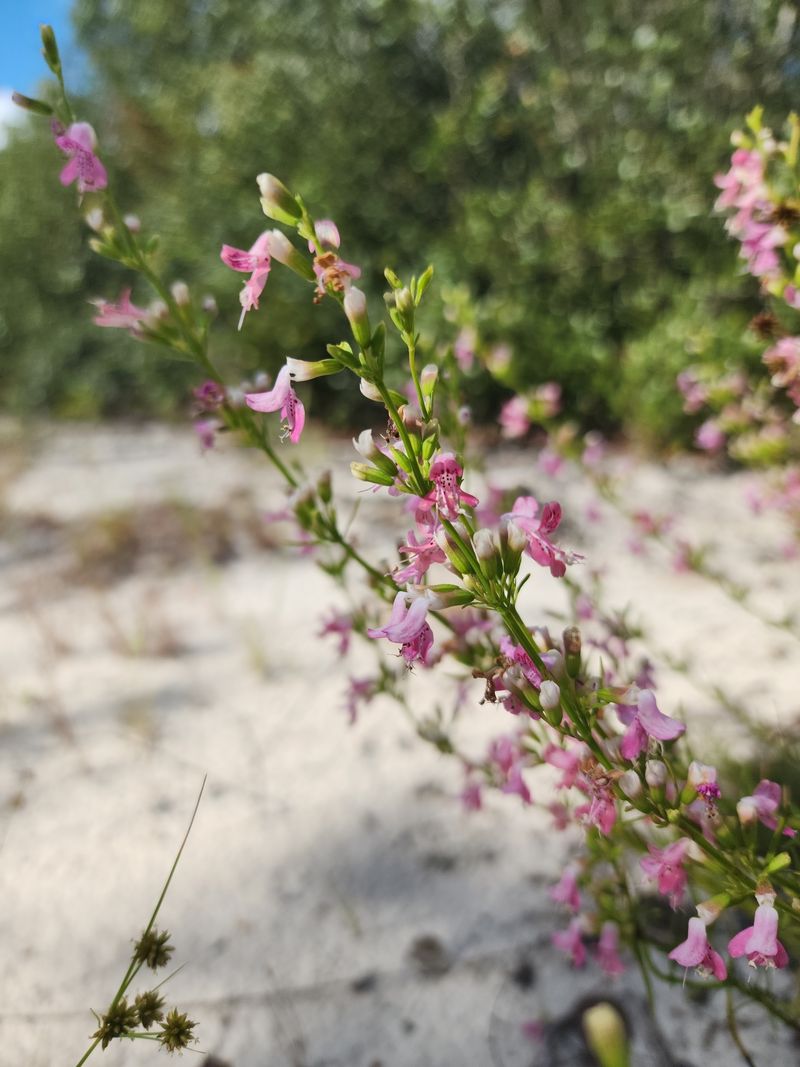
Those tiny flowers come with a chemical defense system. Scrub mint, Dicerandra frutescens, produces aromatic oils that help defend it against plant-eating insects, adding an unseen layer of interest to its pinkish lavender blooms.
This small woody shrub is native to a very restricted part of central Florida’s scrub country. Its flowers reward close viewing, but its greatest distinction is how tightly its survival is tied to a particular landscape.
Scrub mint is federally endangered. Habitat loss and changes in the open, fire-influenced scrub it occupies are major concerns, and protecting a few isolated plants cannot replace protecting the living system around them.
Identification takes care because Florida has several rare Dicerandra species with similar common names. A nursery label that says only scrub mint does not provide enough information to establish which plant is being offered or whether it suits your area.
For most homeowners, this is a species to appreciate through conservation programs rather than hunt down for a porch pot. The best takeaway from its story is practical: choose legally propagated natives that fit your own county and conditions, and let truly scarce specialists remain the focus of expert recovery work.