
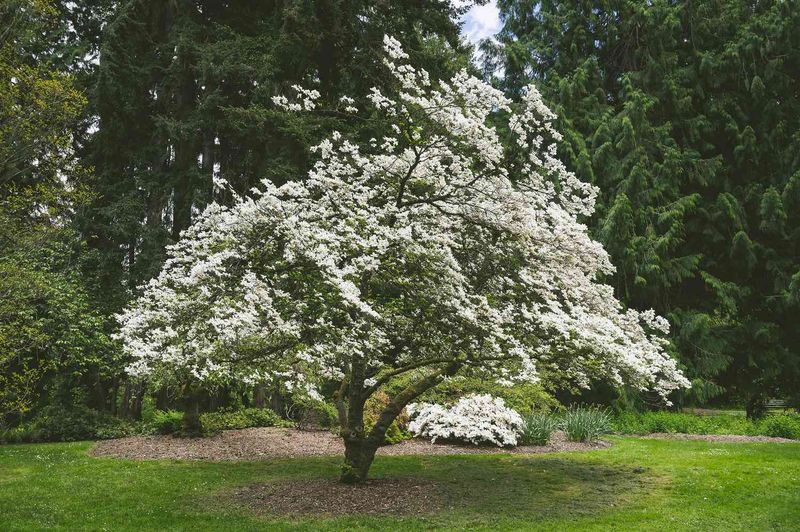
Bradford pears looked like a bargain when everyone planted them, but those trees crack apart in storms and smell like old fish when they bloom. Worse, they spread into wild spaces and crowd out the native plants that North Carolina birds, bees, and butterflies actually need. The good news is that our state is full of beautiful native trees that flower just as hard without the stink or the snapped branches. Here are seven you can plant this season to protect your yard and give local wildlife a real home.
1. Flowering Dogwood (Cornus florida)
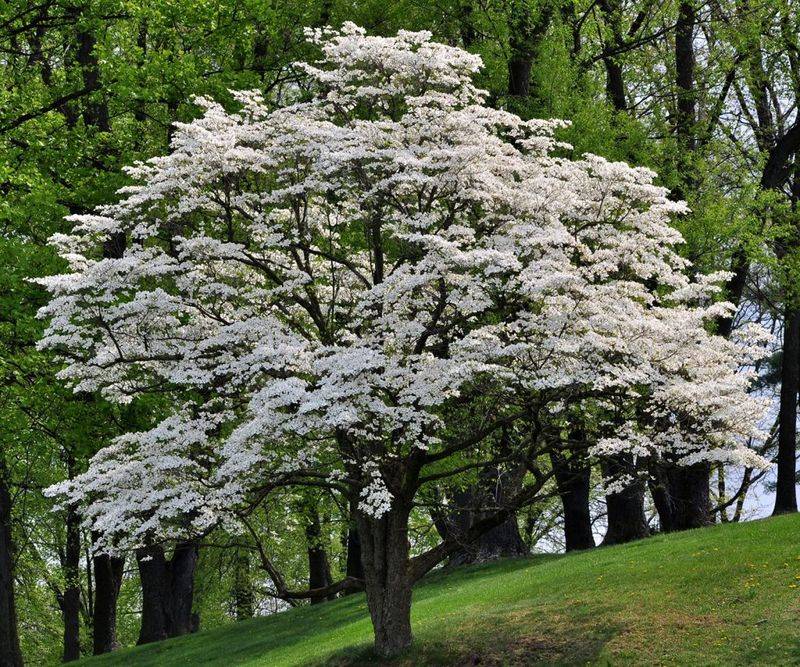
Ask any longtime North Carolinian to name a spring tree and the dogwood usually comes up first. It is the official state flower, and those creamy white blooms floating in horizontal layers look like clouds caught in the branches.
Beyond the beauty, dogwoods pull real weight for wildlife. The bright red berries feed more than 35 bird species heading into fall, and the leaves host caterpillars that baby songbirds depend on to grow. That kind of food chain is exactly what a Bradford pear cannot offer.
Dogwoods stay modest in size, usually topping out around 25 feet, so they fit tidy yards without threatening the roofline. They love the dappled shade of a woodland edge, which makes them a natural fit for Piedmont lots ringed by taller oaks and pines. Give the roots a layer of mulch and steady moisture in their first couple of summers and they settle in for decades. No fishy smell, no shattered limbs after an ice storm, just a tree that has quietly earned its place in Carolina yards for generations.
2. Eastern Redbud (Cercis canadensis)
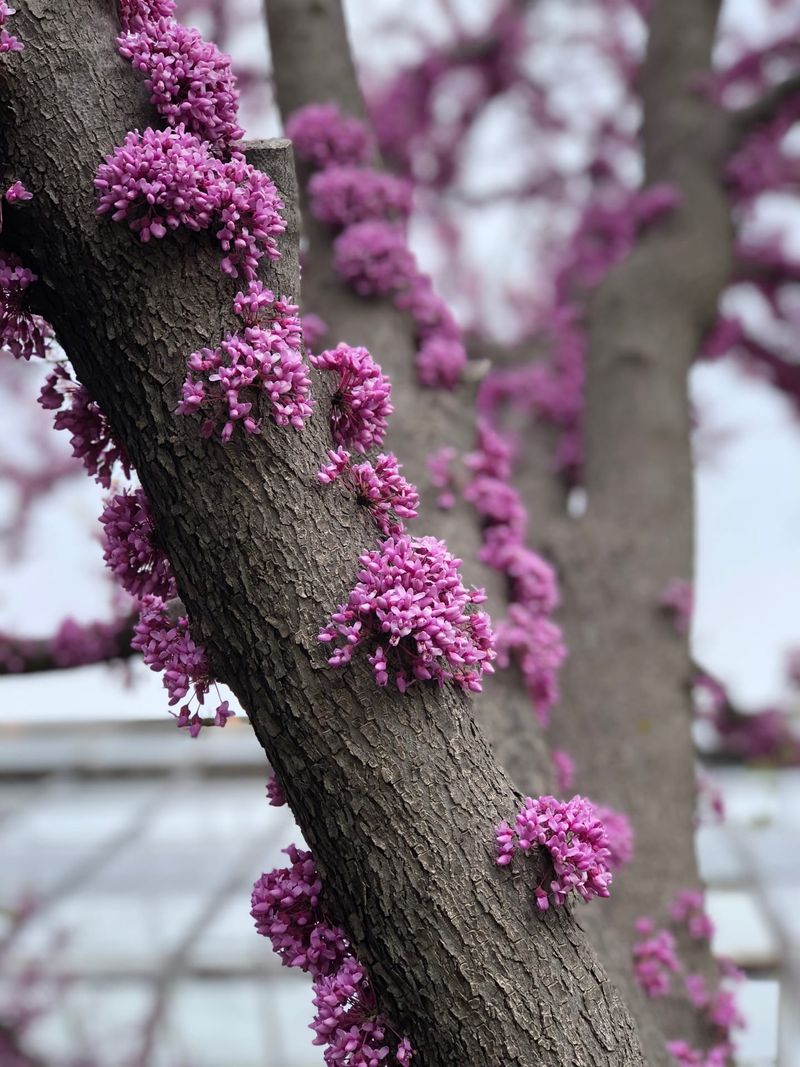
Right before the rest of the yard wakes up, the redbud throws a purple-pink party on totally bare branches. The flowers pop straight out of the trunk and limbs, which is a strange and wonderful sight the first time you notice it.
Native bees adore this timing. Redbuds bloom so early that they may become one of the first solid nectar sources of the season for emerging pollinators, giving them fuel when little else is open. Later the tree develops heart-shaped leaves that turn a soft gold in fall.
Fun bit of trivia: the young flowers are edible and slightly tangy, and folks have tossed them into salads for ages. Redbuds handle Piedmont clay far better than fussier ornamentals and shrug off drought once established. Staying compact at 20 to 30 feet, this is a tree that gives you a jaw-dropping spring show and steady wildlife value without ever demanding much back.
3. Southern Magnolia (Magnolia grandiflora)
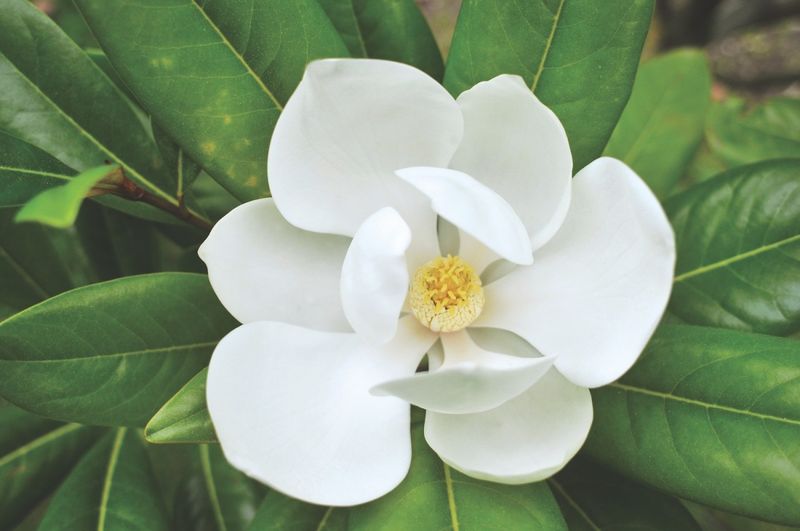
Few things say Carolina summer like the lemony perfume of a Southern magnolia drifting across a porch. The dinner-plate white blooms are enormous, and unlike the Bradford pear, this fragrance is one you actually want near the windows.
Glossy evergreen leaves keep the tree handsome all twelve months, giving you privacy and screening long after other trees drop bare. The cone-like seed pods split open in fall to reveal scarlet seeds that woodpeckers, quail, and squirrels line up to eat.
Magnolias run large, sometimes 60 to 80 feet, so this one belongs on roomier lots or as a backyard anchor rather than a squeeze-in spot. They thrive across the coastal plain and Piedmont and tolerate heat and humidity like champions. Slow and steady is the game here, but plant one and you are leaving behind a living landmark that shelters wildlife and scents the air for the next hundred years.
4. Serviceberry (Amelanchier arborea)
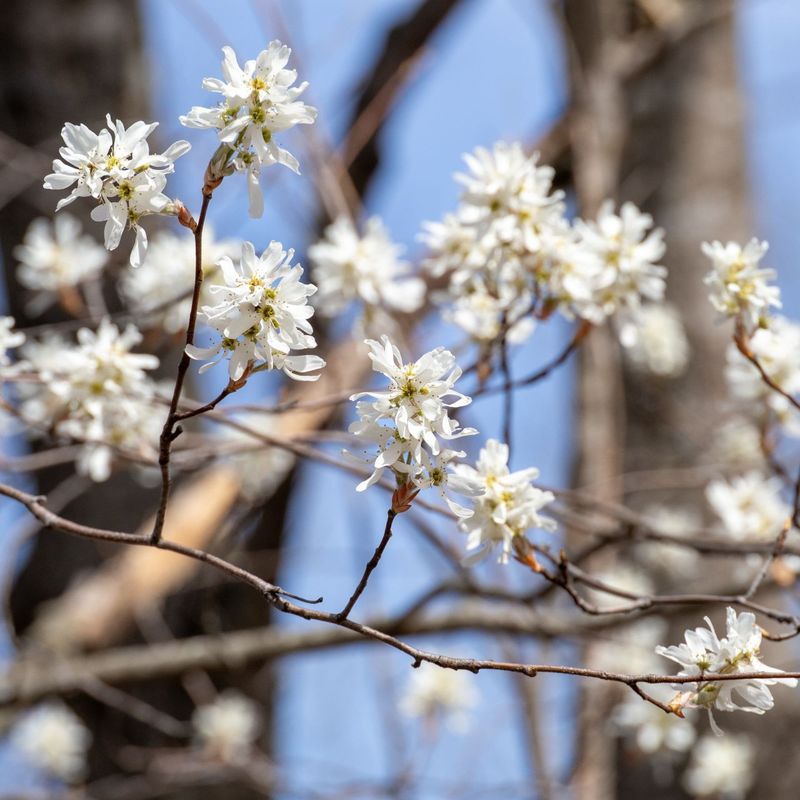
Here is the overachiever of the bunch. Serviceberry gives you a cloud of delicate white flowers in early spring, sweet edible berries in June, and a blaze of orange-red leaves in fall, all from one modest tree.
Those June berries taste like a cross between a blueberry and an almond, and if you want any for yourself you had better be quick. Robins, cedar waxwings, and cardinals strip the branches fast, which is exactly the point for a yard built to feed native birds.
Old-timers in the mountains called it “sarvis” and timed the blooms to when spring finally arrived and traveling preachers could reach remote settlements. Serviceberry stays small at 15 to 25 feet, handles part shade, and works beautifully at a woodland edge or tucked beside a patio. For a homeowner who wants maximum wildlife payoff from a single low-effort planting, this one is hard to top.
5. Fringe Tree (Chionanthus virginicus)
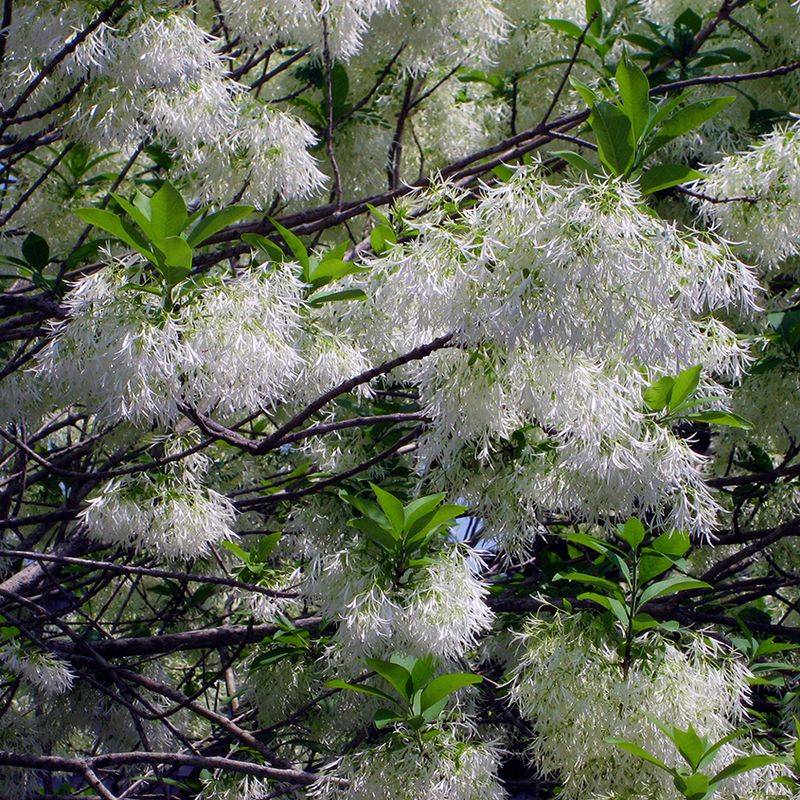
Nicknamed “old man’s beard,” the fringe tree drapes itself in feathery white flower clusters that flutter in the slightest breeze. The blooms carry a light, sweet scent that pulls in bees and early butterflies without a hint of the Bradford stink.
What makes it special is how unbothered it is. Fringe trees rarely suffer serious pest or disease trouble, so you can skip the spraying and let it do its thing.
Female trees follow the flowers with dark blue fruits that mockingbirds and other songbirds happily clean off in late summer. Staying petite at 12 to 20 feet, the fringe tree slots into small yards, corner beds, or spots near the house where a bigger tree would crowd things. It is a bit of a hidden gem that not enough Carolina yards have discovered yet, which is a shame because it delivers a soft, romantic bloom show with almost no fuss.
6. Sourwood (Oxydendrum arboreum)
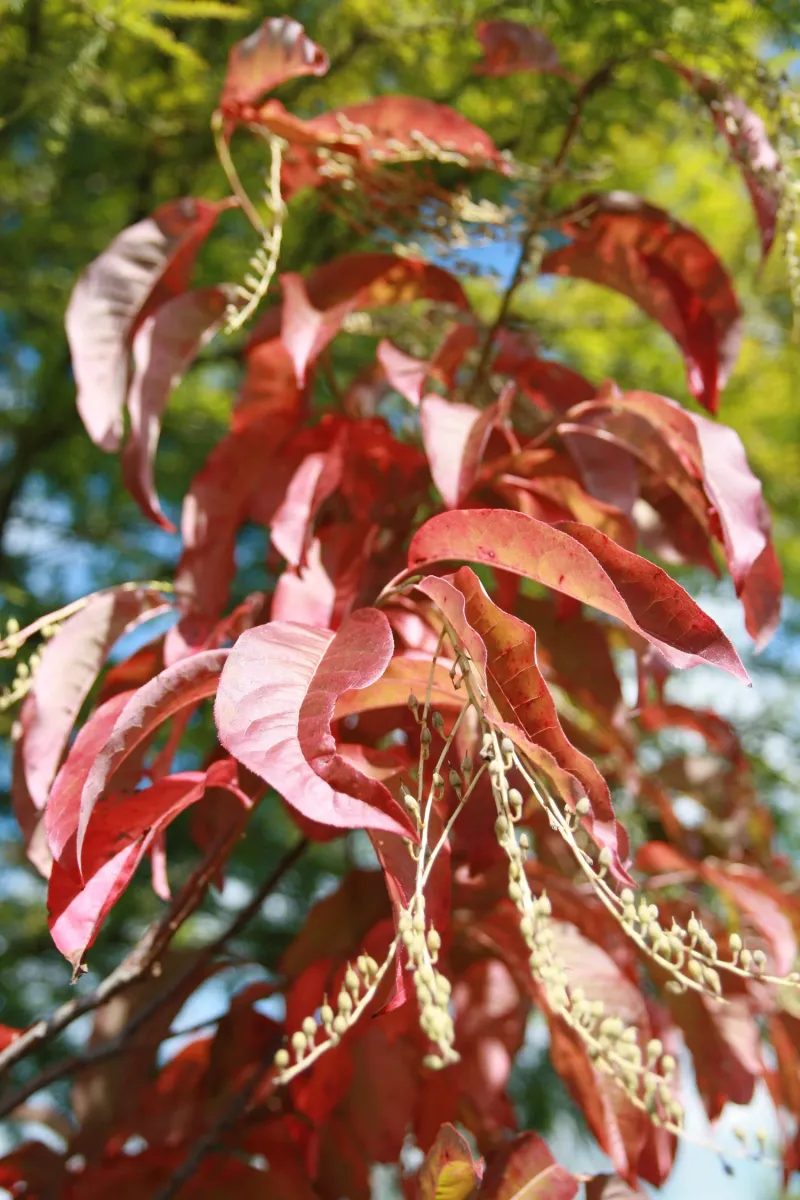
Beekeepers across the Carolina mountains chase one prize above all others, and it comes from this tree. Sourwood produces cascading strands of tiny white bell-shaped flowers in midsummer, and the honey bees make from them is famous enough to sell out at every roadside stand.
Blooming in June and July fills a gap when few other trees flower, so sourwood may help support pollinators during the slow stretch of summer. The nectar is a genuine gift to honeybees and native bees alike.
Come autumn the show shifts to the leaves, which turn one of the deepest, most fiery reds in the entire Southern forest. Sourwood grows slowly to about 25 or 30 feet and prefers acidic, well-drained soil, making it a great match for the Piedmont and mountains. Plant one and you get summer flowers, unforgettable fall color, and a front-row seat to the pollinators it feeds.
7. Carolina Silverbell (Halesia carolina)
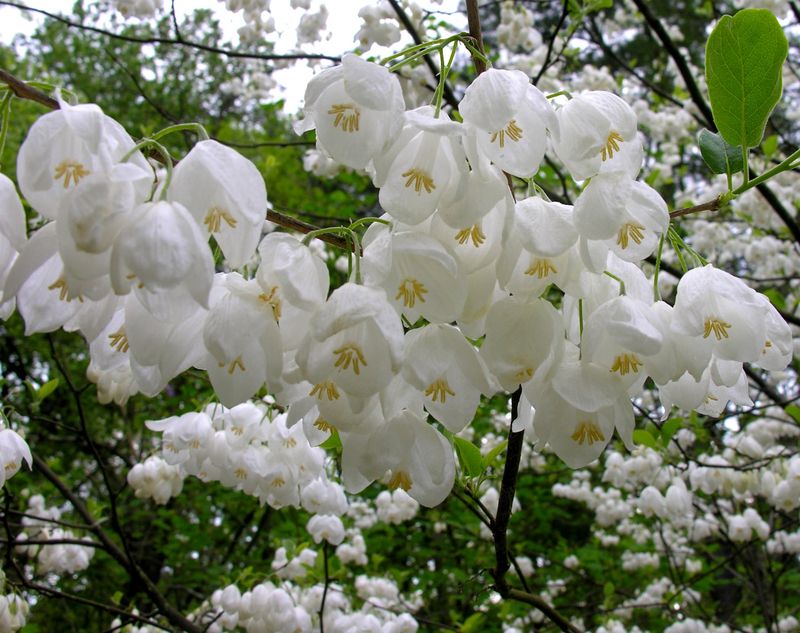
Named for our own state, the Carolina silverbell hangs rows of little white bells beneath its branches every spring, and walking under it feels like standing inside a wind chime made of flowers. The effect is quiet and charming rather than showy, which is its whole appeal.
Because it evolved as a forest understory tree, silverbell actually prefers the dappled shade that stumps a lot of other flowering trees. That makes it a smart pick for the shady side yard where nothing else seems to bloom.
Early bumblebees and native bees visit the bells for nectar just as spring gets going. Reaching 20 to 40 feet depending on conditions, the silverbell fits comfortably under taller hardwoods and rarely causes trouble. For a homeowner who wants something distinctly Carolina, tied to the woods and gentle on the yard, this native closes out the list with real local pride.