
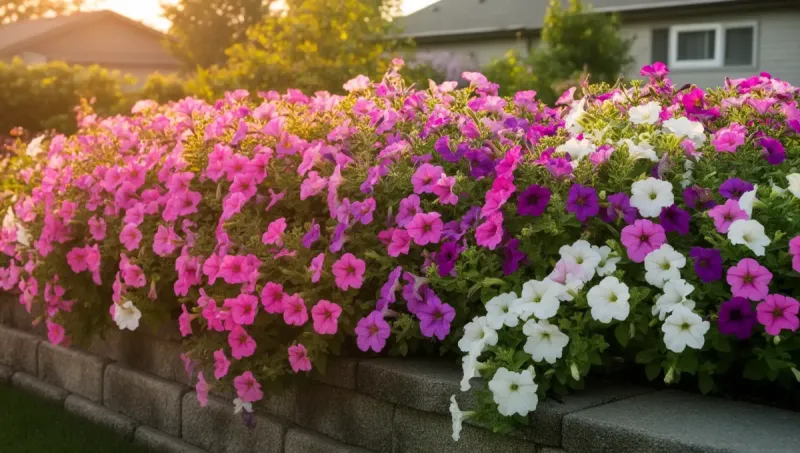
Petunias promise months of nonstop color, but a lot of gardeners watch their plants fizzle out by midsummer and wonder what went wrong. Usually it isn’t one big disaster, it’s a handful of small habits quietly stealing blooms week after week. The good news is that most of these slip-ups are easy to fix once you know what to look for. Here are nine common petunia mistakes and exactly how to turn things around so your blooms keep coming.
1. Skipping Deadheading and Letting Spent Blooms Set Seed
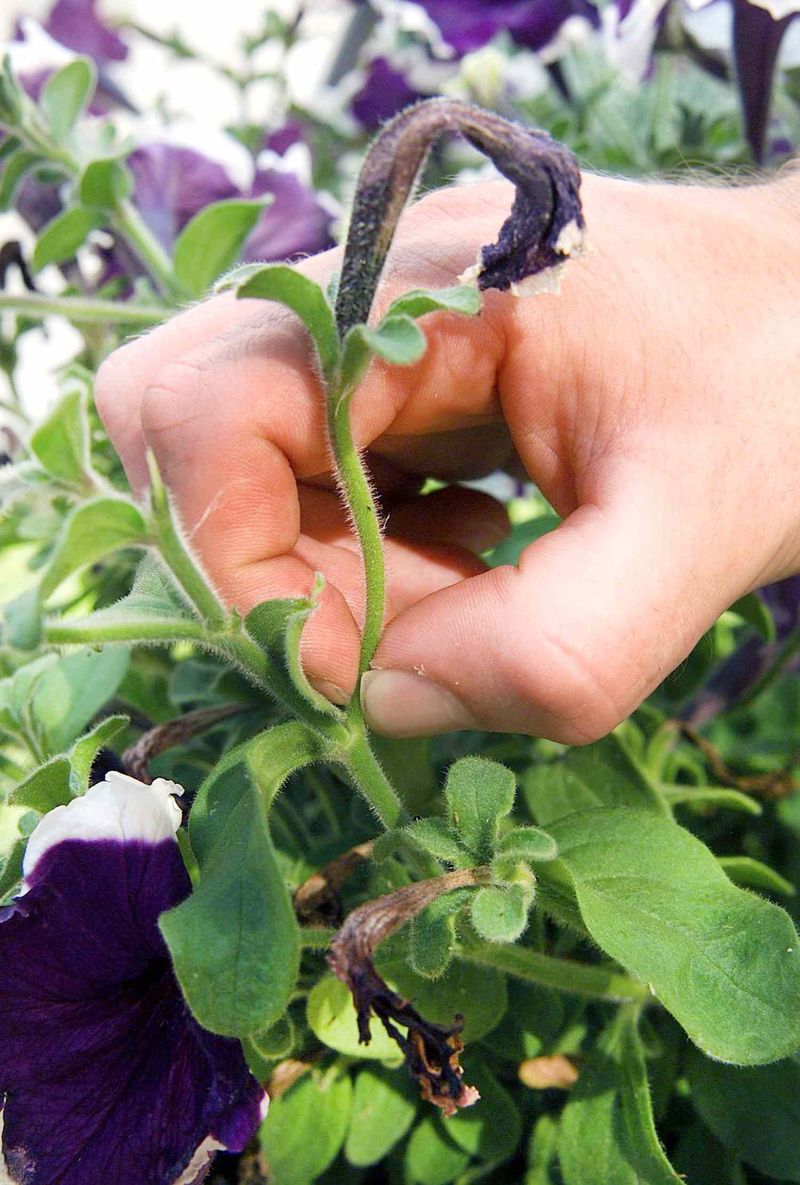
Every faded flower you leave on the plant is a tiny factory switching from bloom-making to seed-making. Once a petunia decides its job is to produce seeds, it slows down new flowers because, in the plant’s mind, the mission is nearly complete.
Pinching off the wilted blooms sends the opposite message. Don’t just grab the papery petals though. Follow the stem down to the little green seed pod behind the flower and remove that too, since that swollen bit is where the energy drain really happens.
A quick pass every few days often keeps the show going far longer than a big cleanup once a month. Grandiflora types especially benefit, because their large flowers turn to mush and cling to the plant.
Fun bit of history: many modern spreading varieties like the Wave series were bred to be more self-cleaning, so they need less fussing. Even so, a little tidying can still boost their output.
Keep a small pair of snips by the door and treat it like a two-minute chore, and your petunias may reward you with weeks of extra color.
2. Never Pinching Back Leggy Stems
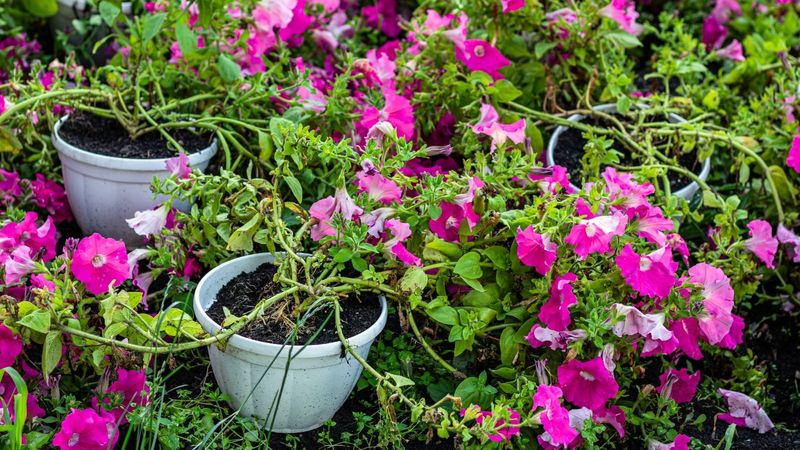
Leggy petunias are the classic July heartbreak. The plant stretches into long, bare vines with a sad little cluster of flowers hanging off the very tips, while the center looks like a tangle of green string.
Cutting them back feels brutal, and that’s exactly why so many gardeners avoid it. Trimming each stem by about a third, sometimes even by half, tells the plant to branch out and grow bushier from lower down.
Yes, you lose some flowers for a week or two. What you gain afterward is a fuller mound covered in blooms instead of a few stragglers stranded at the ends.
If you can’t stomach cutting everything at once, try trimming a third of the stems this week and another batch next week. That way you always have some color while the plant recovers.
Container petunias tend to go leggy fastest because their roots are cramped and stems reach for light. A midseason haircut plus a good feeding can often revive a hanging basket that looked completely finished, giving you a second wave of flowers well into fall.
3. Underfeeding These Hungry Bloomers
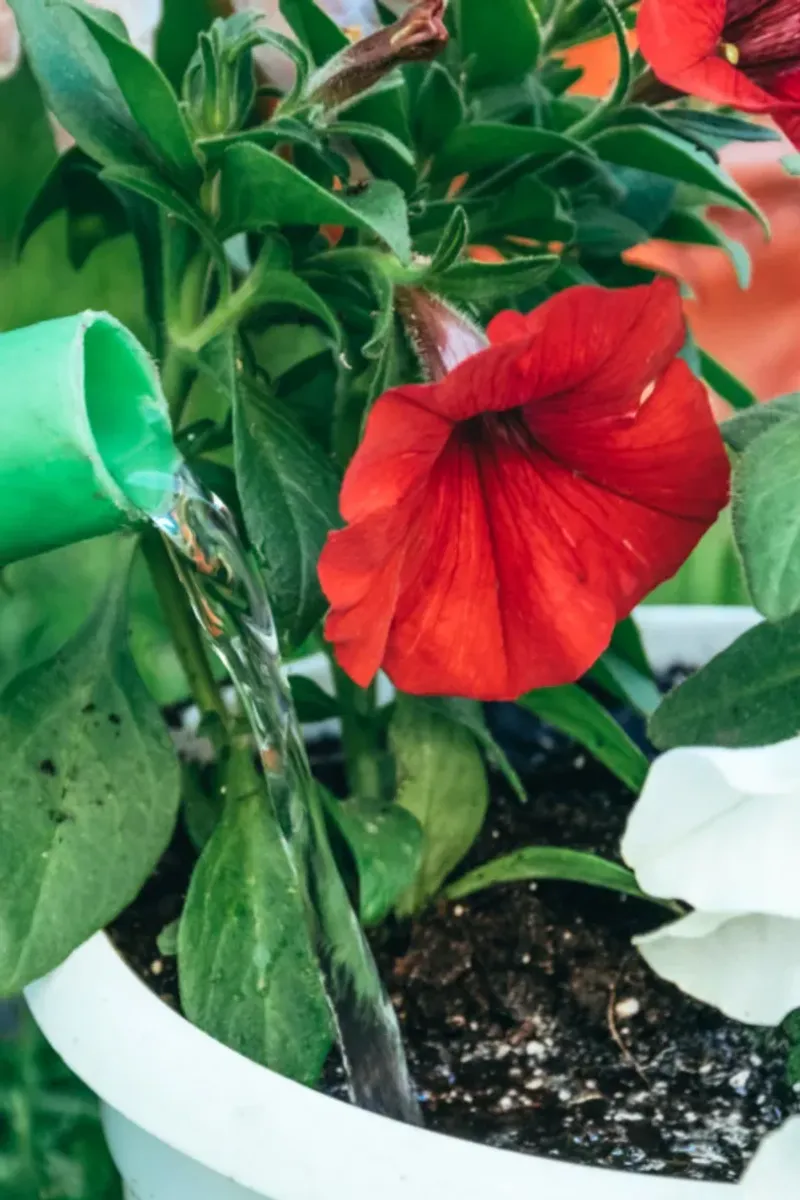
Petunias eat like teenagers. They pump out flower after flower all season, and that kind of nonstop performance burns through nutrients faster than most gardeners expect.
Plants growing in pots and hanging baskets get hungry quickest, because every watering rinses food right out of the drainage holes. By midsummer a starved petunia often shows pale leaves, weak stems, and a stubborn refusal to bloom no matter how sunny it gets.
A balanced liquid fertilizer every week or two can make a dramatic difference, and many gardeners swear by feeding little and often rather than one heavy dose. Look for a formula labeled for flowering annuals so you’re not just growing lush leaves with no color.
Slow-release granules mixed into the soil at planting give a steady baseline, and a liquid boost on top keeps things humming during peak bloom.
Watch for yellowing between the leaf veins, since that’s often a hint your petunias need more iron, especially the Calibrachoa cousins. Feed them well and they’ll often reward you with the kind of tumbling, flower-packed display that made you buy them in the first place.
4. Overwatering Until Roots Suffocate
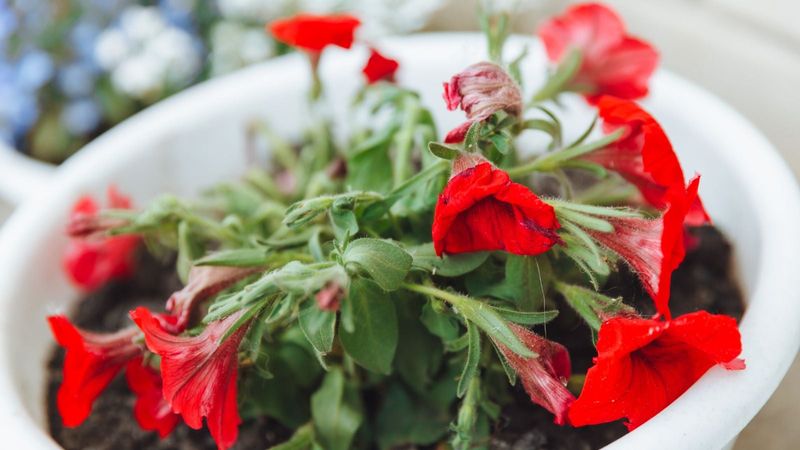
Soggy roots kill more petunias than drought ever will. It seems caring to douse them daily, but constantly wet soil pushes out the air roots need and opens the door to rot and fungus.
A petunia sitting in mush often looks wilted, which tricks worried gardeners into watering even more. The plant isn’t thirsty though, it’s drowning, and that extra water just makes the spiral worse.
The reliable test is your finger. Poke it an inch or two into the soil, and only water when that depth feels dry to the touch. Pots should always have drainage holes so excess water can escape freely.
Morning watering can help too, giving foliage time to dry before cool evenings that invite disease. Ground beds usually need far less frequent watering than containers, so treat them differently rather than following one schedule for everything.
If a plant already smells sour or has blackened stems, easing off the water and improving drainage may still save it. Get the balance right and your petunias will stay perky, green, and generous with blooms instead of collapsing in a waterlogged sulk.
5. Planting Them in Too Much Shade
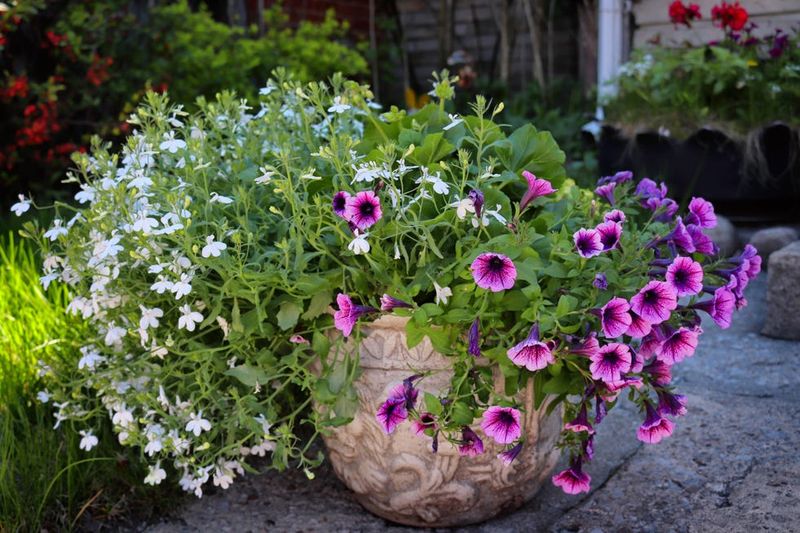
Sunlight is petunia fuel, and skimping on it is one of the sneakiest bloom killers around. A spot that looked bright in early spring can turn shady once nearby trees leaf out, and suddenly your flowers thin out for no obvious reason.
These plants really want six hours of direct sun a day, and more is usually better. In too much shade they stretch toward the light, grow floppy, and trade flowers for lanky green growth.
Take a slow look at where your pots and beds sit through an entire day before you commit. Morning sun with a touch of afternoon shade works beautifully in hot southern zones, while northern gardeners can often give full sun all day.
Containers have a big advantage here, since you can simply slide them into a sunnier corner if blooming drops off. Even a move of a few feet can wake up a sulking plant.
Should a heat wave scorch your petunias despite plenty of sun, light afternoon shade during the hottest weeks may reduce stress without sacrificing much color. Balance is the goal, but when in doubt, lean toward more sun.
6. Crowding Plants So They Fight for Everything
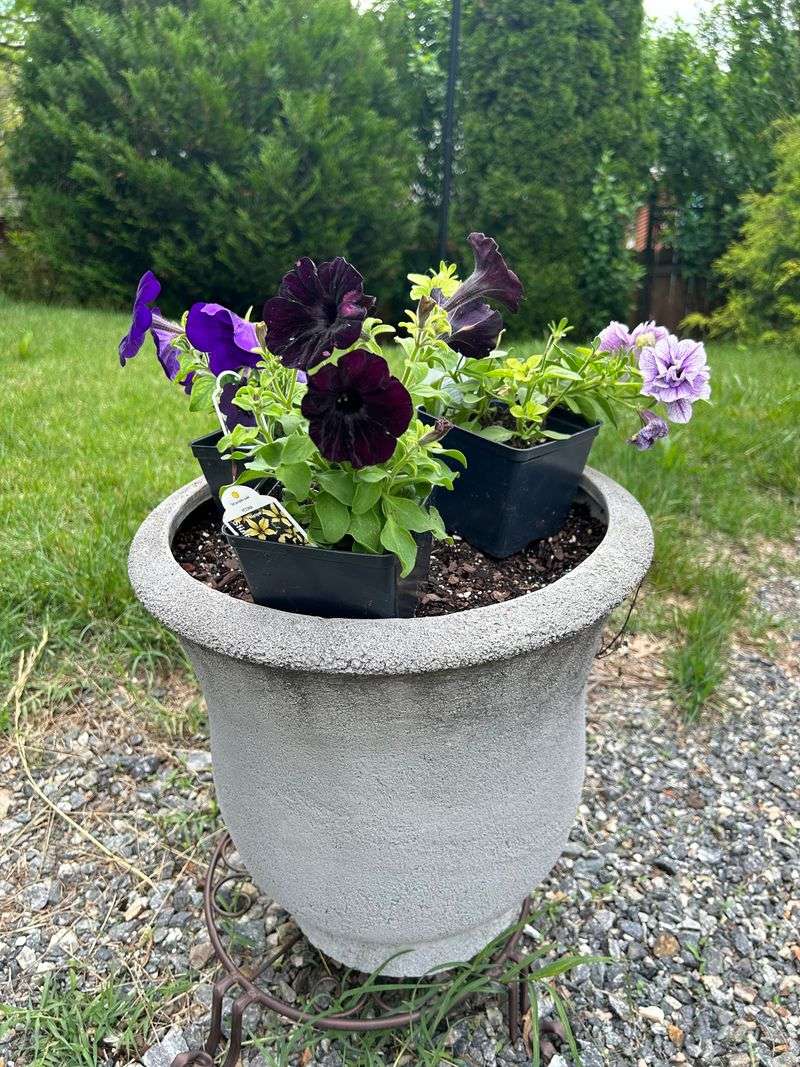
Cramming petunias shoulder to shoulder for an instant full look almost always backfires. Packed too tightly, they battle each other for water, food, and light, and stressed plants simply stop blooming as freely.
Poor airflow makes things worse. When leaves stay damp and crowded, fungal troubles like botrytis and powdery mildew spread fast, leaving you with gray fuzz and dropping flowers instead of a lush display.
Give each plant room to breathe, usually around ten to twelve inches apart in the ground, and a little less in containers where you can afford to be slightly bolder. It looks sparse for a couple weeks, then fills in and outperforms the crammed version by a mile.
Spreading types such as the Wave series need extra elbow room because they gallop sideways once they get going. One or two plants can cover a whole basket.
If you already overplanted, thinning out a few crowded stems or plants can improve airflow and rescue the survivors. Roomy petunias dry faster after rain, dodge disease more easily, and channel their energy into the thing you actually want, which is flowers.
7. Ignoring Budworms and Aphids Chewing the Buds
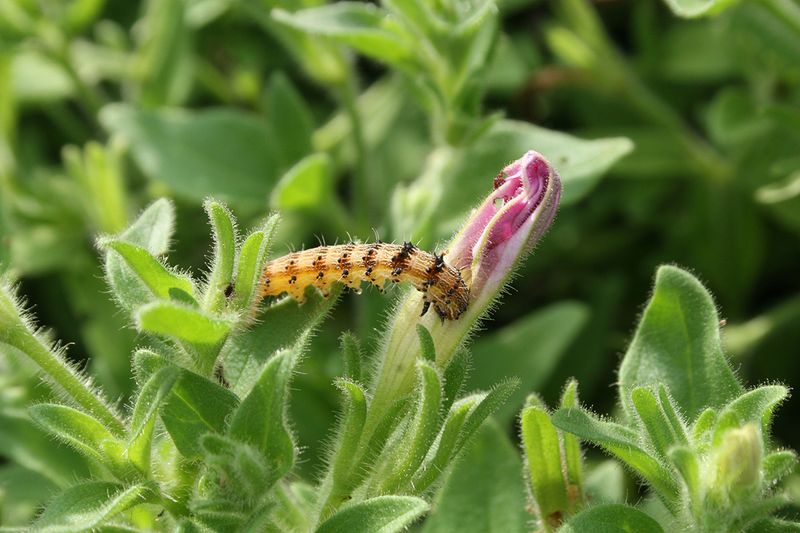
Sometimes the problem isn’t your care at all, it’s a hidden diner. Tobacco budworms are the usual culprit, tiny caterpillars that burrow straight into flower buds and eat them from the inside before they ever open.
The telltale clues are little holes in the petals, chewed buds that never bloom, and small dark droppings scattered on the leaves. You may not even spot the green or reddish worms, since they hide deep in the buds by day and feed at night.
Handpicking in the evening helps, and many gardeners find that a product containing Bt, a natural bacteria, can reduce budworm damage when applied to the affected plants.
Aphids are the other quiet thief, clustering on tender new growth and sucking the sap that fuels blooming. A strong blast of water or insecticidal soap often knocks their numbers down.
Checking your petunias closely once or twice a week means you catch trouble early, while it’s still small. Suburban gardens are full of these pests in summer, so staying watchful can protect your flowers far better than reacting after half the buds are already ruined.
8. Using Tired, Compacted Soil With No Drainage
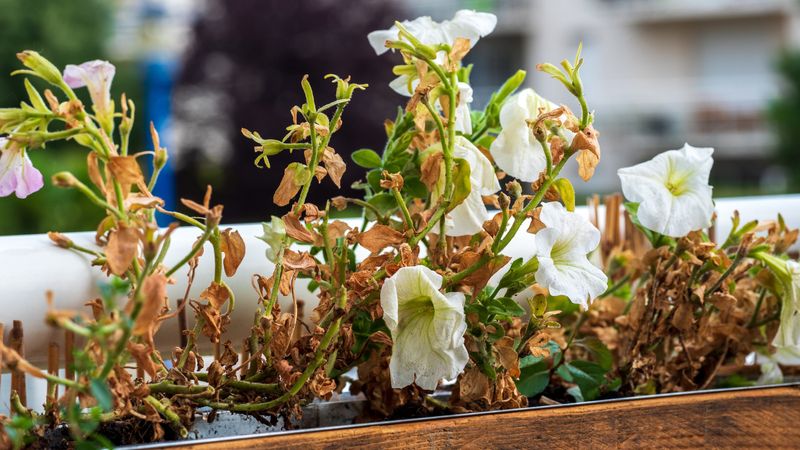
Great blooms start underground, and heavy, worn-out soil quietly sabotages them from below. When soil packs down hard, roots can’t spread, water pools instead of soaking in, and the whole plant coasts along in survival mode rather than flowering mode.
Old potting mix from last season is a common trap. It breaks down over time into a dense, airless lump that holds too much water and too little oxygen, which is basically the opposite of what petunia roots crave.
Fresh, light potting mix with materials like perlite or coarse compost gives roots room to breathe and drain. In garden beds, working in compost loosens clay and helps sandy soil hold just enough moisture.
Petunias also prefer slightly acidic soil, so wildly off pH can lock up nutrients even when you’re feeding faithfully.
Should your container feel heavy and stay wet for days, that’s your signal to repot into something fresher and more open. Give these plants a crumbly, well-draining home and their roots reward you above ground, turning all that hidden effort into the steady flush of flowers you were hoping for.
9. Letting Summer Heat Stress Go Unmanaged
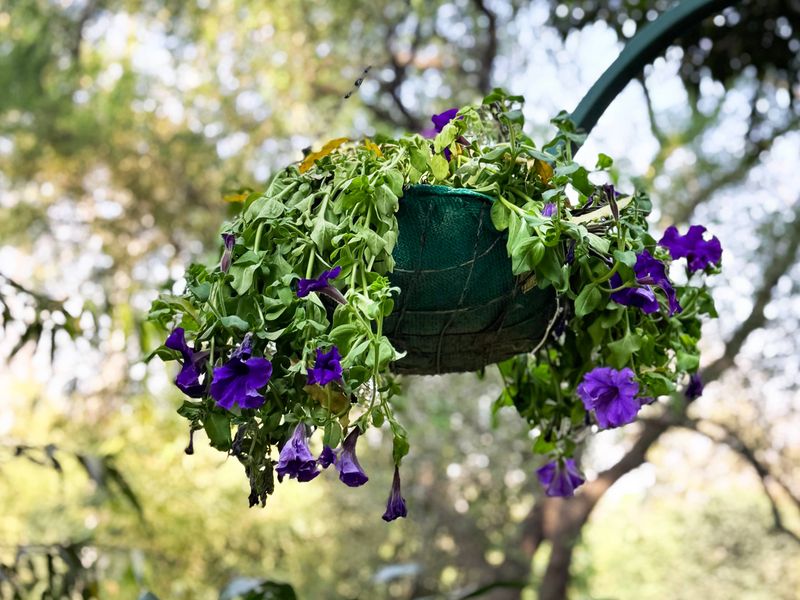
Come the dog days of summer, even healthy petunias can throw in the towel. Prolonged heat above the upper eighties often triggers a bloom pause, where plants stop flowering and just try to hang on until temperatures ease.
Wilting in the afternoon can be normal on brutal days, but a plant that stays flat every morning is genuinely struggling. Containers heat up fastest, since sun-baked pots can cook roots long before the air feels that hot.
Consistent moisture is your best defense, so check pots daily and sometimes twice a day during heat waves. A layer of mulch over garden beds can help keep roots cooler and hold water longer.
Grouping containers together and moving them into light afternoon shade during a scorcher may reduce stress without stealing much bloom power. Pale or clay-colored pots stay cooler than dark ones too.
Once the worst heat breaks, a trim and a feeding often coax petunias back into a fresh wave of flowers for fall. Instead of writing them off in August, nursing them through the rough patch can stretch your bloom season several extra weeks.