
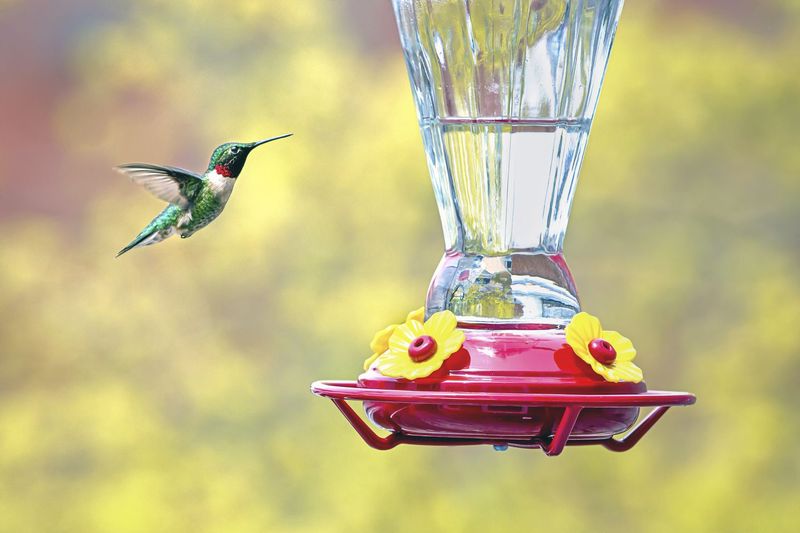
Noticing fewer hummingbirds at your feeder can feel discouraging, especially when you have put time and care into setting it up. Before assuming something is wrong, it helps to know that hummingbird activity changes for many reasons that have nothing to do with the feeder itself. This guide walks through the most likely explanations and practical ways to respond, from simple nectar checks to habitat improvements that help birds thrive all season long.
Fewer visits do not prove the feeder scared birds away
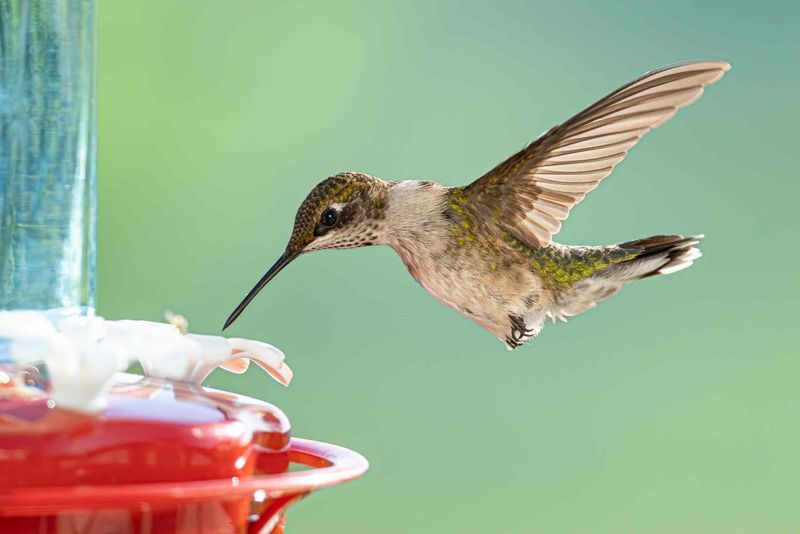
Stepping outside to find a quiet feeder can feel like something went wrong overnight, but the absence of hummingbirds often reflects natural changes rather than a feeder problem. Cornell Lab of Ornithology notes that hummingbird activity shifts with migration, nesting cycles, local weather, and the availability of natural flowers and insects, all independently of whether a feeder is clean or well-stocked.
During spring and fall migration, birds pass through briefly and move on. In midsummer, a nesting female may spend hours incubating eggs or feeding young away from the feeder, making the yard seem emptier than it actually is.
Nearby feeders can also pull traffic away from yours, and a territorial male can quietly exclude other birds while appearing to be the only visitor. A bloom of natural flowers in the neighborhood can reduce feeder visits without signaling any problem at all.
The goal of this guide is not to identify one certain culprit but to give you a set of practical hypotheses to test. Some may apply to your situation and some may not. Working through them methodically is a better strategy than assuming the worst.
Check the nectar before assuming anything else
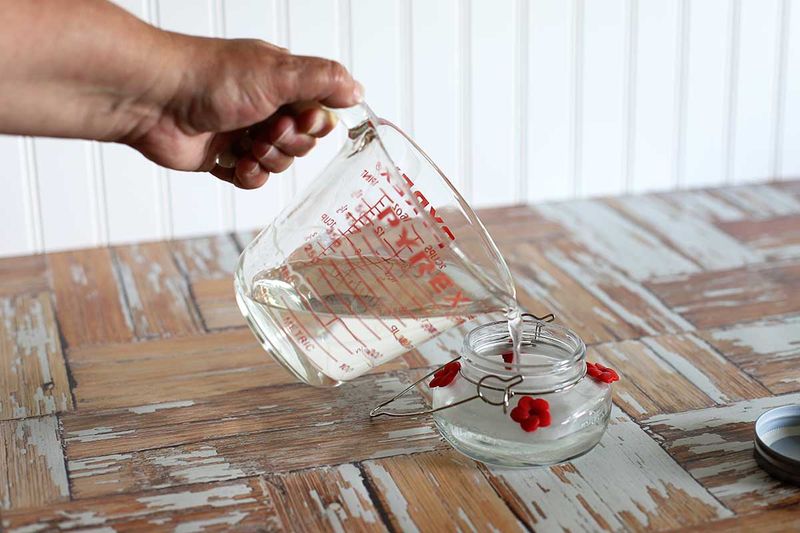
Nectar quality is one of the first sensible things to check when visits slow down, though it is far from the only possible explanation. The correct recipe is a 1:4 ratio of refined white sugar to water, such as one quarter cup of sugar per one cup of water. Hot or boiling water can help dissolve the sugar fully, but the mixture must cool completely before you fill the feeder.
Skip honey, brown sugar, molasses, and artificial sweeteners entirely. Audubon explains that honey can spoil in ways that are especially dangerous for birds, and artificial sweeteners provide no usable energy. Red food coloring is also unnecessary. The red parts of a feeder are enough to attract attention, and natural flower nectar is clear.
The safety of dye additives for hummingbirds has not been adequately demonstrated, so there is no good reason to include them.
Cornell advises checking nectar daily and replacing it every few days under normal conditions, more often when temperatures climb or the feeder sits in direct sun. If the liquid looks cloudy, smells fermented, or shows any trace of mold, replace it immediately without waiting for a scheduled change.
Using smaller amounts of nectar at a time means less goes to waste and freshness is easier to maintain. Think of it as a routine inspection rather than a chore.
Clean the ports, seams, and reservoir
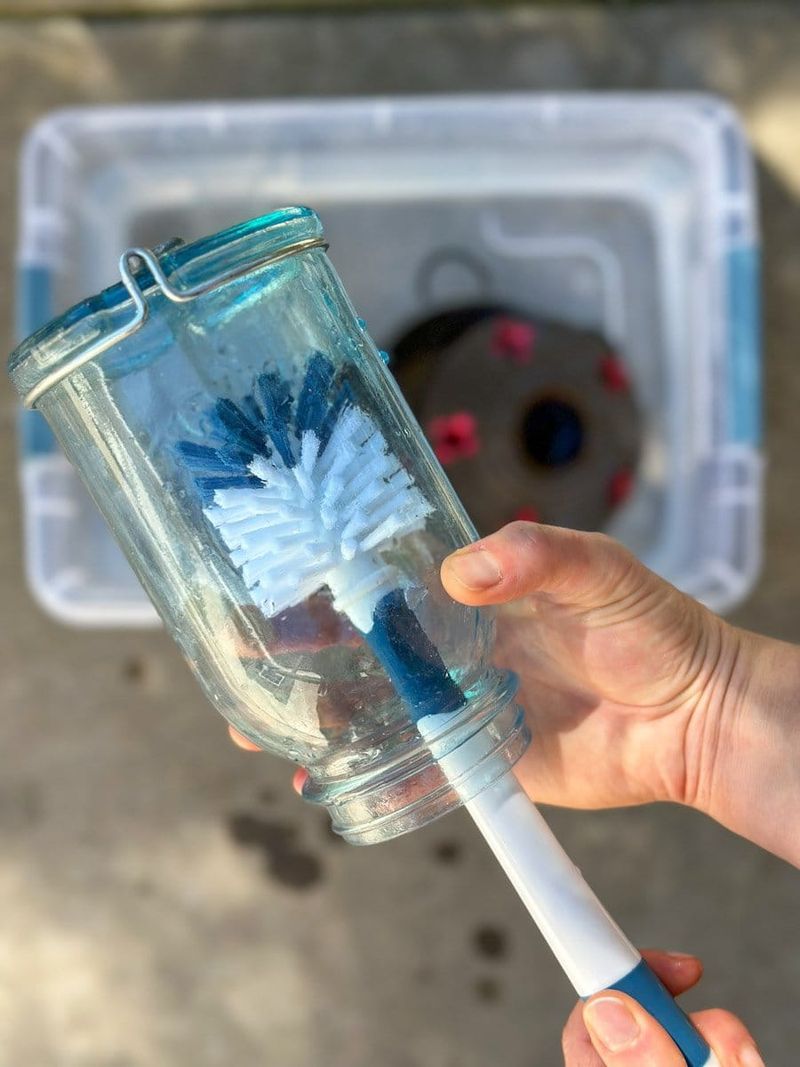
A feeder can look perfectly fine from the outside while mold, bacteria, and fermented residue accumulate inside the feeding ports, along internal seams, and in hard-to-reach crevices. That hidden buildup is what makes thorough cleaning so important, not just a rinse of the reservoir.
Cornell recommends fully disassembling the feeder every time you clean it, so every reachable surface gets scrubbed with a bottle brush sized for the ports and reservoir. Follow the feeder manufacturer’s instructions on whether hot water, diluted vinegar, a mild dish soap, or a properly diluted bleach solution is appropriate for your model. Whatever cleaning agent you use, rinse every part thoroughly so no residue remains.
Choosing a feeder that comes apart easily is worth considering when you buy one, because a design that traps residue in unreachable corners will always be harder to maintain properly. University of New Hampshire Extension notes that contamination in a feeder can create real health risks for visiting birds. That said, a feeder with some residue does not guarantee harm; the goal is to reduce the risk by cleaning consistently rather than to treat every imperfect feeder as a crisis.
Plan to clean the complete feeder every time you replace the nectar, and do an extra scrub anytime you notice residue, discoloration, or an off smell when you open it.
Use shade and stability to improve the setup
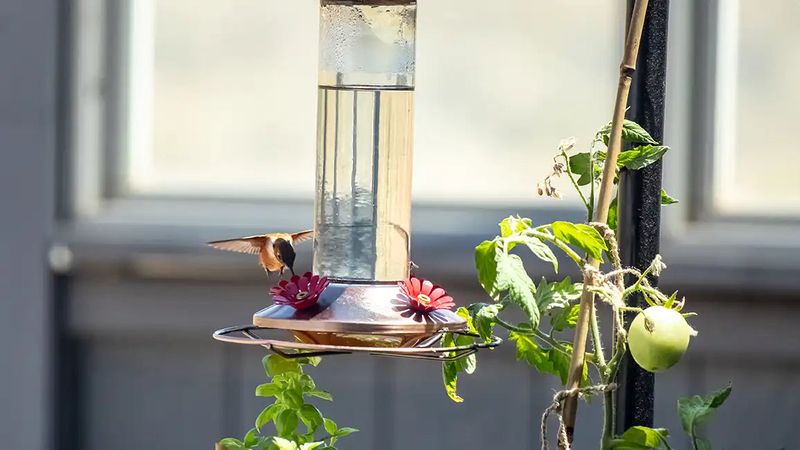
Where a feeder hangs matters more than many people realize. Direct sun warms nectar quickly and can speed up fermentation and spoilage, meaning a feeder in full afternoon sun may need attention far sooner than one tucked into partial shade. Moving the feeder to a spot that gets morning light and afternoon shade is a practical first step if you have not already done so.
Cornell’s hummingbird feeding guidance also points out that bottle-style feeders can develop leaks as trapped air inside warms and expands. A leaking feeder drips sugary liquid down the hanger and onto surfaces below, which quickly draws ants and other insects to the feeding area and can make the feeder less accessible to birds.
Strong wind is another variable worth addressing. A feeder that swings and spills repeatedly not only wastes nectar but may make the feeding perch harder to use. Look for a location that offers some shelter from prevailing winds, such as near a fence, a garden wall, or the edge of a shrub border.
None of these placement factors guarantee a specific number of visits, but correcting them reduces conditions that can lead to spoilage, insect interference, and leaks. Think of shade and stability as basic maintenance rather than a cure, and combine them with regular nectar checks for the best result.
Manage insects without poisoning the feeding area
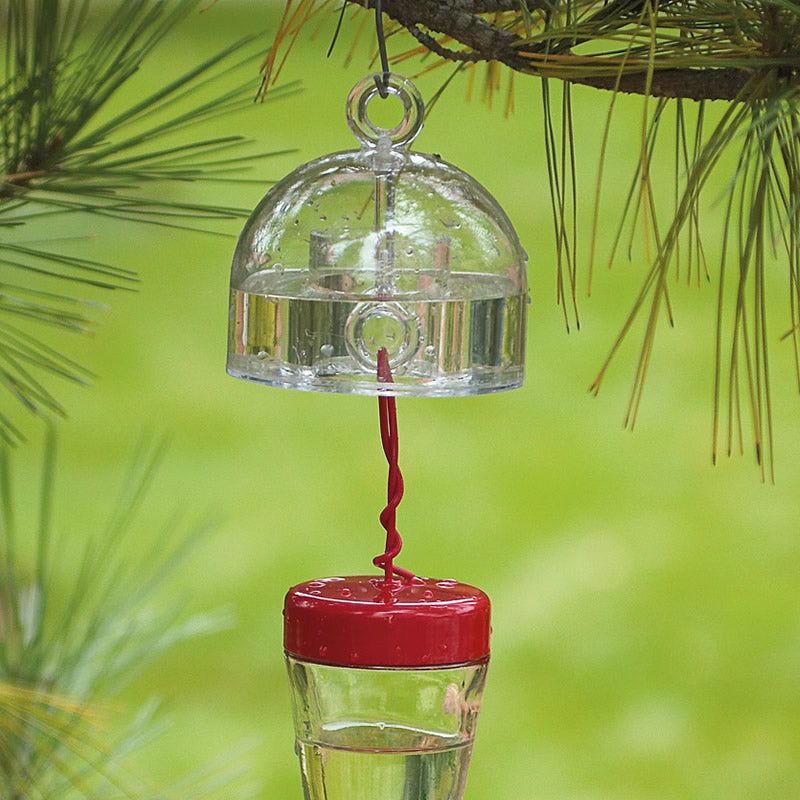
Insects at a hummingbird feeder tend to fall into two separate problems that call for different solutions. Ants typically reach the feeder by crawling down the hanger, while bees and wasps hover around the feeding ports themselves. Treating both as one issue leads to fixes that work for neither.
For ants, the most reliable physical barrier is a water-filled ant moat or a commercial water baffle placed above the feeder on the hanging wire or hook. Cornell’s ant-feeder guidance specifically warns against smearing petroleum jelly, cooking oil, or other sticky substances on the hanger. Those materials can contaminate nectar and soil the feathers of birds that brush against them, so they should be avoided entirely.
Bees and wasps are drawn to sugar, and Cornell advises trying a few practical steps before giving up: move the feeder to a different spot, take it down for a day or two to break the insects’ pattern, or switch to a saucer-style feeder with top ports that bees find harder to reach. Yellow bee guards, despite their name, can actually attract bees rather than deter them, so those are worth skipping.
Pesticides are not a safe general solution around feeding areas. They can harm the birds you are trying to help, as well as native bees and other beneficial insects. Insects near a feeder may reduce access temporarily, but they do not create permanent avoidance, and physical deterrents handle most situations without any chemical risk.
A territorial bird may be hiding the other visitors
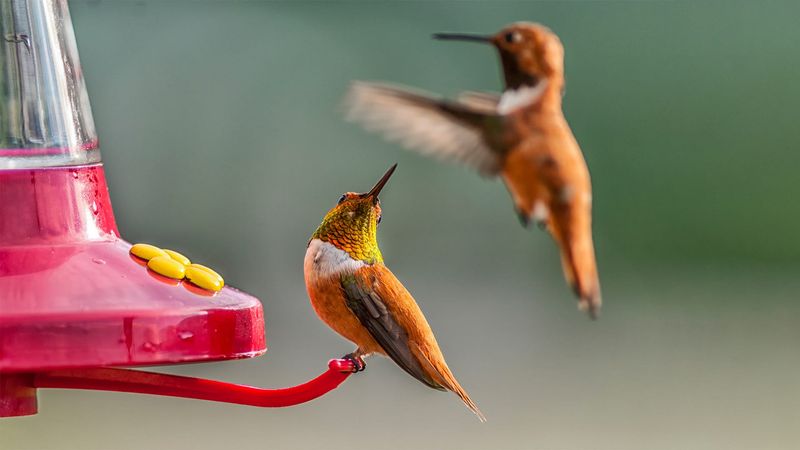
Hummingbirds are famously territorial, and a single dominant male can spend much of his day chasing other birds away from one feeder. The yard may feel like it has lost its hummingbirds when, in fact, several birds are nearby but being actively excluded from the one spot where you are watching.
Cornell’s explanation of hummingbird territoriality makes clear that this behavior is deeply ingrained. A territorial bird patrols its claimed feeder relentlessly, and no amount of feeder cleaning or nectar improvement will change that instinct. The practical workaround is to add several smaller feeders placed far enough apart that the dominant bird cannot watch all of them at once, ideally around a corner or on opposite sides of the house.
Separated feeders may improve access for subordinate birds, but the outcome is not guaranteed. Some yards simply have one very determined individual, and spreading feeders out reduces rather than eliminates that pressure. Still, it is a low-cost adjustment that often helps and carries no downside.
If you notice one hummingbird spending more time chasing than feeding, territoriality is a reasonable hypothesis to explore before assuming the feeder itself is the problem. Watch for a few days before making changes, since the pattern usually becomes obvious fairly quickly.
Protect birds and strengthen the natural food supply
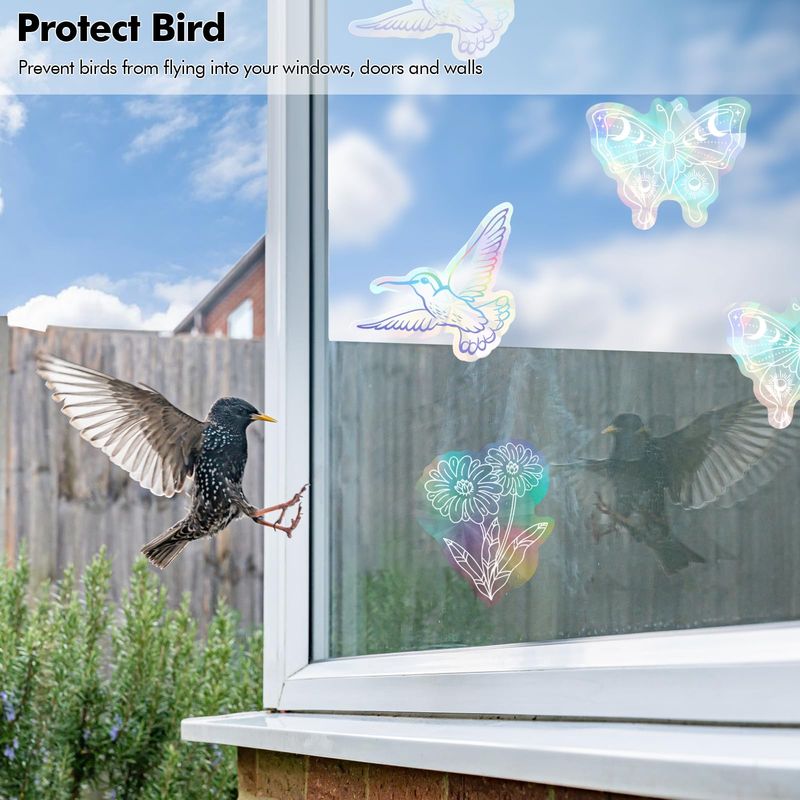
Windows and outdoor cats are genuine safety concerns for birds near feeders, though they are better understood as hazards to address rather than as proven reasons hummingbirds stop visiting a particular spot. U.S. Fish and Wildlife Service guidance recommends placing feeders within three feet of reflective glass so that any bird startled off the perch cannot build enough speed to be seriously injured. Glass positioned fifteen to thirty feet from a feeder can create a longer launch zone where a bird reaches full speed before impact, making that middle distance the most hazardous range.
Effective exterior window markers or screens can reduce collision risk at any distance. Decals or tape patterns applied to the outside surface of the glass work better than interior treatments. Keeping cats indoors or away from the feeding area addresses a separate but equally real threat to small birds.
Beyond safety, the feeder itself is only one piece of what hummingbirds need. Sugar water supplies energy, but hummingbirds also depend on insects and spiders for protein, especially during nesting and feather growth. Native flowering plants provide nectar, shelter, and insect prey all in one. Reducing or eliminating pesticide use in the yard helps preserve that insect supply.
When natural flowers are blooming abundantly nearby, visits to the feeder may drop simply because birds have better options. That is a sign of a healthy yard, not a feeder failure.
Reset the feeder, observe the pattern, and wait
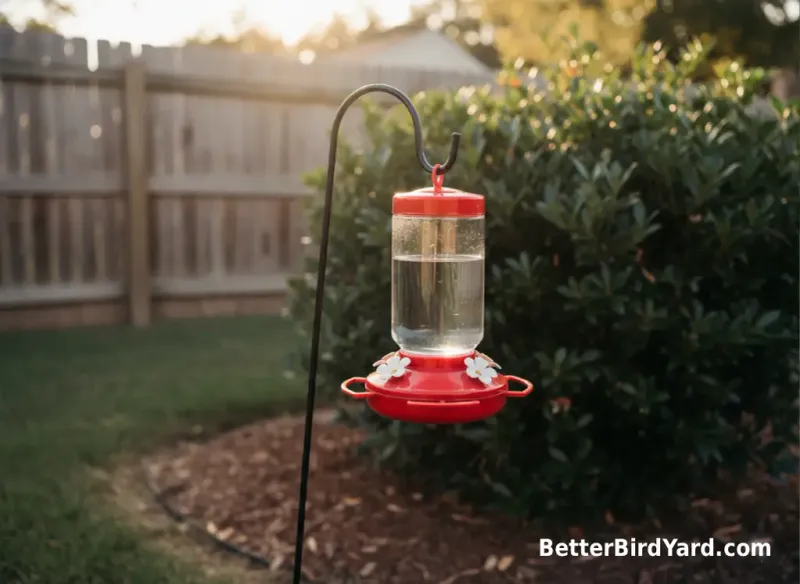
Working through a quiet feeder is most useful when you treat it as a sequence rather than a scramble. Start by discarding any nectar that looks cloudy, smells off, or has been sitting through several hot days. Disassemble the complete feeder, scrub every port, seam, and surface, rinse it thoroughly, and refill it with cooled 1:4 sugar-water nectar before hanging it again.
If the location gets direct afternoon sun or strong wind, move the feeder to a shadier, calmer spot. Add a water-filled ant moat above the hanger, and if bees or wasps have been an issue, try shifting the feeder a short distance or taking it down for a day to break their pattern. Address any reflective glass nearby with exterior markers, and keep cats away from the feeding area.
Cornell notes that birds may need time to find a feeder that has been moved or reset, and that seasonal activity can shift independently of anything you do. Keeping the feeder clean and stocked during slow periods costs little and keeps the option open for birds passing through.
After making changes, give it a week or two before deciding whether to adjust further. A log of when you see activity, under what weather, and at what time of day, can reveal patterns that a quick glance never will. Careful watching, more than any single fix, is what separates a likely feeder issue from the natural rhythm of the season.