
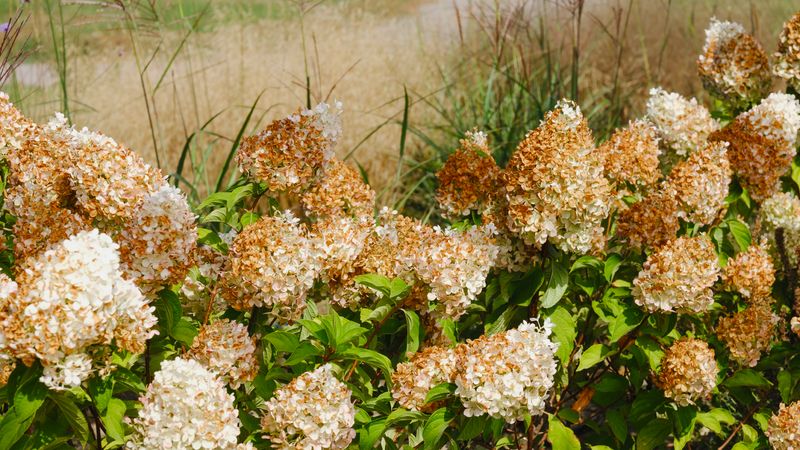
Your hydrangea looked great in spring, and now it is drooping, browning, or dropping leaves in the summer heat. Before you grab the hose or start cutting stems, take a breath because the heat you see outside is often not the whole story. Knowing what is really happening at the root zone, in the soil, and across the plant can save you from making things worse. This guide walks you through the most common causes of summer hydrangea trouble and the steps that may actually help.
Heat Is a Clue, Not a Diagnosis
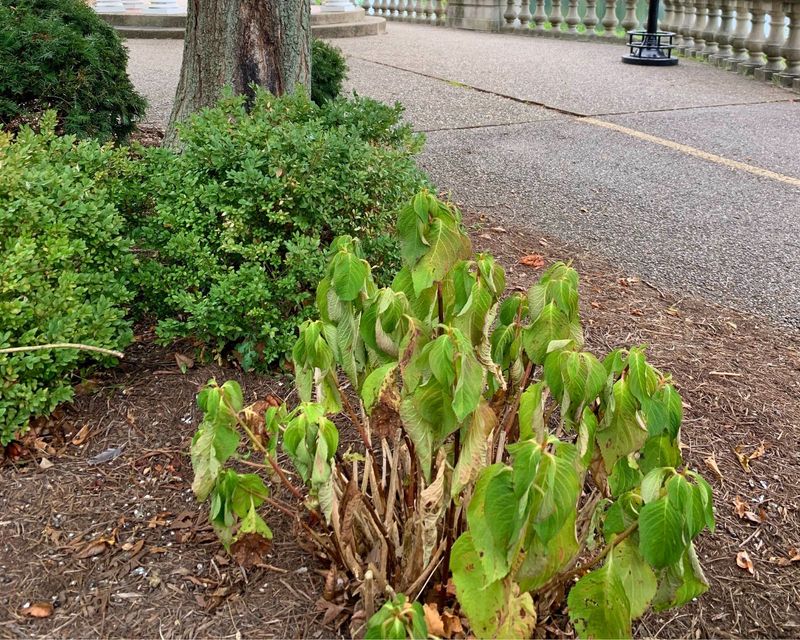
Wilting leaves, drooping stems, crispy brown margins, faded or papery flowers, sudden leaf drop, and patches of dieback are the symptoms that send gardeners into a panic every summer. Hot, sunny, and windy conditions speed up water loss through hydrangea foliage faster than roots can keep up, and that gap between supply and demand is what shows up on the leaves. But seeing those symptoms on a hot afternoon does not automatically tell you why they are happening.
Temperature is a clue, not a diagnosis. Oregon State University Extension guidance on hydrangeas in heat waves makes clear that drought, waterlogged soil, poor drainage, root damage, pests, disease, and exposure problems can all produce overlapping symptoms during hot weather. Treating the wrong cause can make things worse rather than better.
The most useful thing you can do before reaching for a hose, pruners, or fertilizer is to observe the plant over time. As University of Maryland Extension notes, a hydrangea that wilts during the hottest part of the day but firms back up by evening or the next morning may simply be managing temporary heat stress. The diagnostic framework that actually helps involves checking soil moisture, evaluating drainage, noting the plant’s exposure, identifying the hydrangea type, and matching symptoms to timing before taking any action.
Check the Root Zone Before You Water
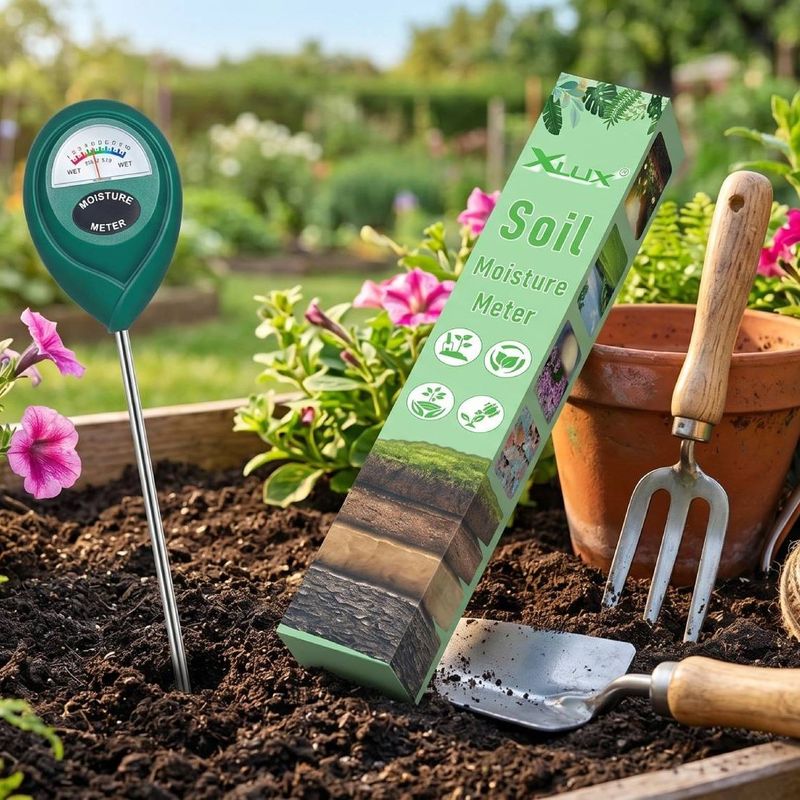
The single most useful step you can take when a hydrangea looks stressed is to push a finger or a trowel several inches into the soil near the root zone and feel what is actually there. Genuinely dry soil crumbles and pulls away from roots, while saturated soil feels heavy, slick, or even smells sour. Both conditions can produce wilting, and they require opposite responses.
Dry roots cannot pull enough water up through the plant to replace what the leaves are losing to heat and wind, and that deficit shows up as wilt and scorch. Soggy roots face a different problem: waterlogged soil drives out oxygen, and without oxygen, roots cannot function normally even when surrounded by water. Colorado State University Extension explains that roots deprived of oxygen lose the ability to absorb water and nutrients, which is why an overwatered hydrangea can look exactly like a drought-stressed one.
Compacted soil, hardpan layers, poor drainage, shallow root systems, and patchy or unreliable irrigation can all make moisture levels inconsistent across the root zone. University of Missouri Extension cautions against overwatering heat-stressed plants, noting that more water is not always the answer and that drainage must be evaluated first. Check the soil every time before adding water, and let that result, not a fixed calendar, guide your next step.
Exposure and Hydrangea Type Change the Risk
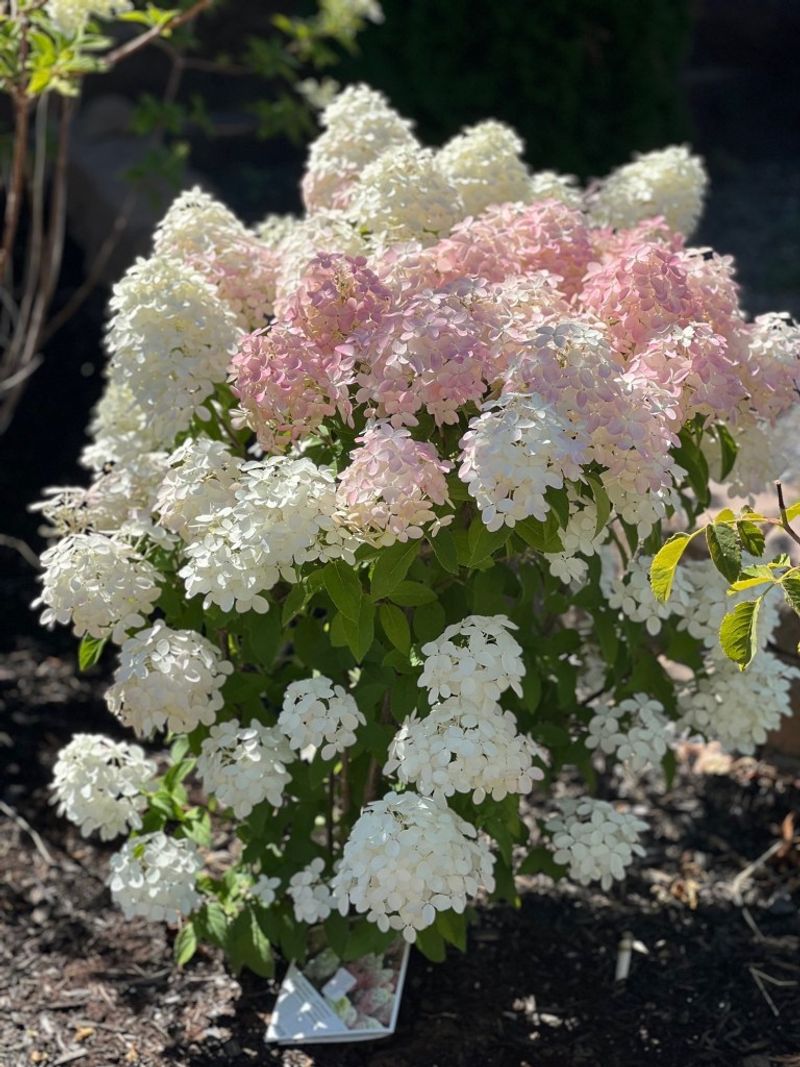
Where a hydrangea sits in your yard matters as much as what the thermometer reads. Afternoon sun is more intense than morning sun, and a plant facing west or southwest absorbs heat during the hottest hours of the day. Drying wind pulls moisture from leaves continuously, low humidity speeds up that loss further, and hardscape surfaces like concrete driveways and brick walls radiate stored heat back onto nearby plants long after the sun has moved on.
Not all hydrangeas respond to those conditions the same way. Bigleaf hydrangeas (Hydrangea macrophylla) are the most vulnerable to heat and drought, and they show stress the fastest. Panicle hydrangeas (H. paniculata) are generally more tolerant of sun and heat, though NC State Extension notes they still perform best with moist, well-drained soil and are not drought-proof by nature. Smooth hydrangeas and oakleaf hydrangeas fall somewhere between those two extremes depending on cultivar and site conditions.
A tag that says “full sun” does not mean a plant will thrive in every sunny location. As University of Maryland Extension explains, sun intensity, reflected heat, wind, soil type, and regional climate all shape real-world performance. A bigleaf hydrangea planted against a south-facing brick wall may struggle every summer regardless of how much you water it, and persistent site stress may eventually call for relocation or a better-matched plant rather than more irrigation alone.
Look for Problems That Mimic Heat Stress
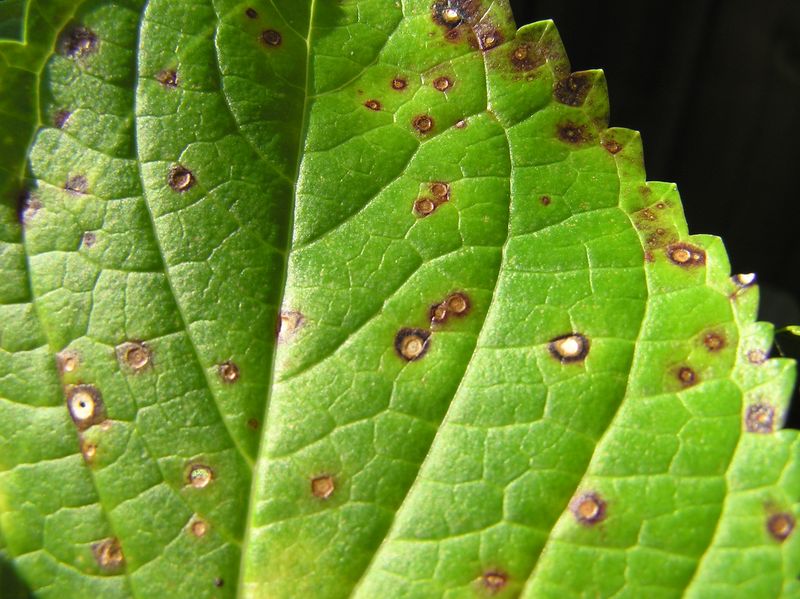
Midday wilt that clears up on its own by evening is different from wilt that persists through the night or into the next morning with dry soil underneath. Persistent wilt, progressive browning, widespread leaf drop, or dieback spreading from branch tips are signs of a more serious or prolonged problem, and those symptoms deserve a closer look before you act.
Leaf diseases are common when foliage stays wet for extended periods. Penn State Extension identifies several fungal and bacterial leaf spot diseases that create brown or purple-edged spots, often with a pattern that does not match simple heat scorch. Powdery mildew shows up as a white coating, usually on the upper leaf surface, and tends to appear when nights are cool and humid even during warm summers.
Hot, dry summers favor spider mites, and University of Minnesota Extension describes the telltale signs as fine stippling or bronzing across the leaf surface, tiny webbing on leaf undersides, and actual mites visible with a hand lens. Root damage from construction, soil compaction, or vole activity can also create drought-like symptoms that do not respond to watering. Herbicide drift from a nearby lawn treatment sometimes produces cupped, twisted, or distorted new growth rather than the uniform browning of heat scorch.
Poor flowering is its own category. Penn State Extension explains that bigleaf and oakleaf hydrangeas bloom on old wood, so pruning at the wrong time of year, a hard winter, a late frost, or deer browsing through the previous fall can remove next season’s buds entirely. Smooth and panicle hydrangeas bloom on new wood and follow different pruning timing. Blaming summer heat for missing flowers often points gardeners toward the wrong fix.
Water Slowly When the Soil Is Dry
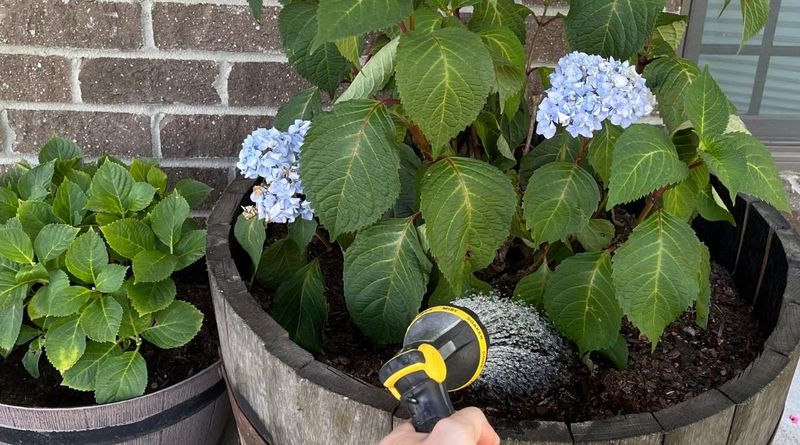
Once you have confirmed that the root zone is genuinely dry, the goal is to get water deep enough to reach the roots rather than just wetting the top inch of soil. A quick splash from a hose can look like thorough watering while leaving the root zone dry just a few inches down. Slow, steady application gives water time to move through the soil profile where roots can actually use it.
Drip irrigation, soaker hoses, or a slow-flow garden hose held at the base of the plant are all more effective than a brief overhead spray. Oregon State University Extension recommends applying water directly to the root zone and avoiding patterns that leave the surface wet while the deeper soil stays dry. How much water and how often depends on your soil type, recent rainfall, plant size, whether the hydrangea is newly planted or established, and how hot and exposed the site is. No single schedule fits every yard.
Organic mulch works alongside careful watering to stretch the benefit of each application. A two-to-four-inch layer of shredded bark, wood chips, or leaf mold over the root zone can reduce evaporation, moderate soil temperature, improve water infiltration, and suppress weeds that compete for moisture. Oregon State University’s water conservation guidance supports organic mulch as a practical way to hold moisture in the root zone longer between waterings. Keep mulch a few inches away from the main stems, and skip black plastic or heat-absorbing gravel in already hot spots.
These steps may reduce further stress, but they will not turn scorched tissue green again.
Use Shade to Reduce Heat Load
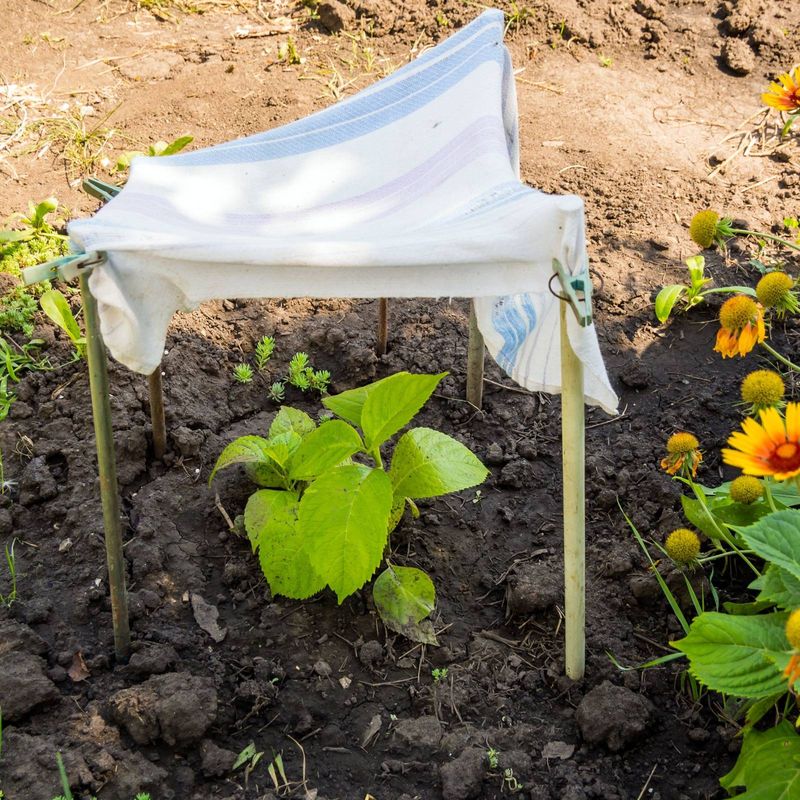
Adding water to a sun-baked root zone helps, but reducing the amount of heat the plant absorbs in the first place can be just as important. Shade lowers the temperature of the leaf surface, slows water loss through the foliage, and reduces the demand placed on roots that may already be working hard to keep up. In many cases, appropriate shade does more practical good than increasing irrigation frequency.
Existing trees, shrubs, or structures that cast afternoon shade are the most reliable long-term solution. When those are not available during an extreme heat event, a temporary shade cloth held above the plant on stakes or a simple frame can help protect foliage. Oregon State University Extension advises keeping shade cloth elevated above the plant rather than laying it directly on the foliage, and maintaining airflow to avoid trapping heat underneath. A 30-to-50-percent shade cloth is typically used rather than a solid cover.
Shade is an emergency measure, not a permanent workaround for a badly exposed planting site. Arizona Cooperative Extension notes that temporary protection during extreme events can reduce immediate injury, but a plant placed in a chronically wrong spot will continue to struggle each summer. Bigleaf and smooth hydrangeas generally need the most afternoon protection, while panicle hydrangeas can handle more sun when soil moisture and site conditions are otherwise suitable. Shade will not reverse brown leaves or bring back flowers that have already been damaged.
Pause Actions That Can Add Stress
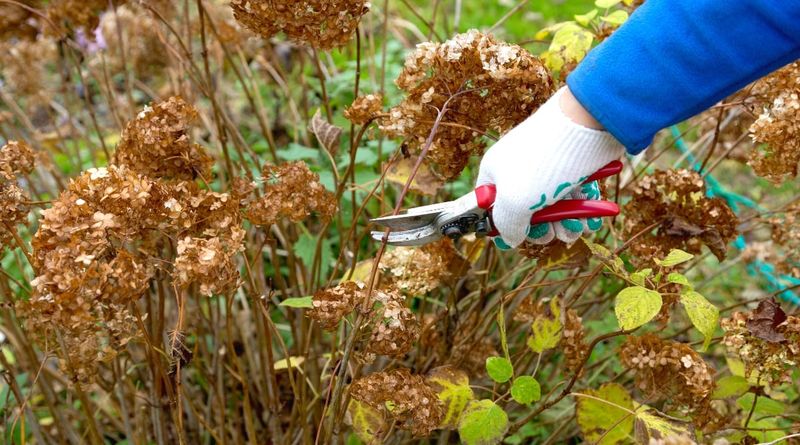
A stressed hydrangea does not need more challenges, and several well-meaning garden tasks can make summer decline worse rather than better. Heavy pruning during a heat event is one of the most common mistakes. Removing substantial foliage exposes stems that were previously shaded by leaves, reduces the plant’s ability to produce energy through photosynthesis, and can trigger a flush of soft new growth that is more vulnerable to subsequent heat or drought. Oregon State University Extension advises against heavy pruning while a hydrangea is under heat stress, recommending that major cuts wait until conditions improve and the hydrangea type is confirmed.
Fertilizer is not a rescue treatment. Scorched tissue does not respond to nutrients, and a nitrogen push during extreme heat or drought can stimulate tender growth at the worst possible time. University of Missouri Extension guidance on leaf scorch reinforces that fertilizing a stressed plant adds burden rather than relief. Routine fertilization, if the plant actually needs it, belongs in a cooler, more stable period based on a soil test rather than on the appearance of summer damage.
Overhead watering late in the day is another habit worth changing. Water sitting on leaves overnight creates the prolonged wetness that bacterial and fungal leaf spot diseases need to establish and spread. Penn State Extension identifies leaf wetness as a key factor in hydrangea disease development, so directing irrigation to the base and watering earlier in the day can reduce that risk. If spider mites or another specific pest is confirmed, cultural controls like a firm spray of water to dislodge mites come first, and any product should be applied only after accurate identification and according to the label.
Protect Healthy Growth During Recovery
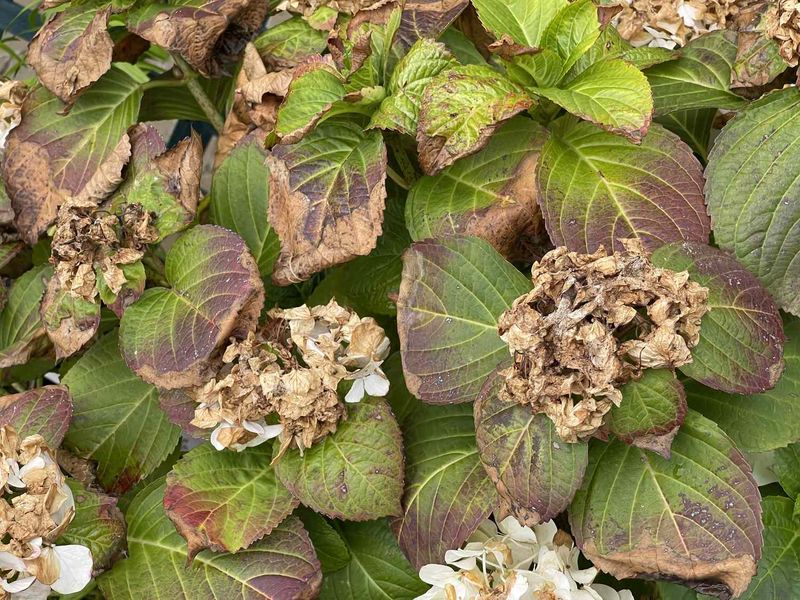
Brown leaves and papery flowers will not turn green or fresh again, and accepting that early saves a lot of wasted effort. The realistic goal after a heat event is to stop new injury from happening and give the healthy portions of the plant a chance to stabilize and eventually recover. That means maintaining appropriate moisture without pushing the soil into saturation, keeping organic mulch in place, and continuing temporary shade if the weather stays extreme.
Watch the plant over the following days and weeks. Persistent wilt after temperatures drop, symptoms spreading to previously healthy stems, or new browning appearing on tissue that looked fine after the heat event are all signs that something beyond temporary stress may be at work. University of Maryland Extension recommends revisiting soil condition, drainage, exposure, and pest or disease possibilities when symptoms do not stabilize.
Major pruning should wait until the heat has passed, the plant has had time to show which tissue is genuinely dead versus temporarily damaged, and you have confirmed the hydrangea type to avoid cutting off next year’s flower buds. University of Minnesota Extension guidance on pruning for best bloom is a useful reference before making any significant cuts. The same rule that opened this article still applies at the end: check the soil, the site, the plant type, and the symptom pattern before choosing a remedy, because a hydrangea that gets the right diagnosis has the best chance of coming back strong.