
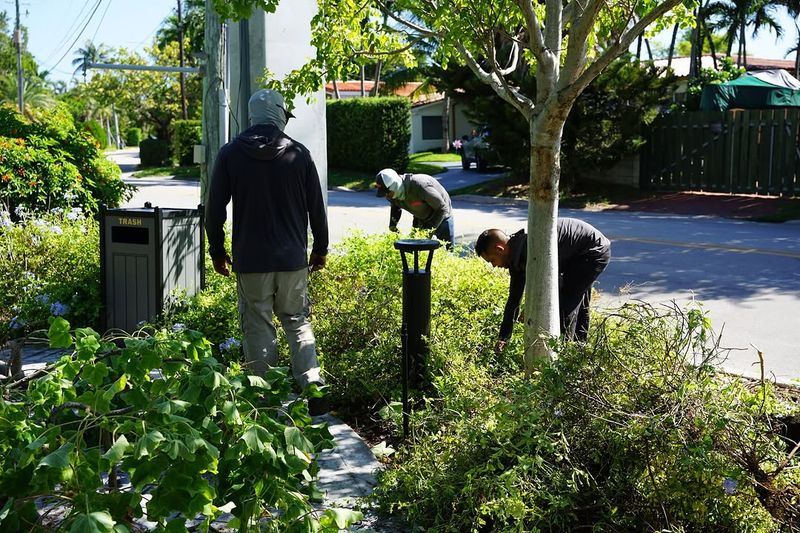
Across Florida, some homeowners are swapping out thirsty grass lawns for a low-growing native groundcover called frogfruit, and not every HOA is happy about it. Florida law may limit what an HOA can do when a landscape qualifies as Florida-friendly, but that protection is not automatic and it does not come with a permission slip. Knowing what the law actually says, and how to build a proposal that holds up to review, puts you in a much stronger position than simply claiming a native plant gives you the right to skip the approval process.
Frogfruit is the likely plant behind the dispute
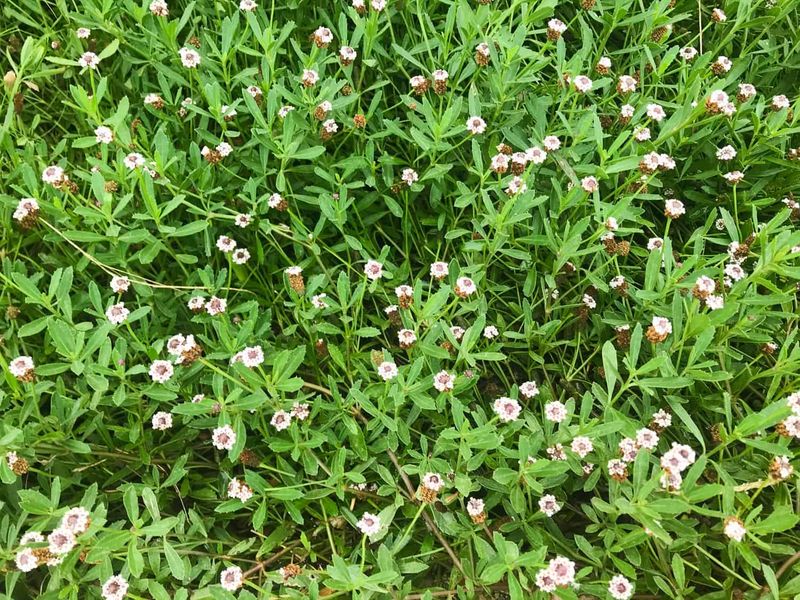
When Florida homeowners talk about replacing their St. Augustine grass with a native alternative, frogfruit (Phyla nodiflora) comes up more than almost any other option. UF/IFAS Extension identifies frogfruit as a mowable native groundcover suitable for use as an alternative lawn, which is a big part of why it shows up at the center of landscaping conversations with HOA boards. Sunshine mimosa (Mimosa strigillosa) is another plausible Florida-native candidate for this kind of swap, so the discussion is not limited to one species.
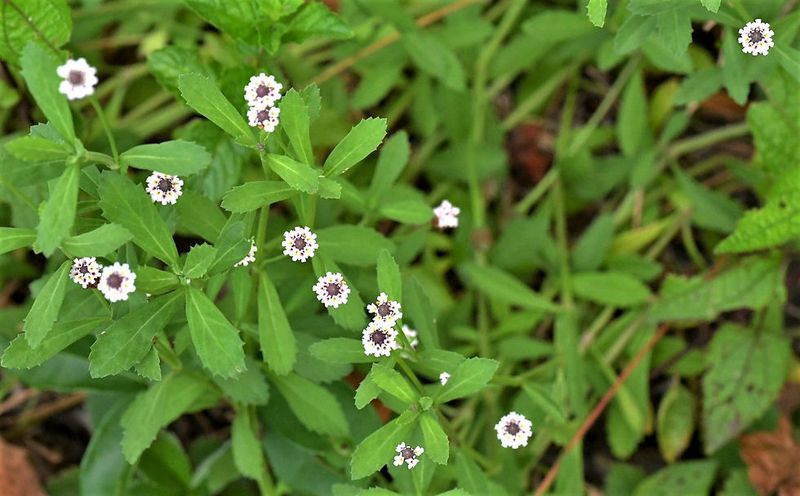
Frogfruit grows low to the ground, typically reaching about six inches tall, and spreads into a dense mat that can visually mimic a traditional lawn. It produces small white and lavender flowers that attract pollinators, and it is a documented larval host plant for the common buckeye, phaon crescent, and white peacock butterflies. That said, planting frogfruit alone does not create a complete pollinator habitat, so wildlife benefits should be understood in proportion.
The Florida Native Plant Society describes frogfruit as a long-lived perennial that adapts to sand, clay, and loam soils and handles full sun or part sun reasonably well. It tolerates drought and can handle some flooding, but it may go dormant in winter and will thin out under heavy foot traffic. A yard used regularly for sports or active play is probably not the best fit. Frogfruit supports a Florida-friendly landscaping argument most convincingly when the site conditions actually match what the plant can handle.
The statute addresses a landscaping category, not frogfruit by name
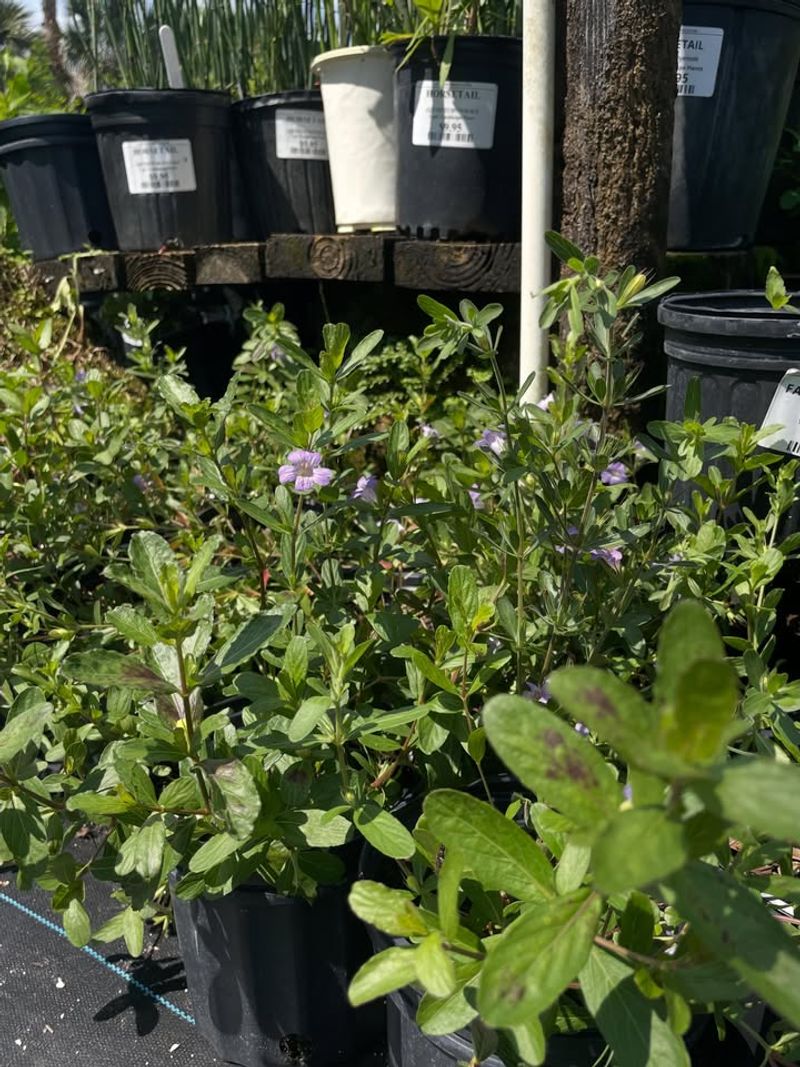
Florida Statute section 720.3075(4)(b) says that HOA governing documents may not prohibit, or be enforced to prohibit, Florida-friendly landscaping as defined in section 373.185. That is a meaningful protection, but it applies to a category of landscape design, not to a list of named plants. Section 720.3075 bars HOA documents from prohibiting Florida-friendly landscaping, but whether a particular yard qualifies as Florida-friendly depends on how the design is built and documented.
Section 373.185 defines Florida-friendly landscaping around a set of principles: water conservation, environmental protection, local adaptability, drought tolerance, correct plant placement, efficient irrigation, appropriate fertilization, stormwater reduction, and proper maintenance. A yard full of native plants that is poorly maintained, floods neighboring properties, or ignores local soil and drainage conditions does not automatically qualify. The statutory category is about how the landscape is designed and managed, not just what species it contains.
Frogfruit is a native plant and can be part of a Florida-friendly design, but its native status alone is not the legal argument. UF/IFAS guidance on the Florida-friendly landscaping legislation explains that “native” and “Florida-friendly” are related concepts but not interchangeable terms. A Florida-friendly landscape can include turfgrass, non-native plants, shrubs, and groundcovers, as long as the overall design meets the statutory principles. A homeowner who wants statutory protection needs to show that the proposed design fits that full set of criteria, not just that the plant has a native range in Florida.
Required HOA review does not disappear

There is an important difference between arguing that an HOA cannot issue a blanket ban on Florida-friendly landscaping and believing you can skip the approval process entirely. Those are two separate legal positions, and only the first one has clear statutory support. UF/IFAS states plainly that the Florida-friendly landscaping legislation did not eliminate HOA approval requirements when governing documents require prior landscape or architectural review.
If your HOA covenants require you to submit a landscape or architectural change request before altering your yard, that process still applies even if your proposed design would qualify as Florida-friendly. An HOA board can evaluate your proposal on plant selection, layout, visual appearance, drainage impact, maintenance plan, and compatibility with the neighborhood’s overall character. What the board cannot do, under the statute, is use that review process as a disguised blanket ban that effectively prohibits any Florida-friendly design from ever being approved.
A Florida Bar Journal analysis of the statute notes that HOA restrictions may remain enforceable when they are compatible with site-specific Florida-friendly principles rather than operating as a categorical prohibition. The practical takeaway is straightforward: review your governing documents, determine whether a landscape change requires prior approval, and submit an application if it does. Going ahead without permission, even with a genuinely Florida-friendly design, puts you in a weaker position if the board pushes back.
A site-specific application gives the proposal credibility
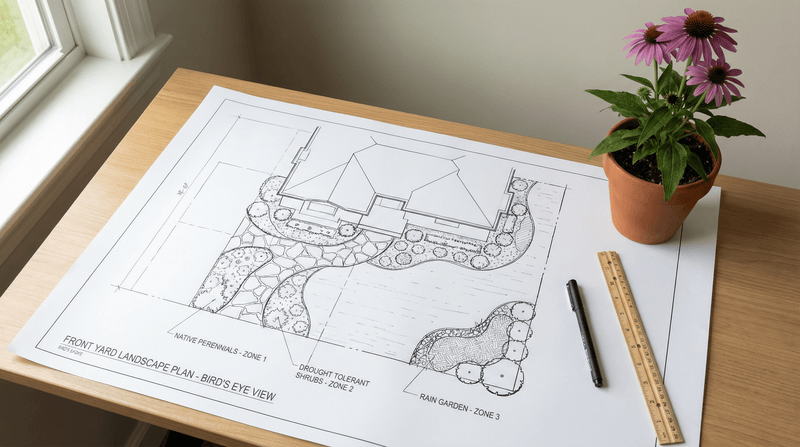
Walking into an HOA review with a strong application is not just good strategy, it is the most direct way to show that your design qualifies as Florida-friendly under the statute. Start by documenting your yard’s actual conditions: how many hours of direct sun each area receives, what the soil type and drainage pattern look like, where foot traffic is expected, and whether any utility easements or drainage structures limit planting areas. UF/IFAS guidance on the Florida-friendly landscaping legislation specifically emphasizes right plant, right place, local growing conditions, and proper maintenance as the pillars of a defensible design.
From there, build a plant list that matches those documented conditions. For frogfruit, that means confirming you have a low-traffic area with adequate sun and appropriate soil drainage. Include mature plant heights, spacing, and a clear explanation of how you will edge the planting to keep it contained and neat. Show where pedestrian paths or stepping stones will provide access without compressing the groundcover.
The UF/IFAS right plant, right place framework encourages matching plant selection to site conditions as a core principle, so tying your choices directly to your site documentation strengthens the case considerably.
A concise written summary should connect each design element to the relevant Florida-Friendly Landscaping nine principles, including water efficiency, stormwater management, and proper upkeep. Attach photographs of the existing yard, plant information sheets, and a scaled drawing. Include a maintenance schedule that addresses weeding during establishment, seasonal dormancy management, and how you will handle edging and overgrowth. Making “native” the sole justification leaves gaps; grounding every choice in site-specific evidence and recognized principles gives the board something concrete to approve.
Frogfruit has real horticultural limits
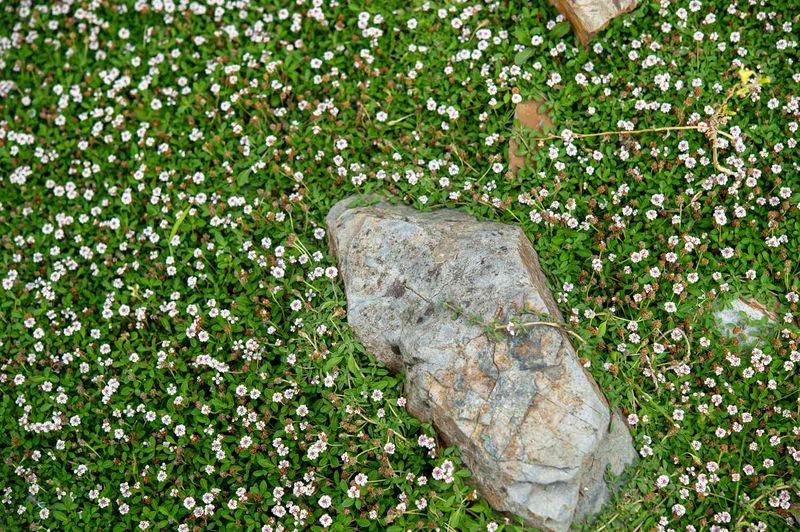
Frogfruit handles a surprising range of Florida conditions, but it is not a one-size-fits-all lawn replacement. The Florida Native Plant Society notes that frogfruit suits low-traffic turf-substitute use and adapts to sandy, clay, or loam soils in full sun or part sun. If your front yard sees occasional foot traffic from guests walking to the door, frogfruit can manage that. If you have kids or dogs using the space heavily every day, it will thin and break down over time.
Sandy Florida soil is one of the most common planting challenges in the state, and it matters for establishment even with drought-tolerant species. Sandy soil drains quickly and does not hold moisture as long as heavier soils, which means a newly planted frogfruit patch will need consistent irrigation until it roots in and spreads. UF/IFAS guidance on calibrating irrigation systems recommends adjusting watering schedules to site conditions rather than simply eliminating irrigation once a drought-tolerant plant goes in. Calibrate to your specific soil and sun exposure, then taper as the plant establishes.
UF/IFAS Extension identifies winter dormancy as a factor to plan for with frogfruit, particularly in northern Florida where temperatures drop further. During dormancy, the mat can look sparse or patchy, which matters if your HOA has appearance standards. Edging requires attention to keep the plant from spreading into sidewalks or drainage structures, and weed management is most demanding during establishment before the mat fills in. Coastal homeowners should also know that frogfruit tolerates ordinary moisture and some flooding, but it is not tolerant of saltwater or brackish-water inundation, so low-lying coastal sites with tidal influence require careful evaluation before committing to this plant.
Legal uncertainty makes documentation and maintenance essential

Florida Statute section 720.3075 provides a real argument for homeowners, but it does not come with a guarantee. A Florida Bar Journal analysis of the Florida-friendly landscaping statute identifies substantial legal ambiguity: the statute does not specifically name native plants or list protected species, and there is limited case law defining exactly which designs and plant selections qualify as Florida-friendly landscaping. That means the outcome of a disputed application can depend on the specific design, the covenant language, the HOA’s prior approval history, and the facts of the individual case.
A 2025 Florida appellate decision illustrates what can go wrong when a landscape change goes sideways. In Mooney v. Color Le Palais of Boynton Beach Homeowners Association, the court addressed a dispute involving a mulch-heavy front yard where the HOA alleged covenant violations, mulch displacement onto neighboring property, blocked storm drains, flooding, and failure to obtain prior approval. The case does not establish that native or Florida-friendly landscapes can be rejected freely, but it does show that HOAs can seek injunctive relief under Chapter 720 when they allege specific violations of governing documents, including drainage problems and skipped approval steps.
Beyond HOA rules, additional layers of regulation may apply to your property. Section 373.185 expressly allows state agencies and water-management districts to require Florida-friendly practices as permit conditions and requires attention to prohibited invasive species in model ordinances. Local ordinances, drainage requirements, utility easement restrictions, and permit conditions from your water-management district may all affect what you can plant and where. If your HOA denies an application or issues an enforcement notice, and you believe the denial conflicts with the statute, that situation calls for advice from a Florida attorney who handles HOA and real property matters before you take further action.
Build the case around a Florida-friendly design
The strongest position a Florida homeowner can take is not “this plant is native, so the HOA cannot stop me.” The strongest position is a well-documented, site-appropriate design that clearly meets the statutory definition of Florida-friendly landscaping and has been submitted through whatever review process your governing documents require. UF/IFAS guidance on the Florida-friendly landscaping legislation consistently points toward documented compliance over confrontation, and that framing holds up better if the application is later disputed.
Review your covenants before you plant anything. Submit the required application with site documentation, a plant list, a maintenance plan, and a written explanation of how the design handles soil conditions, heat, rain, drainage, foot traffic, and visual appearance. Keep copies of everything you submit and every response you receive. If the board approves the design with conditions, document those too and follow them.
Section 720.3075 may limit an HOA’s ability to issue a blanket prohibition against qualifying Florida-friendly landscapes, but it does not guarantee approval of any particular design, and it does not exempt a homeowner from reasonable, site-compatible review. Frogfruit can be a genuine and practical part of a Florida-friendly landscape; the plant that earns approval is the one backed by a thorough plan, not just a good species name.