
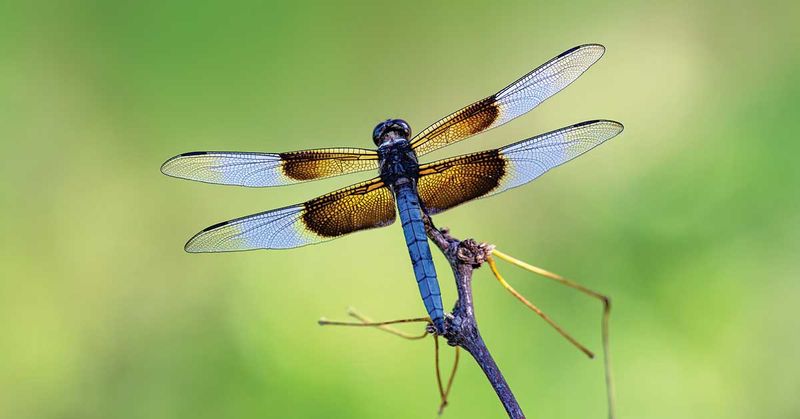
Mosquitoes can turn a warm Texas evening on the porch into a slapping, itching mess, and store-bought sprays only go so far. What if your own yard could fight back for you? Dragonflies are hungry mosquito hunters, and the right native Texas plants pull them in while giving you a garden that laughs at triple-digit heat and water restrictions. Here are eight tough natives that invite these bug-eating helpers to move in and stay.
1. Pickerelweed (Pontederia cordata)
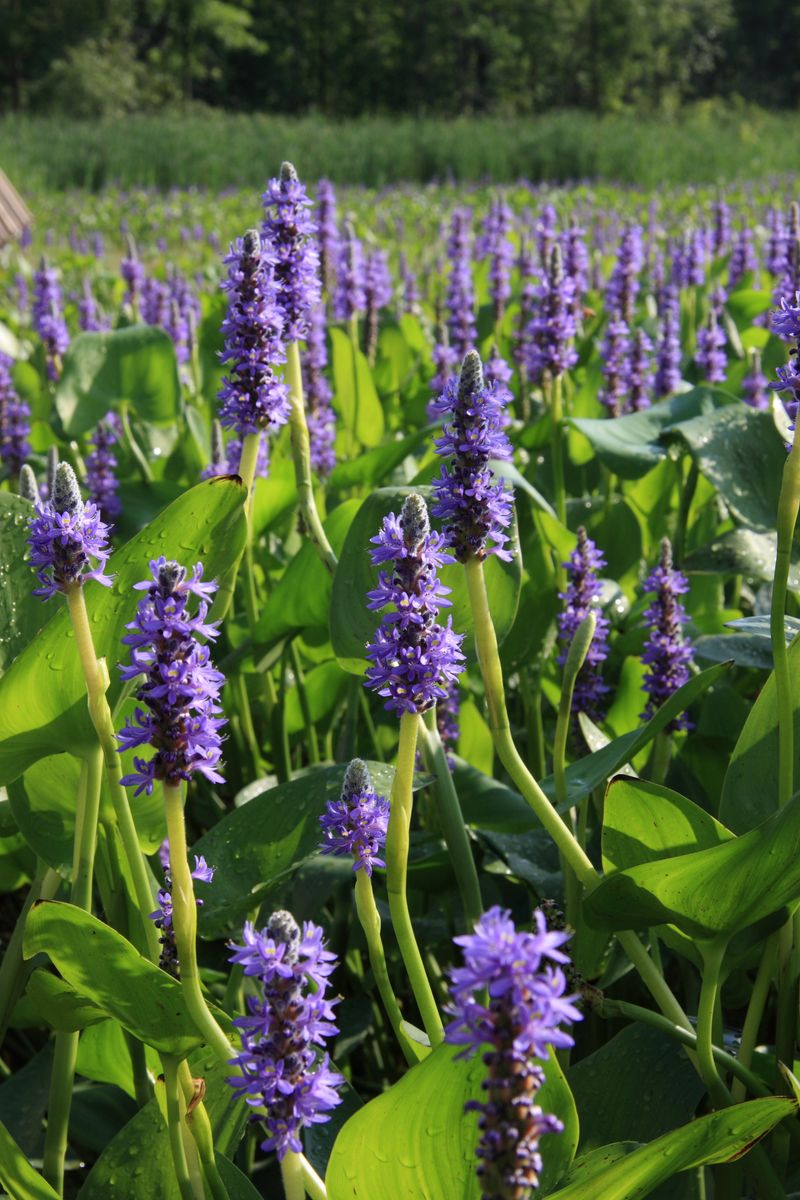
Standing water is a mosquito nursery, but pickerelweed flips that script. Rooted in the shallow edge of a pond or rain garden, its tall purple flower spikes give dragonfly nymphs a safe underwater world and adult dragonflies a perch to hunt from.
Dragonflies spend most of their lives underwater as nymphs, gobbling up mosquito larvae before they ever grow wings. Pickerelweed shades the water and feeds the food chain that keeps those nymphs fed and thriving right where you need them.
Fun fact: this plant handles the muggy Gulf Coast climate with ease and blooms from spring straight through the hot months. Give it a boggy spot or the margin of a small water feature, and it may help draw in the flying predators that patrol your yard at dusk.
2. Gulf Coast Muhly (Muhlenbergia capillaris)
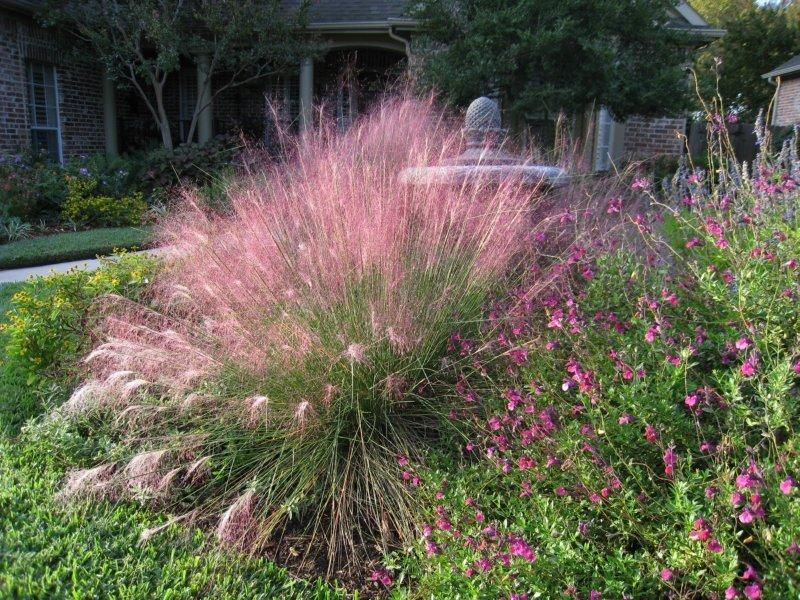
Come fall, this grass explodes into a pink-purple cloud that looks almost fake, and gardeners across Texas plant it just for that show. Beyond the beauty, though, the airy seed heads and clumping form make a landing pad dragonflies love.
Adult dragonflies need open perches near their hunting grounds, and the stiff stems of Gulf Coast muhly rise just high enough to let them survey the yard and launch surprise attacks on passing mosquitoes.
Drought is no problem here. Once established, muhly shrugs off water restrictions and triple-digit summers, asking for almost nothing while it anchors sandy or clay soils. Plant a few clumps near a damp corner or water feature, and you build the perch-and-hunt setup dragonflies rely on.
3. Blue Flag Iris (Iris virginica)
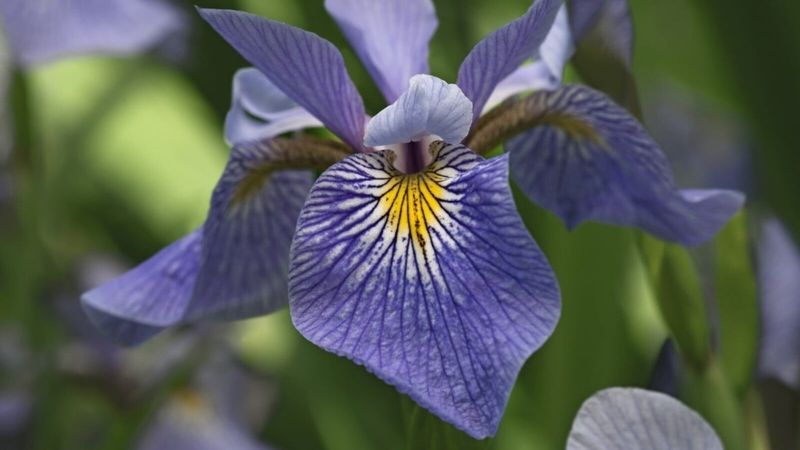
Elegant and swampy at the same time, blue flag iris thrives with its feet wet at the edge of ponds and ditches. That love of soggy ground is exactly why it earns a spot on this list.
Dragonflies lay their eggs in and around water, and the sword-like leaves of blue flag give newly emerged adults something sturdy to climb as they leave the water and dry their fresh wings. Without that vertical structure, young dragonflies struggle.
The deep violet-blue blooms show up in late spring, a jolt of color for boggy spots where few other pretty plants survive. Native to wetlands across East and Central Texas, it can reduce the number of mosquitoes near your water garden simply by hosting the predators that eat them. Just remember it wants consistent moisture, so pair it with pickerelweed for a matching wet-edge team.
4. Turk’s Cap (Malvaviscus arboreus)
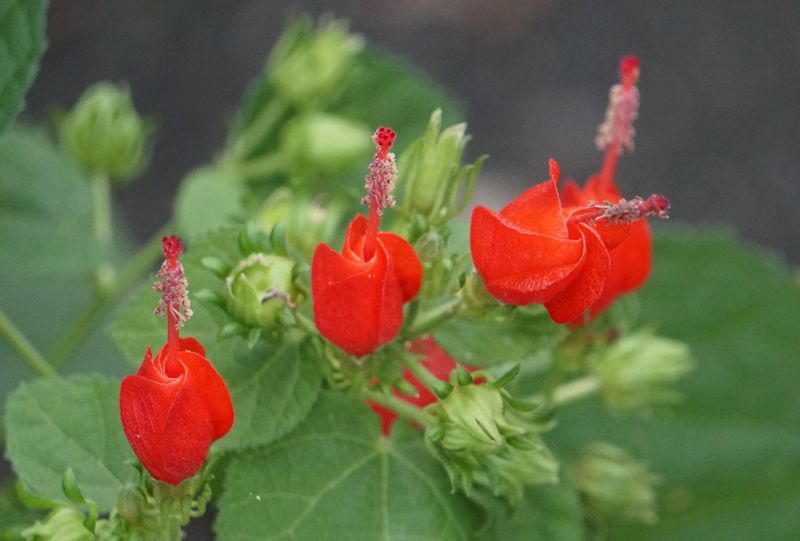
Ask any Texas gardener for a plant that grows in dry shade and takes a beating, and Turk’s cap usually comes up first. Its little swirled red flowers never fully open, looking like tiny turbans tucked among big soft leaves.
So how does it help with mosquitoes? The dense, shrubby growth creates a sheltered, humid pocket where flying insects gather, and that steady supply of prey pulls dragonflies in to feast. More bugs for them means fewer biters for you.
Hummingbirds and butterflies crowd the flowers too, turning one shrub into a busy wildlife hub. Turk’s cap laughs off drought once rooted and comes back reliably after a hard freeze, making it one of the most forgiving natives you can plant along a fence line or under a live oak.
5. Softstem Bulrush (Schoenoplectus tabernaemontani)
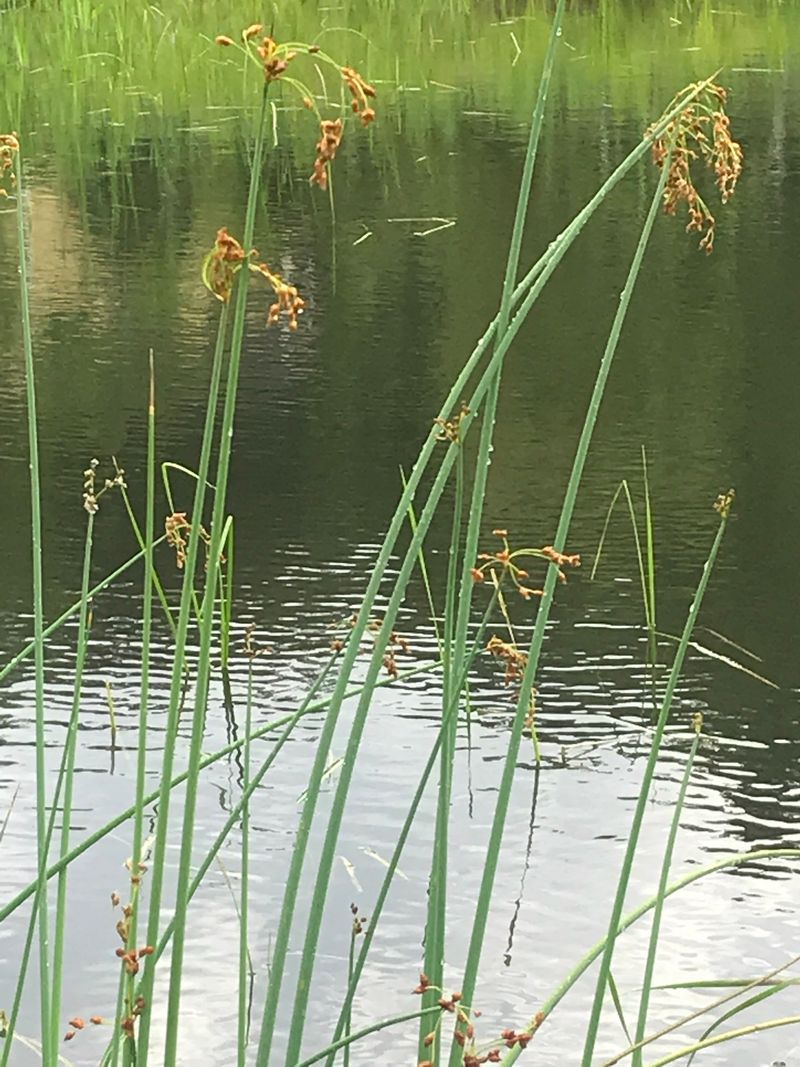
Picture the classic reedy plant swaying at a pond’s edge, and you are picturing softstem bulrush. Its slender green stalks shoot straight up out of shallow water, forming the vertical forest that emerging dragonflies climb to reach the open air.
Bulrush does double duty. Below the surface, its roots and stems shelter dragonfly nymphs as they hunt mosquito larvae; above the water, the tall stems become launch towers for the adults.
Native to marshes throughout Texas, it also filters runoff and steadies muddy banks, which matters on the storm-battered Gulf Coast where soil washes away fast. Give it a permanently wet spot and it fills in quickly, building the kind of habitat that keeps mosquito-eaters coming back year after year.
6. Frostweed (Verbesina virginica)
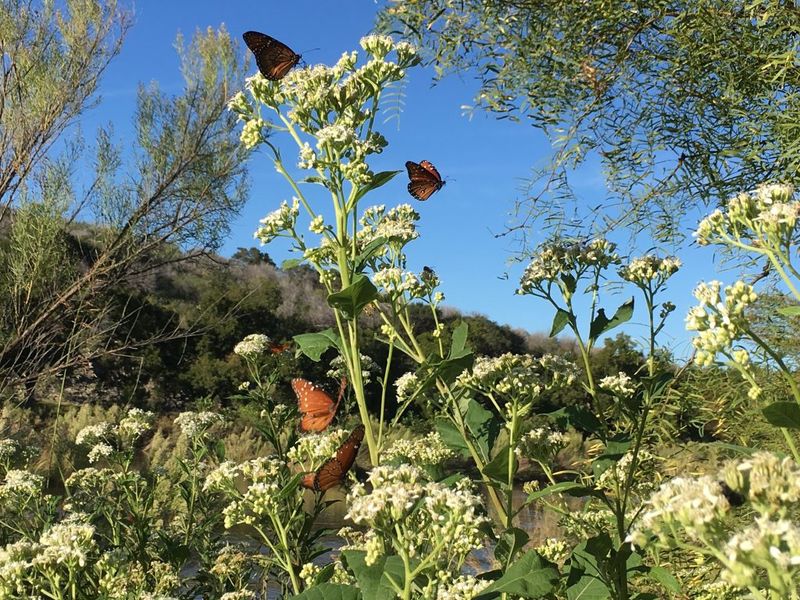
Late in the season when much of the garden fades, frostweed throws out flat white flower clusters that swarm with insects. That buzzing crowd is basically a dragonfly buffet, and the predators show up to cash in.
Growing tall in part shade, frostweed also offers plenty of sturdy stems for dragonflies to rest between hunting runs. The more perches and prey you provide, the longer they linger in your yard picking off mosquitoes.
Here is the quirky part: on the first hard freeze, frostweed splits its stems and pushes out curling ribbons of ice, a natural sculpture that gives the plant its name. It handles Central and East Texas conditions with almost no fuss, tolerating dry shade where other bloomers give up.
7. Lizard’s Tail (Saururus cernuus)
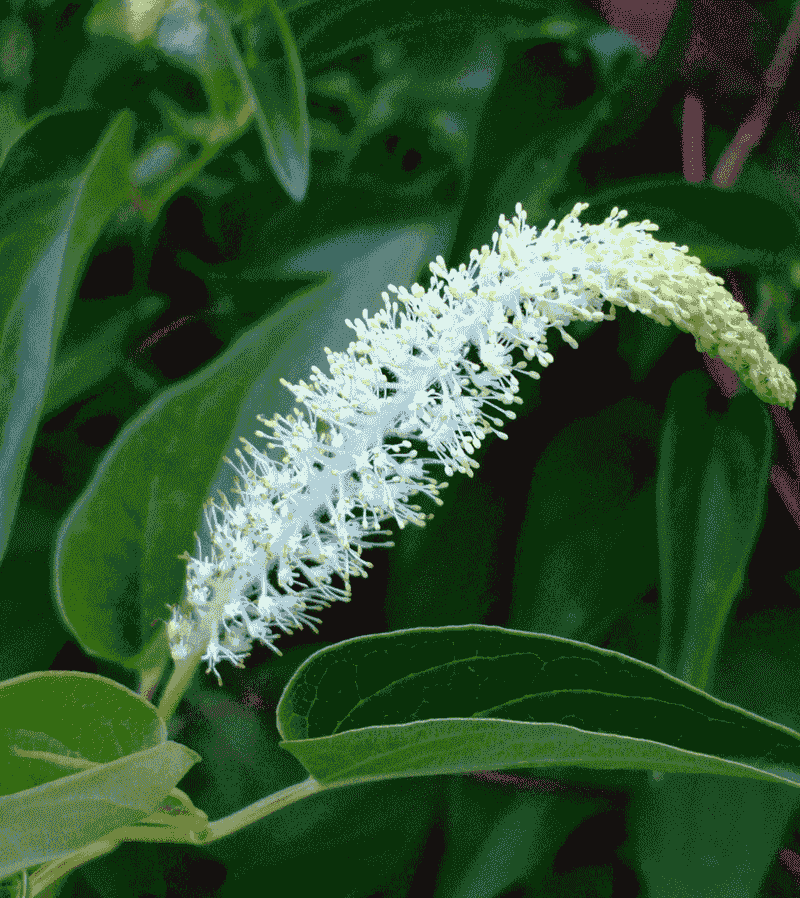
Named for its drooping, tail-like flower spikes, lizard’s tail spreads into a lush green carpet at the water’s edge. It thrives in the muddy, shaded shallows that many gardeners write off as useless.
Dragonfly nymphs need cover to ambush their prey, and the tangled underwater roots and stems of lizard’s tail create exactly the maze they hunt in. Every mosquito larva eaten down there is one that never bites you up top.
The fragrant white spikes nod above the leaves through summer, adding a soft, woodland feel to a boggy corner. Native to wet areas of East Texas, it can help fill damp shade where turf and typical bedding plants simply rot. Pair it with taller reeds so nymphs have a climbing route out of the water when it is time to take flight.
8. Texas Frogfruit (Phyla nodiflora)
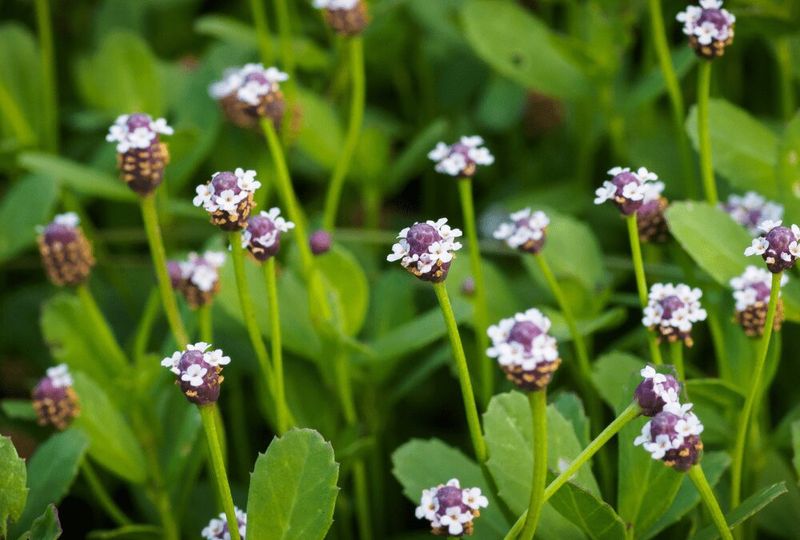
Low, tough, and covered in tiny button flowers, Texas frogfruit hugs the ground like a living blanket. Gardeners use it as a lawn alternative that never needs mowing and barely needs water.
Those small blooms pull in a steady stream of little flying insects, and where the small bugs gather, dragonflies follow to hunt. Planting a spreading mat of frogfruit near a damp area keeps a reliable food source humming right where the mosquito-eaters patrol.
It shrugs off foot traffic, salt, poor soil, and the brutal Texas sun, all while staying green when thirsty lawns turn brown. Butterflies adore it too, so a single patch quietly feeds pollinators and predators at once, doing far more work than its humble size suggests.