
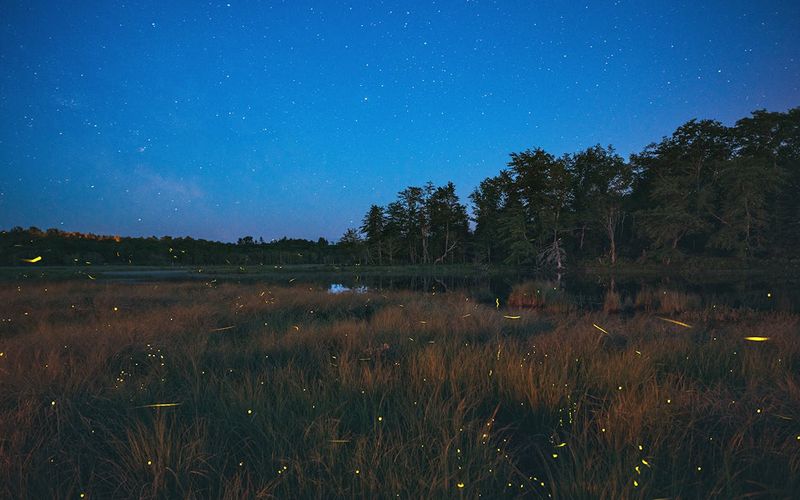
Summer nights in Texas carry a certain kind of magic when the yard starts to flicker with tiny, blinking lights. Lightning bugs – technically beetles in the family Lampyridae, not flies at all – have a way of making a humid June evening feel like something worth stepping outside for. But plenty of Texas homeowners have noticed fewer of those flashes over the years, and the reasons are more complicated than a simple disappearance. Understanding what these beetles actually need, and what yard conditions quietly work against them, is the first step toward making your property a place where sightings become more likely.
Fireflies respond to habitat conditions, not a single Texas yard formula
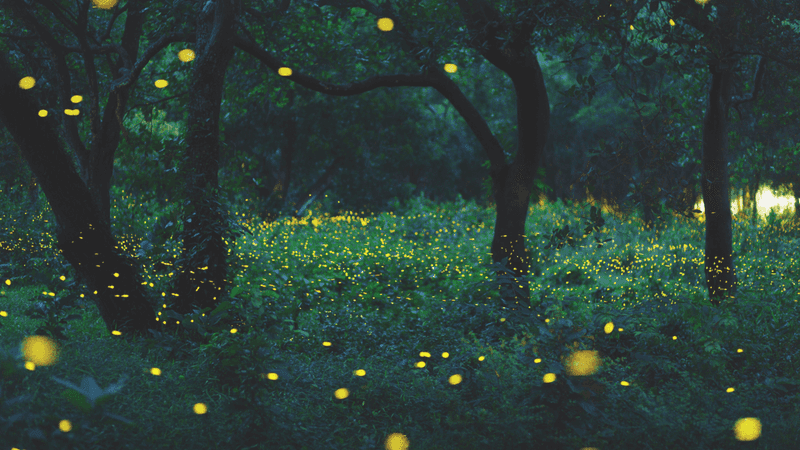
Across Texas, firefly sightings shift from yard to yard and season to season in ways that can feel almost random. Rainfall totals, soil moisture, the presence of nearby wooded edges or creek corridors, nighttime light levels, and the specific species present in a given area all shape whether and when those familiar flashes appear. A yard that seemed alive with lightning bugs three summers ago may go quiet for a year or two, then light up again, without any obvious change in management.
Texas is home to multiple firefly species, each with its own habitat preferences. Texas A&M AgriLife’s field guide to Texas insects notes that fireflies occupy a range of settings across the state, from riparian corridors and creek margins to open areas near wooded edges. Some species are closely tied to damp, undisturbed soil and would not colonize a typical suburban lawn regardless of how carefully it is managed. Others turn up in more suburban settings when conditions are favorable.
The Texas Fireflies field guide reinforces this regional and species-level variation, making it clear that no single yard prescription applies statewide.
Conservation researchers have documented real concern about firefly populations across North America. The Xerces Society’s state of fireflies report found that at least 18 of 132 assessed North American species face some level of threat, while more than half could not be evaluated because of insufficient data. That picture supports genuine concern without supporting a blanket claim that every Texas firefly population is disappearing. What it does suggest is that local conditions matter, and that homeowners who protect the right habitat features may improve their odds of sightings over time.
Think of the guidance that follows as a set of conditions worth protecting, not a guaranteed recipe for bringing fireflies back every summer night.
The summer display depends on a long, hidden life
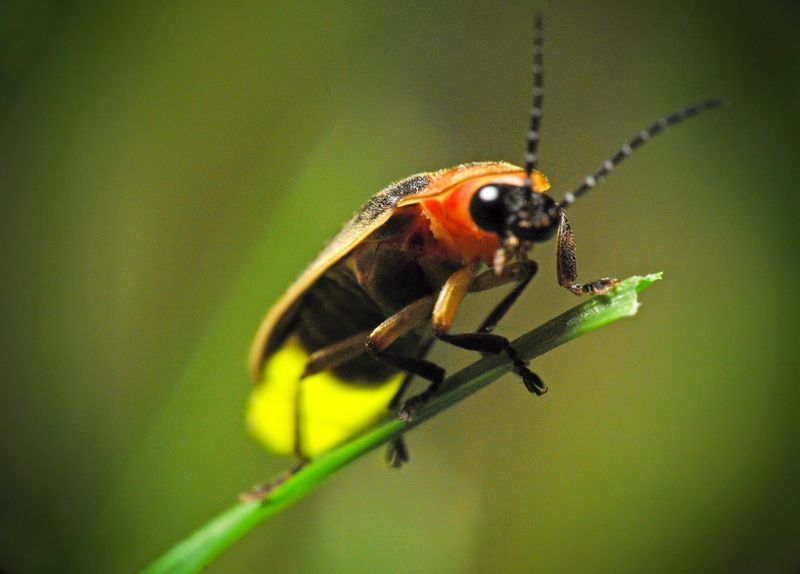
The blinking adults that draw attention on warm June and July evenings represent only a fraction of a firefly’s life. Most of the beetle’s existence plays out underground or in leaf litter, far from view, during a larval stage that can last roughly two years for many species. Texas A&M AgriLife reports that firefly larvae feed on small invertebrates including earthworms, slugs, and snails, using their bioluminescence even at that stage. The adult flash display that signals courtship lasts only a few weeks by comparison.
That long hidden stage is why everyday yard decisions matter so much more than most people realize. A single season of heavy pesticide application, aggressive soil disturbance, or repeated disruption of leaf litter can affect larvae that won’t become visible adults for another year or longer. Conversely, a yard that quietly protects moist, sheltered ground cover for two or three seasons in a row may gradually build conditions that support more larvae reaching adulthood.
Year-to-year variation in adult sightings often reflects conditions that existed long before the adults emerged. A dry spring two summers ago, a stretch of unusually warm winters, or a change in how a shaded corner of the yard was managed can all affect the size of the adult population that appears this July. Recognizing this lag helps explain why a yard can seem to gain or lose fireflies without any obvious recent change, and why patience is a genuine part of firefly-friendly yard management. The practical takeaway is straightforward: protect the ground-level habitat now, and the results may show up in a future season’s display.
Give one part of the yard cover, leaves, and less disturbance
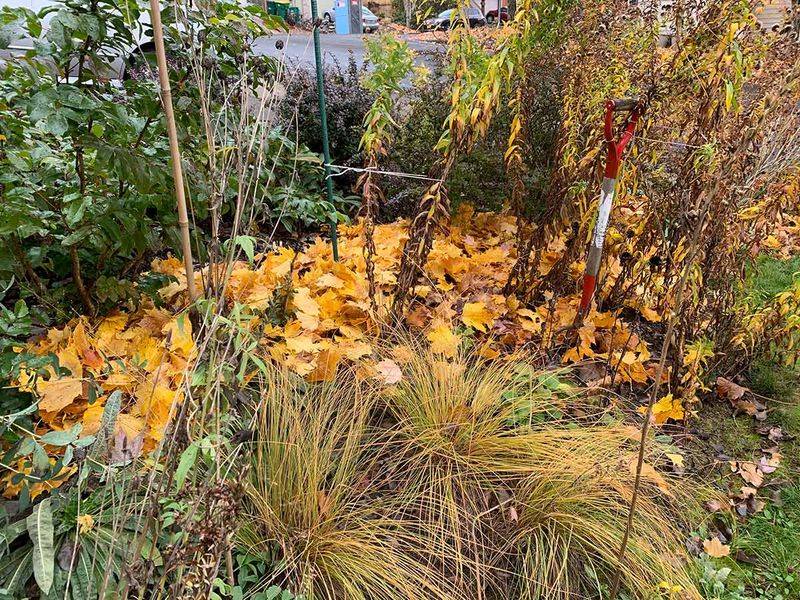
Turning the life-cycle picture into a practical yard plan starts with one simple decision: pick a section of the yard and leave it alone. A shaded corner beneath a live oak, a bed edge along the fence line, or the ground beneath a cluster of shrubs can all serve as low-disturbance zones where leaf litter accumulates, soil stays cooler, and larvae have shelter and prey. University of Illinois Extension recommends leaving some leaves and plant debris in designated areas, particularly beneath trees and shrubs, where layered cover can shelter eggs, overwintering insects, and the small invertebrates that larvae feed on.
The key word is designated. The Xerces Society’s protect-fireflies-at-home fact sheet is specific about this: leaf litter benefits concentrate in areas where it can accumulate undisturbed, not across every surface of the property. Gutters, drainage paths, rooftops, walkways, and any area with wildfire risk still need regular clearing. In Texas, where drought conditions and fire risk are genuine concerns across much of the state, a blanket “never rake anything” approach is neither safe nor practical.
The goal is a purposeful patch of undisturbed habitat, not a neglected yard.
Mowing habits feed into this same thinking. Xerces Society guidance on helping fireflies supports reducing mowing frequency and retaining taller vegetation in selected areas rather than treating the entire property as uniformly short turf. A maintained lawn with one taller, less-disturbed edge or corner serves firefly habitat far better than an evenly clipped quarter-acre. There is no Texas-specific research establishing a precise mowing height as a restoration threshold, so the practical approach is to mow what needs mowing for safety and access, and protect a defined area from repeated disturbance.
Even a strip along a shaded fence line can make a meaningful difference if it stays undisturbed through multiple seasons.
Moisture helps, but standing water creates a different problem
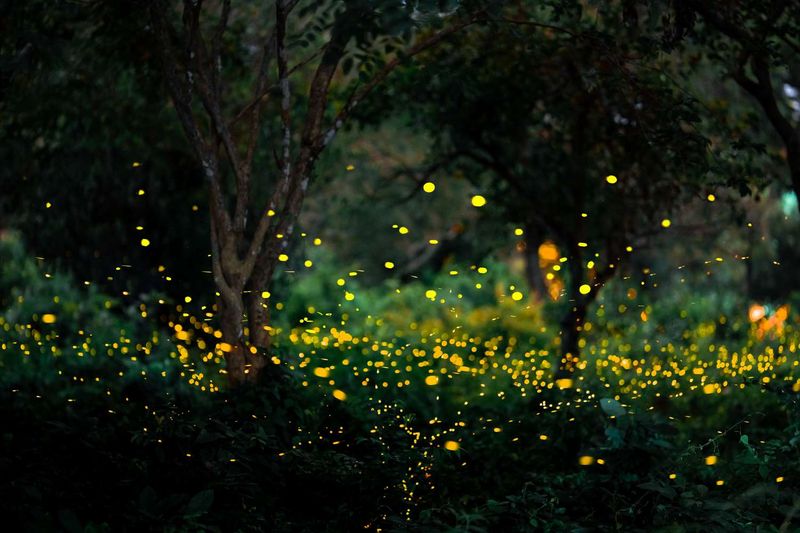
Soil moisture is one of the most consistent factors associated with firefly habitat. Larvae need damp conditions to survive, and many Texas firefly species are concentrated near creek margins, stream edges, wetlands, or areas with reliable soil moisture. Xerces Society’s firefly conservation page identifies loss of wet habitat as a significant pressure on firefly populations, and in Texas that pressure is amplified by the state’s sharp regional differences in rainfall and by increasingly frequent drought cycles.
Protecting moisture in a Texas yard does not require a pond or a permanently soggy corner. Shade from trees reduces soil temperature and slows evaporation. A layer of organic mulch beneath shrubs and along bed edges holds moisture between rain events. Native vegetation with deep root systems improves water infiltration and keeps soil from baking hard.
Where drainage patterns allow, a simple rain garden, planted swale, or maintained water feature can support both moisture retention and habitat value. A broad assessment of firefly extinction risk reinforces that habitat loss and degradation, including loss of moist ground cover, are among the primary threats facing firefly populations across North America.
The line between useful moisture and a mosquito problem comes down to water movement and maintenance. Buckets, saucers under potted plants, tires, clogged gutters, and any container holding still water for more than a few days can breed mosquitoes regardless of their intended purpose. CDC guidance on mosquito control at home is clear that eliminating standing water in small containers is one of the most effective steps a homeowner can take. Fireflies are not a substitute for that work; their larvae eat some soil invertebrates, but adult fireflies of some species feed little or not at all, and their presence will not reliably suppress mosquito populations.
Keep water features designed, maintained, and consistent with local mosquito-control recommendations.
Darkness is part of the habitat after sunset
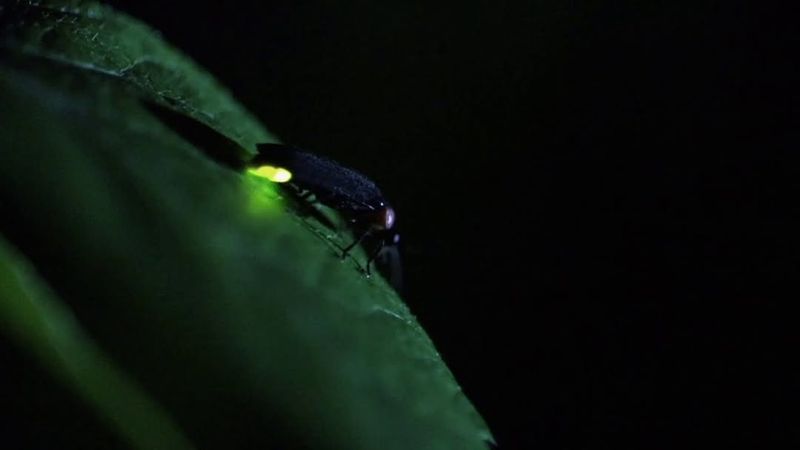
Firefly courtship is a conversation carried out in light, which means the ambient brightness of a yard after sunset matters in ways that most homeowners have never considered. Male fireflies produce species-specific flash patterns; females answer from perches in vegetation. When artificial light floods that space, it can make those signals harder to detect, and some research suggests it reduces mating success under certain conditions. A study by Owens and Lewis on artificial light and firefly mate success found that female fireflies exposed to artificial light showed reduced flash responses to male signals, pointing to a real interference effect, though the magnitude varies by species and light conditions.
Not every species responds identically to every light source. Experimental work by Firebaugh and Haynes on light-pollution impacts on nocturnal insects found no measurable mating effect for two crepuscular species under certain field conditions, illustrating that effects are context-dependent. A review of behavioral responses of bioluminescent fireflies to artificial light at night concluded that the strongest protective guidance centers on reducing unnecessary light, lowering intensity, limiting duration, and shielding fixtures rather than relying on any single bulb color as a safe substitute.
Practical changes do not require going completely dark. Switching off decorative string lights, flood lights, and landscape uplighting during the peak evening hours when fireflies are active is a meaningful step. Security lights that stay on all night can be fitted with motion sensors or timers so they illuminate only when needed. Fixtures aimed downward and shielded on the sides reduce sky glow and lateral spill into vegetation.
If you replace bulbs, longer-wavelength options produce less short-wave blue light, which some research associates with stronger disruption, but darkness and shielding matter more than bulb color alone. Protecting even one corner of the yard from direct light after sunset gives any fireflies present a better chance of finding each other.
Protect larvae and their prey with a lighter pest-control approach
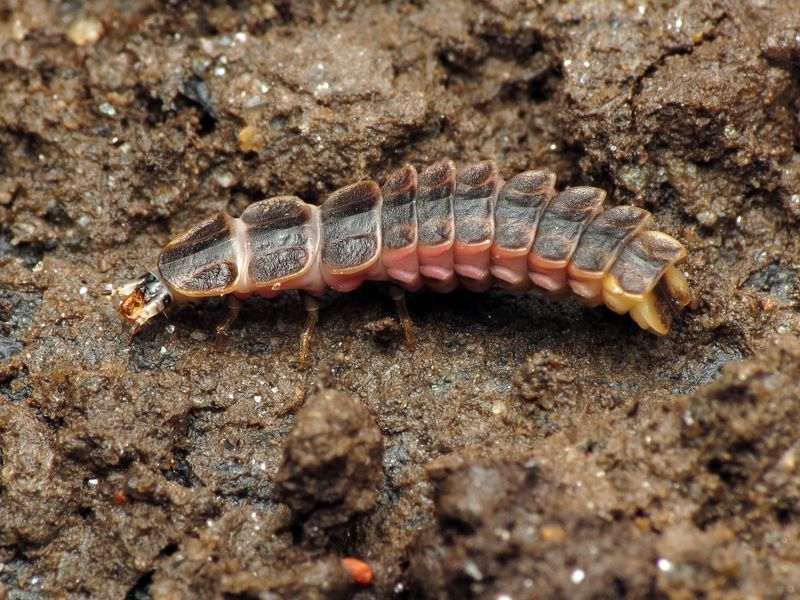
Broad-spectrum insecticides applied across a lawn or garden do not distinguish between target pests and firefly larvae moving through the soil beneath. Routine broadcast treatments, whether for grubs, chinch bugs, or mosquitoes, can expose larvae directly and also reduce the populations of earthworms, slugs, and snails that larvae depend on for food. The Xerces Society’s fact sheet on protecting fireflies from pesticides identifies insecticide use as one of the clearest pressures on firefly populations and recommends minimizing broadcast treatments across areas likely to support larvae.
Research has started to clarify how specific products affect fireflies. A peer-reviewed study on clothianidin toxicity to common Eastern North American fireflies found that the neonicotinoid caused mortality and sublethal behavioral effects in larvae of two firefly species at concentrations present in some treated soils. The evidence for other pesticide classes and other Texas species remains incomplete, so the practical guidance is to reduce unnecessary exposure rather than to claim that every product is equally harmful or that eliminating all pesticides will guarantee firefly returns.
Integrated pest management offers a workable middle ground for Texas homeowners who still need to address real pest problems. The approach starts with identifying what is actually causing damage before reaching for a product. Tolerating minor cosmetic damage where the plant is otherwise healthy, improving plant placement and soil conditions to reduce stress, removing affected material by hand, and choosing the least disruptive legally labeled treatment when intervention is genuinely needed are all steps that protect both the yard and the wider soil community. Texas A&M AgriLife Extension’s lawn and ornamental pest management guidance provides a Texas-specific framework for this kind of decision-making.
On fertilizers, the case is narrower: some synthetic products may affect soil biology, but the strongest reason to reconsider routine treatments is the insecticide concern, not a blanket claim that every fertilizer product harms fireflies.
Match the habitat to your Texas region
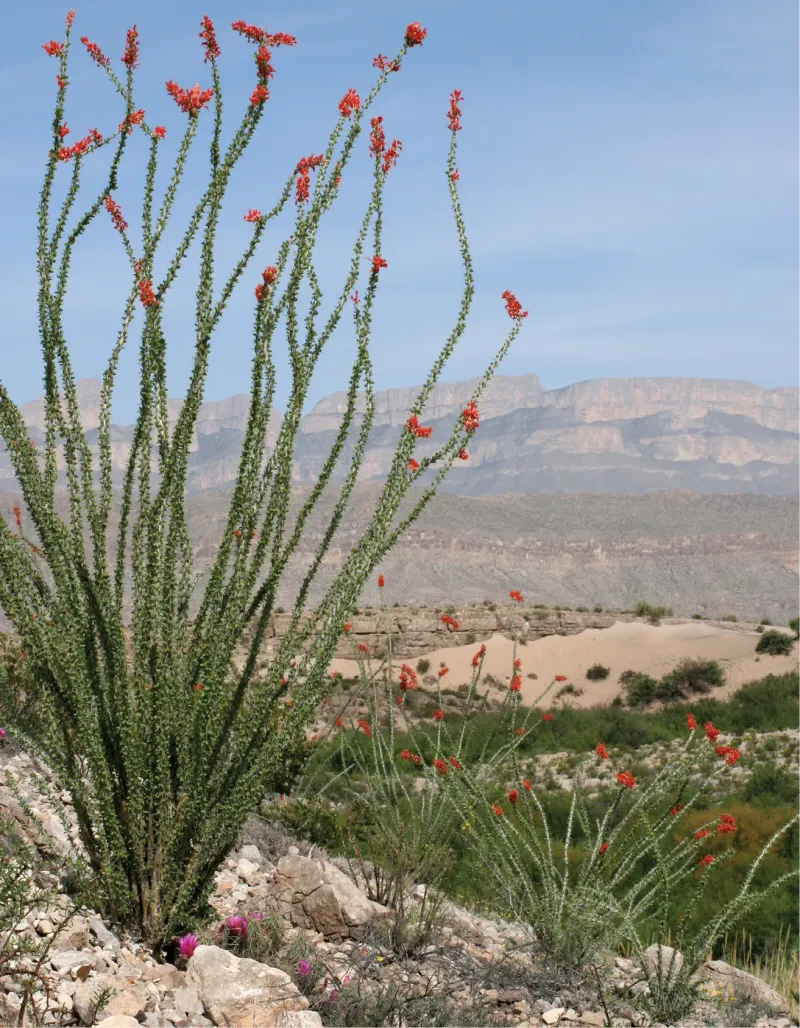
A yard near a creek bottom in the Pineywoods of East Texas operates in an entirely different ecological context than a limestone Hill Country property, a Gulf Coast lot with clay soil and high humidity, or a drier property on the edge of the Edwards Plateau. Rainfall totals, soil type, existing vegetation, and proximity to riparian corridors all shape which firefly species are even possible in a given location. The Texas Fireflies field guide documents this regional and species-level variation clearly, showing that some species are tightly associated with stream edges and wooded bottomlands while others appear in more open settings.
Choosing regionally appropriate native vegetation is one of the most durable ways to build habitat structure that fits local conditions. Native plants adapted to a specific Texas region typically require less supplemental water once established, provide layered cover at ground level and mid-canopy, support the insects and other invertebrates that make up firefly larval prey, and create the kind of shaded, sheltered microhabitats that hold moisture longer during summer heat. The Native Plant Society of Texas offers regionally organized plant information that can help homeowners identify species suited to their specific soils and rainfall. No particular native plant has been established as a universal firefly attractant, so the goal is layered habitat that fits the existing site rather than importing a plant list designed for a different part of the state.
Proximity to source populations also matters in ways that yard management alone cannot fully address. A property adjacent to a functioning riparian corridor, a wooded park, or a creek with established firefly habitat has a meaningfully different starting point than an isolated suburban lot surrounded by heavily treated turf. Texas A&M AgriLife notes that fireflies are associated with specific habitat types rather than being uniformly distributed across the landscape. Building habitat that connects to or extends existing suitable conditions nearby is more likely to support sightings than trying to create firefly habitat in isolation on a property with no nearby source population.
Make the yard more welcoming, then watch what the season brings
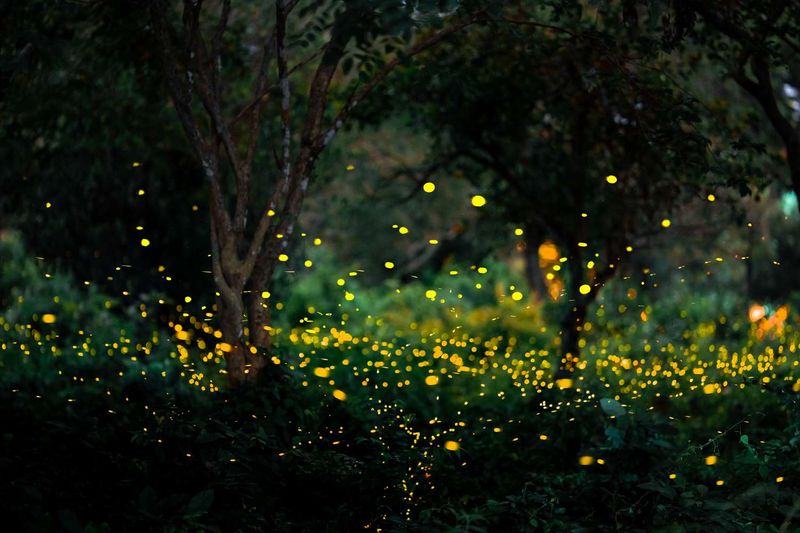
None of the steps described here carry a guarantee. Firefly sightings depend on nearby source populations, regional rainfall, seasonal timing, soil conditions built up over multiple years, and factors that no single homeowner controls. What yard management can do is remove some of the obstacles and protect the conditions that give larvae a better chance of surviving to adulthood. The Xerces Society’s guidance on helping fireflies frames it this way: improve habitat suitability and reduce known pressures, then let the biology unfold on its own timeline.
A practical starting point requires no major renovation. Protect one low-disturbance corner with accumulated leaf litter. Mulch a shaded bed edge and leave it undisturbed through the season. Turn off outdoor lighting across vegetation during summer evenings.
Skip the broadcast lawn treatment this year and address any real pest problems individually. These are small, stackable changes that build habitat value over time without creating new problems like mosquito breeding sites or fire hazards.
Judge progress by the overall health of the yard’s ground-level ecosystem and by patient, year-to-year observation rather than by a single summer’s count. Texas A&M AgriLife reminds us that most firefly species spend the majority of their lives hidden in soil and litter, so a quiet yard may be more active than it appears. Rainfall, drought, and seasonal timing will shift the display from year to year regardless of what you do, and that variability is part of what makes a summer evening with fireflies feel like something worth noticing.