
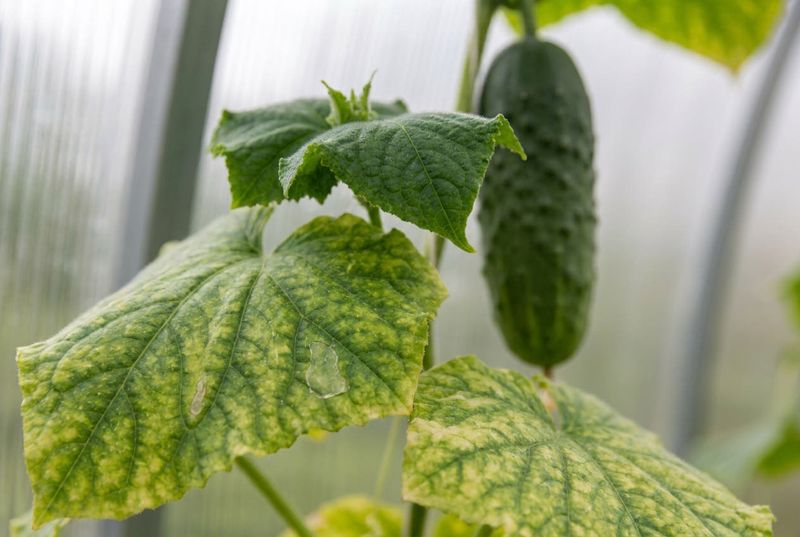
Walking out to your cucumber patch in July and finding yellow leaves can feel like a small disaster, especially when the vines were looking fine just a week ago. Before you reach for the fertilizer bag, know that yellowing foliage has several possible causes, and feeding the wrong problem can make things worse. A careful look at your plant, your soil, and recent weather will tell you far more than the color of the leaves alone.
Yellow cucumber leaves need a diagnosis before fertilizer
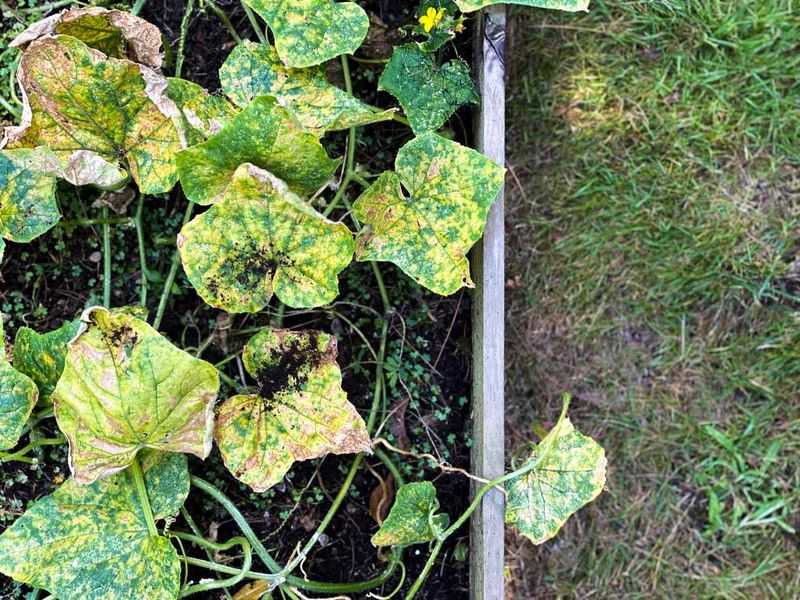
Reaching for a bag of fertilizer the moment cucumber leaves go yellow is a natural impulse, but it skips a step that matters. Extension diagnostic guidance lists a wide range of competing causes for yellow cucumber foliage, including drought, heat stress, excess water and poor drainage, disease, pests, salt injury, high soil pH, and the normal aging of older leaves. Fertilizer addresses none of those problems and can worsen a few of them.
Start by looking at which leaves are yellowing and where on the plant they appear. Check whether the yellowing is uniform across the leaf surface or concentrated between the veins, along the edges, or in scattered spots. Then push a finger or a trowel several inches into the soil near the root zone and feel whether the soil is dry, moist, or soggy.
Drainage matters as much as moisture level. A bed that holds water after rain can suffocate roots and trigger chlorosis even when the soil surface looks fine. Review any fertilizer applications made in the past few weeks, and scan the plant for insects, powdery growth, or lesions before drawing conclusions.
A soil test can clarify available nutrients, pH, and some fertility questions, but it cannot identify root rot, insects, poor drainage, compaction, or heat stress. The UMN cucumber leaf-discoloration diagnostic is a useful starting point for matching symptoms to possible causes before taking action.
Leaf age and pattern offer clues about nitrogen and magnesium
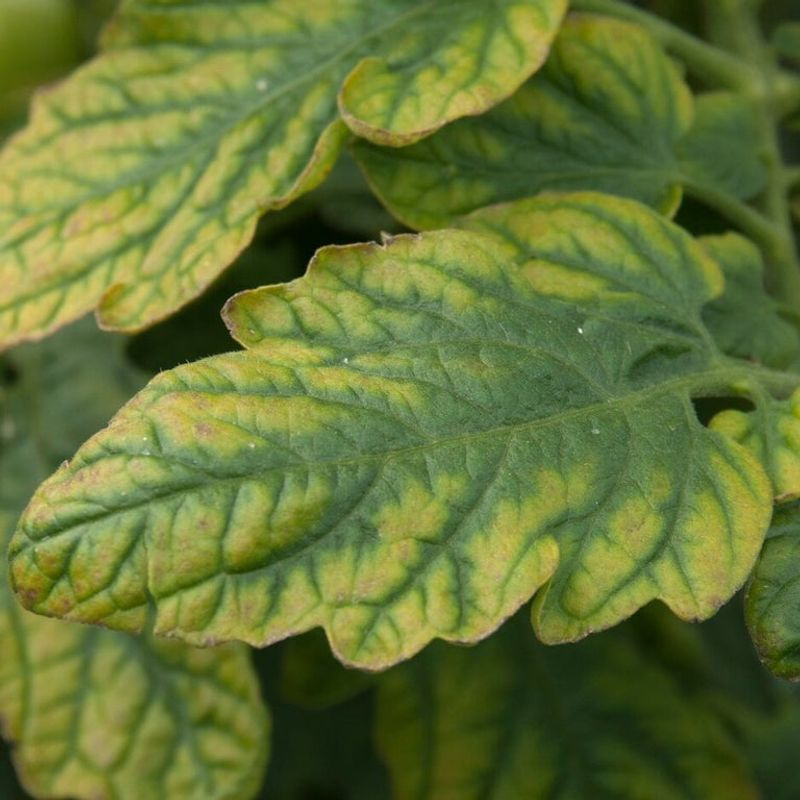
Where the yellowing starts on the plant, and exactly how it looks, can point you toward nitrogen or magnesium as a possibility, though neither pattern is a firm diagnosis on its own. Nitrogen is a mobile nutrient, meaning the plant can pull it from older tissue and redirect it toward new growth. UGA Cooperative Extension identifies fairly uniform yellowing of mature, lower foliage as the most recognizable symptom of nitrogen deficiency, and that yellowing often comes with weak stems or noticeably stunted growth across the vine.
Magnesium deficiency looks different. OSU Extension plant-growth guidance describes the pattern as interveinal chlorosis, meaning the tissue between the leaf veins turns yellow while the veins themselves stay green. This pattern tends to show up on older or lower leaves first and is more plausible in light, sandy soils or in plants that have received heavy potassium fertilization, which can compete with magnesium uptake.
Yellow margins or brown leaf edges are not a reliable sign of magnesium deficiency. Those patterns can reflect potassium deficiency, salt injury, drought, or heat damage, and treating them as a magnesium problem without more supporting evidence risks adding the wrong nutrient.
Extension advice on cucumber leaf yellowing notes that new leaves turning yellow, especially when the veins remain green, can suggest iron-related chlorosis or another root or pH problem rather than nitrogen or magnesium. That distinction reinforces why leaf pattern is a starting clue, not a conclusion.
Check heat, moisture, and drainage before feeding
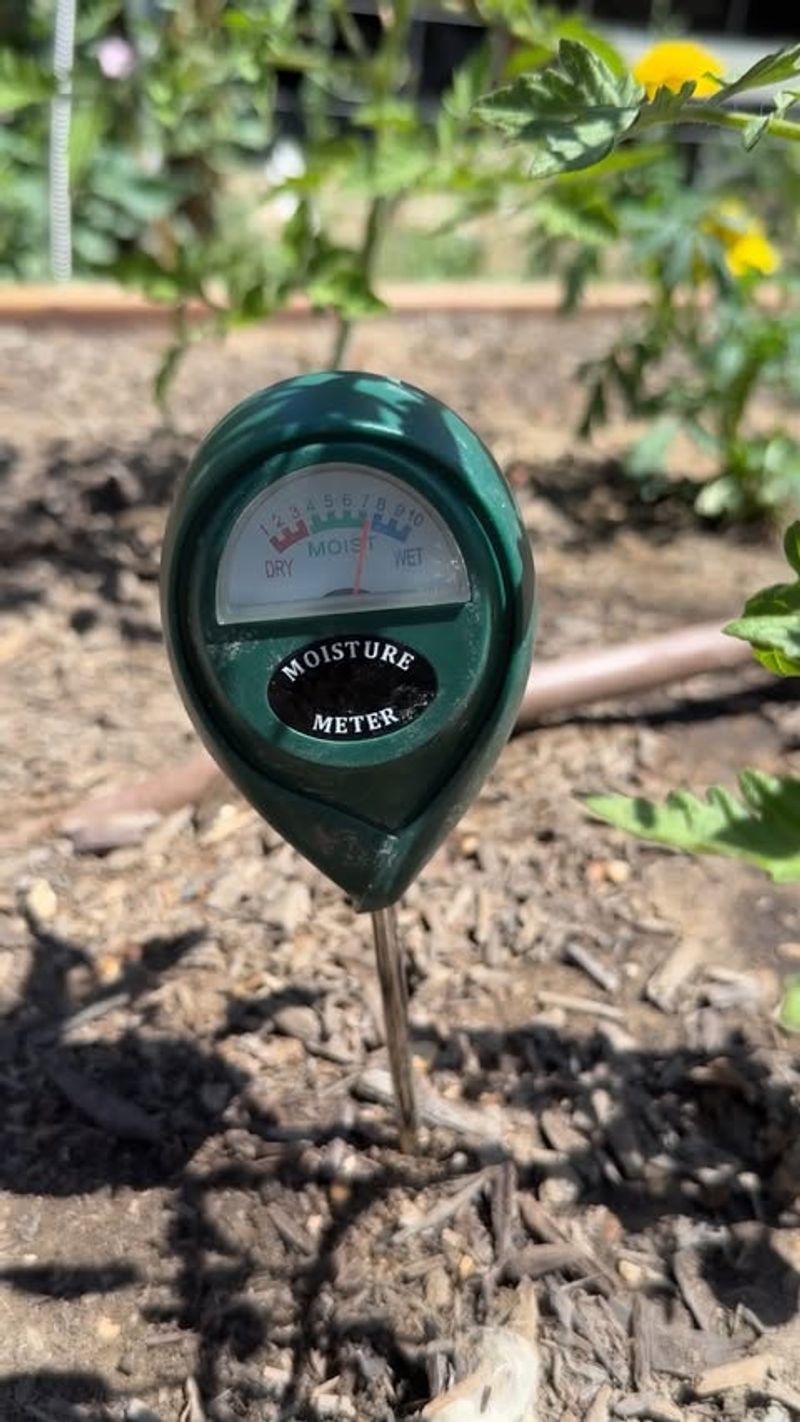
Summer heat does more than make gardeners uncomfortable. High temperatures increase the rate at which soil dries out and can cause cucumber leaves to wilt or yellow in ways that look a lot like a nutrient problem. OSU Extension heat-wave guidance recommends watering wilted plants as soon as reasonably possible rather than waiting for a preferred time of day, and emphasizes deep, regular irrigation through hot spells to keep roots functioning.
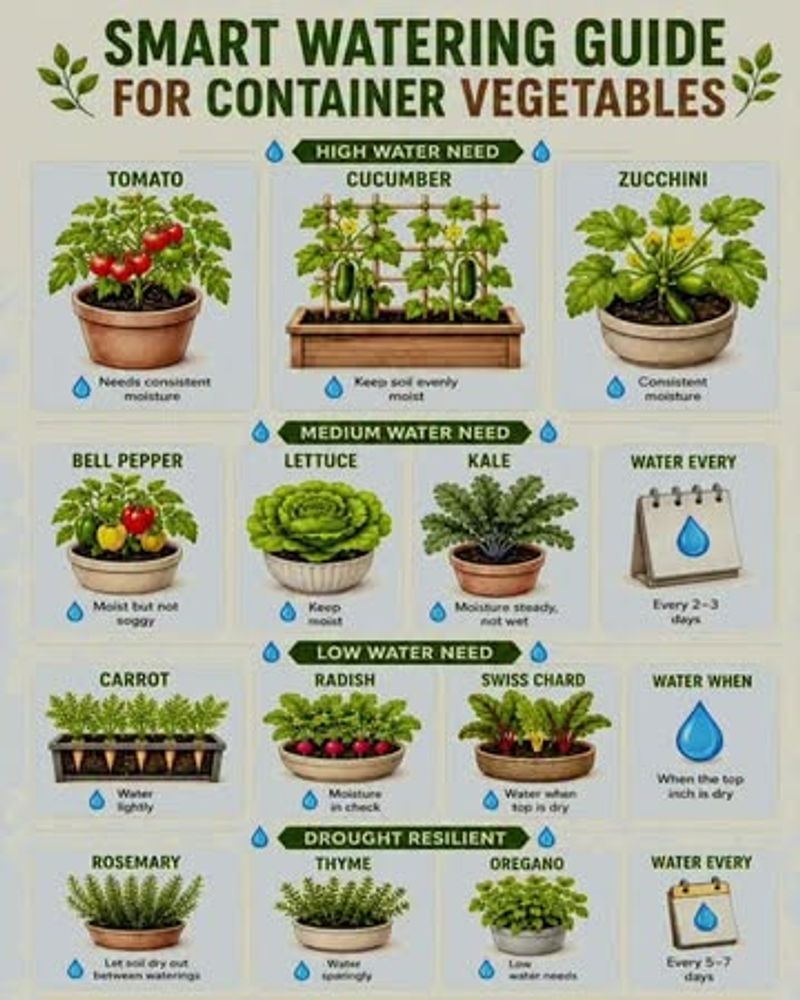
Cucumbers need consistent moisture throughout the growing season. UMN Extension gives approximately 1 inch of water per week from rainfall or irrigation as a general growing-season baseline, though that number is flexible. Sandy soil dries faster and may need more frequent watering, and plants on a trellis or in containers can dry out more quickly than those sprawling on the ground.
Always check moisture below the surface, not just at the top. Dry soil several inches down, even when the surface looks damp, signals that roots are not getting enough water. The opposite problem, soggy soil with little oxygen reaching the roots, can cause chlorosis and impair nutrient uptake just as effectively as drought can.
Poor drainage and prolonged saturation are distinct from simply applying a lot of water. A cucumber in a container with blocked drainage holes or a bed with compacted subsoil can suffer despite frequent irrigation. Resolve any acute water stress or drainage problem before considering fertilizer, since feeding a plant under root stress can add salt load without delivering the benefit you expect.
Inspect for pests, disease, and salt injury
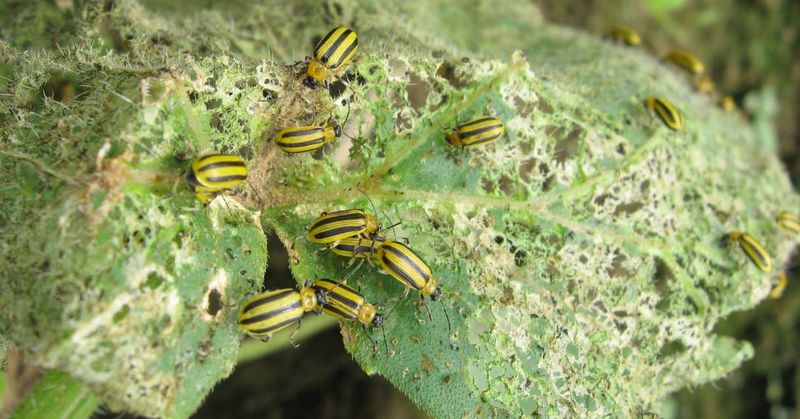
A quick inspection of the whole plant before any feeding decision can save you from treating the wrong problem. Turn leaves over and look at the undersides for insects, stippling, webbing, or powdery residue. Check the stems, the base of the vine, and the soil line for lesions, soft tissue, or unusual discoloration.
According to the UMN cucumber leaf-discoloration diagnostic, powdery mildew begins as pale yellow areas on the leaf surface before developing its characteristic white, powdery coating. Cucumber beetles are another concern: they chew leaf tissue and can transmit bacterial wilt, a disease that may cause sudden wilting and plant death that no amount of fertilizer will reverse.
Yellowing or browning along leaf margins with some wilting is not automatically a sign of nutrient deficiency. NSW DPIRD cucumber nutrition guidance identifies marginal yellowing with wilting in warm weather as a symptom of excess fertilizer or salt injury, not a deficiency. Applying more fertilizer to a plant already stressed by salt can intensify the damage.
Salt buildup from repeated fertilizer applications or from naturally saline water is a real possibility in some gardens and containers. USU Extension notes on soil salinity explain how accumulated salts can interfere with water and nutrient uptake at the root level, producing symptoms that resemble drought stress or deficiency. If you have been fertilizing regularly and the margins are browning, hold off on adding more nutrients and focus on flushing the soil with water instead.
A nitrogen side-dress may fit only a supported diagnosis
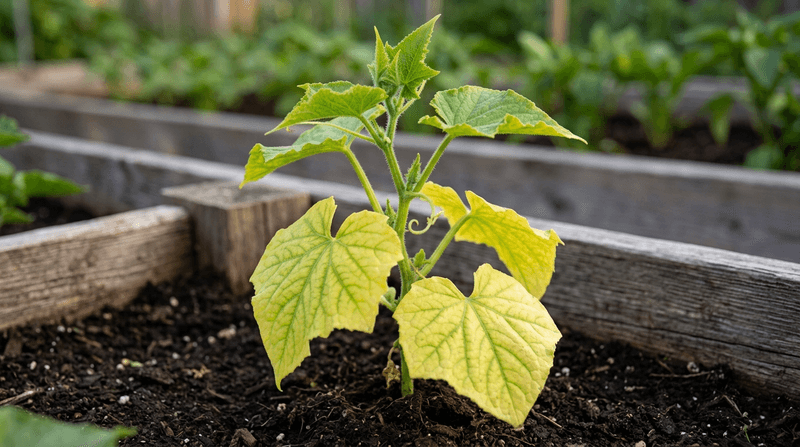
Nitrogen side-dressing is a legitimate practice for cucumbers, but the recommendation applies under specific circumstances, not every time leaves look pale. Illinois Extension recommends side-dressing cucumbers with nitrogen fertilizer when plants begin to vine, treating it as a timed production step rather than a response to any particular symptom. That timing guidance does not mean every vining plant with yellow leaves is nitrogen-deficient.
Before applying any nitrogen, run through a short checklist. The yellowing should match the nitrogen pattern described in the previous section: fairly uniform color loss on older, lower leaves with possible weak or stunted growth. Soil moisture and drainage should be adequate, with no soggy conditions. No excess fertilizer should have been applied recently, since adding more nitrogen on top of a recent application risks burning roots or producing lush vegetative growth at the expense of fruit.
CSU Extension nitrogen guidance warns that applying too much nitrogen can reduce vegetable quality and yields. Fertilizer percentages on the label describe the concentration of nutrient in the product, not the total amount of product to apply. Read the label, follow its rate for cucumbers or vegetable gardens, and calculate how much actual nitrogen you are delivering based on that percentage.
Apply the fertilizer beside the plant, not on it. Concentrated fertilizer on foliage can injure leaves, and Illinois Extension vegetable guidance consistently directs gardeners to apply fertilizer to the soil surface and keep it away from plant tissue. Water the side-dress in after application so the nitrogen moves toward the root zone rather than sitting on the surface where it can volatilize or run off.
Do not make Epsom salt the default magnesium treatment
Epsom salt, which is magnesium sulfate, has developed a reputation as a cure-all for garden plants, but that reputation is broader than the evidence supports. Magnesium sulfate supplies magnesium and sulfur, two nutrients plants need, but it does not address heat stress, root disease, pH problems, pest damage, or any of the other causes of yellow cucumber leaves. Applying it without a credible reason adds salts to the root zone without a corresponding benefit.
OSU Extension plant-growth guidance notes that magnesium deficiency is more plausible in light, sandy soils and can be encouraged by excessive potassium fertilization. If your soil is loamy or clay-based, or if you have not applied heavy potassium, the case for magnesium treatment weakens considerably. Reserve Epsom salt for situations where the interveinal pattern on older leaves is clear and consistent, or where a soil or tissue test supports low magnesium.
Unnecessary applications carry real downsides. USU Extension explains that repeated fertilizer or salt applications can raise soil salinity, and excess magnesium can interfere with calcium uptake at the root level. Epsom salt is also not a liming material and will not raise soil pH or correct acidic conditions.
Heat or water stress can impair a plant’s ability to take up magnesium even when the nutrient is present in the soil, so a magnesium-like symptom pattern still requires context. A soil test that shows adequate magnesium, combined with signs of drought or root stress, points toward fixing the water situation rather than adding more magnesium. When in doubt, address the most likely physical cause first and treat nutrients only when the evidence is specific enough to support it.
Judge recovery by new growth, not a guaranteed green-up
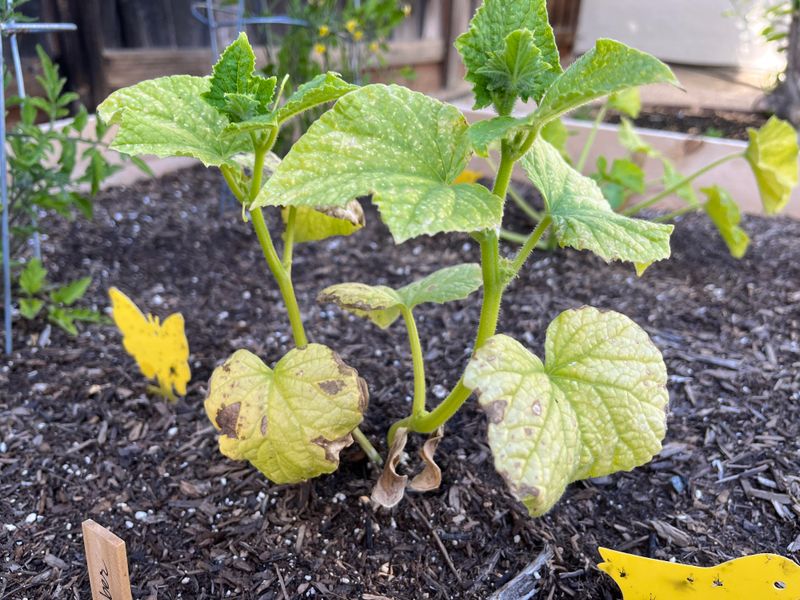
Working through a careful sequence gives you the best chance of helping your cucumber plant without making things worse. Start with the yellowing pattern and leaf age, then check soil moisture several inches down, confirm that drainage is working, scan the plant for pests and disease, and review recent fertilizer use. A consistent, well-timed watering routine and healthy drainage are the foundation that makes any nutrient correction possible.
If those checks point toward a genuine nitrogen deficiency and conditions are appropriate, a label-directed side-dress applied beside the plant and watered in may support better growth going forward. CSU Extension is clear that the goal of nitrogen management is supporting productive growth, not reversing existing damage. Leaves that are already yellow, brown, or otherwise damaged are unlikely to turn fully green again after a single feeding, and the UMN diagnostic guide reinforces that multiple causes can look alike, making accurate identification the real leverage point.
A soil test, obtained when practical, can sharpen your next decision whether to feed, adjust pH, or hold off entirely. The most reliable sign that you corrected the right problem is healthy new growth emerging at the top of the vine, not a color change in leaves that were already damaged. Getting the diagnosis right is the fix, and that matters more than any single bag of fertilizer.