
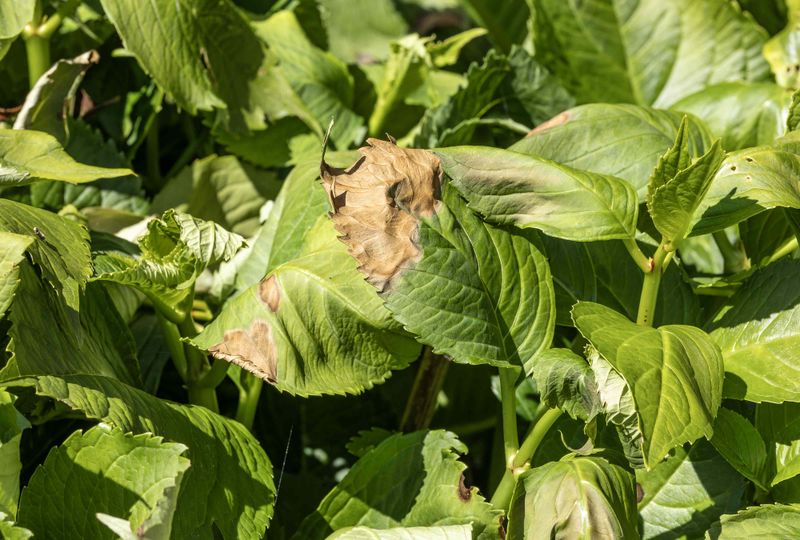
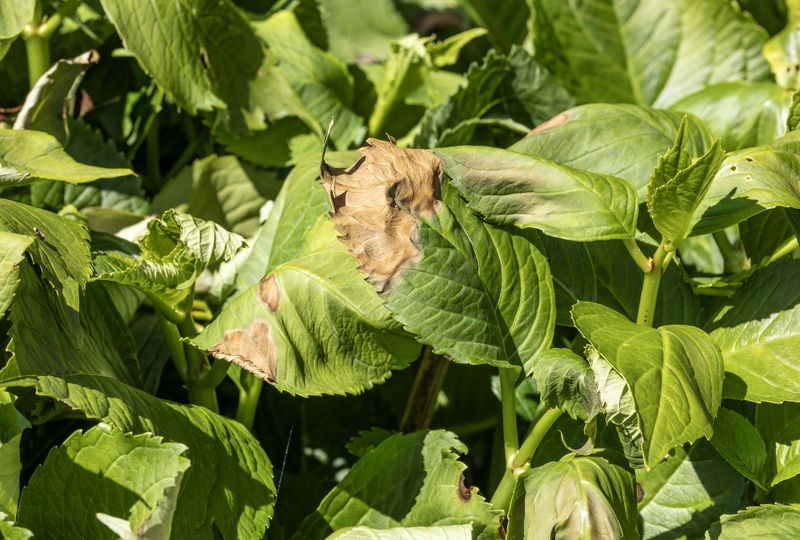
Those crispy brown edges creeping across your hydrangea leaves can send any gardener straight for the hose. Before you do that, consider that overwatering a plant already struggling can make things worse, not better. Brown leaf margins are a nonspecific signal with several possible causes, and figuring out which one is at work will save you time, water, and frustration.
Brown edges do not prove your hydrangea is thirsty
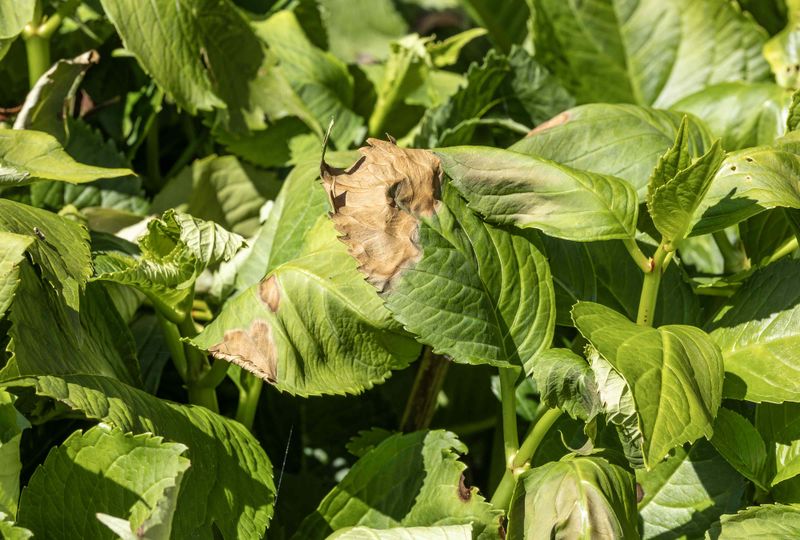
Crispy brown margins on hydrangea leaves look like a plant begging for water, but that appearance is misleading. University of Maryland Extension guidance lists drought, heat, strong sunlight, wind, root injury, overwatering, overfertilization, herbicide injury, frost, and disease as possible causes of hydrangea leaf damage. The symptom is real, but it does not point to a single fix.
Heat and wind can strip moisture from leaf edges faster than roots can replace it, even in reasonably moist soil. Soggy, waterlogged roots can also produce marginal browning because damaged roots cannot move water upward efficiently. A plant sitting in compacted or poorly drained soil may look drought-stressed while its roots are actually drowning.
Excess fertilizer is another possibility that gets overlooked. Fertilizers are salts, and applying too much can scorch roots and produce the same crispy margins you would see with drought or heat stress. Herbicide drift from a nearby application can also cause marginal injury that mimics thirst.
As WSU Hortsense notes on marginal leaf necrosis, the same visible symptom can result from several unrelated problems. Reaching for the hose or switching your water source before examining the plant and its conditions is a shortcut that can delay the right fix and potentially add new stress to an already struggling shrub.
Salt buildup can interfere with root water uptake
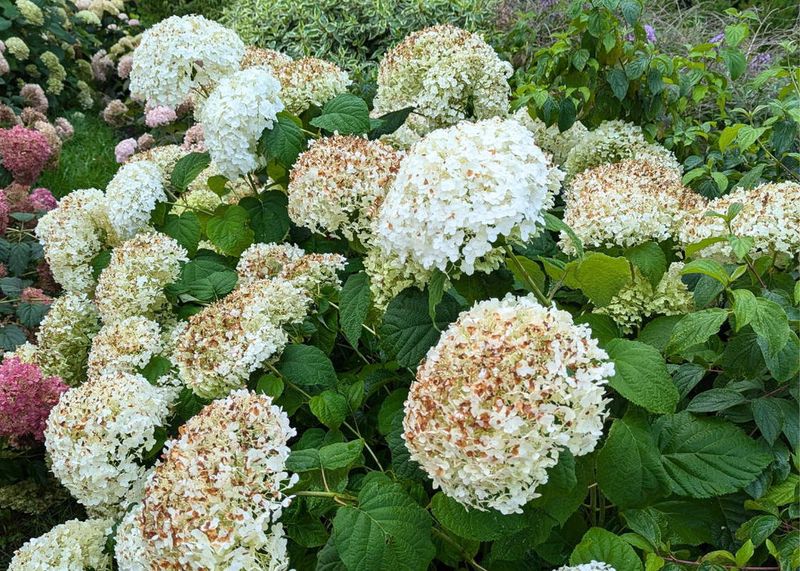
When soluble salts accumulate in soil or irrigation water, they change the chemistry around the root zone in a way that makes it harder for plants to pull in water. Sodium and chloride are the main offenders. High salinity can cause marginal burn, necrosis, stunted growth, and leaf damage by creating what is essentially a reverse osmosis effect at the root surface, pulling water out of roots rather than letting it in.
Colorado State University Extension guidance on irrigation water quality confirms that dissolved salts are a meaningful concern when evaluating whether water is harming ornamental plants. This is not a blanket indictment of ordinary municipal tap water. The problem becomes more plausible under specific conditions: saline well water, sodium-based water softeners, reclaimed or recycled irrigation water, containers with limited drainage, and repeated irrigation without periodic leaching. Nearby deicing salt from a sidewalk or driveway can also deposit sodium and chloride near the root zone over winter.
Container hydrangeas face higher risk than established shrubs planted in open ground, because containers hold less growing medium and receive less natural dilution from rainfall. A shrub in a well-drained outdoor bed that gets regular rain may never encounter meaningful salt buildup, while a potted plant watered exclusively with softened water could accumulate damaging levels over a single season.
Species and cultivar matter too. USDA ARS research on hydrangea salt tolerance found meaningful differences among bigleaf, panicle, oakleaf, and hybrid types, so a single salt threshold does not apply equally to every plant in your yard.
Read the damage pattern before changing your watering
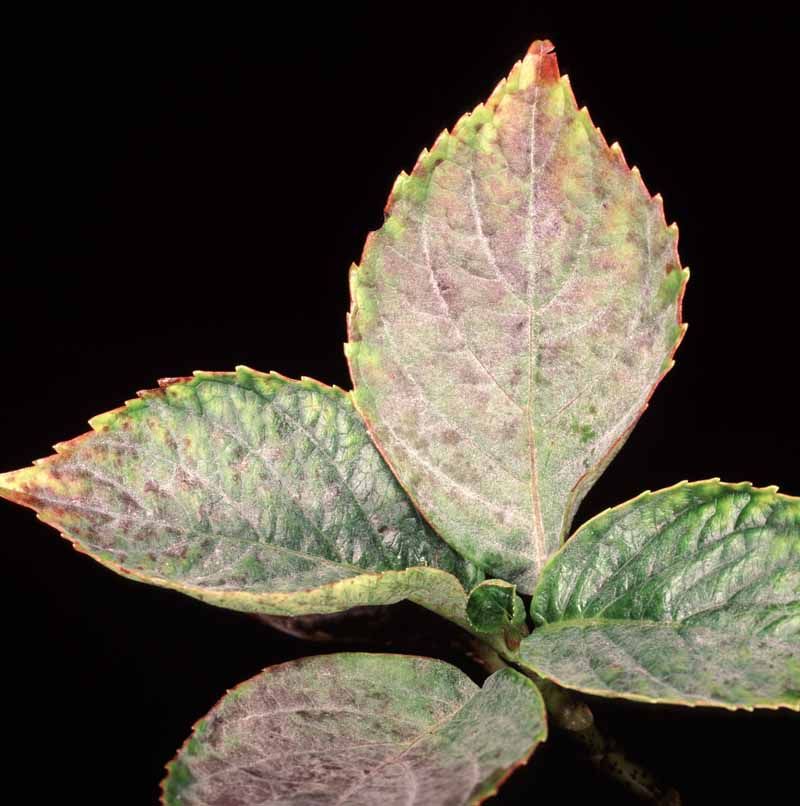
Where the browning shows up on the plant tells you a lot. Scorch concentrated on the side facing the afternoon sun, or on leaves most exposed to wind, after a stretch of hot and dry weather, points toward heat or water-transport stress rather than water quality. WSU Hortsense explains that hydrangeas can scorch even when soil is not completely dry if the roots simply cannot supply water fast enough during peak heat. That distinction matters: adding more water will not solve a root-supply problem caused by damaged or compacted roots.
Before watering, check moisture several inches below the soil surface rather than relying on the appearance of the top inch. University of Connecticut Extension recommends consistently moist but well-drained soil for hydrangeas. If the soil feels soggy or smells sour several inches down, the problem may be too much water, not too little. Roots suffocating in waterlogged soil can produce the same marginal browning as drought.
Fertilizer injury has its own clues. Colorado State University Extension notes that excess fertilizer salts can scorch roots and produce leaf margins that look identical to heat or drought damage. If you applied granular or liquid fertilizer recently, that belongs in your suspect list.
Browning that looks different from simple margin crisping deserves a second look. Discrete tan or reddish spots, fuzzy or powdery growth on leaf surfaces, lesions that spread inward from the edges, or significant leaf drop can indicate a leaf-spot disease rather than water stress. University of Maryland Extension identifies several fungal diseases that cause leaf damage in hydrangeas, and overhead watering that keeps foliage wet for extended periods can worsen those problems.
Test whether a water-quality problem is present and plausible
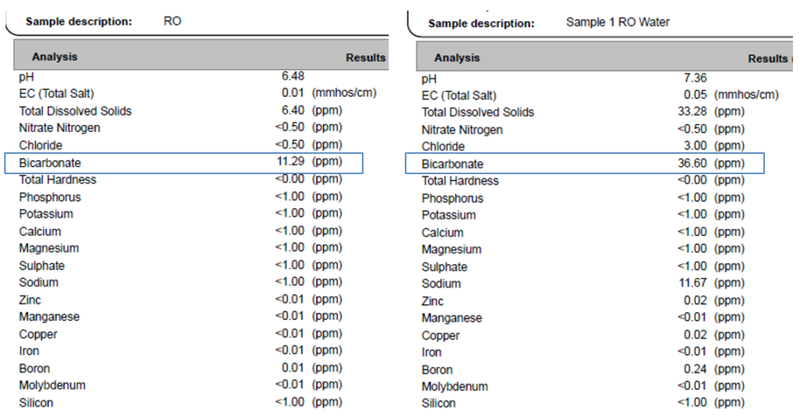
Suspecting a water-quality issue is not the same as confirming one. Testing becomes worthwhile when the symptom pattern and site conditions fit salt or mineral buildup: for example, a container hydrangea irrigated with softened water, a plant near a salted driveway, or a shrub in a bed with poor drainage that has never been leached. Guessing and switching water sources without data can waste money and still miss the actual problem.
Penn State Extension guidance on interpreting irrigation water tests recommends measuring electrical conductivity, pH, alkalinity, hardness, sodium, and chloride. Each measurement reveals something different. Electrical conductivity gives a rough total-salt load. Sodium and chloride levels indicate the specific ions most likely to accumulate and harm roots. pH tells you how acidic or basic the water is, but a high pH reading alone does not establish a salt hazard or prove that the water is burning leaves.
UMass Extension explains that hardness, alkalinity, and pH are distinct measurements that are often confused. Hardness mainly reflects calcium and magnesium. Alkalinity reflects bicarbonates and carbonates and is the more meaningful concern for long-term nutrient availability and soil pH shifts. Salinity is a separate measure of total dissolved salts.
Chlorine and chloramine are disinfectants, not salts, and they behave differently from each other and from the mineral ions that drive salt buildup.
Water test results only tell part of the story. They need to be read alongside a soil test, your drainage situation, recent fertilizer applications, the hydrangea species you are growing, and the full symptom picture. Penn State Extension water testing resources can help you find a certified lab and interpret results in context rather than in isolation.
Correct salt buildup only when drainage allows
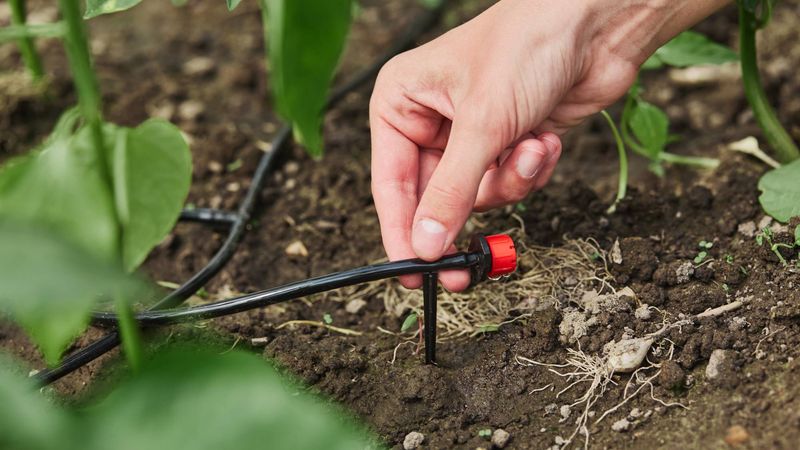
Confirmed or strongly suspected salt accumulation calls for a specific response, not a generic increase in watering. The goal is to move accumulated salts below the root zone using low-salt water applied slowly enough for the soil to absorb it without pooling. Colorado State University Extension guidance on saline soils is clear that leaching only works when drainage is genuinely adequate. Flooding a compacted, poorly drained, or already waterlogged bed does not push salts downward; it saturates the root zone further and can cause or worsen root injury.
Before attempting any leaching, confirm that water moves freely through the soil. Dig down six to eight inches and observe whether water drains within an hour or lingers. If it lingers, address the drainage problem first rather than applying more water.
For routine care that reduces ordinary scorch, University of Connecticut Extension recommends watering slowly and deeply at the root zone using a drip system, soaker hose, or low-flow hand watering rather than overhead sprinklers. Keeping foliage dry reduces the risk of leaf-spot disease and does not affect how well the root zone receives moisture.
Mulch placed two to three inches deep over the root zone but kept a few inches away from the main stems helps retain soil moisture and moderates soil temperature during heat spells. University of Maryland Extension also suggests providing afternoon shade for hydrangeas that repeatedly scorch in exposed locations, which addresses the heat-and-wind component of marginal browning without requiring any change to watering volume or water source.
Rainwater can help, but chlorine is not a simple villain
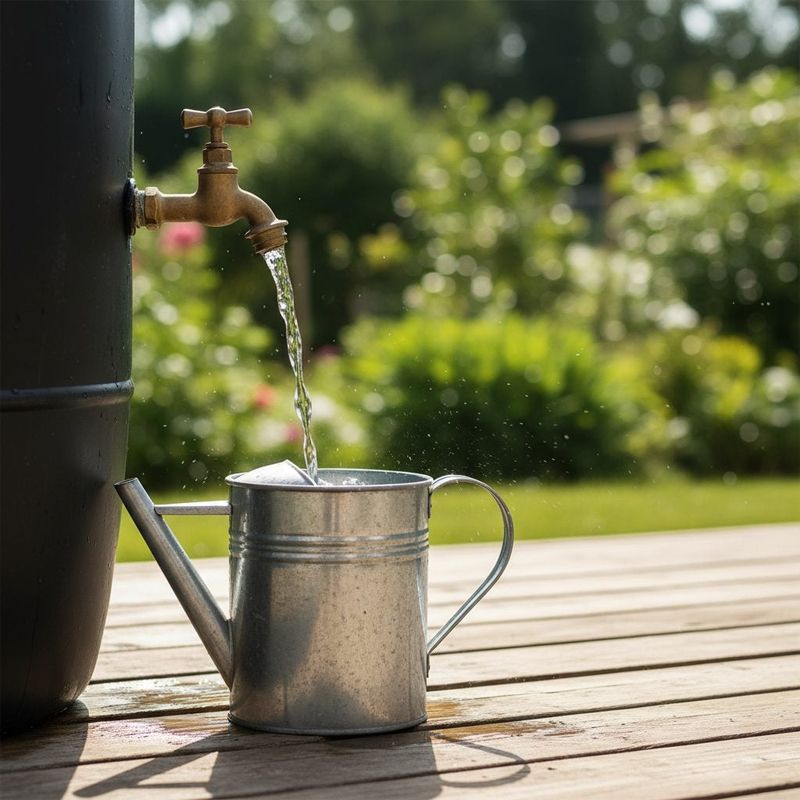
Rainwater generally carries fewer dissolved salts than many municipal or well-water sources, which makes it a reasonable option for ornamental hydrangeas when testing or site conditions point to a salt or mineral concern. The practical benefit is real in specific situations, not universal. Rain barrel water is not automatically superior for every garden, and treating it as a cure-all skips the diagnostic step that determines whether water quality is actually the problem.
EPA guidance on rain barrels notes that roof runoff can collect bird droppings, roofing contaminants, metals, and other pollutants depending on the roof material and surrounding environment. University of Minnesota Extension recommends keeping rain barrels covered and screened, maintaining them regularly, and using untreated barrel water primarily for ornamental plants rather than edible crops or areas where the water might contact food. Apply barrel water at the soil surface rather than overhead to keep foliage dry.
Ordinary municipal tap water disinfectants should not automatically be assumed harmful to outdoor hydrangeas. University of Tennessee hydrangea production guidance reports that free chlorine concentrations up to 2.5 ppm generally should not injure plants, while higher or continuous chlorination can harm sensitive ornamentals. Most household tap water falls well within regulated safety limits.
Letting tap water sit overnight is sometimes suggested as a way to off-gas chlorine, but EPA information on chloramines in drinking water explains that many water systems now use chloramine rather than free chlorine as a disinfectant. Chloramine does not dissipate reliably by sitting in an open container, and resting water does nothing to remove dissolved sodium, chloride, calcium, magnesium, or alkalinity. If your water system uses chloramine, that overnight-bucket approach is not a reliable fix.
Protect healthy foliage while you confirm the cause
Once you have observed the symptom pattern and checked soil moisture, match your response to what the evidence actually shows. Environmental stress from heat, strong sun, or wind calls for shade adjustment, better root-zone watering technique, or mulch. Soggy soil points to drainage work before any increase in watering. Excess fertilizer means stopping applications and waiting for the plant to recover.
Spots, lesions, or leaf drop that suggest a disease call for guidance specific to that pathogen rather than a watering change.
WSU Hortsense confirms that hydrangea leaf scorch is generally physiological, not infectious, but that does not mean every case of browning is the same problem. Container hydrangeas and salt-sensitive species need closer monitoring than established shrubs in open ground, as USDA ARS salt-tolerance research makes clear.
Brown tissue will not turn green again. Pruning damaged leaves tidies the plant’s appearance but does not accelerate recovery. The real measure of success is whether new growth emerges healthy and whether the existing undamaged foliage stays that way. Test before blaming the tap, and change the water source only when the soil results, symptom pattern, and site conditions together make that step genuinely justified.
A plant that gets the right diagnosis recovers faster than one that gets the right-looking treatment for the wrong cause.