
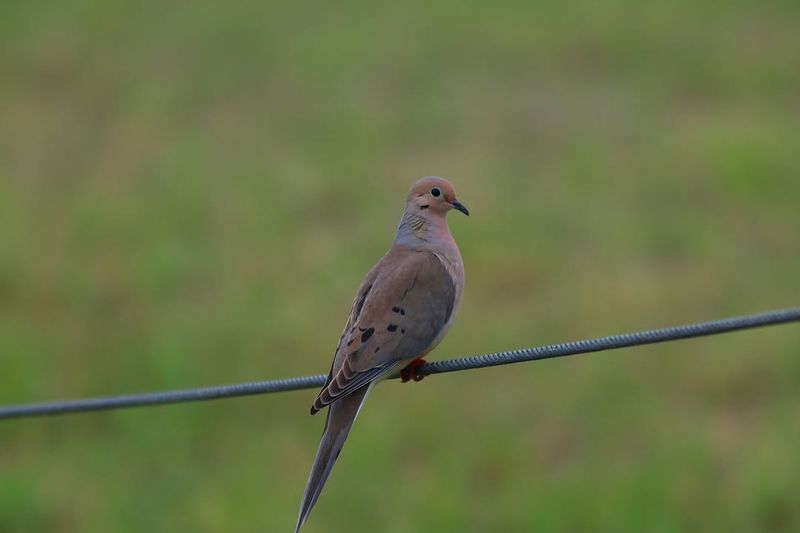
That soft, hollow cooing drifting from your roofline or backyard fence on a warm Texas morning is one of the most familiar sounds in the state. Plenty of Texans have stopped what they were doing to wonder if the bird is trying to tell them something. The answer is more grounded than most folklore suggests, and once you know what to look and listen for, the dove’s message starts to make a lot more sense.
First, make sure the caller is a mourning dove
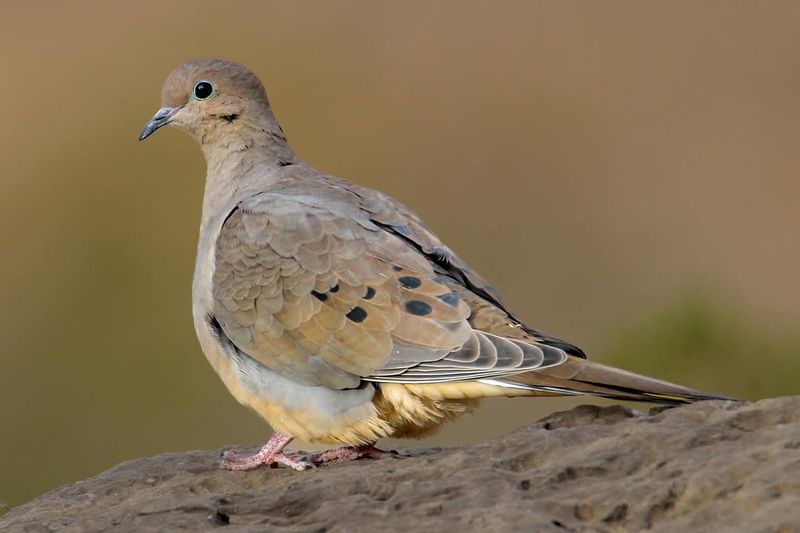
Before assigning any meaning to that persistent coo, take a good look at the bird itself. Texas yards host several dove species, and mixing them up is surprisingly easy when the bird is perched high on a wire or silhouetted against a bright sky. Rushing to interpret the sound before confirming the species can send you down the wrong path entirely.
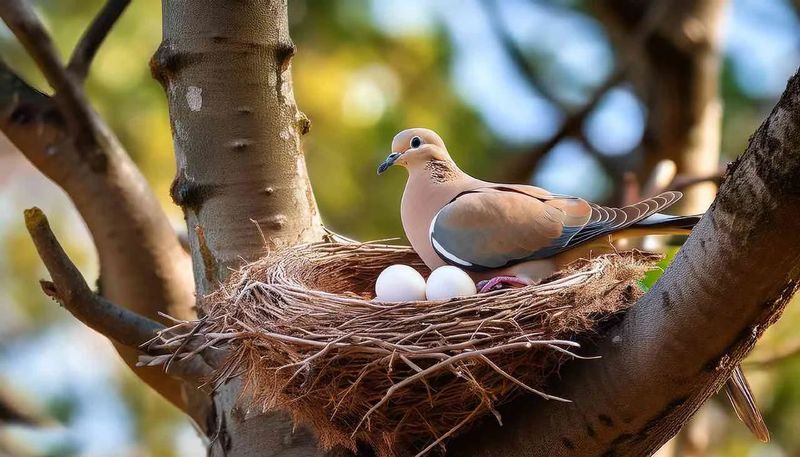
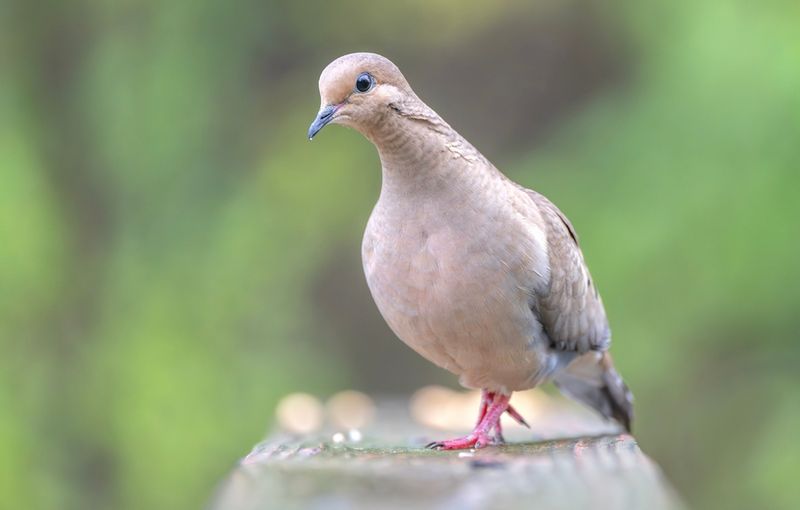
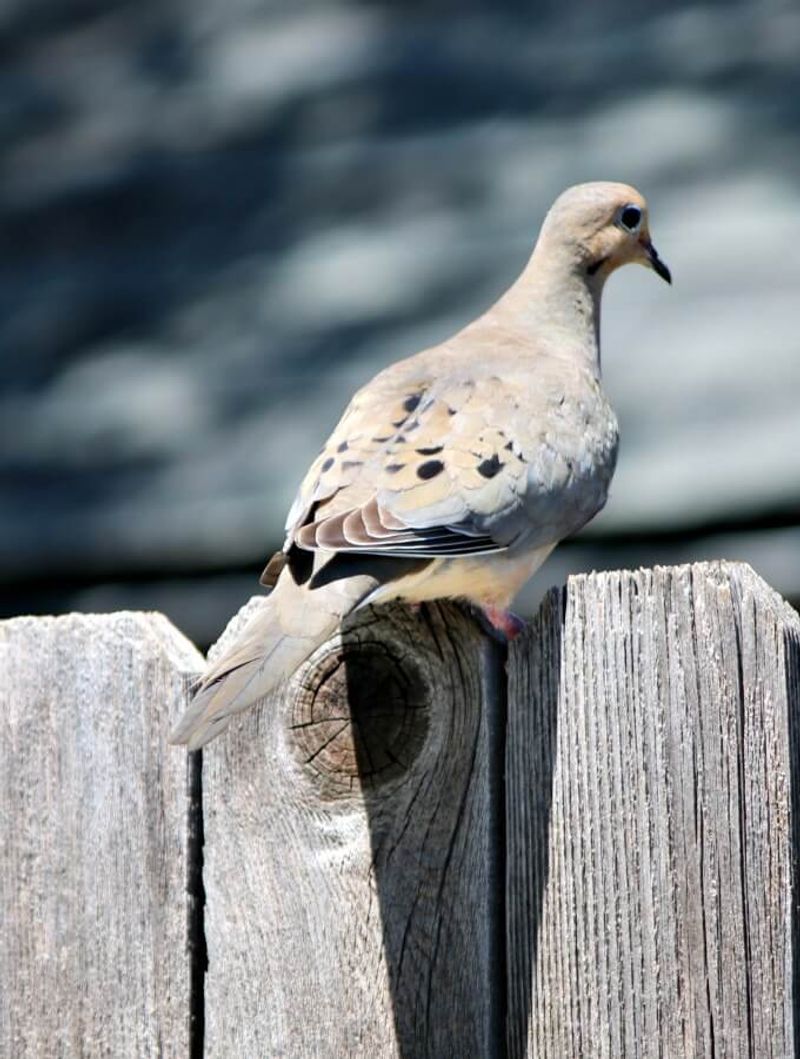
A mourning dove is generally brown overall, with a slender body, a small rounded head, and a distinctly long, pointed tail. Look for scattered black spots on the wings and a soft pinkish wash on the breast. When it flies, the tail fans out and shows white edges on the outer feathers, which is a useful field mark.
Two other species commonly turn up in Texas yards and can cause confusion. Texas Parks and Wildlife notes that white-winged doves carry a bold white bar along the wing that is visible even at rest, and their tail is more rounded rather than pointed. Eurasian collared-doves are noticeably larger and paler, with a narrow black collar across the back of the neck. Rock pigeons, which are stockier and often spotted near urban structures, add another layer of potential mix-up.
White-winged doves are especially common across South Texas and have steadily expanded their range northward and into suburban neighborhoods across much of the state. Depending on where you live in Texas, a white-wing may be just as likely a visitor as a mourning dove. Checking markings and tail shape before drawing conclusions is the most reliable first step, because relying on the sound alone will not sort out which bird you are actually watching.
The familiar perch-coo usually advertises a male’s status
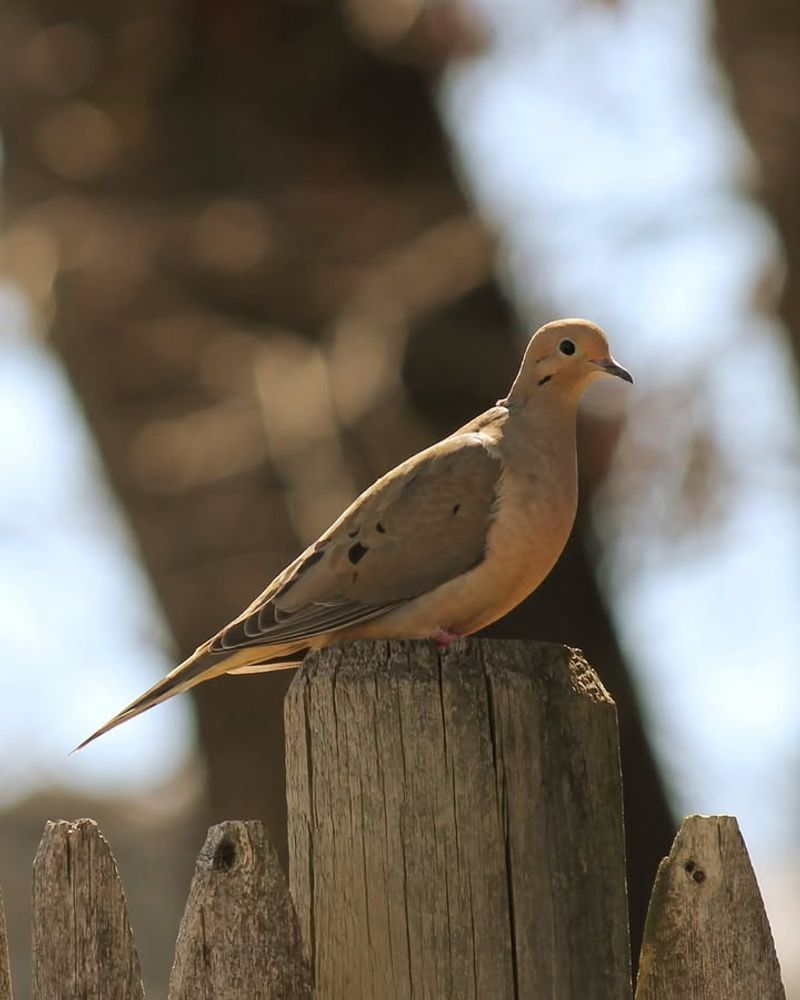
Once you have confirmed you are looking at a mourning dove, the sound it is making carries more specific information than most people realize. The call most Texans recognize is what ornithologists call the perch-coo: a soft, low introductory note followed by two or three longer, more resonant coos. Heard from inside the house, it can sound almost mournful, though that human impression says more about our ears than the bird’s emotional state.
According to Cornell Lab of Ornithology’s All About Birds, the perch-coo is given mainly by unmated males. The bird typically delivers it from a conspicuous, exposed spot, such as a bare tree branch, a rooftop ridge, a utility wire, or a fence post, where it can be seen and heard easily. The function is biological and practical: the male is advertising his presence to potential mates and signaling other males that the area around his perch is occupied.
Territorial signaling and mate attraction are closely linked during the breeding season. A male that has not yet paired up has strong motivation to keep calling, which is part of why the sound can seem relentless on certain mornings. His elevated, open perch is not a coincidence. Height and visibility help the call carry farther and make the bird more detectable to a female flying through the area.
Mourning doves are year-round residents across much of Texas, so the perch-coo is not strictly limited to a single season statewide. That said, it is most consistent and frequent when males are actively seeking mates. A lone dove on a prominent perch, coo-ing steadily into the morning air, is most likely doing exactly what the biology suggests: announcing that he is available and holding his ground.
What repeated calling can reveal—and what it cannot
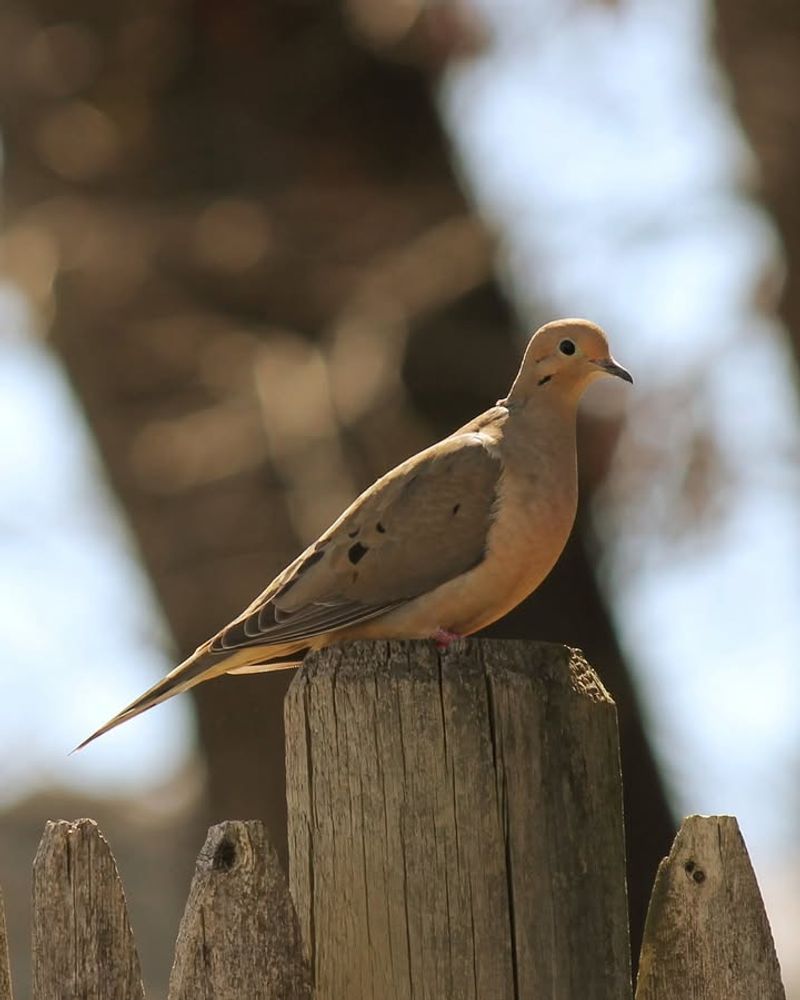
Hearing the same coo from the same corner of your yard day after day is not random. Mourning doves often return to a favored calling perch repeatedly, and a male will defend that spot from other males who try to use it. Your roofline, a particular fence post, or a specific branch in the oak tree out back may simply be prime real estate in one dove’s territory, offering the right height, visibility, and proximity to food or water.
A nearby dove can also trigger a response. If a second bird lands close by, the resident male may increase his calling rate or shift posture, which is worth watching for if you want to understand what is driving the noise on a given morning. The presence of another dove in view is a useful clue that the calling is at least partly territorial rather than purely directed at an unseen female somewhere else.
A USGS-supported field study on mourning dove perch-coos found that pairing status was the strongest measured influence on how often and how long males called. Unmated males cooed substantially more than mated males under the study’s conditions. Population density was not identified as a major driver, and no reliable weather effect was detected within that study’s methods.
Those findings are genuinely useful, but they come from specific field conditions and should not be treated as a complete translation guide for every Texas backyard. Repetition alone cannot confirm a bird’s sex, tell you whether it has a mate, or pin down the exact message being sent. To get closer to an answer, you need to combine what you hear with what you can actually see: the bird’s behavior on the perch, whether another dove is nearby, and whether there are any signs of nest activity in the area.
Not every dove sound is the same conversation
Treating every coo as a mate-attraction call is an easy mistake to make, and it leads to some misreadings of what is actually happening in your yard. Mourning doves produce more than one type of vocalization, and the differences matter if you are trying to figure out what stage of the breeding cycle a bird might be in.
The standard perch-coo described in the previous section is the most recognizable call, but Cornell Lab’s detailed sound guide identifies a separate three-part nest call that paired males may produce during nest-building. The rhythm and structure of this call differ from the classic perch-coo, though distinguishing them by ear takes practice. Females may also produce a quieter vocalization while sitting on the nest, which is softer and less likely to carry across a yard the way a male’s perch-coo does.
Body posture and context add a lot to what the sound alone cannot tell you. A male puffing up and calling loudly from a high wire is behaving differently from a bird crouched near a low shrub and producing quieter sounds near a second dove. Nearby birds, the height and openness of the perch, and any nest activity in the area are all worth noting before drawing a firm conclusion.
Realistically, a homeowner watching from a window may not be able to confidently classify every sound a dove makes. That is fine. The honest answer is that some vocalizations are ambiguous without close observation, and even experienced birders sometimes cannot assign a precise function to a particular call. Knowing that more than one type of call exists is enough to prevent the common error of assuming the bird is always doing the same thing.
The sound is not a forecast or a message from the beyond
Many Texans have grown up hearing that a dove cooing near the house means rain is coming, that someone is about to die, or that a departed loved one is sending comfort. Those associations are real parts of cultural and personal life, and they are worth acknowledging honestly rather than dismissing with a wave.
At the same time, the scientific sources on mourning dove behavior point in a different direction entirely. Cornell Lab’s documentation of mourning dove vocalizations describes the perch-coo in terms of mating, territorial signaling, and nest-related communication. None of the reviewed research supports the idea that the call functions as a forecast of weather, a warning of death, a signal of arriving guests, or a message tied to events in a human’s life. Those interpretations belong to cultural meaning-making, not to what the bird’s behavior can demonstrate.
The species name itself contributes to the confusion. “Mourning” refers to the mournful quality that human ears tend to hear in the call, not to any emotional state the bird is experiencing. A dove cooing from your fence post is not grieving. The sound has documented biological functions, and the name is a human label applied to a human perception.
Personal or spiritual meaning that a sighting holds for you is your own to keep. Many people find genuine comfort in the idea that a dove’s presence carries a message, and there is nothing wrong with that experience. What the biology cannot do is confirm those interpretations as predictions. The dove is communicating with other doves, and the rest belongs to the listener.
Texas timing changes the clues around a calling dove
Texas is a large state with a wide range of climates, and the context around a calling dove shifts depending on where you are and what time of year it is. Mourning doves are common statewide and can occur year-round in many parts of Texas, though some birds do move south during colder months and regional patterns vary considerably.
Texas Parks and Wildlife’s mourning dove management material for the Texas Panhandle reports a nesting season that runs from March through September in that region. That schedule reflects Panhandle conditions specifically and should not be applied as a universal statewide calendar. Nesting timing in South Texas, the Hill Country, or the Gulf Coast may look different, and local conditions including temperature, food availability, and habitat all play a role.
Doves may nest in trees, shrubs, on ledges, on structures, or even on the ground. Their nests are famously flimsy platforms of twigs that can be damaged by wind and heavy rain, which is a real concern during Texas storm season. A nest is easy to overlook until you happen to spot the bird sitting low and still in an unusual spot rather than calling from a high perch.
A calling bird in your yard does not automatically mean there is a nest nearby. Cornell Lab’s mourning dove life history notes that doves feed in open areas and may travel between separate sites for food, water, resting, and calling. The rooftop perch your dove keeps returning to may simply be a convenient vantage point while its nest, if it has one, is located somewhere else entirely. Watching where the bird goes after it finishes calling can sometimes offer a better clue than the call itself.
Observe the bird without turning your yard into a hazard
Watching a mourning dove up close is genuinely rewarding, and most of the best observation happens without doing much at all. Staying back from a perch the bird is using regularly, avoiding sudden movement near a suspected nest, and keeping noise low are enough to let the dove behave naturally. Binoculars help you see posture and markings without closing the distance.
Cats are one of the most significant threats to ground-foraging birds like mourning doves. Cornell Lab recommends keeping cats indoors, particularly around birds that feed and move on the ground. Doves spend a lot of time foraging at ground level, which puts them at serious risk from both pet cats and free-roaming cats in the neighborhood.
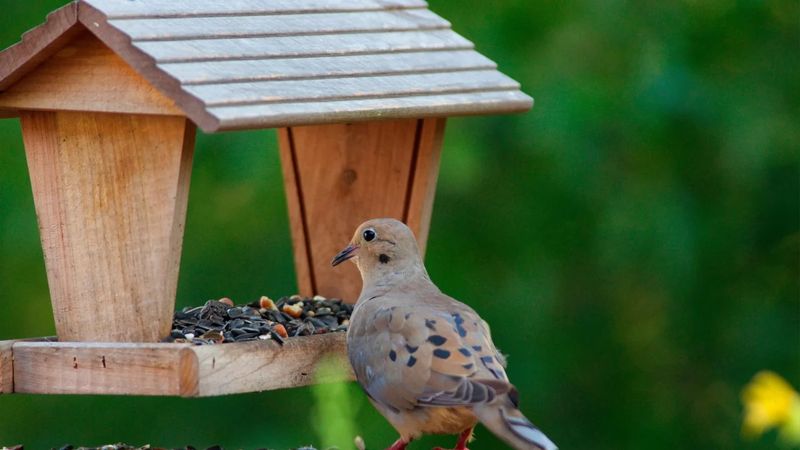
Feeding is optional. The U.S. Fish and Wildlife Service notes that native seed-producing plants, dense cover, and a clean water source may support birds just as well as a feeder, without concentrating birds, feces, and pathogens in one spot. Mourning doves eat primarily seeds and respond well to platform or ground-level feeders with millet if you choose to offer food.
If you do use feeders or birdbaths, specific sanitation steps are not optional extras.
CDC guidance following a Salmonella outbreak linked to wild songbirds advises cleaning feeders at least monthly and more often when visibly soiled, cleaning and refilling birdbaths weekly or whenever the water looks dirty, cleaning feeders outdoors when possible to avoid tracking bacteria inside, washing hands thoroughly with soap and water after handling feeders or baths, and keeping pets away from feeders, baths, and any spilled seed on the ground. If you find a sick or dead bird near your feeding area, remove feeders and baths temporarily and follow current wildlife-health guidance before putting them back out.
Do not handle a sick or dead bird bare-handed. Contact Texas Parks and Wildlife or another relevant state wildlife agency for guidance on next steps. If you spot a young bird that appears to be hopping on the ground but is fully feathered, it is most likely a normal fledgling learning to move around and does not need to be rescued. TPWD advises leaving healthy fledglings alone and contacting a permitted wildlife rehabilitator only for birds that are clearly injured, sick, or confirmed orphans.
Attempting to raise a wild dove at home is not recommended and may be prohibited without the proper permits.
A calm interpretation is the useful one
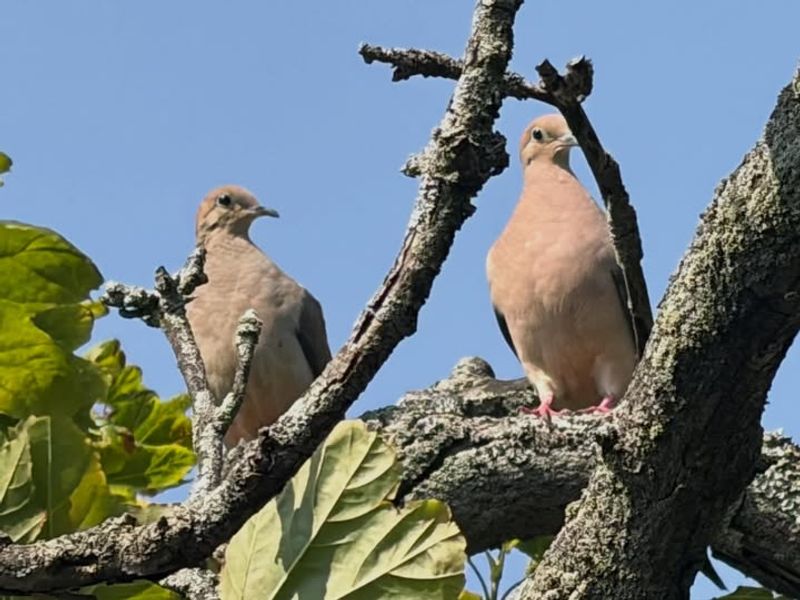
Persistent mourning-dove cooing in a Texas yard most often reflects ordinary bird communication. A male sitting on a favored perch and calling repeatedly is most likely unmated, defending his spot, or responding to another dove nearby. Context matters: the call type, the bird’s posture, the presence of a second dove, and any nest activity nearby all shape what the cooing can reasonably tell you.
The practical next steps are straightforward. Confirm the species by checking markings and tail shape rather than relying on the sound alone. Notice the perch the bird keeps returning to and whether another dove appears in response. Avoid disturbing a low, still bird that might be sitting on a nest.
If you offer food or water, keep the station clean and follow sanitation guidance consistently.
What the cooing cannot do, based on the reviewed evidence, is predict rain, signal a death, announce good luck, or carry a personal message intended for you. The documented functions of mourning dove vocalizations are rooted in mate attraction, territory, and nesting. Personal meaning is yours to interpret privately, and it can coexist with the biological explanation without one canceling the other. A dove that keeps returning to your yard is almost certainly finding something useful there, and that quiet loyalty to a good perch is, in its own way, a kind of small thing worth noticing.