
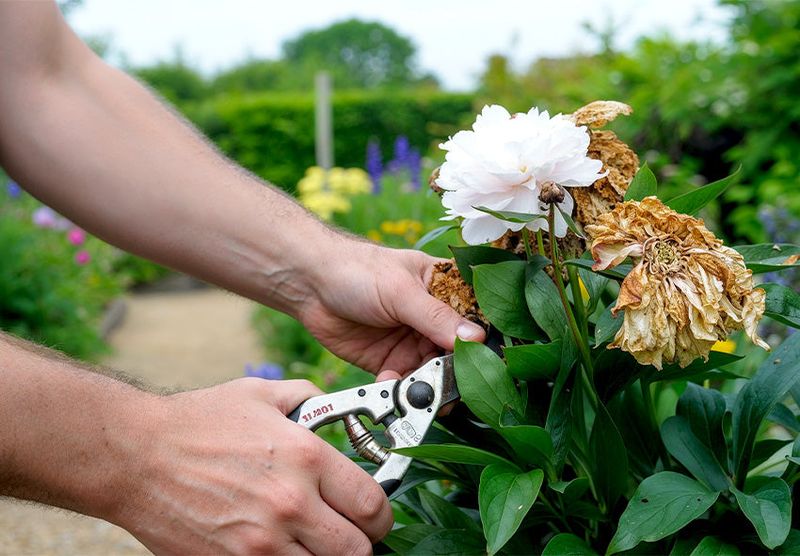
Peonies are one of the most rewarding plants in a home garden, but they can also leave you scratching your head once those gorgeous flowers fade. Many gardeners reach for their pruners the moment the last bloom drops, not realizing that timing makes a real difference for the plant’s long-term health. Knowing when to cut, what to remove right away, and what to leave alone through summer is the key to keeping your peonies strong year after year.
Start by identifying your peony
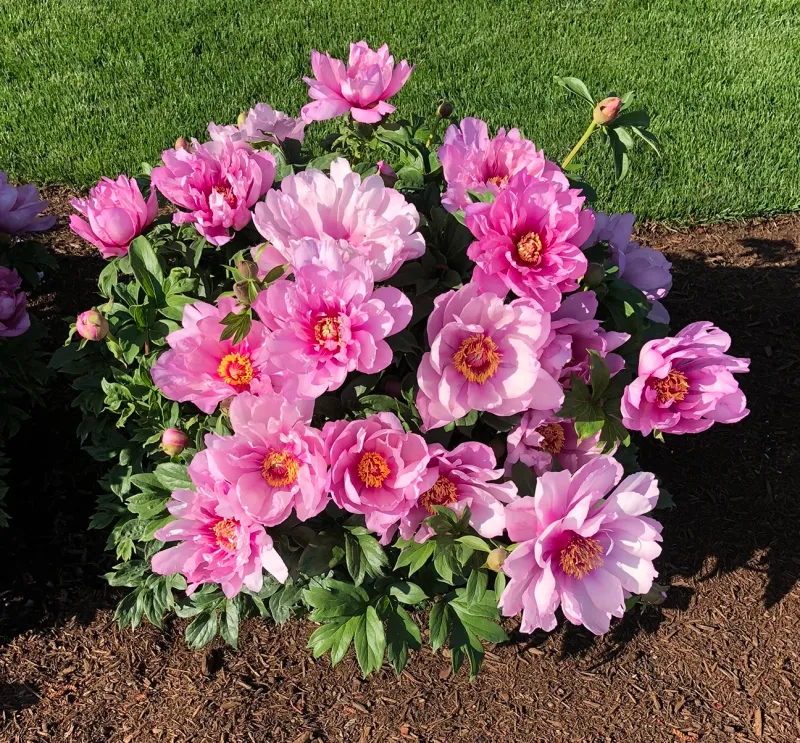
Not every peony follows the same pruning rules, and cutting the wrong type back to the ground can cause real harm. The most common type found in US home gardens is the herbaceous peony. Herbaceous peonies are nonwoody plants that send up fresh stems each spring and die back completely each winter, making them the primary focus of fall cutback guidance.
Tree peonies are an entirely different situation. University of Connecticut Extension and Clemson Cooperative Extension both note that tree peonies are woody shrubs with permanent stems that persist above ground year-round. Their leaves drop naturally in fall, but the branches stay. Cutting a tree peony to the ground removes the framework the plant depends on and can seriously set it back.
A third group worth knowing about is the Itoh or intersectional peony, a hybrid between tree and herbaceous types. Iowa State University Extension describes Itoh peonies as generally behaving more like herbaceous peonies in fall, dying back to the ground. Even so, confirm your plant type before grabbing the pruners. When uncertain, check a plant tag, contact your local extension office, or look up the cultivar name online before making any major cuts.
Deadhead when the flowers fade
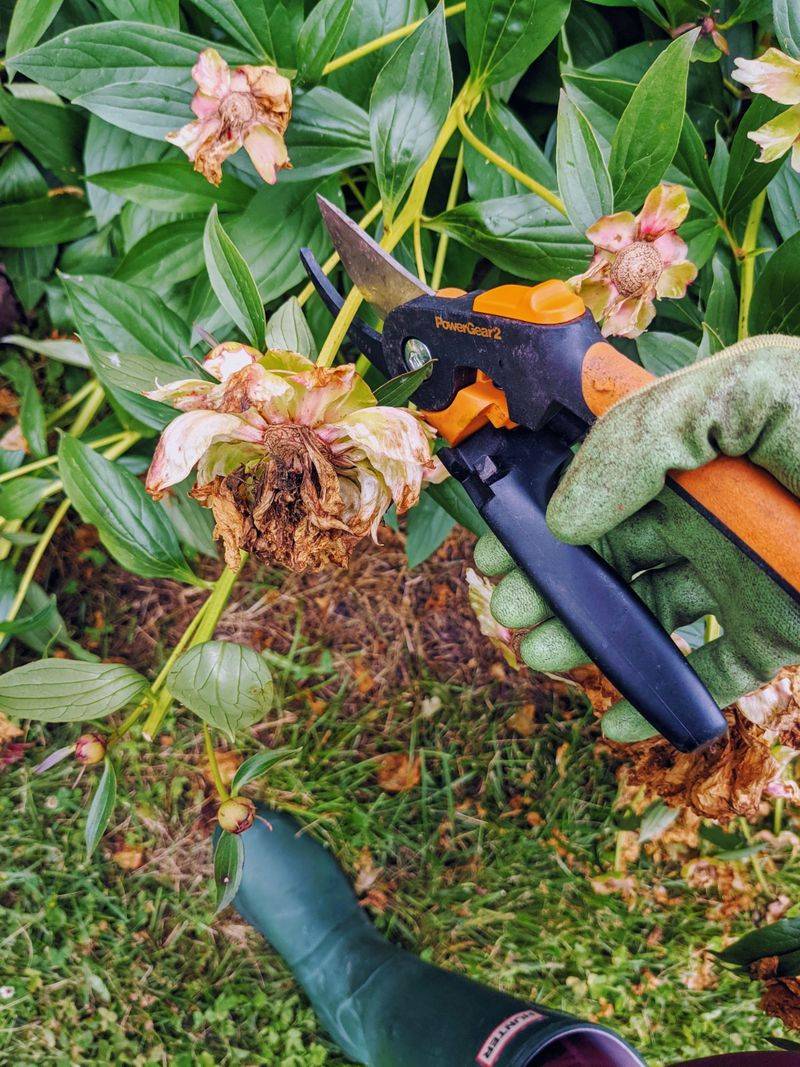
Once a peony flower finishes, it turns brown and papery, and that is your cue to act. Deadheading spent blooms is the first pruning task after flowering, and it is completely separate from the fall cutback that comes months later. Use clean, sharp pruners to cut the spent flower stem back to the first strong set of leaves below it, or cut it low enough that no bare stub sticks out above the surrounding foliage.
University of New Hampshire Extension explains that deadheading improves the plant’s appearance and stops it from putting energy into seed production. One thing deadheading does not do for ordinary garden peonies is trigger a second round of blooms. Unlike some annuals and repeat-blooming perennials, most herbaceous peonies flower once per season regardless of whether you remove the spent heads.
If you cut peony stems for bouquets during bloom season, keep the cuts conservative. North Dakota State University Extension advises limiting cut flowers to roughly one-third to one-half of the blooms and leaving as much foliage intact as possible. Taking too many stems strips the plant of the leaves it needs to stay healthy through summer, so enjoy a vase of peonies without going overboard.
Leave healthy leaves in place
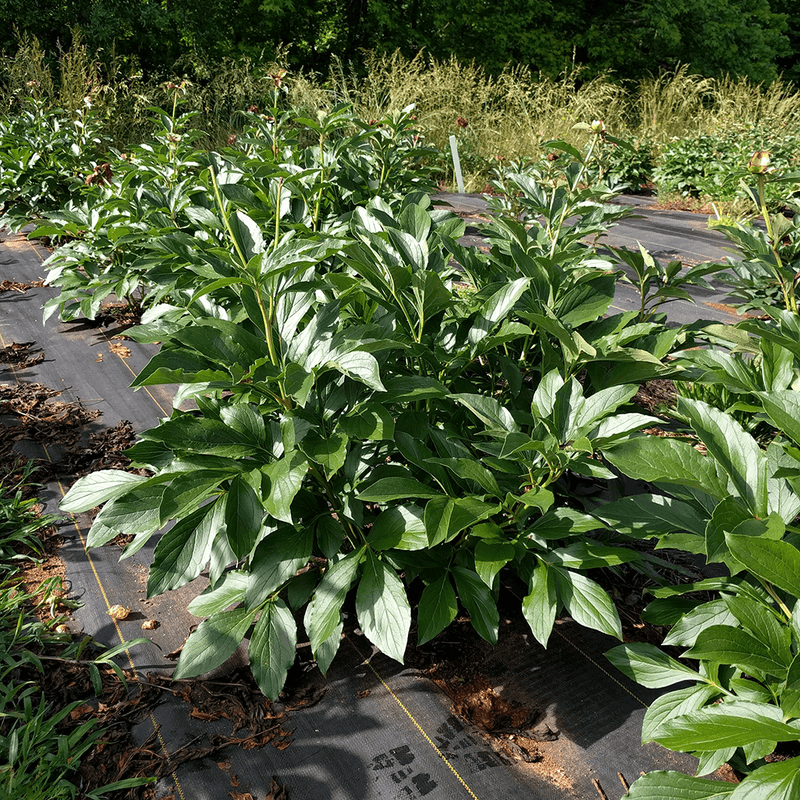
After the flowers are gone, the foliage is still doing important work. Peony leaves continue photosynthesis all through summer, capturing sunlight and converting it into the energy and carbohydrate reserves the plant stores in its roots. Those reserves are what the plant draws on to produce next year’s buds, so protecting the leaves through summer is genuinely useful for long-term plant health.
Iowa State University Extension states directly that cutting peony foliage in August or early September may result in fewer flowers the following year. University of Illinois Extension echoes this, noting that the foliage should stay in place until it naturally dies back. Resist the urge to tidy up the plant by cutting it down while the leaves are still green and working.
Unattractive foliage is not the same as diseased foliage, and that distinction matters. Leaves that look a little tired or slightly faded in late summer are still contributing to the plant. Leaves with spreading spots, gray fuzzy growth, or obvious blighting are a different story and may need attention sooner. Section seven covers that scenario in more detail, but the basic rule for healthy green leaves is simple: leave them alone until the plant tells you otherwise.
Use dormancy as the pruning signal

Gardening advice that promises one specific date for cutting back peonies is leaving out the most important part of the picture. Conditions vary too much across the continental US for a single calendar date to apply everywhere. The reliable signal is not on the calendar at all; it is on the plant itself.
Wait until the foliage has naturally yellowed and begun to die back on its own, or until a hard freeze has visibly damaged and collapsed the stems. Iowa State University Extension uses yellowing and natural dieback as the primary timing cues, and University of Connecticut Extension similarly ties the cutback to dormancy rather than to a fixed date. The American Peony Society also points to the post-freeze period as the appropriate time for cutting back.
A light first frost that barely touches the tips is generally not enough. You are looking for foliage that has genuinely shut down, turned yellow or brown, and lost its firmness. In many northern and Midwestern gardens, that point commonly arrives somewhere in late October through November, according to Ask Extension guidance on fall cutback timing. Gardeners in warmer USDA zones may see it later, while those in colder zones may reach it earlier.
Watch the plant, not the date.
Make the final cut cleanly
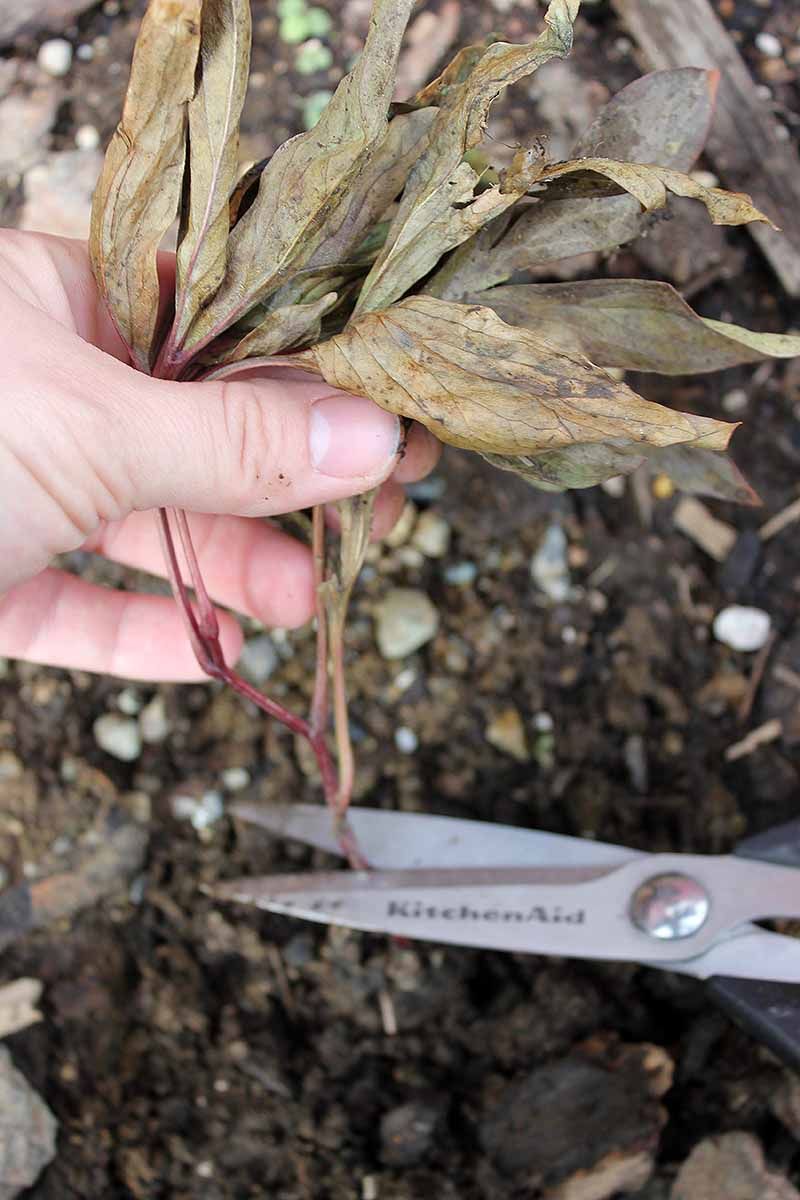
Once the foliage has died back or been knocked down by a hard freeze, the actual cutting goes quickly. Use clean, sharp bypass pruners rather than dull or anvil-style blades that can crush stems. Work your way around the plant, cutting each stem as close to the ground as practical.
University of Connecticut Extension recommends leaving approximately 3 inches of stem above the soil surface, while Iowa State University Extension advises cutting near ground level. Either approach is reasonable for a dormant herbaceous plant. The slight stub that remains poses no problem for the plant, and cutting too aggressively at or below the soil line is unnecessary.
After cutting, collect all the removed stems and any fallen leaves from around the crown of the plant. Debris left on the soil surface can harbor disease organisms through winter, so clearing it away is a straightforward part of routine fall maintenance. Keep in mind that cutting height and cleanup habits support normal plant care but do not, by themselves, determine how many flowers appear next spring. A clean garden bed going into winter is a reasonable goal on its own merits, separate from any promise about bloom quantity.
Treat cleanup as disease prevention
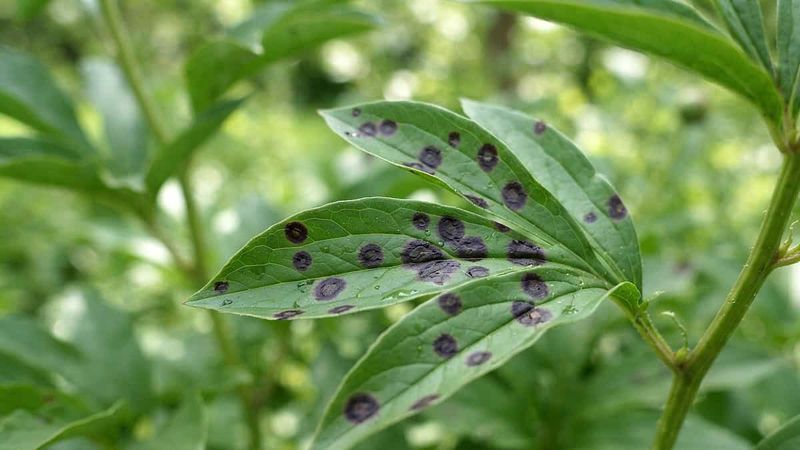
Fall cleanup around peonies does more than make the garden look tidy. Removing old stems and fallen leaves can reduce the amount of disease-causing material that survives winter in the garden bed. Botrytis blight, leaf blotch, and powdery mildew are among the most common peony diseases, and the organisms responsible for them can persist in dead plant tissue left on or near the soil.
Iowa State University Extension and the Matthaei Botanical Gardens at the University of Michigan both describe removing and disposing of old peony foliage as a sanitation step that may reduce infection sources the following spring. University of California Statewide IPM and University of Maine Extension echo this guidance, particularly for botrytis-affected material.
Frame this as preventive sanitation rather than a cure. Clearing the bed reduces potential inoculum sources but does not guarantee disease-free plants the following year, because pathogens can arrive from neighboring plants or persist in soil. One firm rule applies to diseased debris: do not add it to a home compost pile. Pathogens can survive the composting process and spread when finished compost is applied.
Remove visibly diseased leaves and stems from the garden entirely and dispose of them according to your local yard waste or green-bin guidelines.
Adjust the routine for diseased foliage
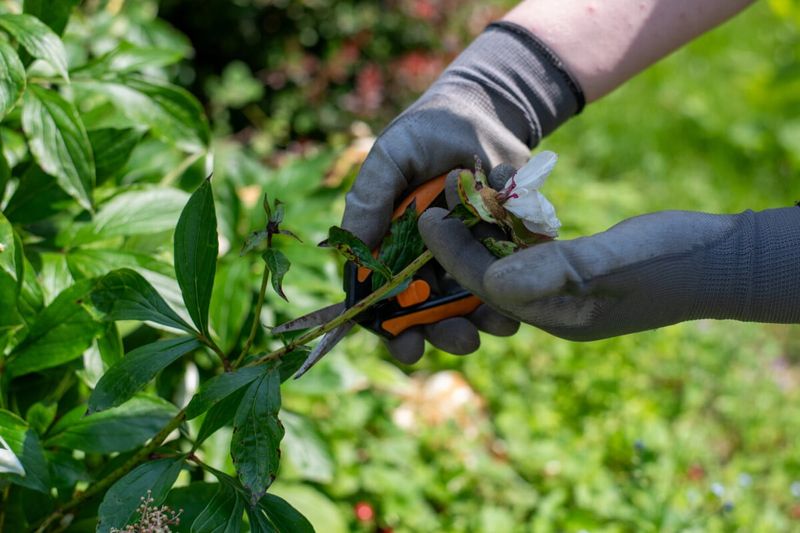
Healthy foliage and diseased foliage call for different responses, and the difference matters more than most gardeners realize. When a peony’s leaves are actively showing spreading spots, gray fuzzy growth consistent with botrytis, or other obvious signs of infection during the growing season, waiting until full dormancy is not always the right call. Removing substantially diseased tissue earlier can reduce the amount of infectious material the plant and its neighbors are exposed to over the rest of the season.
At the same time, be careful about removing too aggressively. University of Connecticut Extension and University of Illinois Extension both note that healthy green foliage still contributes to photosynthesis even late in the season. Removing large amounts of still-functional leaves to address a minor spotting problem trades one risk for another. When in doubt about a diagnosis, contact your local cooperative extension office before cutting.
Iowa State University Extension recommends working with dry foliage where practical, since wet conditions can spread spores during cutting. Remove infected material promptly and place it directly into a bag rather than dropping it near healthy plants. The University of Minnesota peony disease guide recommends disinfecting pruners with a 10 percent bleach solution or 70 percent rubbing alcohol after cutting diseased tissue and before moving to healthy plants. Disinfecting tools reduces the chance of spreading pathogens from one cut to the next, though it does not treat the plant itself.
Pruning supports plants but does not create blooms
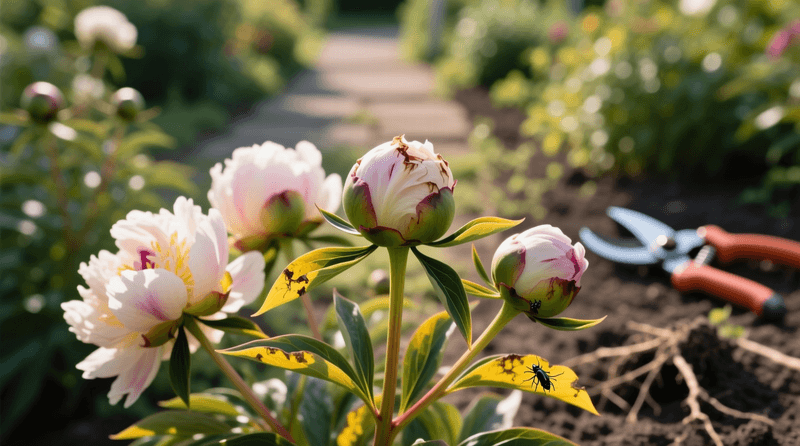
Fall cleanup and timely deadheading are good habits that support normal peony health, but they do not come with a bloom guarantee. A plant that was cut back on schedule, in a clean garden bed, can still produce few flowers the following spring for reasons that have nothing to do with pruning. Managing those expectations helps you troubleshoot more accurately when blooms are sparse.
Iowa State University Extension and University of Illinois Extension identify several well-documented causes of poor peony flowering: too little direct sunlight, planting the crown too deeply, young plants still establishing themselves, recent transplanting, insufficient moisture during the growing season, cultivar variation, and late-spring frost damage to emerging buds. Ask Extension guidance on peony establishment notes that newly planted or divided peonies may take two to three years to bloom reliably regardless of how well they are pruned.
The practical routine comes down to two stages: deadhead spent flowers promptly after bloom by cutting each stem back to healthy leaves, then leave the green foliage alone until it yellows naturally or a hard freeze brings it down. At that point, cut herbaceous stems close to the ground, clear the debris from around the crown, and dispose of any diseased material away from the compost pile. Good fall care keeps the plant in reasonable shape heading into winter; what happens in spring depends on far more than a pair of pruners.