
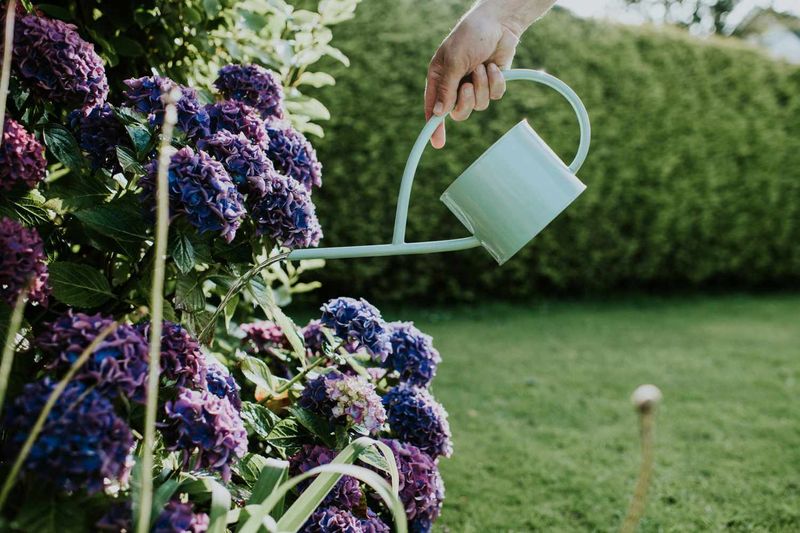
Watching your hydrangea go from lush blooms to brown, papery clusters in the middle of summer can feel discouraging – but the plant may not be failing at all. Heat, drought, and watering habits can all leave their mark on flowers and foliage in ways that look alarming but mean very different things. Before adjusting your watering routine, it helps to know exactly what you are seeing and why it happened. The answer changes what you should do next.
Identify the problem before changing your watering
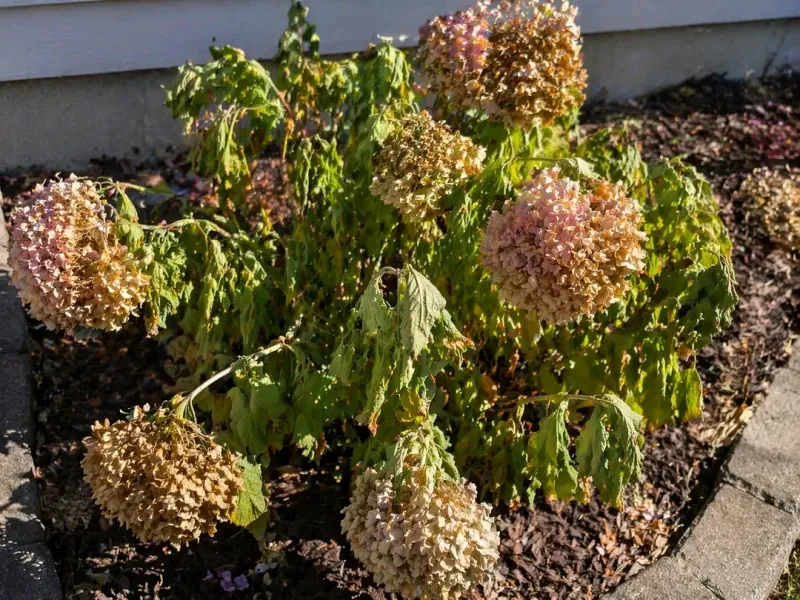
Not every struggling hydrangea is the same problem wearing the same face. Flower clusters that are softening in color, turning papery, and slowly drying out are likely just aging naturally – extension plant specialists note that hydrangea blooms go through a normal fading cycle that does not signal plant failure or a need for more water. Faded flowers are a sign of time passing, not a cry for help.
Heat-damaged flowers look different. Look for brittle edges with a tan or brown color, almost as if the tips were lightly singed. OSU Extension explains that when water loss exceeds what roots can supply during hot, windy weather, plant tissue dies – and that shows up first on the most exposed parts of the flower.
A third situation is the one that confuses gardeners most: a plant that looks healthy and full of green leaves but has produced zero flowers. University of Maryland Extension points out that a hydrangea can be completely leafy and vigorous yet have no blooms at all if its flower buds were removed by pruning or killed by winter cold or a late frost. Knowing which of these three situations you are dealing with is the only reliable starting point for deciding what to do next.
Heat and drought can damage flowers and future buds
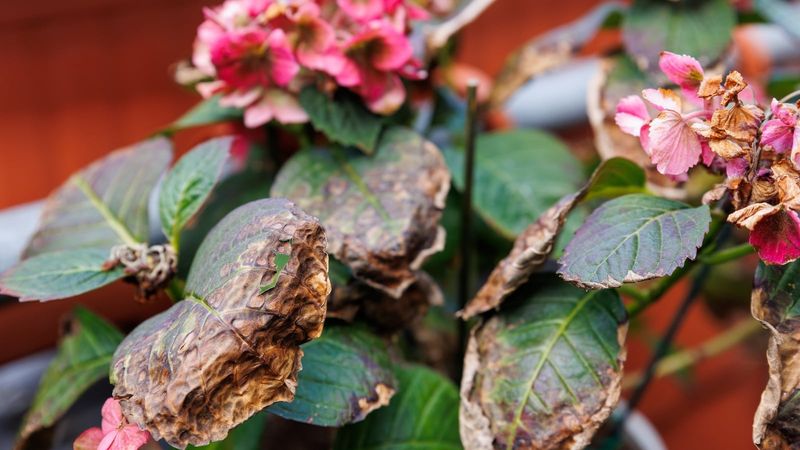
Summer heat puts hydrangeas under real physiological pressure. When temperatures climb and wind picks up, plants lose water through their leaves faster than roots can pull it from the soil. OSU Extension reports that this imbalance causes the brittle, tan-edged blooms and scorched leaves that alarm so many gardeners mid-summer. Bigleaf hydrangeas are notably more sensitive to this kind of heat and drought stress than panicle or some smooth hydrangeas.
The timing of late-summer drought carries a second consequence that is easy to overlook. Bigleaf hydrangeas begin forming next year’s flower buds during late summer, so a plant that stays chronically water-stressed during that window may enter fall with fewer buds than it should have. UConn Extension’s hydrangea guide specifically warns that continually wilted plants can produce fewer flower buds the following year.
This reframes what good summer watering actually does. Keeping the root zone adequately moist during heat events is less about reviving flowers that are already open and more about preventing tissue damage and protecting the buds your plant is quietly building for next season. UGA Extension’s bigleaf hydrangea guide reinforces this by noting that adequate moisture during late summer supports healthy bud development. Think of summer watering as preservation, not a guaranteed bloom trigger.
Hydrangea type tells you whether missing buds can still be replaced
One of the most practical things to know about your hydrangea is whether it blooms on old wood or new wood, because that determines whether any missing flowers this season can still be replaced. Maryland Extension’s pruning guide explains that bigleaf hydrangeas (Hydrangea macrophylla) and oakleaf hydrangeas generally bloom on old wood – meaning the flower buds were formed on last year’s stems during the prior growing season. If those buds are gone, no amount of water this summer will bring them back.
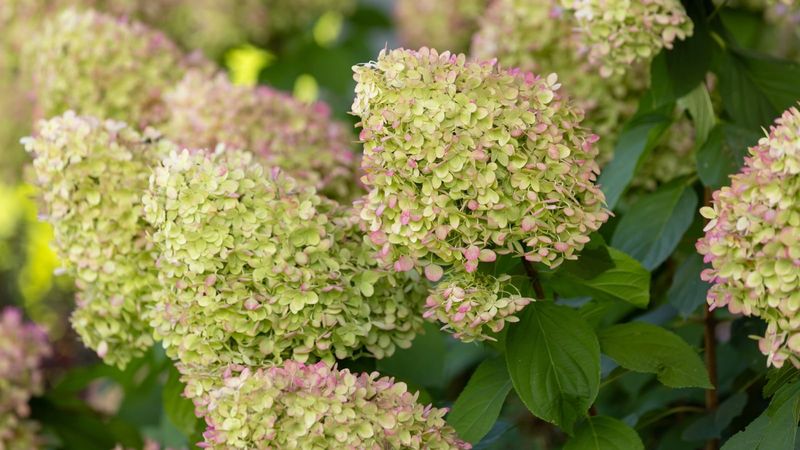
Panicle hydrangeas and smooth hydrangeas work differently. They produce flower buds on new wood – stems that grew during the current season. A panicle or smooth hydrangea that gets adequate water and light can still bloom even after a rough winter, because it builds its flowering potential fresh each spring. University of Minnesota Extension outlines this distinction clearly and connects it directly to pruning and bloom expectations.
Reblooming bigleaf cultivars, such as the Endless Summer series, can produce some flowers on current-season growth, but Penn State Extension notes that reblooming performance varies by cultivar and growing conditions and is not guaranteed. Watering a stressed bigleaf hydrangea well can reduce heat damage and help protect developing buds, but it cannot restore old-wood buds that were already removed by a pruning shear or killed by a hard frost. Knowing your plant’s type sets realistic expectations before you reach for the hose.
Water deeply at the root zone when the soil needs it
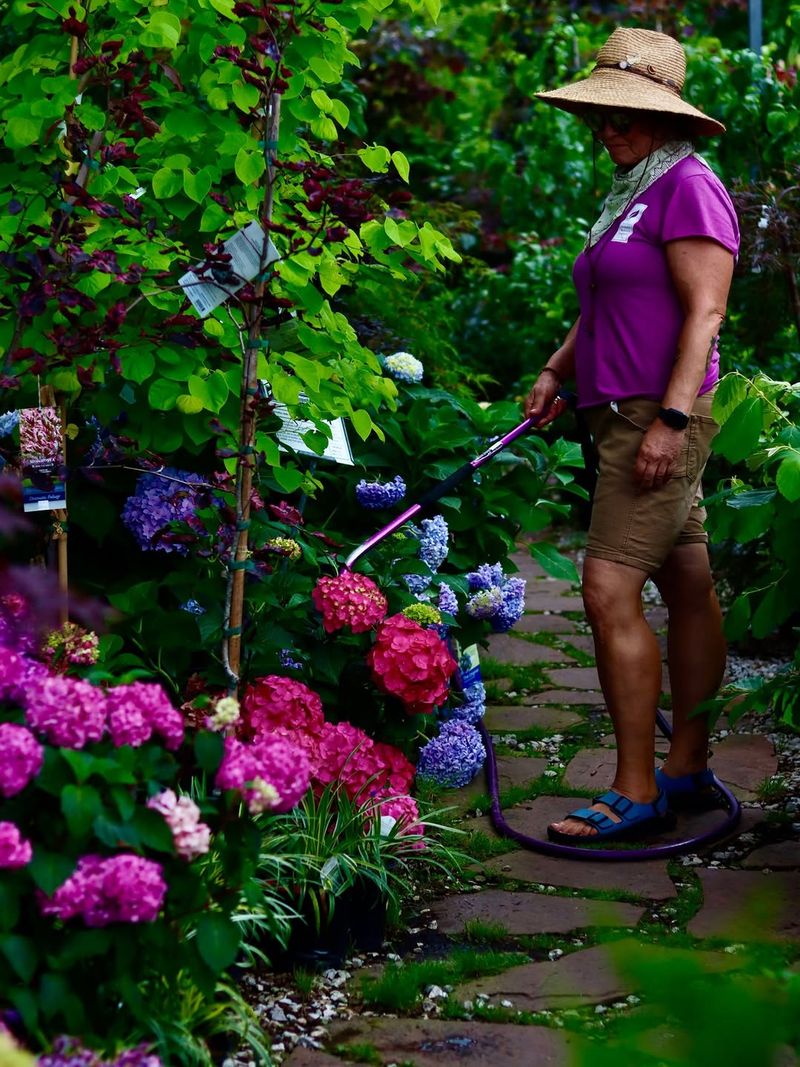
Before turning the water on, check the soil. Push a finger or a thin trowel a few inches into the ground near the plant’s base – if the root zone feels moist, the plant likely does not need more water yet, regardless of how the leaves look in the afternoon heat. When the soil does feel dry in the upper several inches, that is the reliable signal to water.
University of Minnesota Extension recommends wetting the top 6 to 9 inches of the root zone for established shrubs, applying water slowly and deeply rather than giving frequent shallow passes that only wet the surface. A soaker hose, drip line, or a slow stream held at the base of the plant works well because it puts water where roots can actually use it. Routine overhead watering that wets flowers and foliage is worth avoiding – it wastes water and can encourage foliar disease.
Morning is the preferred time to water. UMN’s hot-weather gardening guidance explains that watering early gives the soil and roots time to absorb moisture before peak heat arrives, and less water is lost to evaporation and wind. OSU Extension’s general hydrangea care page echoes this preference. Skip fixed schedules and universal volumes – how often you water depends on your soil type, recent rainfall, sun exposure, plant age, and whether the hydrangea is growing in a container or in the ground.
UConn’s hydrangea guide specifically recommends long, slow soaks with a soaker or drip hose over daily shallow watering, which can encourage shallow root systems and leave the plant more vulnerable to heat stress over time.
Check the soil before responding to a midday wilt
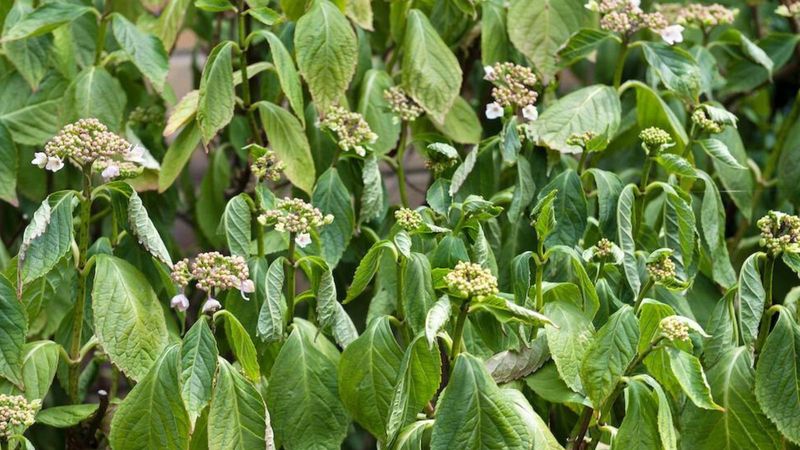
A drooping hydrangea at noon does not automatically mean a thirsty hydrangea. Maryland Extension explains that hydrangeas commonly wilt during the hottest part of the day even when the root zone holds plenty of moisture – the plant simply cannot move water fast enough through its stems to keep up with the heat-driven demand from its large leaves. If the soil is moist and the plant perks back up by morning, adding more water is not necessarily helpful.
The practical test is simple: check the soil a few inches down near the roots, then observe the plant the following morning. Recovery overnight with moist soil means heat stress, not drought. Persistent wilting paired with dry soil is the combination that calls for a deep soak at the base.
OSU Extension’s hydrangea care guidance also cautions that chronically soggy soil can damage roots just as drought can – overwatering a plant that is already stressed from heat adds a second problem on top of the first. Good drainage matters as much as adequate moisture. UMN’s heat-gardening newsletter reinforces that soil-moisture checks are more reliable than visual cues alone when temperatures are extreme. If watering in the evening or late afternoon is sometimes the only option, directing water at the soil rather than the foliage makes it a reasonable choice – morning remains the better routine, but an evening soil soak is far preferable to skipping water when the root zone is genuinely dry.
Use mulch and temporary shade to reduce heat stress
Watering is not the only tool available when summer turns brutal. A 2 to 3 inch layer of organic mulch – shredded bark, wood chips, or leaf material – spread around the root zone helps the soil hold moisture longer between waterings and buffers root-zone temperatures against surface heat. UMN’s water-wise gardening guidance lists mulch as a reliable way to reduce evaporation and moderate soil temperature at the same time. Keep it pulled several inches back from the plant’s stems to avoid trapping moisture against the crown.
Material choice matters in already-hot spots. Black plastic sheeting and gravel both absorb and radiate heat, which can make conditions worse for a plant already struggling with high temperatures. Stick with light-colored or natural organic materials in sun-exposed beds.
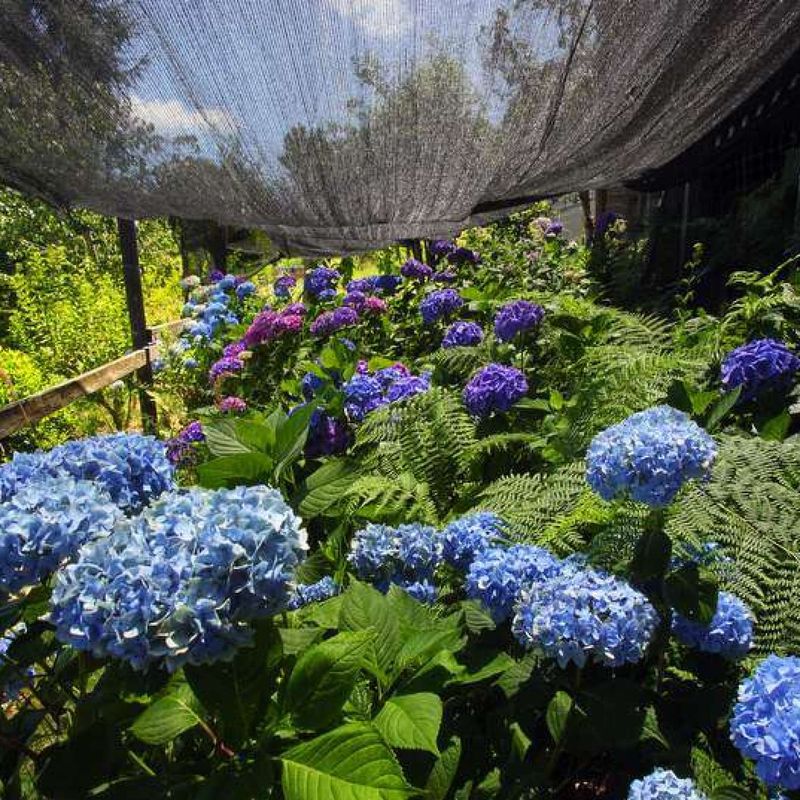
Temporary shade is another option worth considering, especially for bigleaf hydrangeas planted in more sun than they can comfortably handle. OSU Extension recommends draping shade cloth or breathable fabric over the plant during the worst heat, supported on stakes so it sits above the foliage and allows airflow rather than trapping heat underneath. This is meant as a short-term measure during heat events, not a permanent fix.
One expectation to set clearly: scorched leaves and browned petals will not recover. The goal of mulching and shading is to protect the healthy tissue that remains and prevent the damage from spreading further, not to reverse what has already happened.
Check pruning, frost, winter injury, and light when blooms are missing
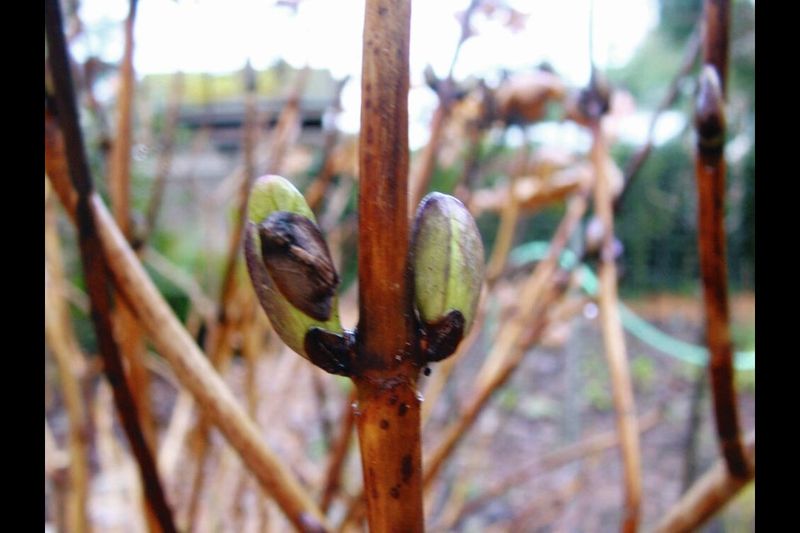
A hydrangea that is green, leafy, and clearly alive but producing zero flowers is telling you something specific: the problem almost certainly started before summer. Penn State Extension identifies pruning at the wrong time as one of the most frequent reasons bigleaf hydrangeas skip a bloom season entirely. Cutting stems in late summer, fall, or winter removes the very buds the plant was holding for the following year’s flowers. If you pruned after mid-summer last year or cut back stems that still had live buds, that single action can explain an otherwise healthy but flowerless plant this season.
Winter injury and late spring frosts are the next most common culprits. Maryland Extension notes that a hard freeze or a late frost can kill old-wood buds on bigleaf hydrangeas even when the stems themselves survive – the plant looks fine going into spring but simply has no buds left to open. Examine the stem tips in early spring: if the buds are soft, brown, or hollow, frost damage is the likely explanation.
Light deserves a closer look too. UConn Extension points out that full shade can reduce flowering, while the right balance of sun and afternoon shade depends on the species, cultivar, and local climate. A hydrangea that has grown into deep shade as surrounding trees matured may simply not be getting enough light to bloom well. UGA Extension also lists excessive shade and excess nitrogen fertilizer among the contributing factors for poor flowering in bigleaf hydrangeas.
Watering can support a stressed plant, but it cannot replace buds that were never there to begin with.
Protect healthy growth now and set realistic bloom expectations
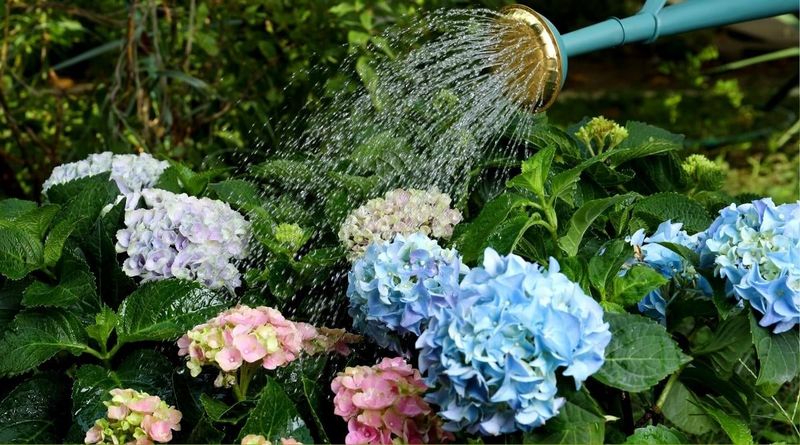
The most useful thing you can do for a heat-stressed hydrangea right now is work through a short, practical sequence. Start by checking the root-zone moisture before watering. If the soil is dry several inches down, apply a slow, deep soak at the base of the plant in the morning, directed at the soil rather than the foliage. OSU Extension and Maryland Extension both emphasize that protecting healthy tissue from additional stress is the immediate priority once damage has occurred.
Add a layer of organic mulch if the root zone is bare, and consider temporary shade cloth during the worst heat stretches, especially for bigleaf hydrangeas in full afternoon sun. Do not try to revive scorched leaves or browned petals – they will not recover, and the energy is better spent on what is still healthy.
If flowers are absent rather than damaged, revisit pruning timing, frost history, winter injury, light levels, and your cultivar’s bloom habits before assuming watering is the answer. UMN Extension’s established-shrub watering guide is a reliable reference for dialing in a moisture routine that fits your specific site. These steps can reduce stress and help protect the buds your plant is building for next year, but they cannot guarantee more flowers this summer. A hydrangea that is well-cared-for through August often has more to show for it the following June.