
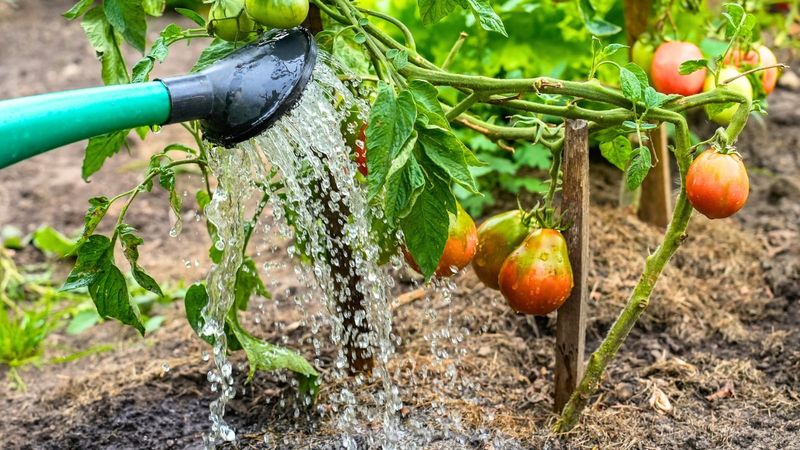
Finding a perfectly ripe tomato split down the side is one of the most frustrating moments in a summer garden. You did everything right, and then the fruit cracked open right after you watered. The good news is that this problem usually points to a specific pattern in how moisture reaches the roots, and adjusting that pattern can reduce how often it happens. No fertilizer changes or disease sprays needed, just a closer look at when and how you water.
The crack usually starts with a growth surge, not a disease
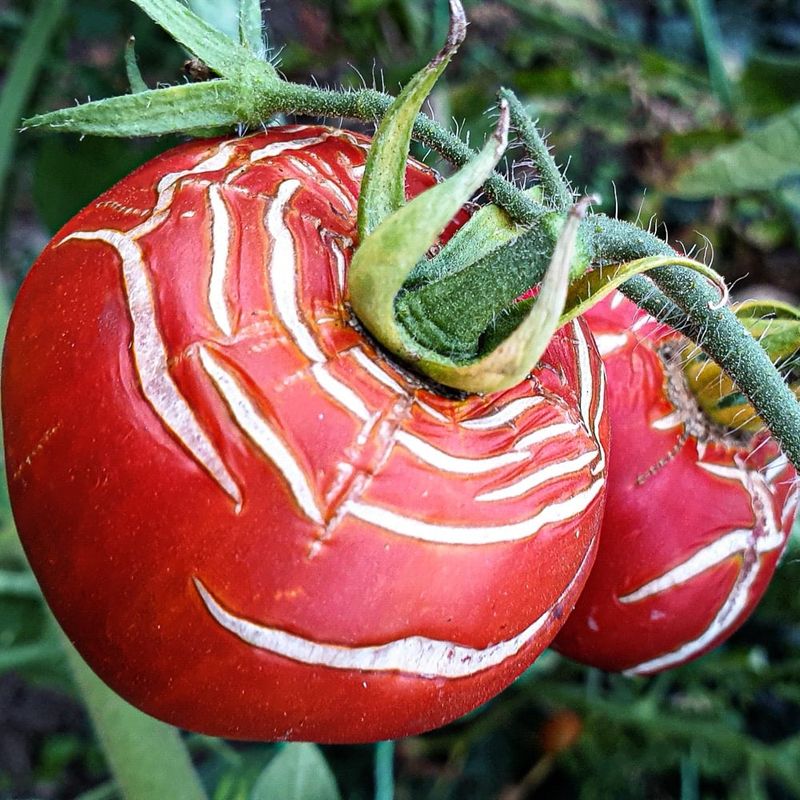
Radial splits running down from the stem end like spokes on a wheel, or concentric rings circling the stem like growth rings on a tree trunk, are the two most common crack patterns gardeners find on summer tomatoes. Both patterns fall under the category of growth cracks identified by University of Minnesota Extension, and they are generally caused by environmental or physiological conditions rather than a fungal or bacterial disease that started the damage.
That distinction matters because it changes how you respond. Reaching for a fungicide or disease spray will not address a crack that formed because the fruit swelled faster than its skin could stretch. Treating an abiotic disorder as an infection wastes time and money while the real cause, moisture fluctuation, continues unchanged.
Where disease does enter the picture is after the crack forms. An open wound in the fruit skin creates an entry point for secondary fungi, bacteria, and insects that would not have gotten through undamaged skin. Harvesting cracked fruit promptly limits how long that opening sits exposed in the garden heat. Catching the problem early and adjusting your watering approach is a more useful response than spraying, and the sections that follow explain exactly how to do that.
Why tomatoes split after watering or rain
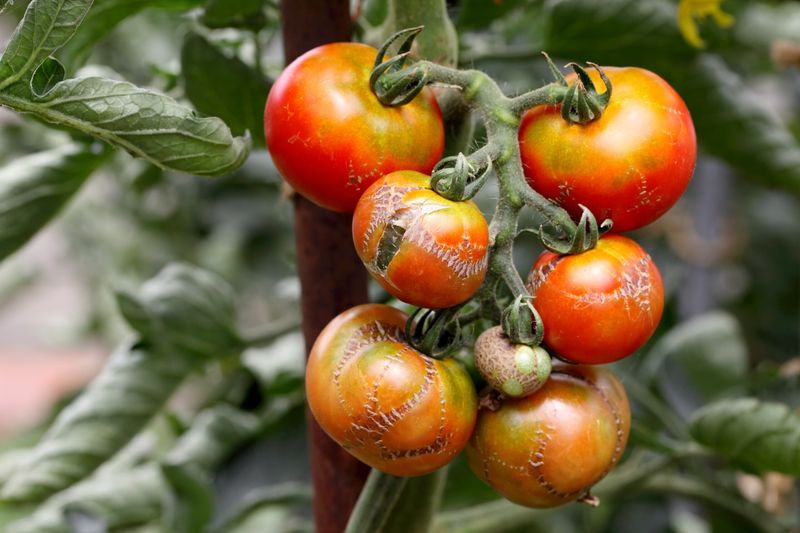
The pattern that leads to cracking often starts not with too much water, but with a sharp swing from too little to too much. When the root zone becomes substantially dry over several days, the plant slows the movement of water into the fruit. Then a heavy watering session or a soaking rain arrives, the roots absorb a large volume of moisture quickly, and the fruit swells faster than its skin can accommodate. The skin tears, and a crack appears.
Seeing a crack right after you water does not mean that watering caused it. Penn State Extension explains that the watering event you just completed may simply be the final step in a swing that began days earlier when the soil dried out. The crack was already in progress at the cellular level before you picked up the hose.
Several other factors shape how susceptible any given fruit will be. Cultivar genetics, fruit size, how close the tomato is to full ripeness, air temperature, humidity, direct sunlight on the fruit, canopy cover, and whether water lands directly on the skin around the stem scar all play a role. Chronic overwatering on its own is a less accurate explanation than a rapid dry-to-wet shift, and blaming the last watering alone misses most of what is actually happening.
Water before the root zone becomes severely dry
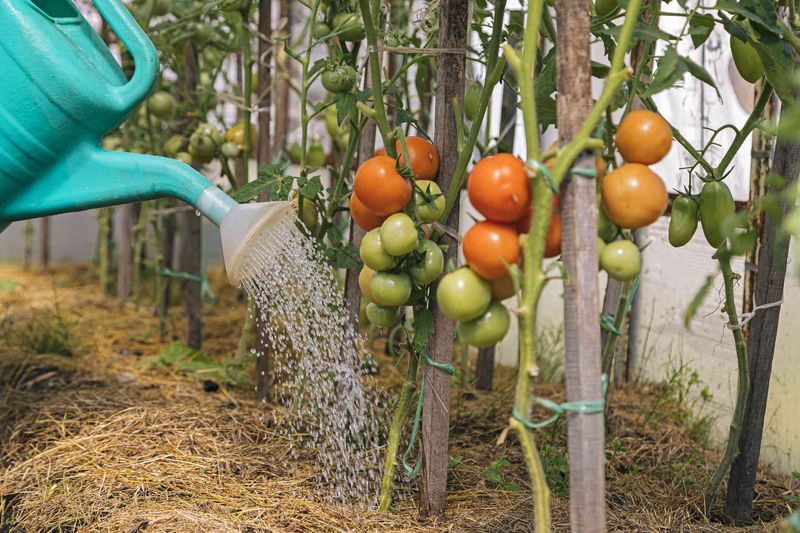
The most useful adjustment you can make is to shift when you water, not necessarily how much. Checking the soil near your tomato plants and watering when the root zone is just beginning to dry, rather than waiting until the leaves droop or the soil pulls away from the container edges, keeps moisture levels far more stable. That stability is what reduces the sharp swings that lead to cracking.
Oregon State University Extension’s watering guidance recommends checking moisture about two inches below the surface as a practical indicator of when plants actually need water. If the soil at that depth still feels damp, you can wait. If it feels dry or barely cool, water now rather than tomorrow. That two-inch check works across most soil types and plant sizes without locking you into a calendar.
A rigid schedule, such as watering every seven days no matter what, is not reliable general advice for US home gardens. Sandy soils drain and dry faster than clay. Raised beds and containers lose moisture more quickly than in-ground beds. A stretch of 95-degree days changes the math entirely compared to a mild, cloudy week.
Penn State Extension consistently emphasizes using plant and soil conditions, not a fixed interval, as your decision guide. Your goal is a steadier moisture pattern, not less water overall.
Deep root-zone watering can reduce the next sharp swing
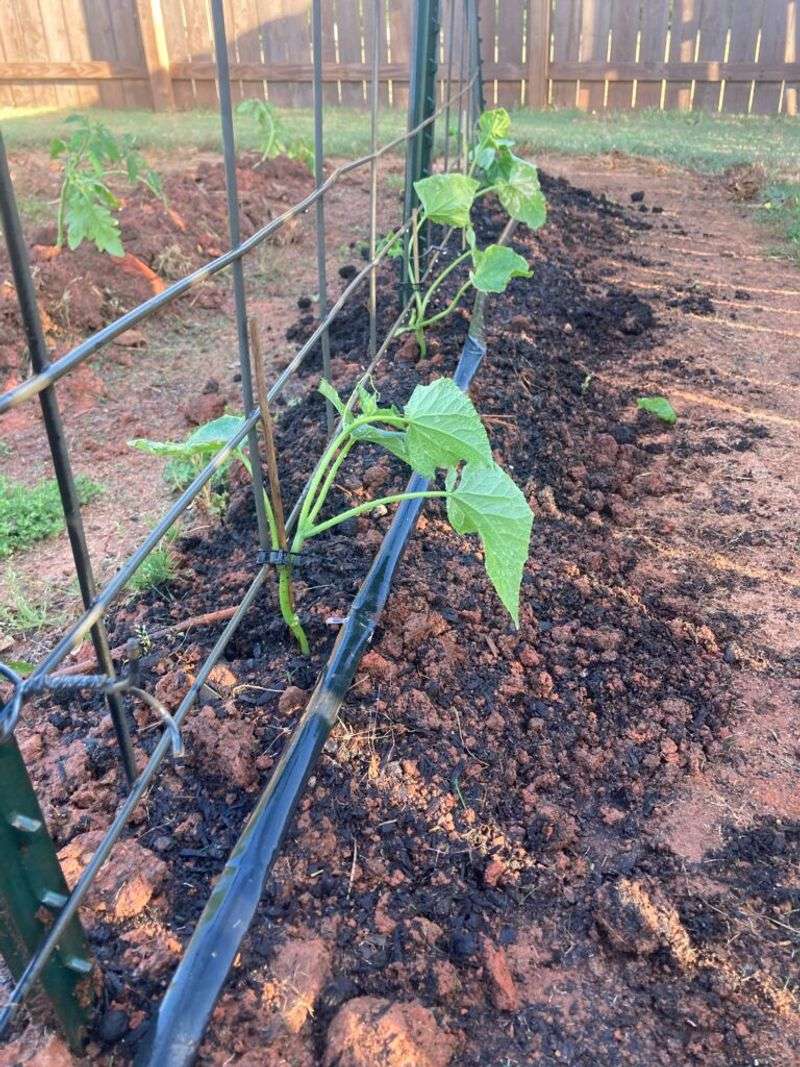
Knowing when to water is only half the equation. How you deliver that water shapes whether the moisture reaches the root zone evenly or just wets the surface and evaporates before the roots benefit. Applying water slowly and deeply, so it soaks down through the full root zone rather than sitting in the top inch of soil, gives the plant a more consistent reservoir to draw from between sessions.
OSU Extension’s watering basics and University of Minnesota Extension’s irrigation strategies for vegetables both point toward deep, thorough watering as more effective than frequent light sprinkling. Light sprinkling encourages shallow roots and leaves the deeper root zone dry, which sets up exactly the dry-to-wet swing you are trying to avoid. The amount of water and the interval between sessions will vary by soil type, bed depth, container size, and local weather, so use the two-inch soil check from the previous section rather than a fixed number of gallons.
Drip irrigation and soaker hoses deliver water directly to the soil at a slow rate, which makes moisture delivery more uniform and avoids wetting the fruit and foliage. Penn State Extension notes that overhead irrigation can increase cracking risk when water collects around the stem scar of ripening fruit, so directing water to the soil rather than the plant is a practical advantage of drip or soaker systems. Neither method can guarantee crack-free fruit, but both can reduce the severity and frequency of moisture swings.
Mulch and leaf cover help stabilize growing conditions
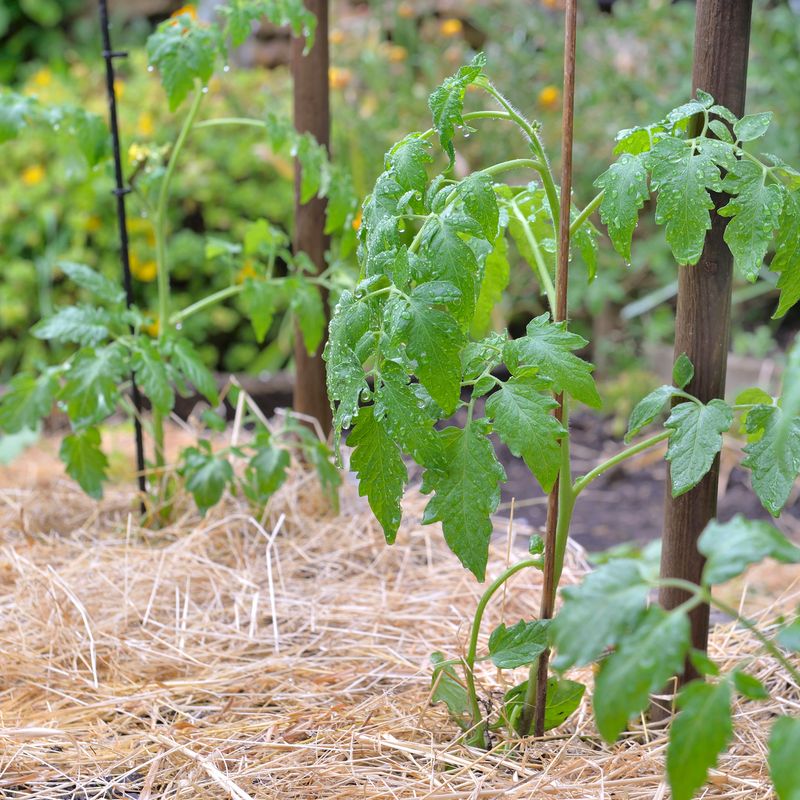
Once you have improved your watering timing and method, mulch is one of the simplest ways to hold onto the progress you have made. A two-to-four-inch layer of organic mulch, such as straw, shredded leaves, or wood chips, slows evaporation from the soil surface and helps maintain more uniform moisture between waterings. Penn State Extension recommends mulch specifically for conserving moisture around tomatoes, and plastic mulch can serve the same function in beds where it is already in use.
Mulch also moderates soil temperature, which matters on hot July afternoons when bare soil can heat up quickly and push moisture out of the root zone faster than you expect. Cooler, more stable soil holds moisture longer and gives you more time between waterings without letting the root zone swing into drought stress.
Canopy management deserves attention alongside mulch. Tomato leaves shade both the soil and the developing fruit, reducing heat and light stress on the skin. Avoid heavy pruning that strips away large portions of the plant’s leaf cover, and if disease has already caused significant leaf loss, treat the underlying problem rather than ignoring the exposed fruit. Neither mulch nor foliage alone can prevent cracking in a susceptible variety during a wet spell, but both reduce the swings that make cracking more likely.
Variety and harvest timing still affect cracking risk
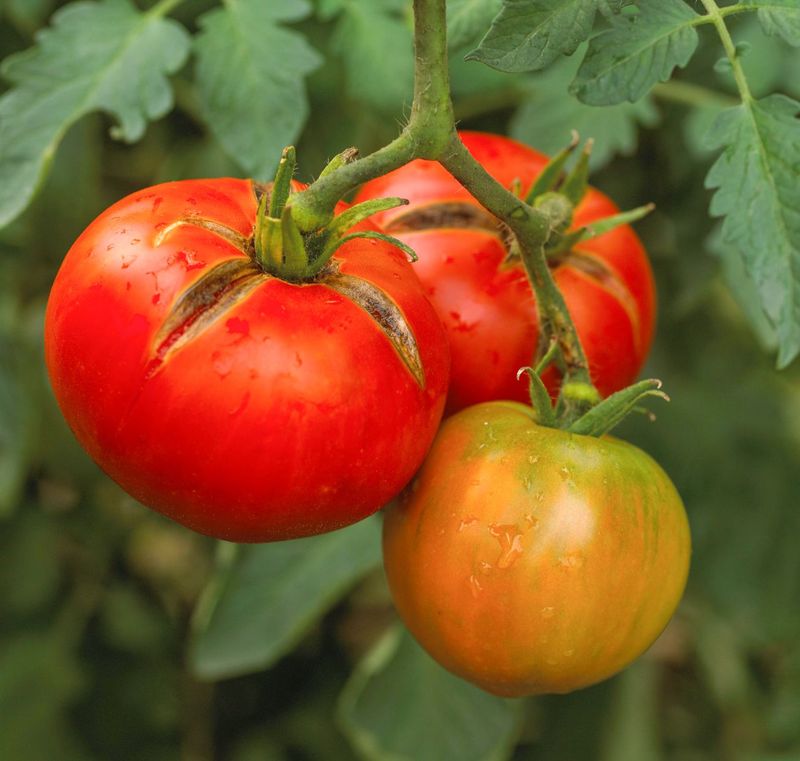
Even with improved watering and mulch in place, some tomatoes will still crack, and variety plays a significant role in why. Large-fruited types, including many beloved heirlooms, tend to have thinner, more delicate skins that stretch less before tearing. University of Minnesota Extension notes that varieties differ substantially in crack susceptibility, and choosing one described as crack-resistant can make a meaningful difference in future seasons, even if it does not solve the problem for the plants already in your garden this year.
Harvest timing offers another lever you can pull right now. Tomatoes that have reached the breaker-to-pink stage, where the color has just begun to shift from green, will continue to ripen indoors and are less likely to crack than fruit left on the vine through a rain event. Penn State Extension presents early harvest as a risk-reduction strategy worth considering, especially when rain is in the forecast.
This is not a recommendation to pick every tomato green. Fully green fruit lacks the sugars and acids that develop during vine ripening, and the flavor will reflect that. The practical middle ground is watching the forecast and pulling fruit that has already started to color before a predicted downpour, rather than leaving fully ripe fruit exposed to the wet-dry cycle that cracks it most reliably.
Check for other tomato disorders before choosing a treatment
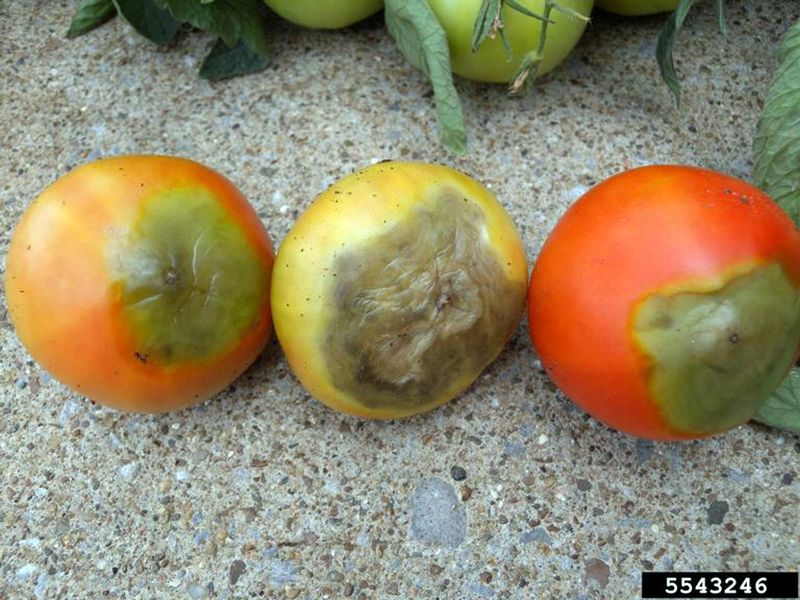
A split at the stem end of a tomato is not the only thing that can go wrong with the fruit, and matching the right fix to the right problem starts with knowing what you are actually looking at. Growth cracks, which radiate from the stem or circle it in rings, are different from several other common disorders that gardeners sometimes confuse with them.
Blossom-end rot appears as a dark, sunken, leathery lesion at the bottom of the fruit, opposite the stem. University of Minnesota Extension’s tomato disorders guide explains that blossom-end rot is associated with disrupted calcium movement within the plant, often worsened by inconsistent moisture. Applying calcium fertilizer to fix a stem-end crack will not help because that crack is a growth disorder, not a calcium deficiency symptom. Catfacing produces distorted, misshapen fruit with corky scars, usually near the blossom end, and is typically linked to cold temperatures during flowering.
Sunscald shows up as a pale, papery, or slightly flattened area on the side of the fruit facing the sun, caused by heat and UV exposure after leaf loss or aggressive pruning.
Minnesota’s fruit-crack diagnostic tool and irrigation guidance for vegetables both reinforce that growth cracking is primarily an environmental issue. Treating it as a disease or a mineral deficiency sends you down the wrong path entirely, so take a moment to match the symptom pattern before reaching for any product.
Use sound cracked fruit promptly and discard damaged fruit safely
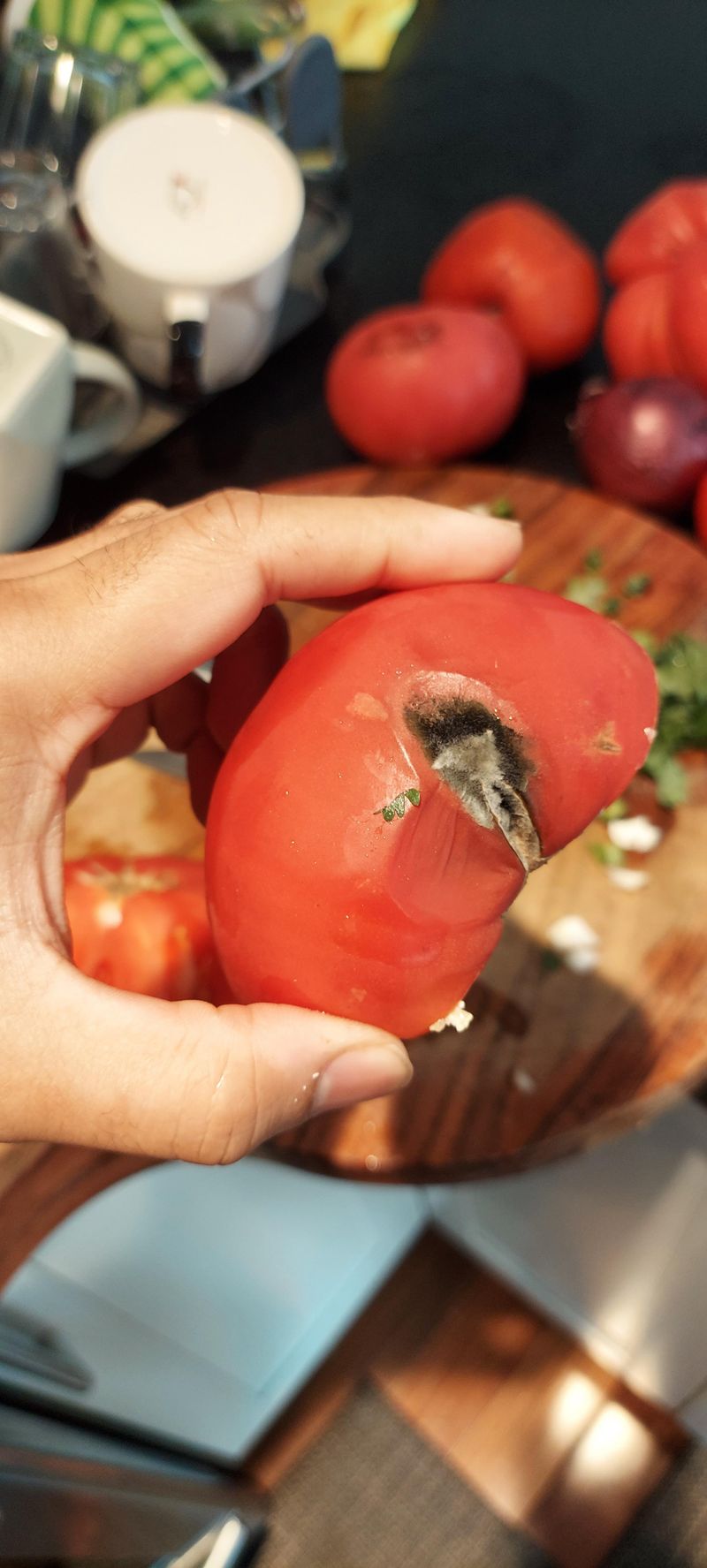
When you find a cracked tomato, act quickly. Harvest it right away rather than leaving it on the vine, where the open skin invites insects, mold, and bacteria to move in. University of Minnesota Extension advises prompt harvesting of affected fruit for exactly this reason.
For fresh use, wash the tomato thoroughly and cut away the damaged area. USDA food safety guidance recommends removing damaged portions of produce before eating. If the remaining fruit is firm, smells clean, and shows no mold, soft spots, or decay, it is reasonable to use it the same day in a salad, sauce, or cooked dish. Any fruit with mold, rot, a foul smell, extensive damage, or anything that makes you uncertain should be discarded rather than eaten.
Do not use cracked tomatoes for home canning under any circumstances. University of Minnesota Extension’s home canning guidance is clear that damaged fruit introduces safety risks that standard canning processes cannot reliably eliminate. Going forward, the combination of checking soil moisture before severe drying occurs, watering deeply and steadily, laying mulch, and harvesting at the first blush of color before rain gives you the best practical chance of fewer cracks next time. The tomato that never splits is probably still out there in next year’s seed catalog.