
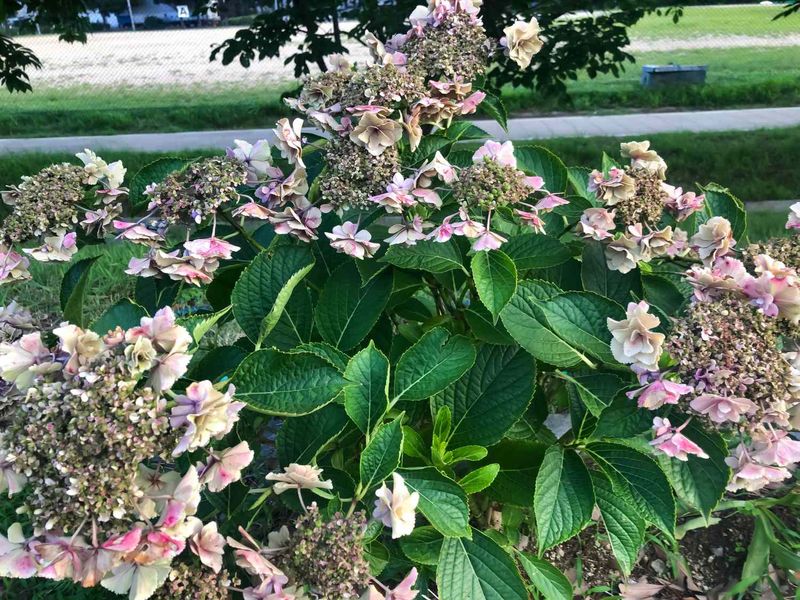
Sparse, small, or faded hydrangea flowers in midsummer can feel like a defeat, especially after a full season of watering and waiting. The good news is that weak blooms often point to a fixable problem, and understanding what went wrong is the first step toward getting your shrub back on track. A smarter care reset may improve conditions now and protect the next round of flowers, though some results will take until the following season to show up.
The bloom problem may not be a fertilizer problem
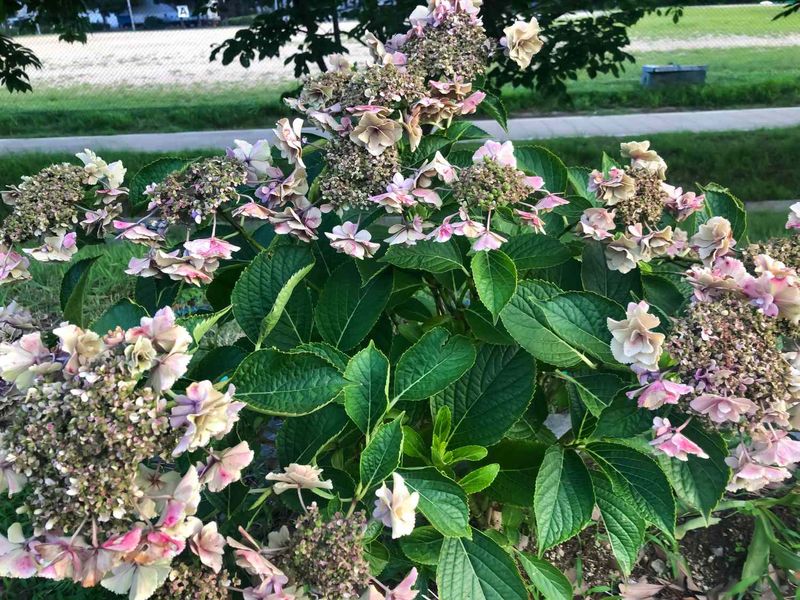
Reaching for a bag of fertilizer when hydrangea flowers look disappointing is a natural first instinct, but the cause of weak or sparse blooms is rarely a simple nutrient shortage. Penn State Extension’s guide on hydrangea bloom failure lists pruning at the wrong time, insufficient light, winter injury, deer browsing, and disease as common culprits that fertilizer cannot address. Before assuming the plant is hungry, it helps to work through a short checklist of the more likely causes.
Some flower heads that look weak are actually going through normal aging. The Royal Horticultural Society’s notes on garden hydrangeas point out that flower clusters naturally shift color and texture as they mature, so a fading or greenish bloom head is not automatic proof that the plant needs feeding. Distinguishing genuine bloom failure from normal flower-head aging is worth doing before making any changes.
The reset described in this guide is a sequence of checks and corrections rather than a single fix. University of Missouri Extension’s coverage of mophead and lacecap hydrangeas reinforces that site conditions, moisture, and pruning habits all shape flowering. Some corrections may help the plant perform better within the current season; others protect next year’s buds and will not show results until then.
Identify the hydrangea before you change its care
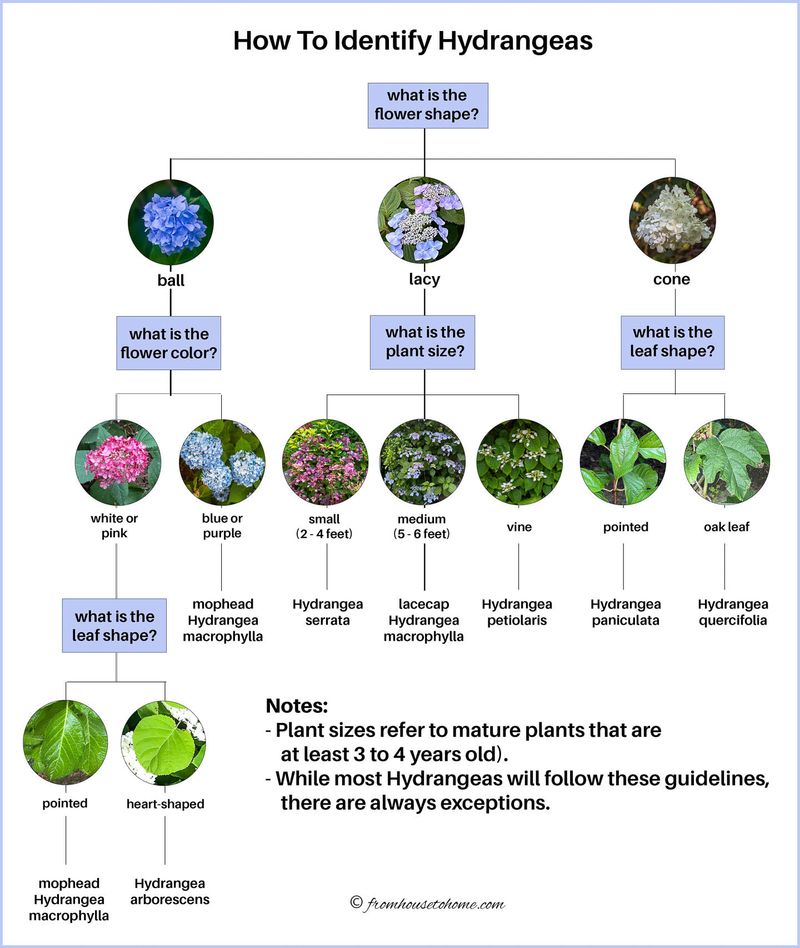
Not all hydrangeas follow the same rules, and a generic instruction to “cut it back” or “feed it more” can do real harm if applied to the wrong type. The single most useful step before adjusting any care routine is figuring out which species or cultivar you actually have. University of Minnesota Extension’s pruning guide for hydrangeas explains that bigleaf hydrangea (Hydrangea macrophylla) and oakleaf hydrangea (H. quercifolia) generally produce flowers on old wood, meaning stems that grew the previous season carry the buds for this summer’s display.
Smooth hydrangea (H. arborescens) and panicle hydrangea (H. paniculata) generally flower on new wood, the growth that develops during the current growing season. Penn State Extension’s species-by-species pruning breakdown clarifies why this distinction matters so much: a new-wood type that was cut back in late winter can still push fresh growth and produce flowers this summer, while an old-wood type that was pruned at the wrong time may have already lost this season’s buds with no way to recover them before fall.
Reblooming cultivars, sometimes sold under names like Endless Summer or Incrediball, can flower on both old and new wood, which gives them more flexibility. The RHS pruning guide for hydrangeas notes that individual cultivar behavior can vary, so checking the plant tag or a reliable cultivar database is worthwhile when the species is uncertain. Knowing your plant type turns vague worry into a clear starting point.
Protect the buds that fertilizer cannot replace
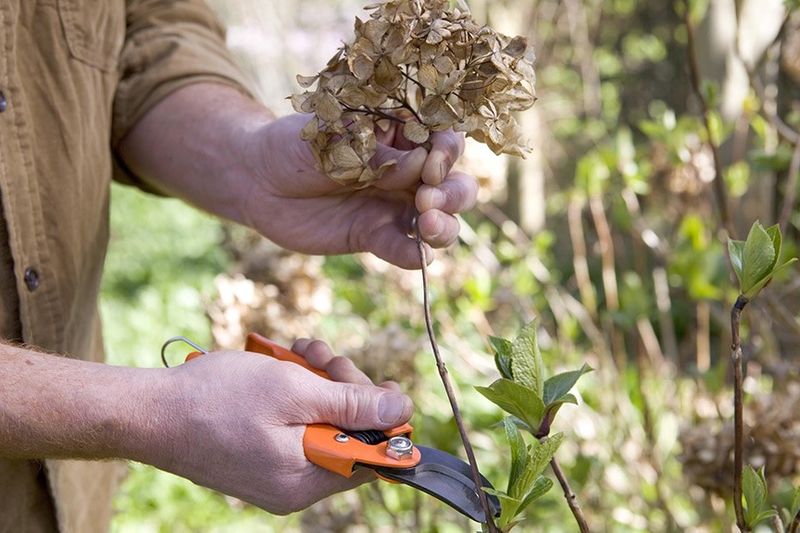
Pruning timing is often the hidden reason a hydrangea shows up in summer with few or no flowers. For old-wood types like bigleaf and oakleaf hydrangeas, flower buds form on the previous season’s stems during late summer, then overwinter and open the following year. Minnesota Extension’s hydrangea pruning guide explains that cutting these plants in fall, winter, or early spring removes the very stems carrying next summer’s buds, which is why a well-intentioned tidy-up can result in a flowerless shrub months later.
Major pruning in midsummer is risky for old-wood types once buds have already formed for the following year. Penn State’s species pruning guide recommends pruning bigleaf hydrangeas shortly after they finish flowering as the safer general window, though cultivar behavior can shift that timing. Light cleanup, such as removing dead stems or spent flower heads, carries much less risk than cutting healthy canes back hard.
New-wood types, including smooth and panicle hydrangeas, are more forgiving and can generally be cut back in late winter or early spring without sacrificing the current season’s flowers. Penn State’s bloom-failure guide and UGA Extension’s hydrangea publication both make the same core point: feeding cannot recreate buds that were already removed by untimely pruning, killed by cold, or eaten by deer. Recognizing that limit is what turns a frustrating summer into a better-planned next season.
Correct moisture and light before feeding
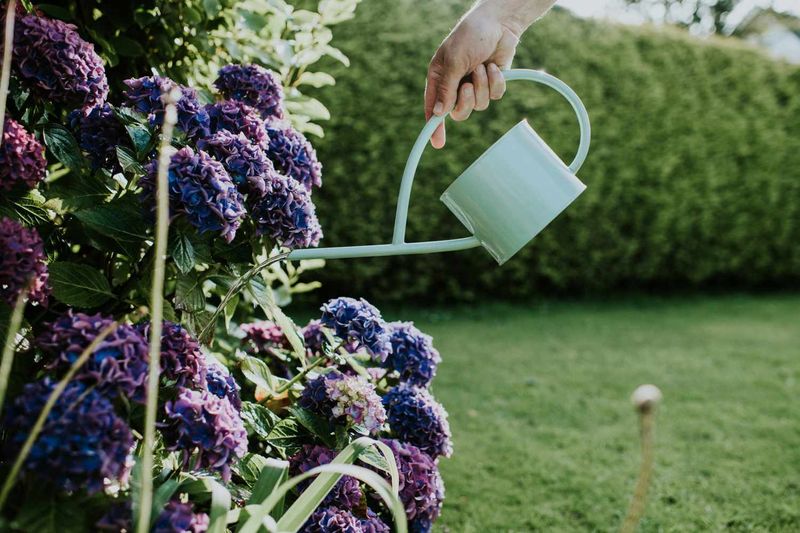
Water and light problems cause more bloom failures than most gardeners expect, and correcting them should come before any fertilizer decision. Missouri Extension’s guidance on heat-stressed plants warns that wilting does not automatically mean a plant needs more water. Drought stress, root damage, and waterlogged soil can all produce a drooping plant, so checking soil moisture before adding water is a smarter approach than responding to wilt alone.
When the soil genuinely needs moisture, water deeply at the root zone rather than with frequent shallow sprinkling. Missouri Extension’s mophead and lacecap guide describes keeping soil moist but not soggy, and cautions that saturating poorly drained soil around a heat-stressed plant can worsen root stress rather than relieve it. UGA Extension’s hydrangea guide recommends checking the root zone before each watering rather than following a fixed daily schedule.
Light conditions deserve equal attention. Oregon State Extension’s hydrangea overview notes that too much shade can reduce flowering, while many bigleaf hydrangeas perform well with morning sun and afternoon shade. Panicle hydrangeas generally tolerate more direct sun than bigleaf types, particularly when soil moisture stays adequate. Mulch applied around the base of the plant, but kept away from the stems, can help moderate soil temperature and slow moisture loss between waterings; Colorado State Extension’s spring garden guidance supports mulching as a practical moisture-stabilizing tool, with depth adjusted to local conditions.
Test the soil before reaching for fertilizer
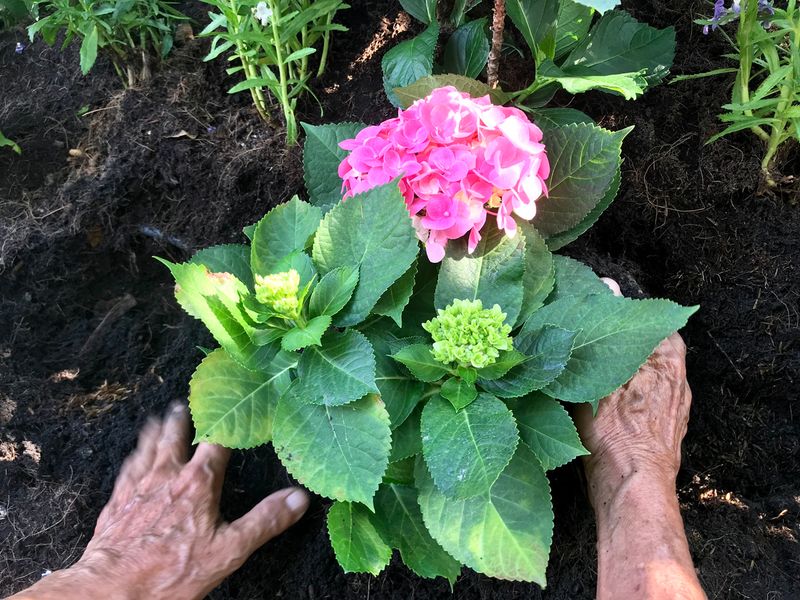
A soil test is the most reliable way to decide whether fertilizer is actually needed and, if so, which kind. University of Minnesota Extension’s soil testing guide explains that a standard test measures pH, phosphorus, potassium, and other nutrient levels, giving you a clear picture of what the soil already contains. Repeated fertilizer applications without testing can build up excess nutrients, particularly phosphorus, which can harm water quality and may not benefit the plant at all.
When a test or clearly observed plant symptoms do support fertilizing, a light application of a balanced or slow-release product, used exactly as the label directs, is the appropriate approach. Oregon State Extension’s hydrangea guide warns that excess nitrogen tends to push leafy growth at the expense of flowers, which is the opposite of the result most gardeners want. Oregon State’s NPK fertilizer guide and Minnesota Extension’s fertilizing overview both caution against applying a high-phosphorus bloom booster as a general solution; extra phosphorus is only appropriate when a soil test confirms a deficiency.
Newly transplanted shrubs need different handling than established plants. UGA Extension advises waiting roughly four to eight weeks after transplanting before fertilizing bigleaf hydrangeas, to avoid stressing a plant that is still settling in. Regional feeding calendars, including the Georgia March-May-July schedule sometimes cited online, reflect local climate and soil conditions and should not be treated as universal guidance. Product labels and soil-test recommendations take priority over any general schedule.
Separate bloom production from flower color
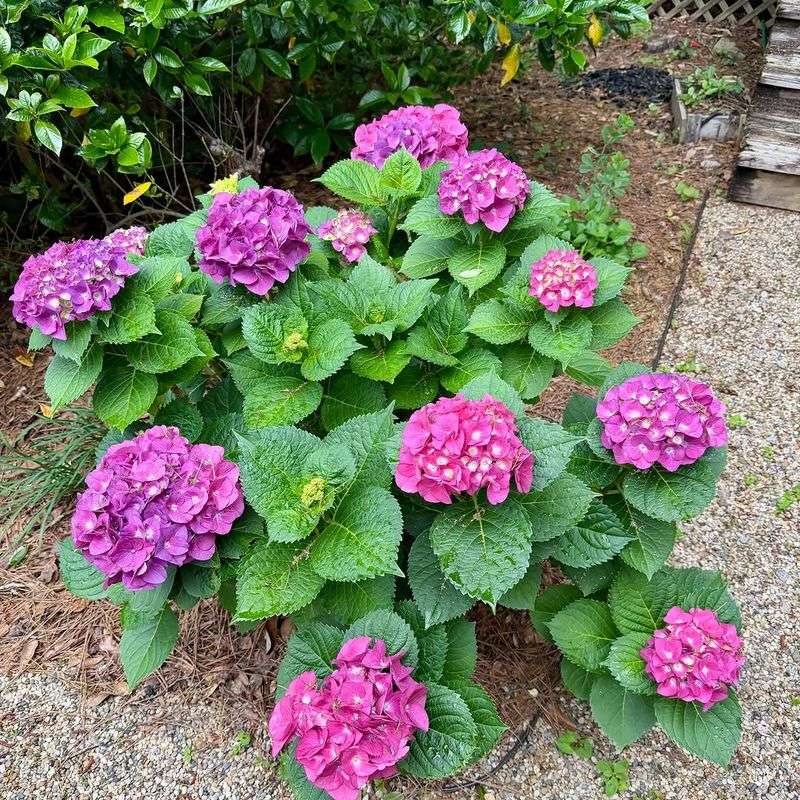
Color-management advice for hydrangeas circulates widely online, and it sometimes gets confused with advice for improving flowering. The two are separate issues. Missouri Extension’s chameleon-of-plants feature on hydrangeas explains that soil pH and the availability of aluminum affect the color of many bigleaf hydrangeas, shifting blooms toward blue in more acidic conditions and toward pink in more alkaline ones. Adjusting pH can change the color of an existing flower, but it does not create more flowers or fix sparse bloom production.
White-flowered cultivars generally stay white regardless of soil pH, and panicle hydrangeas do not respond to aluminum availability in the same way that bigleaf types do. Penn State Extension’s bloom-failure guide and Penn State’s species pruning resource both note that flower quantity and flower color are driven by different factors, and treating one as a solution for the other wastes time and can create new problems.
Adding aluminum sulfate, lime, or other amendments to shift color without a soil test and a clear cultivar-specific goal carries real risk. Penn State warns that aluminum sulfate can damage hydrangea roots when applied in garden soil conditions, and Minnesota Extension’s soil testing resource reinforces that any amendment decision should be grounded in actual test results. If the goal is more flowers rather than a different color, the bloom-production steps in this reset are the right place to focus.
Inspect for injury, browsing, and disease
After checking pruning habits, moisture, light, and fertility, a hands-on inspection of the plant itself can reveal causes that no amount of feeding will solve. Winter injury is one of the most common hidden reasons for bloom failure in old-wood hydrangeas. When temperatures drop sharply after buds have formed, or when a late frost follows an early warm spell, those buds can be killed while the canes look outwardly healthy. Penn State Extension’s species pruning guide describes how cold damage to overwintering buds can eliminate a season’s flowers even on an otherwise healthy plant.
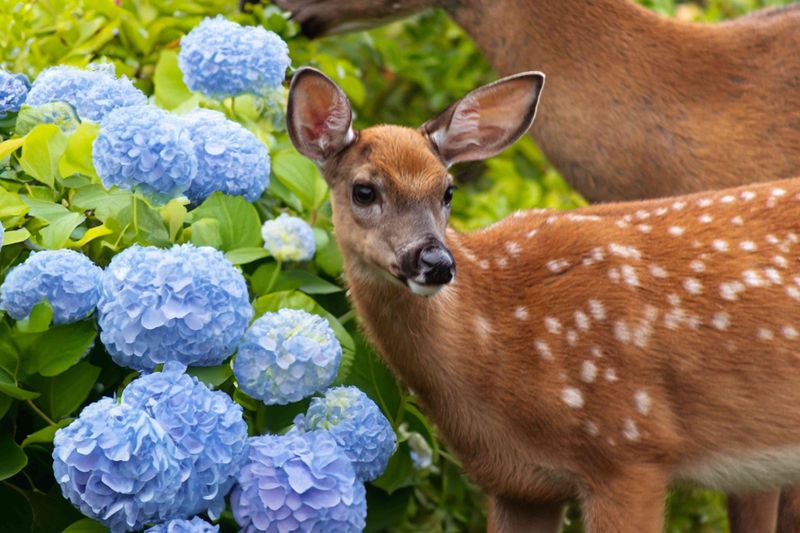
Deer browsing is particularly damaging to old-wood types because deer often remove the very stems that carry flower buds, and the loss may not be obvious until summer arrives with no flowers. Penn State’s bloom-failure guide identifies browsing as a significant cause of poor flowering, especially in areas with high deer pressure. Look for ragged stem ends, missing branch tips, or a pattern of damage concentrated at browse height, roughly two to five feet from the ground.
Disease can also weaken flowering, though diagnosing a specific disease requires visible symptoms. Penn State Extension’s hydrangea disease resource covers the range of fungal and bacterial problems that can affect hydrangeas, including powdery mildew and leaf spot. If damage patterns or site conditions remain unclear after a thorough inspection, contacting your local cooperative extension office is a reliable next step rather than applying more inputs and hoping for the best.
Use the reset to improve conditions and protect next year’s bloom
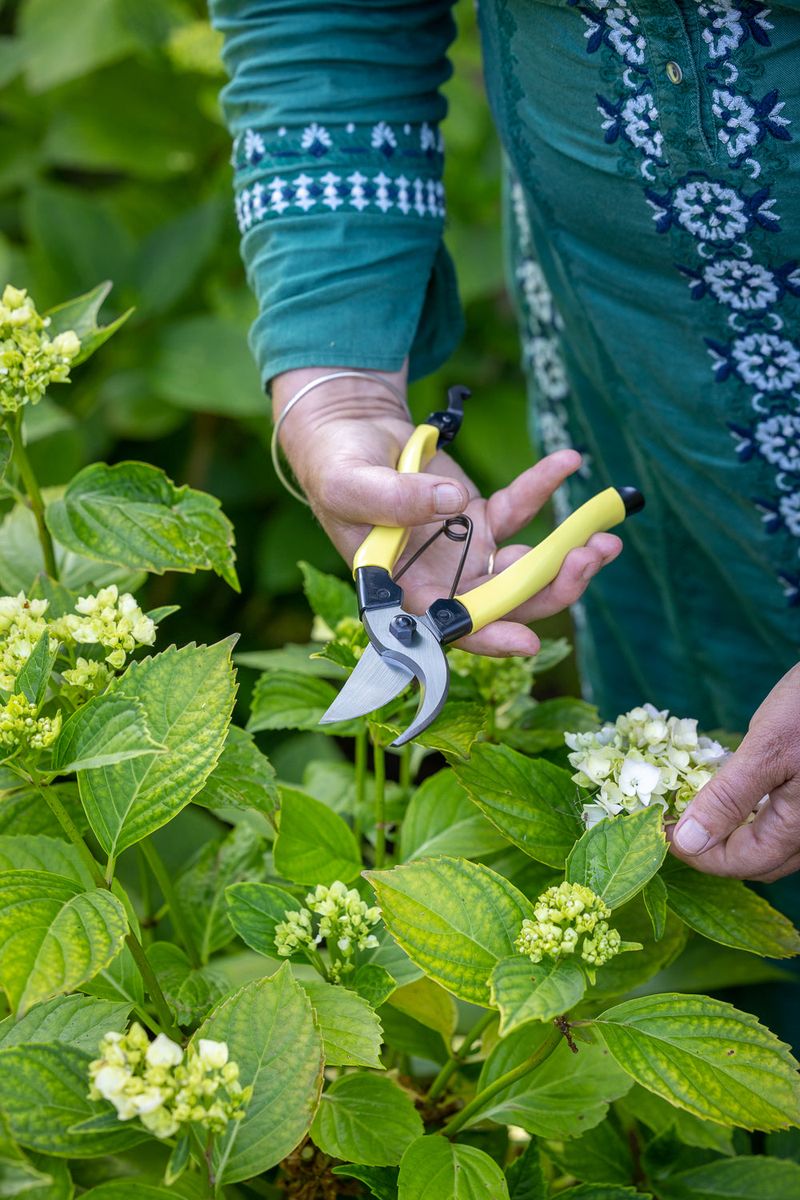
Working through this reset in order gives you the clearest picture of what is actually limiting your hydrangea. Start by identifying the species or cultivar, then check whether any pruning removed buds at the wrong time. Correct moisture and drainage issues before anything else, because Missouri Extension’s guidance on heat-stressed plants makes clear that fertilizing a drought-stressed or waterlogged plant can make things worse. Inspect the stems and site for signs of winter injury, deer damage, or disease before reaching for any product.
If soil testing supports fertilization, apply a balanced or slow-release product as directed, and keep expectations realistic about timing. Penn State Extension and Minnesota Extension both explain that when old-wood buds have already been lost to pruning, cold, or browsing, the current season’s flower display cannot be restored. Correcting those root causes now protects next year’s buds and gives the plant a much better chance going forward. Soil testing can also be done this fall or winter so amendments are ready before next spring’s growth begins.
Some improvements will show up this summer if the plant still has healthy buds developing. Others will take a full bud cycle to appear. A hydrangea that looks disappointing in July is not necessarily a lost cause; more often, it is a plant that needed a smarter kind of attention.