
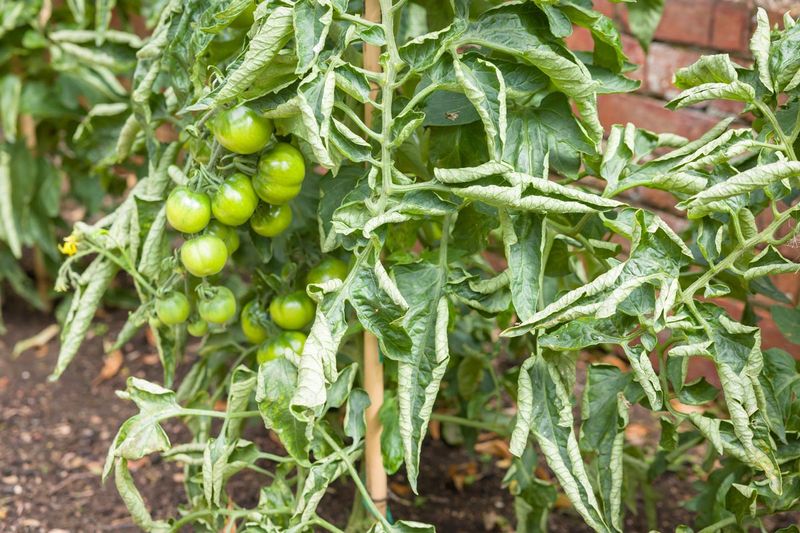
Seeing your tomato leaves curl upward on a hot summer day is enough to send any gardener running for the hose. But grabbing that hose without checking the soil first can actually make the problem worse. Upward-curling leaves have several possible causes, and knowing which one you are dealing with will save your plant far more reliably than a reflexive watering.
The curl may reflect heat stress—but it does not prove thirst
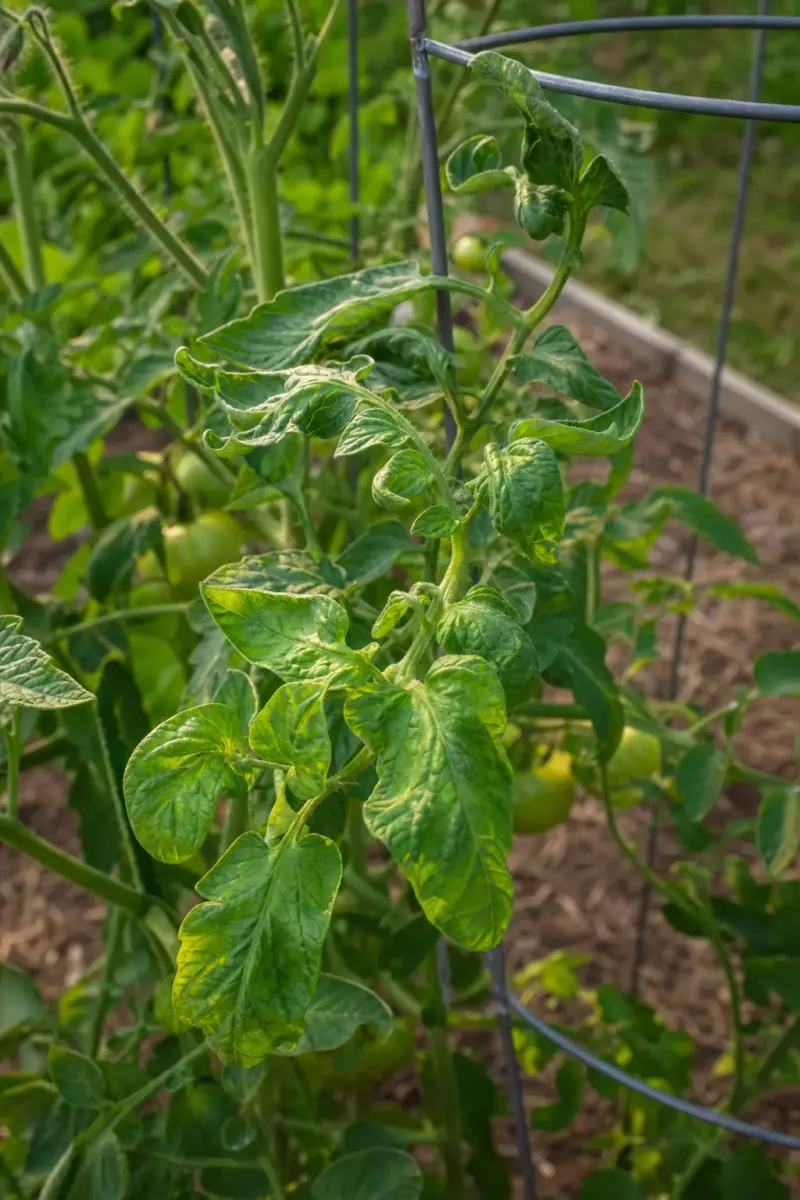
Tomato plants have a built-in response to stressful conditions called physiological leaf roll. During hot, windy, or dry weather, older leaves toward the bottom of the plant may curl upward and inward, turning firm or leathery while staying green. University of Minnesota Extension guidance on tomato disorders explains that this noninfectious response can be triggered by heat, drought, wind, rapid growth, pruning, root disturbance, and even prolonged wet soil – meaning the curl alone does not tell you whether the plant needs water.
What makes this pattern reassuring is its location and appearance. When the curling is limited to older, lower leaves that remain green and firm while the rest of the plant continues growing normally, physiological leaf roll is the most likely explanation. Extension sources note that this form of rolling generally causes little or no reduction in growth, yield, or fruit quality.
Heat and physiological leaf roll are related but not the same thing. Hot, dry air and wind pull moisture out of leaves faster than roots can replace it, and UMN Extension’s heat garden guidance confirms that high temperatures can reduce photosynthesis and interfere with flowering and fruit set even when the soil is already moist. A curled leaf shows you the plant is under stress – it cannot show you how much water is actually available at the root zone.
Check the root zone before you water
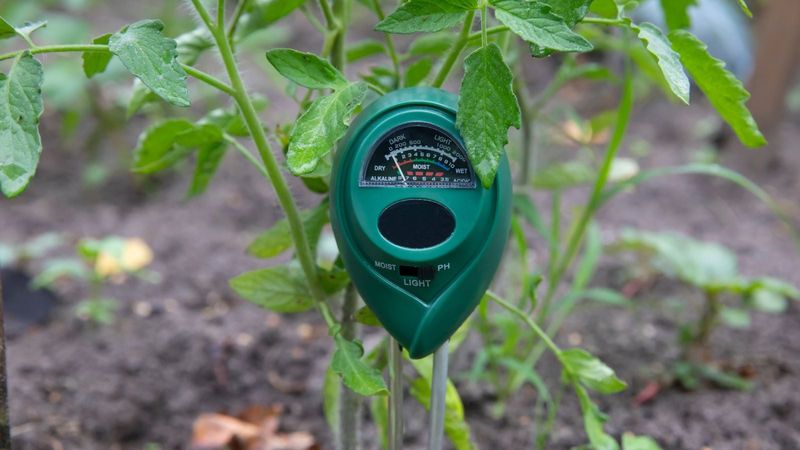
Before reaching for the hose, push a finger or a small trowel into the soil about 2 inches below the surface near the base of the plant. That root-zone check is the most reliable watering signal available, far more useful than leaf appearance alone. Penn State Extension’s tomato growing guide supports making soil moisture the decision point: if the soil at that depth feels dry, water slowly and thoroughly at the base; if it already feels moist, hold off – adding water to already-wet soil will not stop the curling and can create new problems.
A general starting point for established in-ground tomatoes is roughly 1 to 1.5 inches of rain or irrigation per week, according to UMN Extension’s home tomato guide. That number shifts considerably based on your soil type, plant size, recent rainfall, temperature, wind exposure, and whether you are growing in a container or directly in the ground. Sandy soil drains fast and dries out quickly; heavy clay holds moisture longer but can also stay waterlogged after heavy rain. Use the weekly guideline as a rough reference, not a calendar rule.
Prolonged wet soil is itself listed as an associated trigger for physiological leaf roll, which means overwatering can produce the same curled leaves that gardeners often interpret as a cry for more water. Oklahoma State University Extension’s non-infectious disease fact sheet confirms that both underwatering and excess moisture can contribute to this response – so the 2-inch soil check is the only way to know which direction to go.
Keep moisture steady without saturating the roots
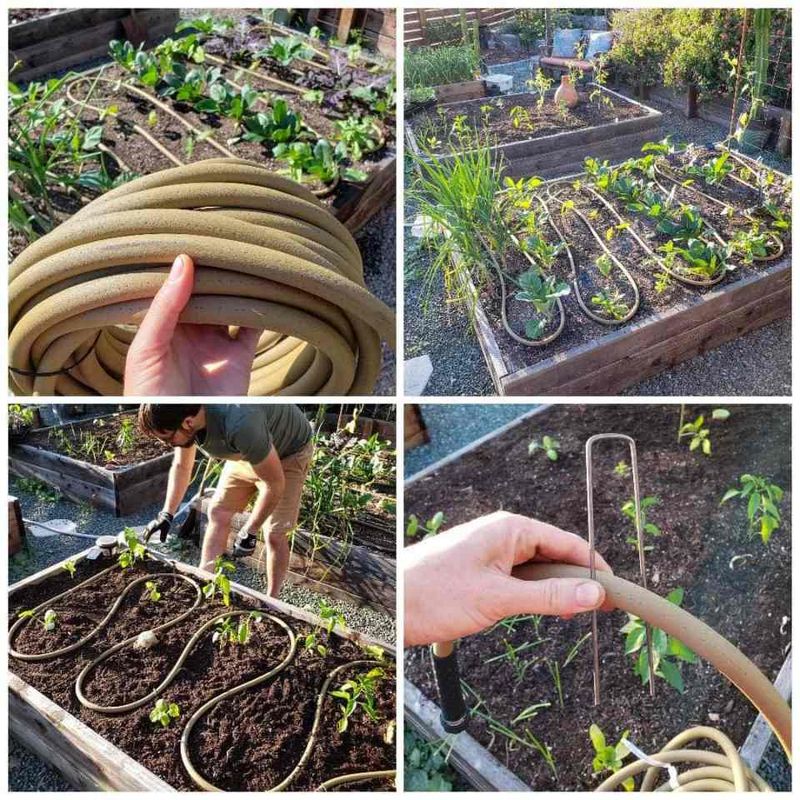
Once you know the root zone is dry, the goal is to water in a way that actually reaches and benefits those roots. Slow, deep watering at the base of the plant allows moisture to penetrate down where the roots are growing. Frequent, shallow splashes wet only the top inch or two of soil, which can encourage roots to stay near the surface – making them more vulnerable to heat and drought, not less. UMN Extension’s tomato growing guidance recommends deep root-zone watering over repeated light applications for exactly this reason.
Morning is the preferred time to water when conditions allow. Watering earlier in the day gives foliage a chance to dry before evening, which can reduce the risk of certain leaf diseases. UMN’s heat gardening guidance also notes that if a plant is actively wilting during a heat event, you should not delay necessary watering just to wait for the next morning. A drip line or soaker hose is worth considering because it delivers water directly to the root zone while keeping foliage dry.
Applying roughly 2 to 3 inches of organic mulch around the plant can make a meaningful difference in moisture retention and soil temperature. Penn State Extension’s seedling-to-fruit guide supports mulching as a way to reduce evaporation and moderate soil temperature – just keep the mulch a few inches away from direct contact with the stem to avoid rot. Container-grown tomatoes need special attention because pots dry out far faster than garden beds. During extreme heat, UMN Extension’s container plant guidance notes that daily or even twice-daily watering may be necessary, while still ensuring the container drains freely so roots are never sitting in standing water.
Lower the heat load and avoid adding new stress
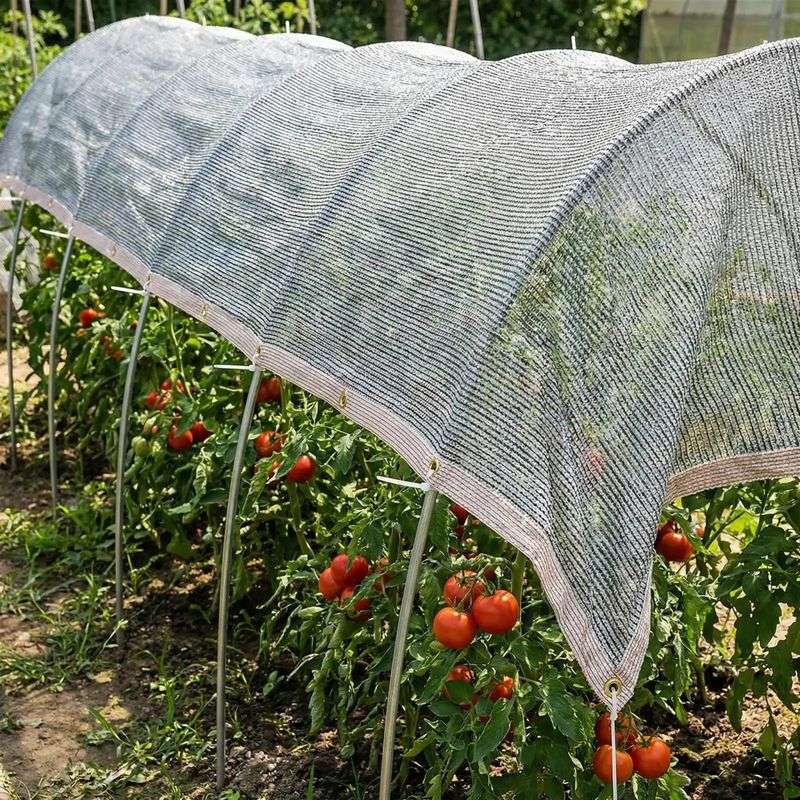
When the soil moisture is adequate but the heat keeps climbing, there are a few practical ways to reduce the pressure on your plants. Temporary shade cloth positioned over tomatoes during the hottest part of the afternoon may help lower the heat load on leaves. Penn State Extension’s heat stress and tomatoes resource identifies roughly 88 to 102 degrees Fahrenheit as a temperature range where tomatoes begin to show heat stress effects, with nighttime temperatures above 70 degrees also contributing – though plant response varies by cultivar, humidity, wind, and plant age. Shade cloth may reduce stress in those conditions, but it is not a cure and does not replace checking soil moisture or diagnosing the underlying cause.
Good air circulation around plants can also help moderate temperatures at the leaf surface. Avoid crowding plants or letting dense foliage trap heat and humidity at the center of the canopy. UMN Extension’s heat garden guidance supports root-zone watering and recommends against routine midday misting or overhead watering, since wetting foliage mid-afternoon raises disease risk without meaningfully cooling the plant.
Steer clear of actions that add new stress on top of heat. Heavy pruning, deep hoeing close to the plant, and unnecessary high-nitrogen fertilizer are all associated with leaf roll and other tomato growth problems. UMN Extension’s tomato disorders page notes that excess nitrogen can push excessive leafy growth and delay fruiting. Calcium sprays and fertilizers are not default treatments for curled leaves – those should follow a soil test or specific product guidance, not a visual symptom alone.
The goal right now is stability: steady moisture, reduced heat exposure, and no unnecessary disturbance to roots or canopy.
Use the whole symptom pattern to find a more serious cause
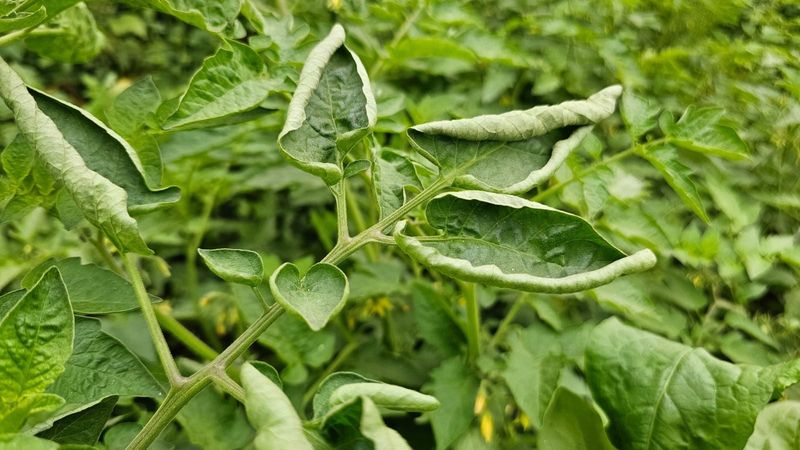
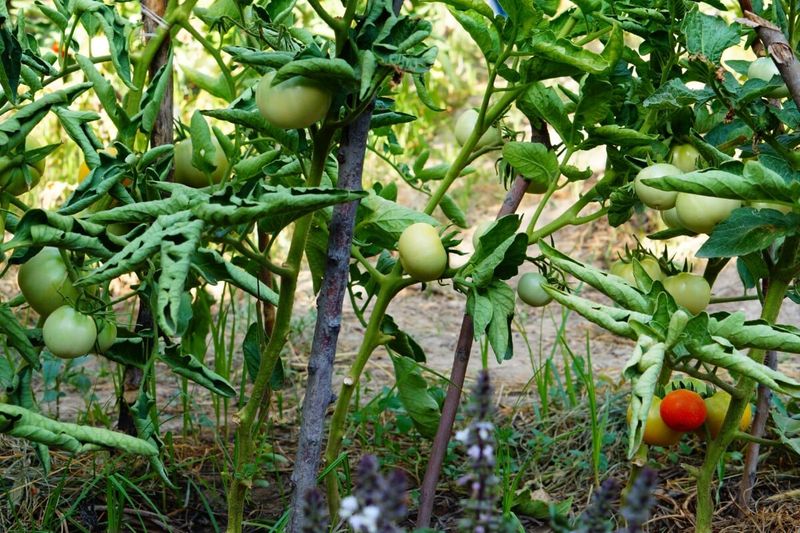
Physiological leaf roll follows a recognizable pattern: older and lower leaves curl upward, stay green and firm, and appear on a plant that is otherwise growing normally. When curling shows up alongside other symptoms, the picture changes. UMN Extension’s tomato leaf-curl diagnostic tool recommends looking at new growth, leaf color and texture, stems, fruit, and overall plant vigor before drawing any conclusions. Yellowing, mottling, severe stunting, distorted or misshapen new leaves, lesions, or abnormal fruit are all reasons to investigate rather than simply water more.
Curly top virus is a more serious concern for gardeners in parts of the western United States, where it is spread by the beet leafhopper. Utah State University Extension’s curly top of tomato resource describes the warning signs as upward-curled yellow leaves, purple veins especially on the underside, stunting, premature or dull and wrinkled fruit, and a plant that does not resume normal growth. Plants infected with curly top virus do not recover. Leaf curl alone cannot identify a virus – supporting symptoms, regional exposure, and sometimes laboratory testing are needed for a reliable diagnosis.
Herbicide injury is another cause that can look deceptively similar to viral distortion. It is more likely when young leaves are twisted, cupped, narrow, elongated, or otherwise malformed; when veins look unusually prominent; when stem distortion is visible; or when symptoms are strongest on the side of the plant nearest a spray source. Lawn herbicide drift and contaminated grass clippings used as mulch are documented risks for tomatoes.
Aphids and other sap-feeding insects deserve a close look as well. UMN Extension’s aphid guide explains that heavy infestations can cause curled, puckered, yellowed, or stunted leaves – symptoms that look like moisture or heat stress until you flip the leaf over and check. Inspect undersides of leaves and growing tips carefully before deciding on any treatment. When herbicide exposure is suspected, Penn State Extension’s herbicide damage guidance can help clarify next steps, and any pesticide use should follow product-label directions and applicable local requirements.
Follow a measured response, not a reflex
A clear sequence helps more than a quick fix. Start with the 2-inch soil check. If the root zone is dry, water slowly and thoroughly at the base. If it is already moist, hold off and focus instead on reducing heat load, improving air circulation, and avoiding unnecessary disturbance to the roots or canopy.
Then check back on the plant’s new growth and overall condition over the next few days.
UMN Extension’s tomato disorders guidance notes that ordinary physiological leaf roll generally causes little or no reduction in growth, yield, or fruit quality. Rolled leaves may not immediately flatten out after conditions improve – new growth can appear completely normal while older curled leaves stay curled. That is expected behavior, not a sign that something is still wrong.
Resist the urge to strip off every curled leaf. Removing green, functioning leaves reduces the plant’s ability to photosynthesize and is not justified for ordinary leaf roll. Leaf removal makes more sense when a specific disease diagnosis, severe herbicide injury, or dead tissue calls for it – not simply because a leaf is rolled. UMN Extension’s leaf-curl diagnostic tool is a useful next stop if worsening symptoms, abnormal fruit, visible pests, known chemical exposure, or stunted growth appear.
Most curling during summer heat turns out to be the plant protecting itself – and steady, attentive care is usually all it needs.