
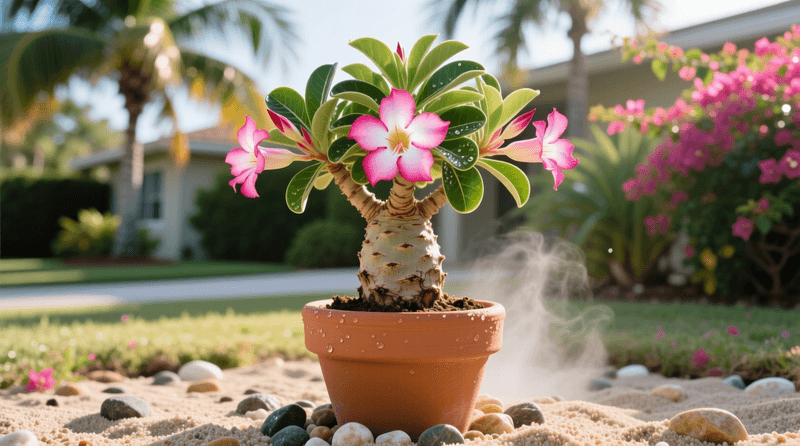
Desert rose (Adenium obesum) is one of those plants that rewards attention with spectacular, trumpet-shaped blooms in shades of red, pink, and white. Growing it well in Florida means understanding two things above all else: how much light it actually needs and how quickly its roots can rot when water lingers too long. Get those two conditions right, and this plant can thrive in Florida’s heat rather than just endure it. This guide walks through every part of that balance, from choosing a spot to surviving hurricane season.
Give desert rose the Florida balance of light and drainage
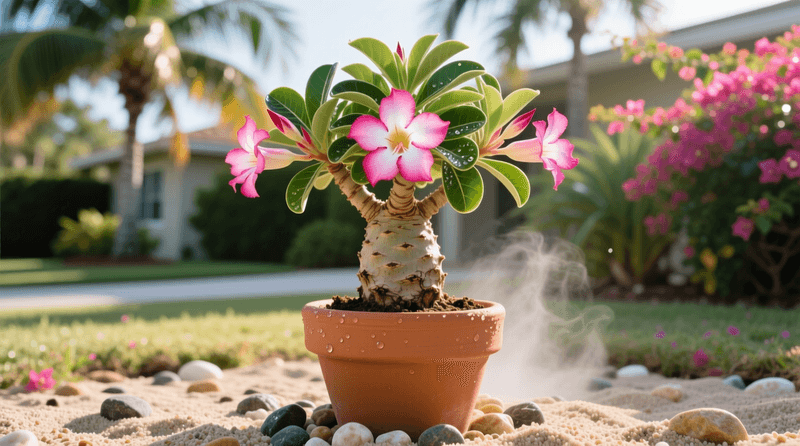
Desert rose earns its reputation as a showstopper when two conditions align: enough bright light to fuel steady flowering and a root zone that drains and dries between waterings. UF/IFAS guidance on Adenium obesum calls for at least six hours of high light daily, regular irrigation without waterlogging, and well-drained soil. When either condition slips, the plant responds, but the symptoms can look deceptively similar whether the problem is too little light or too much moisture.
Insufficient light tends to show up as weak, sparse growth and few or no flowers. Root stress from prolonged saturation often begins underground, so a plant can look acceptable on the surface while its roots are already deteriorating. That distinction matters because the fixes are completely different: moving a plant to brighter light does nothing for a root zone that stays wet, and improving drainage does nothing for a shaded plant that simply cannot photosynthesize enough to bloom.
Florida gardeners have a genuine advantage here. The state’s intense sun and warm temperatures match what desert rose evolved to handle. UF/IFAS Charlotte County Extension notes that excess moisture promotes stem and root rots, which is the primary threat to outdoor plants in a climate where summer downpours arrive almost daily. Rather than fighting Florida’s weather, the goal is to position the plant where sun is abundant and water moves away from the roots quickly.
Every section that follows builds on that pairing. Light placement, growing medium, watering timing, fertilizer, cold protection, pest management, and storm preparation all come back to the same governing idea: give desert rose the bright, well-drained conditions it needs, and Florida’s heat becomes an asset rather than an obstacle.
Test the light instead of assuming more sun always means more flowers
Bright light is non-negotiable for desert rose flowering, but the relationship between sun exposure and bloom count is more nuanced than “more sun equals more flowers.” UF/IFAS recommends at least six hours of high light to maintain summer flowering, and that minimum is a real threshold. Plants grown in low light consistently produce fewer blooms and weaker growth, so shade is not a solution to Florida’s heat.
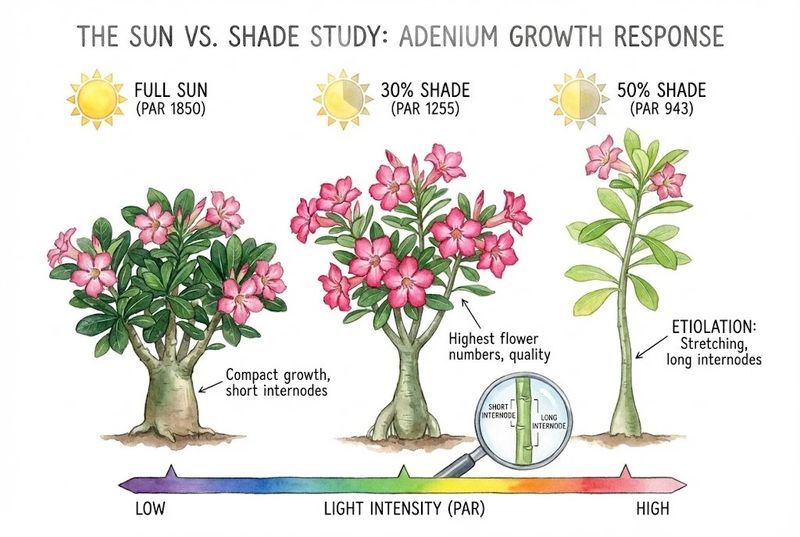
What the research does complicate is the assumption that the harshest, most unrelenting exposure is automatically optimal. A University of Florida study published in HortScience tested two Adenium cultivars, ‘Red’ and ‘Ice Pink,’ under different light levels in a controlled container-production setting. That study found approximately 30% shade produced the highest flower numbers and quality for both cultivars, while plants grown in full sun were smaller overall. Plants under 50% shade performed worse than those under 30% shade, confirming that the answer is not simply to shade the plant more.
Before applying that result broadly, a few important limits apply. The study used specific production conditions with container-grown plants, and it tested only those two cultivars. The 30% shade finding is not a universal prescription for every Adenium, every Florida landscape, or every microclimate. Cultivar, plant age, prior light history, and site conditions can all shift the response.
The practical takeaway for Florida gardeners is to treat light as something worth evaluating rather than maximizing blindly. A location that gets strong morning sun and some relief from the most intense afternoon rays may be worth trying on sites where reflected heat from concrete, pavers, or walls seems to push plants into stress. That is a site-specific test, not a study-proven rule. Start by confirming the minimum six hours of bright light is met, then observe how the plant responds over a full growing season before making major adjustments.
Build a root zone that drains after Florida rain
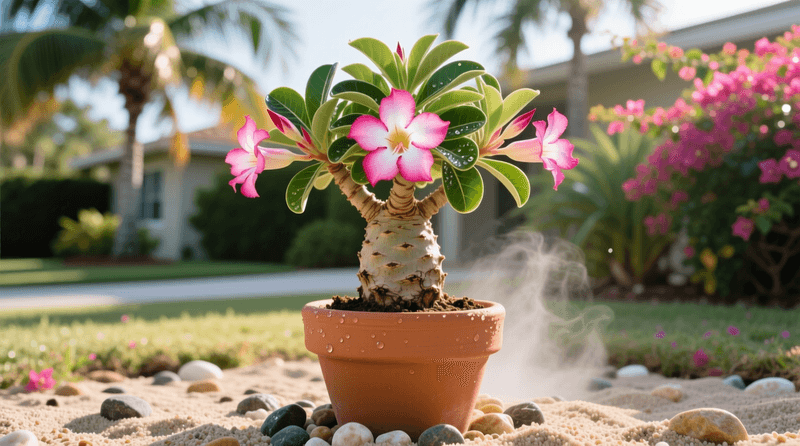
Roots that stay wet are the fastest way to lose a desert rose in Florida, and the solution starts before the plant goes into the ground or a container. For container growing, the medium itself does most of the work. UF/IFAS guidance on succulents specifically warns that soggy soil causes root-rot problems and recommends allowing the soil to dry between waterings. A coarse, porous mix, such as a cactus-and-succulent blend combined with perlite or coarse sand, drains quickly and resists compaction over time.
UF/IFAS container media guidance cautions against using Florida garden soil by itself in pots because it can restrict drainage and reduce aeration around roots. Even soil that drains acceptably in a landscape bed can become dense and waterlogged when confined to a container. Unobstructed drainage holes are equally important: a pot sitting in a saucer full of water defeats the purpose of a well-draining mix, so either empty saucers after watering or raise containers slightly so water escapes freely.
For in-ground plants, site selection is the first decision. UF/IFAS Charlotte County Extension recommends choosing a spot with full sun that never stays wet after rain, and where drainage is questionable, building a raised planting area can help. Their local approach uses an 18-inch mound with a mixture of approximately 75% sand and 25% topsoil. That ratio reflects practical guidance for Charlotte County conditions, not a formula that every Florida site must replicate exactly, but the principle of elevating the root zone above any potential standing water applies broadly.
Sandy Florida soil drains quickly in many locations, but that general reputation can create a false sense of security. Low spots in the yard, compacted soil layers beneath the surface, heavy organic amendments that hold moisture, and storm flooding can all leave roots saturated even in otherwise sandy settings. Before planting in the ground, pour water on the site and watch how quickly it disappears. If puddles linger for more than an hour or two, the drainage at that specific spot needs improvement before a desert rose goes in.
Water when the medium dries appropriately
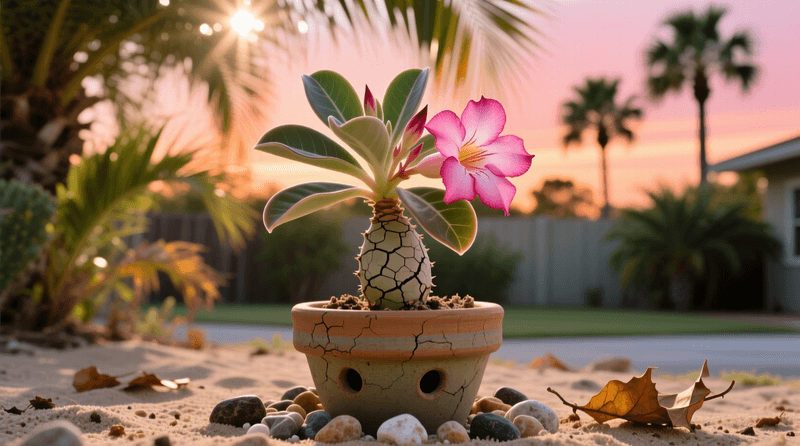
Watering desert rose well in Florida has less to do with a calendar and more to do with reading what the growing medium is actually doing. A rigid schedule, whether daily or weekly, ignores the variables that matter most: pot size, medium type, plant size, sun exposure, and how much rain fell recently. The better approach is to check the medium directly, water thoroughly when it has dried to an appropriate depth, and then let all excess water drain away before the next watering cycle begins.
UF/IFAS succulent care guidance reinforces that desert rose needs a drying cycle between waterings. General UF/IFAS watering principles also emphasize watering thoroughly and allowing drainage rather than applying small, frequent amounts that keep the top layer perpetually damp. During Florida’s hottest months, containers in full sun can dry out faster than expected, which means checking more often, not watering on a timer. The risk runs in both directions: a pot that dries too fast in July may need water every few days, while that same pot after a heavy afternoon thunderstorm may need no water at all for several days.
Summer rain is where many Florida gardeners unintentionally oversaturate their plants. Florida’s rainy season brings intense, frequent downpours that can leave soil saturated for extended periods. UF/IFAS guidance on dealing with heavy rains recommends improving drainage around affected plants after unusually heavy rainfall, removing moisture-retaining mulch from around the base of plants that show stress, and holding off on fertilizer while the root zone remains saturated. Applying fertilizer to roots sitting in waterlogged soil can compound stress rather than relieve it.
UF/IFAS Adenium care guidance makes clear that the goal is a drying cycle, not permanent drought. Active desert rose plants in warm weather genuinely need regular water to support growth and flowering. The aim is to avoid the two extremes: letting a container in summer heat go bone dry for weeks, or watering again before the medium has had a chance to dry from the last rain or irrigation.
Fertilize active growth without chasing flowers with excess
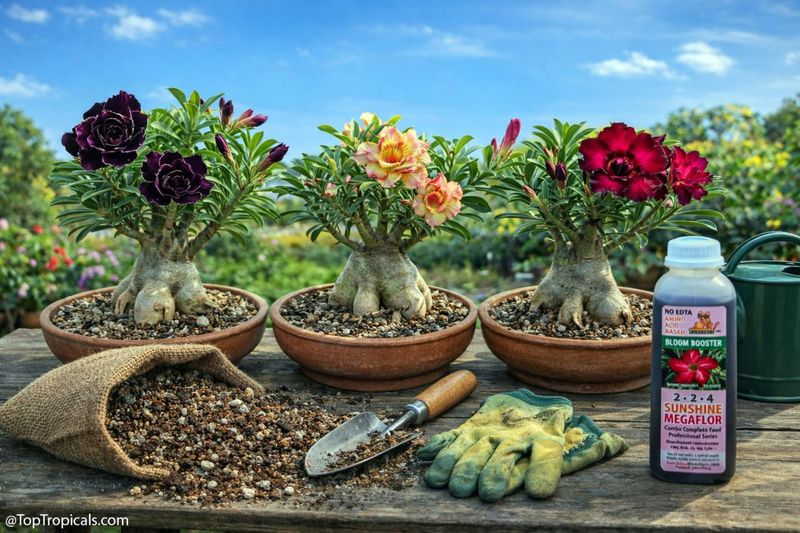
Fertilizer supports desert rose growth, but it cannot substitute for good light or proper drainage. A plant sitting in shade or saturated soil will not respond to extra feeding with more flowers. Getting the foundational conditions right first, then adding nutrition, is the sequence that actually produces results.
For outdoor plants during the active growing season, UF/IFAS recommends a balanced slow-release pelletized fertilizer applied during summer, with the product label guiding the rate and frequency. Balanced means roughly equal nitrogen, phosphorus, and potassium rather than a formula heavily skewed toward any single nutrient. The label matters because slow-release products vary in concentration and release duration, so a rate that works for one product may be too much or too little for another.
A University of Florida research trial examined how different controlled-release nitrogen rates affected Adenium growth and flowering. The study found that the highest tested nitrogen rate improved plant size and overall quality compared to lower rates under its controlled production conditions. That finding is useful context, but it does not translate directly into a home-garden dosage recommendation. Production nursery conditions, container volumes, medium types, and watering regimens differ from what most home gardeners are working with.
Products marketed as “bloom boosters” with very high phosphorus levels are not supported by the authoritative Florida sources for this plant. Chasing extra flowers with specialty fertilizers while neglecting light or drainage is unlikely to produce the hoped-for result. Skip fertilizing entirely when the root zone is saturated after heavy rain, as noted in UF/IFAS heavy rain guidance, and resume once the medium has dried to an appropriate level and the plant is actively growing again.
Adjust care for Florida’s zones, cold snaps, and dormancy
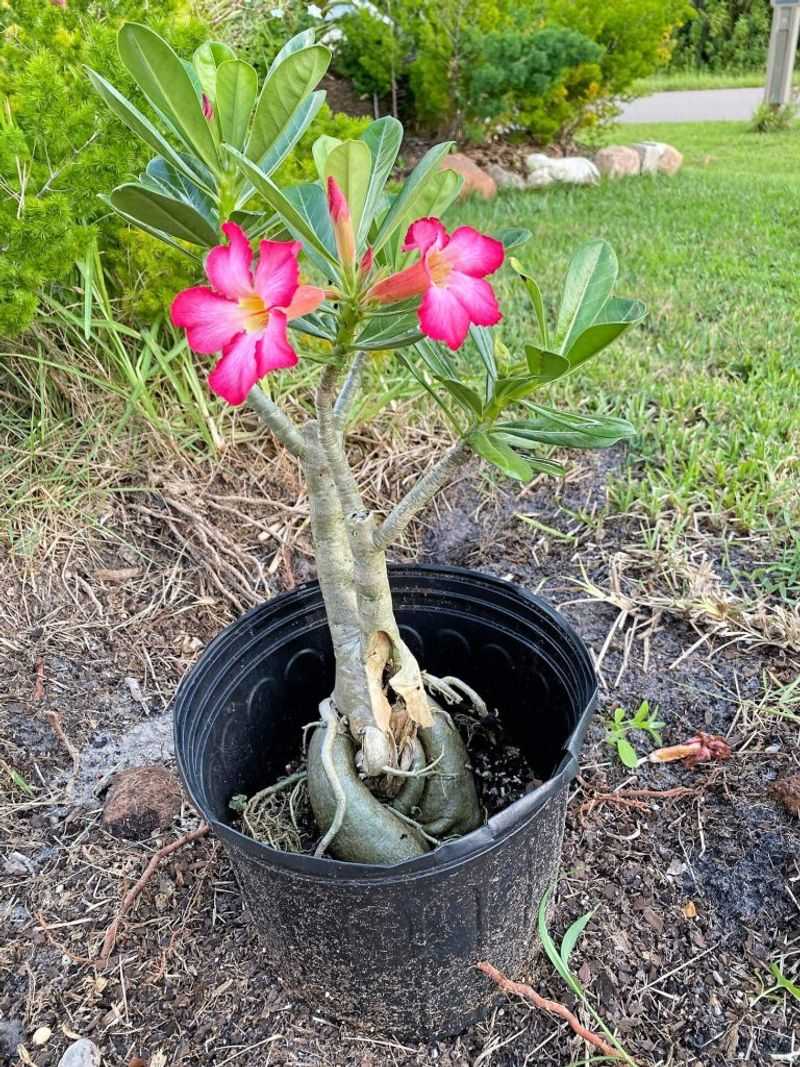
Florida is not one climate, and desert rose care changes significantly depending on where in the state a gardener lives. UF/IFAS considers year-round outdoor growing appropriate for USDA Hardiness Zones 10B through 12, which covers South Florida and the Keys. Gardeners in Zone 10A and northward face meaningful cold risk that their southern counterparts do not, and the plant’s care calendar needs to reflect that difference.
The preferred temperature range for active growth is 75 to 95 degrees Fahrenheit, a hot, tropical band that Florida’s warm months deliver reliably. Below that range, the plant begins to slow. Adenium is not freeze tolerant: cold temperatures can trigger leaf yellowing and leaf drop, and exposure to freezing temperatures can kill the plant outright. Container-grown plants have a practical advantage here because they can be moved indoors or to a protected warm location before freezing weather arrives.
Landscape plants in colder zones need thoughtful site selection and a plan for cold snaps, since they cannot be relocated.
Leaf drop during cooler months can unsettle gardeners who have not seen it before, but it often reflects normal dormancy rather than disease or root failure. UF/IFAS Charlotte County Extension explains that during a winter rest period, water should be withheld, and fertilizer should be paused until warmth returns and the plant shows signs of resuming growth. Restarting water and fertilizer too early, before temperatures rise consistently, can stress roots that are not yet actively growing.
The dormancy guidance applies most directly to plants experiencing genuinely cool conditions. Warm South Florida plants may shed fewer leaves and remain somewhat active through winter, requiring less of a hard pause in care. The diagnostic question to ask when leaves drop is whether the weather is cool and dry or warm and wet. Cool-season leaf drop with an otherwise firm caudex is usually dormancy.
Sudden leaf loss during warm, humid conditions warrants a closer look at the roots and the growing medium for signs of rot or pest activity.
Prune safely and identify pests before treating them

Desert rose is not a plant that demands constant cutting. Under normal conditions, it develops its branching structure and distinctive swollen caudex without much intervention. Gardeners who want to encourage more branching, and potentially more flowering tips, can prune selectively, but the timing and technique matter. UF/IFAS Charlotte County Extension recommends pruning early in the growing season using tools that have been disinfected before and after use.
Gloves are essential because the sap is toxic, and skin contact should be avoided.
Pest pressure is a more routine concern than pruning for most Florida growers. UF/IFAS lists mites and aphids as common outdoor pests and mealybugs as a problem for plants kept indoors or in sheltered spots. Scale insects and oleander caterpillars appear in Florida landscapes as well, with caterpillars capable of stripping a plant of leaves surprisingly quickly. Because these pests require different responses, identifying what is actually present before reaching for any treatment is the essential first step.
Oleander caterpillars, for example, can often be managed by handpicking when populations are small, which avoids the need for chemical treatment entirely. Mites respond differently than soft-bodied insects, and a product that works on aphids may do nothing for scale. Rushing to treat without a correct identification wastes time and money and can expose the plant to unnecessary chemical stress.
One more concern applies to anyone with pets at home. The ASPCA lists desert rose as toxic to dogs, cats, and horses. UF/IFAS Extension St. Johns County also cautions about toxic houseplants near pets, and the same logic applies outdoors. Prunings, fallen leaves, and flower parts should be collected promptly and kept well away from animals.
If ingestion is suspected, contact a veterinarian without delay.
Prepare containers and planting sites for storms and flooding
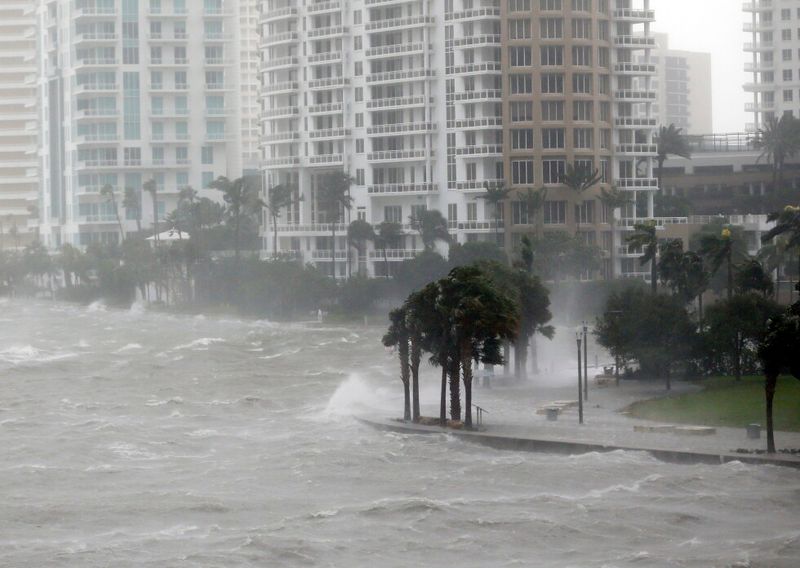
Hurricane season and Florida gardening overlap completely, and desert rose’s container-friendly nature is a genuine advantage when a storm approaches. Moving plants to a sheltered location, such as a garage, covered porch, or interior room, before a storm arrives protects them from wind damage, flying debris, and flooding far better than leaving them in place and hoping for the best. UF/IFAS hurricane landscaping guidance recommends relocating container plants before a storm when possible.
Large plants that cannot be moved can be laid on their sides and secured to reduce wind resistance, though that approach carries its own risks and offers less protection than full relocation. UF/IFAS storm preparation guidance outlines practical steps for protecting plants before a storm makes landfall. These measures reduce risk but cannot guarantee that a plant survives direct storm damage, so realistic expectations matter.
After flooding or heavy storm rain, the recovery focus should be on drainage before anything else. UF/IFAS Pinellas County Extension post-storm flooding guidance recommends elevating containers to improve drainage and inspecting plants for signs of rot before resuming normal care. Watering or fertilizing a plant whose roots have just sat in floodwater is counterproductive. Let the medium dry to an appropriate level, check the caudex and lower stems for soft or discolored tissue, and only resume regular care once the plant shows stable, healthy tissue and the root zone has drained properly.
Storm recovery connects directly back to the central principle running through this entire guide. Florida’s heat and humidity are manageable when roots stay in a well-drained environment. Prolonged saturation after a storm creates the same conditions as chronic overwatering, just compressed into a shorter window. Getting drainage restored quickly after a flood event gives desert rose the best realistic chance of coming through in good shape.
Use a balanced flowering checklist
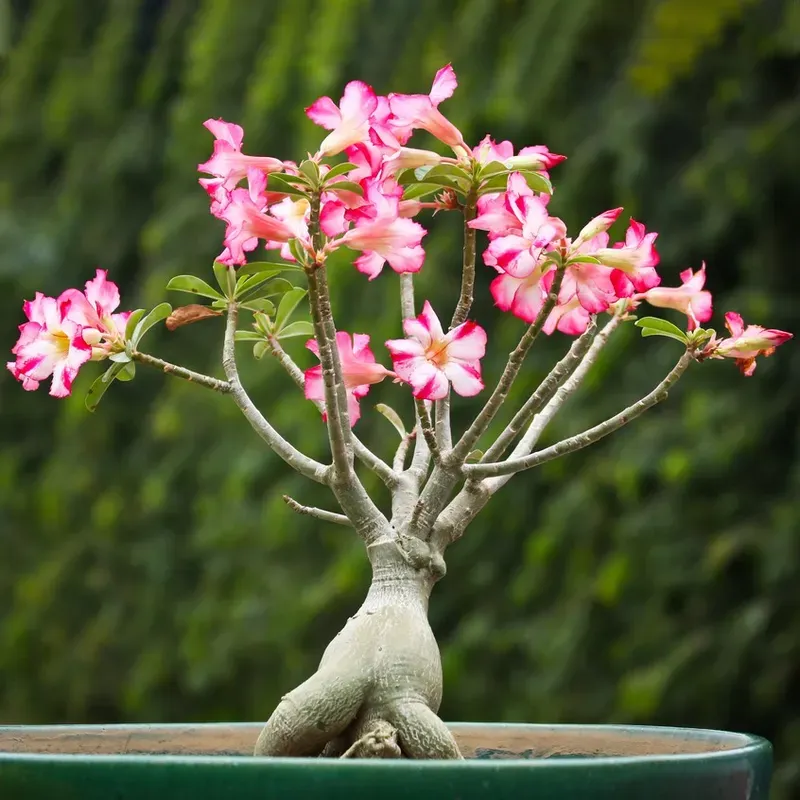
When a desert rose stops flowering or looks off, running through a short diagnostic sequence saves time and avoids chasing the wrong fix. Start with light: confirm the plant is receiving at least six hours of bright light daily. UF/IFAS succulent guidance and UF/IFAS Adenium care recommendations both point to light and drainage as the foundational requirements, so those two come first before anything else.
After light, check the growing medium. Press a finger into the mix or lift the container to gauge weight. If the medium feels wet and the plant recently received rain or irrigation, wait. If it has dried appropriately, water thoroughly and let excess drain completely.
From there, consider warmth: is the plant in its preferred temperature range, or has a cold snap recently stressed it into dormancy?
Regular observation after rain events, cold snaps, heat waves, or storms catches problems early, when they are still manageable. Once light, drainage, and temperature check out, then look at fertilizer timing, pest presence, and whether any pruning is overdue. A plant with the right fundamentals in place rarely needs dramatic intervention. The most reliable path to consistent flowering is steady attention to conditions rather than periodic rescue efforts.