
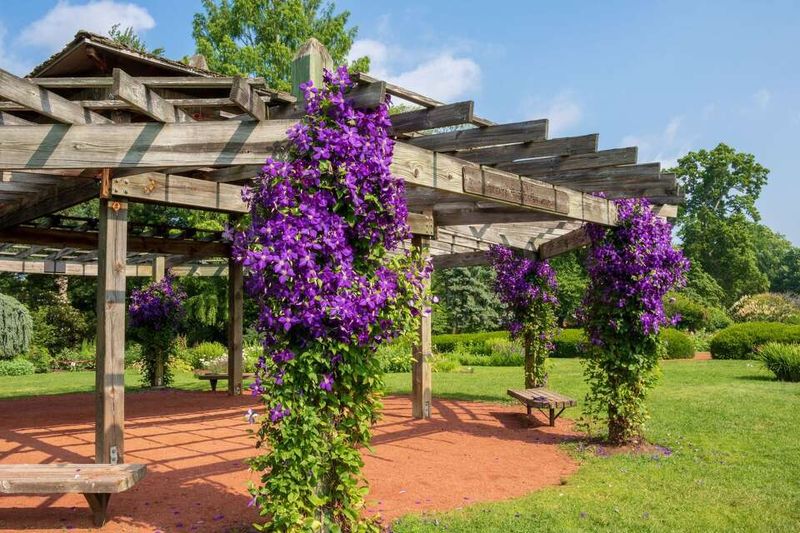
A Texas pergola in July can feel like a griddle if nothing is growing overhead to soften the light. The right vines do more than look pretty. They throw real shade, sip water instead of gulping it, and keep their cool when the thermometer climbs past 100 degrees. Here are seven tough climbers that shrug off the Texas sun and turn a bare frame into a living roof.
1. Coral Honeysuckle (Lonicera sempervirens)
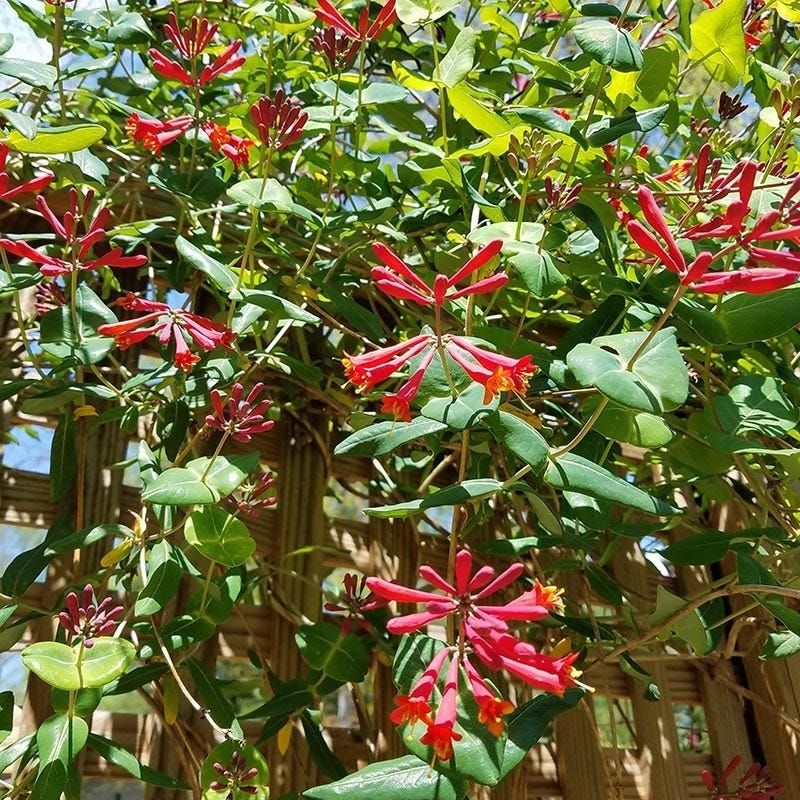
Ask any Texas gardener who has watched hummingbirds fight over red trumpet flowers, and they will point you toward coral honeysuckle. Native from the Piney Woods to the Hill Country, this climber belongs here in a way that imported vines never quite manage.
Unlike the invasive Japanese honeysuckle that smothers fences across the South, the native version behaves itself. It climbs a pergola politely, stays evergreen or semi-evergreen through mild winters, and blooms in flushes from spring into fall.
Heat rarely rattles it. Once the roots settle in during a cool planting window, coral honeysuckle can ride out triple-digit afternoons on deep, infrequent watering, which matters when your city rolls out summer watering restrictions.
Fun fact: the bright berries that follow the flowers feed cardinals, finches, and other Texas songbirds, so you are planting a snack bar as much as a shade maker. Give it a sturdy support, some morning sun, and a little afternoon relief, and it rewards you with color that keeps the pollinators coming back.
2. Crossvine (Bignonia capreolata)
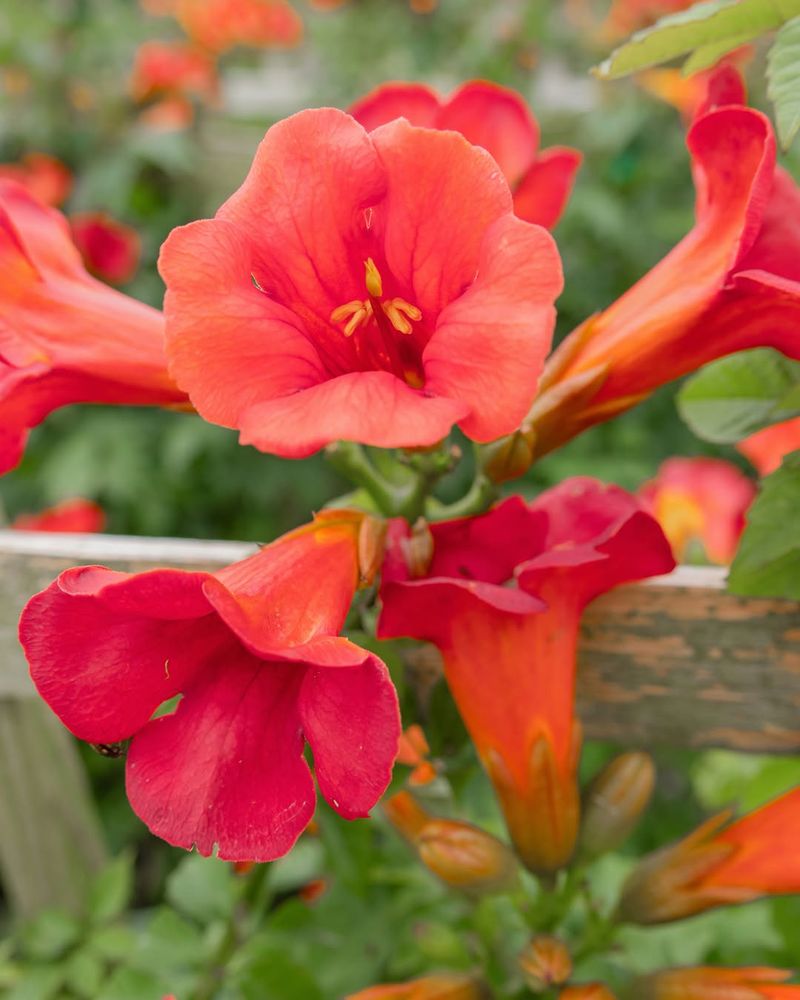
Long before crossvine became a nursery favorite, it was scrambling up East Texas trees on its own, throwing out orange and yellow trumpets that stop traffic in early spring. Slice a stem and you will see the tiny cross pattern inside that gave the plant its name.
What makes it a pergola champion is grip. Crossvine climbs with clinging tendrils tipped in little discs, so it can hold onto wood, brick, or a wire trellis without much fussing from you.
Texas heat is no argument for this native. It stays evergreen in the southern half of the state, tolerates poor clay soils, and keeps its footing through drought once established.
The bloom show peaks in March and April, then repeats in lighter waves through summer, feeding early hummingbirds when little else is open. Plant it where you want fast, dense cover, because a happy crossvine can climb thirty feet and shade a whole seating area by its second or third season.
3. Carolina Jessamine (Gelsemium sempervirens)
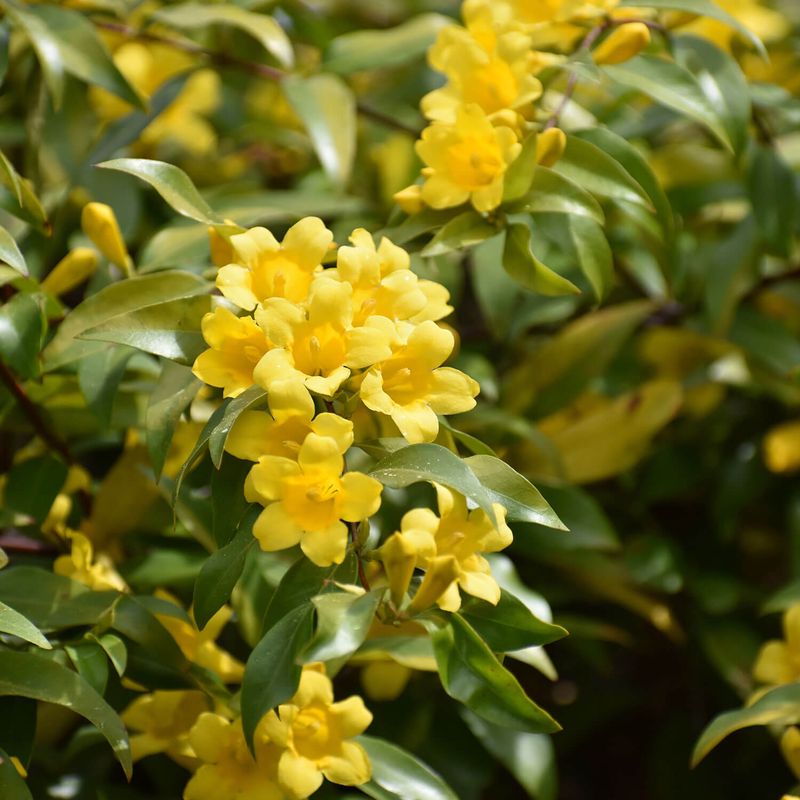
Picture a pergola dripping with buttery yellow bells while the rest of the yard is still shaking off winter. That early burst is Carolina jessamine’s signature move, and it happens right when Texans are itching to get outside.
The evergreen leaves stay glossy and green all year, so even when the flowers fade, the vine keeps pulling its weight as an overhead screen. That reliability makes it a favorite for shading a porch or patio you actually use.
Heat and drought barely register once the roots are deep. It handles full Texas sun, tolerates the sandy and clay soils common across the state, and asks for little supplemental water after its first year.
A word of honest caution: every part of this plant is toxic if eaten, so keep it away from spots where curious kids or nibbling pets hang out. Treat it with a little respect, and Carolina jessamine gives you a tidy, fragrant canopy that greets spring earlier than almost anything else.
4. Passionflower (Passiflora incarnata)
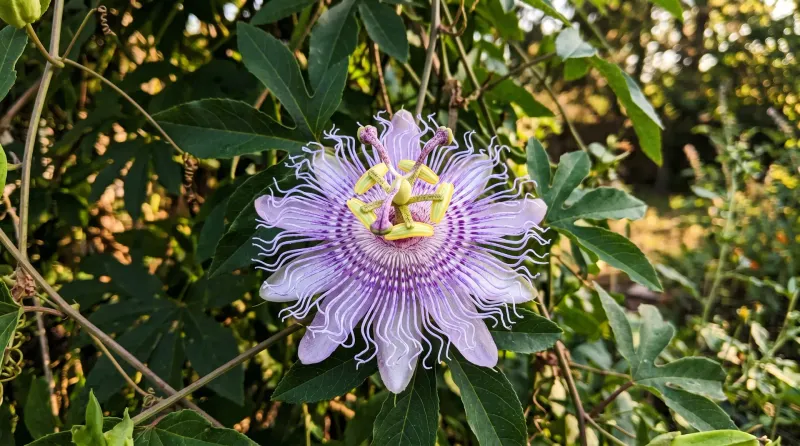
Few vines look as otherworldly as passionflower, whose purple and white blooms seem engineered by an artist with too much imagination. Native to Texas as the maypop, it climbs fast and turns a plain frame into a conversation piece.
Beyond the wow factor, this vine is a working member of your yard’s ecosystem. It is the host plant for Gulf Fritillary and other butterflies, meaning caterpillars will chew the leaves and adults will float around your pergola all summer.
Blistering heat suits it just fine. Passionflower thrives in full sun, dies back in winter, and pops up again from tough roots each spring, which spares you from replanting.
One thing to know going in: it spreads with enthusiasm and can send up shoots several feet from the mother plant. Give it room or a defined bed, and the trade-off is a summer-long parade of exotic flowers and the egg-shaped maypop fruits that give it its nickname.
5. Trumpet Vine (Campsis radicans)
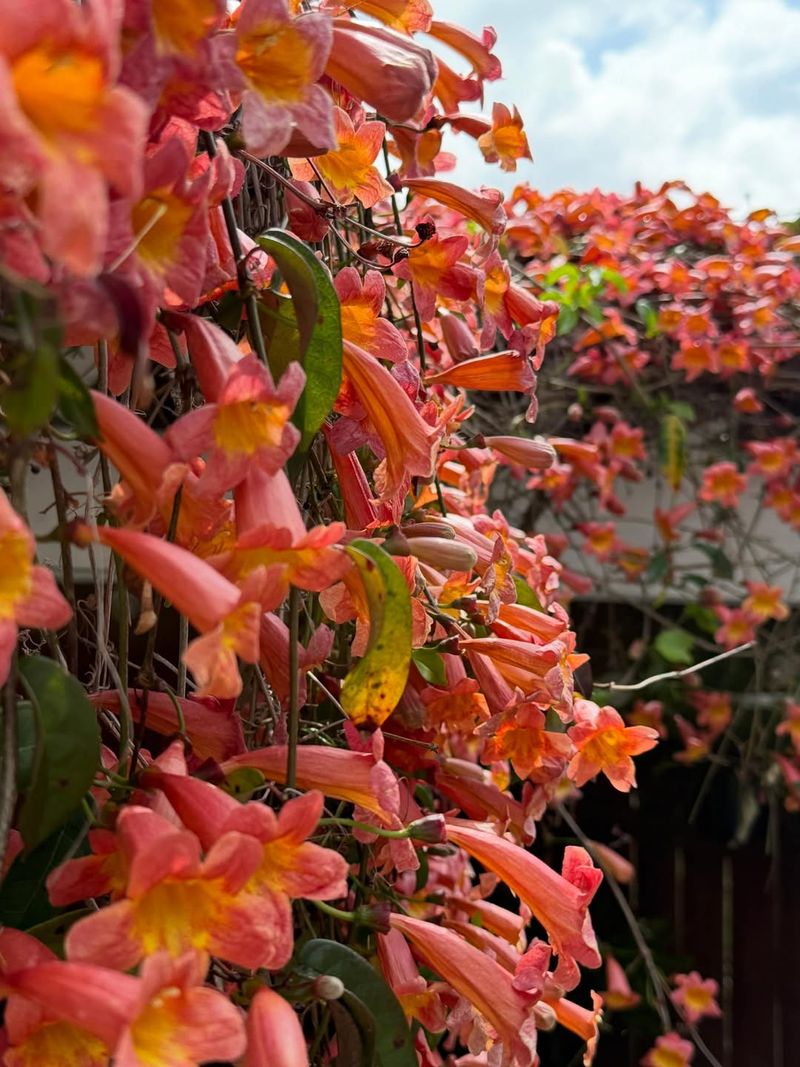
If you want shade in a hurry and do not mind a vine with a big personality, trumpet vine delivers. This native powerhouse can gallop up a pergola in a single season, dressing it in ferny leaves and fiery orange flowers that hummingbirds treat like a filling station.
Toughness is the whole point here. Trumpet vine laughs at drought, poor soil, and reflected heat off patios, making it one of the most reliable choices for the worst corner of a Texas yard.
That vigor comes with a warning, though. The plant suckers aggressively and can lift pavers or crowd out neighbors, so it works best on a strong, standalone pergola where you can keep it in bounds with regular pruning.
Think of it as the workhorse of this list. When July arrives and you need dense, dependable cover that no amount of sun can wilt, trumpet vine is already three stories tall and blooming its head off.
6. Coral Vine (Antigonon leptopus)
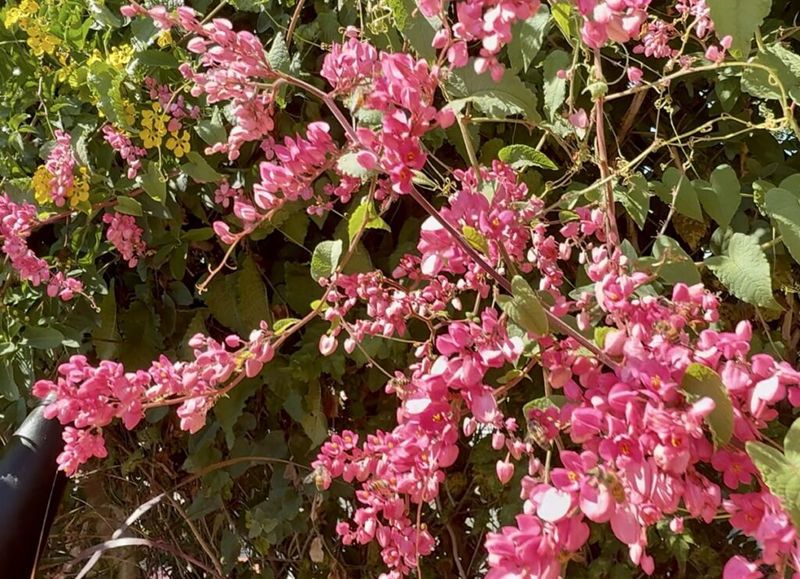
Old-timers around San Antonio and the Gulf Coast call it the queen’s wreath, and one look at its cascading pink sprays explains the affection. Coral vine blooms hardest exactly when most gardens surrender to the heat, covering a pergola in cotton-candy color through the dog days of summer.
Bees and butterflies swarm it, so the vine hums with activity from late summer into fall. That timing fills the gap after spring bloomers have called it quits.
Drought and blazing sun only seem to encourage more flowers. Coral vine grows from a tuber, dies back after a hard freeze in the northern part of the state, and returns with gusto once soil warms up again.
Because it is not native and can reseed freely, keep an eye on stray seedlings and pull them if they wander. Managed thoughtfully, it gives you the most reliable July-through-October flower curtain a Texas pergola can wear.
7. Star Jasmine (Trachelospermum jasminoides)
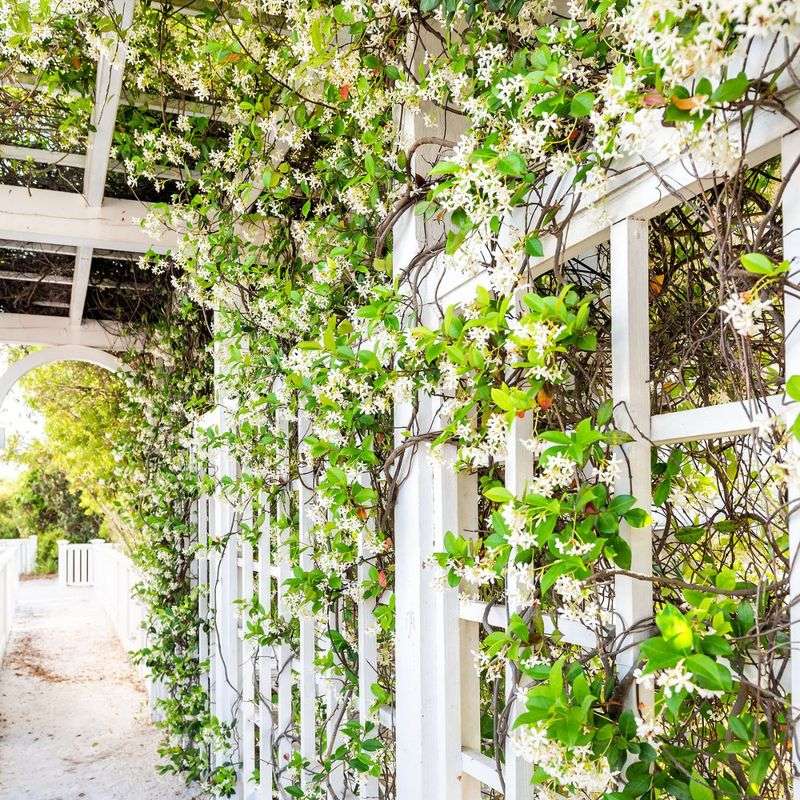
Step onto a shaded patio on a warm May evening and catch that sweet, heady perfume drifting down, and odds are star jasmine is overhead. The tiny white pinwheel flowers pack a fragrance that turns an ordinary pergola into a place you never want to leave.
Glossy evergreen foliage keeps the structure clothed all year, so the shade does not vanish when the flowers finish. That dense, dark green mat is exactly what you want blocking a low July sun.
Once rooted, it handles Texas heat and moderate drought without drama, thriving in full sun to part shade across much of the state’s warmer zones. In the northern reaches it may need a protected spot to shrug off a hard freeze.
Give it a season or two to knit together, and star jasmine becomes a fragrant, cooling canopy that pulls double duty: gorgeous when blooming and quietly handsome the rest of the year. For a seating area you actually want to linger in, it is hard to beat.