
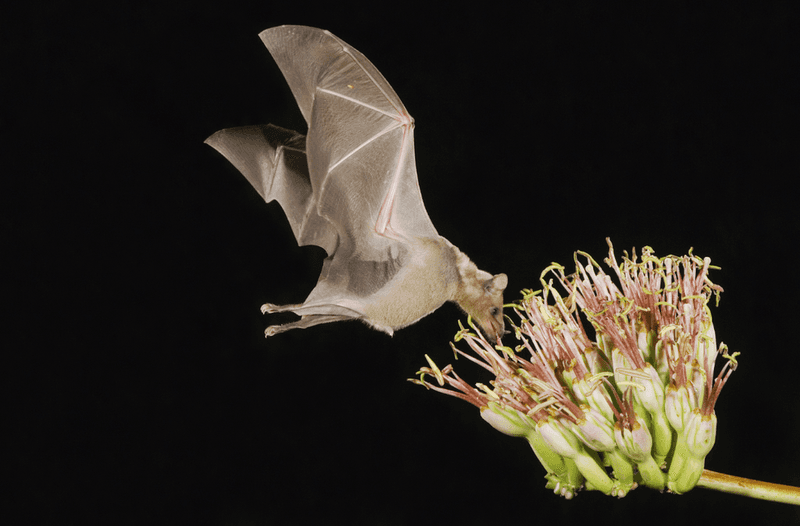
When the Texas sun finally drops and the heat lets up, a whole night shift of pollinators clocks in. Bats swoop over backyards eating thousands of mosquitoes, and certain night-blooming plants are exactly what pull them close. If you plant the right pale, sweet-smelling flowers, you can turn your yard into a natural bug patrol that works while you sleep. Here are nine Texas-friendly plants that open after dark and help keep the mosquito swarms in check.
1. Evening Primrose (Oenothera)
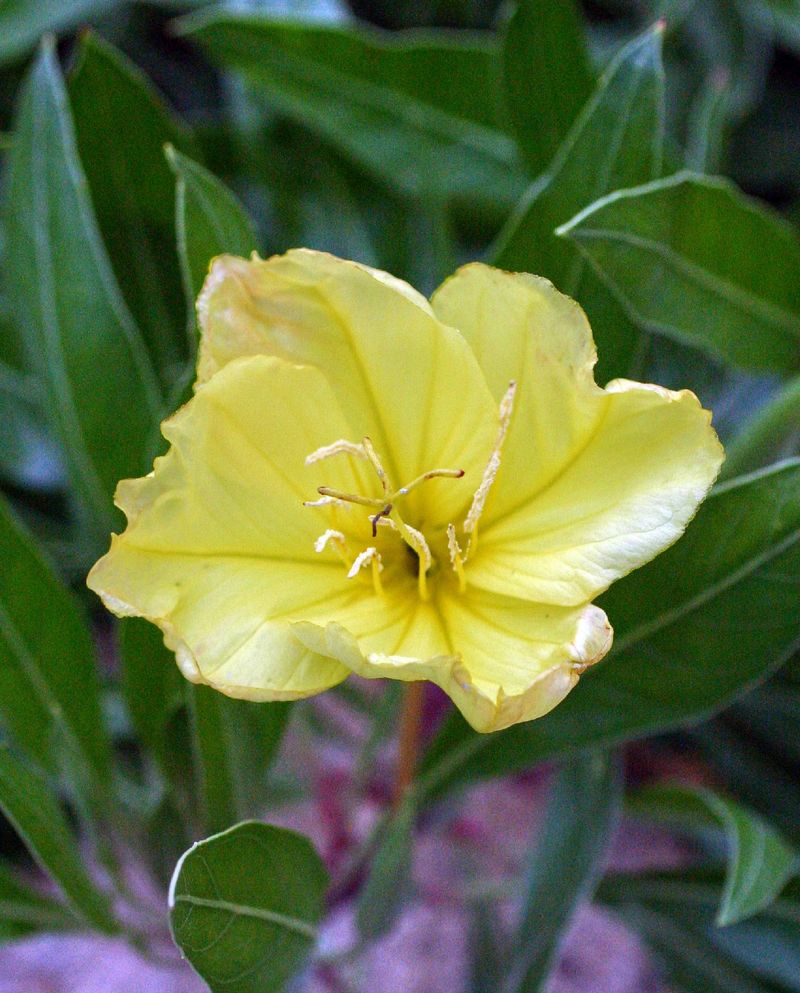
Right around dusk, evening primrose does something almost theatrical. Its lemon-yellow petals crack open in a matter of minutes, releasing a light citrus scent that carries across a warm Texas yard.
Native varieties like the showy pink and Missouri evening primrose already grow wild along Texas roadsides, which tells you everything about how tough they are. They shrug off drought, poor soil, and the kind of triple-digit afternoons that fry fussier flowers.
The open blooms feed night-flying moths, and where moths gather, bats follow. Those bats can eat their body weight in insects, so a patch of primrose may help thin the mosquitoes drifting around your patio. Give it a sunny spot with sandy soil and let it self-seed, and you will have a returning night-light for pollinators year after year.
2. Moonflower (Ipomoea alba)
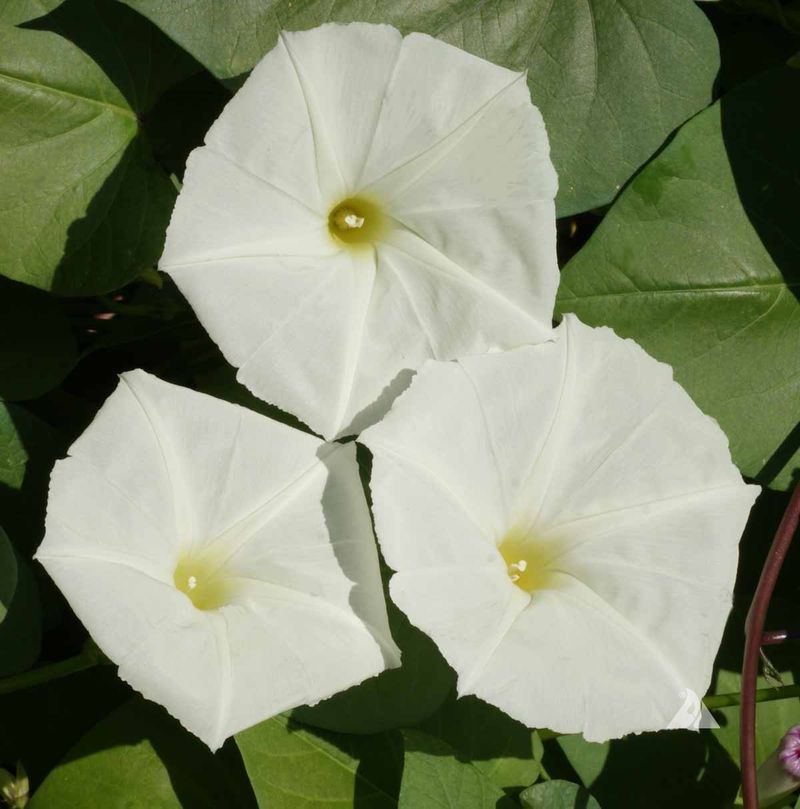
Picture a dinner-plate-sized white trumpet unfurling in slow motion just as the fireflies come out. That is the moonflower, a night-blooming cousin of the morning glory that saves its whole show for after dark.
Its huge pale blossoms practically glow in low light, which is exactly the point. Pale flowers are easier for night pollinators to spot, so moths and the bats hunting them are drawn straight to the vine.
Texas gardeners love it for climbing fences, trellises, and mailboxes through the long growing season, and it handles Gulf Coast humidity without complaint. The heavy evening perfume pulls in the moth crowd, and the feeding frenzy that follows can reduce the mosquito population loitering near your door. One heads-up, though: the seeds are toxic if eaten, so keep them away from curious kids and pets.
3. Night-Blooming Jasmine (Cestrum nocturnum)
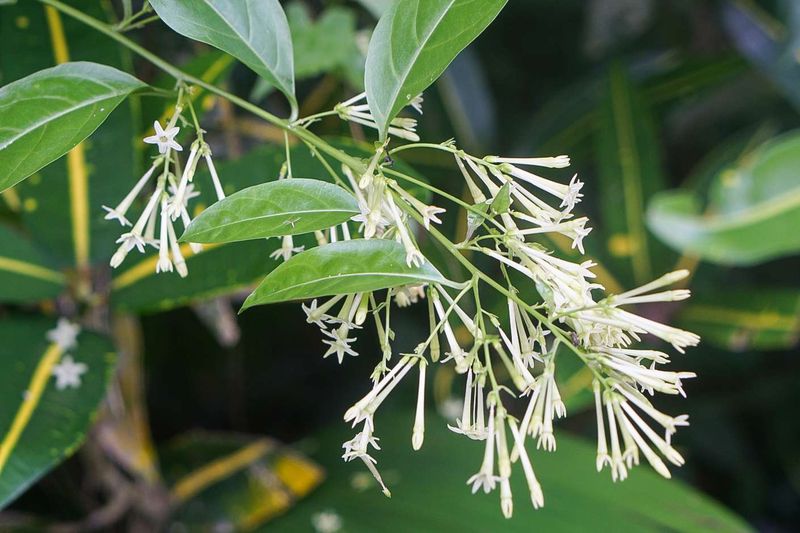
Some plants whisper. Night-blooming jasmine shouts. Its tiny greenish-white flowers are easy to miss by day, but after sunset they pump out a fragrance so strong you can smell it from across the yard.
That powerful scent is the whole strategy. It acts like a dinner bell for moths and other night insects, and the bats that patrol Texas skies show up for the buffet those insects create.
It thrives in the warmer parts of the state, especially along the Gulf Coast where mild winters let it grow into a lush shrub. In cooler zones, treat it as a container plant you can move indoors before a hard freeze. A word of caution for sensitive folks: the perfume can be overwhelming right under a bedroom window, so plant it a little ways off where the breeze can spread it around instead of trapping it.
4. Datura (Datura wrightii)
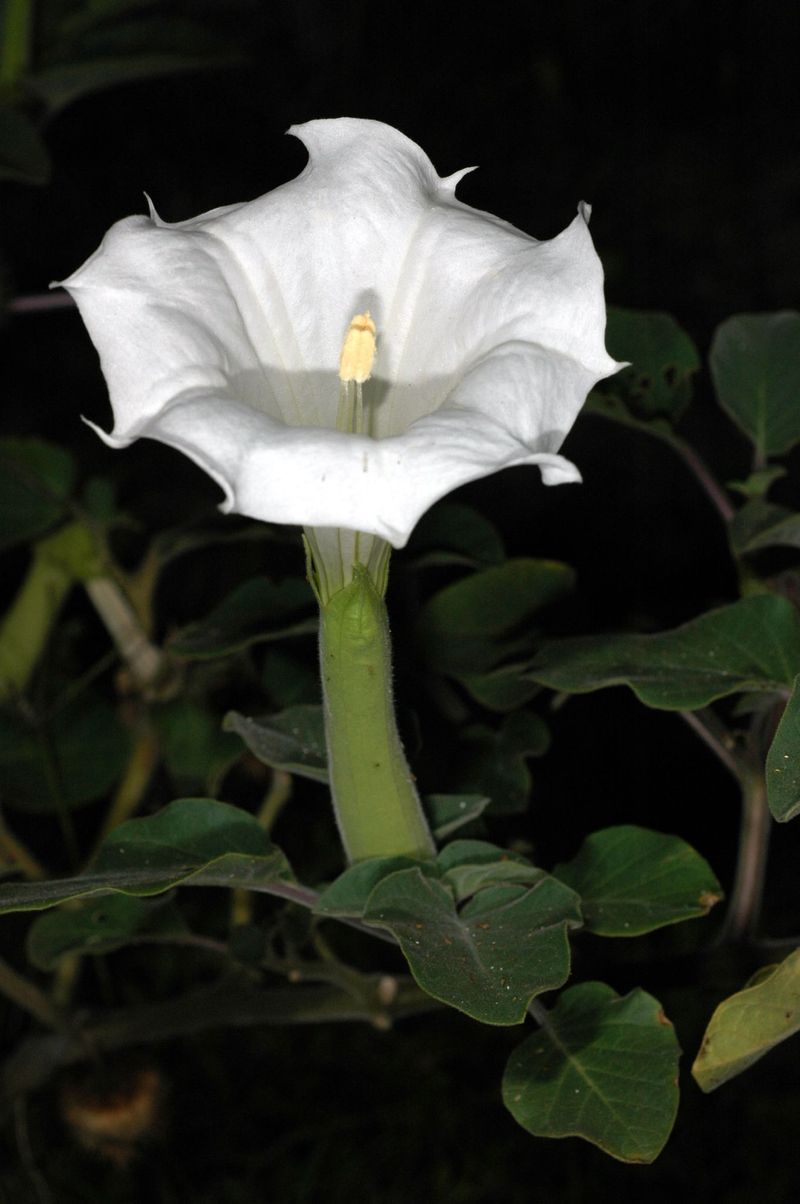
Sacred datura has a reputation, and it earns it. This sprawling native throws out big white-and-lavender trumpets that pop open in the evening and glow like little lanterns against gray-green leaves.
Found growing wild across much of Texas, it laughs at drought and heat, needing almost no help once it settles in. The flowers are built for hawkmoths, whose long tongues reach deep for nectar, and those fat moths are prime bat food.
Bring the moths, bring the bats, and the mosquito swarm hovering over your evening cookout has a rough night. Datura does come with a serious warning, though: every part of the plant is poisonous, so it belongs in yards without small children or pets who might nibble. Handle it as an admire-from-a-distance beauty, and it will reward you with a nightly light show.
5. Four O’Clocks (Mirabilis jalapa)
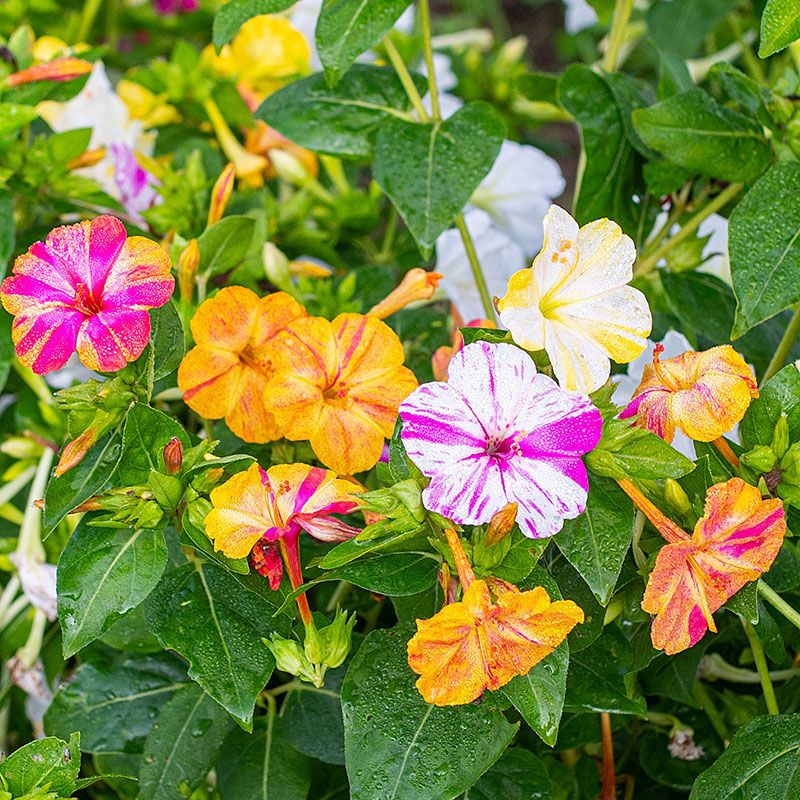
True to their name, four o’clocks wait until late afternoon to wake up, then stay open all through the night. By the time you are lighting the grill, they are already showing off their magenta, yellow, and streaked blooms.
Old Texas farmhouses often had a bushy clump of these near the porch for good reason. They handle heat, spread easily from a chunky tuber, and come back reliably summer after summer with barely any fuss.
Sweet-smelling and tube-shaped, the flowers call in sphinx moths at dusk. That evening insect traffic feeds the bats overhead, which in turn helps chip away at the mosquitoes circling your ankles. Plant a row along a fence or walkway, and you get old-fashioned color plus a working part of your after-dark pest patrol.
6. Texas Agave (Agave americana)
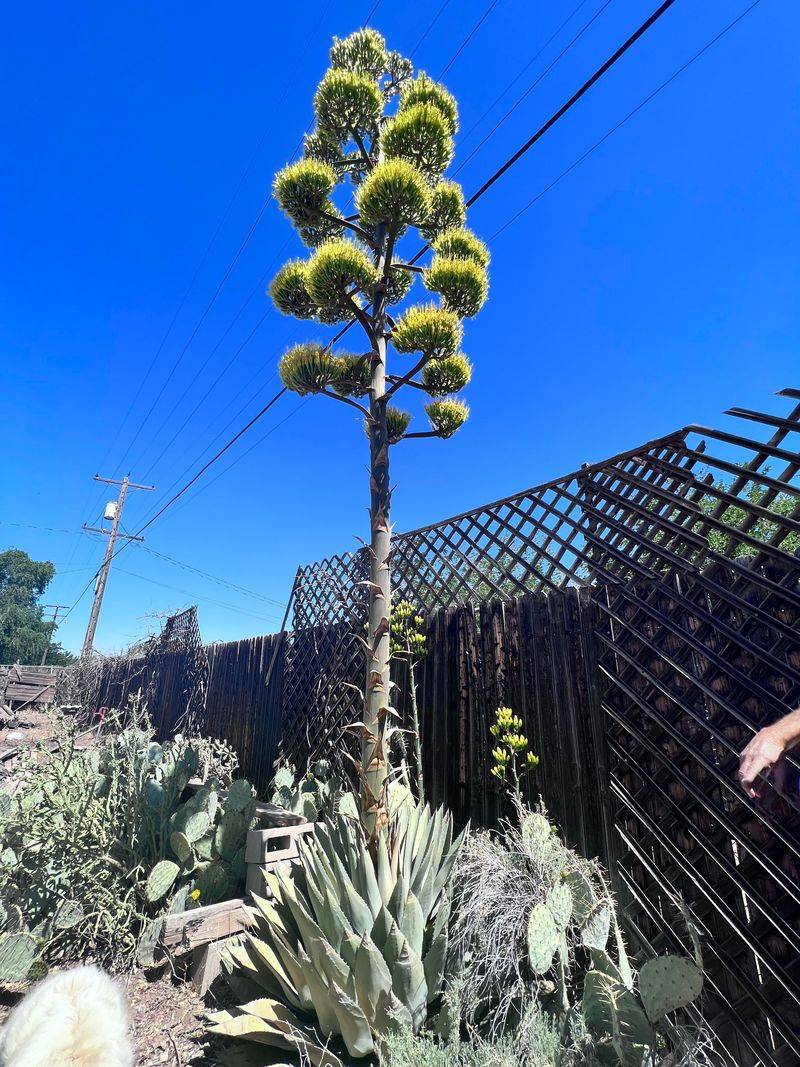
Here is a plant that plays the long game. An agave can grow for years as a spiky rosette before shooting up a towering flower stalk that can reach twenty feet or more, crowned with clusters of nectar-rich blooms.
When that once-in-a-lifetime bloom finally happens, it becomes a full-blown bat magnet. Nectar-feeding bats, including species that migrate through West and South Texas, drink from agave flowers and pollinate them in return.
Those same bats gobble up insects on their nightly rounds, so an agave in bloom is like rolling out a welcome mat for your best mosquito control crew. Even between blooms, agave is a dream for water-restricted yards, storing moisture in its thick leaves and asking for almost nothing. Just mind the sharp spines and give it room away from foot traffic.
7. Angel’s Trumpet (Brugmansia)
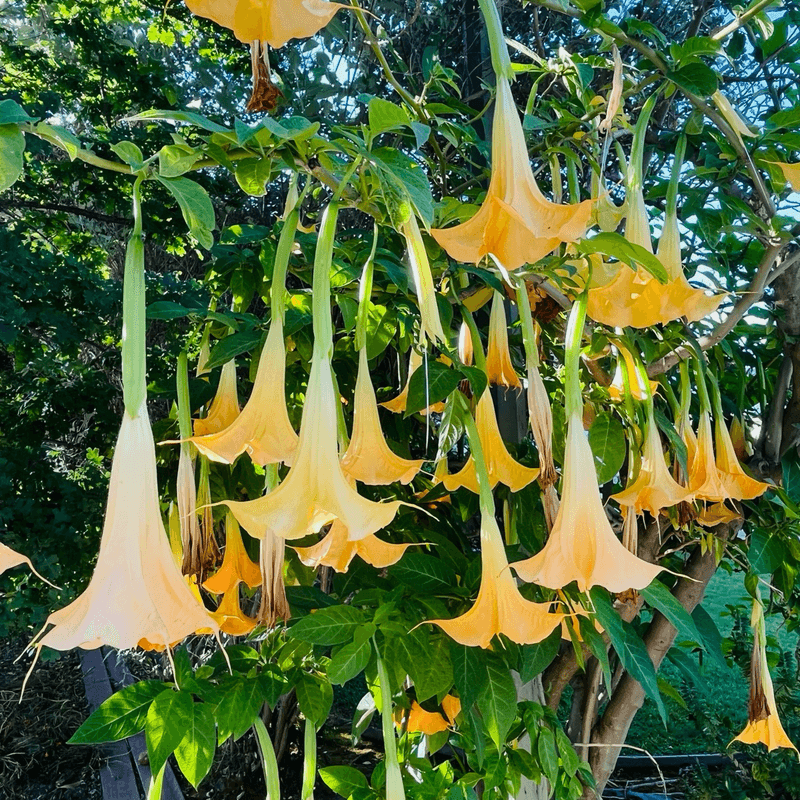
Few plants make a bigger entrance after dark than angel’s trumpet. Its enormous hanging bell flowers, sometimes a foot long, dangle like ornaments and release a rich perfume once the sun sets.
Warm, humid corners of Texas suit it best, particularly along the Gulf Coast where it can grow into a small tree in a season. Gardeners in colder spots keep it in a large pot and haul it inside when a freeze threatens.
The scent and pale coloring team up to lure hawkmoths, setting off the same chain that ends with hungry bats swooping through your yard. As with several nighttime bloomers, every part of Brugmansia is toxic, so treat it as a showpiece rather than something to plant where little hands can reach. Kept out of trouble, it delivers drama and a quiet assist against biting bugs.
8. Nicotiana (Flowering Tobacco)
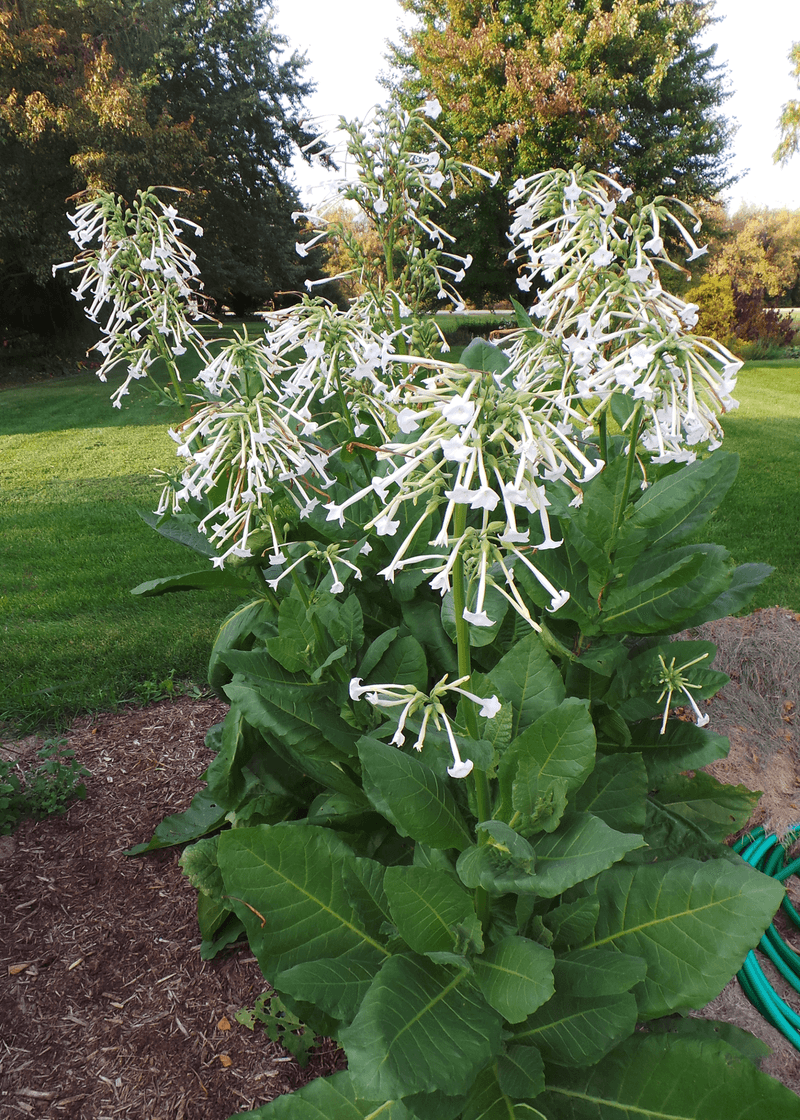
Delicate and easy to underestimate, nicotiana comes alive right when most gardens are settling down for the night. Its star-shaped flowers flop a bit during the hot part of the day, then perk up and pour out fragrance as the temperature drops.
The tall, old-fashioned white types are the ones you want for night work, since their pale petals and deep tubes are built for after-dark visitors. Sphinx moths hover in front of them like tiny hummingbirds, dipping in for nectar.
That reliable moth activity feeds the bats cruising your neighborhood, which quietly helps trim the mosquito numbers around your seating area. Nicotiana grows fast from seed and tolerates Texas heat well as long as it gets a drink during the driest stretches. Tuck it into borders or big pots near where you relax in the evening for the best payoff.
9. Night-Blooming Cereus (Peniocereus greggii)
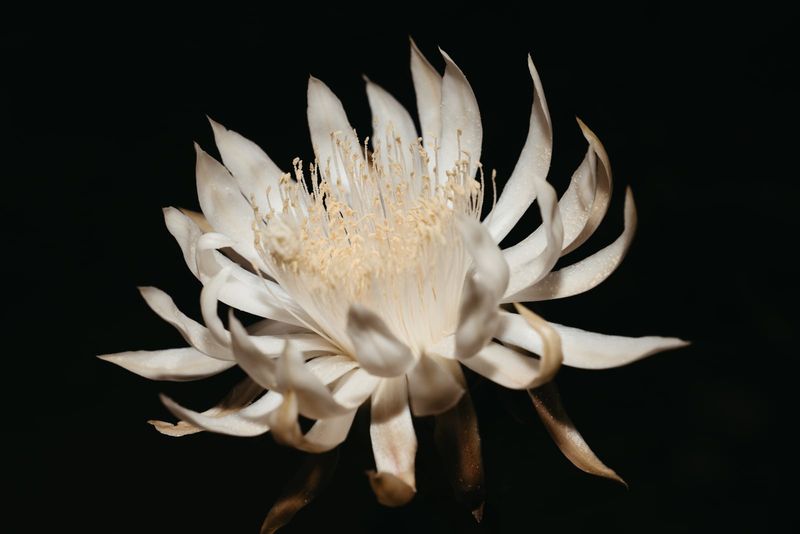
Blink and you will miss it. Night-blooming cereus spends most of the year as a scraggly, forgettable stick, then for one or two nights it unleashes a huge, sweetly perfumed white bloom that closes forever by sunrise.
Gardeners in West and South Texas prize this desert native precisely because the show is so rare. When the flowers open, word spreads fast, and people throw watch parties just to see it happen.
The blooms are a beacon for moths, and the buzzing insect crowd draws in bats to feed, giving your yard a brief but real boost against mosquitoes. Better yet, this plant is practically built for water restrictions, surviving on almost nothing once established in fast-draining soil. If you want a conversation piece that also quietly supports your nighttime pest control, few plants match its drama.