
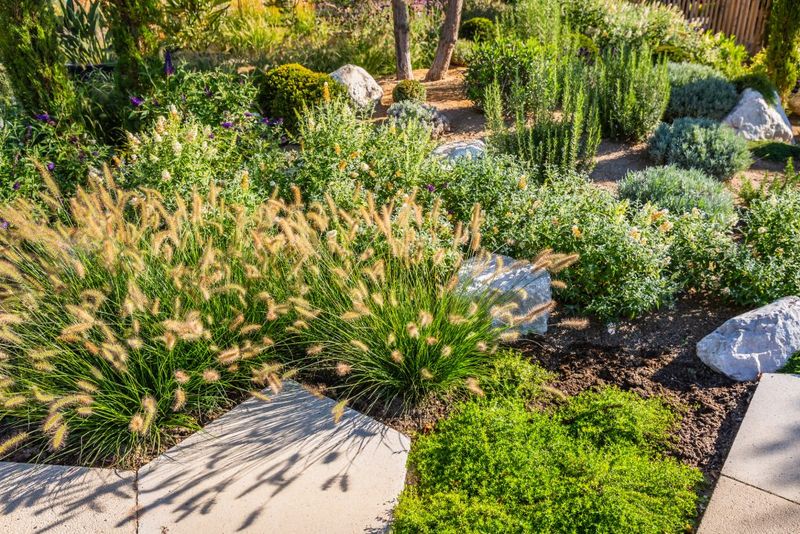
If you live in Texas, you already know summer can turn your yard into a tinderbox. Bark mulch might look tidy piled against your foundation, but it dries out fast and can catch a stray ember during wildfire season, sending flames right up to your walls. The smarter move is to plant low, living groundcovers that hold moisture, stay green, and act like a natural firebreak instead. Here are seven tough Texas groundcovers that belong up against your house, ready to shrug off triple-digit heat and protect your home at the same time.
1. Frogfruit (Phyla nodiflora)
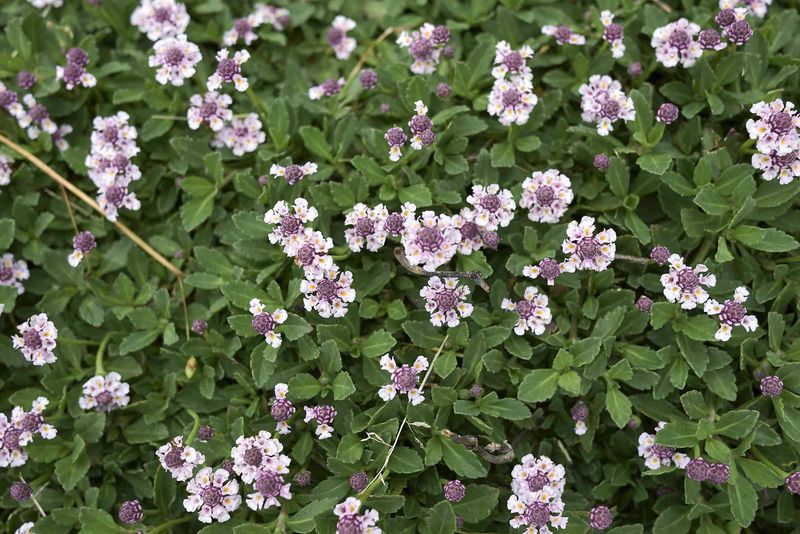
Walk across a patch of frogfruit on a July afternoon and you will notice something surprising: it stays cool and springy even when the lawn around it has gone crispy. That moisture-holding habit is exactly what makes it such a poor fuel for fire, which is why it earns first place along your foundation.
Native across much of Texas, frogfruit spreads into a dense mat only a couple of inches tall, hugging the ground so tightly that flames struggle to find anything dry to grab. It sips very little water once established, so it laughs at municipal watering restrictions during a drought.
Tiny white-and-pink blooms pop up spring through fall, and pollinators adore them, so you are protecting your house and feeding butterflies at the same time. Frogfruit tolerates foot traffic, poor soil, and reflected heat bouncing off a brick wall. Plant it in a strip about three to five feet wide against the house, keep it trimmed low, and you have swapped a flammable mulch bed for a living green barrier that practically takes care of itself.
2. Silver Ponyfoot (Dichondra argentea)
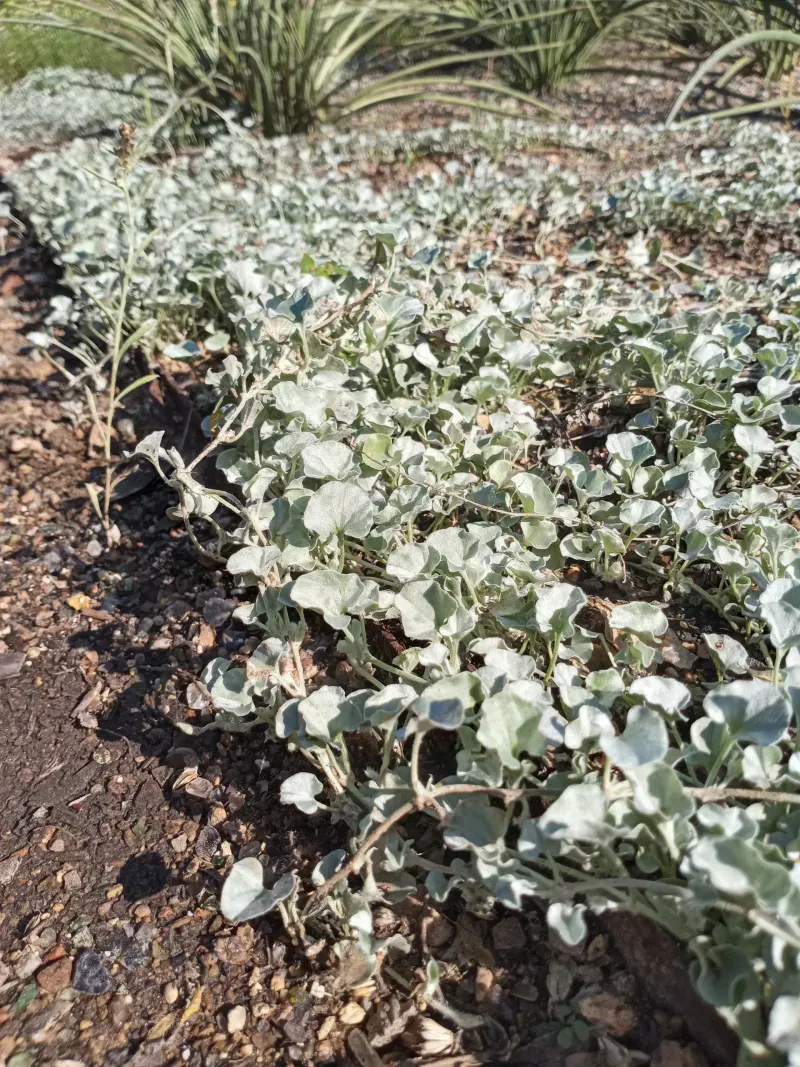
Shimmering like spilled coins, silver ponyfoot brings a cool metallic sheen to the hottest, driest strip of your yard. That silvery, slightly fuzzy foliage reflects sunlight instead of soaking it up, and the leaves carry enough internal moisture that they resist ignition far better than a dried-out mulch pile.
A Texas native adapted to rocky, sun-blasted ground, ponyfoot thrives in the exact spot most plants hate: right up against a west-facing wall where afternoon heat radiates back at everything. It creeps outward in a trailing carpet, filling gaps and smothering weeds without ever growing tall enough to become a fire ladder.
Give it lean, well-drained soil and almost no supplemental water, and it rewards you with that eye-catching silver blanket all season. Because it stays flat and lush, embers landing on it tend to fizzle rather than flare. For homeowners who want good looks and genuine fire safety in one plant, this one delivers both without asking for a drop of extra effort.
3. Woolly Stemodia (Stemodia lanata)
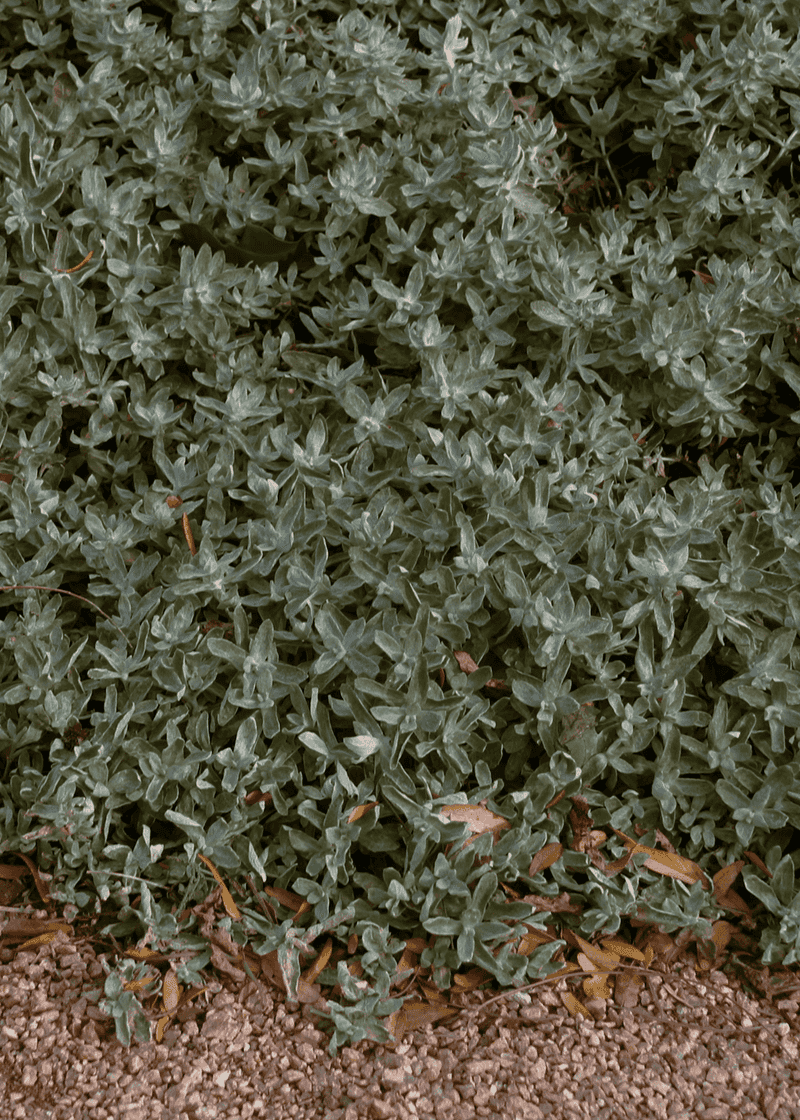
Run your fingers over woolly stemodia and it feels like felt, thanks to a coat of soft gray hairs that gives the plant its name. That fuzzy layer is more than charming, it holds humidity close to the leaf surface and keeps the foliage plump and slow to burn even during a Gulf Coast heat wave.
Originally at home in the sandy soils of South Texas and the Rio Grande region, this groundcover forms a soft silver-gray mat that spreads steadily without climbing. It handles salty air, sandy dirt, and blazing sun, making it a great pick for coastal homeowners juggling both hurricane season and wildfire worry.
Woolly stemodia stays low and tight, so there is no woody buildup to catch flames and carry them toward your siding. It needs excellent drainage and very little water, which suits Texans living under sprinkler bans just fine. Tuck it into a foundation bed where it can sprawl, and you get a plush, drought-proof cushion that helps keep fire on the ground and away from your home.
4. Horseherb (Calyptocarpus vialis)
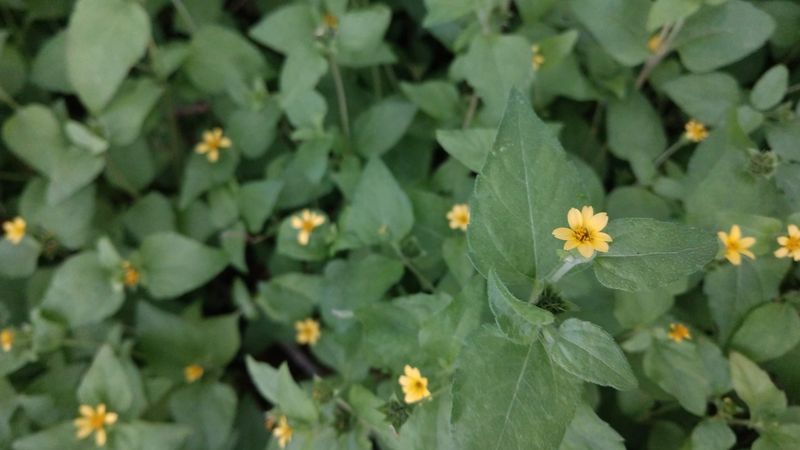
Some Texans call horseherb a weed, but the folks who fight wildfires call plants like this a defense. It shows up naturally in shady spots where grass gives up, quietly weaving a soft green mat that stays hydrated and hard to ignite even in the dog days of summer.
What sets horseherb apart from the others on this list is its comfort in shade, so it will thrive on the north side of your house where sun-lovers sulk. It grows only a few inches tall, produces small yellow flowers, and bounces back fast after a trim or a dry spell.
Because it holds moisture and stays low, it acts as a smothering blanket over bare soil where mulch would otherwise sit drying in the wind. Deer nibble it, bees visit the blooms, and it asks almost nothing of you in return. If part of your foundation stays shaded, horseherb fills that awkward gap with a living, fire-smart carpet instead of a flammable one.
5. Sedum (Stonecrop)
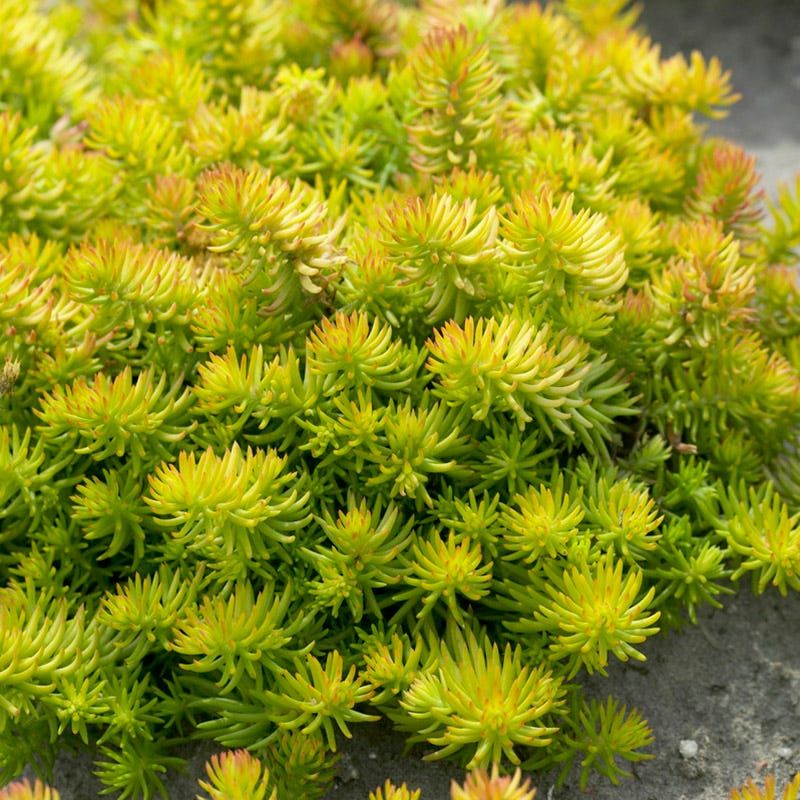
Picture a plant so packed with water that its leaves feel like tiny green water balloons, that is sedum. Those succulent leaves store moisture inside thick, waxy skin, which is roughly the opposite of what a fire wants, and it makes stonecrop one of the most reliably ember-resistant groundcovers you can plant.
Firewise landscaping guides across the country recommend low succulents like sedum for the first zone right around a home, and Texas gardeners get the bonus of a plant that shrugs off triple-digit heat with a smile. Many varieties creep along the ground in tidy rosettes, staying short and neat against a wall.
Sedum wants sharp drainage and full sun, and it genuinely prefers being ignored, so overwatering is the only real way to hurt it. It also comes in a rainbow of colors and textures, letting you design a foundation bed that looks intentional rather than accidental. When you want a groundcover that carries its own water supply, this juicy little survivor is tough to beat.
6. Trailing Lantana (Lantana montevidensis)
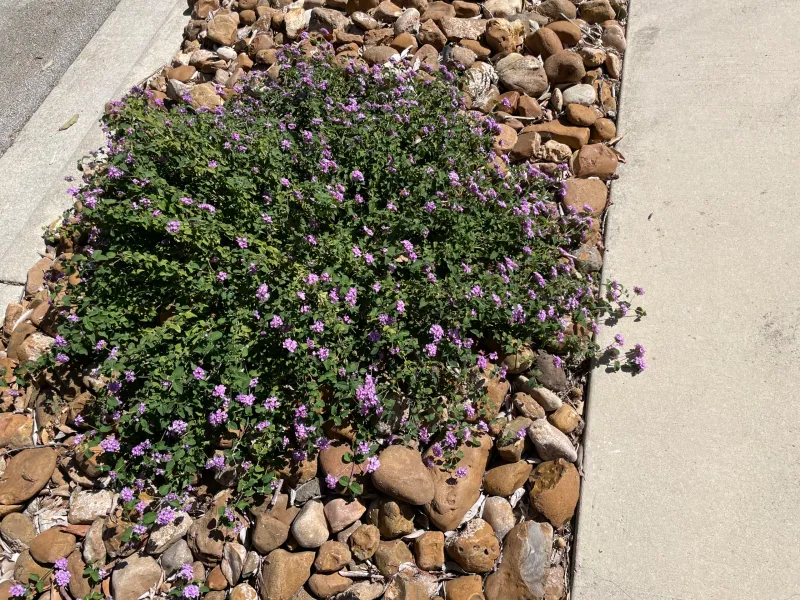
Bright purple blooms buzzing with butterflies might not scream fire safety, but trailing lantana quietly pulls double duty in a Texas yard. Kept low and regularly deadheaded, its fresh green growth holds moisture and resists flames, while the flowers turn a plain foundation strip into a pollinator magnet.
A tough performer through the worst of the Texas summer, this lantana laughs at heat, drought, and lean soil, blooming when almost everything else has quit. It hugs the ground and cascades over edges rather than growing into a tall, woody shrub, which keeps it from becoming a fire ladder up your wall.
The catch worth knowing: any groundcover only stays fire-smart if you keep it lush and clear out dead, dry stems, so give trailing lantana a trim now and then. Do that, and you trade a lifeless mulch bed for a river of color that helps guard your home. For gardeners who refuse to choose between beauty and safety, this one bends the rules in your favor.
7. Gregg’s Dalea (Dalea greggii)
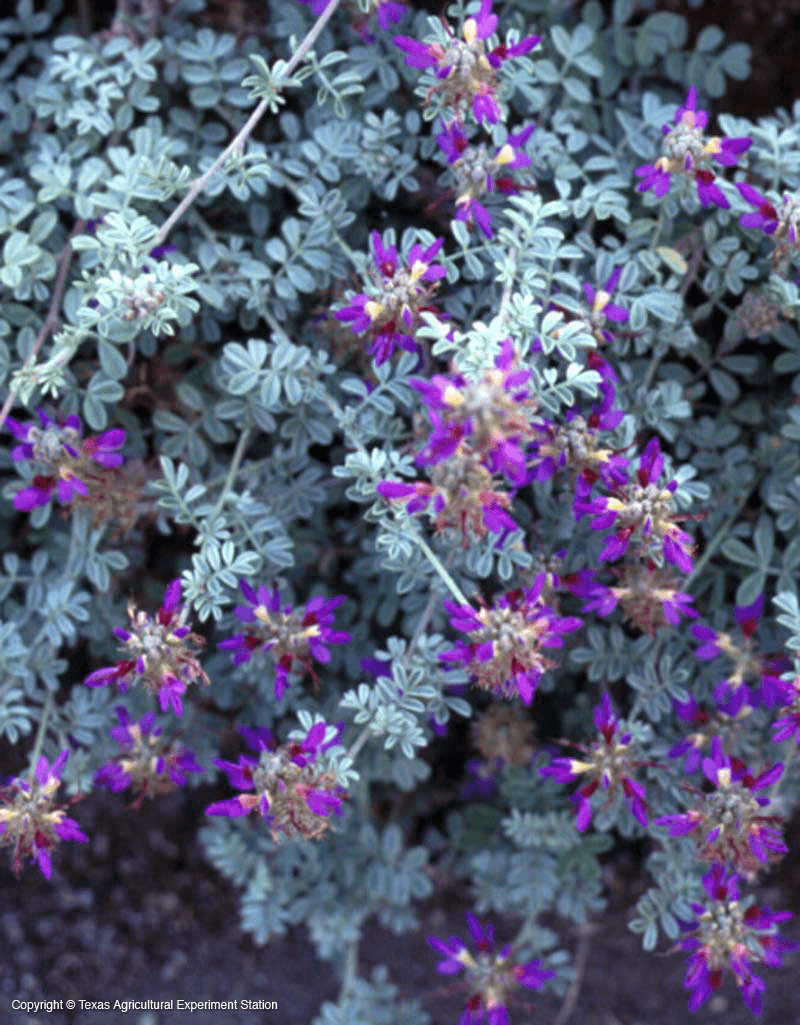
Native to the rugged limestone country of West Texas, Gregg’s dalea looks delicate with its silvery ferny leaves, yet it is one of the toughest customers in the whole lineup. That fine gray-green foliage stays soft and moist through brutal heat, giving fire very little dry material to work with right where you need protection most.
It spreads into a wide, low mound that can blanket a slope or a foundation bed several feet across, staying under a foot tall so it never becomes fuel climbing toward your eaves. Small purple flowers dot the mat in spring, drawing in native bees looking for a meal.
Dalea craves the same conditions that stress other plants: rocky soil, full sun, and barely any water once it is rooted in, which makes it a dream during watering restrictions. Because it holds its ground on erosion-prone slopes, it also helps with the runoff Texans see during Gulf Coast storms. Firebreak, erosion control, and pollinator buffet in one silvery package, that is a lot of value crammed into a single native plant.