
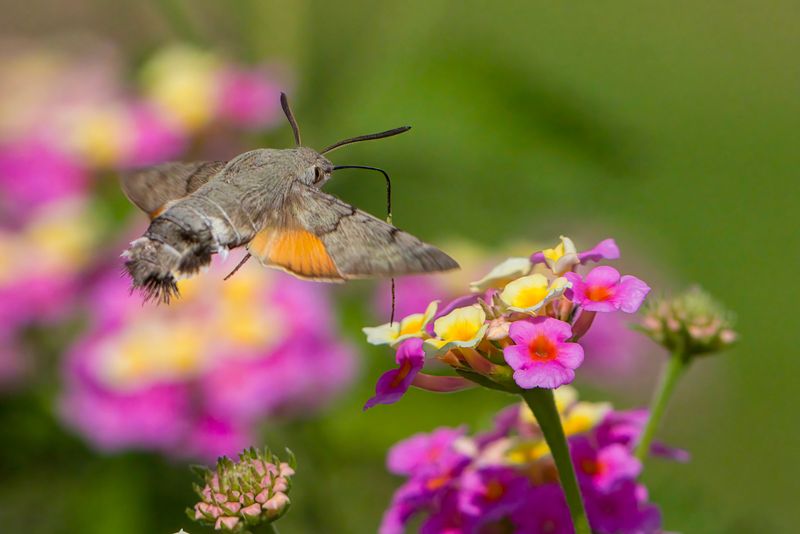
Right around sunset, when the Texas heat finally eases up, you might catch something zipping between your flowers that looks almost like a tiny hummingbird. It hovers, sips nectar with a long tongue, and darts away before you can grab your phone. That is the hummingbird hawk-moth, and the right blooms will invite it straight into your yard. Plant these Texas-friendly flowers and you turn your garden into a dusk-time show that survives our brutal summers.
1. Texas Lantana (Lantana urticoides)
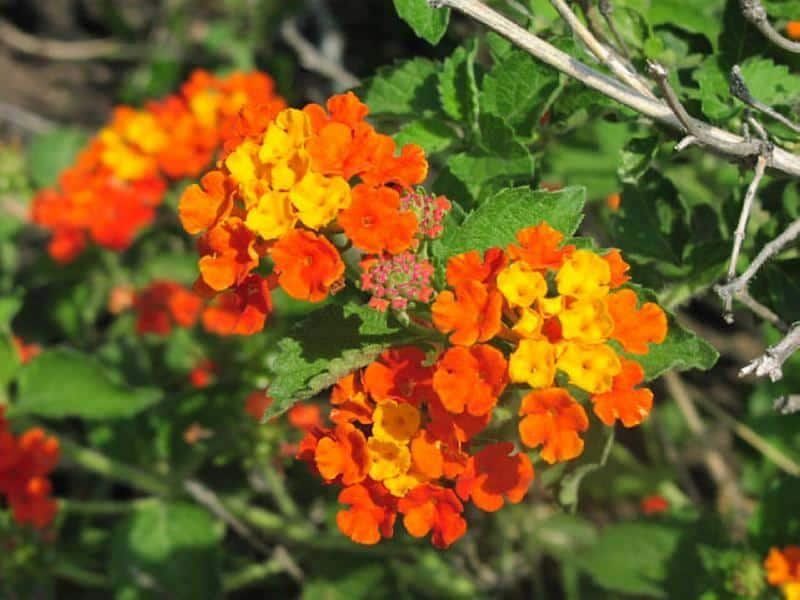
Tough as boot leather and blazing with color, native Texas lantana laughs at triple-digit afternoons that leave fussier plants wilting. Its clusters of orange and yellow blooms stay open into the evening, which is exactly when hawk-moths come looking for an easy meal.
What sets it apart from other nectar plants is the sheer volume of tiny flowers packed onto each cluster. A hovering moth can work one plant for a full minute without moving on, giving you plenty of time to watch. Because it is native, it shrugs off drought and thrives even when municipal water restrictions kick in.
Fun bit of history: settlers across Central Texas planted lantana precisely because nothing seemed to kill it. Give it full sun, poor soil, and near-total neglect, and it may reward you with blooms from spring straight through the first freeze.
2. Turk’s Cap (Malvaviscus arboreus)
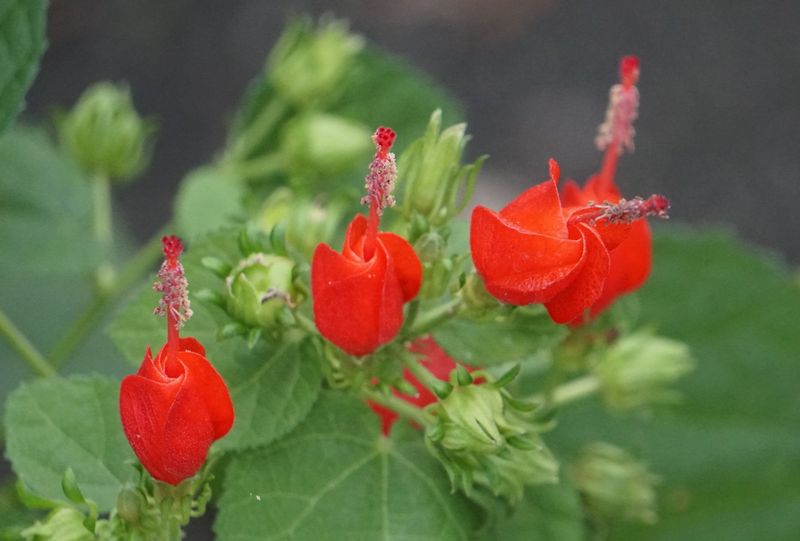
Picture a hibiscus flower that never quite finishes opening, twisting its red petals into a little turban, and you have Turk’s cap. Those partly closed blooms hide nectar deep inside, and a hawk-moth’s long tongue reaches it perfectly while the moth hangs in midair.
Unlike the sun-worshippers on this list, Turk’s cap actually prefers the shady spots along fences, under oaks, and beside the house where other flowers sulk. That makes it a rare payoff plant for the dim corners of a Texas yard.
It keeps blooming through the muggiest Gulf Coast stretches and holds up when hurricane season dumps heavy rain, then dries out fast afterward. Pollinators of every kind pile onto it, so you often get moths at dusk and hummingbirds by day sharing the same bush.
3. Evening Primrose (Oenothera species)
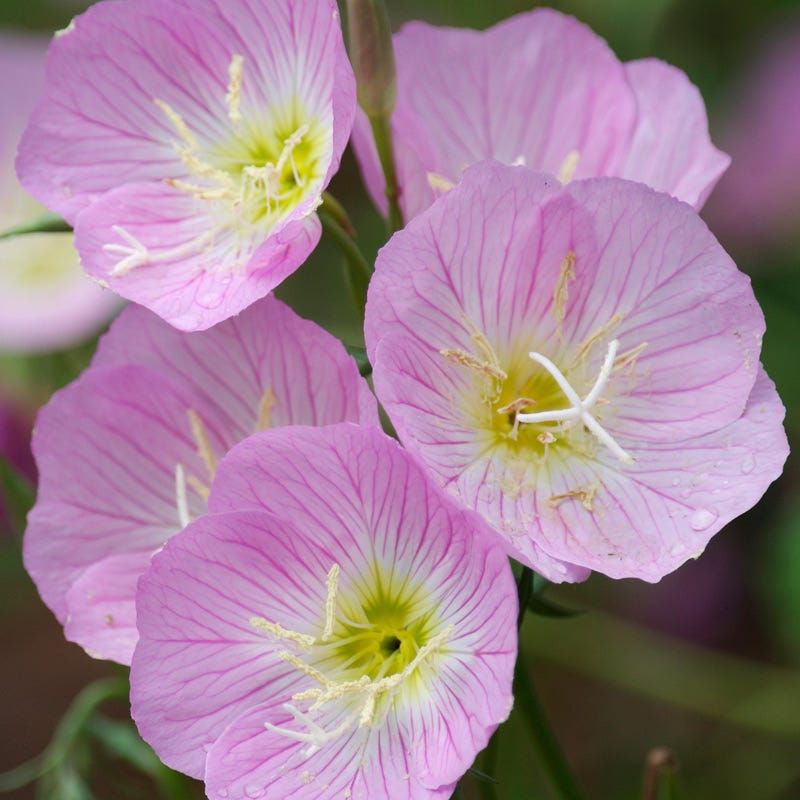
Some flowers save their best trick for after dark, and evening primrose is the headliner. Its pale, cup-shaped blooms pop open near dusk and release a sweet scent that drifts across the yard, practically ringing a dinner bell for hawk-moths.
The timing is the whole point here. While daytime bloomers close up shop, evening primrose is just getting started, matching the moth’s schedule almost exactly.
Texans will recognize the pink-and-white “buttercups” that carpet roadsides every spring, a wild cousin of the garden types. They spread easily and handle sandy, rocky soil that would starve other plants, so a small patch can fill in fast. For a garden built around dusk visitors, few natives pull their weight quite like this one.
4. Texas Sage (Leucophyllum frutescens)
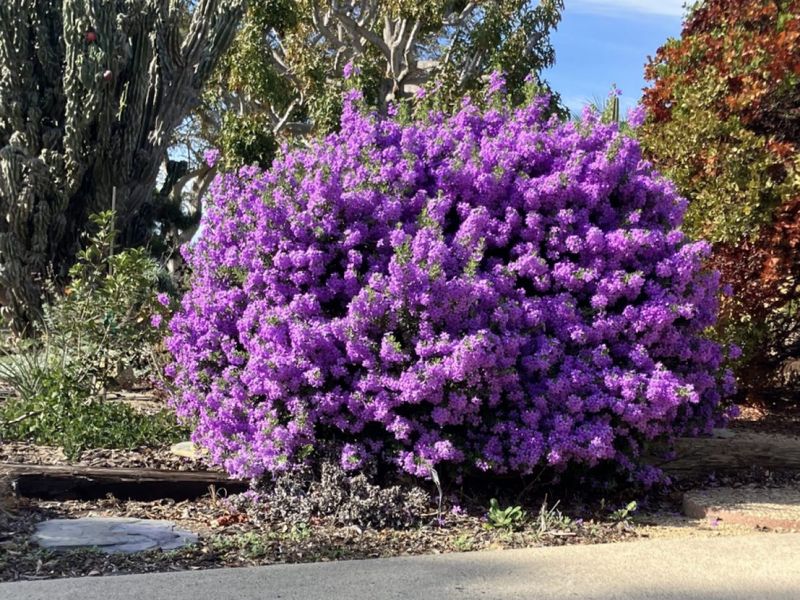
Locals swear this silvery shrub can predict the weather, bursting into purple bloom right before a rain, which is how it earned the nickname “barometer bush.” Those sudden flower explosions are a feast that hawk-moths can find from a distance.
Native to the Rio Grande region, Texas sage is built for punishment. It survives on almost no water, tolerates alkaline soil, and reflects the harsh sun with its fuzzy gray leaves, so heat waves barely faze it.
The trumpet-shaped purple flowers are just deep enough to suit a hovering moth’s long tongue. Since it often blooms in waves after summer storms, you may notice a fresh crowd of dusk visitors every time the weather shifts. Plant it as a hedge and you can reduce your watering bill while feeding pollinators at the same time.
5. Standing Cypress (Ipomopsis rubra)
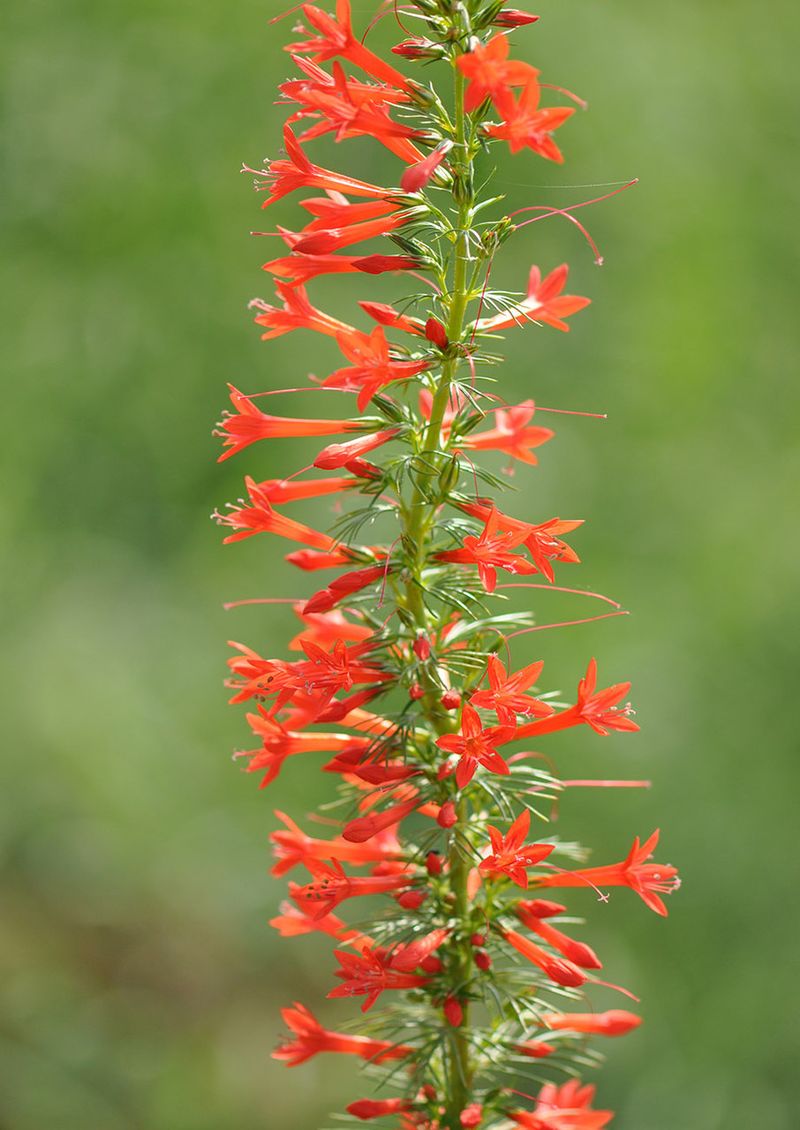
Tall and torch-like, standing cypress shoots up a spire of scarlet tubular flowers that looks like a firework frozen mid-burst. Each narrow bloom is practically custom-made for a long-tongued hawk-moth that feeds while hovering.
Height gives this native an edge the low growers cannot match. Rising three to six feet, it puts its nectar right at eye level, so the moths perform their show where you can actually see them from the porch.
It is a biennial that loves the well-drained, sandy soils common across much of Texas and asks for very little water once established. Sow it in a sunny spot and let it reseed itself year after year. When the red spikes light up at dusk, they turn a plain corner of the yard into the busiest table in the garden.
6. Flowering Tobacco (Nicotiana)
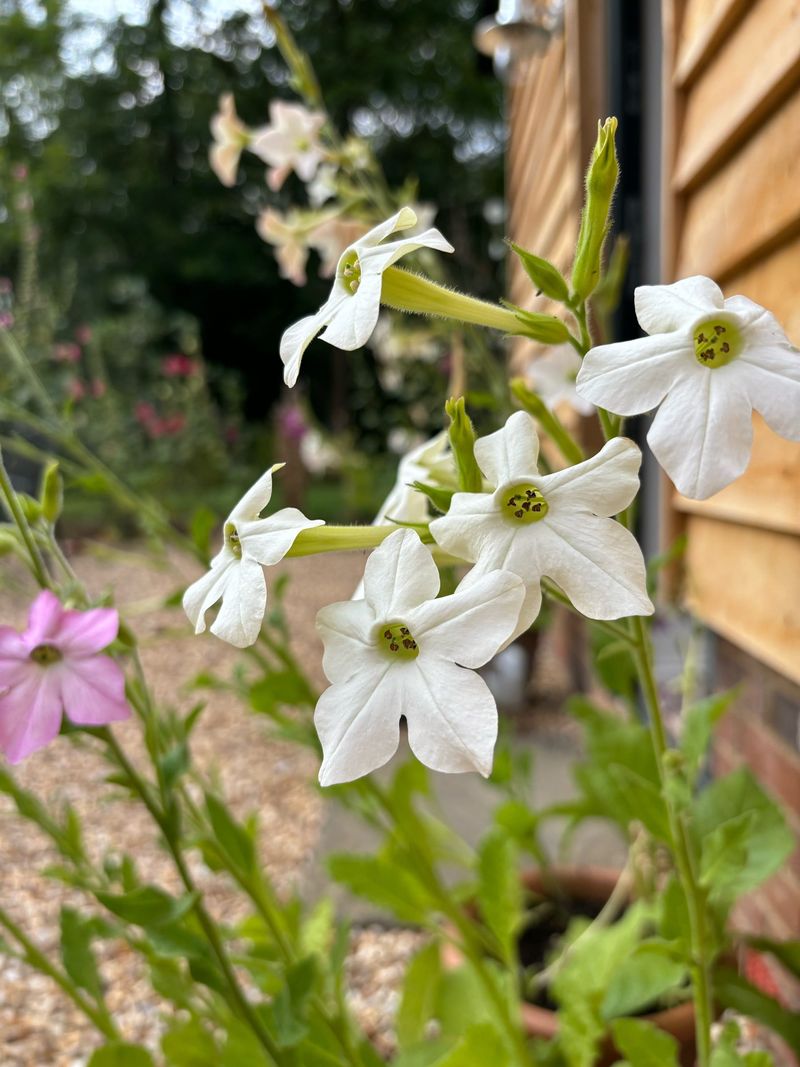
Come evening, flowering tobacco does something sneaky: its trumpet blooms unfurl and pump out a heavy perfume aimed squarely at night-flying moths. Hawk-moths follow that scent trail in like sailors to a lighthouse.
The long, tubular flowers store nectar deep at the base, a shape that rewards the very insects with tongues long enough to reach it. That deep design is what makes it such a reliable draw compared to shallow, open flowers.
In Texas gardens, give it a little afternoon shade and consistent moisture and it can bloom through much of the warm season. The white and pale-green varieties glow in low light, helping moths spot them after sundown. Tuck a few near a patio and you may find yourself with front-row seats to the dusk parade.
7. Coral Honeysuckle (Lonicera sempervirens)
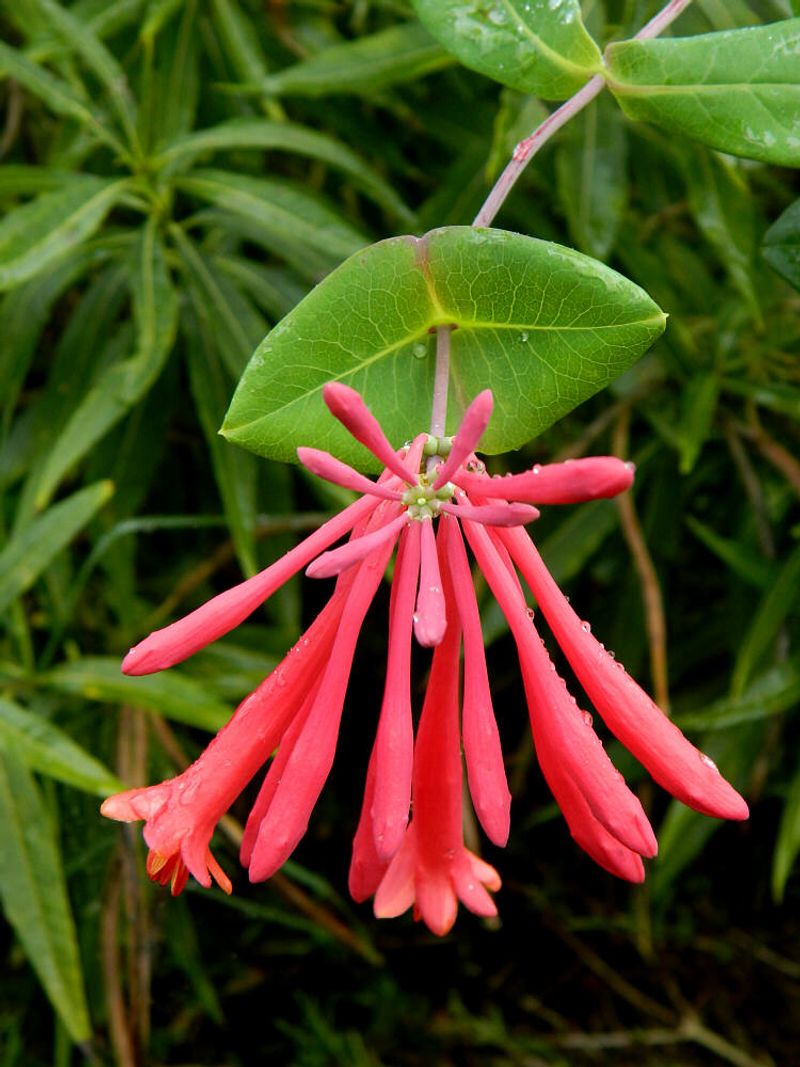
Here is the vine to reach for if you want a mannerly climber instead of the thuggish invasive honeysuckle that smothers native plants across the South. Coral honeysuckle stays polite, and its clustered red-orange trumpets are pure temptation for hovering moths.
Choosing this native over the invasive Japanese kind matters more in Texas than folks realize, since the aggressive version chokes out the very ecosystem you are trying to build. This one behaves, climbing a trellis or fence without taking over the neighborhood.
Did you know its tubular blooms feed hummingbirds by day and hawk-moths at dusk, then ripen into red berries that songbirds finish off? Heat-tolerant and low-maintenance, it can bring three kinds of wildlife to a single fence line, turning a plain boundary into a living corridor.