
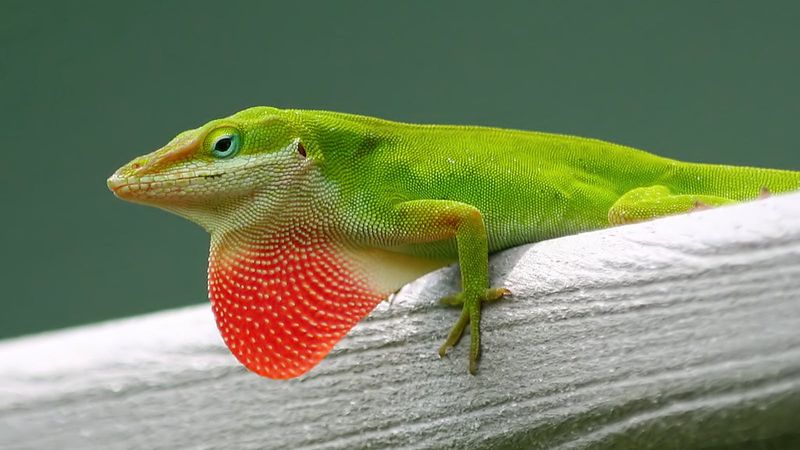
Spot a handful of small green or brown lizards darting across your fence or disappearing into the shrubs, and you might wonder whether your yard is thriving, overrun with bugs, or hosting something it shouldn’t. Those quick little reptiles are almost certainly green anoles, the native lizard of eastern and southeastern Texas, and their presence is worth reading carefully. Summer is the season you’re most likely to notice them, and what they’re pointing to says more about your yard’s structure than any single garden problem.
Start with what the yard provides
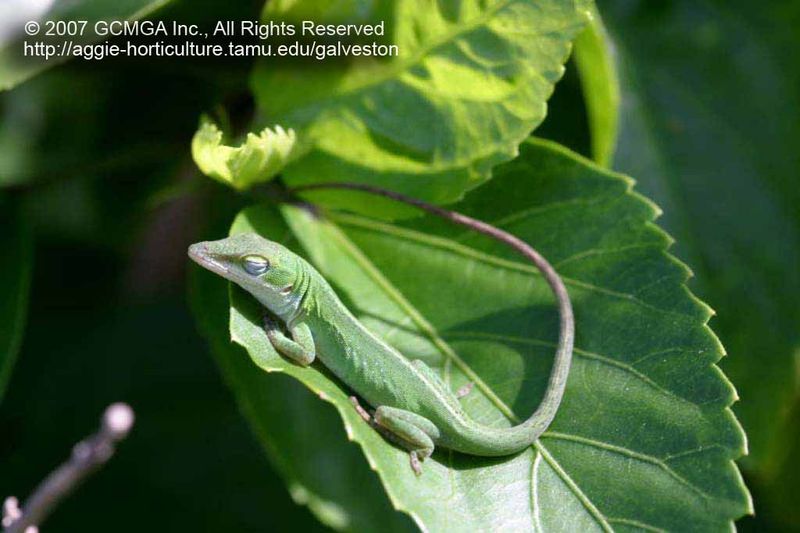
Finding several green anoles in one yard on a summer afternoon is less a riddle and more a checklist. Texas Parks and Wildlife notes that green anoles need greenery, occasional shade, and moist conditions, and they spend most of their time in trees and shrubs. When those elements come together in one yard, anoles tend to show up there rather than next door.
The physical structure of the landscape may be the strongest factor. A peer-reviewed study of anole habitat in eastern Texas open pine forests found that plots with higher shrub density supported estimated anole populations roughly 16 times greater than plots with lower shrub density, and lizards consistently favored shrubs with more volume as perch sites. That kind of association suggests that if your yard is full of anoles, your shrubs may simply be doing their job as wildlife habitat.
Available arthropod prey could also play a role, since anoles eat small insects and other invertebrates and will patrol the territory where food turns up. That said, a concentration of lizards in your beds or along your fence line does not reliably signal that prey is unusually abundant, and it certainly does not function as a measurable garden health score. Shelter, moisture, elevated perches, and dense greenery are the features with the clearest ties to anole presence, as National Park Service guidance on anoles also confirms.
Framing the sighting correctly matters. A yard full of correctly identified green anoles most plausibly tells you that the yard offers usable habitat. It does not confirm that the garden is especially healthy, free of pests, or chemical-free, and it does not indicate that something has gone wrong. Consider it an ecological clue rather than a verdict.
Why summer sightings may increase
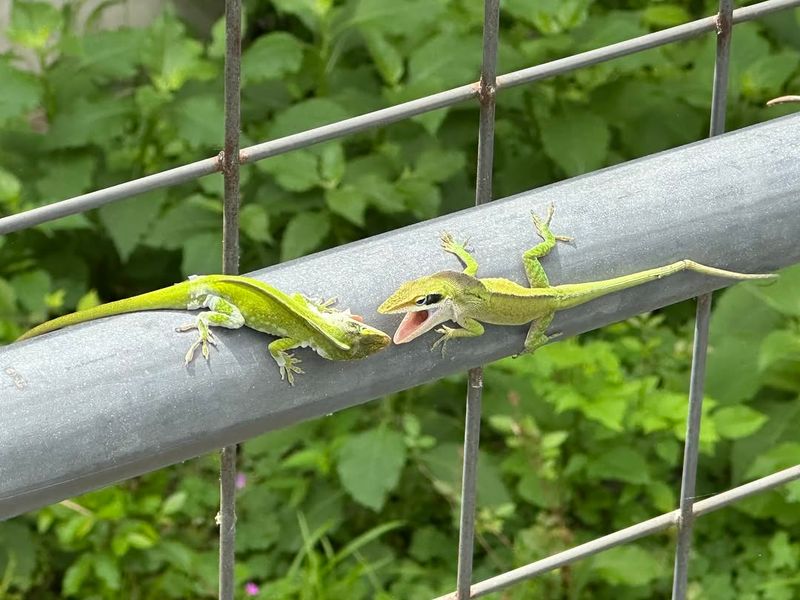
Green anoles are cold-blooded, so warmer air temperatures directly increase how active and visible they are. During the heat of a Texas summer, anoles move around more, bask in open spots, and defend territory in ways that make them far easier to notice than they would be on a cool spring morning. The same lizard that spent March tucked quietly in the leaf litter may spend July flashing its pink dewlap from a fence rail in plain sight.
Reproduction adds another layer. Research on green anole biology documents that females lay individual eggs repeatedly across the warmer months rather than in a single clutch. In the Galveston-Houston region specifically, Texas Master Gardeners report a breeding window stretching from March through November, with eggs deposited in moist soil, decaying wood, or leaf litter. That guidance reflects a coastal southeastern Texas climate and should not be applied as a statewide rule, since breeding timing shifts with geography and local conditions.
Hatchlings emerging across the season may contribute to the number of anoles you notice, but that does not mean your yard is experiencing a population explosion. Sightings can increase simply because lizards are more active, more exposed during territorial display, or moving through new vegetation as plants fill in. A temporary uptick in prey availability could also bring more individuals into view, though that connection is difficult to confirm without direct observation.
The practical takeaway is that a busy-looking yard in July reflects summer biology as much as anything else. Seasonal activity, warmer temperatures, possible hatchlings, and improved visibility through open vegetation all contribute to what feels like a sudden surge. Calling it an invasion or a population boom goes further than the evidence supports.
Shrub structure matters more than a plant label
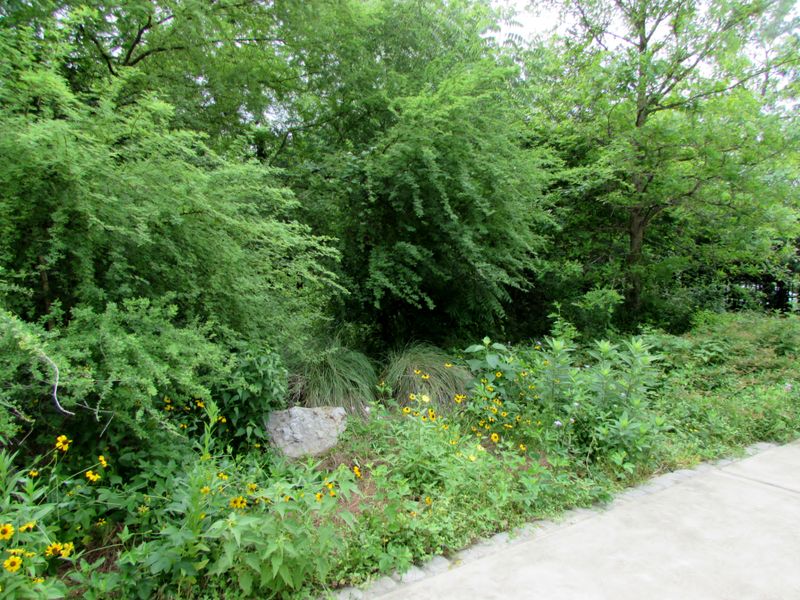
Gardeners often assume that anoles gravitate toward yards planted with Texas natives, and while native plants can support the broader food web and reduce water use, the research points to something more specific. The eastern Texas habitat study measured shrub density and shrub volume as the variables most strongly associated with anole abundance. The study found that anoles preferred live shrubs and consistently chose perches on larger shrubs over smaller ones. The findings are about structure, not species label.
What that means practically is that a dense border of well-established shrubs, whether native or not, likely offers more to a green anole than a single specimen plant surrounded by bare mulch. Elevated perches give anoles a hunting vantage point and a place to thermoregulate. Dense canopy provides shade and holds moisture longer than open ground, and both factors align with what Texas Parks and Wildlife identifies as the moisture and greenery conditions anoles require.
Ground-level features also contribute in ways the shrub study did not specifically measure. Galveston County Master Gardeners note that females deposit eggs in moist soil, decaying wood, and leaf litter, which means a planting bed with accumulated organic matter and retained moisture may serve as potential nesting habitat. That is a reasonable interpretation based on egg-laying behavior, though it does not mean every damp bed in your yard is actively hosting eggs.
The distinction between structure and species label matters for gardeners deciding where to invest. Thickening an existing shrub border, leaving some leaf litter in place, and avoiding the urge to prune every plant into a tidy ball may do more for anole habitat than swapping one plant species for another. Reasonable-but-untested backyard interpretations should stay separate from the study’s direct findings, and the study itself was conducted in pine forest plots rather than residential landscapes.
Many anoles do not diagnose a pest outbreak
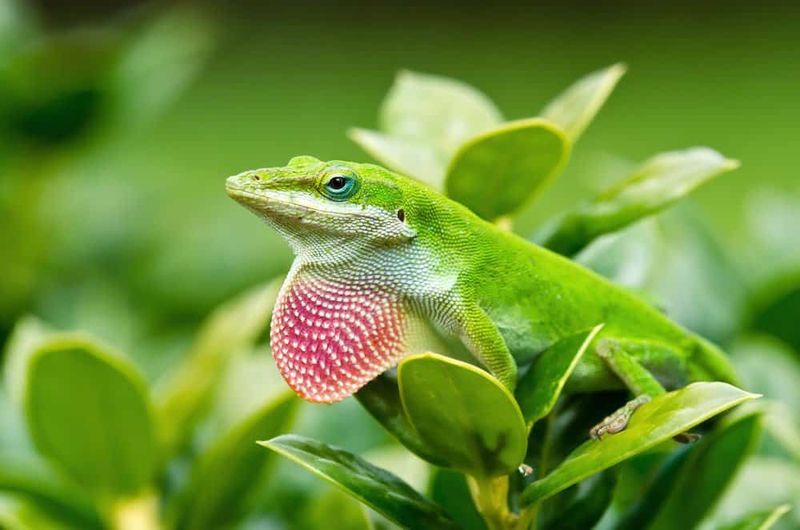
Anoles eat small insects and other arthropods, and that dietary fact is often turned into a claim it cannot support: that a lot of anoles means a lot of bugs, which means the garden has a pest problem. The logic sounds tidy, but the connection between anole numbers and prey abundance in a Texas residential yard has not been established by research. A well-structured yard with dense shrubs and suitable moisture can attract and sustain anoles even when insect populations are entirely ordinary.
The diet itself is broad. National Park Service documentation on anoles describes a menu that includes flies, crickets, moths, beetles, ants, and spiders, and Animal Diversity Web’s profile of Anolis carolinensis confirms they are generalist predators that take what is available in their territory. Spiders and other predatory arthropods appear on that list alongside pest species, so anoles cannot be counted on to selectively remove the organisms you least want in the garden.
Research in agricultural settings has found that lizards in the Anolis group can reduce arthropod pressure on crops. A peer-reviewed study on Anolis lizards as biocontrol agents in agroecosystems documented measurable effects in coffee plantations, which is useful context for understanding why the question is scientifically interesting. However, those findings come from managed agricultural systems and do not translate directly into a guarantee that anoles in your vegetable bed will reduce aphids, mosquitoes, or caterpillars to any measurable degree.
The right response to noticing many anoles is not to assume a pest outbreak and reach for a spray. Texas A&M AgriLife Extension describes integrated pest management as a process of preventing and avoiding pest problems and strengthening the landscape rather than trying to eradicate every organism that moves. Inspect your plants for actual damage first. Look at stems, undersides of leaves, and new growth.
If you find something, identify it before deciding whether it warrants action. Anoles are part of the yard’s ecology, not a diagnostic instrument for what is happening in the soil or on the foliage.
Identify the lizard before interpreting the signal
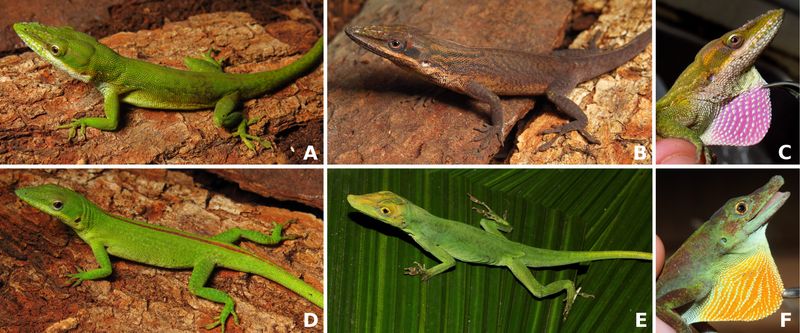
Color is the most tempting identification shortcut, and it is also the least reliable one. Green anoles can appear bright green, olive, gray-brown, or anywhere in between, and they shift color in response to temperature, stress, and background rather than as a deliberate camouflage trick. National Park Service guidance on anoles makes clear they are not true chameleons, and a brown-colored lizard in your yard is not automatically a different species.
Body shape and behavior offer more useful clues. Green anoles generally have a longer, more tapered snout compared to the blunter face of a brown anole. Texas Parks and Wildlife places the native green anole in trees, shrubs, walls, and fences across the eastern third of the state. Brown anoles, by contrast, are nonnative to Texas and spend considerably more time near ground level.
They also tend to display stronger and more defined dorsal patterning, though neither of these clues is foolproof: female green anoles do descend to the ground when feeding or laying eggs, so a lizard spotted low in the leaf litter is not automatically the nonnative species.
The geographic context matters. A yard in Houston, Beaumont, Galveston, or the broader eastern third of Texas is well within the documented native range of the green anole, so a concentration of small lizards there fits expected distribution. Research on nonnative reptiles in the Texas trade confirms that brown anoles are established in the state and can share habitat with native green anoles, making species overlap a real possibility in some yards.
Farther west, the picture changes. Big Bend National Park describes green anoles there as introduced rather than native to that region, which is a reminder that the same-looking lizard can carry a very different ecological meaning depending on location. Before drawing conclusions about what your yard’s anole population signals, it helps to confirm that the lizard you are seeing is actually the native species in its native range.
Observe first and manage confirmed problems
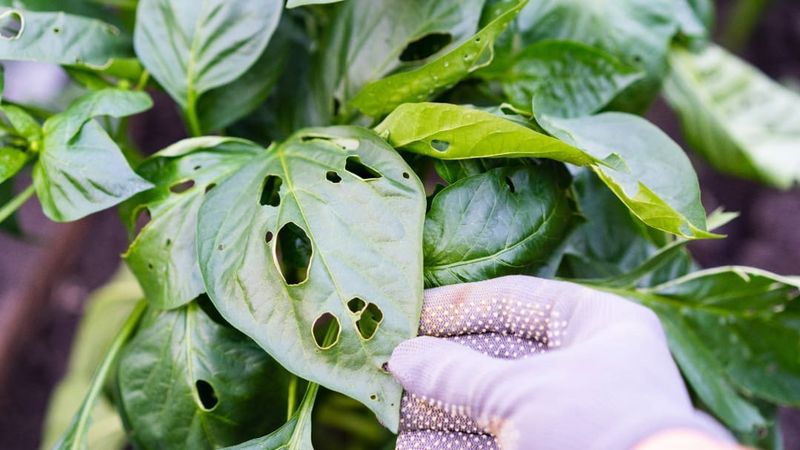
Noticing anoles in a bed or along a fence line is a reason to look more carefully at the plants nearby, not a reason to treat. Walk the garden slowly and check for actual damage: yellowing leaves, chewed margins, stippled foliage, sticky residue, or distorted new growth. Those are the signs that something is feeding on your plants. The lizards themselves are not.
Texas A&M AgriLife Extension’s integrated pest management guidance frames the goal as preventing and avoiding pest problems and building a stronger landscape rather than eliminating every organism present. That sequence, observe, identify, then decide, protects you from treating a problem that does not exist and from choosing the wrong product for one that does. Pest identification matters because many treatments are pest-specific, and a broad-spectrum spray applied without a confirmed target can harm organisms you were not trying to affect.
When a genuine pest problem is confirmed and intervention is warranted, targeted application is the standard. EPA guidance on reducing pesticide impacts on wildlife advises minimizing pesticide use wherever possible to reduce harm to non-target animals and beneficial insects. EPA pesticide safety guidance emphasizes reading and following the product label completely, which includes applying only to the listed pest and site. EPA pesticide registration standards require that products demonstrate they do not pose unreasonable risks to people or the environment when used as directed, but label compliance is the gardener’s responsibility.
Anoles are not a substitute for that diagnostic process. They may consume some of the arthropods in your garden, but they cannot tell you whether a plant disease is spreading, whether a soil pest is damaging roots, or whether a particular insect population has crossed the threshold where treatment becomes necessary. Observation and identification remain the first steps regardless of how many lizards are watching from the shrubs.
Support habitat without handling the wildlife
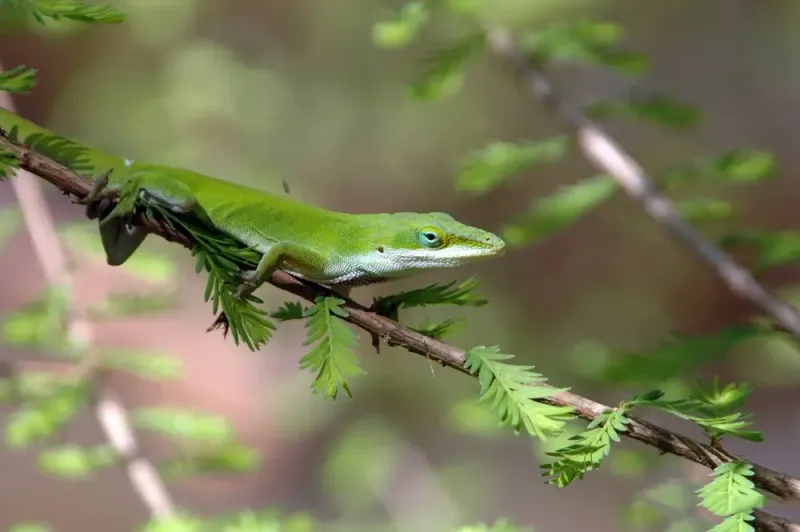
Keeping anoles around does not require a special project. Most of what supports them overlaps with general good-garden practice: layered vegetation at different heights, shrubs dense enough to offer real cover, some leaf litter left undisturbed in planting beds, and a source of clean shallow water. Texas Parks and Wildlife’s Wildscapes certification program identifies food, water, and shelter as the core elements of wildlife-friendly landscaping, and all three apply directly to anole habitat.
TPWD South Texas wildscaping tips and TPWD’s general wildscape design guidance both recommend rock features, logs, and layered plantings as structural elements that support a range of wildlife, including reptiles. Adding a flat rock in a sunny spot gives anoles a warm surface to use in the morning. Leaving a small brush pile or a partially rotted log near a shrub border provides both shelter and potential egg-laying substrate for females.
Any habitat additions should stay compatible with Texas fire safety codes, local ordinances, HOA requirements, drainage patterns, and mosquito management. TPWD is explicit that wildscaping does not exempt a property from safety or regulatory standards. Shallow water features need to be refreshed regularly to avoid becoming mosquito breeding sites, and dense plantings near structures should follow any applicable fire-clearance guidelines that apply in your area.
When it comes to the anoles themselves, the most useful thing a gardener can do is leave them alone. Catching, relocating, or keeping wild anoles is unnecessary and does nothing to improve the habitat they already use. If you do handle a lizard or work in an area where anoles are active, wash your hands thoroughly afterward. CDC documentation on Salmonella and reptile contact confirms that apparently healthy reptiles can carry the bacteria, and CDC Emerging Infectious Diseases research on reptile-associated Salmonella highlights particular care around children under five, older adults, and people with compromised immune systems.
The best way to enjoy anoles in a Texas summer garden is from a comfortable distance, watching them do what they already do well.