
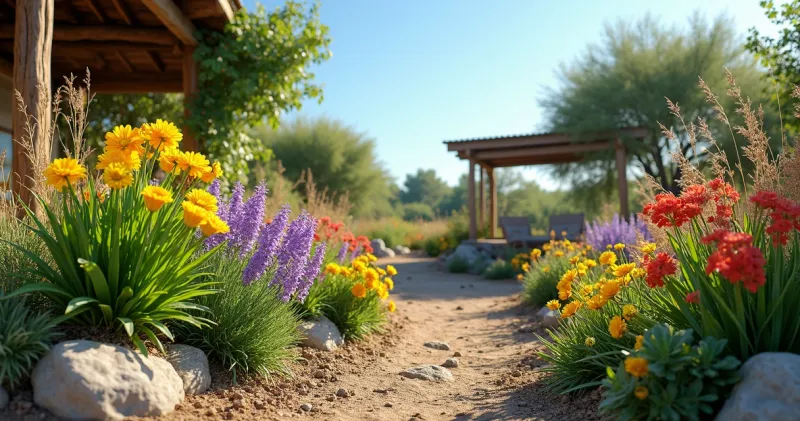
Texas weather likes to test everyone, swinging from triple-digit August afternoons to surprise February freezes without much warning. The plants that were born here already know the routine, so they keep growing while fussier imports wilt or rot. Choosing natives means less watering during city restrictions, fewer dead spots after a heat wave, and a yard that works with our climate instead of fighting it. Here are ten tough Texas natives that treat our wild weather like just another Tuesday.
1. Texas Sage (Cenizo)
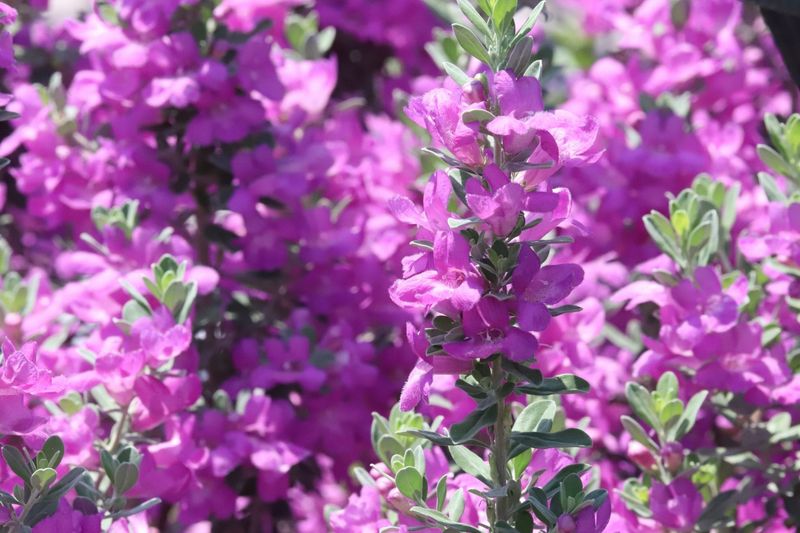
Locals sometimes call it the barometer bush because it bursts into purple bloom right before a rain shifts the humidity. That little trick makes Cenizo feel almost psychic, but it is really just perfectly tuned to Texas air.
Silvery leaves reflect the harsh sun and hold moisture, which is why this shrub barely notices a triple-digit July. It thrives in the poor, rocky, alkaline soils that make other plants sulk, and it asks for almost no supplemental water once established.
Give it full sun and good drainage and leave it mostly alone. Overwatering is the fastest way to hurt it, which makes Cenizo a dream during municipal watering restrictions. Come storm season, its deep roots and low, tidy shape handle Gulf Coast wind far better than leggy imported hedges.
2. Blackfoot Daisy
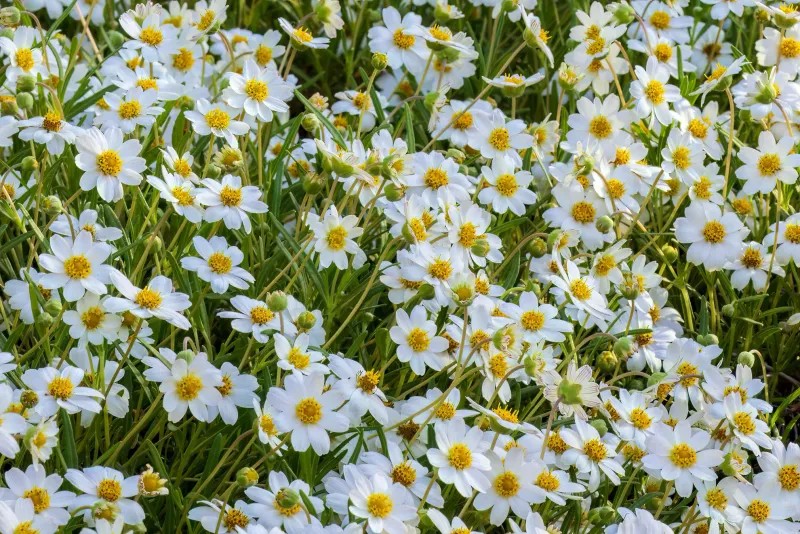
Picture a low white cloud of daisies hugging the ground while everything around it begs for a drink. Blackfoot Daisy pulls that off with a honey scent floating on the hot air.
Native to the rocky slopes and caliche soils of Central and West Texas, this little mounding perennial blooms from spring clear into fall. It laughs at drought, shrugs off reflected heat from driveways and rock beds, and keeps flowering when tender annuals have long since fried.
Pollinators adore it, so a patch may help draw native bees and butterflies into your yard. Plant it in gravelly, fast-draining soil and resist the urge to baby it, because rich soil and heavy watering can rot the crown. For a border that survives water restrictions and still looks cheerful in August, this one earns its spot.
3. Flame Acanthus
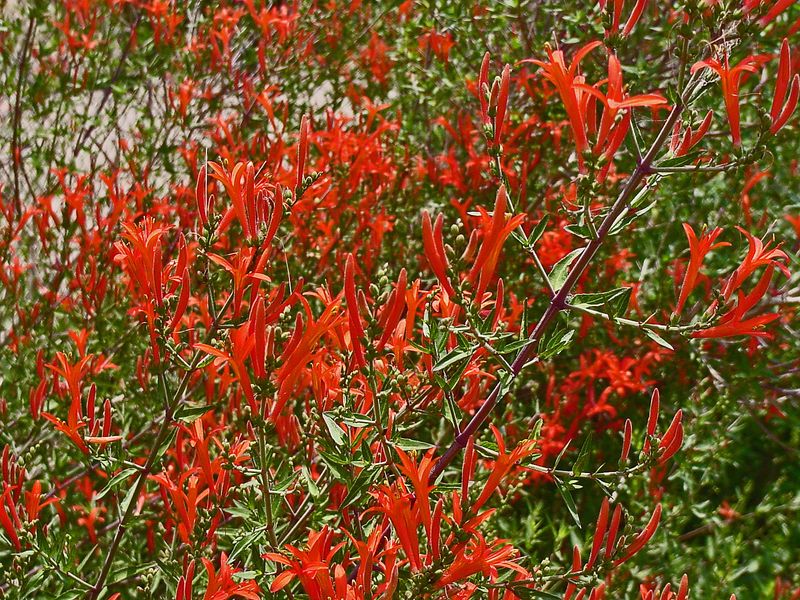
Hummingbirds line up for this one like it is a roadside taco stand. Flame Acanthus throws out slender orange-red tubular flowers exactly when the summer gets meanest, so it fills the hungry gap when other blooms have quit.
Native to the canyons and creek edges of the Edwards Plateau, it stays productive through blistering heat and long dry stretches. The airy, open branches let hot wind pass through instead of catching it, which helps during Gulf Coast storm season.
Here is a bonus for the impatient gardener: it blooms on new growth, so a hard freeze that knocks it back does not cost you the season. It returns and flowers on that fresh wood. Full sun, lean soil, and minimal fuss keep it happy, and the steady nectar can reduce the reasons hummingbirds bother leaving your block.
4. Turk’s Cap
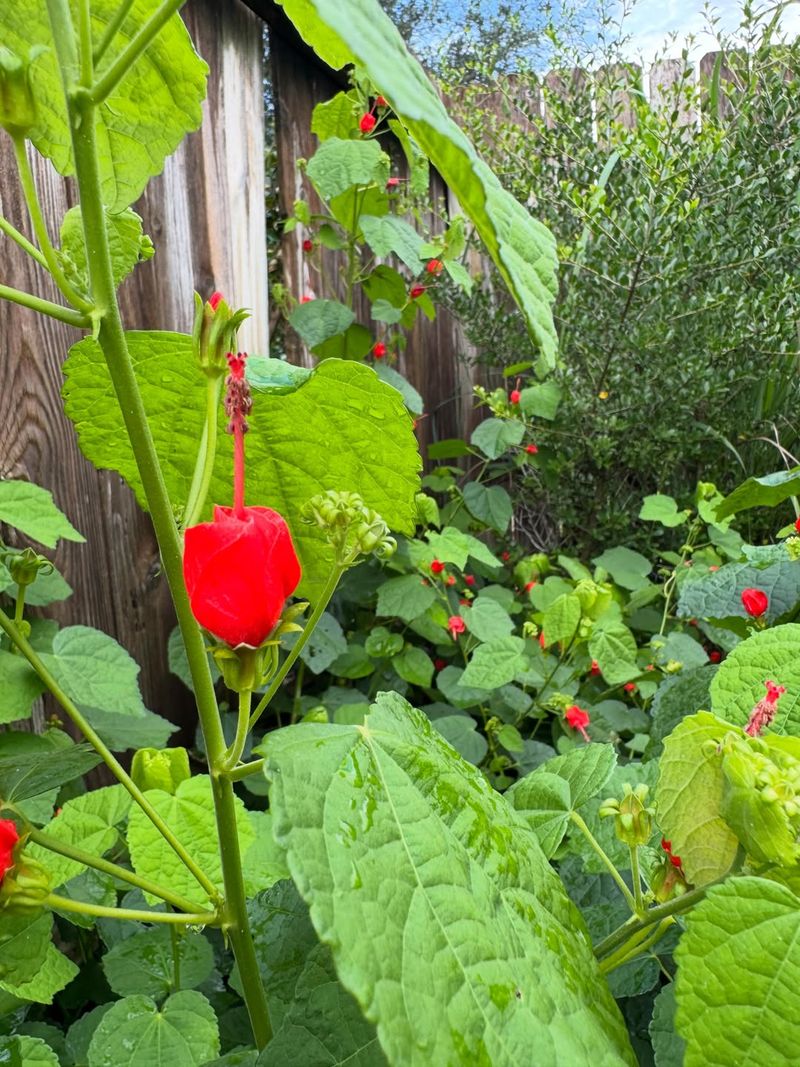
Few natives are as forgiving as Turk’s Cap, the plant that grows where you swore nothing would. Those little red flowers never fully open, twisting into a shape like a tiny turban, and hummingbirds and butterflies work them all summer.
Most Texas natives demand blazing sun, so this one stands out for thriving in the shady spots under live oaks and along fences where grass gives up. It handles heat, drought, and clay, then bounces back after a freeze without complaint.
The soft red fruits that follow the blooms are edible and mildly sweet, a favorite of mockingbirds and curious kids alike. Cut it to the ground in late winter and it returns thicker every spring. For a low-maintenance filler that survives shade, heat, and neglect all at once, Turk’s Cap is hard to beat.
5. Gulf Muhly Grass
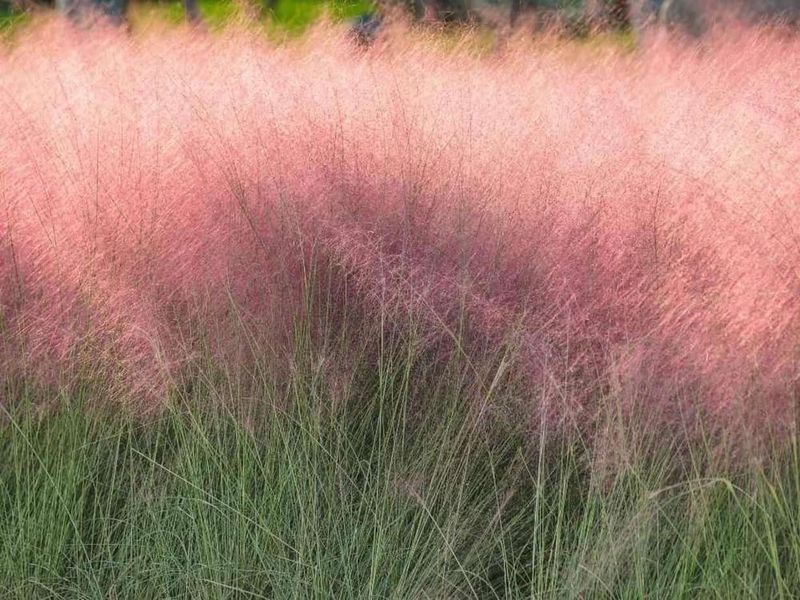
Every fall this quiet grass throws a party. Gulf Muhly erupts into a cotton-candy haze of pink-purple plumes that seem to glow when the low sun hits them from behind.
Beneath the drama sits a genuinely tough native adapted to sandy coastal soils and salt spray, which makes it a smart pick for Gulf Coast yards. It tolerates both soggy spells after a tropical downpour and long droughts once it settles in.
Wind is no problem either, since the fine blades bend and sway instead of snapping when storms roll through. It needs no fertilizer, shrugs off most pests, and asks only for a yearly haircut in late winter. Group several together for the full pink cloud effect, and you get a showstopper that costs almost nothing to keep alive.
6. Texas Lantana
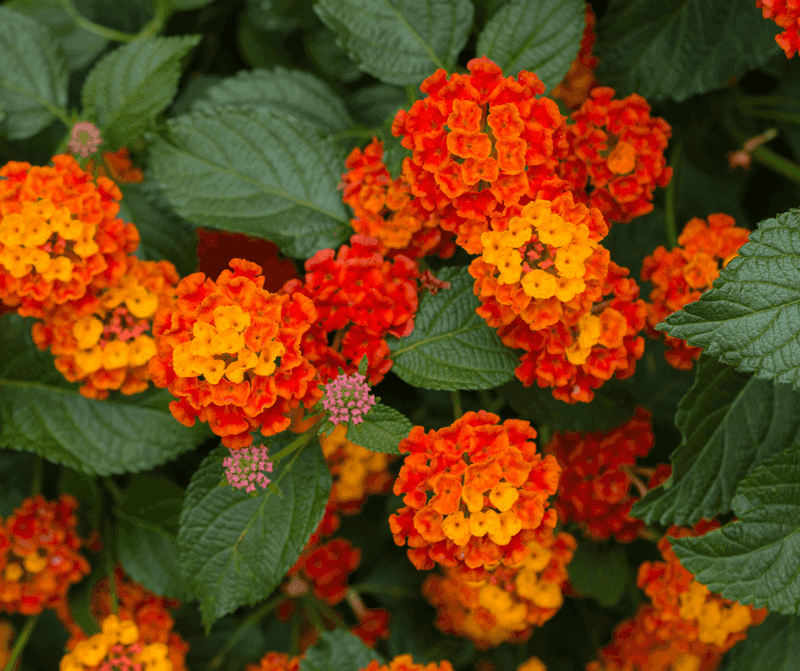
Orange fading to yellow in the same flower cluster gives Texas Lantana a sunset look that lasts all summer. Butterflies treat it like a buffet, and you will often see several species working one bush at once.
Roadsides across the state prove how tough it is, blooming in cracked, baked ground where nothing waters it. Heat only seems to encourage more flowers, and it barely flinches during watering restrictions.
A word of honesty: the berries are toxic if eaten, so keep that in mind around small children and pets. That aside, few plants deliver this much nonstop color for so little effort. It draws pollinators, handles clay or sand, and freezes back only to return each spring. For a hot, neglected corner that you want alive with wings, this native does the heavy lifting.
7. Yucca
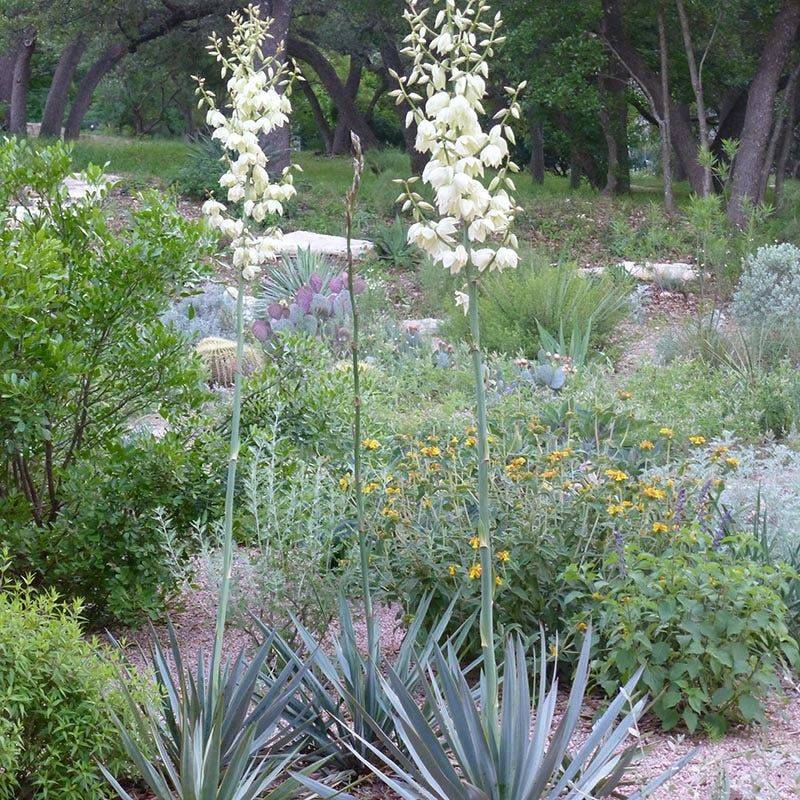
Architectural, spiky, and completely unbothered, Yucca looks like it was designed for a drought. Its stiff, sword-shaped leaves store water and shed the sun, which is exactly why it laughs off West Texas summers.
Come bloom time, it sends up a dramatic stalk crowded with creamy white bells that glow at dusk. There is even a fun quirk here: many yuccas depend on the yucca moth, a tiny partner that pollinates them and nothing else, a relationship found nowhere but the New World.
Deep roots anchor it against wind, and it needs practically no water once established. Give it full sun and sharp drainage, then step back. Whether you want a bold focal point or a xeric bed that survives every restriction the city throws at you, Yucca holds its post like a desert sentry.
8. Bald Cypress
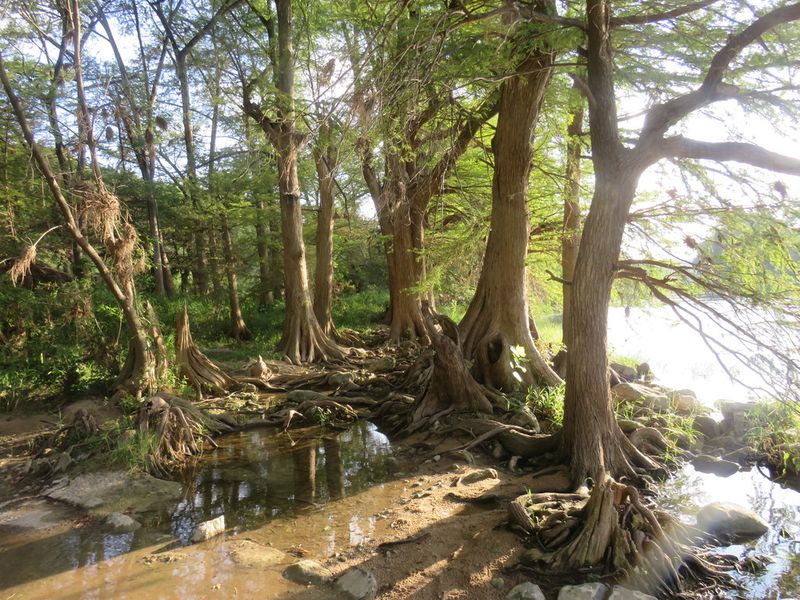
Anyone who has floated a Hill Country river has drifted under these giants. Bald Cypress is the state’s champion of extremes, standing with its feet in floodwater one season and toughing out drought the next.
Those strange woody knees poking up from the ground help anchor it in soggy soil and stabilize it against rushing water, which matters when storms swell the creeks. Despite the swampy reputation, established cypress handle dry uplands surprisingly well, making them versatile shade trees far from any river.
The soft, feathery needles turn a rusty orange before dropping, hence the name bald. Deep, spreading roots give it real staying power against Gulf Coast wind. If you want a long-lived native shade tree that can take a flood, a drought, and a hurricane in stride, this towering survivor delivers.
9. Autumn Sage (Salvia greggii)
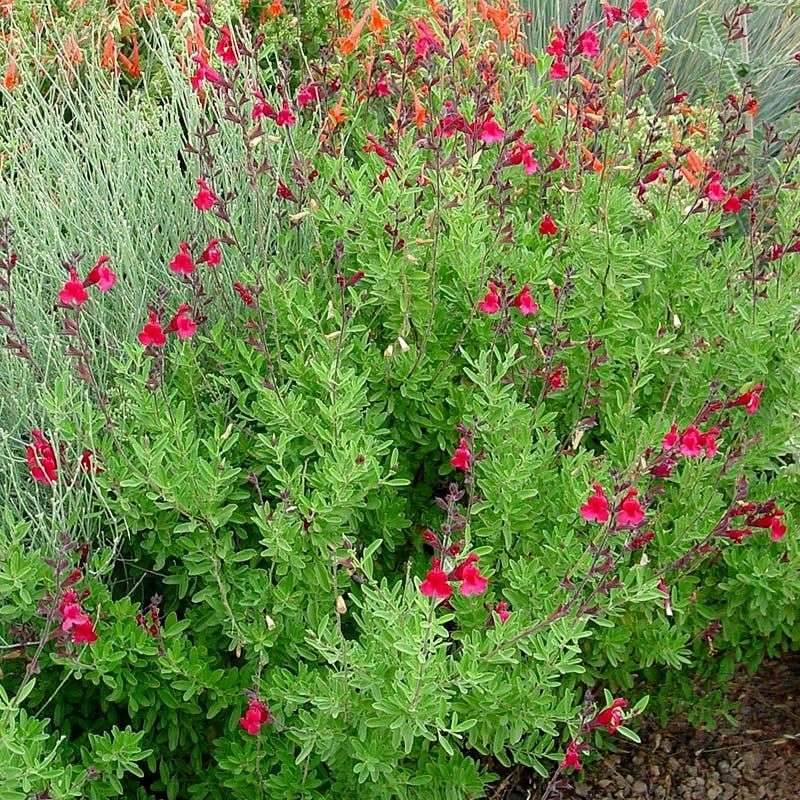
Ask a Texas landscaper for a plant that never quits, and Salvia greggii comes up fast. It blooms in red, pink, coral, or white for most of the year, pausing only in the deepest heat before charging right back.
Native to the rocky limestone country of West Texas and beyond, this compact shrub sips water and prefers lean soil, so it fits perfectly into a low-water bed. Hummingbirds and bees keep it busy from spring through fall.
A light trim after each flush of flowers keeps it tidy and pushes fresh blooms, but even ignored it soldiers on. It shrugs off heat, tolerates poor drainage better than most salvias, and returns reliably after winter. For a dependable pop of color that survives both restrictions and neglect, Autumn Sage is a workhorse dressed up as a showpiece.
10. Texas Red Yucca (Hesperaloe)
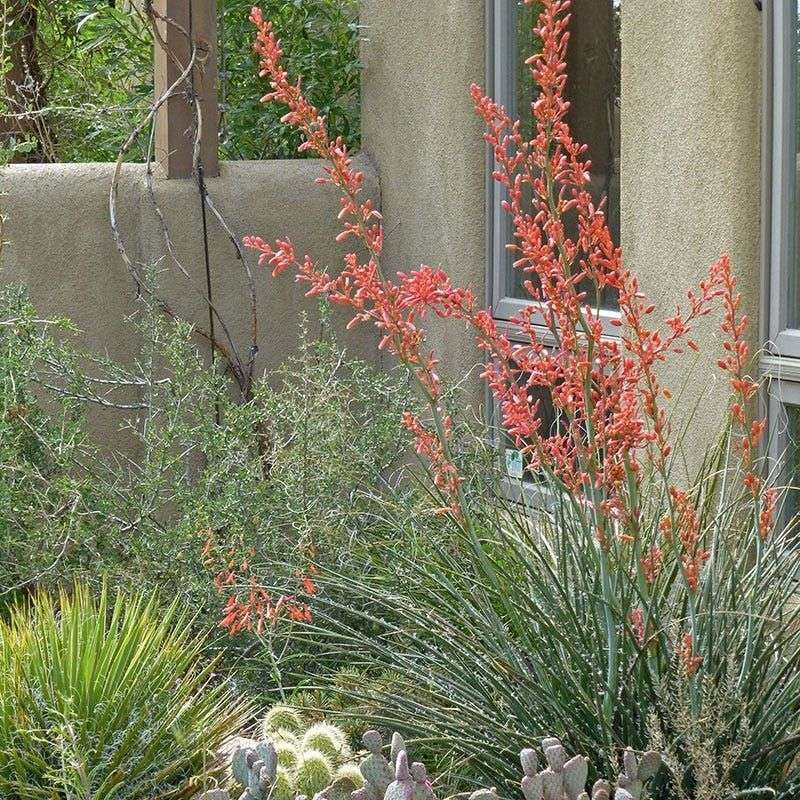
Despite the name, Red Yucca is not really a yucca at all, and its coral flower spikes are the giveaway. Tall, arching stalks lift tubular blooms high above a fountain of grassy blue-green leaves, waving to every passing hummingbird.
You will spot it thriving in the harshest possible spots, like parking lot medians and street strips where heat radiates off the pavement. That toughness is no accident, since it evolved in the dry country of the Texas-Mexico borderlands.
Drought barely registers, wind slides right through the flexible foliage, and it keeps blooming from spring into fall with zero fuss. Cold snaps do not faze it either, which is rare for something this heat-loving. Plant it in full sun with fast drainage and forget about it, and you will still get months of color while the water bill stays low.