
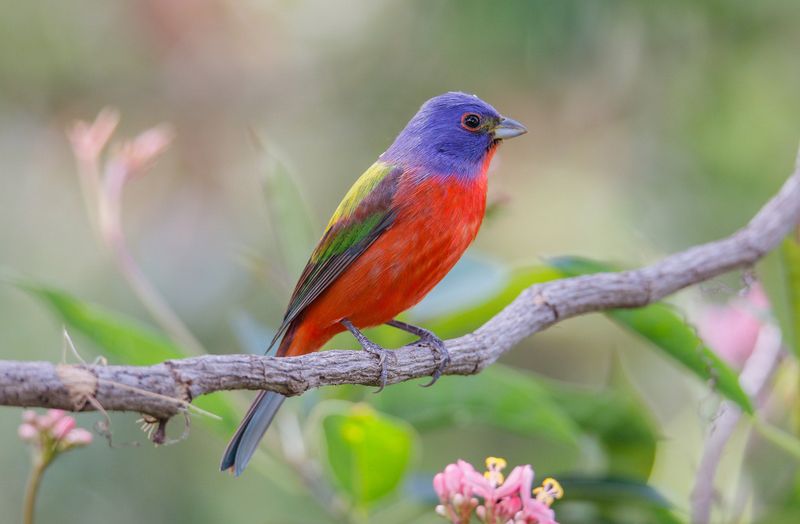
Few sights in a Texas summer yard stop you cold like a male Painted Bunting, a bird that looks like someone spilled a watercolor set on a sparrow. Getting one to show up takes more than luck, though, and keeping the odds in your favor takes a little planning. The habits that make a yard genuinely useful to these birds are simpler than most gardeners expect, and many of them make the yard better for just about every other creature too.
Make the yard suitable, not guaranteed
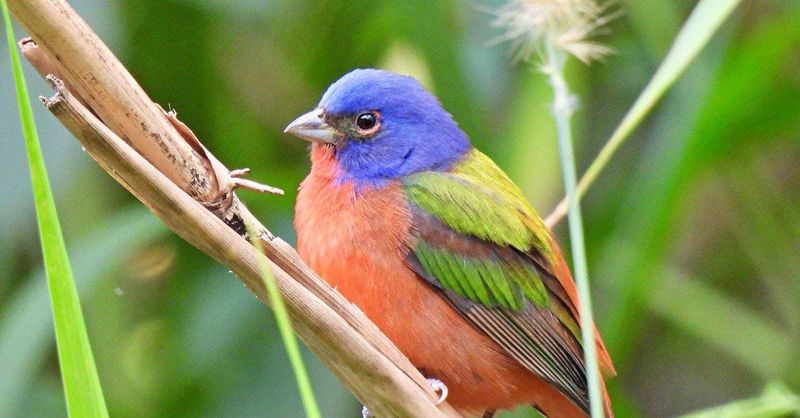
Painted Buntings are genuinely one of Texas’s most striking summer birds, and the temptation to promise yourself one every year is understandable. The honest version of that goal, though, is creating a yard that a bunting could use, not one that will reliably produce a sighting on demand. Habitat quality can meaningfully improve your odds, but no combination of plants, feeders, or yard features can make a wild bird show up on schedule.
According to Texas Parks and Wildlife Department, Painted Buntings prefer heavy cover around streams, forest edges, and dense understory, and they rarely visit feeders placed far from that kind of protective vegetation. That single detail reshapes the whole conversation. A feeder sitting in the middle of an open lawn is not an invitation; for a bird that depends on dense cover for safety, it can look more like a trap.
Cornell Lab’s life history notes confirm that Painted Buntings are more likely to use feeders in yards with low, dense vegetation nearby. The species uses brush, shrubs, woodland edges, streamside tangles, and low thickets for concealment, nesting, and escape cover. Without those elements, the rest of your effort matters a lot less.
The practical frame here is not “what do I buy to attract one” but “what does my yard offer a bird that needs cover and food.” Local occurrence also depends on your region, nearby habitat, weather, migration patterns, and whether suitable territory exists anywhere close to your property. A yard in the Hill Country near a brushy creek has a different baseline probability than a yard in a dense suburban neighborhood with no shrubs for a block in any direction. Start with that honest assessment, then build from there.
Build a semi-open mix of cover and feeding space
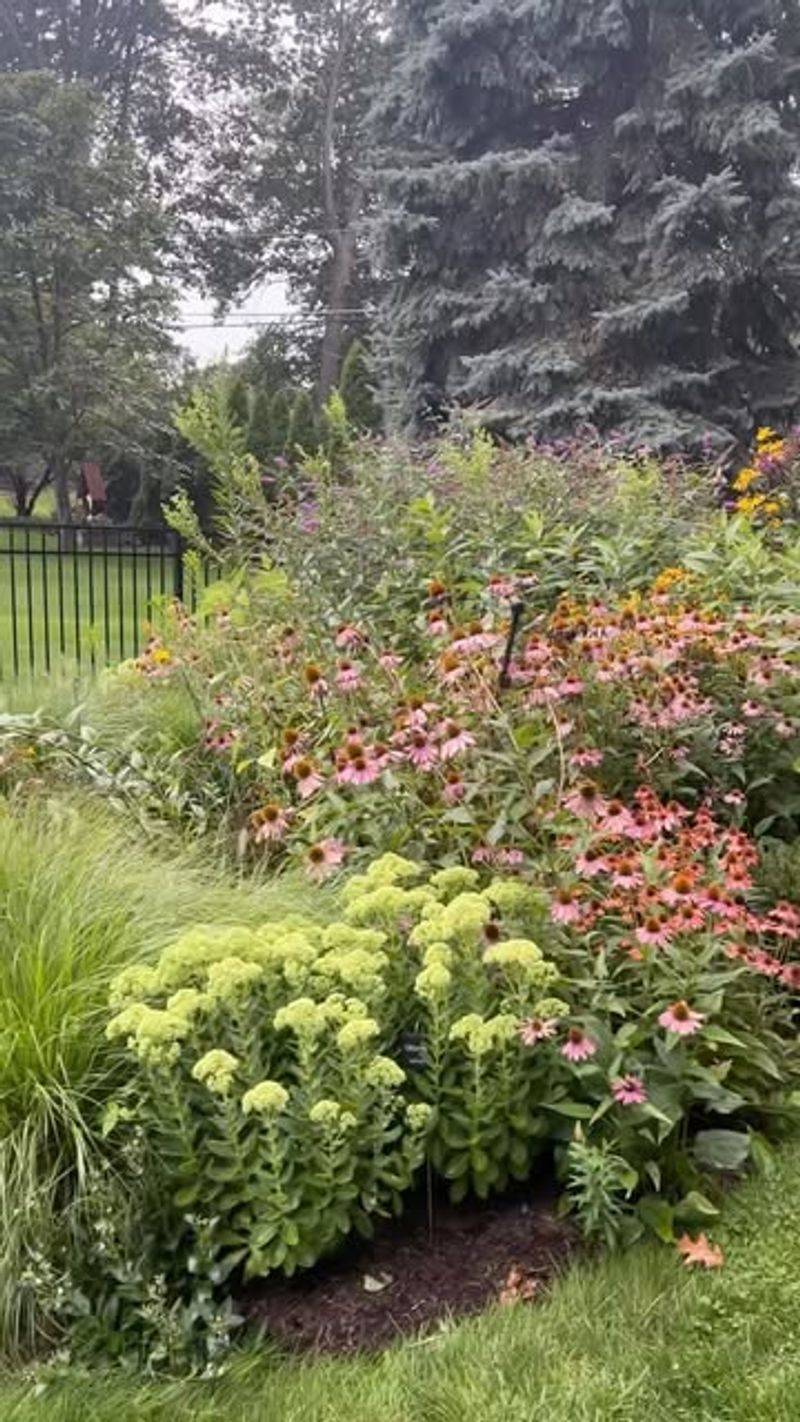
One of the most useful things the Texas Breeding Bird Atlas tells us is that Painted Buntings are actually less common at the extremes, meaning in yards that are either too bare or too densely overgrown. Texas breeding records describe the species using semi-open country with scattered bushes and trees, tall brush, grasses, and forbs, not a manicured lawn and not an impenetrable wall of vegetation.
That middle ground is the design target. A yard that works for Painted Buntings has at least one area of dense, layered cover, whether that is a thicket of native shrubs, a brushy fence line, or a cluster of small trees underplanted with native grasses. From that cover, the bird should be able to see and reach a more open foraging area without crossing a wide, exposed stretch of turf.
Scattered shrubs or small trees, clumps of native grasses, patches of forbs, and some open ground around them give the bird places to perch, places to forage, and places to retreat quickly. TPWD’s Wildscapes design guidance recommends building this kind of multilayered structure deliberately, with canopy, understory, shrub layer, and ground layer each contributing something different.
For a typical Texas suburban lot, that might mean keeping or adding a native shrub border along one fence, letting a patch of little bluestem or sideoats grama grow to maturity near it, and maintaining a modest open area in between. You do not need acreage. What matters is that cover and foraging space are close enough together that a cautious bird does not have to cross open ground to get from one to the other. TPWD’s urban wildlife guidance frames this as providing food, water, and shelter in a connected layout, which is the same principle at residential scale.
Keep regional native plants and mature seedheads
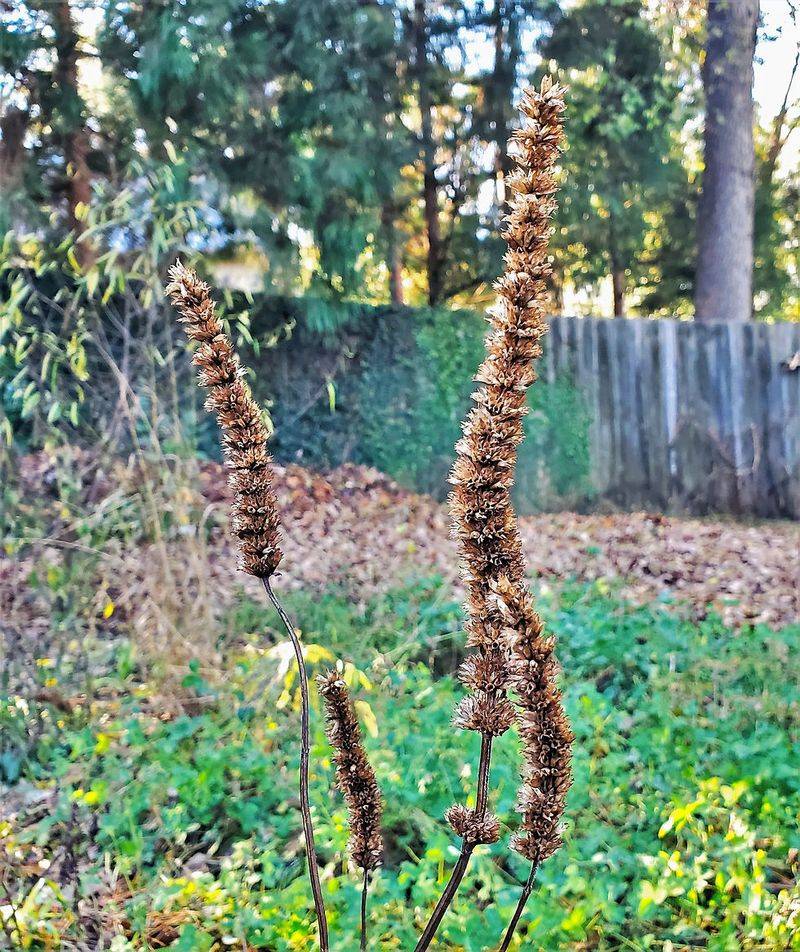
Outside the breeding season, seeds make up the bulk of a Painted Bunting’s diet. Cornell’s life history profile lists seeds of grasses, weeds, and other plants as the primary food source for most of the year, which means a yard that keeps mature seedheads standing is offering something genuinely useful. The reflex to deadhead everything or mow every stem to the ground removes food that is already growing for free.
Native grasses are especially valuable here. Species like little bluestem, sideoats grama, and Lindheimer’s muhly produce seeds that small birds actively seek, and they also provide structure and cover as they mature. Audubon’s species profile notes that Painted Buntings forage on the ground and in low vegetation, picking seeds from grass stems and forb seedheads, so the plants do not need to be at feeder height to matter.
Plant selection should follow your ecoregion, not a single statewide list. A Hill Country gardener working with shallow caliche soils has different options than someone on the Gulf Coast or in the Pineywoods. TPWD’s ecoregion plant guidance breaks this down by region, and Audubon Texas’s plants-for-birds list offers additional regional suggestions. Using these regional tools instead of a generic national bird-garden list will get you plants that are actually adapted to your soil type, rainfall pattern, and summer heat load.
TPWD’s habitat resources for Bird City Texas notes that native plants generally need less water and maintenance than non-native plants, though that advantage is most reliable once plants are established. During the first summer or through extended drought, even tough natives may need supplemental water. The payoff is a yard that provides food, cover, and insect habitat without the constant inputs a non-native ornamental bed demands.
Protect the insects that breeding birds need
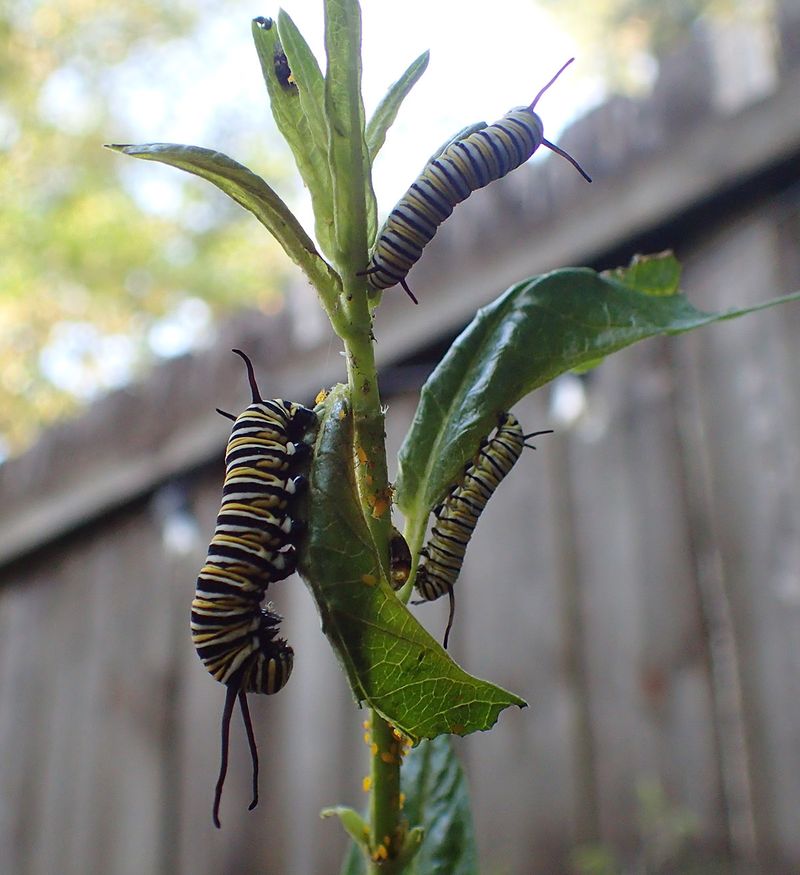
Seeds get most of the attention when people talk about feeding Painted Buntings, but during the breeding season the diet shifts considerably. Cornell’s life history data shows that breeding adults consume grasshoppers, beetles, caterpillars, true bugs, spiders, snails, wasps, and flies, and that adults feed insects to nestlings as the primary protein source for growing chicks. A yard without insects is a yard that cannot support a nesting pair, regardless of how many seed-bearing plants are growing in it.
The practical implication is straightforward: avoid applying broad-spectrum insecticides across habitat areas during the breeding season, which in Texas runs from late March into late August. Audubon’s species account supports the same diet picture, reinforcing why insect-rich vegetation matters. To be clear, skipping a blanket spray does not guarantee a Painted Bunting will appear, but eliminating insect life removes a food source the bird actively seeks during its most resource-intensive period.
Native plants support this goal indirectly but reliably. Plants that evolved alongside local insects tend to host far more caterpillar species and other invertebrates than exotic ornamentals do. Letting some leaf litter accumulate, tolerating a few chewed leaves, and leaving brush or hollow stems in place over summer all preserve microhabitats where insects overwinter, pupate, or shelter. None of these are dramatic interventions.
They are mostly a matter of doing slightly less than the tidiest possible yard maintenance in the areas you have set aside as habitat.
Offer clean, shallow water for wildlife generally
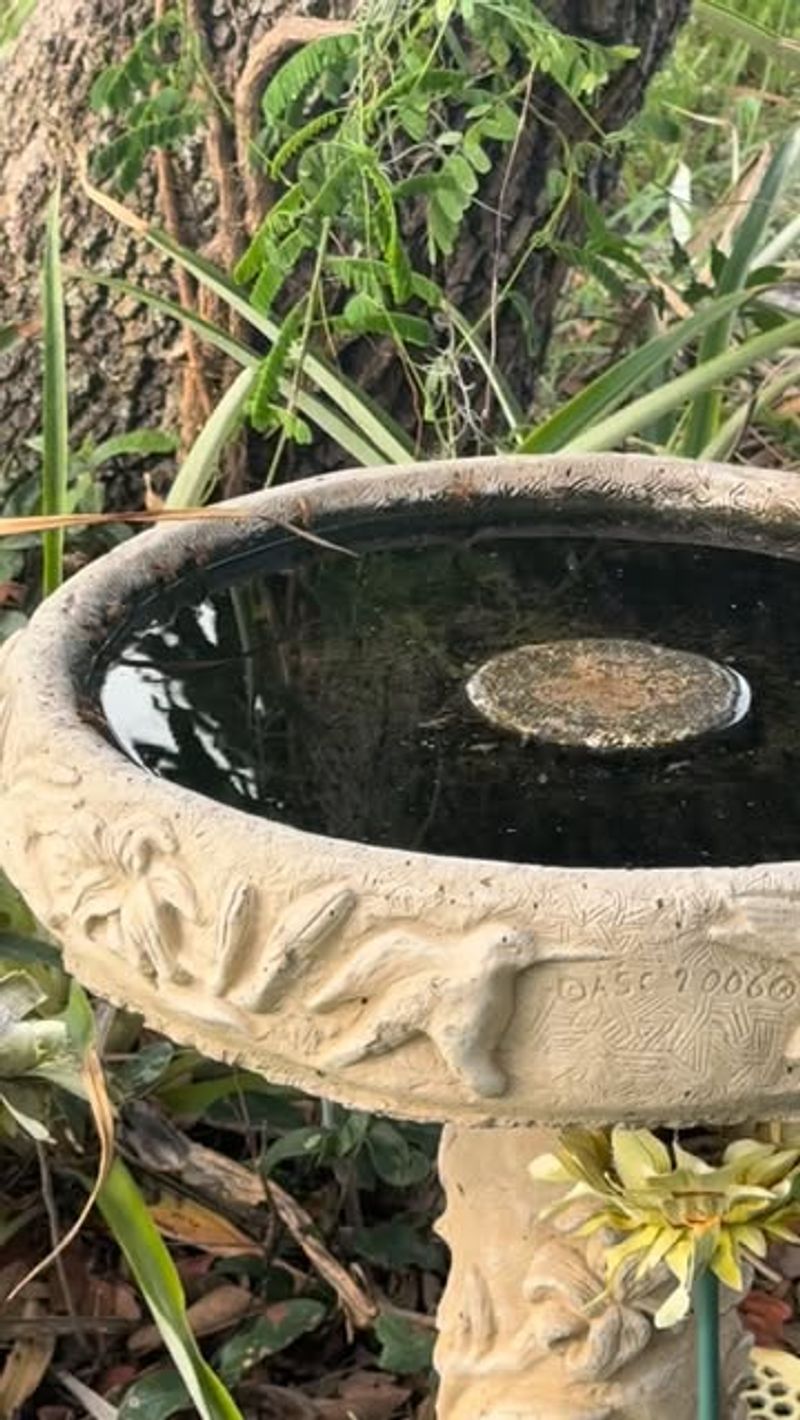
A birdbath is a reasonable addition to any Texas wildlife garden, and in triple-digit summer heat, clean fresh water benefits a wide range of birds, insects, and small mammals. That said, presenting a birdbath as a proven Painted Bunting attractant goes further than the evidence supports. Think of it as a general wildlife amenity that improves overall yard suitability, not a targeted bunting magnet.
TPWD recommends keeping water no more than 3 inches deep and changing it regularly to prevent algae buildup and bacterial growth. In a Texas summer, a birdbath can go from clean to murky in a day or two, especially in direct sun. Placing it in partial shade slows that process and keeps the water cooler, which is more appealing to most wildlife.
Audubon recommends cleaning and refilling birdbaths at least weekly, or whenever the water looks dirty, and warns that stagnant, fouled baths can concentrate disease and create mosquito breeding sites. Use a stiff brush and plain water or a dilute bleach solution, rinse thoroughly, and refill with fresh water. This takes about five minutes and matters more than almost any other birdbath decision you make.
Safety practices matter here too. CDC guidance on wildlife contact recommends washing hands thoroughly after cleaning feeders or birdbaths, keeping pets away from wildlife water sources, and avoiding contact with sick or dead birds. If you find a dead bird near your bath or feeder, do not handle it with bare hands. Contact your state wildlife agency or a licensed rehabilitator, and follow CDC’s bird-flu guidance for backyard bird hobbyists if illness is suspected.
These precautions protect you, your pets, and the birds that use the space.
Use feeders only beside protective vegetation
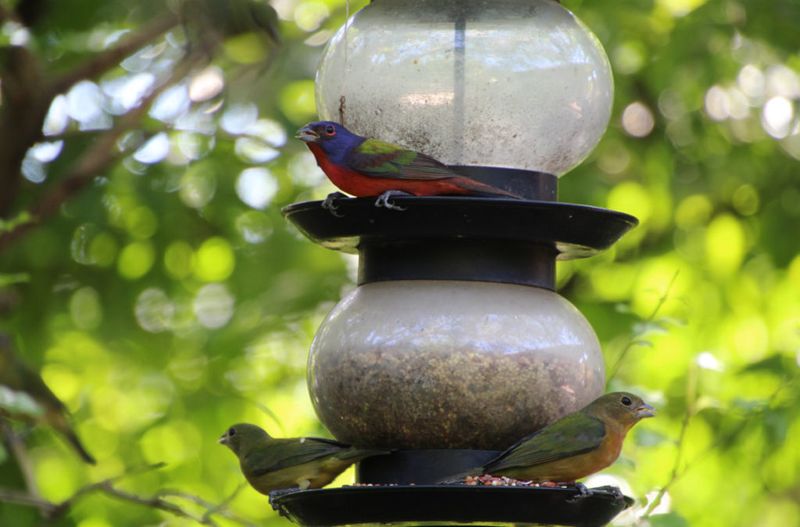
Feeders are optional, and that framing matters. TPWD’s urban wildlife guidance is explicit that native plants are the best food source and that artificial feeders should supplement, not replace, natural food. A yard full of native grasses and forbs is already doing the heavy lifting; a feeder is a convenience, not the foundation.
Placement is the variable that determines whether a feeder helps or not. TPWD notes that Painted Buntings rarely visit feeders placed far from cover, and Cornell confirms the pattern: buntings are more likely to use feeders in yards where low, dense vegetation is close by. Position the feeder within a few feet of a shrub border or brush pile, but not so close that a cat or other predator can use the cover to ambush birds at the tray.
Routine cleaning is non-negotiable. Audubon’s feeder hygiene guidance recommends scrubbing feeders every one to two weeks with a dilute bleach solution, rinsing well, and allowing them to dry before refilling. Remove spilled or moldy seed from the ground beneath the feeder promptly, because wet seed on the ground is a disease vector. Research on backyard bird feeding and disease transmission underscores why crowded, dirty feeders create risk for the birds you are trying to help.
On seed type: various small seeds are commonly mentioned in birding circles as bunting favorites, but the authoritative sources reviewed here do not establish that any single seed reliably draws Painted Buntings to Texas yards. Offer a small platform or tube feeder with a mix of fine seeds near good cover, keep it clean, and treat any visits as a bonus rather than a predictable outcome.
Use the Texas calendar without expecting a schedule
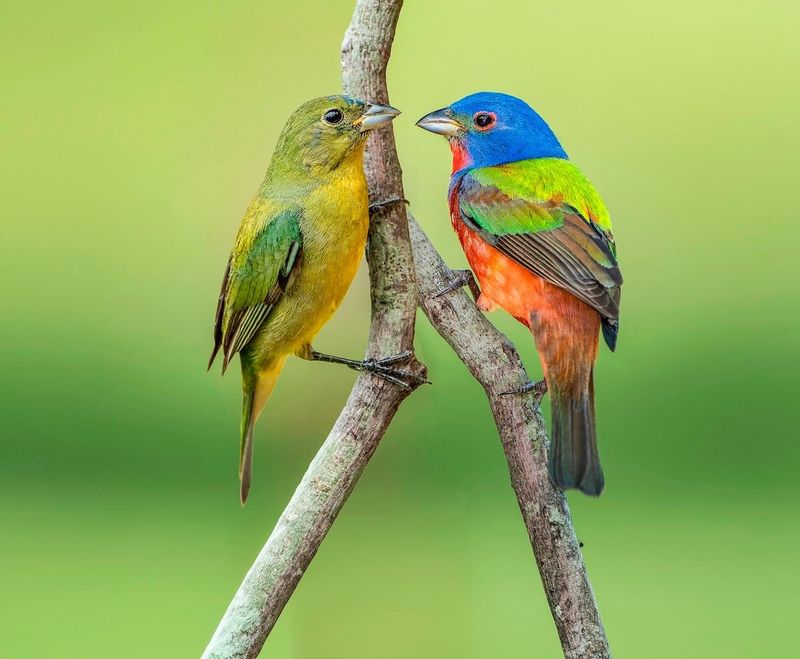
Knowing when Painted Buntings are actually present in Texas helps gardeners focus their effort and set sensible expectations. The Texas Breeding Bird Atlas documents the species’ arrival window as roughly March 5 through May 22, with the bulk of birds moving in from April through mid-May. The breeding season itself extends from late March into late August, meaning that a July gardener is squarely in the middle of the period when buntings are most likely to be present somewhere in the state.
Southbound movement peaks from late July through mid-October, so the back half of summer is a window when both resident breeders and early migrants may pass through. A yard that offers cover, seeds, and insects during that period has something to offer birds that are either finishing a nesting cycle or beginning the journey south. Neither group is predictable, but both are real possibilities during Texas’s hottest months.
Regional variation matters here as much as it does with plant selection. TPWD describes Painted Buntings as common summer residents across much of Texas, but local occurrence still depends on nearby habitat, weather, and whether suitable breeding territory exists in your area. A yard near brushy creek bottoms in the Hill Country or along the upper Gulf Coast has a different probability baseline than a yard in a densely paved urban core with no natural corridors nearby.
The calendar is a useful tool, not a guarantee. Think of it as narrowing the window when effort pays off most, not as a schedule you can set your expectations against. Suitable habitat created now will be in place when birds are present, and that is the most the calendar can honestly promise.
Measure success by habitat, not annual appearances
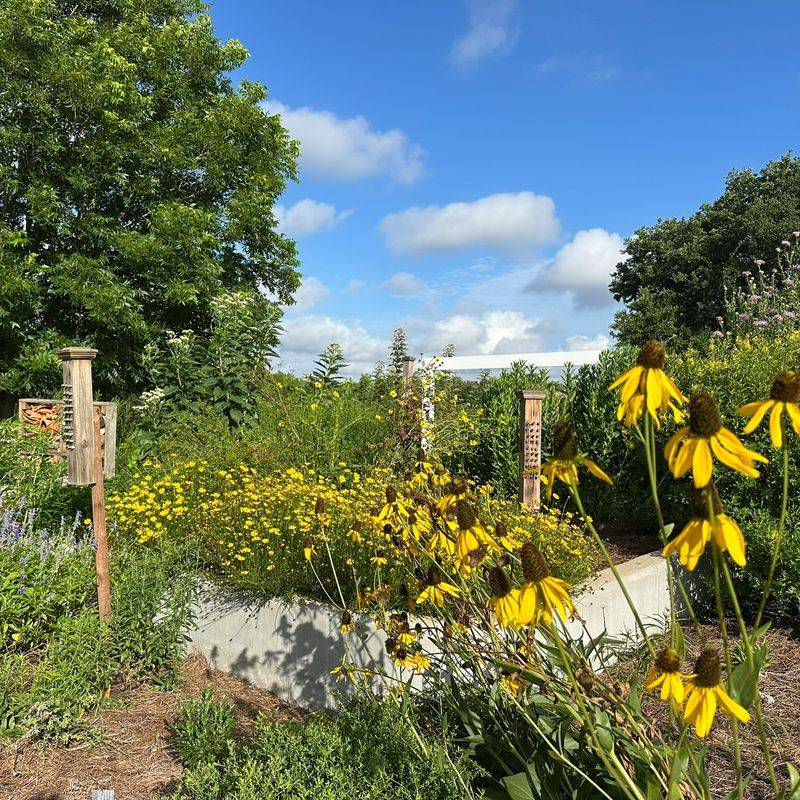
Pulling the whole strategy together, the habits that improve your odds with Painted Buntings are the same ones that make a Texas yard more ecologically functional across the board: layered cover, a semi-open structure that mixes shrubs and grasses with open foraging space, regional native plants that produce seeds and support insects, and restrained maintenance that leaves food and shelter in place through the summer. Optional clean water and a well-placed feeder can round out the picture, but neither one substitutes for the habitat itself.
What these habits cannot do is make a Painted Bunting return to your specific yard every year. Long-term research on breeding-site fidelity, supported by earlier work published in The Condor, shows that some Painted Buntings do return to breeding areas across years, but that evidence comes from population-level studies of broader territories, not from ordinary residential yards. A bird that bred in brushy habitat a quarter mile from your fence line may never visit your property at all, even if your yard is genuinely well-suited.
TPWD’s Wildscapes design guidance frames the goal well: build habitat that meets a species’ needs, and let the wildlife respond on its own terms. By that measure, a yard with dense cover, native grasses still holding their seedheads in late summer, and insects thriving in undisturbed vegetation is already a success, whether or not a bunting ever lands in it. Texas breeding data confirms that the species uses exactly this kind of habitat when it is available. The best you can do is make your yard worth stopping at, and then pay attention.