
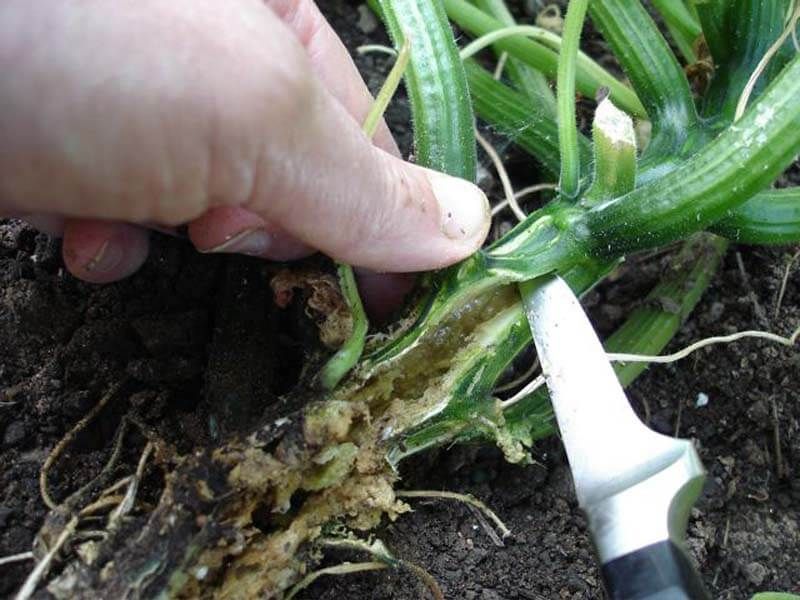
Walking out to your garden and finding a zucchini or squash vine crumpled on the ground is a gut-punch moment, especially when you watered just yesterday. Many gardeners blame the heat or a missed watering, but a caterpillar-like larva chewing through the inside of the stem is often the real culprit. Squash vine borers can hollow out a vine’s core for weeks before the plant finally gives out, making the collapse look sudden even though the damage started long ago. Before you pull the plant, check the lower stem – what you find there will tell you far more than the wilting leaves ever could.
Persistent Wilting Calls for an Inspection, Not a Verdict
A squash or zucchini runner that droops during the hottest part of a summer afternoon is not automatically a red flag. Plants lose water through their leaves faster than roots can replace it when temperatures spike, and a vine that perks back up by evening is probably responding to heat and not to something more serious. The concern starts when a runner stays wilted into the cool of the morning, or when the whole plant collapses and does not recover.
Squash vine borer is one leading possibility for that kind of persistent, morning wilt, but it is not the only one. University of Minnesota Extension’s diagnostic guide for wilting squash and pumpkins lists squash bugs, bacterial wilt, and environmental water stress alongside borer damage as causes worth ruling out. Wilting alone cannot tell you which problem you are facing.
The lower stem holds the key clues. Before drawing any conclusions, get down close to the crown of the plant and look at the first few inches of stem above the soil. That short stretch of vine is where a borer enters, where frass accumulates, and where the evidence that actually points toward a diagnosis will be waiting. The title of this article overstates the certainty a bit – heat is not irrelevant, and not every overnight collapse traces back to a borer – but the inspection sequence that follows will help you figure out what you are actually dealing with.
Internal Feeding Can Make the Collapse Look Sudden
The adult squash vine borer looks nothing like what most gardeners expect. It is a day-flying clearwing moth that mimics a wasp, with an orange-and-black abdomen and clear hindwings. University of Minnesota Extension’s squash vine borer guide describes how these moths emerge from overwintering cocoons in the soil, typically in early summer, and then lay eggs singly near the base of susceptible plants. The eggs are small, flat, and brown – easy to miss unless you are looking for them.
Once an egg hatches, which takes roughly a week, the larva immediately bores into the stem and begins feeding on the tissue inside. That internal feeding goes on for about four to six weeks. The larva is chewing through the vascular tissue that moves water and nutrients up the vine, and the plant may show only minor stress at first, perhaps wilting a bit more than usual at midday.
The visible collapse that seems to happen overnight is really the end point of a much longer process. By the time a vine crumples and fails to recover, the larva has often been working inside the stem for days or weeks. Timing also varies by region: one generation is typical in northern and central states, while areas farther south may see a second generation later in summer. Rather than relying on a fixed calendar, watch for adult moth activity in your own garden and nearby plots as your guide for when to be most alert.
Inspect the Lower Stem for the Key Clues
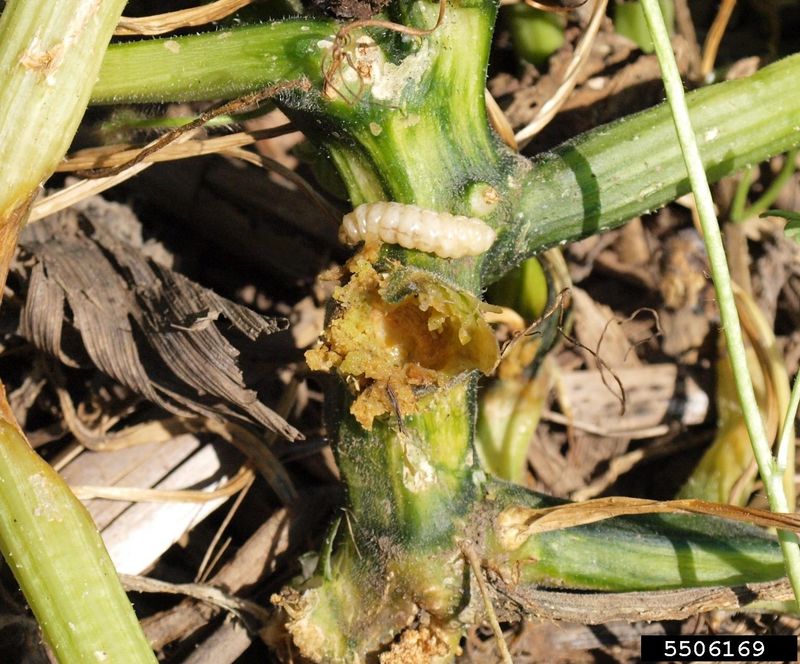
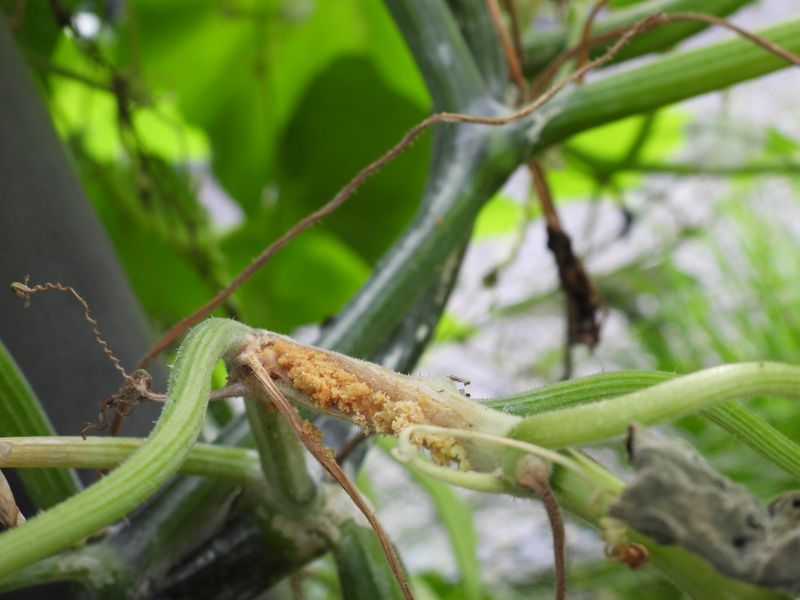
Crouch down and look at the bottom two to four inches of stem, right where it meets the soil. A squash vine borer entry point is usually a small hole, sometimes ragged at the edges, with moist greenish, orange, or brown material packed around it or spilling out onto the ground. That material is frass – the larva’s droppings mixed with chewed stem tissue – and its presence alongside an entry hole strongly supports borer damage as the cause of your wilting plant.
Keep looking even if the hole is not immediately obvious. Check for a mushy or soft section of stem, a rotting or discolored base, or the larva itself: a cream-colored grub about an inch long with a distinctly brown head. Any combination of these signs points toward a borer, while a vine that wilts but shows a firm, intact stem base with no frass and no entry hole deserves a different diagnosis.
Other causes can look similar from a distance. Squash bugs cluster on stems and leaves and can cause yellowing and wilting; turning leaves over to look for bronze-colored eggs in neat rows is a useful check. Minnesota Extension’s wilting diagnostic tool also flags bacterial wilt, which cucumber beetles spread, as a cause of daytime wilt that may partially recover at night. Environmental water stress tends to affect the whole plant evenly and improves quickly with a thorough watering.
Confirm what you are seeing at the stem base before cutting into anything.
Try a Careful Rescue Only While the Vine Still Lives
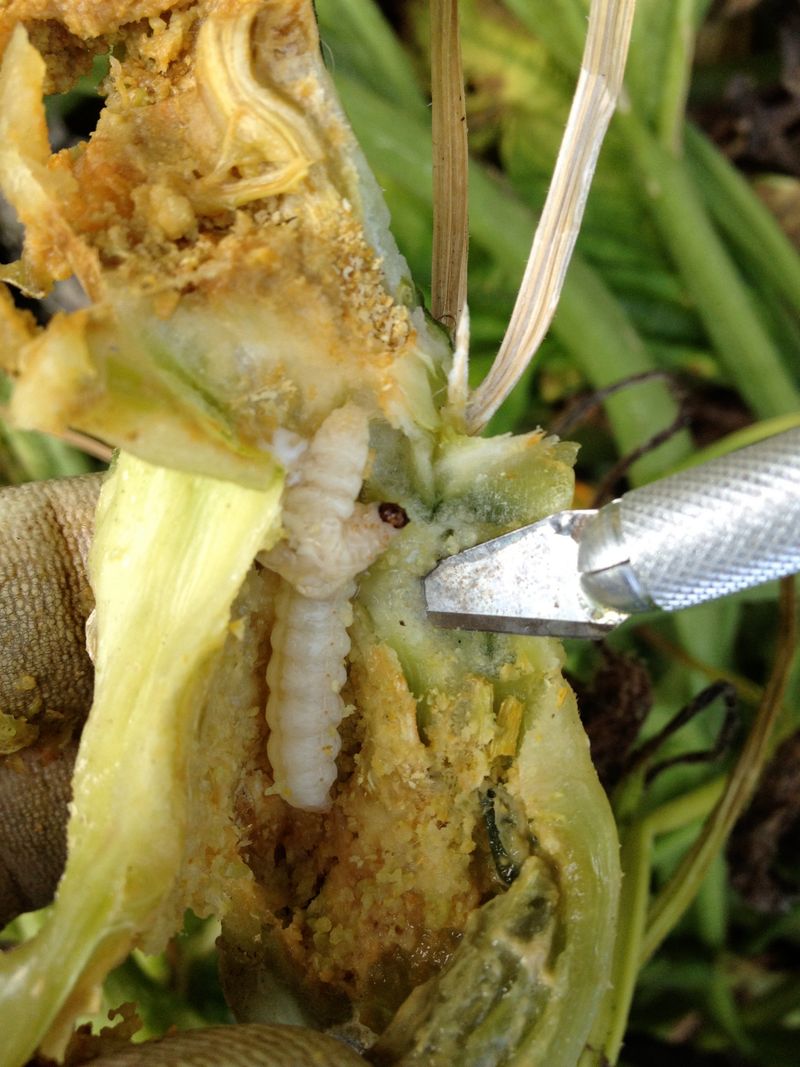
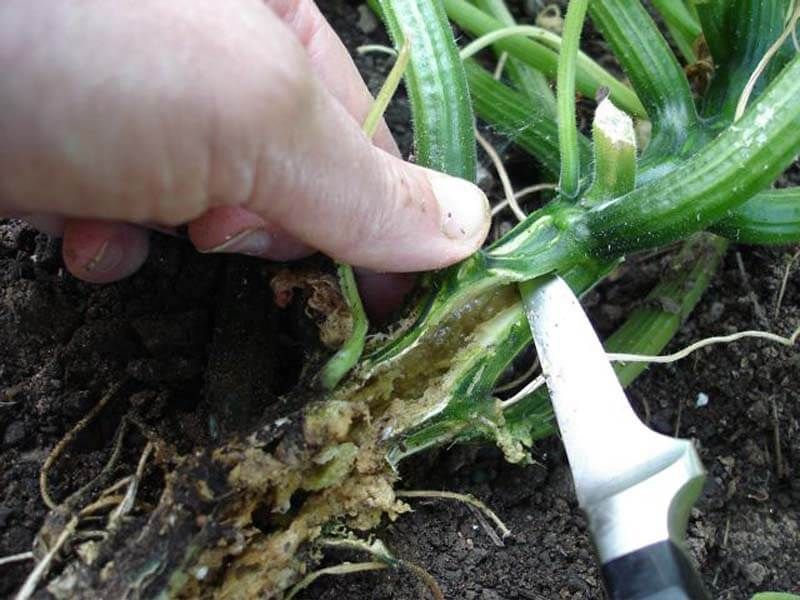
Finding an entry hole and frass does not mean the plant is finished. If leaves are still partly green and the vine has not gone completely limp, a careful stem surgery may give it a fighting chance. The goal is to locate and remove the larva with as little additional damage to the stem as possible.
Use a sharp, thin knife or razor blade. Starting at or just above the entry hole, make a shallow lengthwise slit along the stem and follow the tunnel toward where the larva is feeding. Work slowly and avoid cutting deeper or wider than necessary – every bit of living stem tissue you preserve matters. When you find the larva, which is cream-colored and about an inch long, remove it completely.
A single vine can sometimes harbor more than one larva, so probe the tunnel carefully before closing up.
Once the larva is out, press the stem back together as best you can, mound moist soil over the wound, and water the area consistently to keep the soil from drying out. Minnesota Extension’s borer guide frames this as something gardeners can try, not a dependable cure. Extensive vascular damage, a larva that has already moved deep into the crown, or a plant that is already collapsing lowers the odds considerably. If the stem base is completely mushy, rotted through, or the plant has been dead for more than a day or two, surgery is unlikely to help and removing the plant is the more practical choice.
Foliar insecticide sprays will not reach a larva that is already established inside the stem, so skip that step entirely once internal feeding is confirmed.
Use Healthy Vine Nodes to Build Backup Roots
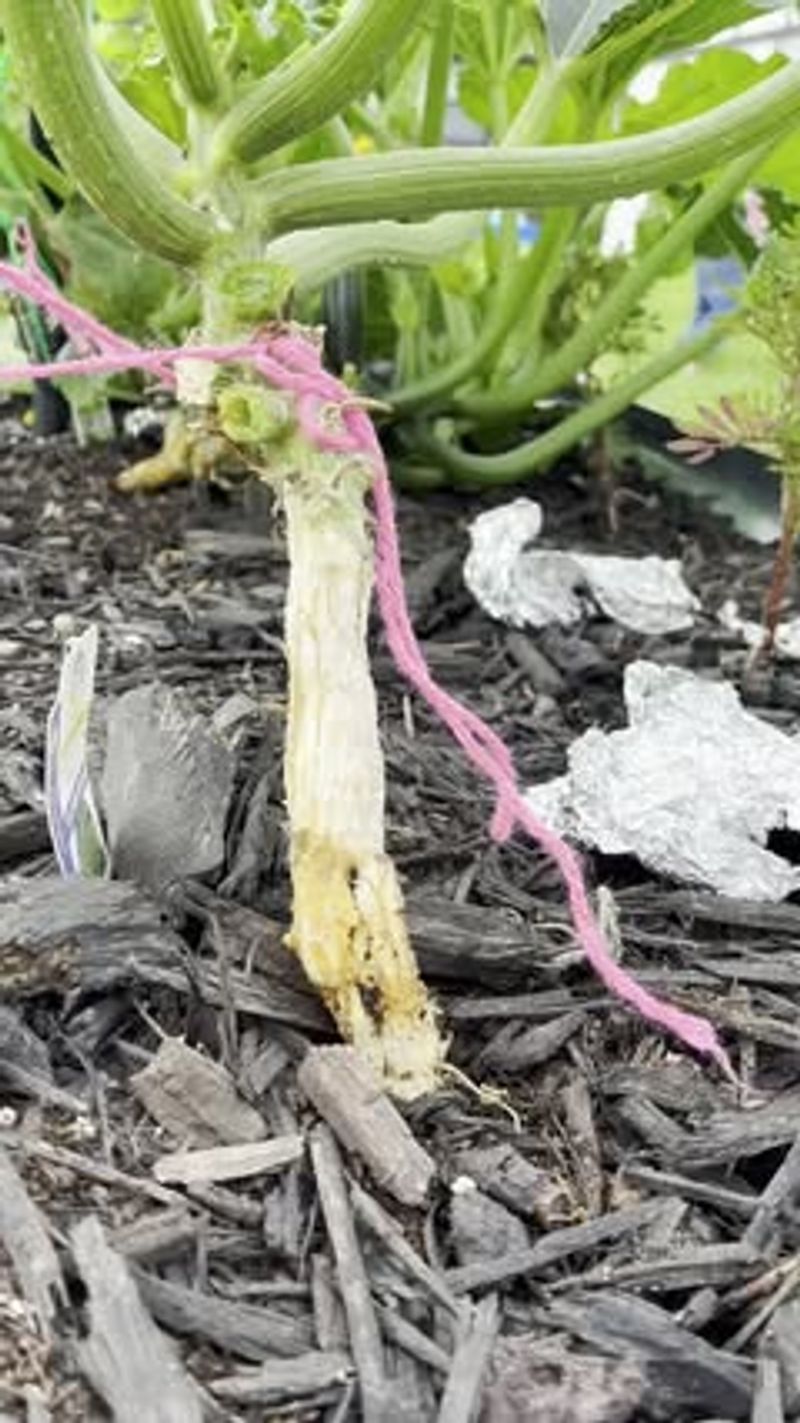
Vining squash, pumpkins, and some zucchini types send out roots from nodes – the spots along the vine where leaves attach. Covering several healthy nodes farther down the vine with a few inches of moist soil encourages those spots to form additional roots, giving the plant a secondary water and nutrient supply that does not depend on the damaged crown.
Illinois Extension’s squash vine borer management article recommends this approach as a way to help the plant compensate for crown damage. Choose nodes that are at least a foot or two beyond the damaged section, press the vine gently against the soil, cover the node area with a small mound of soil, and keep it consistently moist. Roots can establish within a week or two under good conditions.
This technique supports the plant but does not undo what the larva has already done. A stem that has been hollowed out near the crown will not regenerate, and new roots farther along the vine cannot reverse severe vascular destruction. Think of it as a parallel lifeline, not a repair. If you have already attempted larva removal, node rooting works alongside that effort and improves the overall odds.
When a plant is clearly dead – leaves brown and brittle, stem base completely rotted, no green tissue remaining – remove and destroy it rather than leaving it in the garden. The larva will eventually pupate in the soil near the old plant, and removing infested material reduces the number of moths that emerge next season.
Prevent Egg-Laying Before Larvae Enter the Stem
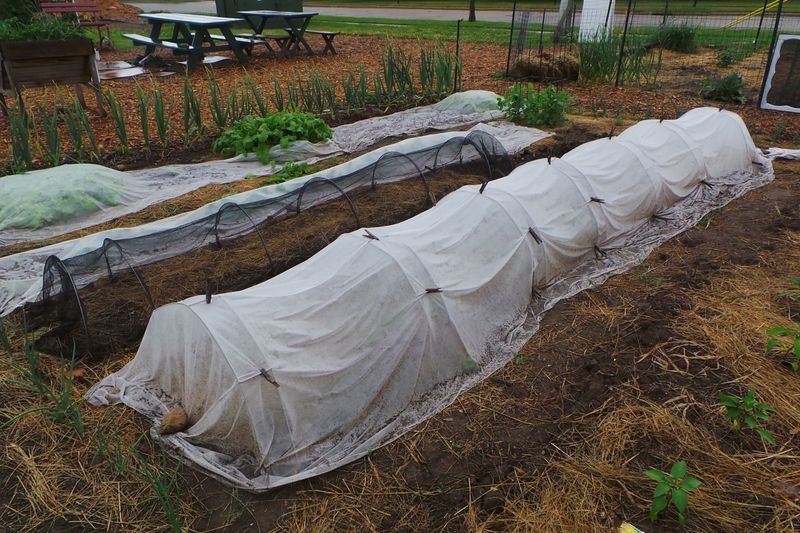
Once a larva is inside the stem, your options narrow fast. Prevention – stopping the moth from laying eggs in the first place – is far more reliable than any rescue attempt after the fact. Several strategies can reduce pressure, though none of them is a guarantee on its own.
Sanitation is the foundation. Remove and destroy vines at the end of the season rather than leaving old cucurbit debris in the bed, because the pest pupates in or near the soil and overwintering cocoons near last year’s plants mean more moths near this year’s crop. Rotating cucurbits to a different part of the garden each year puts physical distance between emerging adults and new transplants.
Floating row covers can prevent egg-laying when installed over transplants before adult moths appear in your area, but the timing matters and so does the installation. Secure the edges completely so moths cannot slip underneath. Remove the covers once plants begin to flower, or hand-pollinate daily, because squash requires bee visits to set fruit. One additional risk: if cucurbits grew in the same bed the previous year, adults may emerge from the soil directly beneath the cover, which defeats the purpose entirely.
Insecticides work against adult moths or newly hatched larvae before they enter the stem – not against larvae already feeding inside. Any product you consider must be labeled for use on the specific crop and pest, applied according to the current label’s directions, rates, and preharvest intervals. The EPA’s pesticide label guidance makes clear that labels are legally enforceable and that using a product inconsistently with its labeling violates federal law. Protect pollinators by avoiding any application to open flowers, and follow all label directions for timing and protective equipment.
EPA’s pollinator protection resources outline additional precautions worth reviewing before any spray program.
Biological options such as Bt can be timed against newly hatching larvae before they enter the stem, under current local and product-specific guidance, but Bt will not rescue a vine where a larva is already established inside. Purdue Extension’s vegetable insects publication notes that sprays generally cannot reach internal larvae, reinforcing why timing any intervention before stem entry is so critical.
Choosing less-susceptible cucurbits is another tool worth considering. Zucchini, summer squash, acorn, delicata, Hubbard, and many pumpkins are commonly described as susceptible. Illinois Extension notes that butternut and some other Cucurbita moschata types are less susceptible to borer damage – not immune or guaranteed resistant, but a practical option if borers have been a recurring problem in your garden.
Follow a Stem-First Decision Sequence
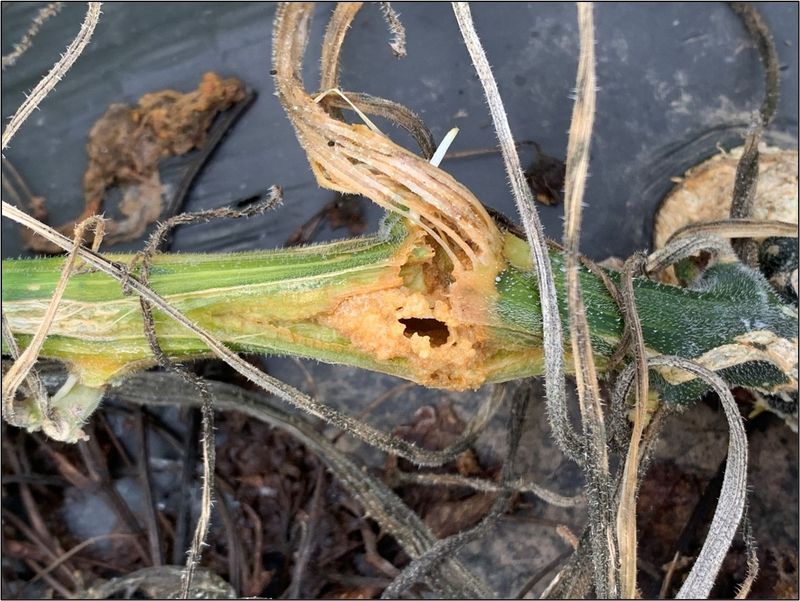
When a squash or pumpkin vine wilts, start with observation before taking any action. A vine that droops at midday and recovers fully by evening is likely responding to heat or temporary water stress – give it a thorough watering and check again the next morning. Persistent or morning wilt is the signal to move to the stem.
Minnesota Extension’s borer guidance and the companion wilting diagnostic tool both point to the stem base as the place where a borer diagnosis either gains or loses support. Look for an entry hole, moist frass, and soft or rotted tissue. If those signs are present and the plant still has living tissue, attempt careful larva removal and consider covering healthy nodes with soil. If stem evidence is absent, revisit squash bugs, cucumber beetles, bacterial wilt, and water stress as the more likely causes.
Discard plants that are beyond recovery rather than leaving infested residue in the garden. Use local adult moth scouting to guide your timing each season rather than a fixed national calendar. Prevention – sanitation, rotation, properly timed row covers, and label-compliant pest management – will serve you better than any rescue after a larva is already inside. The stem is where the story starts and where the best decisions get made.