
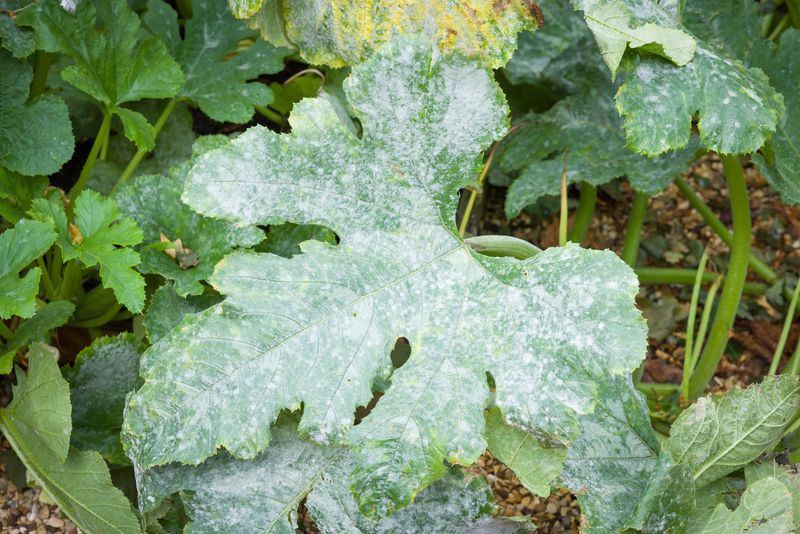
Late summer has a way of turning a thriving squash or cucumber patch into a sea of white-dusted leaves almost overnight. That chalky coating is powdery mildew, and once it shows up, it can spread quickly through a crowded garden bed. The good news is that one practical change, opening up the canopy so air can move through, may slow the disease and help protect the fruit still on the vine. You won’t find a guaranteed cure here, but you will find clear steps to take right now.
Identify the White Coating Before You Act
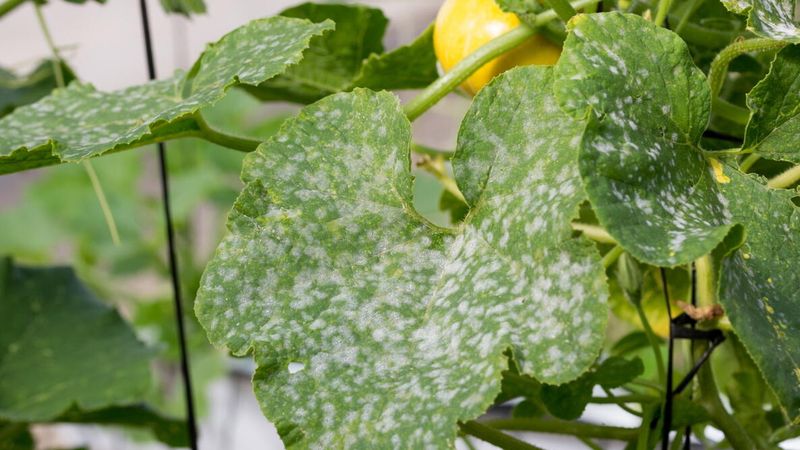
White patches on squash leaves are alarming, but rushing to strip the plant before you know what you’re dealing with can do more harm than good. Powdery mildew on cucurbits typically starts as pale yellow or faintly discolored spots, then develops into the white, powdery or talc-like growth most gardeners recognize. University of Minnesota Extension notes that squash, zucchini, cucumbers, pumpkins, melons, and gourds are all susceptible, and that symptoms usually become noticeable in mid- to late summer, often after plants have begun setting fruit.
The coating can appear on the upper surface of leaves, the lower surface, or both, and may also develop on stems and petioles. Once you spot it, the disease is already established in the tissue, even where the coating isn’t yet visible. That’s why the immediate goal should be protecting the plant’s remaining healthy foliage rather than removing every leaf that shows a mark.
Look at the whole plant before you pull anything off. Count how much foliage still looks green and healthy, because those leaves are still photosynthesizing and feeding your developing fruit. A plan built around preserving what’s working will serve the plant better than an aggressive cleanup that leaves it exposed and weakened.
Understand Why a Dense Canopy Raises Disease Pressure
Powdery mildew thrives when foliage stays shaded and air barely moves between the leaves. Tightly packed vines, weeds growing up through the bed, and overlapping canopies all create a humid microclimate that stays damp longer after rain or dew. UC IPM’s cucurbit powdery mildew guide explains that dense, shaded foliage and elevated humidity can favor the disease, while the pathogen does not actually require free water sitting on the leaf surface to infect.
That last point matters more than most gardeners realize. Warm, dry conditions can support spore production and help spores travel on air currents to new leaves, so the problem isn’t simply about wet weather. A crowded canopy raises disease pressure by slowing the air movement that would otherwise carry humidity away from leaf surfaces and dilute spore concentrations near the plant.
Opening that canopy is a reasonable suppressive measure, not a guarantee. Cornell’s cucurbit powdery mildew fact sheet confirms that infection can already be widespread inside the plant tissue before the white coating becomes obvious to the eye. Better airflow may slow further development and help healthy leaves stay healthy longer, but it will not sterilize the plant or remove spores that have already landed.
Open the Canopy Before Removing Healthy Foliage
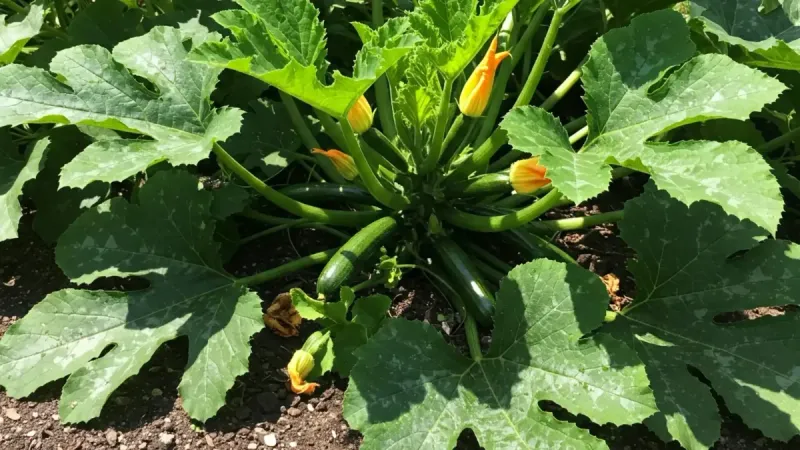
For a crowded, established planting, the first move isn’t reaching for pruning shears. Start by physically separating vines that have grown into each other. Gently lift a trailing stem and redirect it along the ground away from its neighbors, or guide it toward open space at the edge of the bed. This alone can create meaningful gaps in the canopy without removing a single leaf.
Next, clear the weeds. Tall weeds growing up through or around the squash form a second canopy that traps humidity and shades the lower leaves even further. Oregon State Extension recommends removing weeds as part of improving conditions around cucurbits with powdery mildew. Once the weeds are gone, you’ll often find that air can reach the interior of the planting much more easily.
Only after those steps should you consider leaf removal, and then only selectively. UC IPM’s vegetable mildew guidance cautions that heavy defoliation can reduce the plant’s photosynthetic capacity and expose developing fruit to sunscald. Use clean, disinfected tools and remove only leaves that are heavily infected, dying, or already brown and collapsing. If removing a leaf would leave a stem nearly bare, leave it alone and focus your energy on redirecting the vine instead.
Train Only Vines That Can Safely Use a Support
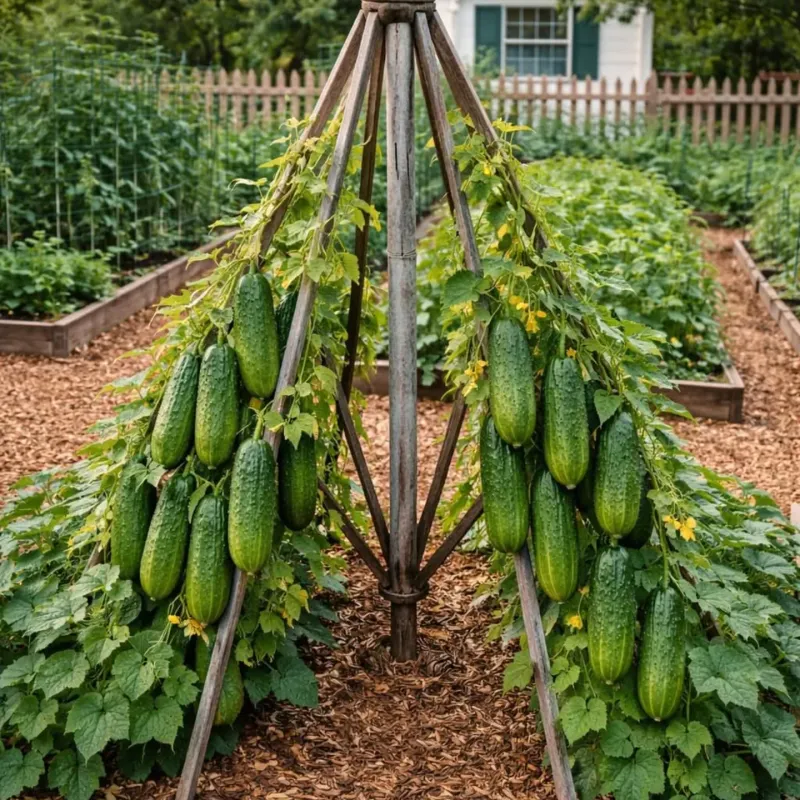
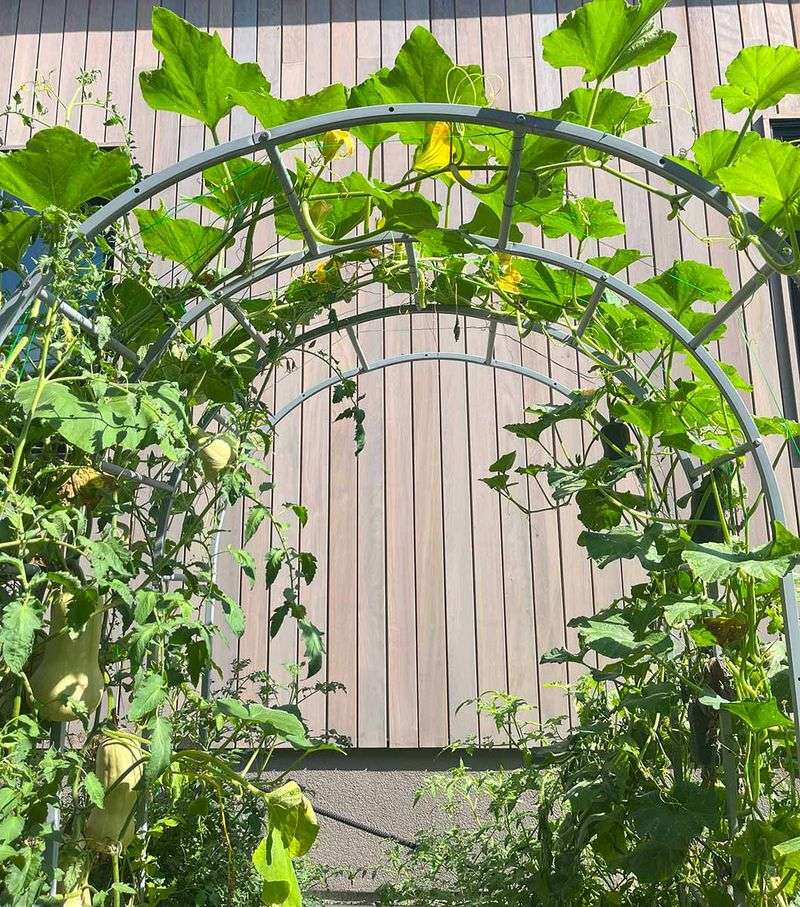
A trellis can do a lot of work for you when the right plant is growing on it. Vining cucumbers are well suited to vertical training because their stems are relatively light and their fruit doesn’t put excessive strain on a support. University of Minnesota’s cucumber growing guide recommends training cucumbers vertically when a suitable support is available, which lifts the foliage off the ground and allows air to circulate around the leaves from multiple directions.
Heavy winter squash is a different story. Large fruits like butternut or acorn squash can pull a vine off a trellis or cause stems to snap under their weight. Extension guidance on trellises and cages notes that heavy-fruited squash may need additional support structures or should simply remain on the ground where the weight is distributed naturally. For those plants, redirecting vines along the ground is more practical than lifting them onto a trellis.
Spacing matters just as much as support, and the right distance depends on the variety and growing system. A vining vegetable planting guide lists vining pumpkins at roughly 2 to 5 feet between plants and 6 to 8 feet between rows, while Oregon State’s cucumber guidance suggests approximately 12 to 24 inches between transplants depending on the system. Check the cultivar’s label or your local extension recommendations rather than applying one number to every plant in the bed.
Support Healthy Leaves With Careful Watering and Nutrition

Where and how you water can affect which diseases gain a foothold alongside powdery mildew. Watering at the soil line with a drip line or soaker hose keeps foliage dry, and that matters because other cucurbit diseases, including downy mildew, are favored by wet leaf surfaces. UC IPM’s downy mildew guide explains that downy mildew sporulation is strongly associated with wet or very humid conditions on the leaf surface, making overhead sprinklers a particularly poor choice when either disease is active in the garden.
Switching to soil-level watering won’t cure powdery mildew, but it avoids piling on additional disease pressure from a second pathogen at the same time. Keep that distinction clear: the goal here is protecting the remaining healthy tissue, not reversing an infection already underway.
Nutrition plays a supporting role as well. University of Minnesota Extension notes that excessive nitrogen can contribute to conditions associated with greater disease pressure, so hold off on additional fertilizer once mildew appears. Weeds that regrow after your initial clearing can quickly rebuild the shaded second canopy you just opened up, so check the bed regularly and pull new growth before it gets established again.
Distinguish Powdery Mildew From Downy Mildew
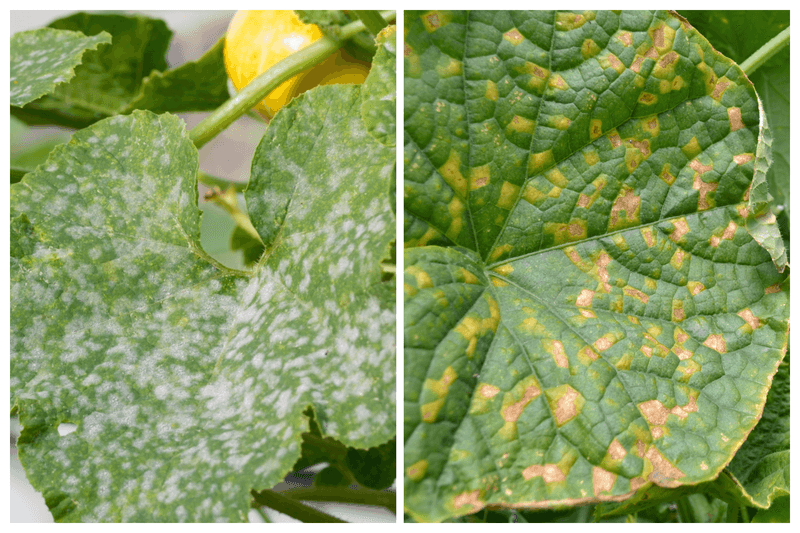
Before escalating your response, make sure you’re dealing with powdery mildew and not its look-alike relative. The two diseases are managed differently, and treating for the wrong one wastes time and resources while the actual problem spreads.
Powdery mildew produces white, powdery or talc-like growth that can appear on the upper surface of leaves, the lower surface, or both. Crucially, UC IPM’s powdery mildew resource confirms that the pathogen does not require free water on the leaf surface to cause infection. You can see a heavily coated leaf on a plant that hasn’t been rained on in a week.
Downy mildew looks different. UC IPM’s downy mildew guide describes it as typically beginning with angular yellow or pale-green lesions on the upper leaf surface, with grayish or purplish sporulation appearing on the underside of the leaf during wet or very humid conditions. Flip the leaf over: powdery mildew may show white growth on both sides, while downy mildew tends to sporulate primarily underneath. The diseases have different environmental relationships and respond to different management strategies, so a careful look at both leaf surfaces before you act can save you from applying the wrong fix.
Know When Airflow Is No Longer Enough
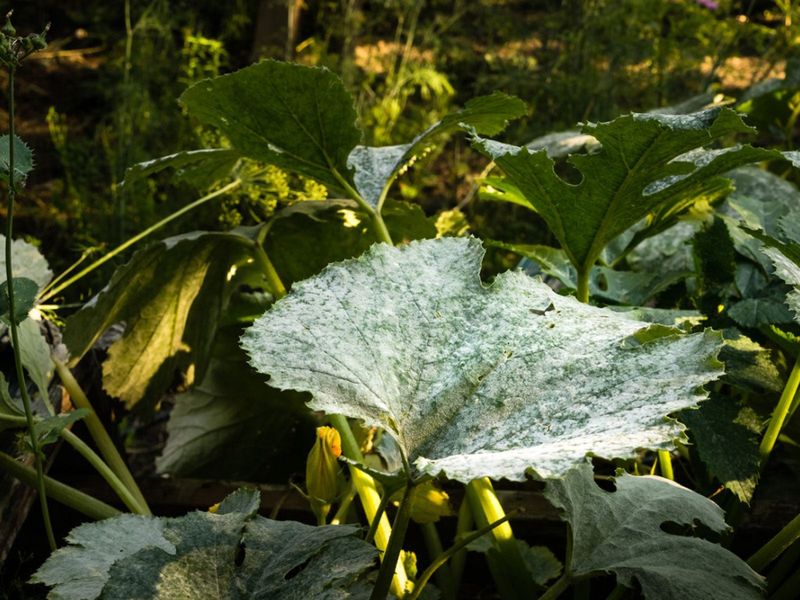
Airflow improvements work best as a suppressive measure applied early, before the disease has colonized most of the plant. Once white coating covers the majority of leaves and new growth is showing symptoms as fast as it emerges, redirecting vines and clearing weeds can still slow the spread, but they are unlikely to turn the situation around on their own. Utah State University Extension is candid that cultural controls like spacing and airflow management are most effective as preventive or early-intervention measures.
Resistant or partially resistant varieties are worth considering for next season. Recent agricultural research on cucurbit disease resistance supports selecting varieties with documented resistance, while noting that resistance delays or reduces disease severity rather than guaranteeing clean plants. Check seed catalogs and UConn IPM’s cucurbit mildew resource for variety-specific information relevant to your region.
For severe outbreaks on highly susceptible varieties, fungicide products may help when used alongside cultural controls. Any product must be labeled specifically for the crop and disease, and the label’s directions on rate, timing, temperature limits, and harvest interval are legally binding requirements, not suggestions. University of Minnesota Extension recommends consulting your local extension service for product guidance appropriate to your area. If a plant has largely stopped producing and the foliage is mostly gone, removing it and composting it away from the garden may be the most practical next step.
Protect the Foliage That Can Still Finish the Harvest
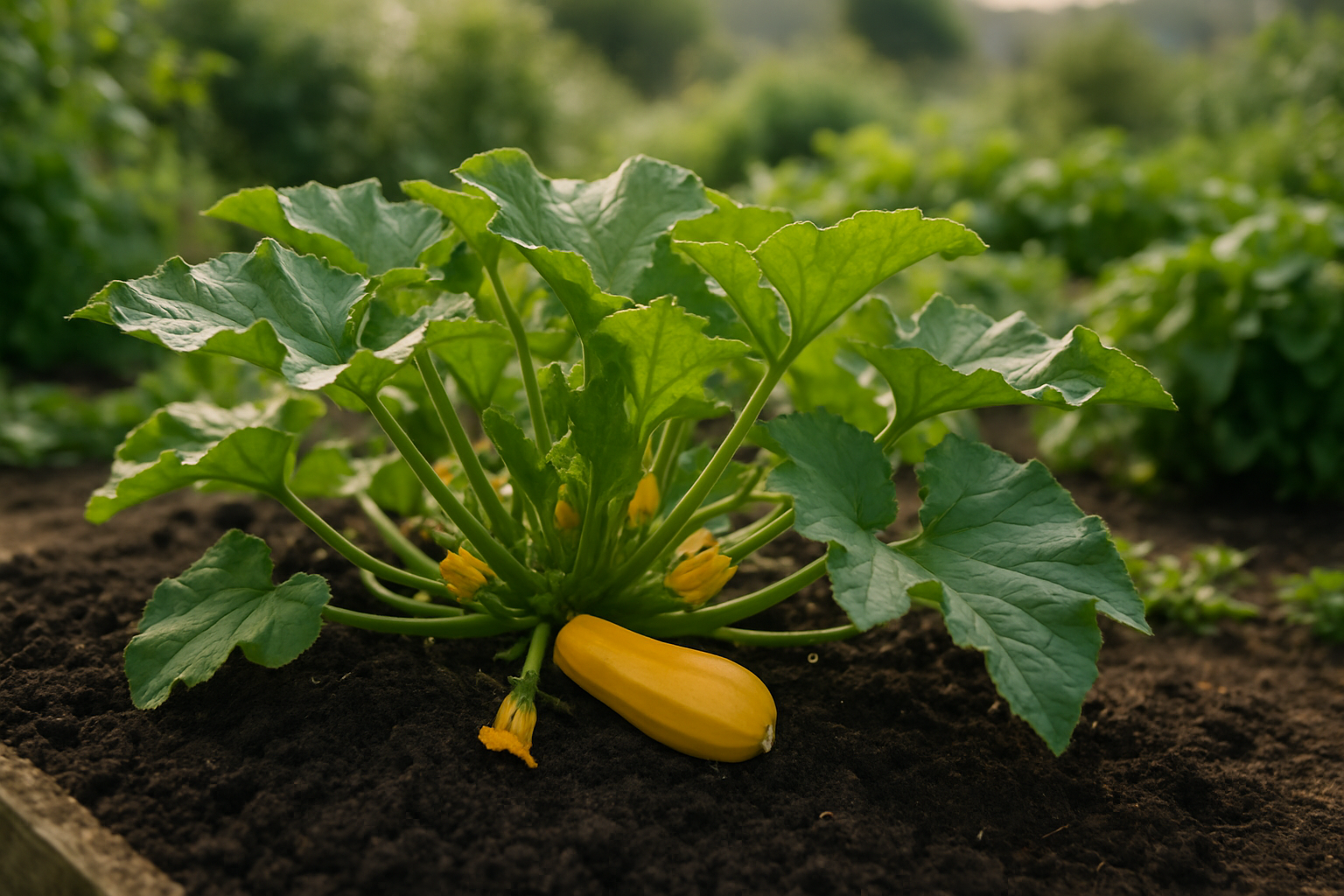
The steps that give your plant the best chance are straightforward: open the canopy by redirecting vines, clear the weeds, train suitable cucumbers onto a support if you have one, and remove only the leaves that are too far gone to contribute. Then keep watching. A plant with enough healthy foliage can still finish ripening the fruit already on the vine, even with some mildew present.
Oregon State Extension and University of Minnesota Extension both frame cultural controls as part of an ongoing management approach, not a single fix. If disease continues to worsen despite your efforts, that’s the signal to consider labeled fungicide options or, eventually, plant removal.
Powdery mildew rarely kills a cucurbit outright before the season ends, but it shortens the window. Every healthy leaf you preserve buys more time at the table.