
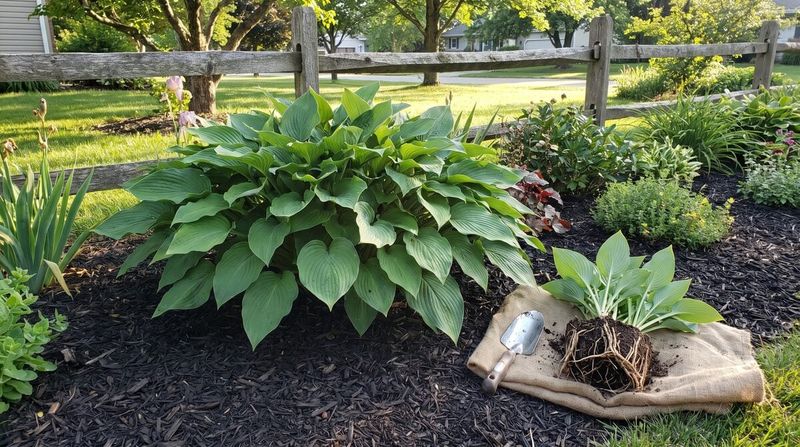
A hosta with a sad, open middle and leaves that flop to the sides can make a shady bed look tired. Dividing the clump can clear out the weak center and give you extra plants for free.
But timing matters, and division is not a magic fix. Here is how to tell whether your hosta really needs it and how to do the job well.
A hollow center is a stronger clue than floppy leaves alone
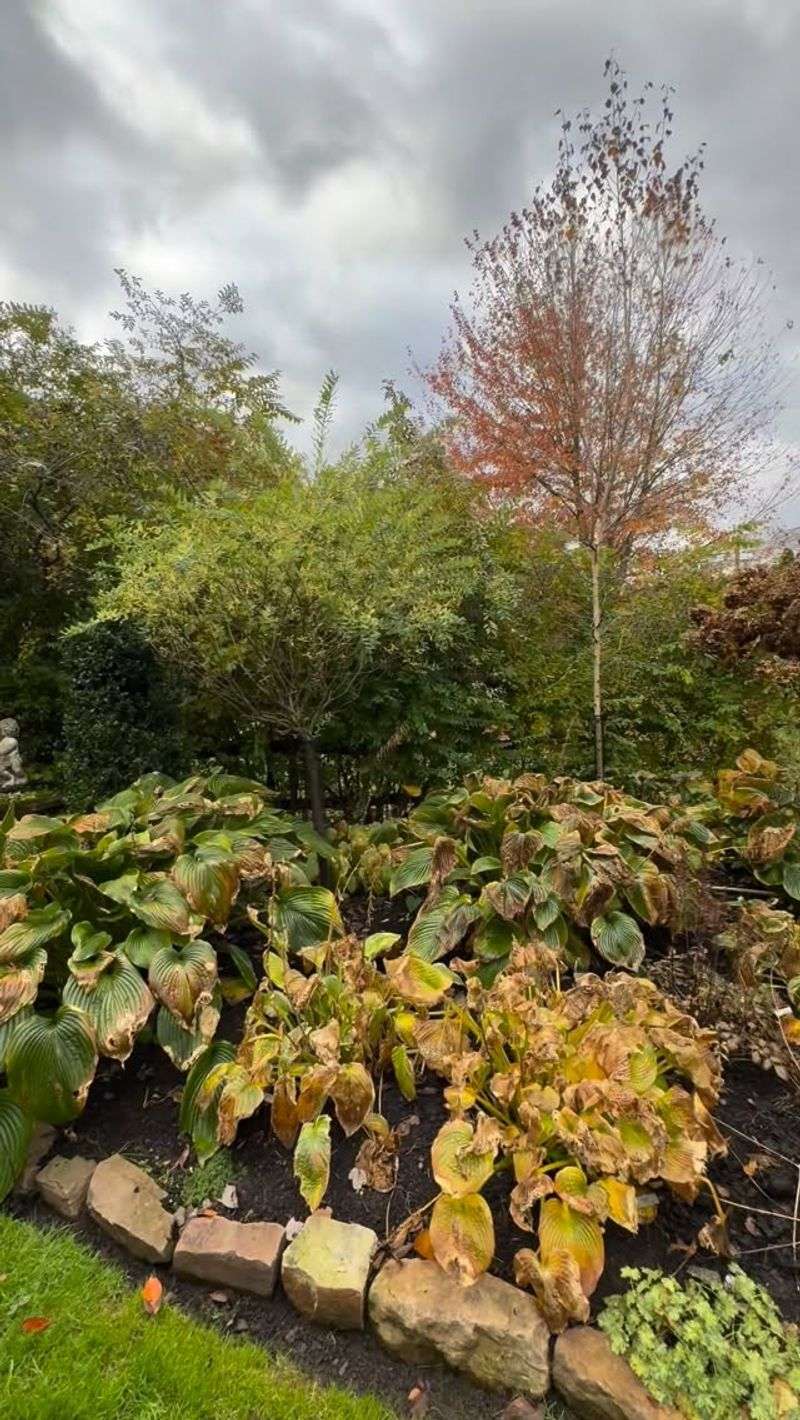
Start by looking at the middle of the clump. Illinois Extension lists a dead center with growth around the edge, loss of vigor, and a clump that opens up and flops as signs a perennial may benefit from division.
A hollow middle with a ring of healthy leaves is the strongest hint.
Drooping or ragged leaves alone prove very little. Dry soil, sunscald, and other site stress can leave hosta foliage damaged, as Iowa State guidance on hostas explains.
Pests, viruses, and root or crown rot are also possible, according to N.C. State Extension.
Before you dig, check the soil moisture, the sun exposure, and the crown for mushy spots or odd leaf mottling. If you suspect infection, do not divide the plant to spread or share it.
Penn State advises against dividing hostas with Hosta virus X.
Fall division depends on local conditions and timing
Advice on timing is mixed. Iowa State calls spring best, though it says division is possible from spring into late summer.
University of Georgia also points to spring, while Clemson accepts early fall or spring.
So fall is an option, not a universal winner. UMN guidance says fall-divided perennials in general need roughly four to six weeks to root before the ground freezes.
That is not a hosta-only rule, but it shows why waiting until the last minute is risky.
Where you live matters too. Georgia guidance lists hostas suited to some landscapes, but UF/IFAS warns that many familiar hostas struggle in Florida.
The sources reviewed give no Texas-specific fall schedule. If your window for rooting looks short, choose spring instead.
Lift the clump while keeping its roots from drying
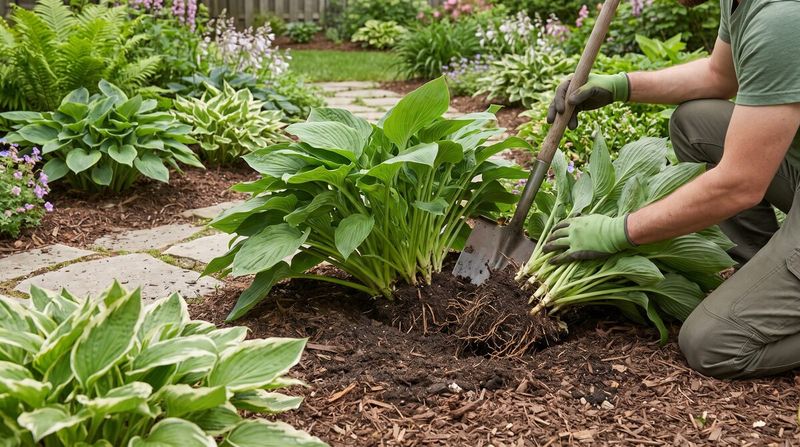
Water the plant a day ahead if the soil is dry, since moist ground makes lifting easier. Then cut a circle around the clump with a sharp spade and pry it up.
You can also slice off a rooted section from the edge and leave the rest in place.
Exposed roots dry out quickly, so work in shade or on a cloudy day. Set the clump on a tarp or in a wheelbarrow, and drape damp burlap or a wet towel over the roots if you need a pause.
UMN advises keeping roots from drying while you work.
Dig the planting holes before you lift, so the plant spends as little time out of the ground as possible. Sharp tools, noted in Iowa State guidance and in Georgia’s hosta publication, make cleaner cuts and less damage.
Keep each new division large enough to establish
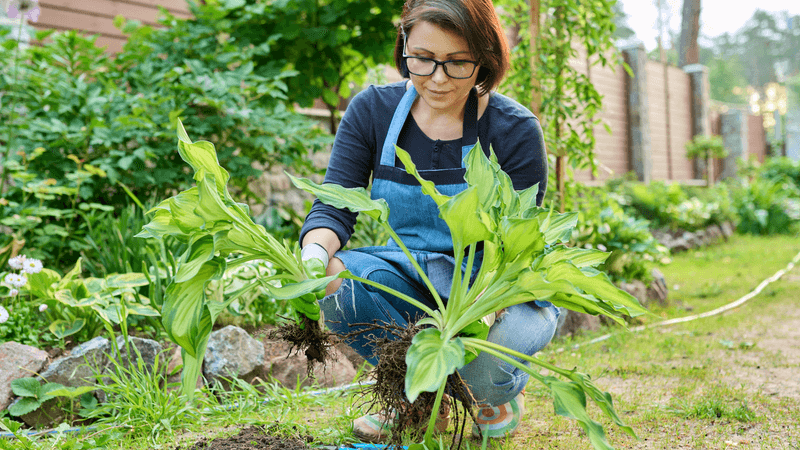
Once the clump is out, look for the growing eyes, the pointed buds at the crown. Each division needs at least one eye plus a good chunk of crown and roots.
Cut or pull the clump apart with a sharp knife or spade, and discard the dead, woody center.
Iowa State recommends two or three points per section. That is a helpful target, not the only acceptable size.
Resist the urge to make as many pieces as possible. The University of Georgia cautions that very small divisions establish slowly.
Fewer, sturdier sections usually settle in better than a pile of tiny ones.
Replant at the previous soil level and water well
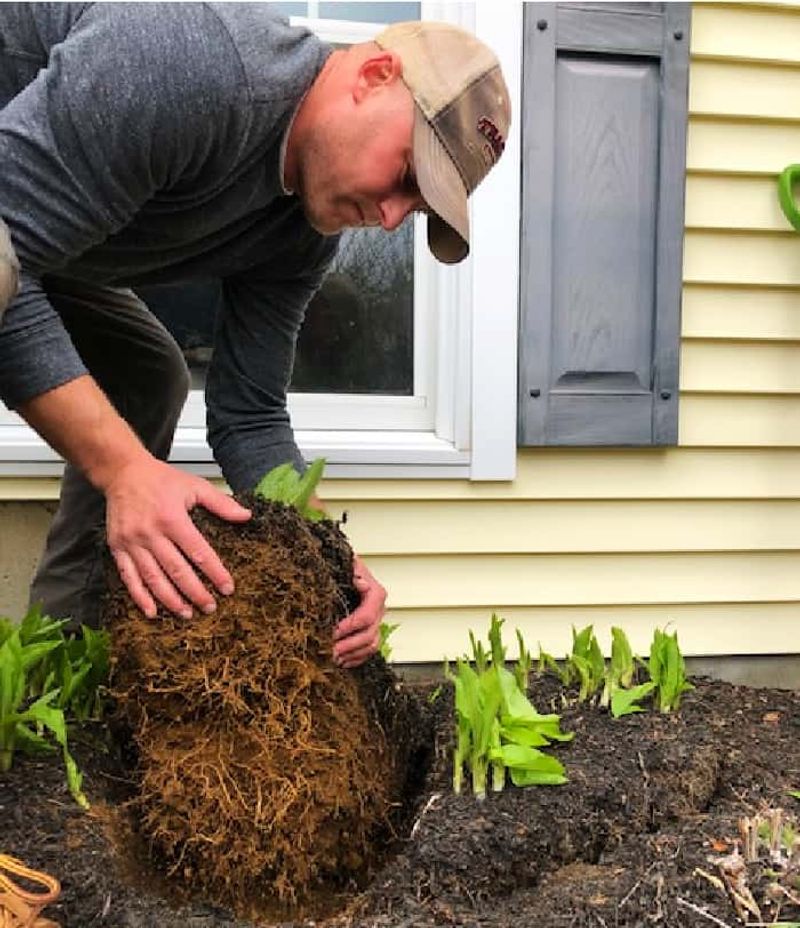
Replant right away, setting each division at the same depth it grew before. Backfill, firm the soil gently, and water deeply.
Keep the soil evenly moist until the plants establish, since new roots are still small.
UMN’s hosta guidance and its perennial division advice both stress prompt replanting and watering.
In cold-winter areas, late-planted divisions can heave out of the ground during freeze-thaw cycles. For late-summer divisions, Iowa State recommends several inches of straw or pine needles in late fall.
That advice fits cold winters, so milder Southern gardens may not need it.
Division can make more plants, but fullness takes time
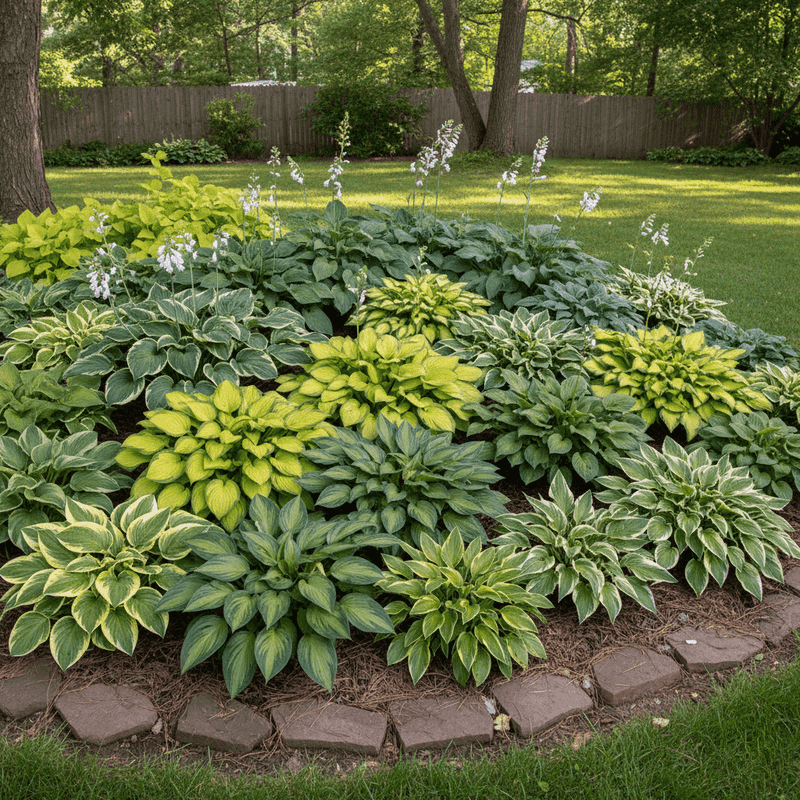
The sure payoff is more plants. Healthy divisions keep the parent’s cultivar, so you can fill other shady spots or share with neighbors.
UMN describes division as a simple way to propagate perennials. Share only healthy plants, never ones that might be diseased, as Penn State warns.
A fuller mound is not guaranteed next year. Small sections establish slowly, and Missouri Extension notes many cultivars take years to form a mature clump.
Not every hosta needs this either. UMN says mature hostas do not need division for health, only for looks, size, or new plants.
A healthy clump left alone is doing fine.
Think of dividing as planting for the seasons ahead.