
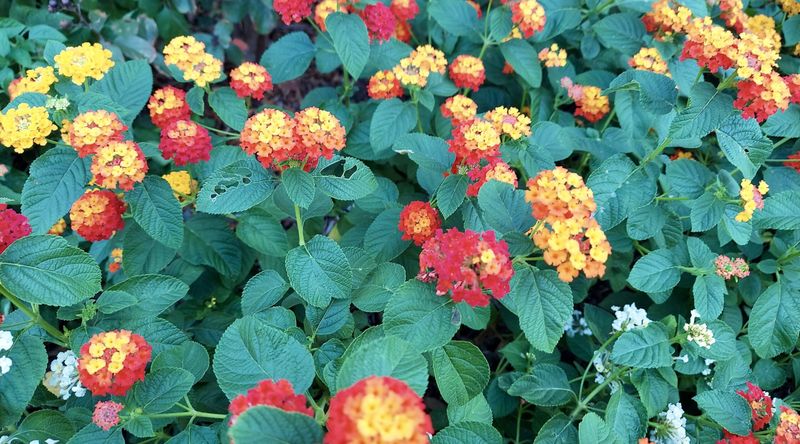
Late summer in Texas can leave even tough lantana looking tired, with long leggy shoots and fewer fresh flowers than it showed back in spring. A restrained trim of selected shoot tips during active growth may help encourage branching and a later flush of blooms, but the results depend on your specific plant, its growing conditions, and how you time the cut. Knowing what to remove, how much to take, and when to stop is the difference between a plant that rebounds and one that struggles heading into fall.
Start with the plant you actually grow
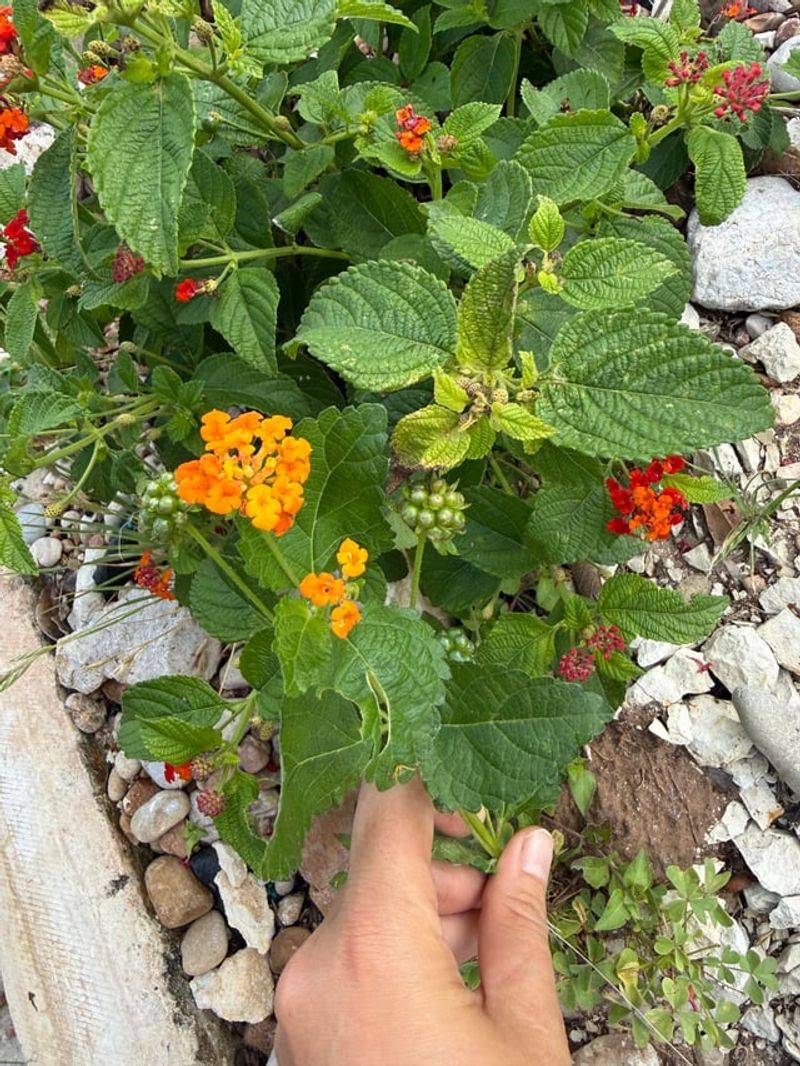
Walk through most Texas nurseries and you will find plants labeled simply as “lantana,” but that label can cover several very different plants. The University of Texas Biodiversity Center identifies Texas lantana as a distinct native perennial – Lantana urticoides – that is adapted to Texas soils and climate. Many nursery plants, by contrast, are cultivars or hybrids involving Lantana camara, Lantana montevidensis, or crosses between species, and their care, cold hardiness, and bloom behavior can differ noticeably from the native form.
Identifying which lantana you are growing matters before applying any broad pruning advice. Texas A&M AgriLife Extension describes Texas lantana as a Texas-native perennial that blooms from roughly April through October in many landscapes, while other ornamental types may behave differently in the same garden. Winter hardiness, the tendency to set seed, and the response to trimming are all cultivar-dependent traits that a single label rarely captures.
The light tip-shear described throughout this article is a cautious approach suited to lantanas in active summer growth. The strongest published pruning evidence comes from a 2024 UC ANR study of a cultivated Lantana strigocamara hybrid, not from Texas lantana specifically. That distinction matters: the study’s findings are useful as a reference point, but applying them to every plant in every Texas yard requires some extrapolation. When possible, note the cultivar name from the plant tag or ask at the nursery before deciding how aggressively to prune.
The best summer cut removes inches, not the whole plant
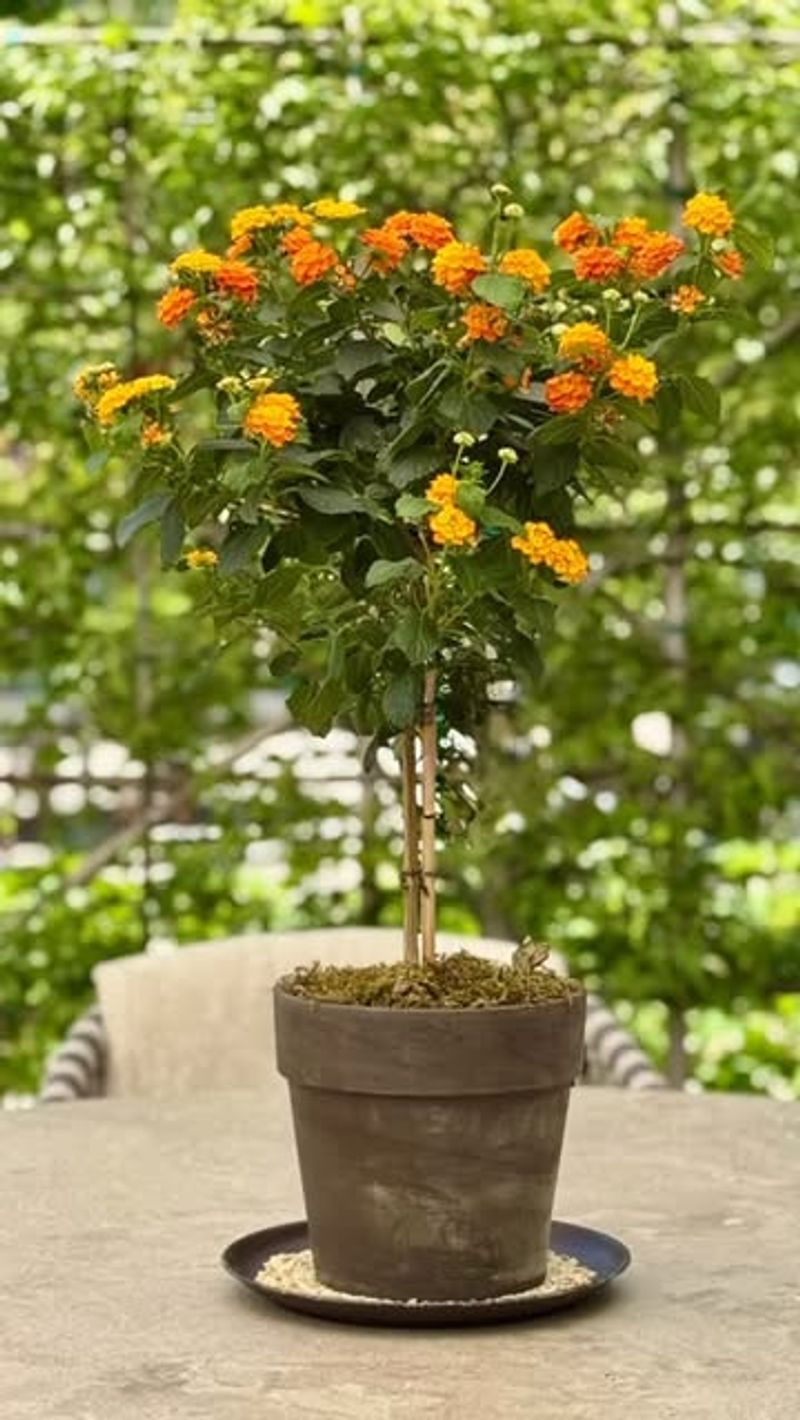
Sharp, clean pruners are the right tool for this job, and restraint is the right mindset. The goal is to remove roughly 1 to 3 inches from selected long or spent flowering shoots, taking faded flower clusters with them while leaving most of the plant’s foliage intact. The 2024 UC ANR pruning study found that tip removal on a cultivated lantana hybrid stimulated lateral shoot production and contributed to a later flowering flush, suggesting that a light cut rather than a hard reset is the more useful summer approach.
Focus on shoots that have finished blooming or grown noticeably longer than the rest of the plant’s canopy. Cut each selected shoot at a healthy branching point just below the faded cluster, and move on to the next. Avoid shearing the entire plant uniformly to a flat surface, which strips away active foliage and can stress the plant during triple-digit Texas heat. The intent is selective shaping, not a dramatic size reduction.
Clemson Cooperative Extension recommends lightly shearing lantana tips periodically through summer to encourage repeat blooming. That language – “lightly” and “periodically” – sets the right expectation. A tip-shear of 1 to 3 inches per selected shoot is a practical working range for most actively growing plants, but it is not a universal prescription for every cultivar, plant size, or growing situation. A small container plant needs a lighter touch than a large established shrub, and a plant already stressed by heat or drought needs even more caution before you remove any foliage at all.
Keep the cut modest, keep the pruners sharp, and let the plant keep its leaves. That combination gives the plant the best chance to respond with new lateral growth rather than spending energy recovering from an unnecessarily severe trim during the hottest part of the Texas summer.
A small tip-shear may create a later flower flush
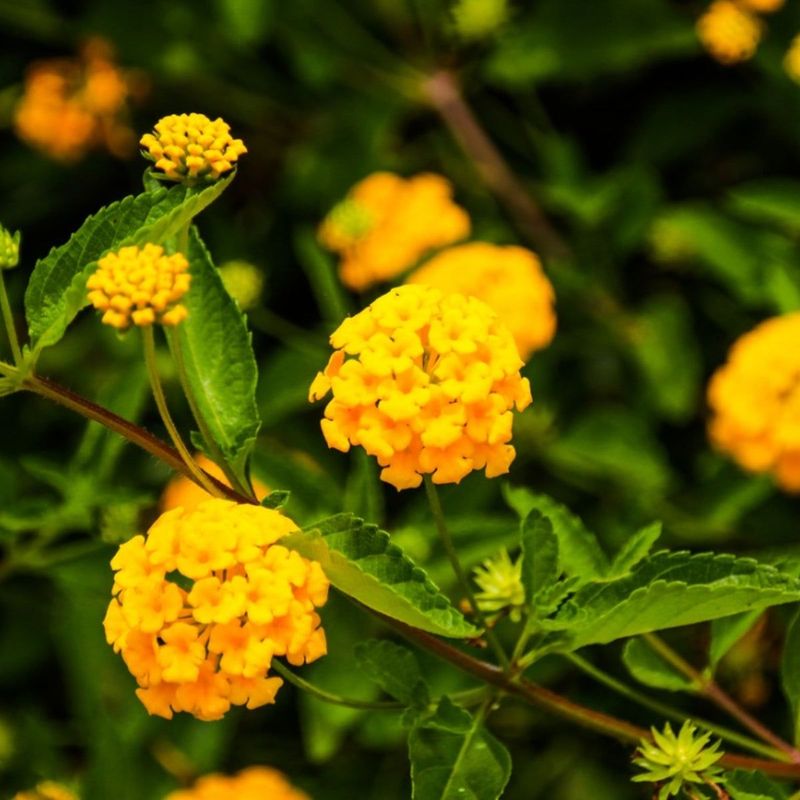
Removing the tip of a growing shoot redirects the plant’s energy outward. Instead of pushing growth through one terminal point, the stem branches at nodes below the cut, producing two or more lateral shoots where one was before. Those new shoots carry fresh growth, and fresh growth is where new flower buds form on lantana.
The 2024 UC ANR study observed increased lateral-shoot production after tip removal on a cultivated Lantana strigocamara hybrid, with flowers beginning to appear on the new growth several weeks after pruning. Peak flowering occurred later in the season than it would have without the trim. That sequence – branching first, then buds, then flowers – is the mechanism behind the recommendation, and understanding it helps set realistic expectations.
The study tested a specific cultivated hybrid under controlled conditions and did not evaluate late-summer pruning in Texas specifically. Applying those findings to Texas lantana, or to a different cultivar in your yard, involves reasonable extrapolation rather than a direct match. The response you see will depend on your plant’s species, cultivar, overall health, and how well the growing conditions support active growth at the time of the cut.
One practical consequence of this sequence is worth stating plainly: your plant will likely look less floriferous for a few weeks after trimming. The spent clusters are gone, the new laterals are short, and visible flowers may be sparse while the new shoots develop. That temporary lull is normal and expected. A later flush of flowers is possible under favorable conditions, but it is not guaranteed for every lantana, and it should not be mistaken for a promise of continuous bloom from a single summer cut.
Shape selectively and reserve harder cuts for the right season
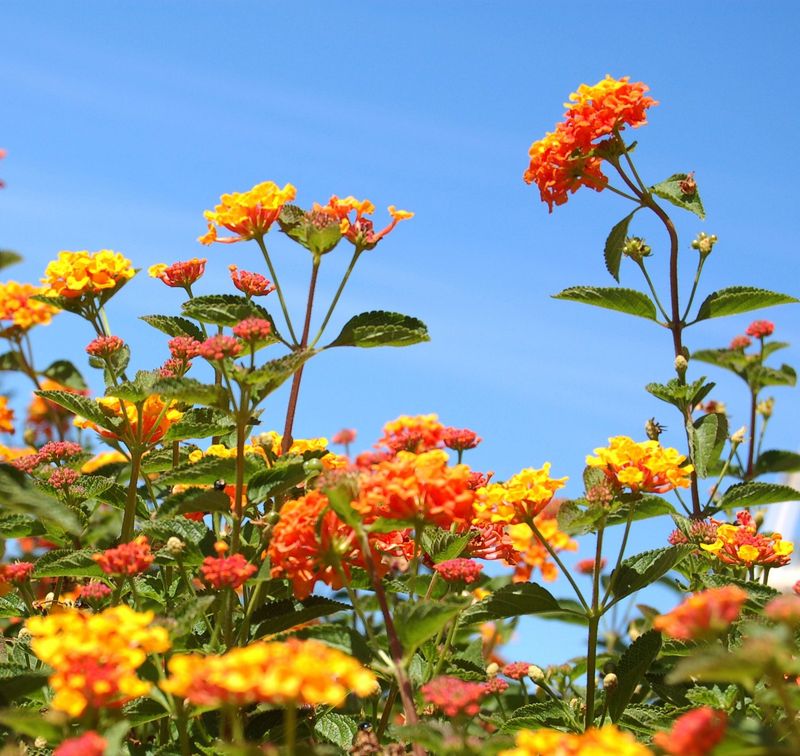
Selective trimming starts with choosing the right shoots. Look for stems that have finished their flowering cycle and are now carrying only faded or browning clusters, or for shoots that have grown well beyond the plant’s general shape. Cut each one at a healthy branching node below the spent portion, removing the terminal section cleanly without tearing the stem. Move through the plant this way rather than shearing everything at once.
The 2024 UC ANR study supports tip removal as a way to encourage lateral branching and a later flowering response. That finding applies most directly to a restrained summer trim – not to a hard size reduction. Clemson Extension notes that an overgrown lantana can tolerate a growing-season reduction of up to one-third of its height and spread, but that option is an exception for a genuinely oversized plant, not a default approach for every trim session.
The most common timing error is treating the summer tip-shear as equivalent to annual renewal pruning. Texas A&M AgriLife Extension places the harder renewal cut – down to roughly 8 inches – firmly in early spring, when the plant is coming out of dormancy and has the full growing season ahead to recover and build new structure. Applying that same hard cut in late summer leaves far less time for recovery before cooler weather arrives, and Clemson specifically warns that hard pruning in fall can reduce a plant’s cold hardiness heading into winter.
Reserve the spring renewal cut for spring. In summer, work selectively through the canopy, remove only what has finished blooming or grown out of bounds, and leave the rest of the plant’s foliage to keep photosynthesizing through the heat. That restraint protects the plant and gives the new laterals the best environment to develop into flowering shoots before the season ends.
Use local freeze timing instead of a one-size-fits-all calendar
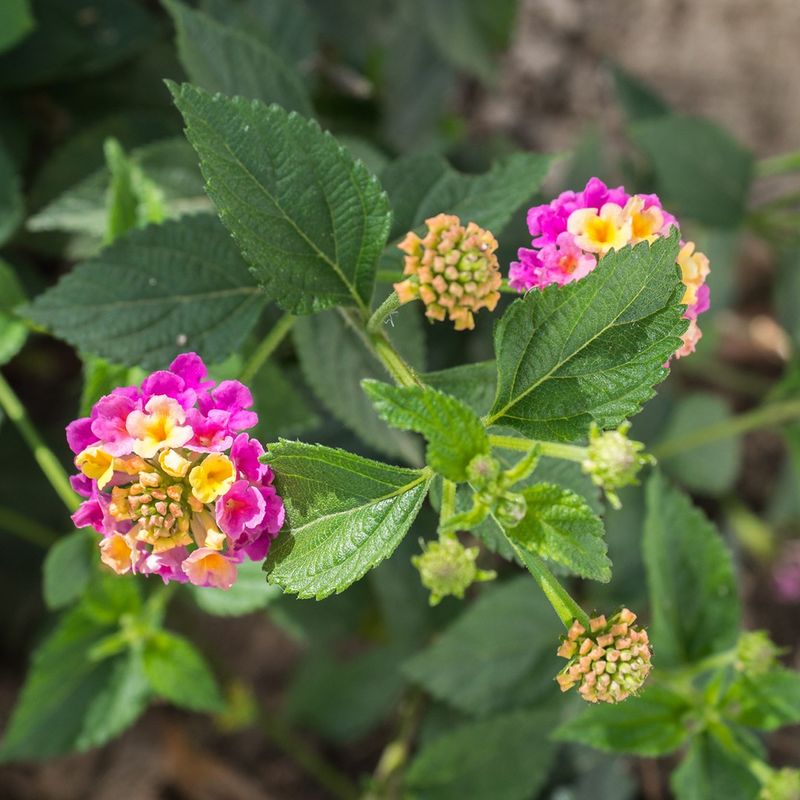
Texas is a large state, and the gap between a first freeze in the Panhandle and one along the Gulf Coast can span two months or more. Treating “late summer” as a single, safe trimming window for every Texas garden misses that variability entirely. The more reliable guide is your own local average first-freeze date, which you can find through your county extension office or local weather records.
Clemson Extension warns explicitly that hard fall pruning can reduce lantana’s cold hardiness, which is the strongest reason to keep any late-season cut light rather than aggressive. A tip-shear is less disruptive than a hard cutback, but the safest framing is still to trim during active summer growth, with enough time remaining in the season for new laterals to develop before cold weather arrives.
How much time is enough? The 2024 UC ANR study observed flowers appearing on new growth several weeks after pruning, but the study did not establish a precise maturation interval that applies universally across cultivars, climates, or late-summer Texas conditions. “Several weeks” is the honest working estimate, not a guaranteed timeline.
A light trim in late July or early August sits in a different risk category than a more aggressive cut in September or October, particularly in central or northern Texas where an early freeze is a realistic possibility. Texas A&M notes that Texas lantana can bloom from roughly April through October in many landscapes, which means the window for a rebloom response narrows as fall approaches. Trim while the plant is actively growing, keep the cut light, and let your local freeze calendar – not a generic Texas date – guide your timing.
Let berry production guide the deadheading decision
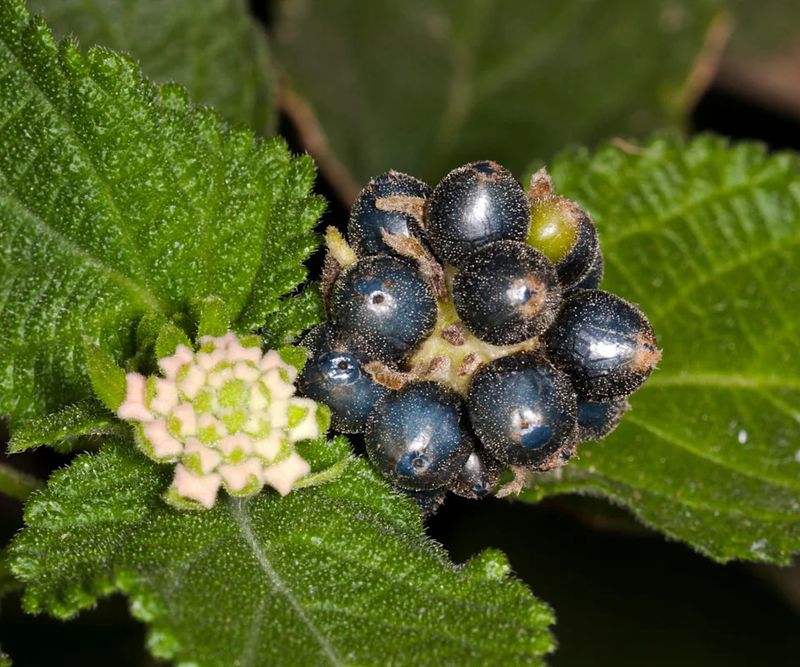
Deadheading gets recommended for many flowering plants, but lantana is a case where the answer depends heavily on what your specific plant is doing. Seed-setting lantanas divert significant energy into fruit and seed production after flowering, and that diversion can slow the development of new flower buds. For those plants, removing developing berries before they mature may do more to support continued flowering than pulling off every faded bloom cluster individually.
Texas A&M AgriLife Extension in Bexar County notes that berries on many lantanas should be removed before more flowers are produced, while sterile selections such as ‘New Gold’ do not form berries and therefore sidestep this issue entirely. University of Florida IFAS confirms that sterile or nearly sterile cultivars may flower more continuously because they are not redirecting resources into seed development.
University of Arkansas Cooperative Extension suggests that weekly deadheading is most likely to benefit lantanas that produce many seeds, while the response from nearly seedless cultivars may be minimal. That nuance is reinforced by K-State Extension guidance listing lantana among plants that generally do not require deadheading.
Before making berry removal a weekly routine, identify whether your plant is actually setting seed. If the fading flower clusters are not forming small green berries beneath them, the plant is likely sterile or nearly sterile, and your energy is better spent on light tip-shearing of long shoots rather than chasing spent blooms. If berries are forming, removing them while they are still small and green is the more targeted intervention for a seed-setting plant.
One firm caution regardless of cultivar: lantana berries – particularly unripe ones – are toxic. The ASPCA lists Lantana camara as toxic to dogs, cats, and horses, with potential gastrointestinal, neurologic, and liver-related effects. Handle and dispose of removed berries carefully, and keep children and pets away from plant material.
Give the plant the conditions that support reblooming
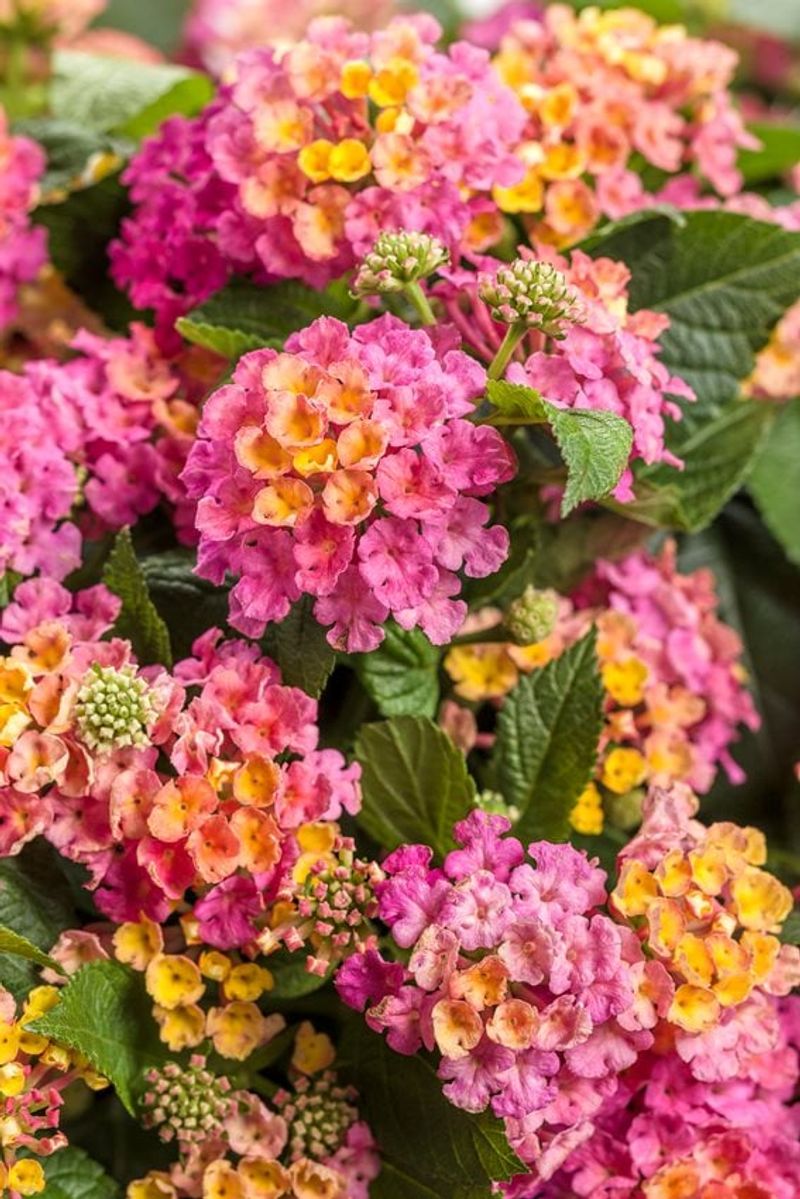
A light summer trim cannot compensate for a poorly sited plant. Before blaming pruning timing or technique for a lantana that refuses to rebloom, check the fundamentals: sunlight, drainage, water, and fertilizer. Each one can suppress flowering on its own, and more than one working against the plant at once will override whatever pruning you do.
Texas A&M AgriLife Extension recommends at least six hours of direct sun and excellent drainage as baseline requirements for lantana performance. Plants growing in heavy shade or compacted, poorly draining soil are working against their own biology, and no amount of trimming will restore the flowering that adequate sunlight enables. If the planting site receives significant afternoon shade from a structure or a maturing tree, the site itself may be the limiting factor.
Watering requires balance. Texas lantana is genuinely drought-tolerant once established, but prolonged extreme heat without any supplemental water can stress the plant and reduce bloom. UC IPM notes that excess water can damage lantana, which means keeping the soil wet in the name of summer care can cause more harm than a dry spell. A deep watering once a week during the worst of Texas summer heat – letting the soil dry between waterings – is a reasonable middle ground for most established plants.
Fertilizer is another place where more is not better. Clemson Extension warns that excessive fertilizer can actually reduce lantana flowering by pushing vegetative growth at the expense of blooms. A light application of a balanced fertilizer in spring is typically sufficient for established plants in reasonable soil. If the lantana is putting out lush green growth but few flowers during the summer, excess nitrogen is worth examining before reaching for the pruners or adding more fertilizer.
Check for lace bugs before pruning or spraying again
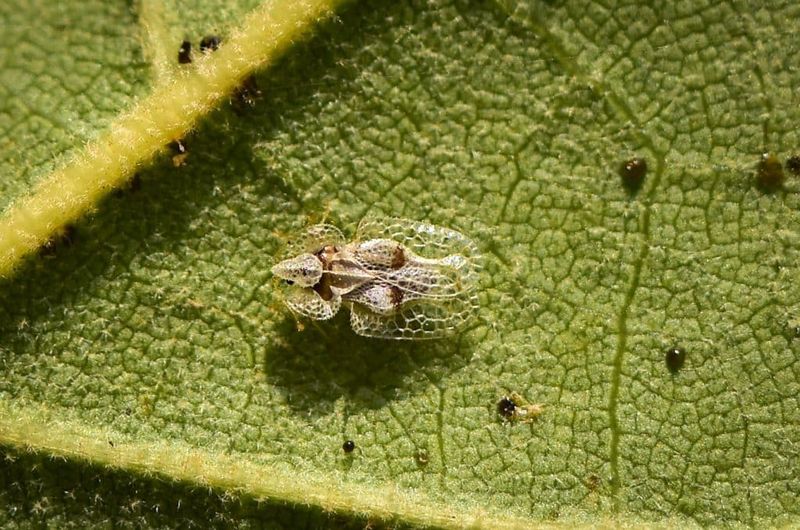
Bleached or bronzed foliage that appears despite adequate sun and water is not a pruning problem. Lantana lace bugs feed on the undersides of leaves, draining plant cells and leaving behind a characteristic stippled, washed-out appearance that can spread across much of the canopy. They also damage developing flower buds, and a heavy infestation can stop bloom production almost entirely on an otherwise healthy plant.
Before trimming again or adding fertilizer to a lantana that has gone quiet, flip a few leaves and inspect the undersides. University of Georgia Extension’s guide to lantana lace bug biology and management describes the insects as small, flattened, and lace-winged, often found clustered on leaf undersides along with dark excrement spots. Damaged leaves show pale stippling on the upper surface, which is often the first visible sign a gardener notices. Texas A&M AgriLife Landscape IPM identifies lantana lace bug as a recognized Texas ornamental pest, so this is not a rare or regional concern.
Confirming the pest before responding matters because the wrong response can create a new problem. Pruning away damaged foliage without addressing the insects leaves the population in place to move onto new growth. Adding fertilizer to a lace-bug-stressed plant pushes tender new growth that the insects will feed on readily.
When an infestation is confirmed, start with lower-impact measures. A firm spray of water directed at leaf undersides can dislodge populations, particularly early in an infestation. Natural predators including lacewings and lady beetles feed on lace bugs, so preserving beneficial insect habitat around the plant supports biological control over time. If a treatment product becomes necessary, apply it carefully and avoid spraying open flowers, since lantana is a significant pollinator plant and insecticides applied to blooms can harm butterflies and bees visiting the garden.
Expect a possible second flush, not nonstop flowers
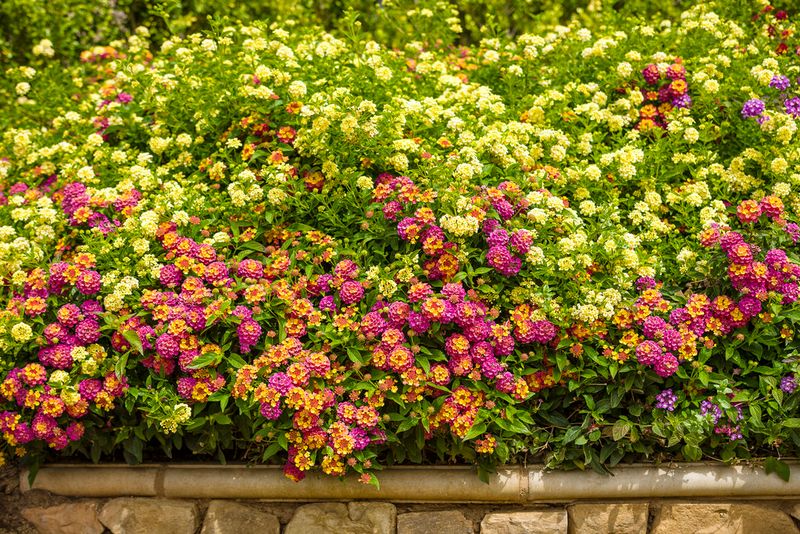
Realistic expectations make the difference between a gardening success and a disappointment. Texas SmartScape reports that Texas lantana blooms from roughly May through November in suitable landscapes, and Texas A&M AgriLife Extension describes the bloom window as April through October. That long natural season is the baseline – a healthy, well-sited lantana already has an impressive flowering range without any intervention.
A restrained summer tip-shear can encourage branching and contribute to a later flowering flush in suitable plants and conditions. The 2024 UC ANR study found increased lateral shoots and a later flowering response after tip removal in a cultivated lantana hybrid, which is useful evidence. What it does not establish is continuous bloom, a guaranteed result for every cultivar, or a universal outcome for late-summer Texas conditions. The response depends on species, cultivar, sunlight, water stress, plant health, seed production, pest pressure, and how much growing season remains before the local first freeze.
Trim lightly during active growth, protect the site conditions that support flowering, manage berries on seed-setting plants, and watch for lace bugs before assuming pruning or fertilizer is the answer. A second flush of flowers is a reasonable and attainable goal. The plants that deliver it most reliably are the ones grown in full sun, with good drainage, and handled with a light hand rather than a hard reset.