
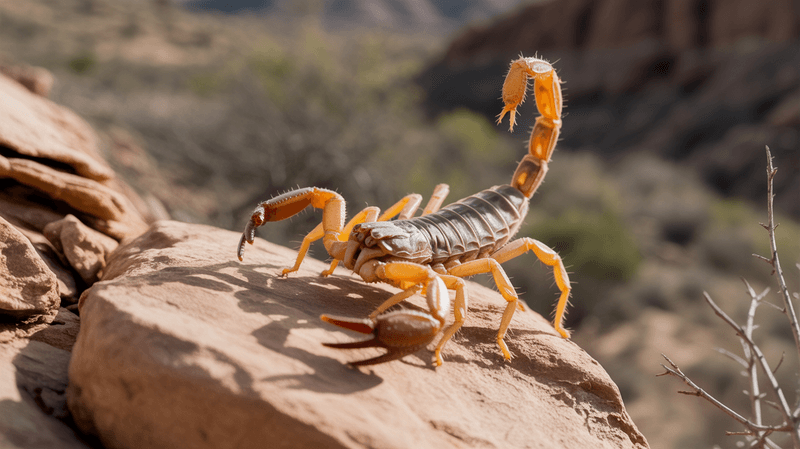
Scorpions have a way of showing up exactly where you don’t want them: on the back porch at night, just inside the garage door, or tucked into a shoe left by the back steps. Across parts of Texas in 2026, plenty of homeowners are noticing them and wondering if something has changed. The short answer is that the evidence doesn’t support a statewide scorpion boom, but it does help explain why encounters may feel more frequent in certain communities this summer. Understanding what’s actually driving those sightings makes it a lot easier to respond without overreacting.
Why encounters may be more noticeable in parts of Texas this summer
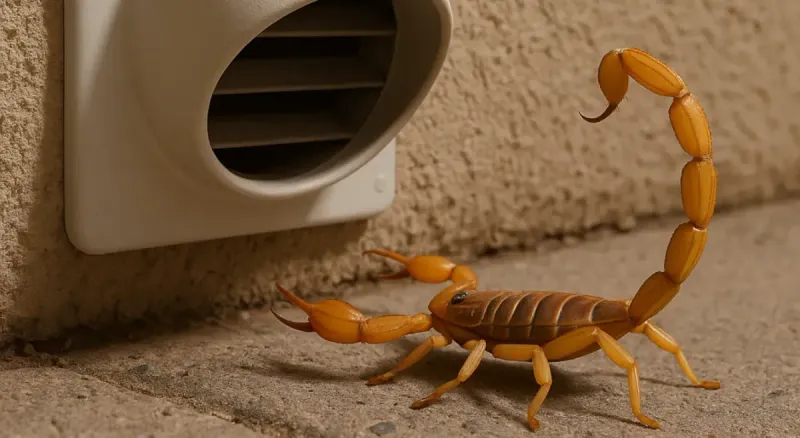
Before accepting the idea that Texas is in the middle of a scorpion surge, it helps to look at what the data actually show. No verified statewide comparison of scorpion sightings, pest-control service calls, trap counts, or poison-center exposures has been located for 2026. That means the claim that Texans are seeing “more scorpions than they have in years” is an editorial hypothesis, not a documented trend. What the available evidence does support is a more specific, regionally grounded explanation for why some homeowners may be noticing more encounters this summer.
On the weather side, NOAA’s June 2026 climate summary confirms that Texas recorded its warmest June average minimum temperature on record, reaching 71.9 degrees Fahrenheit. Warmer nights matter because scorpions are most active after dark, and higher overnight lows extend the window when they are moving around. Residents who step outside later in the evening or leave porch lights on may simply be crossing paths with animals that were always there.
The regional picture in June was not uniformly hot and dry, though. Parts of North and Central Texas received unusually heavy rainfall. The Dallas-Fort Worth area logged roughly 8.07 inches for the month, which is 150 to 300 percent of normal in some locations, according to National Weather Service drought and precipitation data for the region. Wet conditions can temporarily push scorpions out of saturated hiding places and into more visible spots near homes.
Looking ahead, the National Weather Service extended outlook for North and Central Texas forecasts above-normal temperatures and below-normal precipitation for July. That combination, heat without the relief of regular rain, may encourage scorpions to move toward shade, moisture, or structures as the summer progresses. Homeowners in Central Texas, the Hill Country, or the Dallas-Fort Worth corridor have reasonable cause to stay alert, but local conditions vary enough that no single explanation covers all of Texas equally.
How heat and nighttime behavior bring scorpions closer to homes
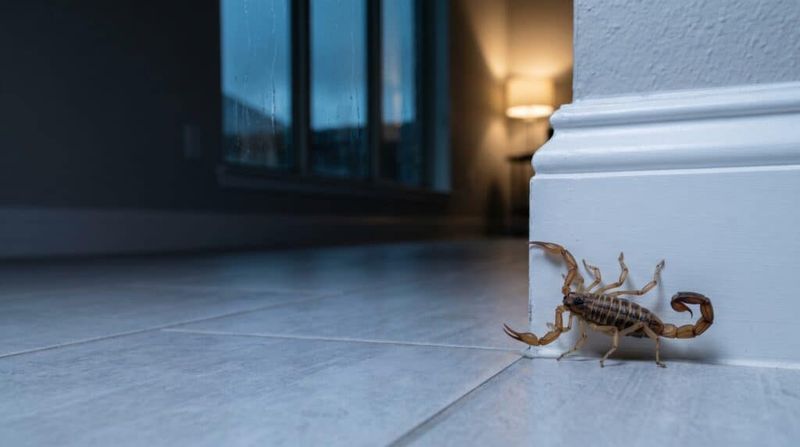
Scorpions are not random wanderers. They follow a predictable daily rhythm: hide during the heat of the day under rocks, boards, leaf piles, or debris, then emerge after dark to hunt. That nocturnal pattern means most homeowners never see them during daylight hours, even when scorpions are present in decent numbers around the yard. Nighttime sightings near porches, doorways, or garage entrances are consistent with ordinary scorpion behavior, not evidence that something unusual has changed.
Hot weather adds a layer to that pattern. Texas A&M entomologists have specifically linked hot, dry conditions to scorpions seeking water or more hospitable shelter, including movement into homes. Attics can become extremely hot during a Texas summer, and scorpions that have been living in wall voids or roof spaces may work their way downward into cooler living areas. A scorpion found in a bathroom or kitchen at night is often following a temperature or moisture gradient, not establishing a colony.
Wet weather introduces a different mechanism. Heavy June rainfall in parts of North and Central Texas may have temporarily displaced scorpions from ground-level hiding places that became saturated. When their usual shelter fills with water, scorpions move. That movement can bring them to the surface, onto sidewalks, or up against the foundation of a house, which is why some homeowners notice more activity shortly after heavy rain.
Neither rain nor heat alone causes scorpions to appear. What changes is where they show up and whether a person happens to be outside at the right moment to notice. CDC guidance on scorpions notes that they are active at night and rest under cover during the day, which is exactly the behavior that makes warm-weather encounters feel sudden even when scorpion numbers have not changed. The Texas A&M Extension entomology fact sheet on scorpions similarly describes how scorpions may enter living areas during hot weather, reinforcing that entry is behavioral rather than a sign of population growth.
The striped bark scorpion is widespread, but Texas species vary by region
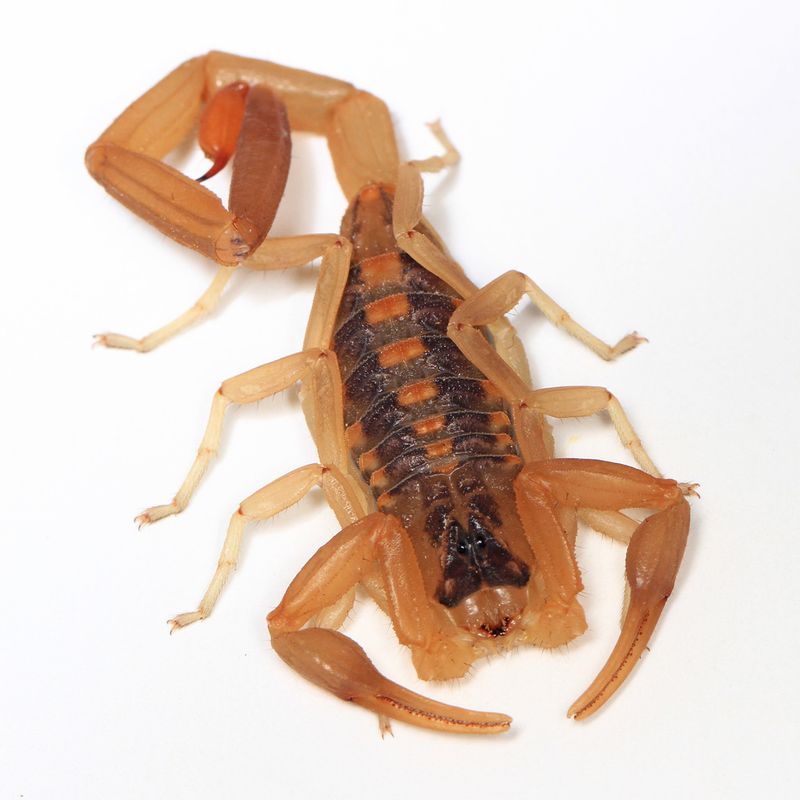
Texas has 18 documented scorpion species, and where you live in the state shapes which ones you are likely to encounter. Most of those species are concentrated in the Big Bend region of far West Texas, where rugged desert terrain supports a wide variety of arachnid life. According to Texas A&M AgriLife Extension’s guide to venomous terrestrial animals of Texas, the striped bark scorpion, Centruroides vittatus, is the species that occurs statewide and is the only scorpion reported in eastern Texas.
That statewide range makes the striped bark scorpion the animal most Texans outside the Big Bend area are likely to encounter around their homes. It is a pale yellowish-brown scorpion with two darker stripes running along the back, typically one to three inches long. Its habitat associations are broad: rocks, boards, fallen logs, dead vegetation, wood piles, walls, and tree bark all serve as daytime cover. Texas A&M Extension entomologists note that striped bark scorpions can climb walls and trees and may enter living areas during hot weather, including from overheated attics.
Homeowners in different parts of the state should be cautious about assuming they know exactly what species they are seeing based on location alone. A resident in Austin, Dallas-Fort Worth, or Houston is most likely dealing with a striped bark scorpion, but someone in the Hill Country, South Texas, or Big Bend may encounter other species with different behaviors and different habitats. Species identity matters when assessing risk, and no one should assume a scorpion is low-risk simply because it is common.
Texas A&M’s materials are clear that none of the state’s scorpion species are considered deadly in the way that the Arizona bark scorpion is, but that does not mean stings are trivial. Pain intensity, swelling, and individual sensitivity all vary, and a scorpion’s species alone does not determine how your body will respond.
What an indoor sighting does—and does not—tell you
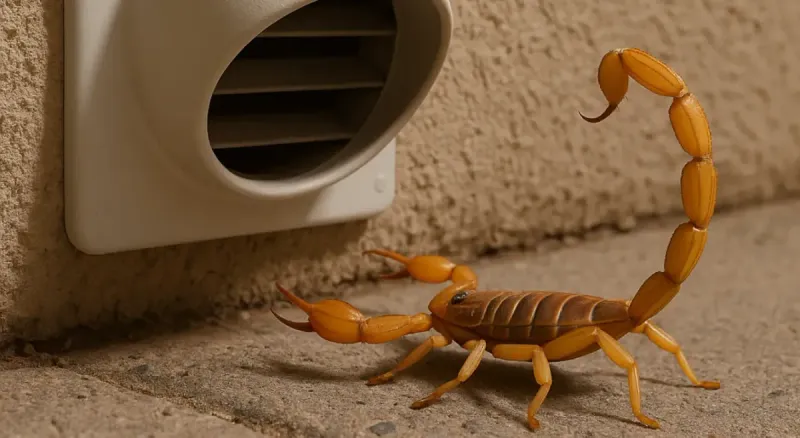
Finding a scorpion inside the house is unsettling, but one indoor sighting does not mean scorpions are breeding in your walls. Scorpions enter homes accidentally, moving through cracks in foundations, gaps around utility penetrations, spaces under doors, or poorly sealed thresholds. Once inside, they often end up in bathrooms, kitchens, or laundry areas because those spaces offer moisture. A single scorpion found in a hallway at midnight is most likely a transient visitor that squeezed through a gap, not a sign of an established indoor population.
Repeated sightings change that picture. If you are finding scorpions in multiple rooms, seeing juveniles, or noticing them over several consecutive nights, those patterns justify a closer look at the structure and the habitat immediately surrounding it. According to Texas A&M AgriLife Extension, scorpions enter through cracks and crevices, which means persistent indoor activity usually points to a gap or opening that has not been located and sealed.
A UV black light is a useful inspection tool. Scorpions fluoresce under ultraviolet light, which makes them much easier to spot at night on a porch, along a foundation wall, or inside a garage. Walking the perimeter of your home after dark with a black light can reveal how many scorpions are active nearby and help you identify the spots where they are congregating. Utah State University Extension’s scorpion guidance describes black-light inspection as a practical method for locating scorpions, while noting that it cannot guarantee that every scorpion on a property has been found.
Think of a black-light sweep as a starting point for inspection, not a final audit. If you find several scorpions clustered near a woodpile, a stacked stone border, or a gap under a door, you have identified a priority area for habitat cleanup and exclusion work.
Reduce entry by sealing gaps and removing nearby hiding places
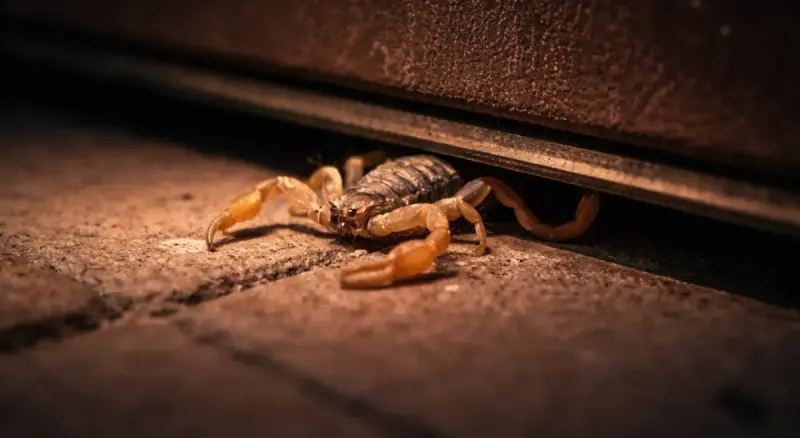
Keeping scorpions out of a home starts with two parallel tasks: closing the openings they use to get in and removing the outdoor cover that attracts them close to the structure in the first place. Neither step alone is fully effective, but together they make a home substantially less hospitable to scorpions looking for shelter during hot weather.
On the exclusion side, work systematically around the building. Seal cracks and crevices in the foundation, around window frames, along door thresholds, and wherever pipes, conduits, or cables enter the structure. Repair or replace worn door sweeps and damaged weather stripping, paying particular attention to garage doors, which often have gaps large enough for a scorpion to pass through. Utah State University Extension’s scorpion management guidance identifies exclusion as a primary control strategy, emphasizing gaps around utility penetrations and ground-level openings as the most common entry points.
Habitat cleanup around the yard addresses the other half of the problem. Move firewood away from the house and bring in only what you plan to use right away. Remove stacked boards, old landscaping timbers, excess leaf litter, and any debris piled against or near the foundation. Trim back low-growing vegetation and ground cover close to the structure, since dense plantings give scorpions daytime cover just steps from your door.
Texas A&M AgriLife Extension lists removal of harborage sites as one of the most effective steps homeowners can take to reduce scorpion activity around buildings.
Personal habits matter too. Wear gloves and boots when moving wood, debris, or stacked materials where scorpions might be hiding. Shake out shoes, boots, and clothing before putting them on, especially if they have been left on a porch or in a garage overnight. CDC guidance on scorpions specifically recommends checking shoes and clothing as a routine precaution in areas where scorpions are active.
These steps reduce the chance of accidental contact without requiring any chemical treatment at all. No exclusion plan eliminates outdoor scorpion populations entirely, but a well-sealed, debris-free home gives them fewer reasons to come close.
Respond to a sting with basic first aid and clear escalation rules

Getting stung by a scorpion is painful, but the response does not have to be panicked. Texas A&M Extension entomologists describe Texas scorpion stings as usually producing moderate reactions, with sharp immediate pain and localized swelling being the most common outcomes. That said, severity is not uniform. The species involved, the amount of venom delivered, the location of the sting, and the individual person’s response all influence how bad a sting feels and how long it lasts.
For most adults stung by a scorpion in Texas, the immediate steps are straightforward. Wash the sting site with soap and water, then apply a cool compress or an ice pack wrapped in a cloth. Do not immerse the affected area in ice water, and avoid cutting the skin or attempting to suck out venom, since those actions cause additional harm without helping. Stay as calm as possible, because elevated heart rate can spread venom more quickly through the body.
Then contact a healthcare provider or call the Texas Poison Center Network at 1-800-222-1222 for guidance specific to your situation.
Some symptoms require emergency medical attention without delay. Seek emergency help if the person stung experiences trouble breathing, a widespread rash, uncontrolled muscle twitching, slurred speech, drooling, staggering, or other serious neurologic signs. CDC guidance on scorpion stings identifies these as warning signs that go beyond a typical local reaction and require professional medical evaluation right away.
Children and people with known sensitivities or underlying health conditions warrant extra caution. A child stung by a scorpion should be evaluated by a medical professional even if symptoms appear mild at first, because reactions can escalate faster in smaller bodies. Do not wait for severe symptoms to develop before making that call. The poison center line is free, available around the clock, and staffed by specialists who can help you decide whether a clinic visit or emergency room is the right next step.
Choose habitat changes before panic spraying
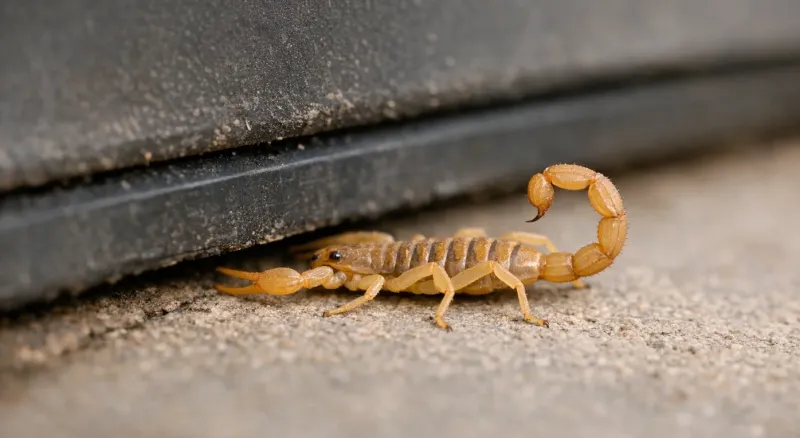
A scorpion on the back porch does not automatically call for a can of pesticide. Scorpions are predators that feed on crickets, cockroaches, beetles, and other arthropods, which means they play a functional role in the yard’s food web. Reaching for a spray bottle as a first response can also miss the point: if a scorpion got inside or came close to the house, the more useful question is how and where, not just what to kill.
Exclusion, habitat cleanup, and careful nighttime awareness address the root causes. Sealing entry points, removing harborage near the foundation, and inspecting with a black light give you real information about where scorpions are active and why. Utah State University Extension’s scorpion management research presents exclusion and harborage removal as the most defensible first-line measures, noting that scorpions’ ecological role means chemical treatment is not automatically warranted for every sighting.
If you decide pesticides are appropriate after those steps have been taken, use only products registered for the intended site and target pest, and follow the label exactly. The label is a legal document: the EPA explains that using a pesticide inconsistently with its label violates federal law. Keep children and pets away from treated areas for the time specified on the label, and do not apply products to surfaces or spaces not listed in the directions. For persistent problems, a licensed pest-control professional can assess the specific conditions around your home and recommend targeted treatment rather than broad spraying.
EPA’s consumer guidance on pesticide labels reinforces that reading and following label instructions is the baseline for any safe application.
Warm nights and shifting weather patterns in parts of Texas may make scorpion encounters more noticeable in certain communities during the summer of 2026, but local sightings do not add up to a statewide invasion. The most useful response is a practical one: close the gaps, clear the cover, and know what to do if a sting happens.