
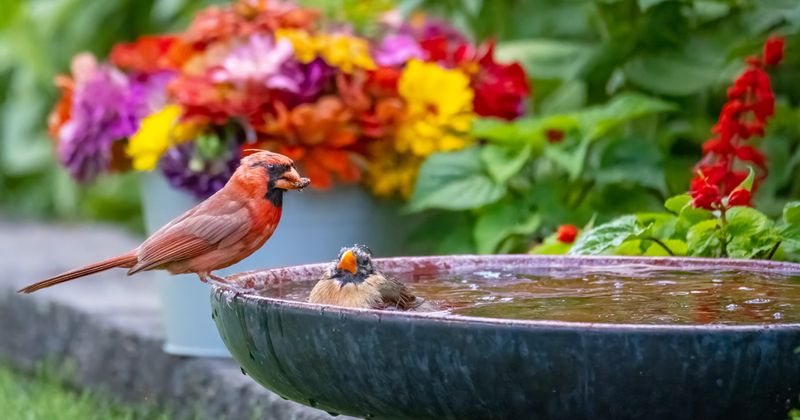
When temperatures push past 100 degrees in Texas, the birds visiting your yard face real challenges finding water and shade. A mourning dove perched on a fence or a Carolina wren hopping through the garden is counting on whatever resources your yard can offer. Small, practical changes to how you set up your outdoor space can make it a more useful stop for birds riding out the heat. No single action is a guaranteed fix, but a clean water source, some shade, and good maintenance go a long way toward making your yard a better place for birds on the hottest days of the year.
What extreme Texas heat can mean for birds
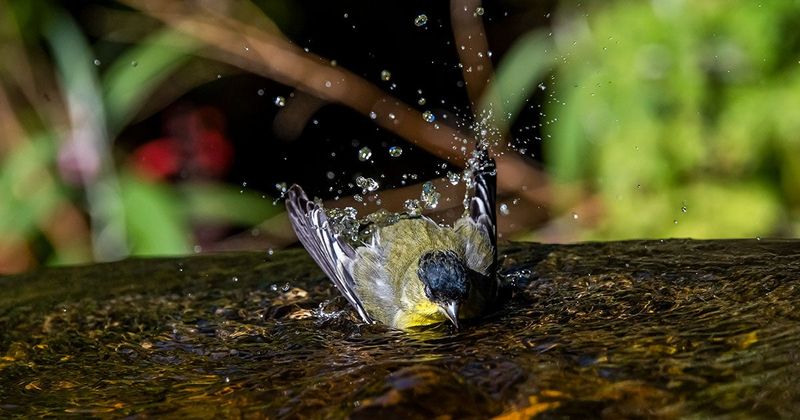
Texas summers are hard on almost everything, and birds are no exception. When temperatures climb into the triple digits, some birds face a serious challenge: keeping their bodies cool and hydrated at the same time. Birds lose water through evaporative cooling, the same basic process that makes sweating work for people, and if they cannot replace that water fast enough, heat stress becomes a real problem.
The risk is not uniform across all species, though. Research on southwestern desert passerines found that smaller birds face higher rates of mass-specific water loss and may approach lethal dehydration thresholds during extreme heat faster than larger birds. That research focused on specific desert species, not on every bird that visits a Texas backyard, and it did not test birdbaths or other household interventions. Heat tolerance also varies with species, body size, how well a bird has acclimated to local conditions, humidity, wind, and access to food and water.
A painted bunting in the Hill Country and a great blue heron along the Gulf Coast face very different conditions even on the same day.
What the research does tell us is that water and thermal refuge matter, especially for smaller birds during the worst heat. Texas Parks and Wildlife Department identifies water, habitat, food, and shelter as critical resources for birds in the state’s hot, dry climate. Providing any of those in your yard can offer short-term support to individual birds passing through or nesting nearby. That is a meaningful contribution, even if one backyard cannot reverse broader bird population trends or guarantee that every bird makes it through a scorcher.
Provide a clean, shallow water source
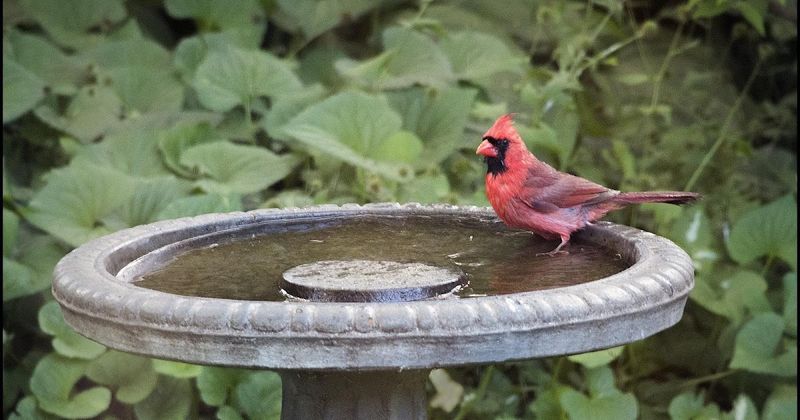
A birdbath does not need to be fancy to be useful. What birds actually need is water that is shallow enough to wade in safely, clean enough to drink, and stable enough to stand in without slipping. Cornell Lab of Ornithology recommends a basin with water no deeper than about 1 inch at the edges and roughly 2 inches at the deepest point in the middle, with gently sloping sides that let birds walk in gradually rather than drop into deep water. Texas Wildscapes guidance echoes this, describing a puddle-like container as ideal.
Adding a flat stone or a sturdy branch inside the basin gives birds a secure place to stand while they assess the depth and keep their footing. Ornamental birdbaths with steep, smooth sides are harder for small birds to use safely, so if yours is slippery, a rough stone or a piece of textured bark placed inside can solve the problem quickly. The goal is a setup that works for a Carolina chickadee just as well as for a larger bird like a white-winged dove.
One thing worth keeping in mind: not every bird depends on a backyard birdbath. Some species get much of their water from the insects and fruit they eat, and others find natural water sources like stock tanks, drainage areas, or creek banks. A birdbath is a useful supplement, and it can attract birds that never visit seed feeders, but it is not a universal requirement that every bird in your yard is waiting on. Think of it as broadening the range of birds your yard can support on a brutal afternoon, rather than as a solution that covers every species.
Plain water is all you need. Do not add bleach, glycerin, essential oils, sugar, or any other substance to the basin. Cornell specifically warns that antifreeze is poisonous to birds and that glycerin can mat feathers; clean, additive-free water is both the safest and most effective choice.
Place the bath for shade and visibility
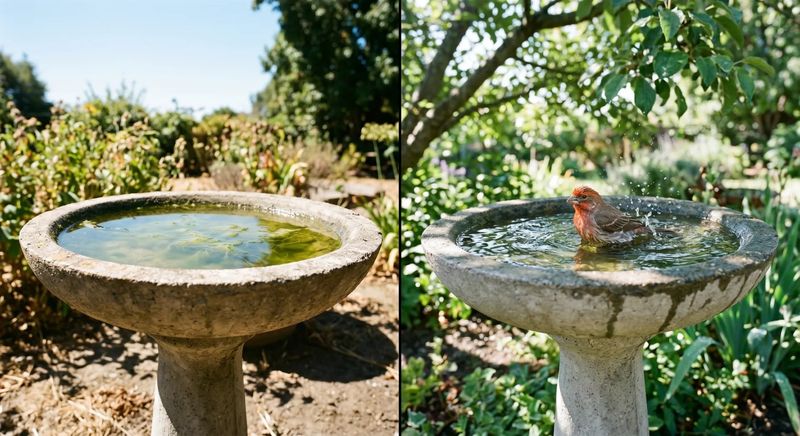
Where you put the birdbath matters almost as much as what you put in it. On a 105-degree afternoon, water sitting in full sun heats up fast and evaporates even faster. Positioning the basin under an established tree, near a shrub line, or beneath a porch overhang keeps the water cooler longer and gives arriving birds a shaded spot to approach from. A nearby branch or fence rail at a moderate height also gives birds a place to perch, preen, and dry off after bathing, which is part of why they visit in the first place.
Cornell Lab recommends keeping open ground between the water source and any dense cover so birds can see cats and other predators approaching before they are in danger. This is an important safety detail that sometimes gets overlooked. While it might seem logical to tuck a birdbath deep into a shrub border for shade, dense vegetation right at the water’s edge can also conceal a cat waiting to ambush a bird that is wet, temporarily grounded, and distracted. The safer arrangement is shade overhead and nearby perches for lookout, with a few feet of open, visible ground immediately around the basin.
Keeping cats indoors is one of the most direct steps any household can take to protect bathing birds. Outdoor and free-roaming cats are among the leading sources of bird mortality in North America, and a bird that has just bathed and is drying off on a low branch is particularly exposed. If your neighbors have outdoor cats, placing the bath a bit higher off the ground, on a pedestal or a sturdy post, adds an extra layer of protection without sacrificing the shade and sightline benefits.
Make maintenance part of the intervention
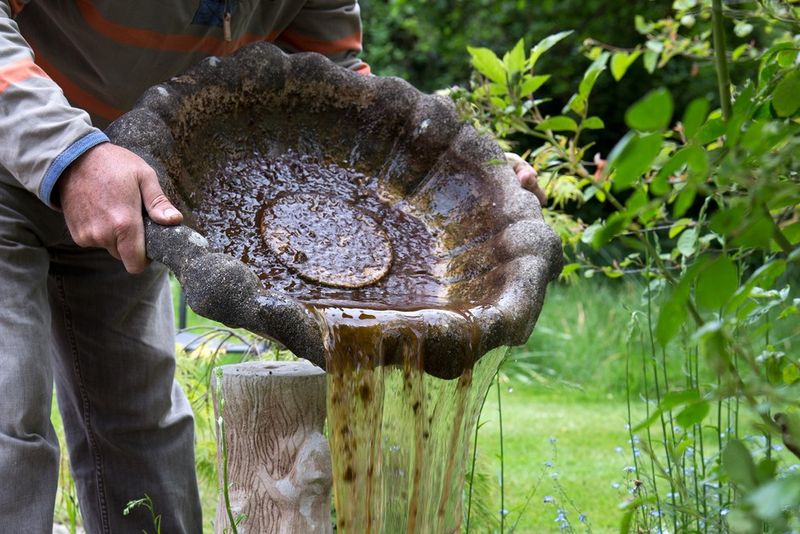
Putting out a birdbath and walking away is not the plan. Maintenance is the part that makes the water actually safe and useful, and during a Texas heat wave, the schedule needs to be tighter than it would be in cooler weather. Bird droppings, dirty feathers, algae, and airborne debris can foul the water quickly, especially when temperatures are high and birds are visiting more often.
Cornell Lab recommends changing birdbath water every day or two, and during triple-digit heat, refreshing it daily is the more practical target. If the water looks or smells fouled before that, empty and refill it sooner. Do not just top it off. Dump it out, give the basin a quick rinse, and refill with clean water.
This keeps the bath useful and reduces the conditions that allow algae to develop on the basin surface.
Beyond daily refreshing, the basin itself needs regular scrubbing. Texas Parks and Wildlife notes that water features need regular cleaning to limit algae and mosquitoes. CDC guidance recommends emptying and scrubbing water-holding containers at least once a week to remove mosquito eggs and larvae that can accumulate on the basin walls and floor. Scrub sooner if the water is visibly dirty or if you can see any larval activity.
A stiff brush and plain water are enough; you do not need soap or disinfectants, which can leave residue that is harmful to birds.
To be clear about what cleaning does and does not accomplish: emptying and scrubbing the basin regularly reduces conditions that favor mosquito breeding, which is a genuine public health benefit. It does not eliminate all mosquito-borne disease risk, and the reviewed sources do not establish that a neglected birdbath directly transmits disease among birds. Treat maintenance as a core part of running a birdbath responsibly, not as a chore you can skip when the week gets busy.
Use established shade and regional native habitat
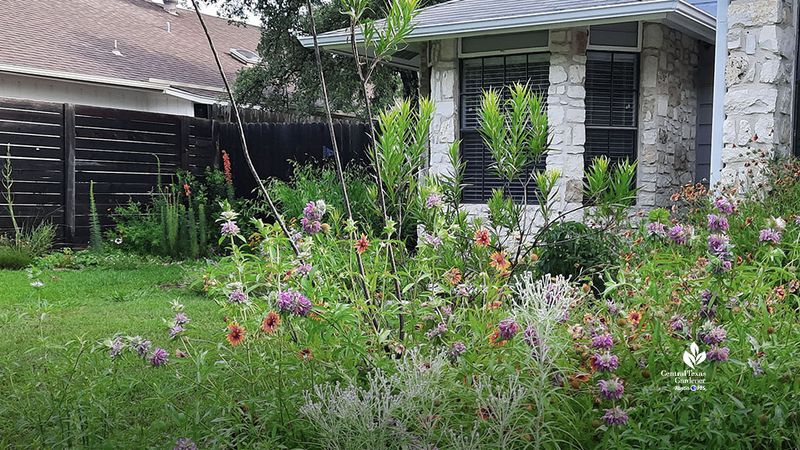
Shade from an established tree does something no birdbath can fully replicate: it lowers the ambient temperature in a small area, gives birds a place to rest and hide, and supports the insects and plant material that make up a large part of what most birds actually eat. During a heat wave, your existing trees and shrubs are already doing that work. The best move right now is to protect and appreciate what is already there rather than planning a new planting project.
USGS research on a desert grassland bird found that shrubs were used as thermal refugia during high temperatures, meaning birds actively sought out dense vegetation to escape heat. That finding comes from one study of one species in a desert grassland setting, so it should not be extended to every bird in every Texas yard. Still, it fits a broader pattern: layered vegetation with canopy, shrub, and ground cover layers creates more options for birds to move up or down depending on temperature, wind, and predator pressure.
Texas Parks and Wildlife recommends native trees, shrubs, grasses, and groundcovers because they provide food, insects, shelter, and cooler refuge while generally being better adapted to local soils and climate than non-native species. Native plants tend to need less supplemental water once established, which matters during a drought or when local water restrictions are in effect. But “once established” is an important qualifier. A newly planted shrub or tree needs regular water to get through its first year or two, and it will not provide meaningful shade or cover during the current heat event.
TPWD notes that trees generally require more water to establish than shrubs and recommends fall as the best planting season in most parts of Texas.
Texas is too ecologically varied for a single plant list to work statewide. A plant that thrives in the sandy soils of East Texas may struggle in the alkaline limestone of the Hill Country, and a South Texas native may not survive a North Texas freeze. TPWD provides separate regional Wildscapes plant lists that match species to local conditions. Using the list for your specific region gives you plants that are more likely to establish successfully and support the birds that actually live in your part of the state.
Treat feeders as supplemental support
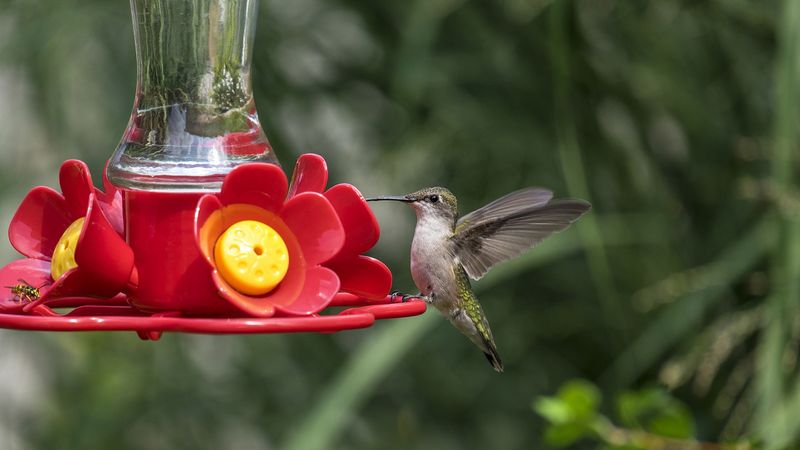
Feeders get a lot of attention in backyard birding, but during a heat wave, natural habitat does the heavier lifting. Texas Parks and Wildlife is direct on this point: feeders can supplement natural food sources but should not be the sole food source for birds. Native plants supply seeds, fruit, nectar, and the insects that many birds feed their nestlings, none of which a feeder can fully replace. If you have feeders, keep them as a bonus layer rather than the centerpiece of your bird support strategy.
That said, a well-maintained seed feeder can attract birds that might not otherwise stop in your yard. The key phrase is “well-maintained.” Cornell Lab recommends cleaning seed feeders about every two weeks under normal conditions, and more often during heavy use, wet weather, or if you notice birds that look sick or lethargic. Moldy seed, wet hulls packed at the bottom of a tube feeder, and accumulated droppings on perches and ports can spread disease among visiting birds and attract rodents. Dump old seed, scrub the feeder with a bottle brush, rinse thoroughly, and let it dry before refilling.
If the heat is making seed go rancid faster than usual, shorten your cleaning interval accordingly.
Hummingbird feeders need even more attention in hot weather. The sugar water inside can ferment and grow mold within a day or two when temperatures are high, and spoiled nectar is harmful to hummingbirds. Audubon recommends emptying and cleaning hummingbird feeders every day or every other day during hot weather, not every three to five days as might be fine in cooler months. Use plain refined white sugar mixed at a ratio of one part sugar to four parts water.
Do not use honey, brown sugar, artificial sweeteners, or red dye. If you cannot commit to cleaning a hummingbird feeder that frequently during a heat wave, it is better to take it down temporarily than to leave spoiled nectar in place.
Follow a realistic heat-wave routine
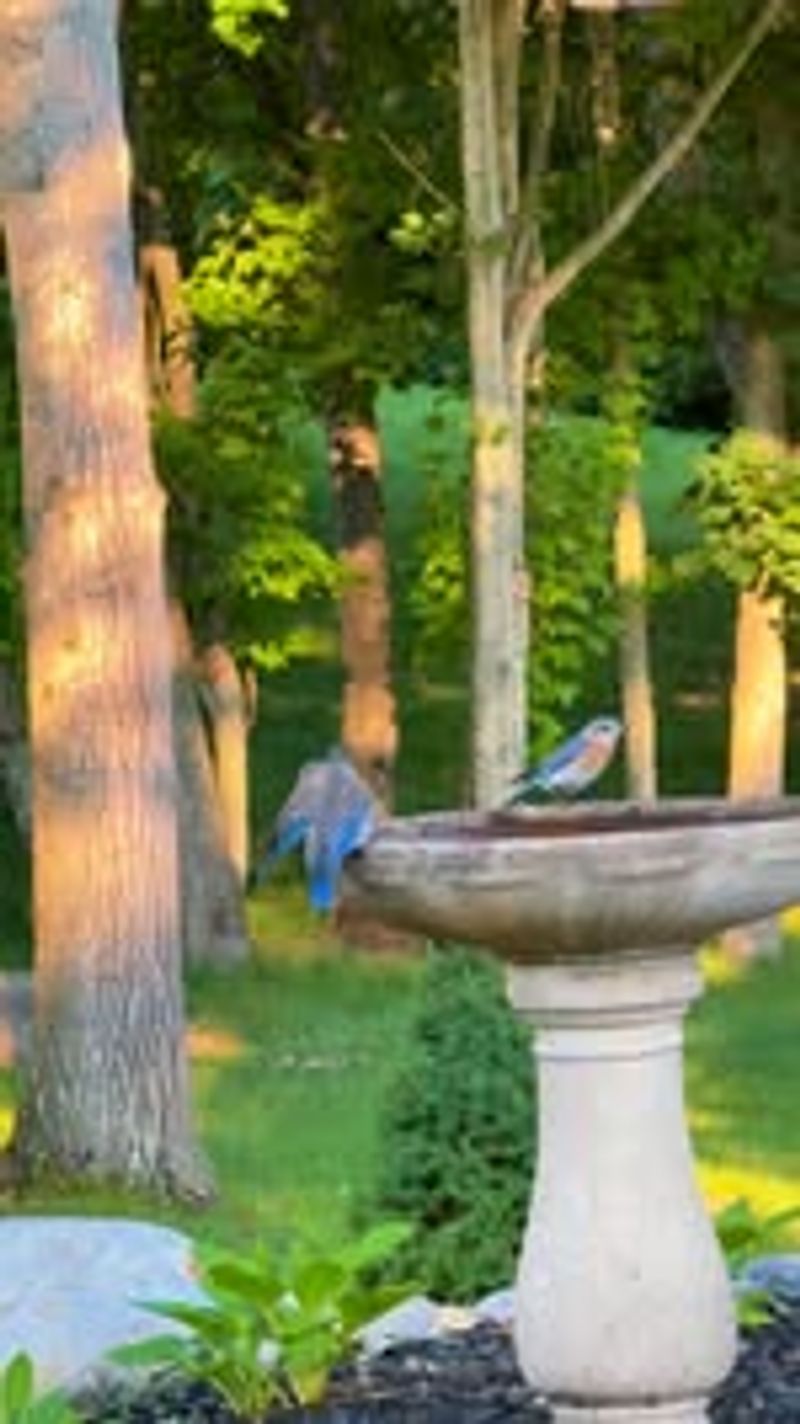
Pulling all of this together into a daily routine is simpler than it sounds. Start with the birdbath: check it each morning, dump and refill with fresh water, and give the basin a quick rinse if it looks cloudy or dirty. Scrub it thoroughly at least once a week. Position it in shade with a few feet of open, visible ground around it, and keep cats indoors if at all possible.
Cornell Lab notes that drippers, bubblers, and gentle misters can attract additional birds by making the water more visible and audible, but treat those as optional additions rather than necessities. Moving water uses more of it, so check whether your municipality has water restrictions in effect before running a dripper or mister during a drought.
Beyond the water, protect the shade and vegetation you already have. Avoid heavy pruning during the heat wave, which removes cover that birds are actively using. If you plan to add native plants, TPWD recommends fall as the best planting season for most of Texas, when cooler temperatures give new plants a better chance to establish before summer returns. If you run feeders, keep them clean and skip them temporarily rather than leave spoiled seed or nectar out.
Texas Parks and Wildlife frames these steps as part of a broader commitment to habitat: water, food, shelter, and connectivity across the landscape all matter for birds over the long term. A well-tended yard can be a useful short-term refuge during a heat wave, but the birds that visit it are also shaped by what surrounds your property for miles in every direction. What you do at home is a real contribution, even if it is one piece of a much larger picture.