
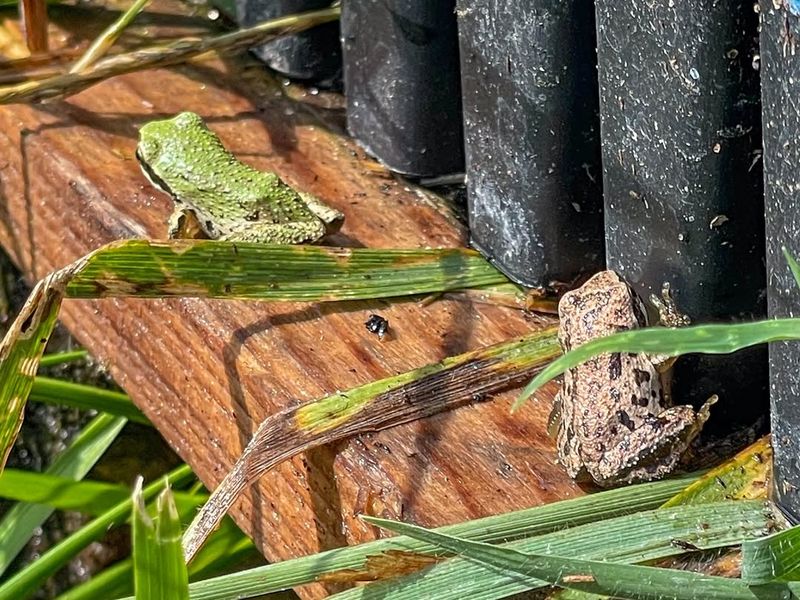
Finding a small frog clinging to a plant stem or tucked under a pot in your California garden is one of those moments that stops you in your tracks. Most gardeners assume it means something good, and in some ways it does, but the full story is a little more nuanced than a simple stamp of approval. Knowing what that frog is actually telling you, and what it is not, can help you make smarter choices about water, plants, and wildlife in your own backyard.
A California “tree frog” may be a chorus frog
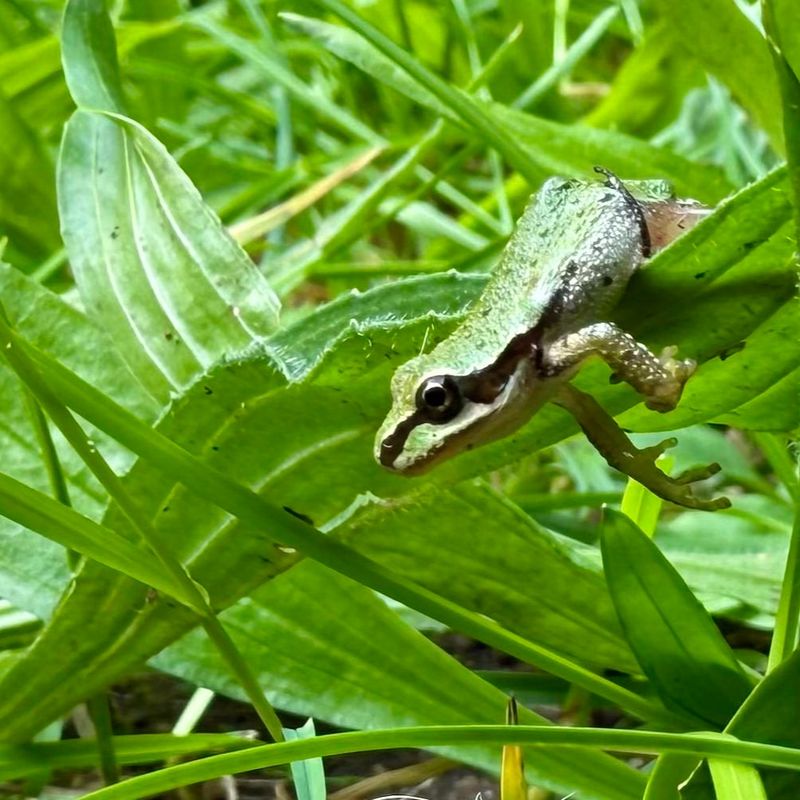
“Tree frog” is a common name, not a species label, and that distinction matters before you draw any conclusions about your garden. Several small frogs in California have been called tree frogs over the years, and the name gets applied casually to any small frog found climbing vegetation. The frog you spotted may or may not belong to the group that name technically describes.
In many parts of California, the most likely candidate is the Pacific chorus frog, Pseudacris regilla. National Park Service field notes on the species explain that it was historically called the Pacific tree frog, which is exactly why the two names get tangled together in everyday conversation. The species is widespread across the state, turns up in residential areas, and is small enough that a quick glance might not reveal much beyond “small frog, possibly climbing something.”
California’s frog taxonomy has also shifted over the years. California Herps, a reference for the state’s reptiles and amphibians, notes regional variation within what has been called Pseudacris regilla, and California Department of Fish and Wildlife documents reflect ongoing updates to how these populations are classified. What counts as a single species or a regional form can depend on which authority you consult and when.
A confident identification from a photograph or a brief sighting requires more than a general impression. Useful diagnostic features include the dark eye stripe running from the snout back past the eye, the small adhesive toe pads, and body size, but location also matters because different regions of California host different species or forms. Without those details, “Pacific chorus frog” is a reasonable possibility in many parts of the state, not a certainty.
What the sighting may suggest about your yard and its surroundings
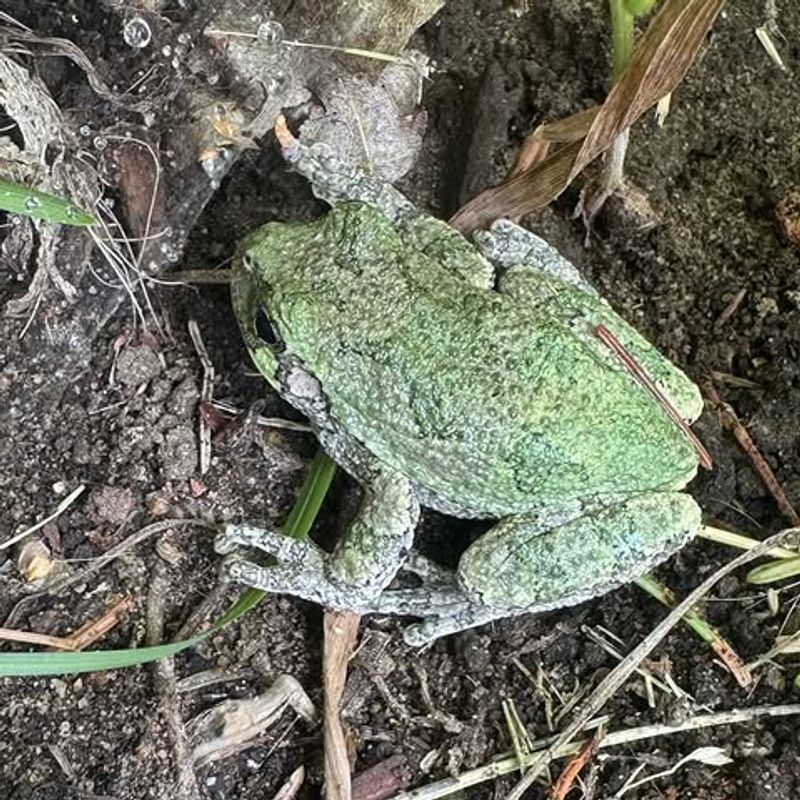
A frog turning up in your garden is genuinely encouraging, but the calibrated reading of that moment is more specific than “my yard is thriving.” What the sighting may suggest is that the frog recently found some combination of usable moisture, sheltered ground, and accessible prey, either in your yard or close enough to it that moving there made sense. The National Park Service describes amphibians as sensitive indicators of environmental conditions, which is part of why a sighting feels meaningful. The catch is that a single frog cannot tell you which specific conditions triggered the visit or where those conditions actually came from.
Adults can travel away from breeding water and spend time in surrounding upland vegetation, so the frog may have walked in from a nearby creek, seasonal pool, pond, or even a neighbor’s irrigated garden. Animal Diversity Web’s account of Pseudacris regilla confirms that adults use surrounding terrestrial habitats after breeding season, which means your yard may be a rest stop rather than a home base. Recent rain, a leaking irrigation line, or a shaded patch of damp mulch could have made the spot temporarily attractive without representing a lasting habitat feature you created.
Terrestrial insects and other invertebrates also factor in. If your garden supports beetles, moths, crickets, or other small prey, that is an additional draw, but the frog’s presence does not prove that your yard produced those prey animals in meaningful numbers either.
What the sighting does not establish is equally worth naming. One frog does not certify that your yard is ecologically healthy, pesticide-free, native-plant-rich, or supporting a stable local population. Frogs can appear in landscapes that are partially degraded or chemically altered while still facing real risks. Treat the visit as a positive signal worth building on, not as a clean bill of health for everything you have done so far.
A garden visitor does not establish breeding
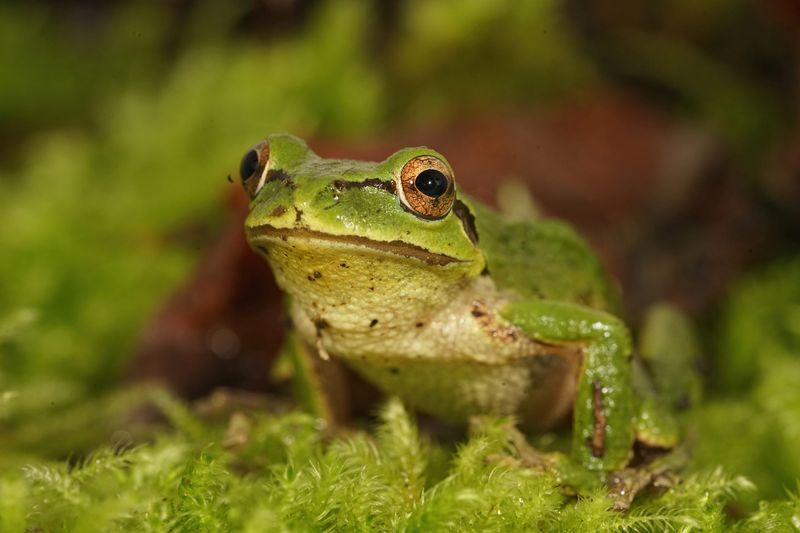
Seeing a frog in the garden and hearing frogs calling at night are two different things, and both are different from knowing that breeding has actually taken place. Adult Pacific chorus frogs move through upland vegetation, forage in gardens, and take shelter under debris or low plants well away from any water. NPS notes on the species describe adults using surrounding terrestrial habitat outside the breeding season, so a frog resting near your raised beds may simply be hunting or waiting out the heat.
Repeated calling from or near shallow water is a sign of reproductive activity or a possible breeding attempt, but calling by itself does not confirm that eggs were laid or that any tadpoles will survive. The species account at Animal Diversity Web notes that Pacific chorus frogs breed in shallow freshwater bodies including ponds, slow-moving streams, and seasonal pools. Eggs or tadpoles in that water are the clearest evidence that reproduction has occurred. Newly metamorphosed frogs, tiny and fully formed, provide stronger evidence still that development ran its full course in that location.
Rain and irrigation complicate the picture. A wet night or a recently watered corner of the garden can improve conditions just enough to coax a frog out of hiding or in from a nearby area, without representing anything durable. USGS research on amphibian communities during catastrophic drought in California found that pond drying is linked to reduced breeding activity and that permanent water improves population persistence through dry periods. Temporary moisture from a single irrigation cycle or a brief rain event does not replicate that kind of stability.
The practical upshot is that adult presence, calling, eggs, tadpoles, and newly metamorphosed frogs each tell you something different. Moving through each stage of that sequence takes time, suitable water, and conditions that last longer than a single wet week.
Create a small, protected habitat pocket without soaking the yard
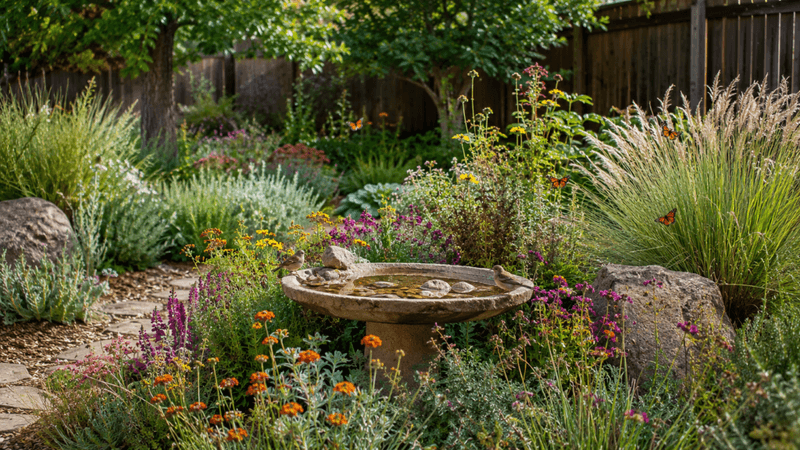
Supporting frog-friendly conditions in a California garden does not mean turning the whole yard into a bog. The better goal is a localized habitat pocket: a shaded corner or edge planting where moisture, cover, and prey can concentrate without overwhelming the rest of the landscape. UC Cooperative Extension guidance on California native plant care is clear that many natives are adapted to dry summers and do not tolerate persistent saturation around their roots. Keeping drought-adapted plants wet through the summer can harm them, so any wetter zone should be planned and bounded.
Useful cover elements include flat rocks, logs, leaf litter, brush, and low-growing vegetation near the edges of a water feature or a shaded bed. UC Cooperative Extension wildlife habitat guidance identifies water, natural shelter, and native plants as useful components for a wildlife-supporting garden, though the same guidance applies to a broad range of species rather than chorus frogs specifically. Think of those elements as creating usable microhabitat, not as a guaranteed frog magnet.
California Department of Water Resources plant and landscape guidance recommends choosing locally appropriate, low-water plants and grouping them by water need so that irrigated zones stay contained. Applying that logic to a habitat pocket means placing any moister planting away from drought-adapted areas and using drip or targeted irrigation rather than overhead spray that wets large areas indiscriminately.
Repairing leaking irrigation lines is worth doing for water conservation reasons, but a slow drip near a shaded rock or log can also create a small, low-maintenance moist patch that frogs may use. UC’s certified pollinator garden resources and UC Master Gardener native gardening guidance both support the broader principle that native plants, varied structure, and reduced chemical inputs benefit multiple wildlife groups at once. No single plant choice or garden style guarantees that frogs will arrive or stay, but creating usable structure while keeping the rest of the yard water-wise is a reasonable and regionally appropriate approach.
Protect the habitat from pesticides and introduced predators
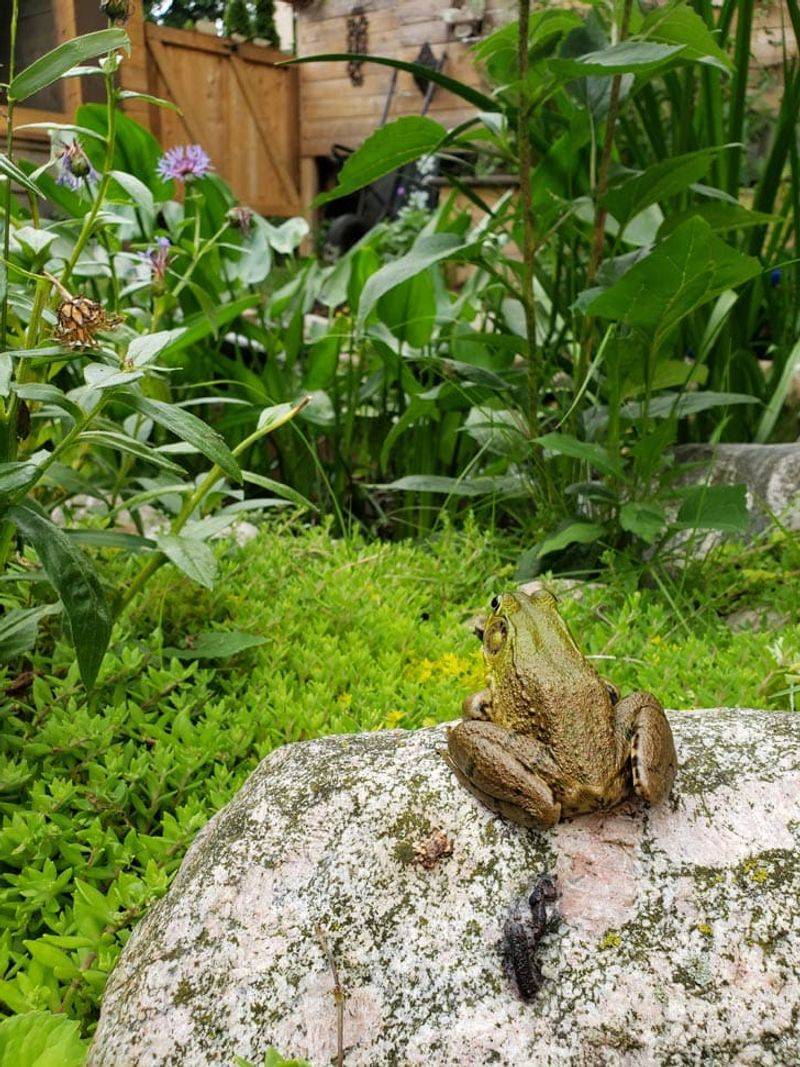
Frogs absorb what is in their environment through permeable skin, which makes the area around any moist habitat pocket worth thinking about carefully. USGS research documenting pesticides in amphibians from remote areas of California shows that chemical exposure reaches frogs even in locations far from direct application. That finding is a reason to reduce pesticide use near frog habitat, not proof that every labeled garden product will kill a frog outright, but it does suggest that the margin is narrower than most gardeners assume.
Two peer-reviewed studies add detail to that picture. One published study on amphibian pesticide exposure and a second examining toxicity and uptake through skin contact both document that amphibians can absorb pesticides through their environment. The practical guidance is to avoid spraying directly over frogs, wet soil, ponds, or areas where frogs are likely to forage, and to reconsider routine broadcast applications near any habitat you are trying to support.
Frogs do eat terrestrial invertebrates, including insects and other arthropods, according to the San Francisco Zoo’s Pacific chorus frog fact sheet. That is worth knowing, but it should not lead to the conclusion that a frog or two will keep your garden pest-free. Frogs forage opportunistically and cannot replace a thoughtful integrated pest management approach.
Introduced predators are a separate and serious concern. UC’s documentation of native frog recovery work in California shows that introduced bullfrogs and exotic fish are significant threats to native amphibian eggs and tadpoles. If you add a pond or water feature, do not stock it with fish or other non-native animals, even species sold as mosquito control. The harm to any frog eggs or tadpoles that develop there can outweigh any benefit from the fish, and the species account for Pseudacris regilla notes that predation pressure is a real factor in where these frogs can successfully reproduce.
Keep water features, fire safety, and contact risks under control
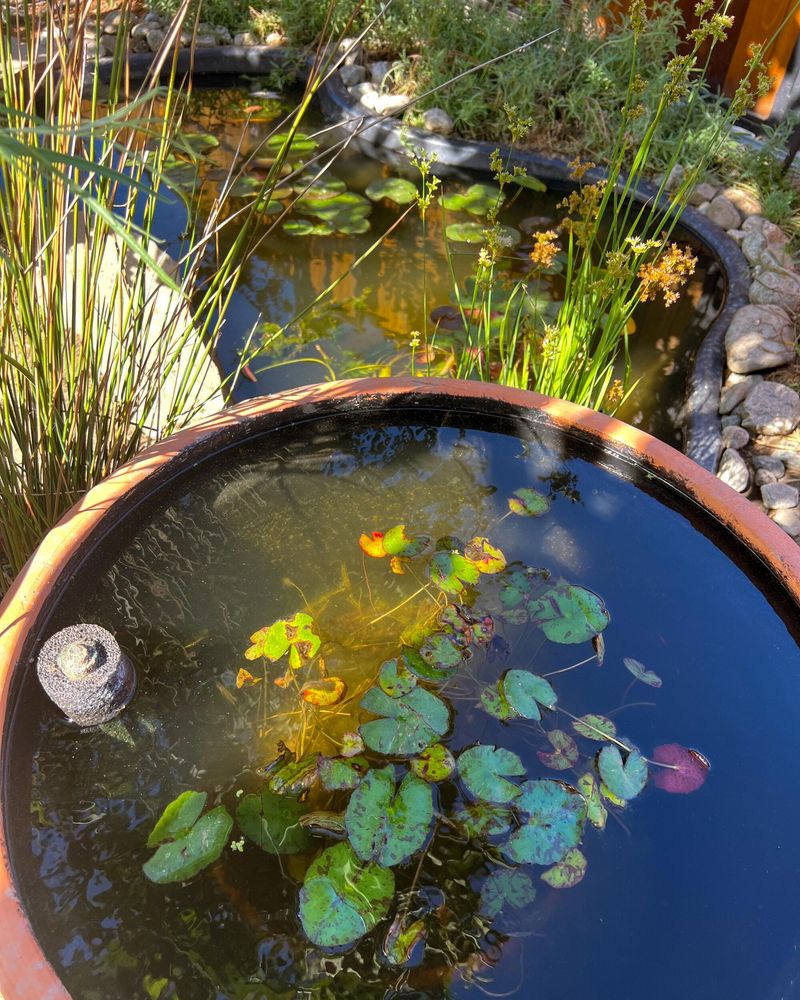
Any water feature that holds still water, even a small ceramic basin, can become a mosquito breeding site if it is not managed. California Department of Public Health guidance on mosquitoes and mosquito-borne disease recommends eliminating or regularly managing standing water and inspecting water-holding features often. CDPH mosquito control FAQs describe options including Bacillus thuringiensis israelensis (Bti) dunks, which are toxic to mosquito larvae but not to frogs or other wildlife when used as directed. Regular inspection and active mosquito management are not optional add-ons for a frog-friendly pond; they are part of responsible water-feature ownership in California.
Fire safety adds another layer of planning for many homeowners. CAL FIRE’s defensible space guidance and the Office of the State Fire Marshal’s wildland hazard and building code resources both make clear that dense vegetation, brush piles, woody debris, and irrigated habitat near structures can increase fire risk in hazard zones. Before placing logs, brush cover, or a dense planted edge near your house, check your property’s current Fire Hazard Severity Zone designation and confirm what your local fire authority requires. A zone classification alone does not determine every planting restriction, and local ordinances can be stricter than state minimums.
Handling the frog itself deserves equal care. Moving frogs or tadpoles between sites carries real risks: U.S. Fish and Wildlife Service reporting on chytrid fungus describes how this pathogen has devastated amphibian populations globally and can spread through contact or contaminated water. California Fish and Game Code section 2118 addresses possession and transport of wild amphibians, and California Department of Fish and Wildlife wildlife rehabilitation regulations cover related rules; check current CDFW rules before moving any frog or tadpole.
Beyond legal concerns, CDC guidance on reptiles and amphibians advises thorough handwashing after any contact and notes that children under five, older adults, and immunocompromised individuals face greater risk from Salmonella associated with amphibians. Observe the frog from a comfortable distance and let it move on its own.
Read the frog as a clue, not a certificate
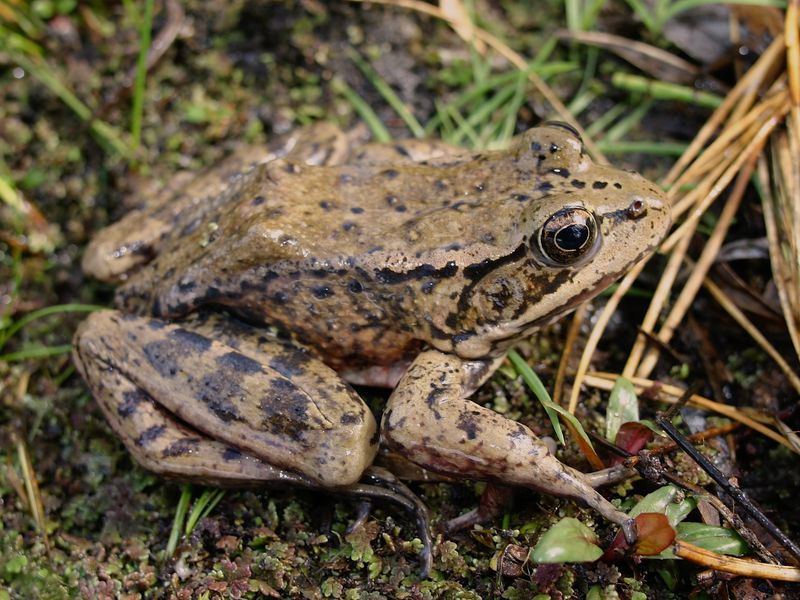
That small frog in your garden is telling you something real: the yard or its surroundings recently offered enough moisture, cover, or prey to make stopping there worthwhile. Pacific chorus frogs, the most common possibility in many parts of California, are opportunistic enough to use residential landscapes when conditions align, even temporarily. What the sighting cannot tell you is where those conditions came from, how long they will last, or whether your yard is free of the pressures that challenge frog populations statewide.
The most useful response is modest and targeted. A small, low-disturbance habitat pocket with localized moisture, natural cover, and water-wise planting around it gives frogs something to return to without turning the whole yard into an irrigation project. Careful choices around pesticides, mosquito management, fire-safety compliance, and hands-off observation protect both the frog and your household. California’s water-wise landscape guidance and UC advice on native plant care through the dry season both point toward the same principle: support what is there without overwatering what does not need it.
Supporting habitat and certifying the yard are two different things. The frog is a clue worth following, not a verdict already handed down.