
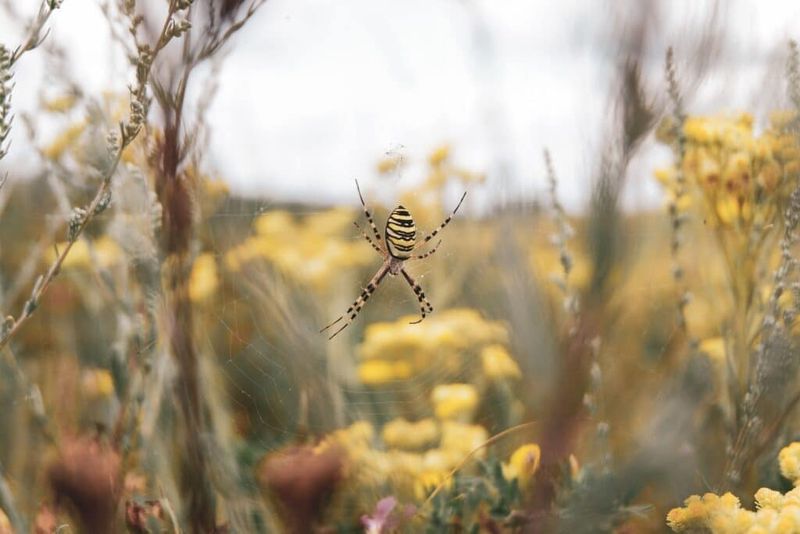
Walk through almost any California garden and you will likely pass within inches of a spider so small it barely registers – a flicker of movement on a leaf, a nearly invisible thread catching the morning light. Most homeowners never give it a second thought, or they sweep it away while tidying up the yard. That quick cleanup could be removing one of the garden’s quiet helpers. Understanding what that tiny spider might be doing out there, and when to leave it alone, can change the way you manage your plants.
A tiny garden spider may belong to several groups
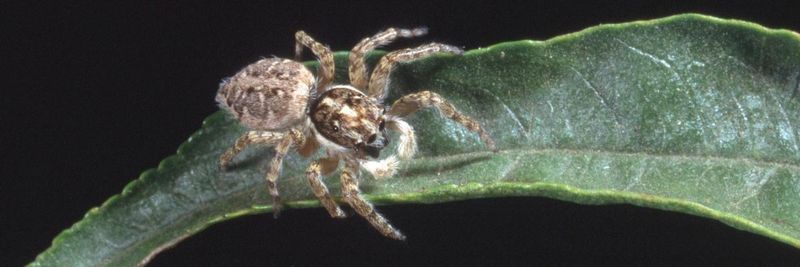
California is home to more than 1,000 spider species spread across at least 54 families, according to the UC IPM Natural Enemies Gallery. That number alone tells you why a description like “tiny, daytime, hunting insects” cannot point to one species without more information. Before assuming you know what you are looking at, a photograph and a few diagnostic details will get you much closer to an answer.
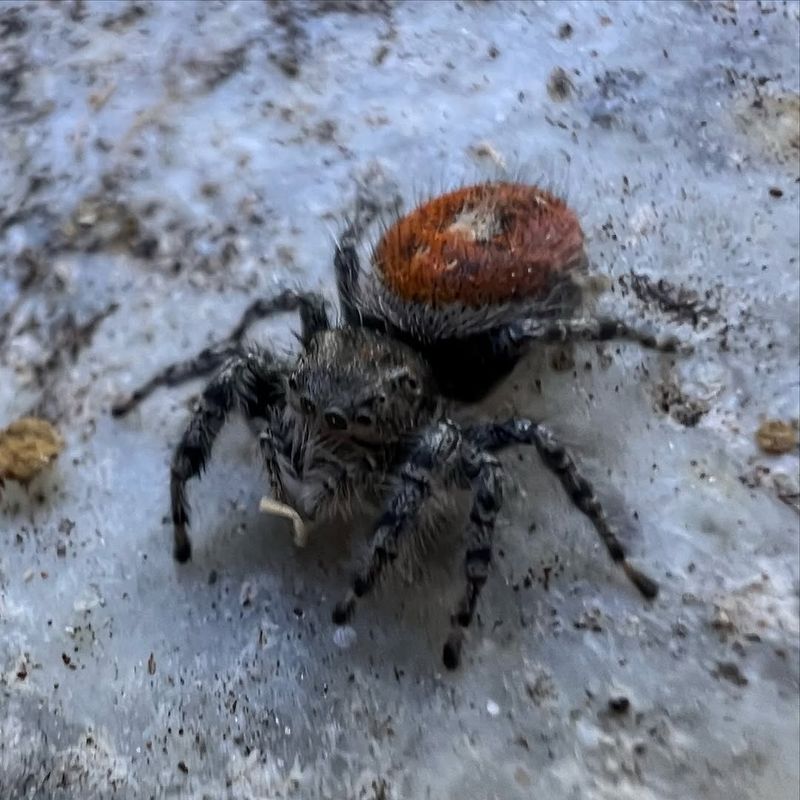
Several spider groups fit the general description of small, active, and found in garden plants. Dwarf spiders are genuinely tiny, often just a few millimeters long, and UC IPM describes them as day-active hunters that work both plant canopies and ground litter, often building small sheet-like or crisscross webs. Jumping spiders are also active during the day but stalk and pounce on prey rather than relying on a web to catch it. Crab or flower spiders sit motionless on blooms or foliage and ambush visiting insects without building a prey-catching web at all.
Orb weavers and funnel weavers are generally larger and easier to spot, but smaller, younger individuals can look surprisingly modest in size. A web that is round and circular points toward an orb weaver, while a flat sheet with a funnel-shaped retreat suggests a funnel weaver. Tiny size, daytime activity, and apparent pest hunting cannot narrow the field on their own.
A useful photograph should show the approximate body size relative to a leaf or coin, the body shape and any visible markings, the type of web if one is present, and where exactly the spider is sitting on or beneath the plant. Those details together give you a much stronger basis for identification than behavior alone. Without them, the safest and most accurate label is simply “tiny garden spider,” and that is a perfectly reasonable place to start.
What small spiders can contribute to a garden
Each spider group encounters prey in its own way, and knowing the difference helps set realistic expectations about what they can and cannot do for your plants. Dwarf spiders string low, irregular sheet-like webs across plant stems and soil surfaces. Insects walking or falling through those webs become trapped, and the spider rushes in from below to subdue them. The webs are easy to miss because they lie nearly flat against the vegetation.
Jumping spiders skip the web entirely. They use sharp eyesight to locate a target, creep within striking distance, and then pounce. Crab spiders take a different approach, sitting still on flowers or leaves and grabbing whatever lands nearby, often bees and flies drawn to the bloom. Both groups can turn up on flowering plants where pollinator traffic is high, which is worth keeping in mind since their prey is not limited to insects damaging your garden.
Orb weavers stretch circular, spoked webs across open spaces to intercept flying and wind-carried insects. Funnel weavers build flat sheet webs with a retreat at one end, capturing insects that stumble across the surface. UC IPM notes that spiders feed on insects and other arthropods and are considered beneficial in garden settings.
The honest picture is that spiders eat whatever prey they can catch, including flies, moths, beetles, wasps, and other spiders, as well as pollinators and other natural enemies. A 2018 review in Oecologia found evidence that spiders can contribute to pest suppression, but also documented generalist predation and complex food-web interactions that make outcomes hard to predict. Their presence may help reduce insect pressure in a garden, but they are not targeted exterminators working only on your behalf.
Why unnecessary cleanup can remove a potential ally
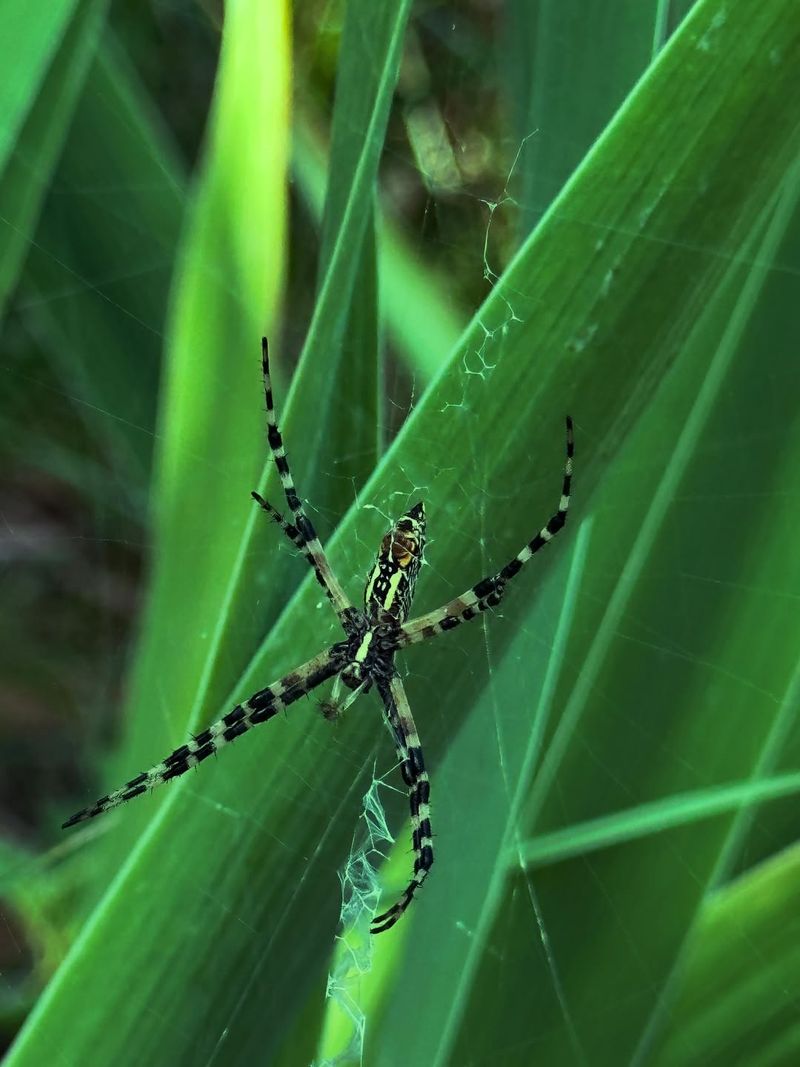
Research does support the idea that spiders can contribute to pest suppression in garden and agricultural settings. A global meta-analysis of spider biocontrol studies found measurable pest-suppression effects in multiple crop systems, though the authors also described variability across environments and noted that spiders are generalist predators with effects that are not always easy to predict. Removing a spider or web does not guarantee a pest outbreak, but it does eliminate one member of the natural-enemy community that was potentially contributing to balance.
The practical takeaway is proportional: sweeping away an occasional web in a plant bed probably does not tip your garden into chaos, but routinely clearing every spider you encounter in low-traffic planting areas removes predators that cost nothing to maintain. The clearer risk comes from a different habit entirely. UC IPM guidance on natural enemies explains that broad-spectrum, persistent pesticides can kill predators and parasitoids alongside the target pest, sometimes setting off secondary pest problems like spider-mite flare-ups when the insects that normally kept mites in check are gone.
Physical web removal and pesticide use are not equivalent choices. Sweeping a web removes one spider from one spot. Spraying a broad-spectrum product across a yard can strip out lady beetles, lacewings, parasitic wasps, predatory bugs, and spiders all at once, leaving the plants with fewer natural buffers against the next pest wave. Keeping that distinction in mind makes it easier to decide when cleanup is fine and when it is worth pausing to think about what else might be affected.
Diagnose the plant problem before treating
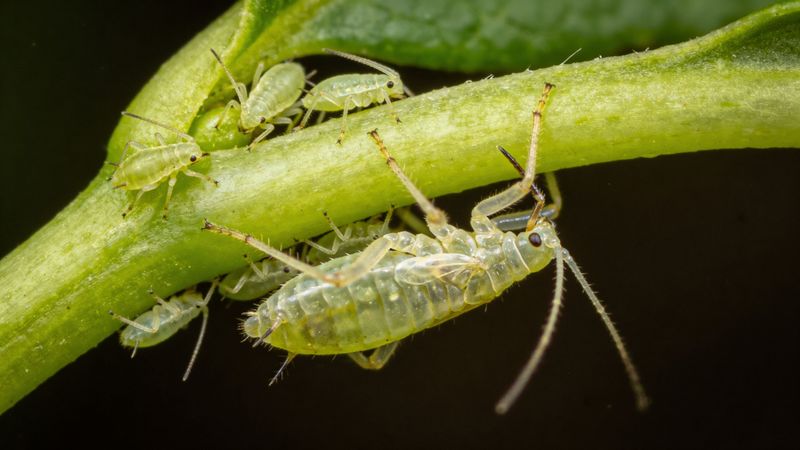
Before reaching for any control option, chemical or otherwise, the first step is figuring out what is actually harming your plants. Yellowing leaves, distorted growth, and sticky residue can all point to different culprits, and treating for the wrong pest wastes time and can harm organisms that were not the problem. Get close to the plant, check both sides of the leaves, and try to find the insect or damage pattern causing the issue.
Aphids are one of the most common complaints in California home gardens, and they make a useful example of how monitoring shapes your response. UC IPM recommends checking susceptible plants at least twice a week during periods of rapid growth, when aphid populations can build quickly. On sturdy plants, a strong stream of water directed at infested stems and leaf undersides can knock aphids off without any chemical input. Pruning out a heavily infested shoot before the colony spreads is another low-impact option.
One detail many gardeners overlook is ant management. Ants actively protect aphid colonies from natural enemies in exchange for the honeydew aphids produce. Controlling ant access to infested plants can allow lady beetles, lacewings, and other predators, including spiders, to reach and feed on the aphids more freely.
UC IPM acknowledges that natural enemies are not always adequate, particularly when infestations are heavy or when pests are sheltered inside curled leaves, galls, or other protected plant structures where predators cannot easily reach them. Spiders and other beneficial insects work best as part of a low-pressure management system, not as a rescue response to a serious infestation already underway.
Use targeted treatment when intervention is necessary
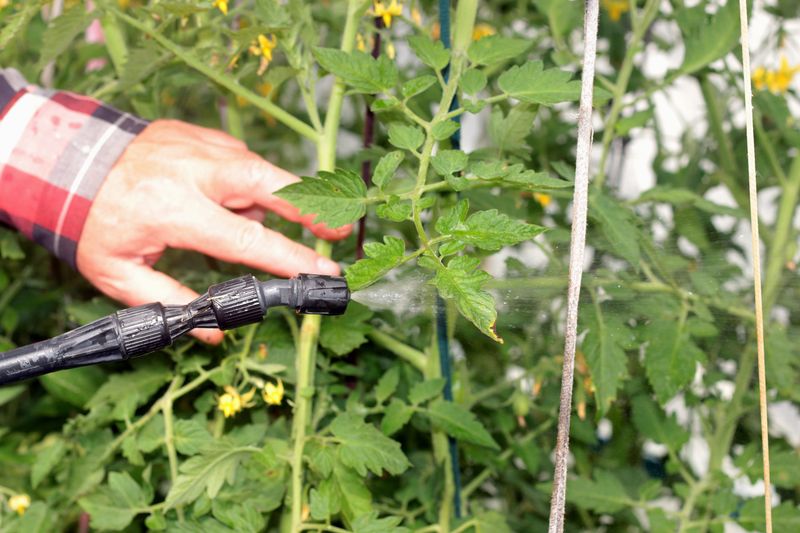
When monitoring confirms a pest problem and nonchemical steps have not been enough, the goal shifts to limiting collateral damage. Spot treatment of the affected plant or stem is far less disruptive to the surrounding natural-enemy community than spraying an entire yard. Covering a wide area with a broad-spectrum product when only one shrub is infested exposes every spider, beetle, wasp, and bee in the yard to unnecessary chemical contact.
UC IPM guidance on biological control recommends choosing selective or nonpersistent products when treatment is needed, and always following label directions precisely. Toxicity is not determined by whether a product sounds natural or chemical. It depends on the specific active ingredient, the application rate and method, the life stage of the organism exposed, and the species in question. A product that breaks down quickly in sunlight may still kill a spider or parasitic wasp that is directly sprayed during application.
Insecticidal soaps and narrow-range oils, for example, are often described as low-impact options, but they work by direct contact and can harm soft-bodied beneficial insects that happen to be on the plant at the time of spraying. Applying them in the early morning or evening when pollinators and many beneficial insects are less active can reduce, though not eliminate, that risk.
Reading the label before purchasing, not just before applying, helps homeowners choose a product matched to the actual pest and situation. If the pest identified does not appear on the label, the product is not the right tool regardless of what it claims on the front of the bottle.
Leave garden webs where they do not interfere
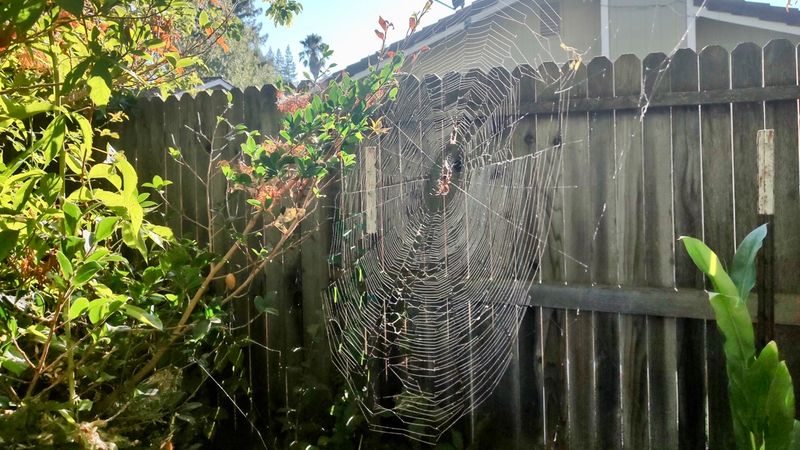
A practical household rule keeps most decisions straightforward: spiders and webs in plant beds, shrubs, and low-traffic garden areas are generally fine to leave alone. They are out of the way, they are not creating a hazard, and they may be contributing to the natural-enemy community at no cost to you. The situation changes when a web is strung across a doorway, along a frequently used path, over outdoor seating, or on play equipment. Those locations create real inconvenience or safety concerns, and physical removal with a broom or gloved hand is a reasonable and proportionate response.
UC IPM notes that pesticides usually provide only temporary spider control outdoors and should not generally be used against spiders in garden settings. Spraying specifically to eliminate garden spiders is unnecessary and risks harming the broader natural-enemy community in the process. UC Cooperative Extension Ventura County recommends moving an inconvenient garden spider to a better location rather than resorting to chemical control.
Black widows deserve a different level of caution. They favor dry, sheltered, undisturbed spots: woodpiles, clutter piles, garages, storage sheds, and tight crevices around the yard. Their venom is medically significant, and finding one in a frequently used area warrants careful removal rather than simply sweeping it aside. Use gloves, a sealed container, and consider contacting a pest management professional if the location is difficult to access safely.
One reassurance worth stating plainly: the spider you spot moving across a sunlit leaf during the day is almost certainly not a black widow. Most day-active spiders seen openly on plants pose no meaningful risk to people, and handling any spider unnecessarily is the main thing to avoid.
Fire preparedness sets the habitat boundary
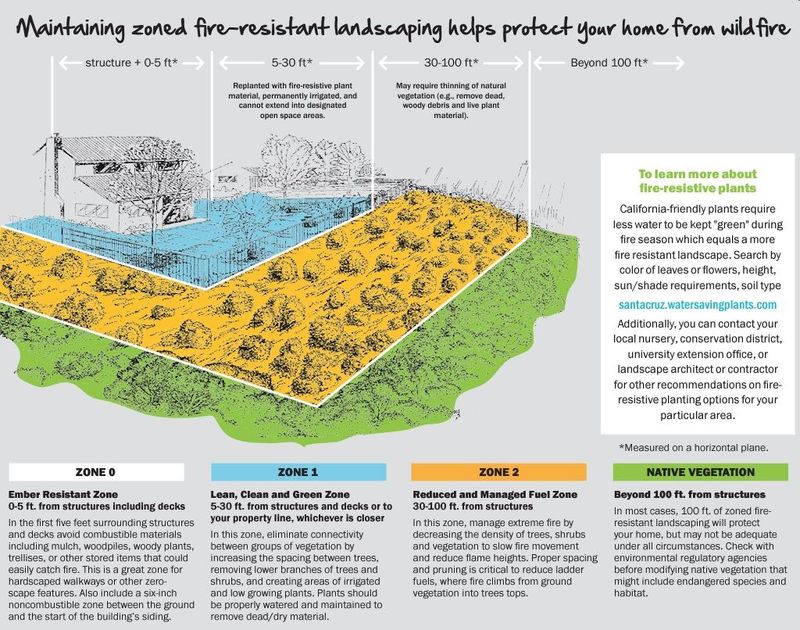
For homeowners in fire-prone parts of California, one gardening principle has to come before all others: defensible space requirements are not optional, and they take precedence over preserving any particular garden habitat. CAL FIRE’s preparedness guidance describes defensible space as the buffer a homeowner creates by removing dead plants, dry grass, and accumulated debris around a structure, giving firefighters room to work and slowing the path of an approaching fire.
California’s defensible space framework includes a zero-to-five-foot ember-resistant zone immediately surrounding the home, where combustible materials should be eliminated or minimized, and additional vegetation management requirements extending outward from the structure. In State Responsibility Areas and designated Very High Fire Hazard Severity Zones, these rules are enforceable and exist because dense, dry, continuous vegetation immediately beside a home dramatically increases fire risk.
Keeping dry, overgrown, or continuous vegetation pressed against a structure in order to preserve spider habitat is not a trade-off that makes sense in these areas. The good news is that spider-friendly habitat does not require a fire-hazard environment. Spiders colonize well-managed planting areas, drought-tolerant native plantings, and low-water shrub beds that can be maintained in compliance with defensible-space requirements farther from the structure.
Habitat value and fire safety can coexist in a California yard, but they have to be arranged in the right order. Meet your defensible-space requirements first, then think about how to support beneficial wildlife in the parts of the yard where it is safe and appropriate to do so.
Use conservation with judgment
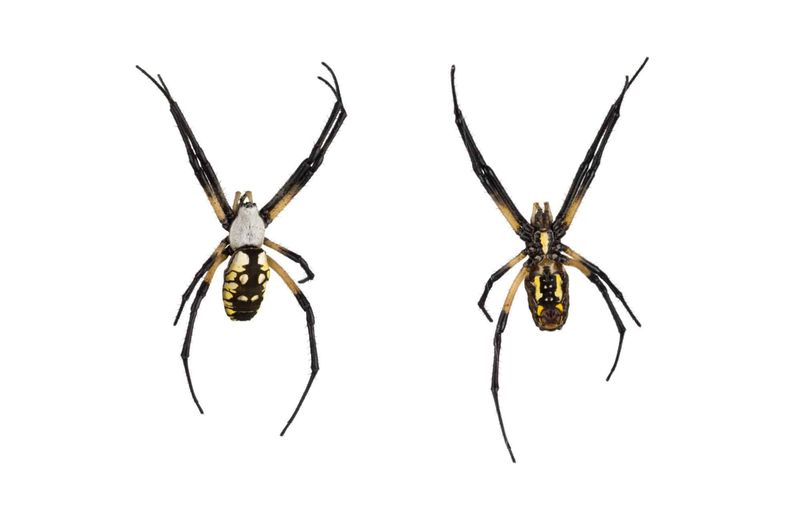
Putting the whole picture together produces a decision framework that is less about rules and more about paying attention. Start with what you can actually observe: if you cannot identify the spider beyond “small and day-active,” that is an honest answer, and it is enough to make a reasonable choice. UC IPM places spiders within a broader natural-enemy community that includes lady beetles, lacewings, parasitic wasps, and predatory bugs, and the value of that community comes from its diversity, not from any single member.
Leave harmless spiders alone in plant beds and low-traffic garden areas. Diagnose plant problems before treating, and choose targeted controls when nonchemical steps fall short. Relocate or remove webs when access, safety, or California’s defensible-space requirements make that the right call. Treat black widows in sheltered, undisturbed areas with greater caution than you would a spider spotted on an open leaf in daylight.
The possible cost of sweeping away every spider you encounter is not a guaranteed pest infestation. As UC Ventura Extension notes, the more proportionate loss is removing a potential natural enemy that was working for free. A garden managed with that awareness, neither preserving every web unconditionally nor eliminating every spider on sight, tends to be healthier, lower-maintenance, and a little more alive than one managed by habit alone.