
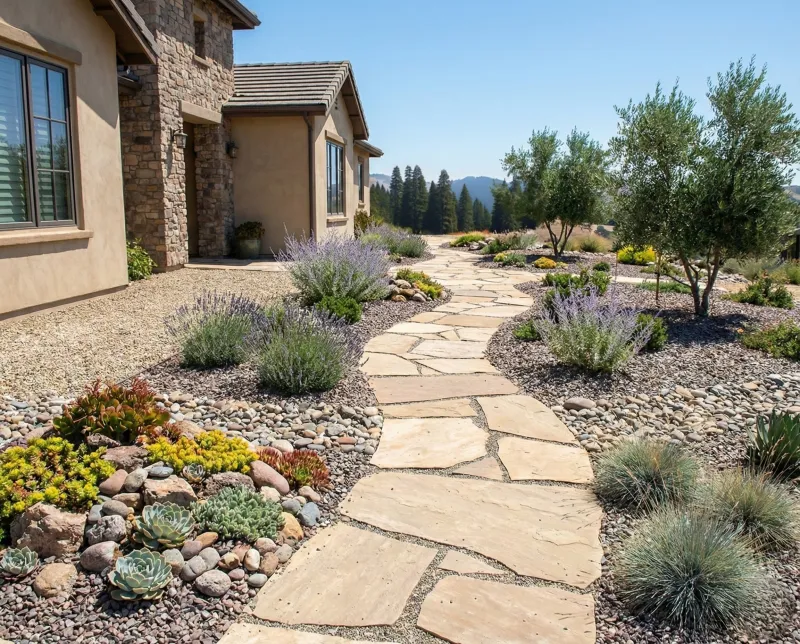
If you love the soft, swaying look of ornamental grasses but live where wildfire is a real worry, you have probably felt that tug of guilt planting anything flammable near your house. The good news is that California is full of native and well-adapted shrubs that give you that same feathery, textured, movement-in-the-breeze feel without turning into kindling in the dry season. Placed correctly in your defensible space, these plants can keep your yard alive and pollinator-friendly while lowering the burn risk close to your walls. Here are twelve fire-smarter choices that let you keep the grassy vibe and sleep a little easier.
1. Coyote Bush (Baccharis pilularis)
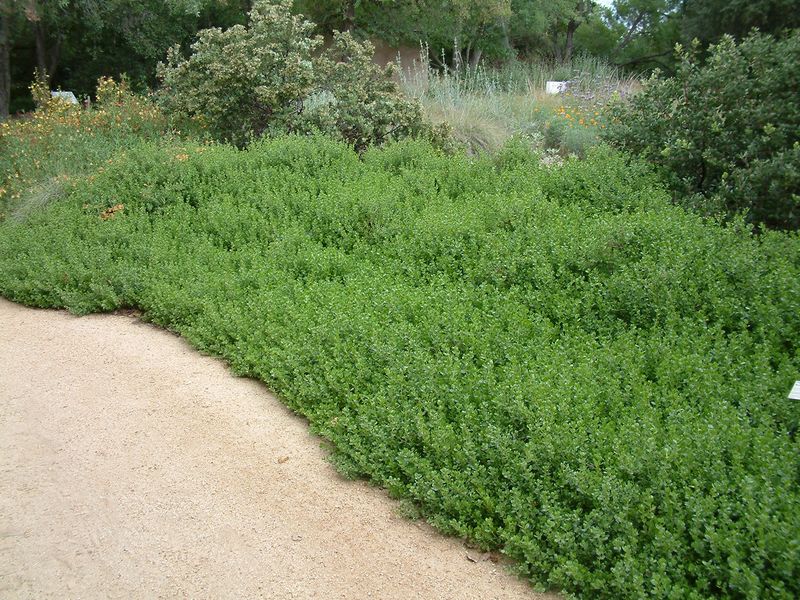
Ask any wildland firefighter about tough California natives and coyote bush usually comes up. Its low, spreading form and moist, resin-light foliage make it a workhorse for the outer edge of a home’s defensible space.
The prostrate variety ‘Pigeon Point’ hugs the ground in a soft green wave that reads a lot like a low grass border, especially when it catches the afternoon wind. Unlike true grasses, it stays green well into the dry months if it gets a rare deep soak, which means less brown tinder near your foundation.
Bees and tiny native wasps adore the fall flowers, so you get pollinator credit alongside the fire-smart bonus. Keep it trimmed and cleared of dead interior twigs, and it can help slow flame spread rather than feed it. Worth noting for hillside homeowners: it also grips slopes and fights erosion.
2. Deer Grass (Muhlenbergia rigens)
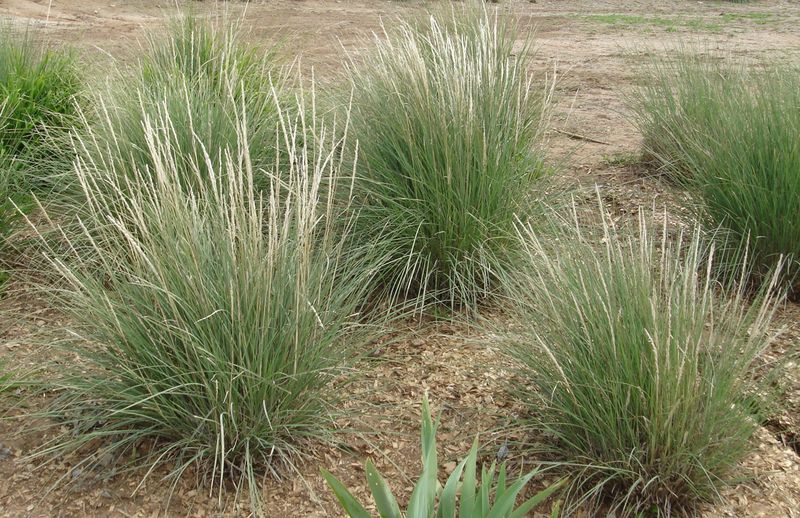
Here is a plant that fools people into thinking it breaks the no-grass rule, yet it behaves far better than most true ornamental grasses near a house. Deer grass forms a tidy fountain of fine green blades that shimmer and bend in the slightest breeze.
What makes it different from flammable pampas or fountain grass is its habit of staying greener and holding less dry thatch when you groom it once a year. Cut it back hard in late winter and rake out the dead center, and you remove the fuel that makes ornamental grasses risky.
California tribes used its long flower stalks for basketry, a nice bit of history to share over the fence. Placed in zone two of your defensible space, spaced apart rather than in a solid mass, it delivers that classic grassy movement while keeping fire behavior manageable.
3. California Sagebrush (Artemisia californica)
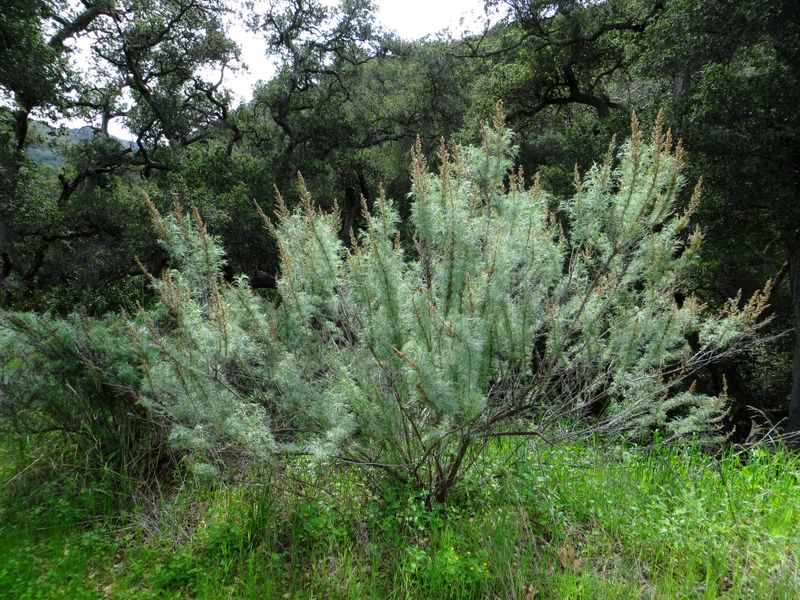
Run your hand through a mound of California sagebrush and the ocean-and-herbs scent alone might sell you. Its lacy, thread-fine gray-green leaves create the same airy, feathery texture that draws people to ornamental grasses.
The catch you should know honestly: sagebrush contains aromatic oils, so it is best kept out of the immediate five-foot zone against your walls and instead used a bit farther out where its wildlife value shines. Groomed and thinned, with dead wood removed, it can support the landscape without becoming a fuel ladder.
Very few plants pull in native pollinators and birds the way this one does, and it is a host for the threatened coastal ecosystem so many yards have erased. Give it lean soil, almost no summer water, and a light shear after bloom, and it rewards you with that soft, wind-tossed grassy silhouette.
4. Cleveland Sage (Salvia clevelandii)
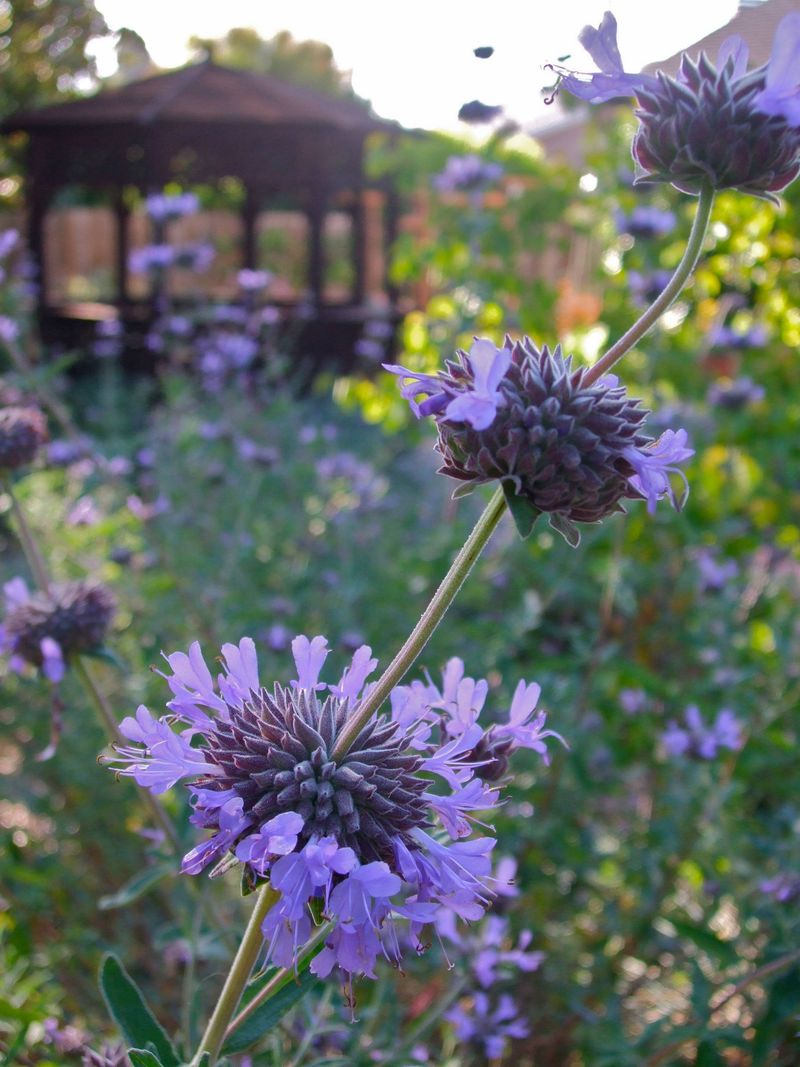
Few shrubs earn their keep like Cleveland sage, which throws up tall wands topped with pom-pom flower whorls that dance above the foliage like grass seedheads on stems. Bumblebees practically line up for it.
Its rounded, well-behaved form and high moisture content in the leaves make it a friendlier choice near structures than woodier, resinous sages, though you still want to space it and clear dead growth. The vertical bloom stalks give you that see-through, movement-rich look people chase with grasses, only with purple flowers stacked on top.
A fun quirk: brush past it on a hot afternoon and the whole patio smells like a sage field. Prune it back by a third after flowering to keep it dense and low on dead wood, and it stays both handsome and fire-smarter through the long dry summer.
5. Blue Fescue (Festuca californica)
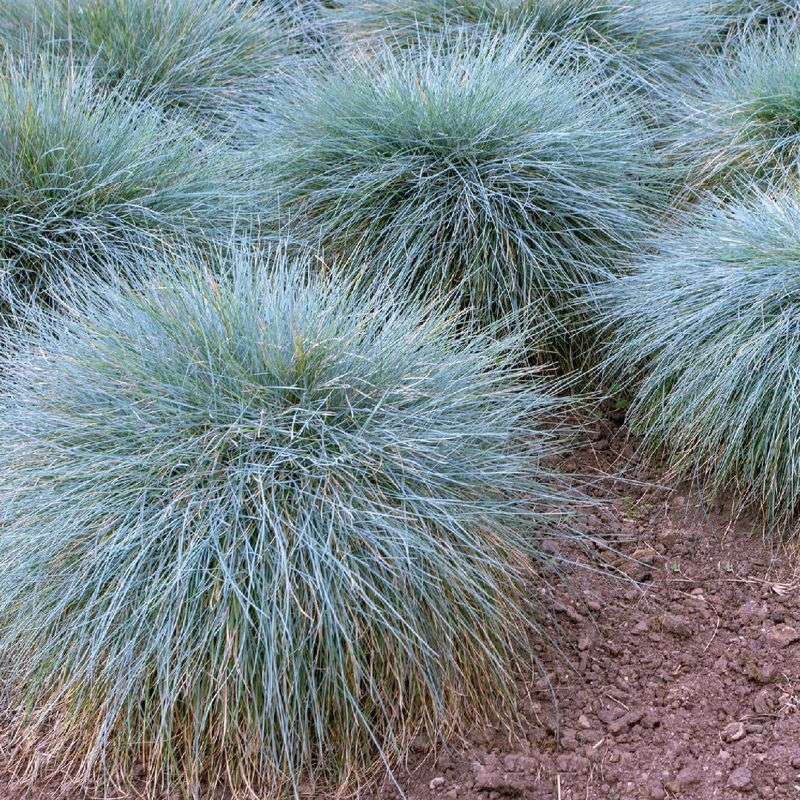
Not all grass-looking plants are the fire hazard people assume, and California fescue is proof. A soft, silvery-blue tuft of arching blades, it looks straight out of a designer border yet belongs on our native hillsides.
The key is that its low, clumping form carries far less dry fuel than towering exotic grasses, and it stays partly green with just a little shade and occasional water. Groom out the dead blades each year and it reads as a neat, cushiony mound rather than a haystack.
Songbirds pick through it for seeds, and it tucks beautifully under oaks where lawns fail. Keep clumps spaced and separated from your siding, and you get the fine-textured, gently swaying grass effect with a much calmer fire profile.
6. Bush Anemone (Carpenteria californica)
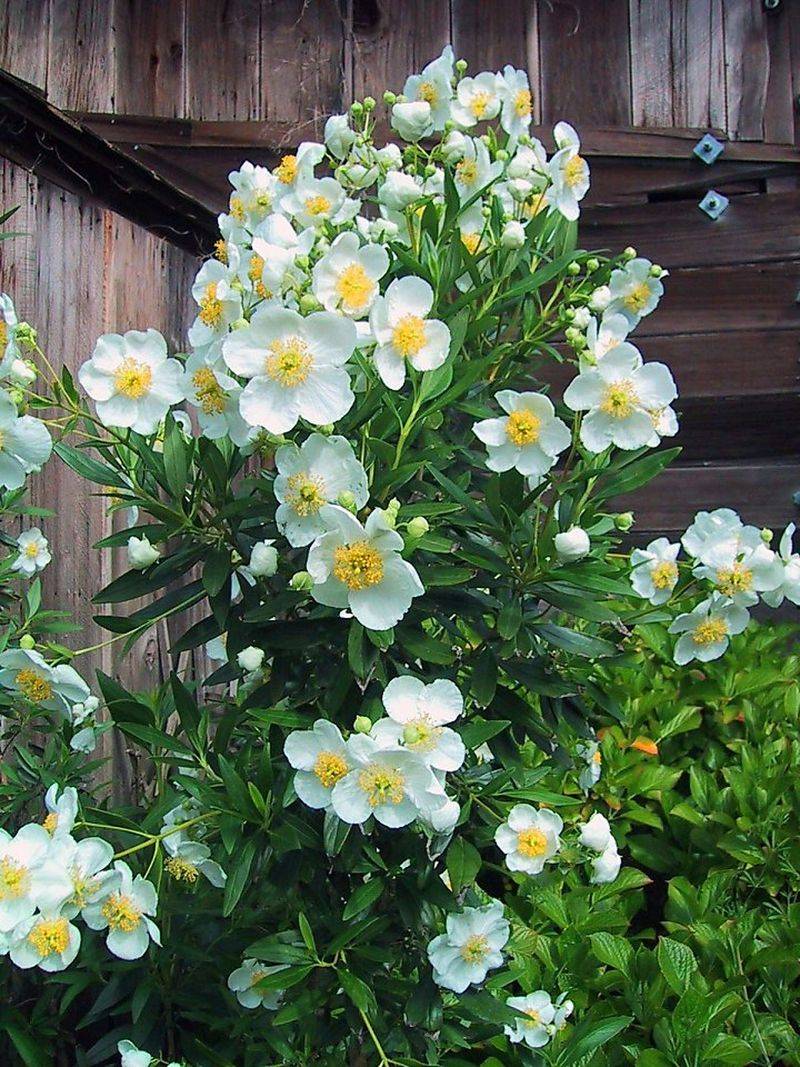
Something about bush anemone feels almost secret, since it grows wild in only a small pocket of the Sierra foothills. Its glossy evergreen leaves and white summer flowers offer a fresher, leafier take on the airy garden look.
While it is not grass-shaped, its fine branching and light, fluttery flowers bring that same soft movement to a bed without piling up dry blades. The high-moisture evergreen foliage makes it a calmer neighbor for the space closer to the house than dry, brittle plants.
Pollinators flock to the fragrant blooms, giving you a wildlife win. Give it decent drainage and a little afternoon shade inland, keep the interior thinned of deadwood, and it stays lush and lower-risk right when the fire-season heat arrives.
7. Coffeeberry (Frangula californica)
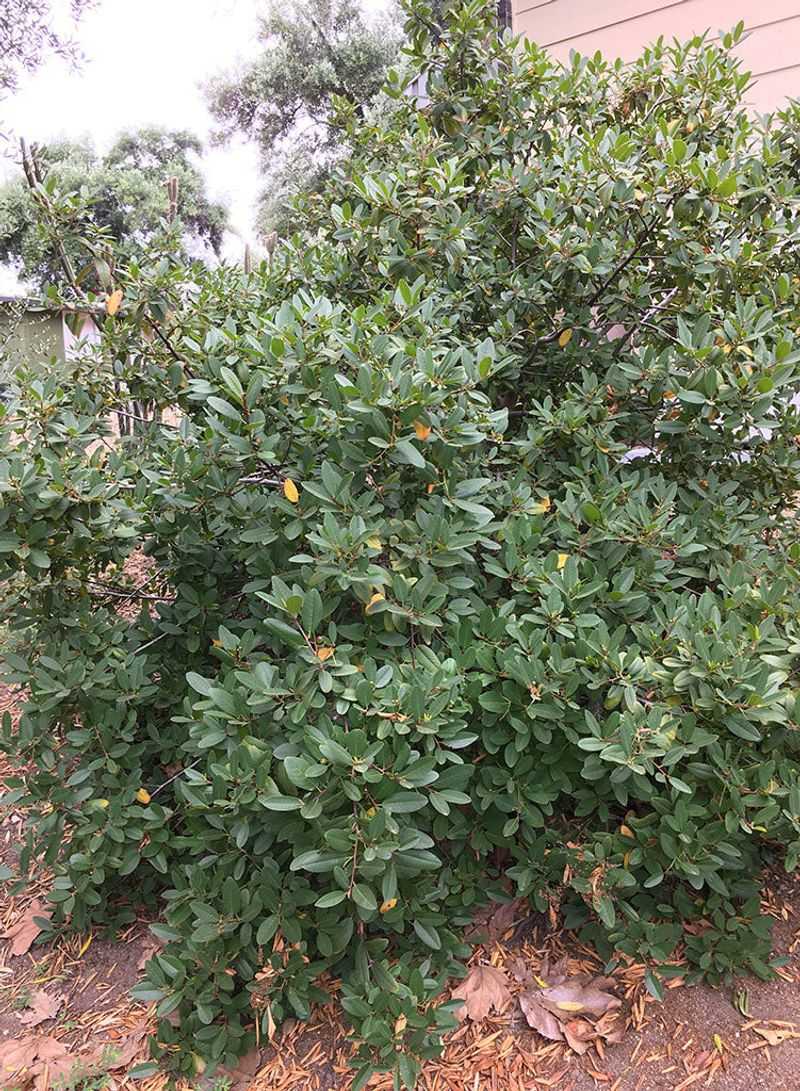
Landscape designers quietly rely on coffeeberry when they want a green, unfussy shrub that behaves itself, and it deserves a spot on any fire-smart list. Cultivars like ‘Eve Case’ stay compact and densely leafy.
The berries shift from green to red to near-black, drawing birds all season, so you trade flammable clutter for a living bird feeder. Its broad, moisture-holding leaves resist ignition better than fine dry foliage, making it useful in the middle zones of defensible space.
You can shear it into a soft, rounded backdrop that sets off finer-textured plants and mimics the layered, grassy-border feel without the dry thatch. Little summer water and a yearly cleanup of dead interior branches keep it looking full and lowering, not raising, your risk near the walls.
8. Yarrow (Achillea millefolium)
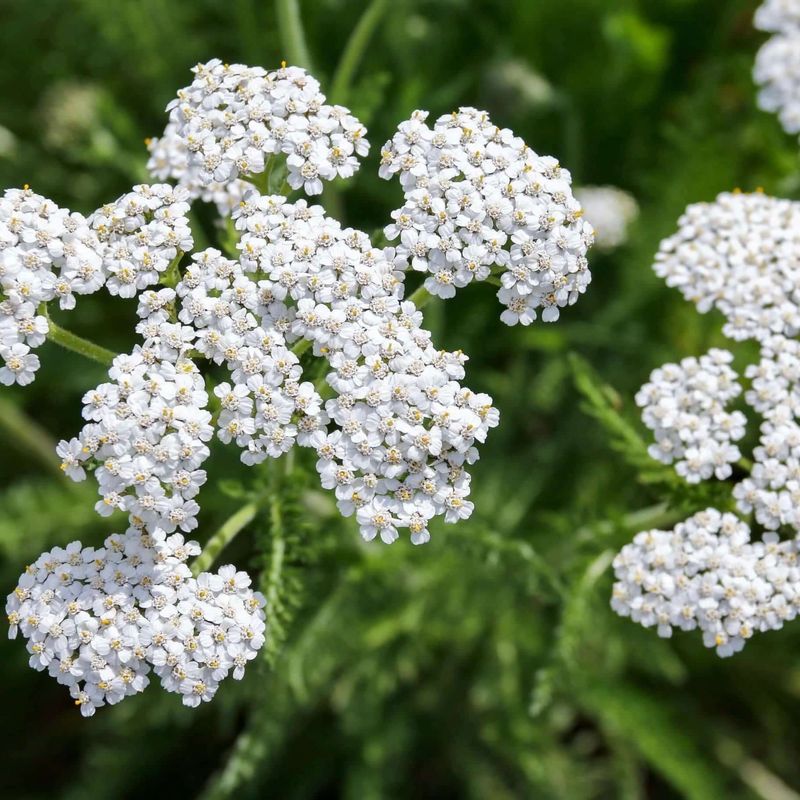
Technically a perennial rather than a woody shrub, yarrow earns an honorary place here because it gives you that soft, feathery groundcover texture with a genuinely fire-smart reputation. Its ferny leaves and flat flower heads sway like a low meadow.
Firefighters and defensible-space guides often list yarrow as a good choice right near the house because it stays low, holds moisture, and greens back up fast after a shear. The white or gold flower clusters float above fine foliage, echoing the airy grass look people want.
Native bees, hoverflies, and butterflies swarm the blooms, so you are feeding pollinators instead of stacking tinder. Mow or cut it back after bloom, keep it lightly watered, and it forms a lush, low, lower-risk carpet close to your foundation.
9. Manzanita ‘Emerald Carpet’ (Arctostaphylos)
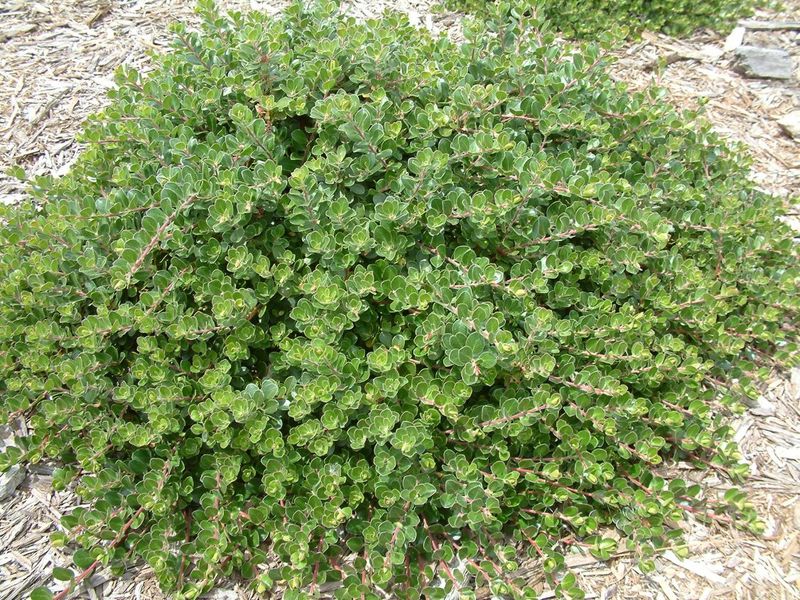
Most people picture manzanita as a big sculptural shrub, but the ground-hugging cultivar ‘Emerald Carpet’ turns the family into a low, glossy green mat that spreads like a living rug. It reads as a smooth grassy alternative for slopes and edges.
Honest caveat: many manzanitas are resinous and better placed farther from the house, yet this low, high-moisture, small-leaved selection is one of the more manageable choices when kept clean and watered occasionally. Its dense cover crowds out weeds and cuts down on the loose dry material that carries fire.
Hummingbirds and early-season bees rely on the tiny urn-shaped flowers when little else blooms. Give it good drainage, avoid crowding it against siding, and clear any dead runners so it stays a tidy, lower-risk green carpet.
10. Sticky Monkeyflower (Diplacus aurantiacus)
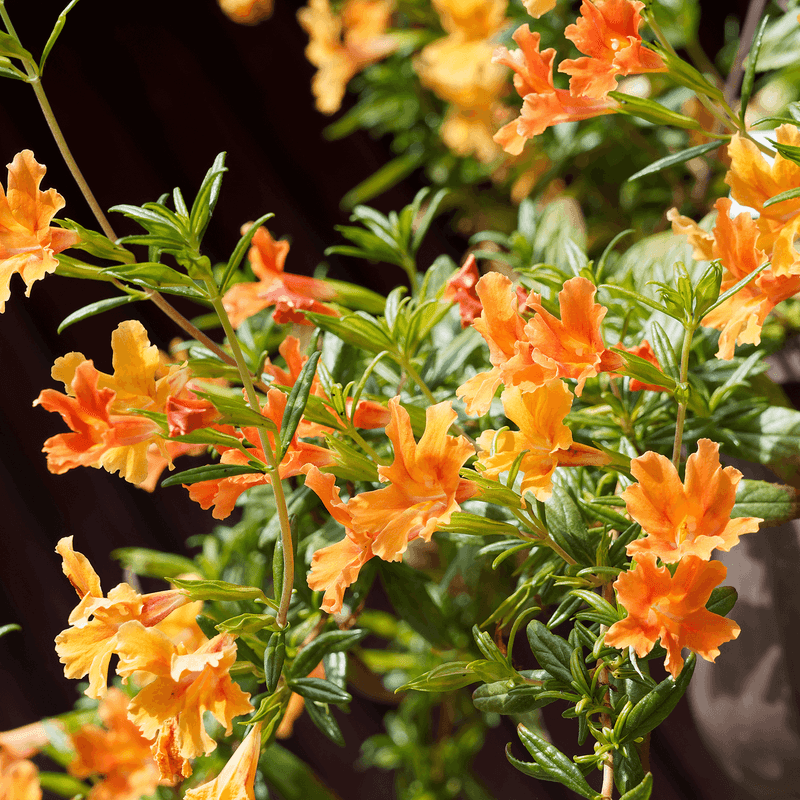
Bright orange trumpets scattered across airy green stems make sticky monkeyflower look almost too cheerful to be so useful. Hummingbirds treat it like a favorite diner.
Its light, open branching and modest size give beds a loose, breezy structure similar to a grassy planting, without the dense mat of dry blades that worries fire crews. As a soft-wooded, moisture-holding native, it fits the middle zone of defensible space when you thin it and cut back the leggy old growth.
The plant goes semi-dormant in high heat, so a light summer watering keeps it greener and less brittle near the house. Shear it after the big spring flush and it bounces back bushier, giving you color, pollinators, and a calmer fuel load all at once.
11. Toyon (Heteromeles arbutifolia)
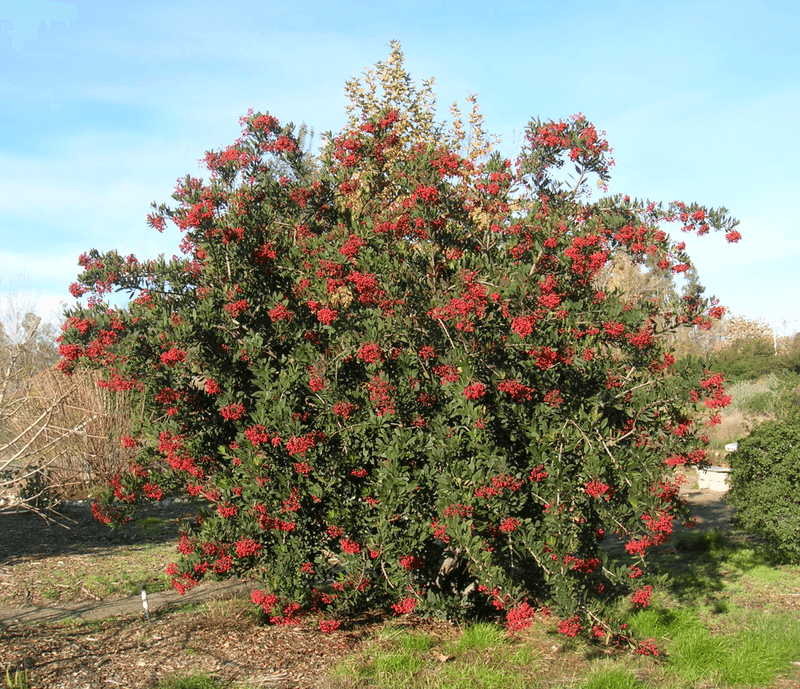
The plant that supposedly gave Hollywood its name, toyon blazes with red winter berries that feed robins and cedar waxwings when the hills go quiet. It brings height and structure to a fire-smarter yard.
Its thick, leathery, moisture-rich leaves ignite far less readily than fine dry foliage, which is why it shows up on so many California defensible-space plant lists. Used as a spaced backdrop shrub, it frames finer, grass-textured plantings in front while staying a lower-risk anchor.
Keep it limbed up and free of dead interior wood so it never becomes a fuel ladder up into trees. With just occasional deep watering it stays green through summer, offering berries, birds, and a handsome evergreen wall that works with your fire plan rather than against it.
12. Purple Three-Awn Alternative: Sedge (Carex praegracilis)
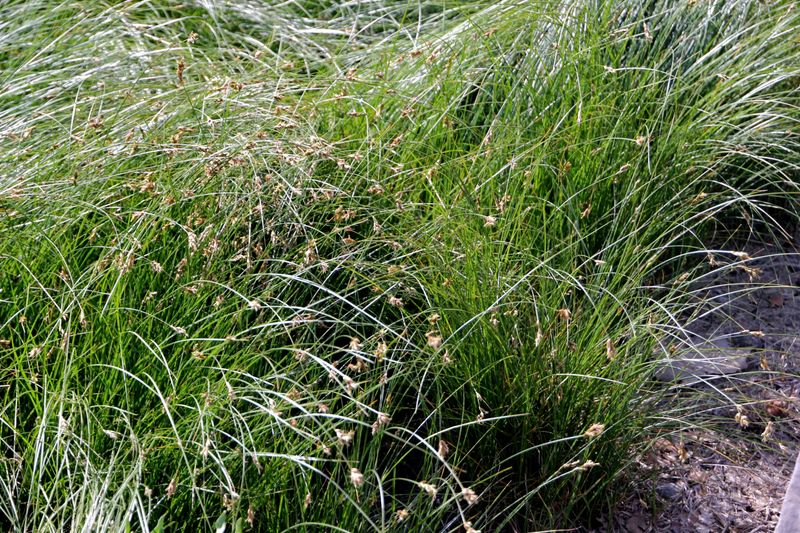
For anyone dreaming of a flowing, lawn-like sweep without the flammable dry thatch, California field sedge is the quiet hero. Its fine green blades ripple like a meadow yet stay softer, lower, and greener than showy ornamental grasses.
Because sedges hold moisture and stay low, they read as one of the safer grass substitutes for the zone close to a home, especially as a walkable no-mow groundcover. You skip the tall dry plumes of banned or invasive grasses that spread embers and instead get a mowable green carpet.
Ground-nesting native bees and small critters find shelter in its cover, adding to the wildlife payoff. Give it moderate water, mow it a couple times a year if you like a tidy look, and enjoy that grassy field feeling with a much gentler fire footprint near the walls.