
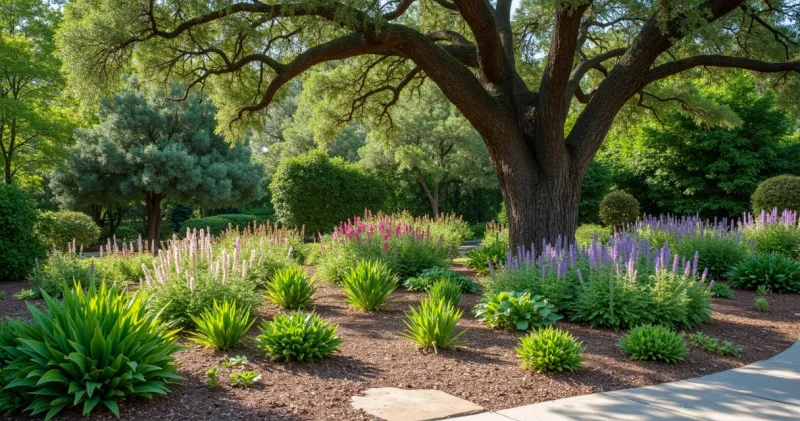
For years, a lot of Californians heard “defensible space” and figured it meant ripping out every plant near the house and leaving bare dirt or gravel. It turns out that advice went too far, and now many county fire officials and UC experts are quietly correcting it. Well-chosen, well-watered plants can actually slow a fire, hold soil in place, and keep your yard alive for birds and bees at the same time. Here are eleven low-flammability plants your county may want back in the ground, plus how to place them so they help instead of hurt.
1. California Lilac (Ceanothus)
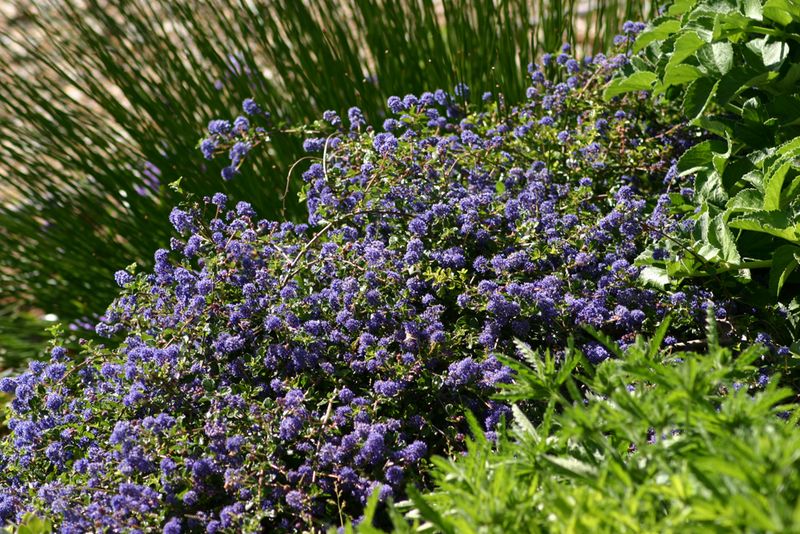
Bees practically throw a party over a blooming Ceanothus in spring, and that is exactly why fire crews changed their tune on it. Once dismissed as brushy fuel, the low-growing and well-hydrated varieties are now recommended by several county planners for the outer zones of defensible space.
The trick is choosing groundcover types like Ceanothus griseus horizontalis rather than the tall, woody chaparral forms. Kept irrigated and pruned of dead wood, its dense evergreen leaves hold moisture and stay far less flammable than dried-out native brush.
Fun bit of history: this shrub was once called soap bush because Native Californians rubbed the flowers into a lather. Today it doubles as a native pollinator magnet, feeding bees and butterflies right when they need it most. Plant it in Zone 2, roughly 30 to 100 feet from the house, and keep the base clear of leaf litter.
2. Coral Bells (Heuchera)
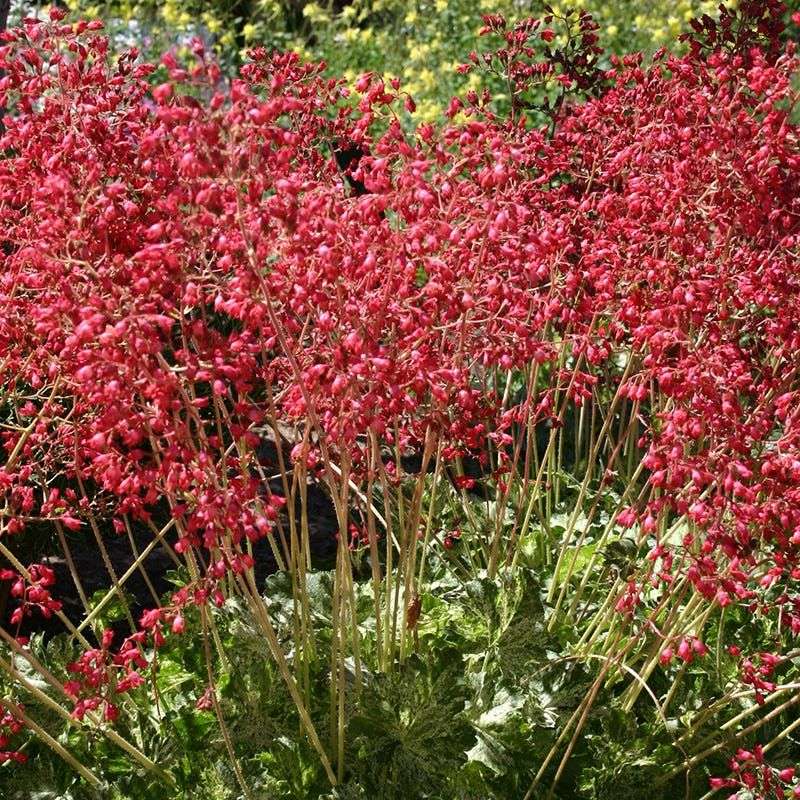
Tuck a cluster of coral bells at the foot of a walkway and you get ruffled, low mounds that stay green and juicy even in the dry months. Their high water content and lack of woody stems put them near the top of the fire-smart list for the zone closest to your home.
Unlike thirsty lawn, Heuchera sips water once established, which keeps it friendly with California’s restrictions. It thrives in the partial shade you often find along the north side of a house, where few other tough plants want to live.
Hummingbirds go straight for the slender flower stalks that rise above the foliage in late spring. Because it hugs the ground and never builds up dry thatch, it fits beautifully in Zone 1, the crucial five-foot band right against the walls where you want almost nothing that can catch a stray ember.
3. California Fuchsia (Epilobia canum)
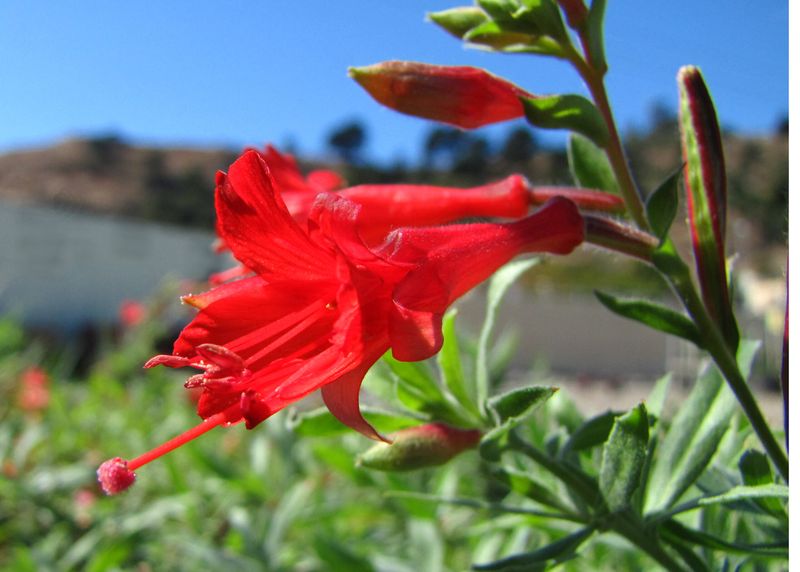
Come late summer, when most of the yard has surrendered to the heat, California fuchsia sends up fiery red-orange trumpets that hummingbirds cannot resist. That knack for staying colorful in the driest stretch is part of why it earns a spot in fire-wise plant guides.
The plant stays low and herbaceous, so it never turns into the tall, resinous fuel that gives natives a bad name. Cut it back hard in winter and it returns fresh each year without leaving a pile of dead stems behind.
It handles rocky, poor soil and needs barely any water once its roots take hold, which suits inland valley and hillside homeowners dealing with tight water rules. Place it in Zones 1 or 2, and enjoy knowing you are feeding migrating hummingbirds during a season when little else is blooming.
4. Agave and Aloe
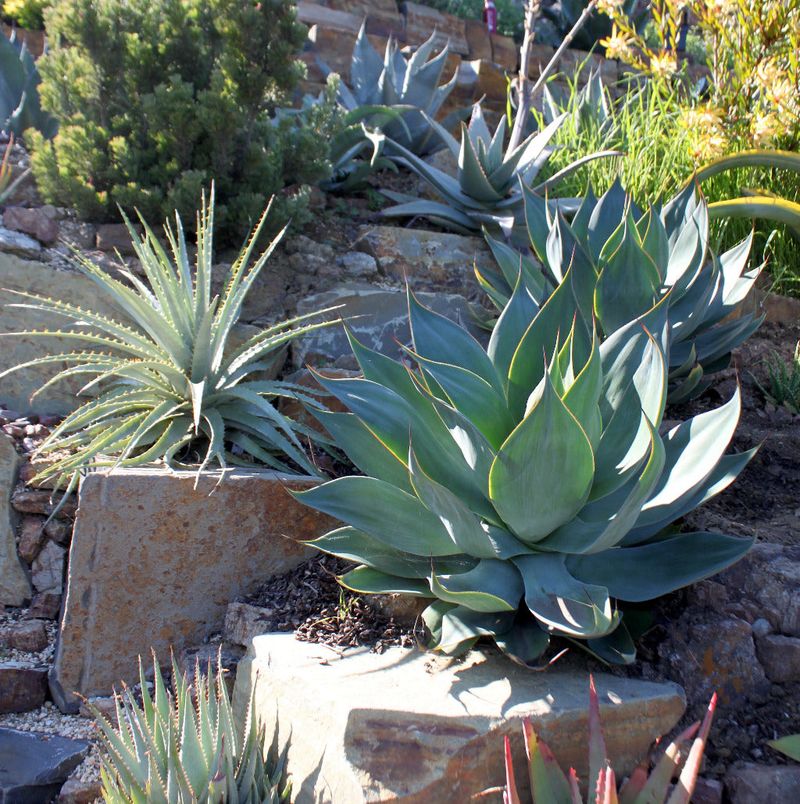
Slice open a leaf of aloe or agave and you find it packed with gel, and that stored water is the whole reason these succulents are fire fighters in plant form. Their thick, moisture-heavy leaves resist ignition and can even act as a small barrier against creeping flames.
Both do wonderfully in California’s Mediterranean climate, asking for sun, sharp drainage, and almost nothing from the hose. A well-placed agave near a patio doubles as sculpture, holding its shape year-round while the rest of the garden ebbs and flows.
One caution worth mentioning: give large agaves room away from walkways because of their spiny tips. Used thoughtfully in Zone 1 or as accent points in Zone 2, they bring architectural drama and genuine fire safety to the same square foot of soil.
5. Toyon (Heteromeles arbutifolia)
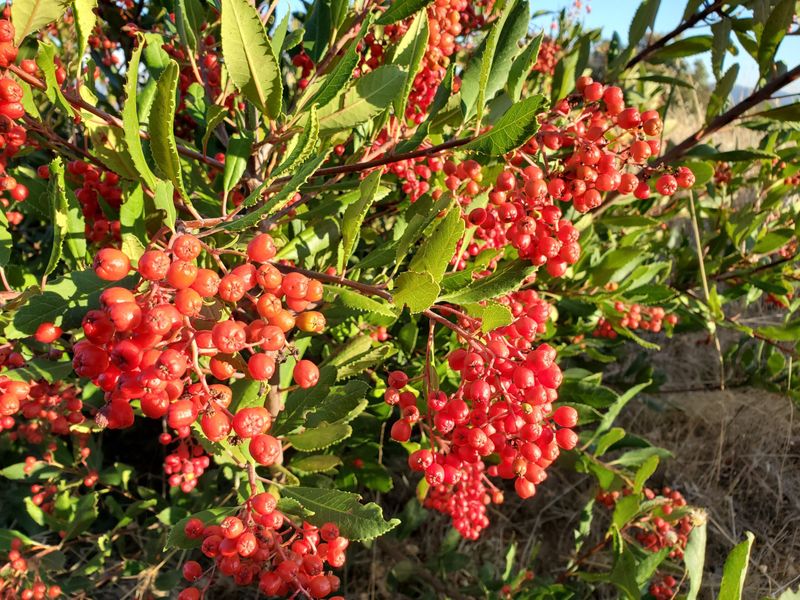
Ever wonder where Hollywood got its name? Local lore ties it to the toyon berries that once blanketed those hills in red, and this hardy native still earns its keep in modern fire-smart yards. Kept green and pruned, toyon holds moisture in its leathery leaves and burns reluctantly compared with drier chaparral.
Birds adore the winter berries, so cedar waxwings and mockingbirds treat a healthy toyon like an open buffet. That wildlife value is exactly the kind of stewardship many homeowners feared they had to sacrifice for fire safety.
The key is management. Left wild and unwatered, any large shrub can become fuel, so give toyon occasional deep water, thin the interior, and clear dead branches. Positioned in Zone 2 as a screening shrub, it offers privacy, food for birds, and a slower path for approaching flames.
6. Sedum and Ice Plant Groundcovers
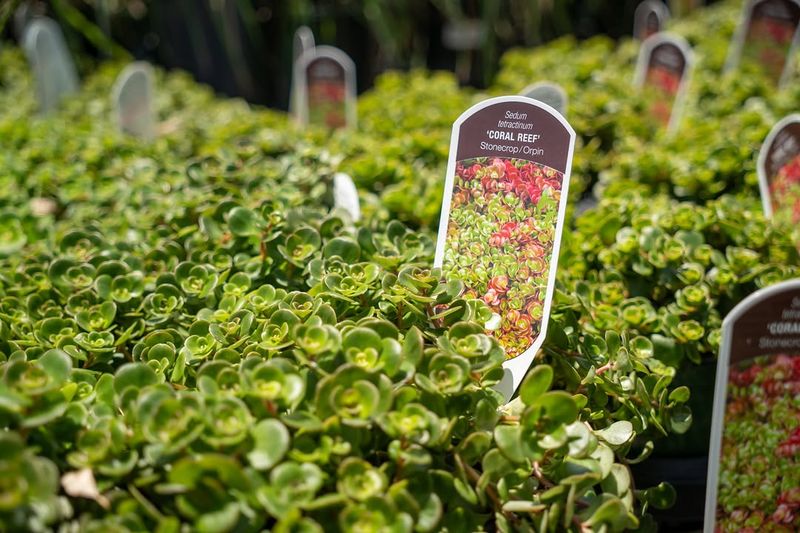
Think of these low succulent mats as a living fire blanket you can walk past every day. Their fleshy leaves are so full of water that they smother sparks rather than feed them, which makes them a favorite for the ground layer near foundations.
Sedum spreads into a tight carpet that needs mowing never and watering rarely, ticking every box for a drought-conscious California homeowner. Some ice plants burst into neon flowers that pull in native bees during the warm months.
A word of honesty: certain highway ice plant species are invasive in coastal California, so choose well-behaved native or clumping types and avoid the aggressive Carpobrotus spreading into wildlands. Used correctly in Zone 1, these groundcovers replace flammable bark mulch with something green, cooling, and genuinely protective.
7. Western Redbud (Cercis occidentalis)
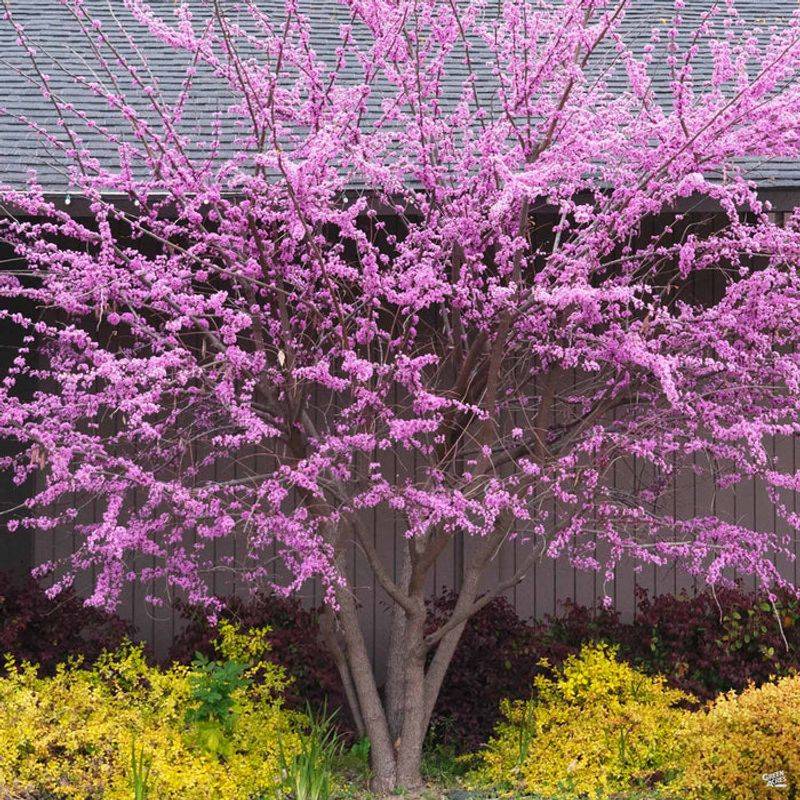
Nothing announces a California spring quite like a western redbud lighting up magenta before its leaves even appear. Beyond the show, this small deciduous tree carries relatively high moisture and low resin, which keeps it on the friendlier end of the flammability scale when maintained.
Native bees rely on those early blooms as one of the season’s first nectar sources, so a single redbud pulls real weight for pollinators. Its rounded canopy also throws welcome shade over a patio without dropping the oily, fire-prone debris that some ornamental trees do.
Give it a spot in Zone 2 or 3 with a bit of summer water in its early years, then step back as it settles into California’s dry rhythm. Keep the lower limbs trimmed and the ground beneath it clear, and you have a tree that is equal parts beauty, wildlife food, and measured caution.
8. Yarrow (Achillea millefolium)
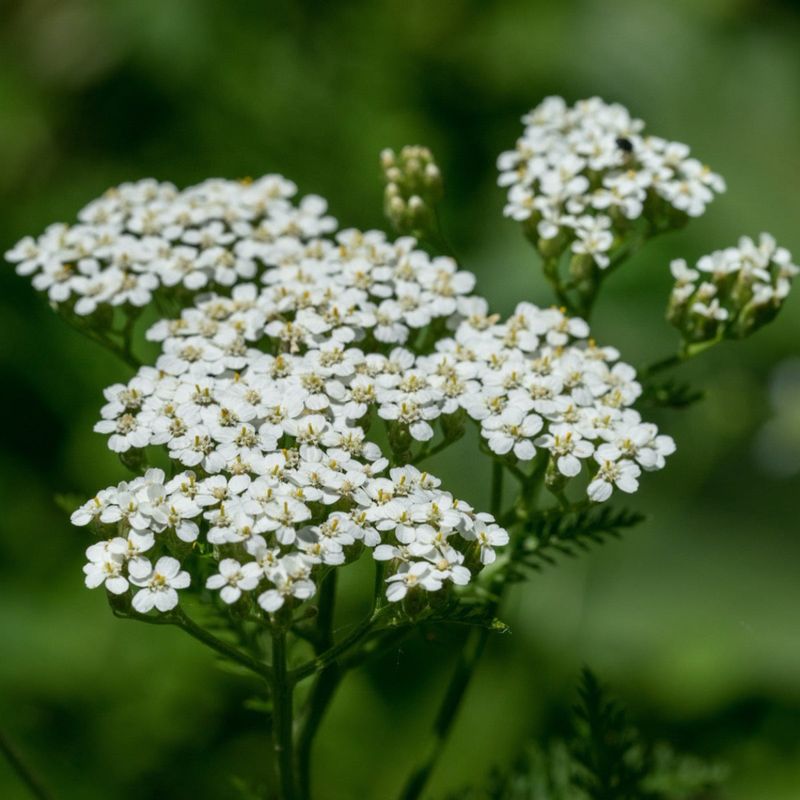
Feathery leaves and flat flower heads make yarrow look delicate, but this native is one of the toughest low-flammability perennials you can grow. It stays soft and green, avoids building woody fuel, and bounces back fast even if fire ever does pass through.
Pollinators treat a patch of yarrow like a landing pad, with hoverflies, native bees, and beneficial wasps working the blooms all summer. Because it needs so little water and no fuss, it slides neatly into a low-maintenance, fire-smart border.
Ancient soldiers reportedly used yarrow to stop bleeding, which is where the genus name Achillea comes from. Modern California gardeners have a gentler use for it: an easygoing, spreadable Zone 1 filler that keeps the ground covered, alive, and far less likely to carry an ember toward the house.
9. California Sycamore Lawn Alternatives: Carex Sedges
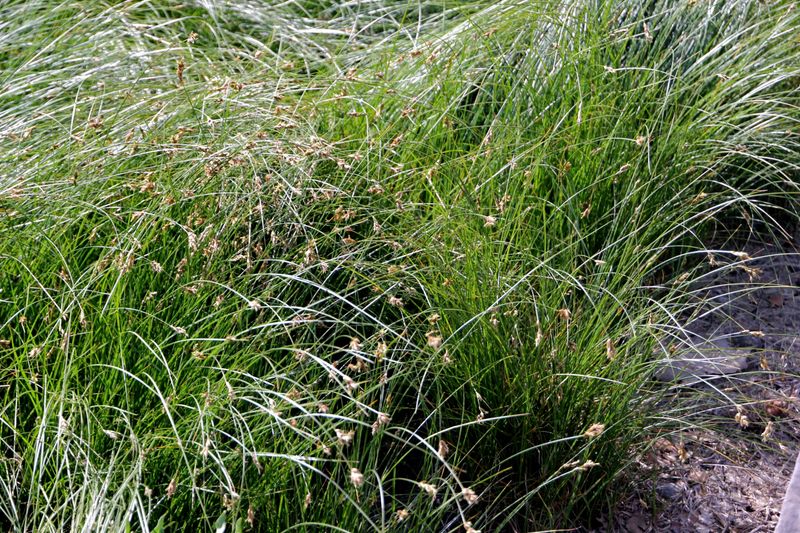
If you pulled out your lawn to follow fire-zone rules and now stare at bare dirt, native sedges are the green comeback story you have been waiting for. Carex forms soft, flowing mounds that read like a meadow but stay low and moisture-rich rather than turning into dry, ember-catching thatch.
Species like Carex pansa or Carex praegracilis can even take light foot traffic, giving you a walkable, lawn-like feel on a fraction of the water. That matters under California’s tightening water ordinances, where a thirsty turf lawn is increasingly a liability.
Ground-nesting native bees and countless small insects find shelter in a sedge meadow, so you reclaim habitat while cutting fire risk. Kept mowed once or twice a year and watered modestly, it fits Zone 1 and 2 as the calm, green floor your yard was missing.
10. Rockrose (Cistus)
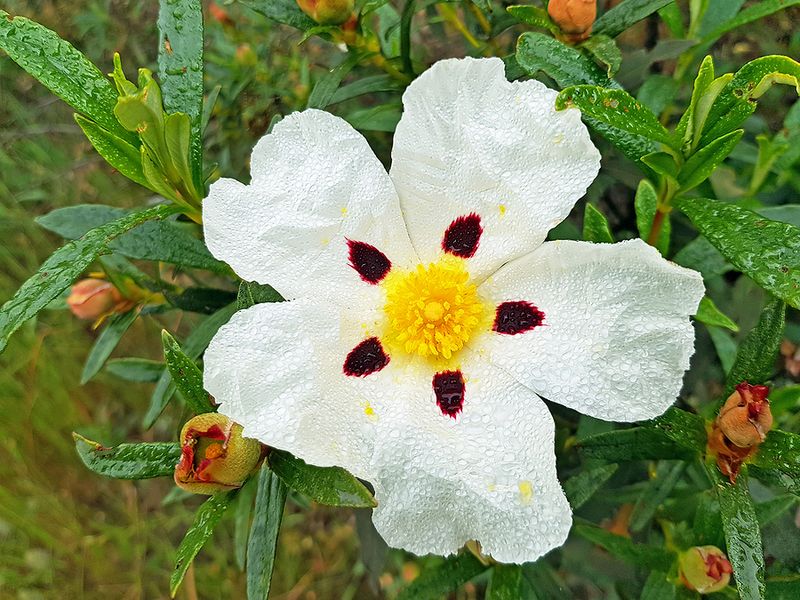
Handsome, rounded, and smothered in papery pink or white blooms, rockrose looks like a Mediterranean postcard and behaves like one too. It evolved alongside fire in its native lands, and the compact, well-watered garden varieties resist ignition better than many people expect.
The catch, and county guides are clear about it, is keeping the plant vigorous rather than letting it dry into a woody tangle. A little pruning after bloom and occasional summer water keep the foliage supple and the fire risk low.
Bees and butterflies visit the short-lived daily flowers, and the shrub asks almost nothing of your irrigation once rooted. Set it in Zone 2, spaced apart so shrubs do not form a continuous run of fuel, and it delivers color, drought toughness, and pollinator support in one tidy package.
11. Deergrass (Muhlenbergia rigens)
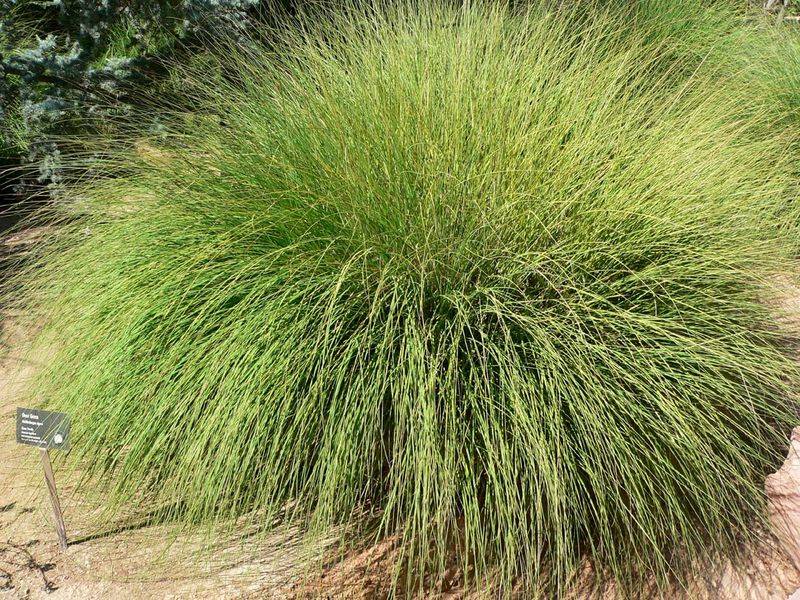
Standing like a graceful green fountain, deergrass proves that even a big native bunchgrass can earn a place in a fire-smart yard when it is handled right. Its fine blades stay relatively moist, and unlike invasive annual grasses, it does not blanket the ground with a mat of dry tinder.
California’s tribes once harvested its long stalks for basket weaving, a reminder that this plant has been useful here for centuries. In the modern yard it offers movement, structure, and cover for birds and small creatures without demanding irrigation.
Maintenance is the whole game with any grass, so comb out or trim the dead thatch each year and space clumps so they do not merge into a fire ladder. Placed in Zone 2 or 3 as an accent or informal border, deergrass gives you the soft, wild look many homeowners crave while keeping fuel in check.