
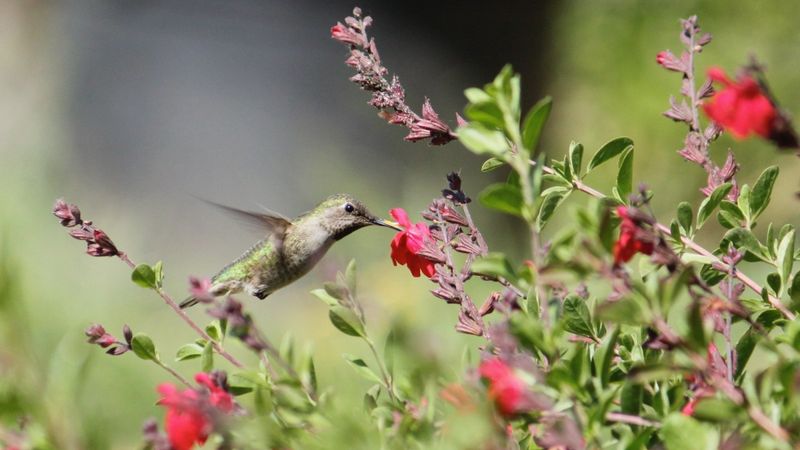
If you have ever watched a hummingbird zip right past a full feeder to land on a single plant in your yard, you know how puzzling that moment can feel. That curious behavior is worth investigating, and one California native keeps coming up as a strong candidate for the plant doing the pulling. California fuchsia, known scientifically as Epilobium canum, produces vivid tubular blooms during a stretch of the year when nectar can be genuinely hard to find. Understanding what makes this plant so useful, and how to grow it safely in your region, can help you build a yard that supports hummingbirds through the whole season.
California fuchsia is a strong late-season candidate—not a proven feeder replacement
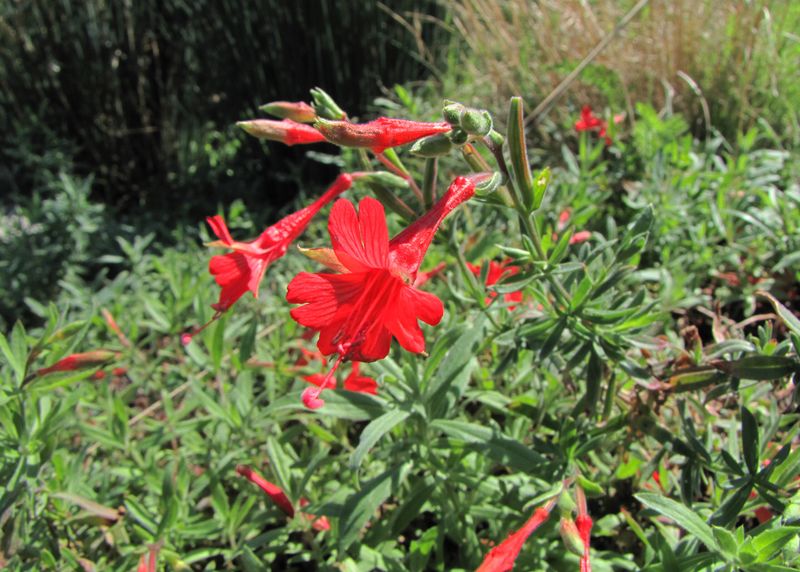
California fuchsia, known botanically as Epilobium canum and formerly called Zauschneria, is a California native perennial that produces clusters of narrow, trumpet-shaped flowers in shades of red and orange. The USDA Natural Resources Conservation Service plant guide for Epilobium canum identifies it as an important late-season nectar source for hummingbirds across the western United States. That is a meaningful endorsement from a federal land-management authority, and it is backed up by California Native Plant Society and UC Cooperative Extension sources that describe the plant as a major summer-to-fall hummingbird resource.
The article title frames feeder-skipping as a universal rule, but that framing deserves some caution. No authoritative source establishes that California hummingbirds broadly abandon a full, clean feeder for one specific plant. A hummingbird visiting California fuchsia while a feeder sits nearby could be responding to several things at once: the bird may simply be following a learned foraging route through your yard, reacting to the density of open blooms, or asserting territorial control over a flower patch it has claimed.
Territorial behavior is worth naming here because it shapes what we observe. Cornell Lab of Ornithology guidance on feeding hummingbirds notes that a dominant bird may actively guard a favored resource and exclude other birds from it, so what looks like a clear preference can partly reflect access and competition rather than taste. Individual foraging choices, local flower abundance, and the specific cultivar in bloom all matter too. California fuchsia is a strong, well-documented candidate for the plant that catches a hummingbird’s attention during the late season, but treating it as the single statewide favorite or a proven feeder replacement goes further than the evidence supports.
Late-season flowers can fill a real nectar gap
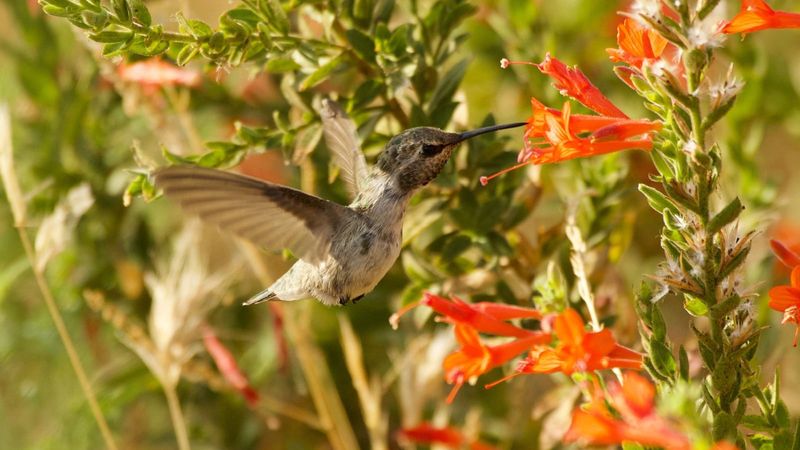
Much of California’s native flora evolved around a Mediterranean rainfall pattern, meaning plants receive most of their moisture between November and April. By midsummer, a large share of spring-blooming natives have finished flowering, set seed, and entered dormancy. That timing creates a genuine gap in natural nectar supply during the hottest months of the year, and California fuchsia steps into that gap in a way that relatively few other native plants can match.
The California Native Plant Society’s August feature on California fuchsia highlights it specifically for its late-season color and hummingbird value, noting that the plant typically blooms from late summer well into fall. UC Master Gardeners in Contra Costa County go further, describing California fuchsia as sometimes the only native plant available to hummingbirds in late fall. That statement captures something real about the late-season landscape: the competition from other flowering plants drops sharply, which can make a yard with California fuchsia stand out to a bird that needs fuel.
Bloom timing does vary, and readers should not assume every plant in every yard will follow the same schedule. Some cultivars begin flowering as early as June or July, while others do not hit their peak until August or September. Geography plays a role too: a coastal garden in the Bay Area may see different timing than an inland Southern California yard or a higher-elevation planting in the Sierra foothills. The USDA plant guide for Epilobium canum confirms that the species commonly blooms from late summer through fall, but notes that cultivar and site conditions shape the actual window.
For a California homeowner trying to support hummingbirds through the dry season, this variability is actually useful information. Choosing a cultivar with a documented early-to-late bloom range, or planting two cultivars with slightly offset flowering periods, can extend the nectar window rather than concentrating it in a single month. The late-season nectar gap is real in many California regions, and California fuchsia is one of the better native tools available to help close it.
Color helps, but flower design and nectar access matter too
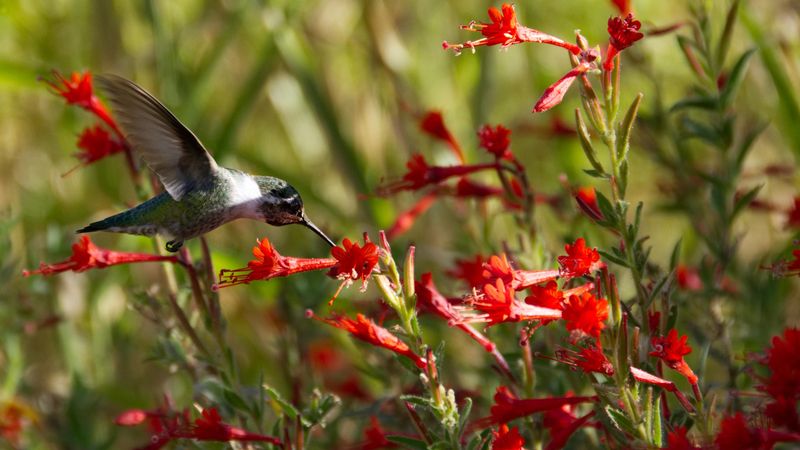
Red and orange flowers often get full credit for drawing hummingbirds, and color is genuinely part of the picture. But reducing the whole story to color misses several other factors that influence where a hummingbird chooses to feed. Flower shape, nectar accessibility, bloom density, and the bird’s own learned foraging habits all contribute to whether it stops at a particular plant.
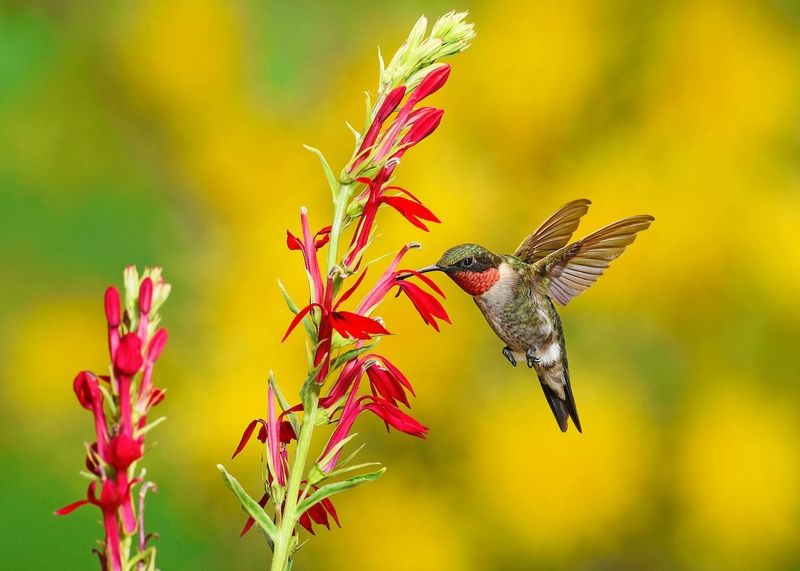
California fuchsia scores on multiple counts beyond color. Its narrow, trumpet-shaped tubes are well-matched to a hummingbird’s bill, and the flower’s structure positions the bird so that it contacts pollen while feeding, a design that benefits both the plant and the bird. The California Native Plant Society’s hummingbird gardening guide points to tubular flower form and accessible nectar as key traits that make a plant reliably useful to hummingbirds, not just visually attractive to them. When California fuchsia blooms heavily, the sheer number of open flowers also matters: a dense floral display can make a patch worth defending and revisiting.
Research adds an important qualification to the color story. A study published in The American Naturalist on atypical hummingbird flowers found that flowers lacking the classic red color or tubular form can be visited regularly and can provide nectar rewards comparable to more stereotypically hummingbird-adapted blooms. Hummingbirds learn which flowers in their territory pay off, and they update those routes based on experience. A bird that discovers a productive patch of California fuchsia will return to it, but that learned behavior reflects nectar reward and accessibility just as much as color.
For California gardeners, the practical takeaway is to think about flower design alongside color when choosing plants. A tubular, nectar-rich bloom that opens during the dry season will likely outperform a red flower that offers little reward or blooms at the wrong time of year.
Match the plant to your California yard
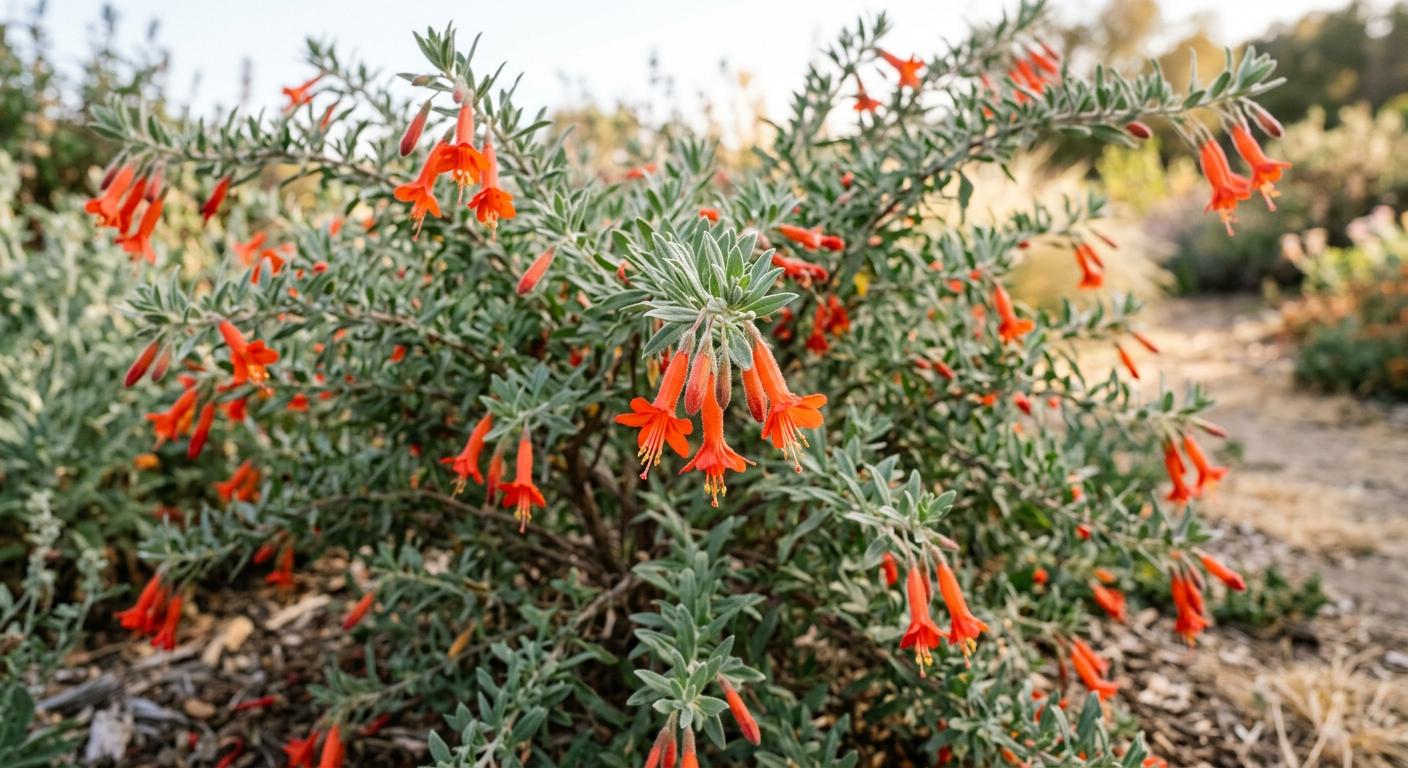
California covers an enormous range of climates, and California fuchsia reflects that diversity. The species Epilobium canum includes multiple subspecies and a growing list of named cultivars that differ in growth habit, mature size, flower color, bloom timing, and water tolerance. Assuming that any plant sold under the name “California fuchsia” will perform the same way in a Pasadena backyard as it would in a Santa Cruz coastal garden or a Sacramento Valley suburb is a setup for disappointment.
The USDA plant guide for Epilobium canum describes the species as native to a broad swath of California and the western states, but notes that subspecies have distinct geographic ranges. Some are endemic to specific California regions, meaning they evolved under particular soil, moisture, and temperature conditions that may not transfer easily to another part of the state. Buying locally sourced plants or cultivars selected for your climate zone gives you a much better chance of success than ordering a cultivar developed for a different region.
The Calscape planting guide recommends matching any California native to local soil type, drainage, sun exposure, and climate conditions before you commit to a planting location. For California fuchsia specifically, that means thinking about how much direct sun the site receives, whether the soil drains freely, and how your local summer temperatures compare to the cultivar’s documented tolerance. A low-growing mat-forming variety might suit a coastal garden with limited space, while a taller, more upright form could work better in an inland yard where you want some vertical presence.
UC Master Gardeners in Contra Costa County note that some California fuchsia varieties spread into wide groundcovers while others stay as compact subshrubs. Checking the mature dimensions of a specific cultivar before you plant avoids the surprise of a groundcover that outgrows its space or an upright form that shades out neighboring plants. Your local nursery, native plant society chapter, or UC Cooperative Extension office can point you toward cultivars with a track record in your specific part of California.
Plant and water California fuchsia without creating new risks
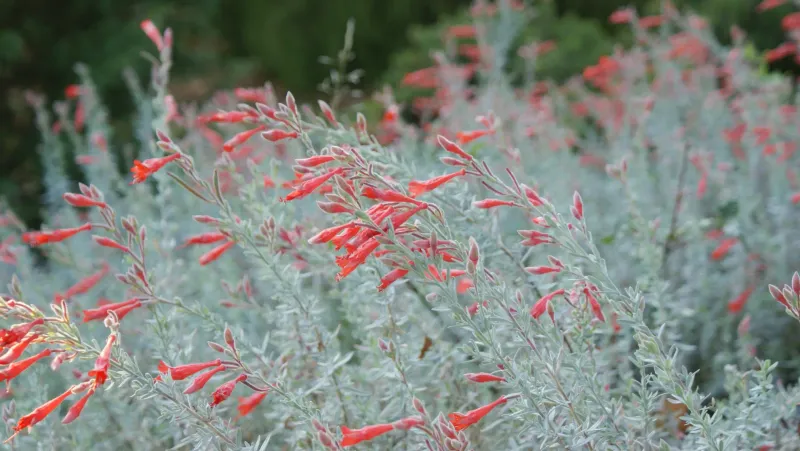
Getting California fuchsia established successfully comes down to a few consistent principles: good drainage, plenty of sun, and a watering approach that supports the plant without drowning its roots. The USDA plant guide for Epilobium canum describes the species as tolerant of heat, wind, and relatively poor soils, which makes it a practical choice for many California yards that struggle to support more demanding plants. The critical condition is drainage: soggy or poorly drained soil leads to root rot and fungal problems that can kill an otherwise tough plant.
Choose a site that receives full sun or at least most of a day’s direct light. Once established, California fuchsia handles California’s dry summers well, but UC Agriculture and Natural Resources guidance on California fuchsia notes that supplemental irrigation during extended dry periods can extend the bloom season and keep the plant looking its best. The key word is supplemental: deep, infrequent watering that allows the soil to dry between sessions is far safer than frequent shallow irrigation that keeps the root zone persistently wet. Overwatering is one of the most common ways to lose an otherwise drought-tolerant California native.
Spreading forms of California fuchsia can colonize a wide area over time. The rhizomatous growth habit that makes some cultivars effective groundcovers also means they can move into adjacent planting areas if not monitored. UC Master Gardeners recommend checking the mature spread of your selected cultivar before planting and giving it room to expand without crowding out neighbors you want to keep.
Fire safety deserves a direct mention for homeowners in wildland-urban interface communities. Drought tolerance does not equal fire resistance, and a plant that is stressed from lack of water during extreme drought conditions can become a fire hazard. The Calscape planting guide advises homeowners to check local defensible-space rules before placing dense vegetation near structures. In fire-prone areas of California, plant placement, regular maintenance, and irrigation management during peak fire season all matter, regardless of how drought-tolerant the species is rated.
Keep the feeder safe while flowers do more of the work
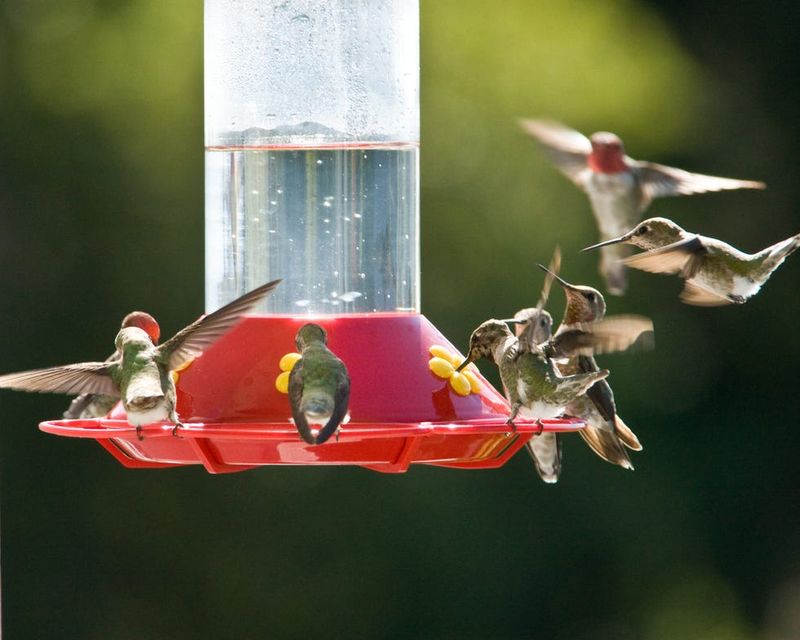
A hummingbird landing on California fuchsia while your feeder hangs nearby is not a sign that the feeder has failed or that you should take it down. Feeders and flowering plants serve genuinely different functions in a yard. A feeder delivers a consistent, standardized sugar solution on demand, while flowers offer nectar within a natural foraging context that also includes shelter, insects, and the physical experience of probing a bloom. Both have a place in a California hummingbird garden.
UC Agriculture and Natural Resources guidance on creating hummingbird gardens recommends keeping feeders available as a supplement to natural plantings rather than treating them as competitors. The feeder becomes especially useful during the gaps between bloom periods, during unusual weather that suppresses flowering, or when a newly planted California fuchsia is still getting established and not yet producing reliably. The California Native Plant Society’s hummingbird gardening guidance similarly describes feeders and native plants as complementary rather than mutually exclusive.
Safe feeder maintenance follows a straightforward protocol. Mix one part plain white table sugar with four parts water, stir until dissolved, and fill the feeder with only as much as the birds will consume in two to three days. Cornell Lab of Ornithology’s hummingbird feeding guidance recommends replacing nectar daily during very hot weather, because heat accelerates fermentation and microbial growth. Clean the feeder thoroughly each time you refill it, and place it in a shaded or partially shaded spot where direct sun will not warm the solution quickly.
Several common additions are worth avoiding entirely. Honey, molasses, brown sugar, artificial sweeteners, red food coloring, vitamins, and protein supplements are all unsupported by authoritative wildlife-care sources and can harm the birds you are trying to help. Plain white sugar dissolved in water is the only recipe backed by consistent guidance from UC Cooperative Extension and Cornell. A clean feeder with the right solution is a genuine asset alongside a blooming California fuchsia, not a backup plan or a consolation prize.
Build a hummingbird habitat around seasonal variety
California fuchsia earns its place in a hummingbird-friendly yard, but no single plant can carry an entire season on its own. Hummingbirds need a reliable succession of blooms across the year, and they also need something that a feeder and a flower patch cannot provide on their own: insects. Small insects and spiders make up a significant portion of a hummingbird’s diet, supplying the protein that sugar water simply cannot deliver.
Cornell Lab’s hummingbird feeding resource notes that hummingbirds actively hunt small arthropods, gleaning them from leaves, bark, and spider webs. A yard treated with broad-spectrum pesticides loses much of this insect biomass, which means even a beautifully planted California fuchsia patch may support fewer birds than a less manicured garden where insects are present. The UC Statewide Integrated Pest Management Program’s guidance on pesticides encourages homeowners to consider the effects of any treatment on beneficial wildlife before applying it. Targeted, minimal intervention protects the insect food web that hummingbirds depend on.
For bloom succession, UC Agriculture and Natural Resources recommends combining plants with staggered flowering periods across winter, spring, summer, and fall. Native currants and flowering currants can bridge the winter-to-spring gap; monkeyflowers, penstemons, and native sages cover spring and early summer; California fuchsia and island snapdragon extend the season into fall. UC Marin Master Gardeners and UC Cooperative Extension’s native plant blog both emphasize locally appropriate selection over any fixed plant list, so treat these examples as starting points rather than a prescribed menu.
Territorial behavior can also distort what you observe in your yard. A single dominant hummingbird may monopolize both a feeder and a flower patch, making the yard look less productive than it actually is. Placing two or three smaller feeders in separate locations, ideally out of sight of each other, reduces the ability of one bird to guard all resources at once and gives subordinate birds a fair chance to feed.
Plant for a reliable season, not a miracle favorite
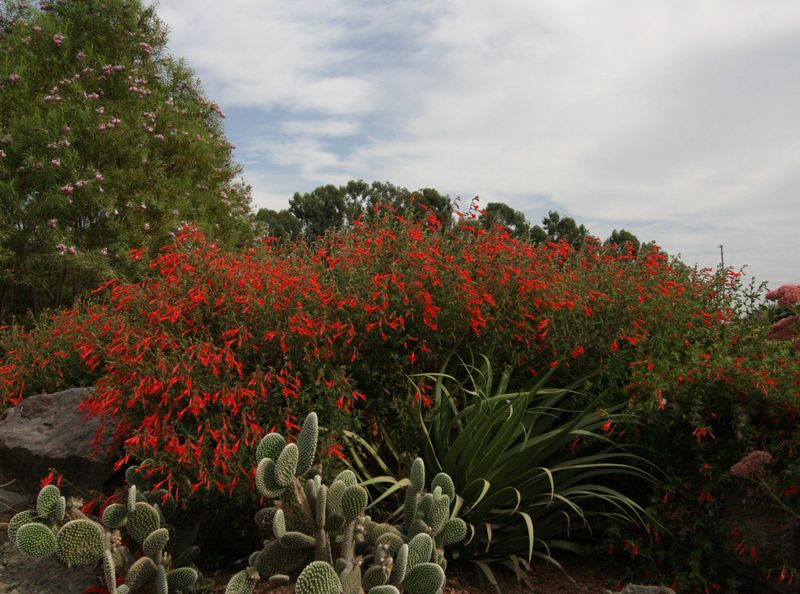
California fuchsia is a genuinely useful plant for hummingbird gardeners across much of the state, and the late-season nectar gap it helps fill is real in many California regions. If you have ever noticed a hummingbird spending more time at your California fuchsia than at a nearby feeder, that observation is worth taking seriously as a clue about what the bird needs during that part of the season. What it does not tell you is that the plant has been proven to outperform feeders universally, or that one cultivar will work equally well from San Diego to Redding.
The practical formula that holds up across California’s varied climates is straightforward. Choose a California fuchsia cultivar matched to your local soil, drainage, and sun conditions, using Calscape or your local UC Cooperative Extension office as a guide. Establish it carefully with well-drained soil and supplemental water during its first dry season. Keep a clean feeder available using the UC-recommended one-part sugar to four-parts water recipe, and replace the nectar on schedule.
Protect the insect habitat in your yard by limiting broad pesticide use. Pair California fuchsia with other native bloomers so that hummingbirds have reliable nectar from multiple sources across the year.
A yard that offers a living, insect-rich, seasonally varied habitat alongside a safe feeder is a more honest gift to hummingbirds than any single plant could be on its own.