
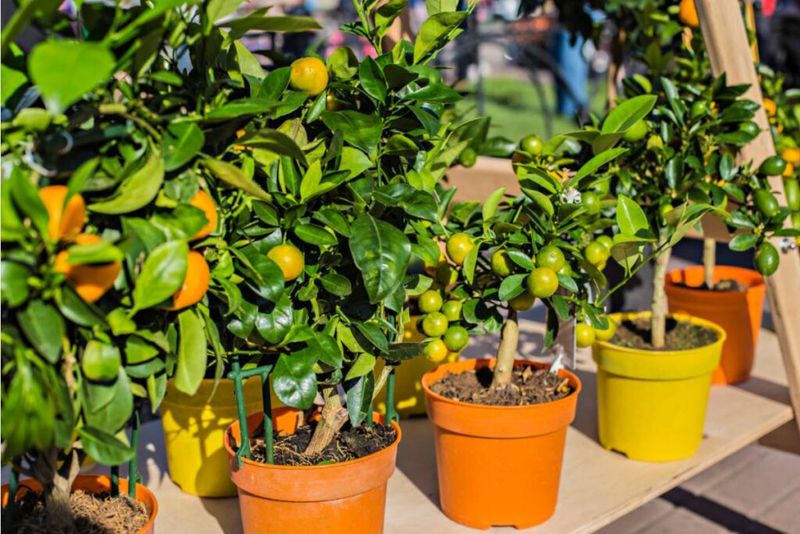
You do not need a big backyard to grow real fruit in California. All over the state, homeowners are tucking dwarf fruit trees into pots on patios, balconies, and narrow side yards, and picking their own citrus and figs from a container smaller than a trash can. Growing in pots also lets you control water carefully, which matters a lot during dry summers and water restrictions. Here are seven dwarf fruit trees that thrive in containers and fit even the tiniest California patio.
1. Improved Meyer Lemon
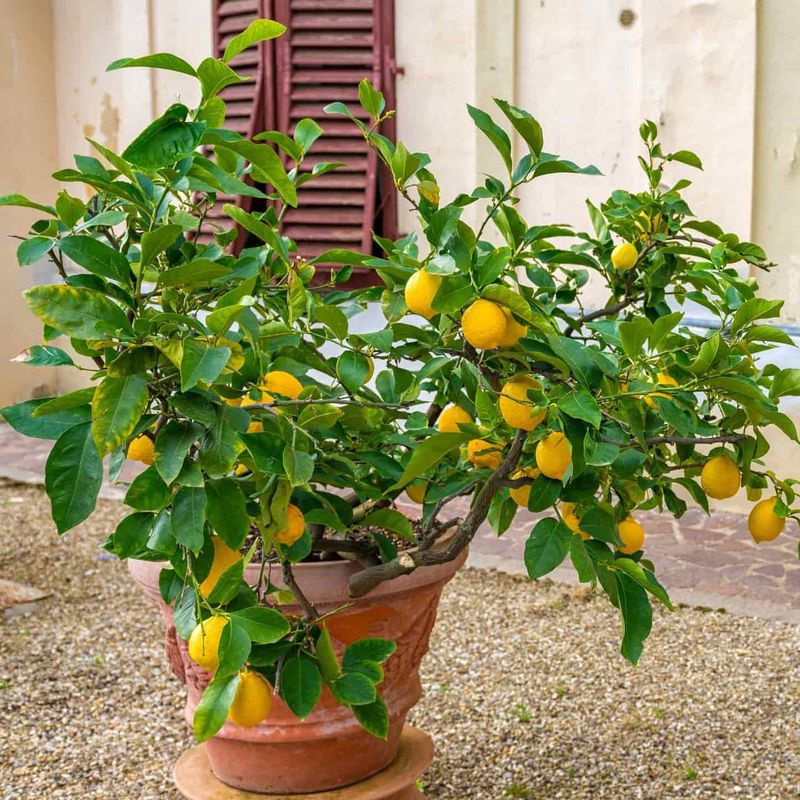
Ask ten California patio gardeners what their first potted tree was, and most will say a Meyer lemon. The Improved Meyer stays naturally small, handles a 15-gallon pot happily, and rewards you with sweet-tart fruit almost year-round in mild coastal and inland zones.
Blooms often appear alongside ripe fruit, and those fragrant flowers are a magnet for local bees. If you want to support pollinators without planting a whole garden, a single blooming Meyer on the patio does quiet, useful work.
Water is where container growers get tripped up. Meyers hate soggy roots, so a pot with real drainage holes and a chunky citrus mix beats overwatering every time. During peak summer heat, you may need to water more often, but always check that the top inch of soil has dried first.
Fun fact: the Meyer is thought to be a cross between a lemon and a mandarin orange, which is exactly why it tastes softer and sweeter than the lemons at the store.
2. Bearss Lime
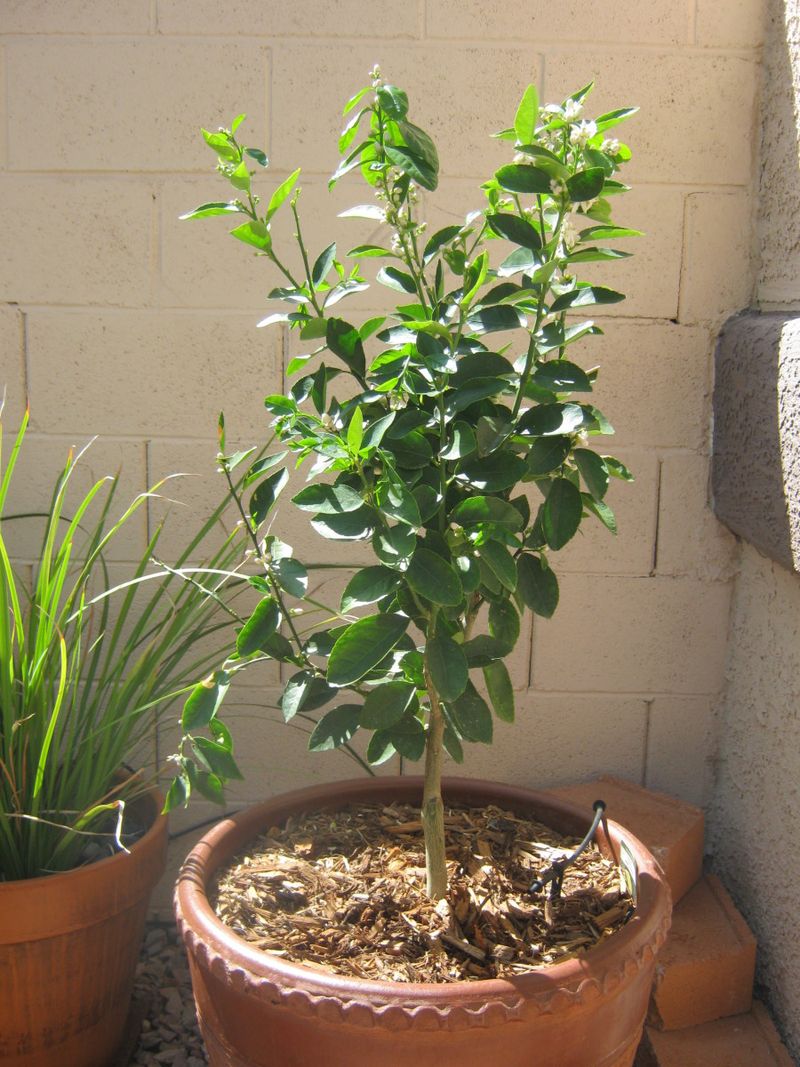
Fresh limes cost a small fortune at the market, so growing your own feels a little like getting away with something. The Bearss lime (also called Persian lime) is thornless, seedless, and stays compact enough for a big container on a Southern California patio.
What sets it apart from other citrus is its tolerance for the warm inland valleys. While some lime varieties sulk in the heat, Bearss keeps producing juicy green fruit through the long dry season, then ripens toward yellow if you leave it on the branch.
Because it flowers repeatedly, it offers steady nectar for native bees, and a potted lime near a kitchen door means pollinators visit right where you can watch them. Keep the pot in full sun and shelter it from cold snaps, since limes are the most frost-sensitive of the common citrus.
A quick tip for container success: feed lightly with a citrus fertilizer during the growing months, because potting soil runs out of nutrients faster than garden ground.
3. Black Mission Fig
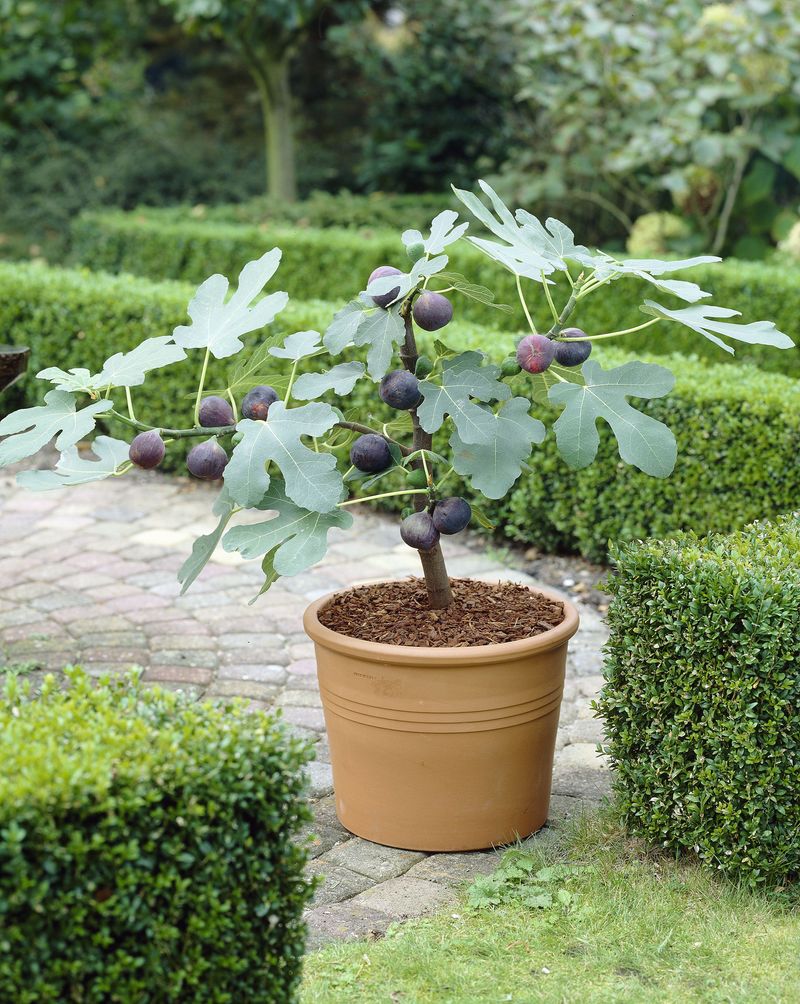
Few trees feel more at home in California than the fig, and the Black Mission has been growing here since the old Spanish missions gave it its name. In a pot, its roots stay restrained, which actually encourages more fruit and keeps the tree at an easy picking height.
Figs are famously drought-tolerant once established, making them a smart pick for water-wise patios. During the hottest weeks you will still water a container fig regularly, but it forgives you far more than thirstier fruit trees do.
The dark, honey-sweet fruit ripens in summer, and birds will absolutely notice. If you would rather share on your terms, a light drape of netting protects the harvest while still letting you enjoy the wildlife that shows up.
Come winter, the tree drops its big leaves and rests, so do not panic when it looks bare. Move the pot to a spot that catches winter sun and it will leaf out again when the warm days return.
4. Dwarf Washington Navel Orange
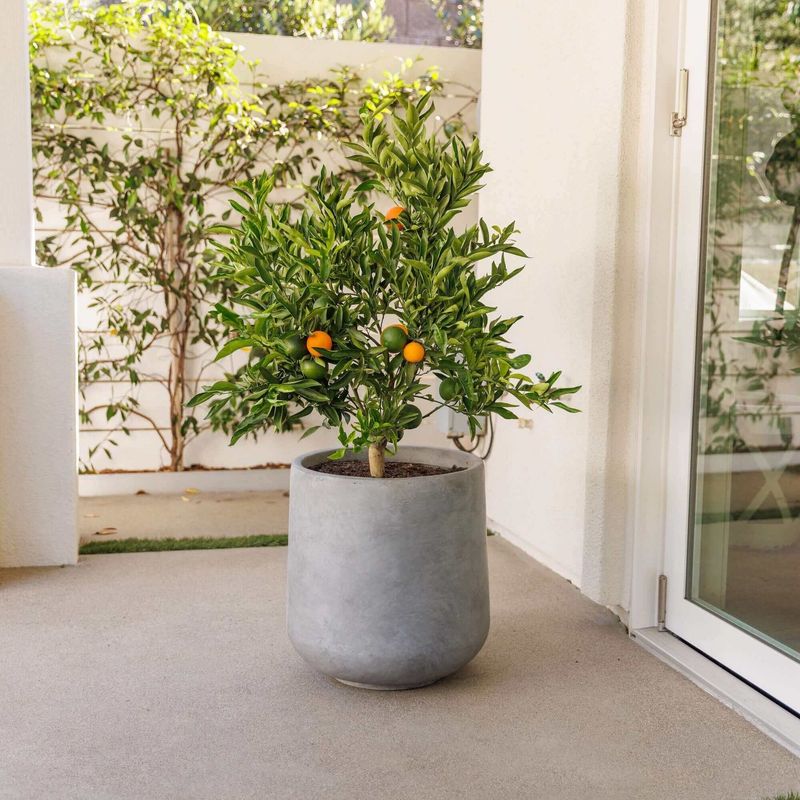
Nothing says California quite like a homegrown navel orange, and Riverside built its early fame on this very tree. Grafted onto dwarfing rootstock, the Washington Navel shrinks down to patio size while keeping the same sweet, seedless fruit that made it famous.
Winter is its showtime. The fruit ripens through the cool months, so a potted navel gives you bright color and vitamin C exactly when the rest of the patio looks sleepy.
Its spring blossoms fill the air with a scent people travel miles to smell, and those flowers feed bees before most other plants wake up. A single tree by the door can perfume an entire small patio.
Container growers should watch for yellowing leaves, which usually signal hungry roots or uneven watering rather than disease. A steady schedule and a slow-release citrus feed keep the leaves deep green and the fruit coming.
5. Dwarf Pomegranate
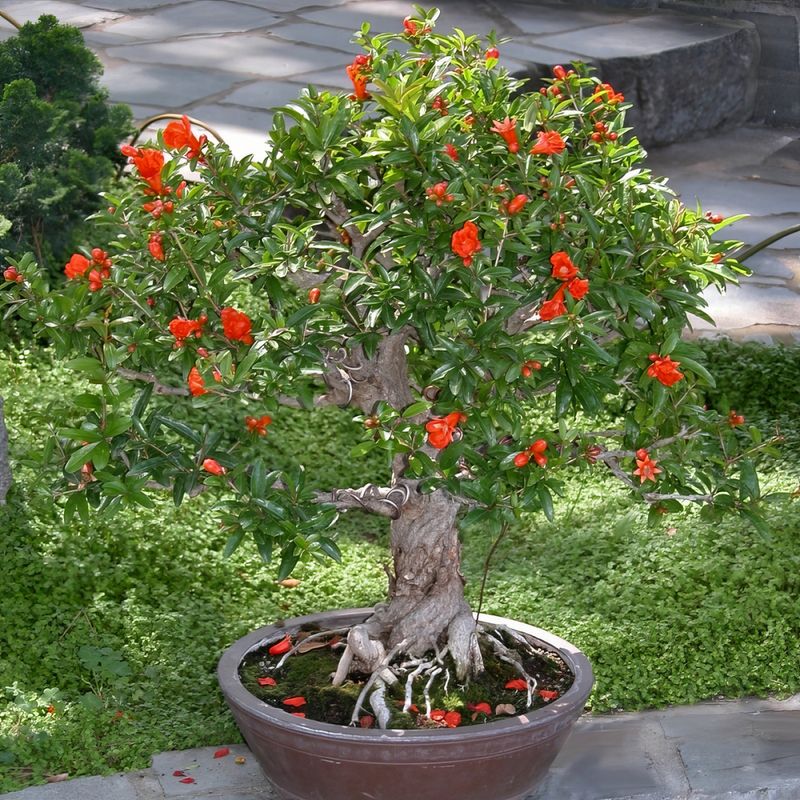
Here is a tree that earns its patio spot on looks alone. The dwarf pomegranate throws out flame-orange flowers all summer, then follows with glossy little fruits, all on a shrubby plant that rarely tops four feet in a pot.
Its real superpower is toughness. Pomegranates shrug off heat, thrive on modest water, and handle the dry inland conditions that scorch fussier fruit trees, which makes them a genuinely water-wise choice for California containers.
Hummingbirds and bees flock to those tubular blossoms, so the plant pulls double duty as both fruit source and pollinator stop. Even the ornamental dwarf varieties bloom generously, though some produce tiny fruit meant more for show than for eating.
Plant it in full sun, let the soil dry between waterings, and resist the urge to fuss. A pomegranate that gets a little neglect often flowers better than one that gets pampered, which suits busy gardeners just fine.
6. Dwarf Fuyu Persimmon
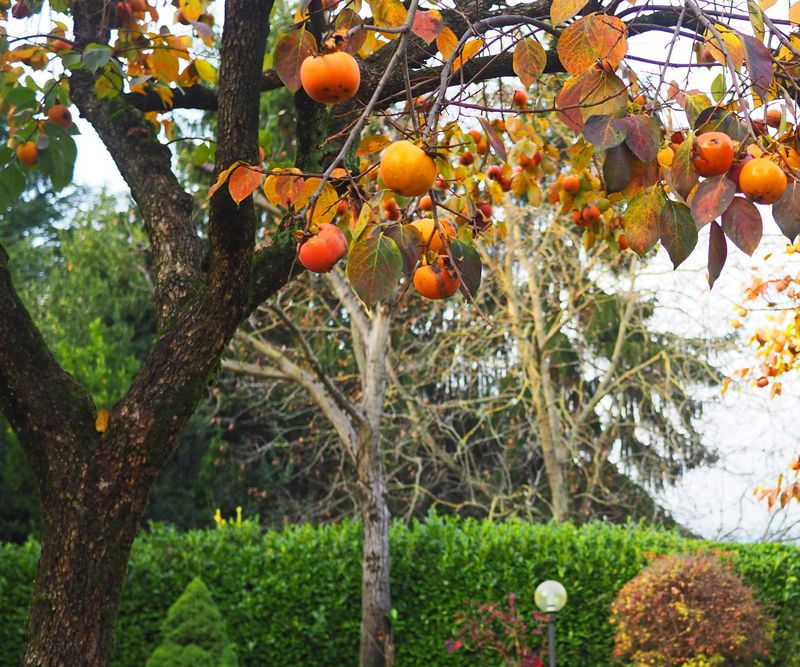
Autumn on a California patio gets a whole lot prettier with a Fuyu persimmon in the mix. The leaves turn fiery shades before dropping, leaving glowing orange fruit hanging like ornaments on the bare branches.
Unlike astringent persimmons, the Fuyu is sweet and crisp while still firm, so you can eat it like an apple straight off the tree. Grafted dwarf versions settle nicely into a large container and stay easy to reach.
Birds find those bright fruits irresistible in late fall, and honestly, watching cedar waxwings or mockingbirds stop by is half the fun. If you want to keep more for yourself, harvest as soon as the fruit colors up fully.
Persimmons need a real winter chill to fruit well, so this one shines in inland valleys and cooler zones rather than the mildest coastal pockets. Give the pot a sunny, sheltered spot and it will reward you for years.
7. Dwarf Bonanza Peach
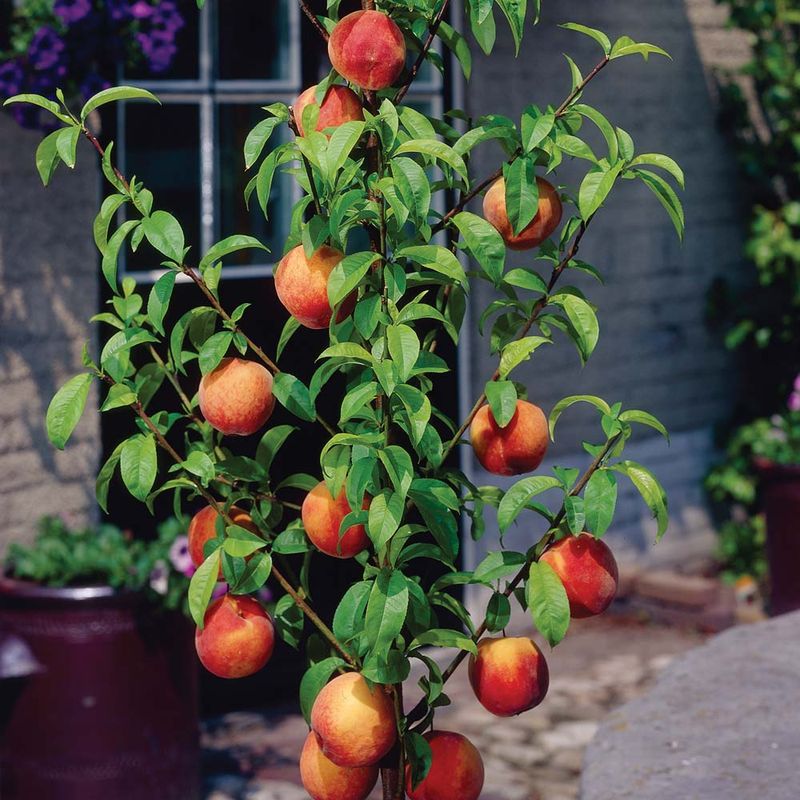
Believe it or not, you can grow a real peach on a balcony. The Bonanza is a genetic dwarf, meaning it stays naturally tiny, around four to six feet, without any grafting tricks, and it fits a container beautifully.
Spring brings a burst of showy pink blossoms that draw early bees, turning a small pot into a pollinator pit stop before most gardens have woken up. Then come the full-size, fuzzy, juicy peaches on a tree you can practically pick while sitting down.
Peaches do need winter chill hours, so this variety performs best in inland and valley climates rather than the warmest coastal strips. Check that your zone gets enough cold nights, or the tree may bloom poorly.
Because it is deciduous, it rests bare through winter and explodes back to life in spring. Prune lightly after harvest, watch for peach leaf curl in wet weather, and you will get a surprising haul from one small pot.