
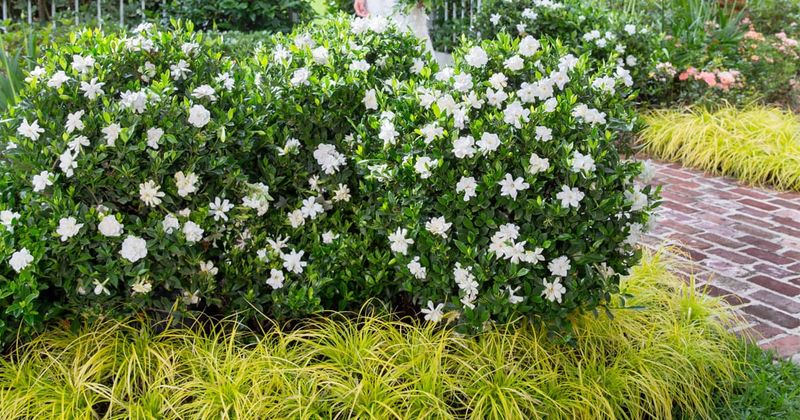
Gardenias are not easy plants to begin with, and a Texas July can push even a healthy one to its limit. Bud drop, scorched leaves, and sudden yellowing are common complaints from gardeners watching a once-beautiful plant struggle through triple-digit heat. The good news is that a focused midsummer reset can help your gardenia hold onto its foliage and recover some ground, even if the blooms have already faded for the season.
Extreme heat changes the goal from more blooms to a healthier plant
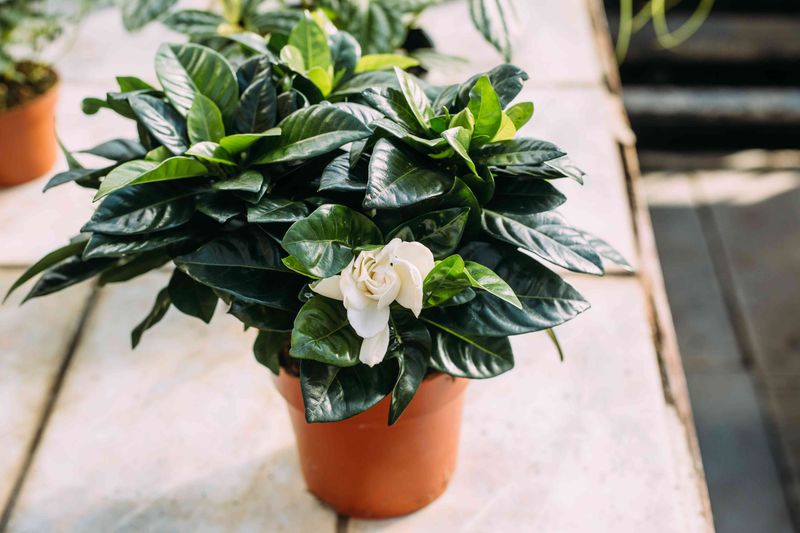
Gardening through a Texas summer means adjusting expectations before adjusting anything else. When temperatures push past 95 or 100 degrees Fahrenheit, a gardenia stops putting energy into flowering and starts working just to survive. Texas A&M guidance cited by Denton County Master Gardeners specifically notes that hot Texas summer temperatures are not conducive to long gardenia bloom periods, which means bud drop during a heat wave is not a sign that you failed. It is a sign that your plant is responding normally to an extreme environment.
The practical shift is this: stop measuring success by flower count in July and start measuring it by foliage quality and plant condition. A gardenia that holds its deep green leaves through the hottest stretch of summer is in a far better position to rebound and bloom again when temperatures ease. One that drops leaves, develops widespread yellowing, or suffers root damage from poor watering or drainage may not recover quickly, if at all.
Texas is not a single growing environment, and that matters when interpreting heat stress. The Texas A&M Earth-Kind plant selector divides the state into eight distinct regions. A gardenia in the Rio Grande Valley faces a different combination of heat, humidity, and soil chemistry than one planted in the Hill Country or the Panhandle. Coastal East Texas gardeners deal with humidity that can mask moisture stress, while Central Texas gardeners often contend with alkaline soils and intense sun.
Identifying which conditions apply to your specific location helps you read your plant’s symptoms more accurately.
Clemson Extension confirms that insufficient light, uneven moisture, and abrupt temperature changes can all cause bud drop independent of overall plant health. During periods of extreme summer heat in parts of Texas, those stressors often stack. The honest midsummer objective is to reduce additional stress and protect the foliage you still have, not to force a plant into flowering through conditions that work against it.
Water the root zone without creating a second problem
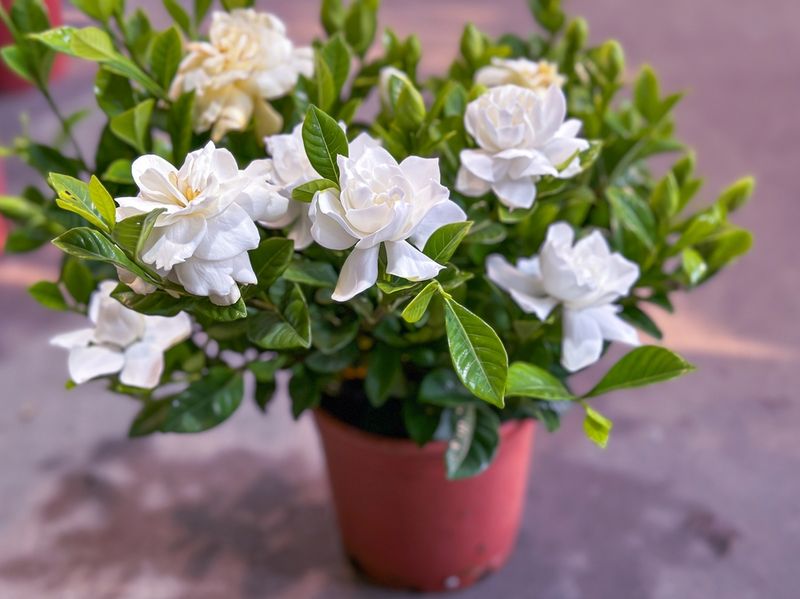
Reaching for the hose every time a gardenia droops is a reflex that can backfire. Wilting during peak afternoon heat does not automatically mean the soil is dry. Root rot, poor drainage, and saturated soil can cause the same wilting symptoms as drought stress, and adding more water to an already wet root zone makes the damage worse. Before you water, push a finger or a thin wooden dowel a few inches into the soil near the root ball.
If it comes out damp, the plant does not need water yet.
When soil moisture is genuinely low, water slowly at the root zone rather than overhead. The goal is to moisten the soil deeply, not just wet the surface. Clemson Extension’s gardenia disease and problems factsheet emphasizes the importance of avoiding both drought and standing wetness, because poor drainage and overwatering favor the root rots that can kill a gardenia quietly before the foliage shows obvious trouble. Once you have watered deeply, let the top layer of soil begin to dry before you water again.
No single schedule works across all Texas gardens. Texas SmartScape recommends checking soil moisture near the root ball and adjusting to local watering restrictions, which vary by municipality. Sandy soils in East Texas drain quickly and may need water sooner than the dense clay soils common in parts of North and Central Texas. A gardenia in a container dries out considerably faster than one planted in the ground, because the pot limits root volume and insulates less effectively against heat.
University of Arizona Cooperative Extension guidance on drought and extreme heat points out that plants under heat stress are already working harder to manage water loss, which means irrigation errors during a heat wave carry more risk than they would in moderate weather. Factor in recent rainfall, your soil type, how much sun the plant receives, and whether your water utility has active restrictions before you settle on any routine. The method matters more than the calendar.
Cooler roots and gentler light can buy a gardenia time
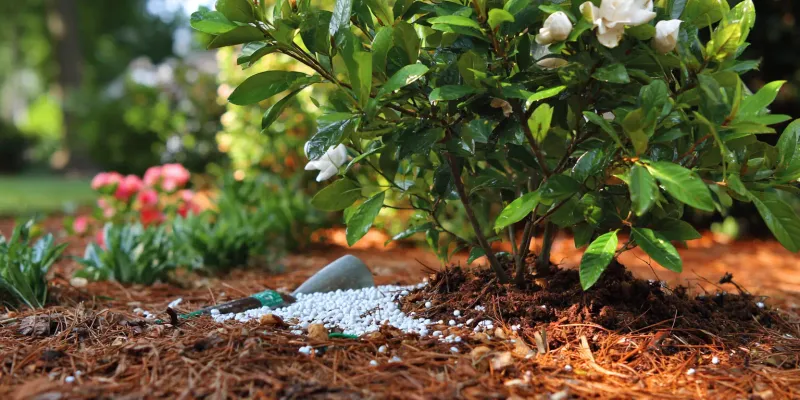
Soil temperature at the root zone can climb well above air temperature during a Texas summer, especially in sites with full western exposure and little ground cover. Organic mulch applied over the root area acts as insulation, slowing that heat buildup and reducing the rate at which the soil dries out between waterings. Texas A&M AgriLife Extension materials describe mulch as a practical tool for conserving moisture and cooling soil during extreme Texas summer conditions. Spread a two-to-three-inch layer of shredded bark or another organic mulch over the root zone, but keep it pulled back from direct contact with the trunk and stems to avoid rot and pest harborage.
Light is the trickier variable. Gardenias need enough sun to flower, and moving a plant into deep shade will not improve its long-term health or blooming potential. UF/IFAS gardenia guidance notes that the plant can grow in full sun, partial shade, or shifting shade, but prolonged shade reduces flowering. The practical compromise for a plant that is repeatedly wilting or showing scorched leaf margins in a hot site is bright morning light paired with protection from the most intense afternoon sun, typically the hours between roughly 2 p.m. and sunset in midsummer.
For in-ground gardenias, a shade cloth temporarily rigged on the west side of the plant can reduce afternoon exposure without permanently changing the garden layout. Container plants present a different challenge. Moving a potted gardenia to a cooler or shadier spot sounds straightforward, but abrupt or repeated relocations can themselves contribute to bud drop, because the plant is sensitive to sudden changes in light and temperature. Extension guidance on Texas gardenia culture acknowledges that containers can be useful where native soil is too alkaline, but they still require consistent moisture and careful placement.
If a move is necessary, do it gradually and avoid shifting the plant back and forth.
Acidic, well-drained soil supports the plant beneath the leaves
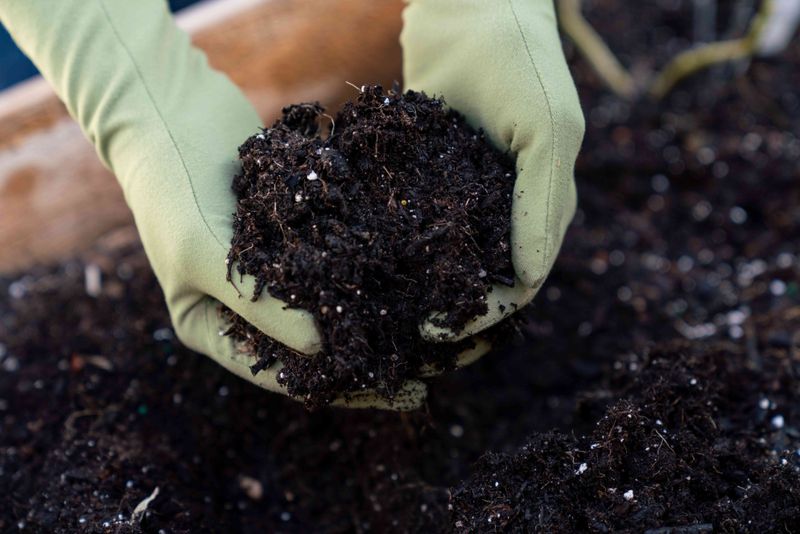
Gardenias are particular about soil chemistry, and parts of Texas make that chemistry difficult to achieve. Alkaline soils are common across Central Texas, the Hill Country, and portions of North Texas, and a gardenia planted directly into high-pH native soil will struggle even with attentive watering and careful feeding. UF/IFAS puts the optimum soil pH range for gardenias at 5.0 to 6.5, while Clemson Extension narrows that window to 5.0 to 6.0 and notes that iron becomes less available to plants once soil pH climbs above 7.0. Both ranges reflect the same underlying need: acidic, well-drained conditions that allow roots to absorb nutrients efficiently.
Yellow leaves between green veins can point to iron chlorosis caused by high pH, but that same pattern shows up when drainage is poor, when roots are damaged, when the plant is overwatered or underwatered, when pests are feeding, or when light is insufficient. Clemson’s disease and problems factsheet is direct on this point: yellowing has multiple possible causes, and applying iron or acidifiers without first understanding the actual problem can waste money and potentially worsen the plant’s condition. Soil testing is more reliable than guessing from leaf color alone.
Before reaching for sulfur, iron chelate, or any other amendment, have your soil tested through your county extension office or a reputable lab. The results will tell you the actual pH and whether any correction is warranted. Naturally alkaline Texas soils may not be permanently changed by casual acidifying products, and repeated applications of aluminum sulfate or similar materials without guidance can damage roots or create nutrient imbalances. If your soil tests within an acceptable range and yellowing persists, check drainage and look for pests before assuming a nutrient problem.
Drainage matters as much as pH. A gardenia sitting in compacted or poorly drained soil will develop root problems regardless of how carefully it is watered. If standing water lingers near the plant after rain or irrigation, improving drainage through amendment or raised planting is more productive than adjusting pH alone.
Match pruning and feeding to the plant’s stress and flowering stage
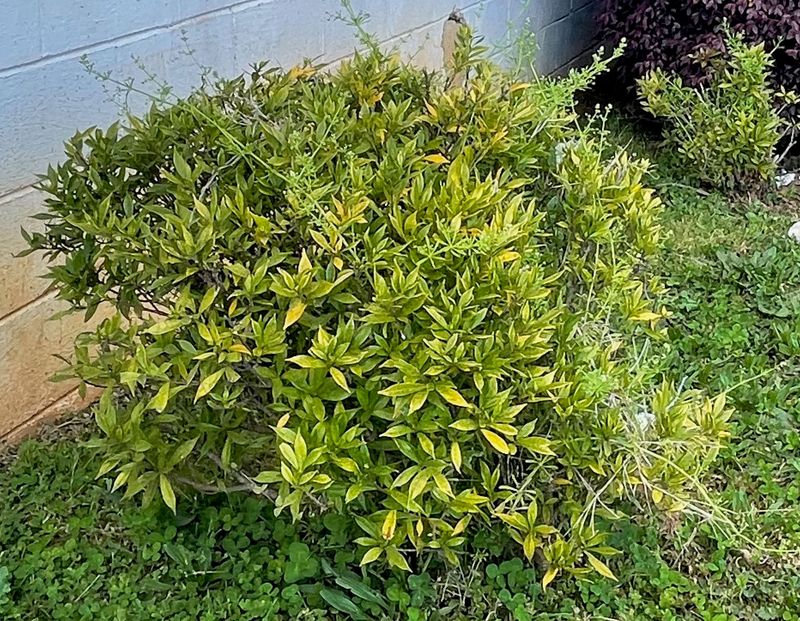
Pruning and fertilizing feel productive, but both can add stress to a plant that is already struggling through extreme heat. The timing and the severity of each intervention matter more than whether you do them at all. Heavy corrective pruning during periods of serious heat or drought stress removes foliage the plant needs for photosynthesis and exposes more of the plant to sun and drying wind. That is a compounding problem, not a solution, when a gardenia is already working to stay alive.
Dead or diseased wood is different. Removing a dead branch or a section showing signs of disease is generally appropriate regardless of season, because leaving it in place creates no benefit and can harbor pests or pathogens. Keep cuts clean and minimal. Extension guidance on gardenia pruning timing notes that light or routine shaping fits best immediately after flowering, before the plant begins setting buds for the next cycle.
Pruning later in the season risks removing those developing buds, which would eliminate next season’s flowers before they have a chance to open.
If your gardenia has already finished its current bloom period and is not severely stressed, light shaping is reasonable. If it is still flowering, or if it has been under prolonged heat and drought stress, hold off on anything beyond dead-wood removal until conditions improve. The plant’s current state is a better guide than the calendar.
Fertilizer carries its own risks in midsummer. University of Arizona Cooperative Extension advises minimizing or skipping fertilizer during drought and excessive heat, because fertilizer salts can further stress a plant whose root system is already compromised. Established gardenias generally need only two or three applications of fertilizer per year, using a product formulated for acid-loving plants. If conditions and the label support a summer application, follow the label’s directions precisely.
Repeated midsummer feeding is not necessary for bloom and can do more harm than good when the plant is heat-stressed. UF/IFAS gardenia care guidance reinforces this conservative approach to fertilization for established plants.
Inspect the leaf undersides before choosing a spray
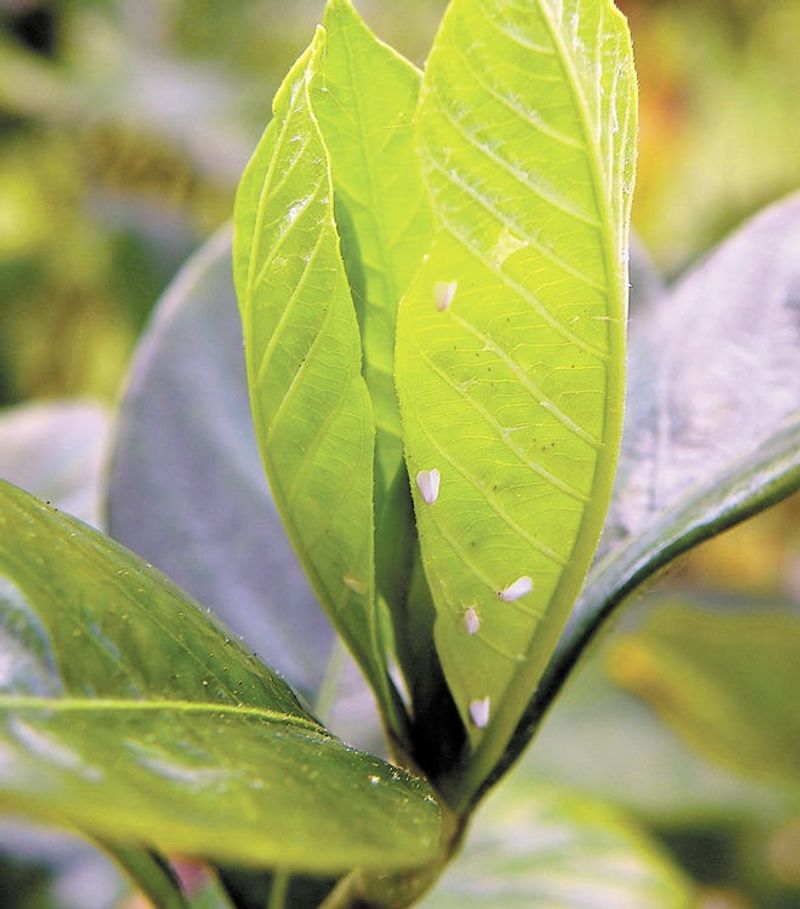
A gardenia under heat stress is also more vulnerable to pest pressure, and the two problems can look similar from a distance. Before reaching for any spray, turn the leaves over and look carefully at the undersides. That is where whiteflies, scale insects, aphids, and spider mites tend to concentrate. Each pest causes different damage and responds to different treatments, so identifying what you are actually dealing with is the first step, not the last.
Whiteflies are a commonly reported problem on gardenias and are worth checking for specifically. When disturbed, they lift off in a small white cloud from the leaf undersides. Clemson Extension’s gardenia insect and pest factsheet and NC State Extension’s shrub pest resource both identify whiteflies, scale, and aphids as key pests to monitor. These insects produce honeydew, a sticky waste product that coats leaf surfaces and supports the growth of sooty mold.
If you see a black, sooty coating on your gardenia’s leaves, the more productive question is not which fungicide to use but which insect is feeding above it. Treating the mold without addressing the insect that feeds it accomplishes little.
Spider mites are harder to see with the naked eye but leave a telltale fine webbing on leaf undersides and cause a stippled, dusty appearance on leaf surfaces. They tend to flare up during hot, dry weather, which makes a Texas midsummer an especially common time to find them.
Once you have identified the pest, match the treatment to the label. Insecticidal soap and horticultural oil can be effective for soft-bodied insects, but thorough coverage of leaf undersides is essential. Clemson Extension guidance is clear that horticultural oils and sulfur should not be applied above 90 degrees Fahrenheit or to drought-stressed plants. Clemson’s main gardenia factsheet gives a similarly cautious temperature window for oil applications.
Always read the current product label before applying anything; the label legally controls application directions and temperature limits, and those details can vary between products and formulations.
Use a region-aware July reset to protect what the heat has not taken
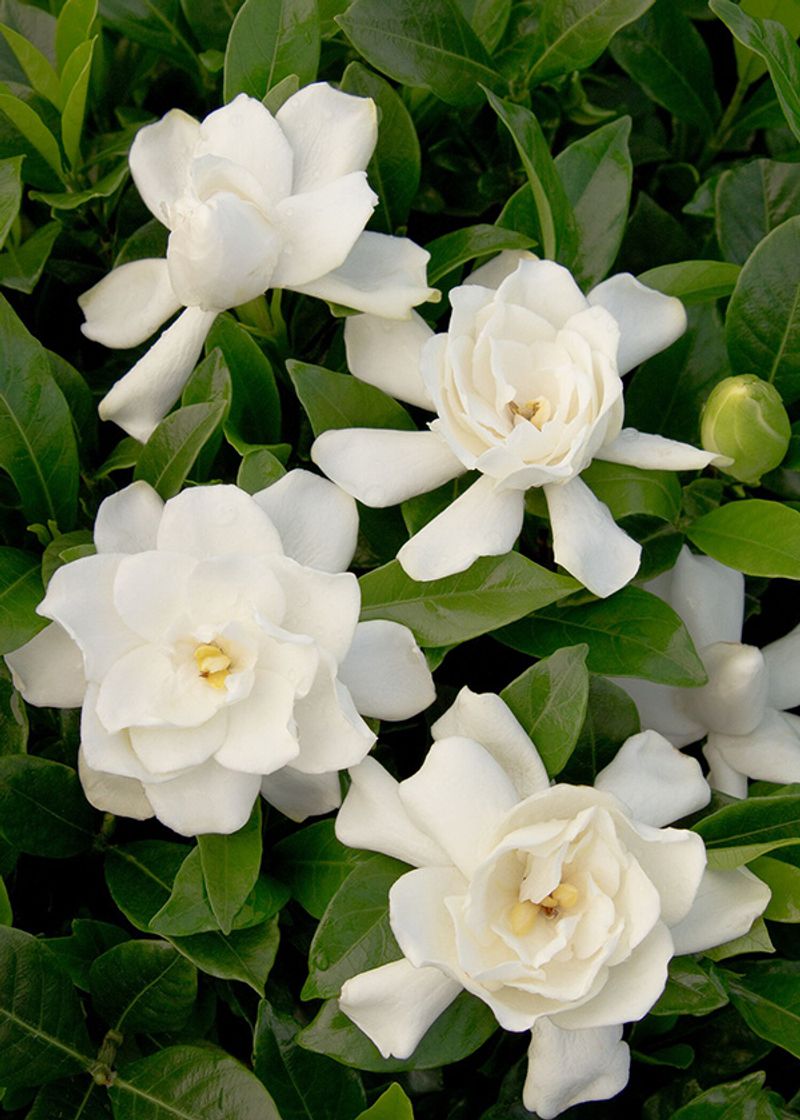
A useful July reset for a Texas gardenia follows a clear order of priorities. Start with moisture and drainage: check the soil near the root ball before watering, water deeply at the root zone when it is genuinely dry, and confirm that water is not pooling around the roots after rain. Then address root-zone temperature by maintaining an organic mulch layer, kept away from the trunk, to slow heat buildup and reduce moisture loss between waterings.
From there, assess light. A plant that is repeatedly scorching or wilting in a western exposure may benefit from afternoon shade, but avoid abrupt moves for container plants. Test your soil before applying any pH amendment or iron product. UF/IFAS gardenia guidance and Texas extension resources both support testing over guessing when yellowing appears.
Match any pruning to the plant’s current flowering stage and stress level, limiting cuts to dead or diseased wood if the plant is severely stressed or still developing buds.
Delay fertilizer if the plant is under heat or drought stress, and scout leaf undersides for pests before choosing any treatment. Remember that your execution of all of this depends on where in Texas you are gardening: Texas A&M’s Earth-Kind regional framework reflects how differently the state’s climates behave. Container status, local water restrictions, and your water source’s chemistry all affect how these steps play out in practice. Extension guidance on caring for gardenias reinforces that consistent conditions matter more than any single correction.
The realistic payoff of a careful July reset is better odds of retaining healthy foliage and carrying the plant through the heat with less damage, and that is worth more than it sounds when September finally arrives.