
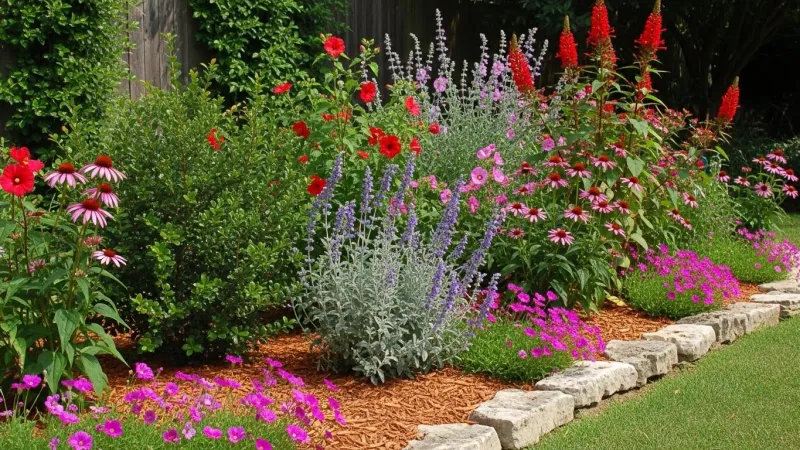
Lantana has been the go-to border plant in Texas yards for years, but it can spread where you don’t want it and looks tired once the heat really cranks up. The good news is that Texas is packed with native plants that shrug off triple-digit summers, handle water restrictions, and feed the bees and birds all at once. Swapping in these tough natives means a border that earns its keep in spring, survives the brutal months, and still shows off when fall rolls around. Here are seven Texas natives that make lantana look like yesterday’s news.
1. Blackfoot Daisy
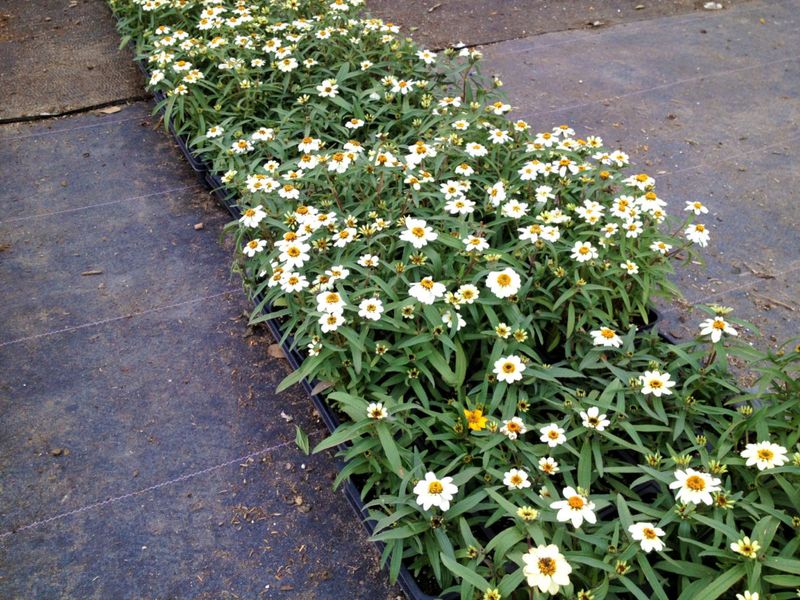
Picture a low mound of white blooms that never seems to quit, even when your thermometer is flirting with 105 degrees. Blackfoot daisy hugs the ground in tidy cushions covered with cheerful daisy flowers that carry a faint honey scent on warm afternoons.
What sets it apart from lantana is its manners. It stays compact, never sprawling into your walkway or crowding out neighbors, so it edges a bed cleanly without constant trimming.
Rocky, poor, fast-draining soil is exactly where this little Texan thrives, which makes it a dream for those tough spots along driveways and limestone-heavy yards. Once established, it barely sips water, so it laughs at municipal watering restrictions during a dry August.
Bloom time stretches from spring straight through fall, giving you months of color instead of a short show. Pollinators love the open flowers, and small native bees can reduce your worries about a lifeless border.
2. Autumn Sage (Salvia greggii)
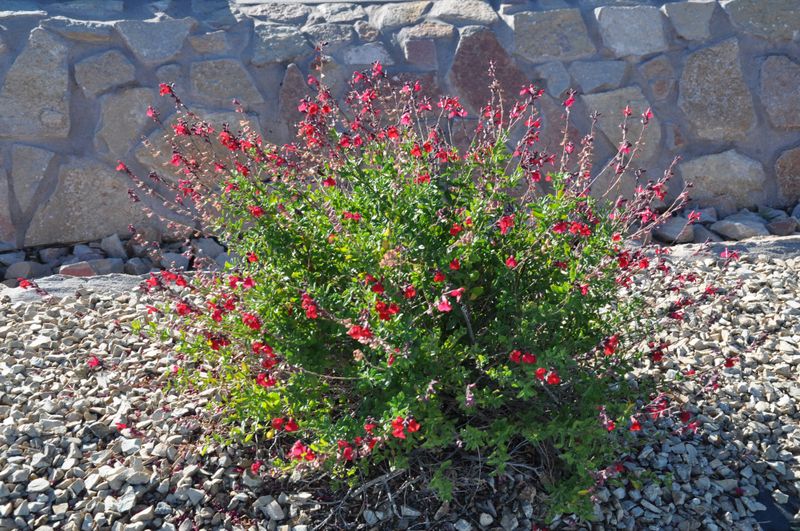
Hummingbirds practically file flight plans around autumn sage, and once you see them zip in you will understand the fuss. This shrubby salvia pushes out tubular blooms in reds, pinks, corals, and whites that keep the winged traffic steady from spring through the first cool snap.
Unlike lantana, which can flop and brown in a heat wave, autumn sage stays upright and fresh with just a light shearing mid-summer to keep it full. It handles the alkaline soils common across Central and West Texas without complaint.
Drought is where it truly earns respect. After it settles in, it survives long dry stretches and still blooms, which means your border keeps its color even when the sprinklers are switched off by city order.
Plant a few different colors together and you get a border that changes personality across the seasons, glowing warm in spring and mellowing into fall.
3. Gregg’s Mistflower
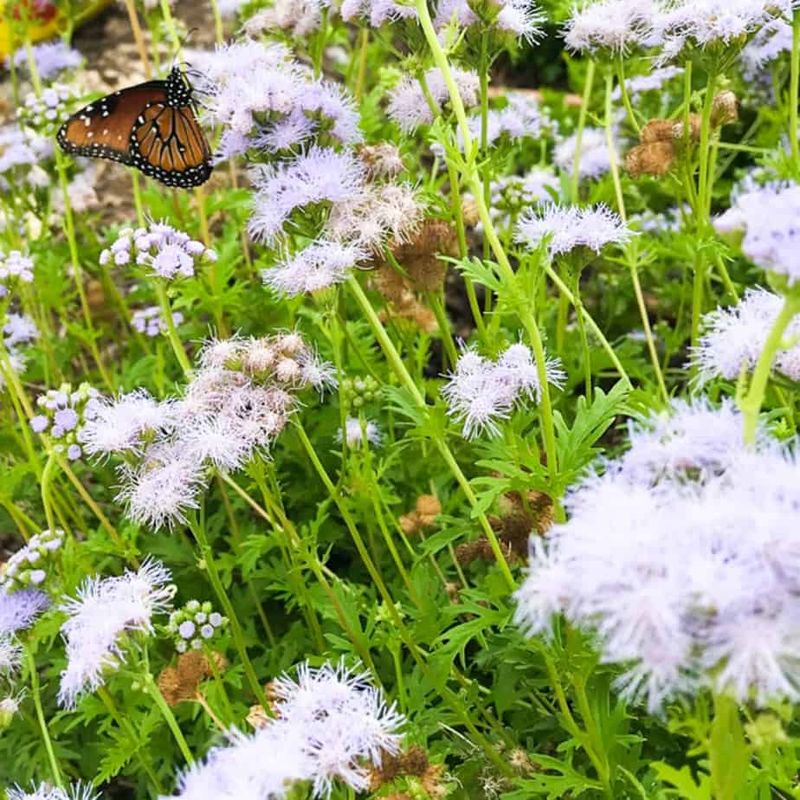
If you have ever wished for a plant that turns your yard into a butterfly airport, Gregg’s mistflower is the answer. Its fuzzy, lavender-blue puffs act like a magnet for queen and monarch butterflies, sometimes covering the plant so thickly you can barely see the leaves underneath.
Lantana attracts pollinators too, but few things rival the sheer clouds of butterflies mistflower pulls in during late summer and fall migration. That timing matters in Texas, where fall is prime butterfly season along migration routes.
The soft, hazy texture also gives a border a completely different look, cooling down all the hot reds and oranges elsewhere in the bed. It spreads by roots, so give it room or edge it, and it will fill a space beautifully.
Heat and drought barely register once it is rooted, making it a low-fuss choice for the punishing middle of a Texas summer.
4. Damianita
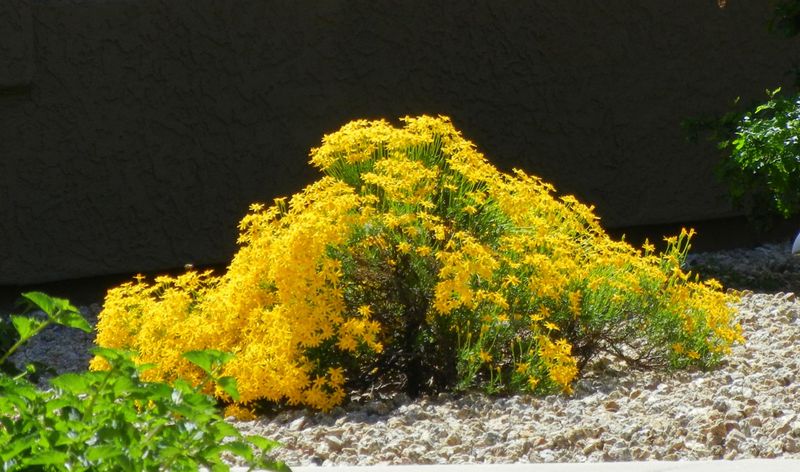
Bright as a highlighter and tough as a fence post, damianita is the plant that laughs at everything Texas throws at it. Come spring, this evergreen shrublet erupts in a dome of golden-yellow daisies so dense you can hardly find a green leaf.
The needle-like foliage carries a resinous, herby fragrance when you brush past, and it stays green year-round, which lantana simply cannot promise after a hard freeze knocks it back to sticks.
Baking rocky slopes and reflected heat from pavement are no problem here. In fact, damianita prefers lean, dry, gravelly ground and can rot if you baby it with too much water, so it fits perfectly into a xeriscape border under watering limits.
A second flush of bloom often shows up in fall, and even out of flower the tidy green mounds keep your border looking intentional through winter.
5. Flame Acanthus
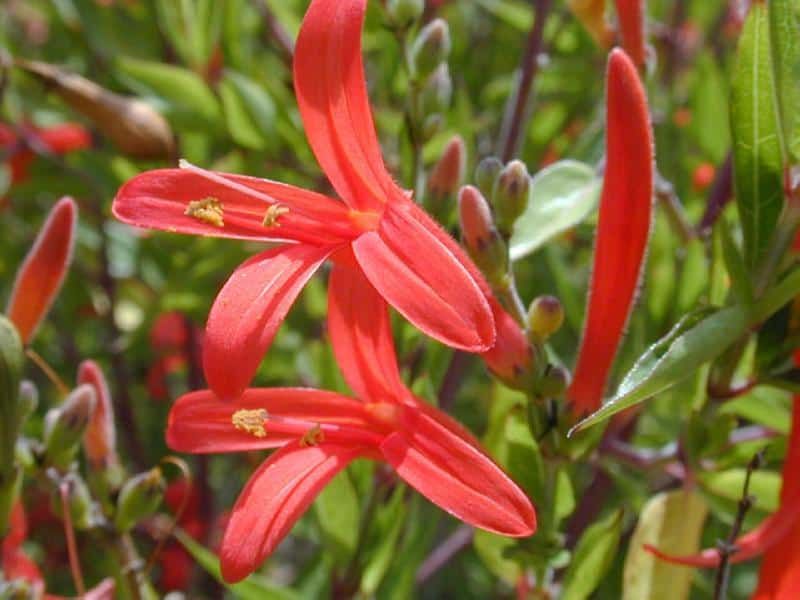
Late summer is when most borders start looking exhausted, and that is exactly when flame acanthus decides to steal the show. Slender orange-red tubular flowers light up the branches right through the hottest, driest weeks, feeding hummingbirds when little else is blooming.
Also called hummingbird bush, this airy shrub has a loose, graceful shape that softens the stiff edges of a bed. Its papery bark and fine leaves give it a delicate look that hides a genuinely tough constitution.
Native to the limestone country of the Edwards Plateau, it drinks very little once established and shrugs off both drought and reflected heat. A hard freeze cuts it to the ground, but it bounces right back in spring like nothing happened.
For anyone wanting late-season fireworks without babysitting a border, this one delivers where lantana runs out of steam.
6. Four-Nerve Daisy (Hymenoxys)
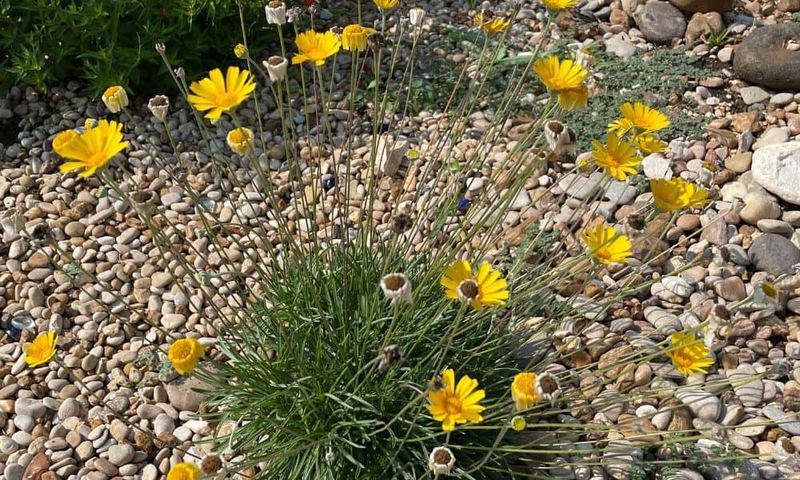
Some plants seem to bloom out of pure stubbornness, and the four-nerve daisy is one of them. On slim wiry stems, sunny yellow flowers dance well above a neat clump of silvery-green leaves, and they keep coming almost every month of the year in milder parts of Texas.
Nearly nonstop bloom is its whole calling card. While lantana takes the winter off and dies back, this little daisy often keeps a few flowers going even in the cool months, giving your border color when the rest of the yard has gone dormant.
It is small and demure, perfect for tucking along the very front edge of a bed or between stepping stones. Poor rocky soil and blazing sun suit it just fine, and it asks for almost no water once settled.
Deadhead the spent blooms now and then, and you will be rewarded with a fresh wave that keeps the display crisp.
7. Zexmenia (Orange Zexmenia)
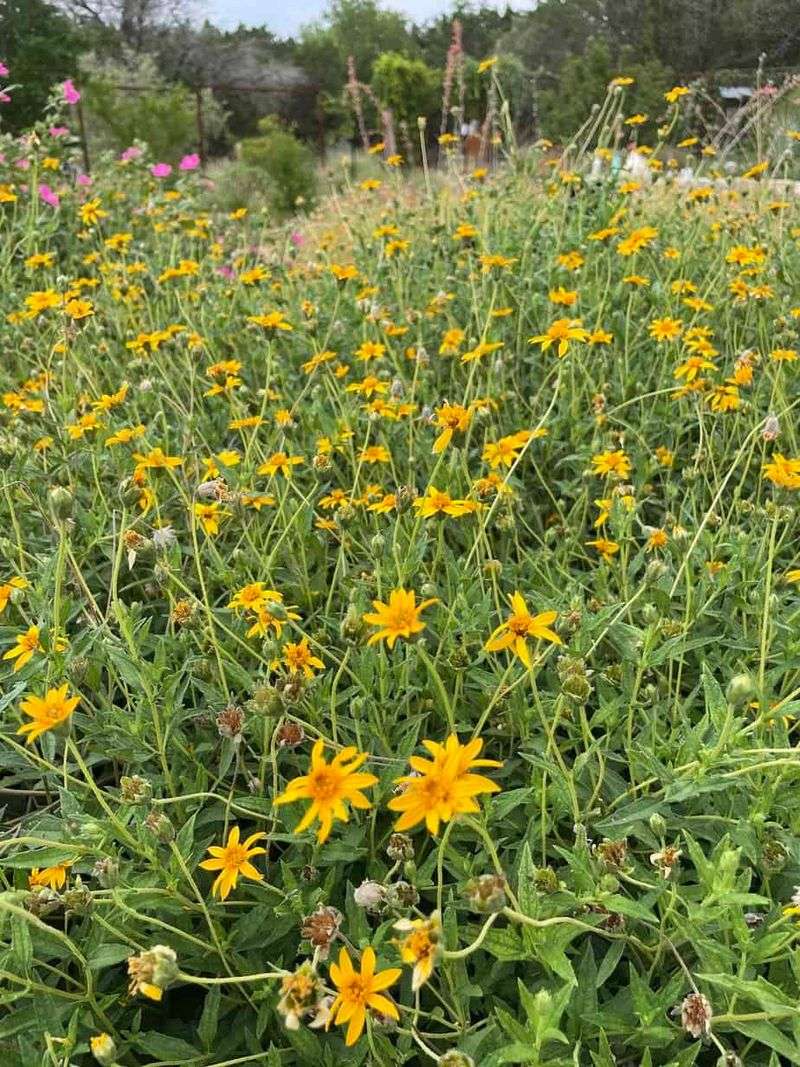
Meet the border plant that just does not know how to quit. Zexmenia pumps out golden-orange daisy flowers from spring until frost, holding its color through the exact stretch of summer when so many other plants surrender to the heat.
Its slightly rough, deep-green leaves form a rounded, well-behaved mound that fits neatly into both formal beds and wild pollinator gardens. Bees and butterflies work the flowers all day, turning your edging into a busy little feeding station.
Drought tolerance here is genuinely impressive. Native across South and Central Texas, it survives on rainfall alone in most years and looks better than fussed-over annuals during a watering ban.
Fun bit of trivia: zexmenia is sometimes called wedelia’s tougher cousin, and unlike some spreading relatives it stays put and polite. Trim it back in late winter and it returns thicker and more floriferous every single season.