
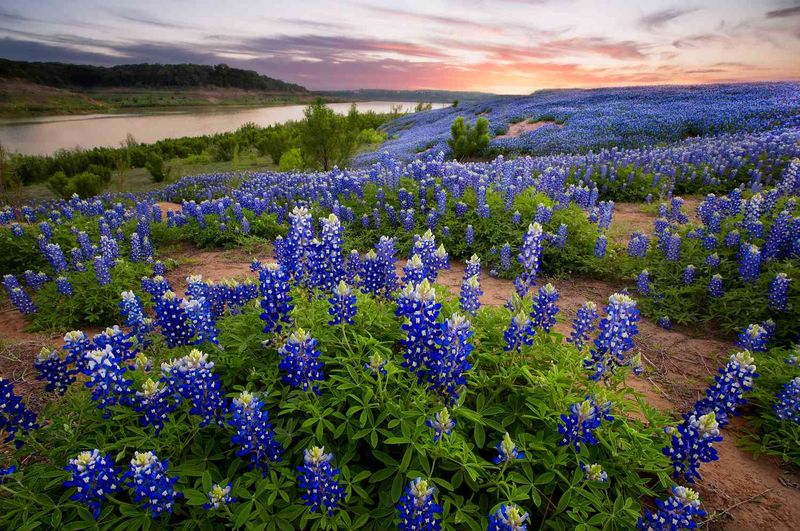
Texas weather does not play nice, with triple-digit summers, stubborn drought, and water restrictions that can leave a thirsty lawn looking sad. The good news is that native Texas plants already know how to handle this climate because they grew up here. Instead of fighting nature, you can fill your yard with tough species that feed pollinators, resist local pests, and barely ask for a drink. Here are eight native Texas plants that deserve a spot in your yard right now.
1. Texas Sage (Cenizo)
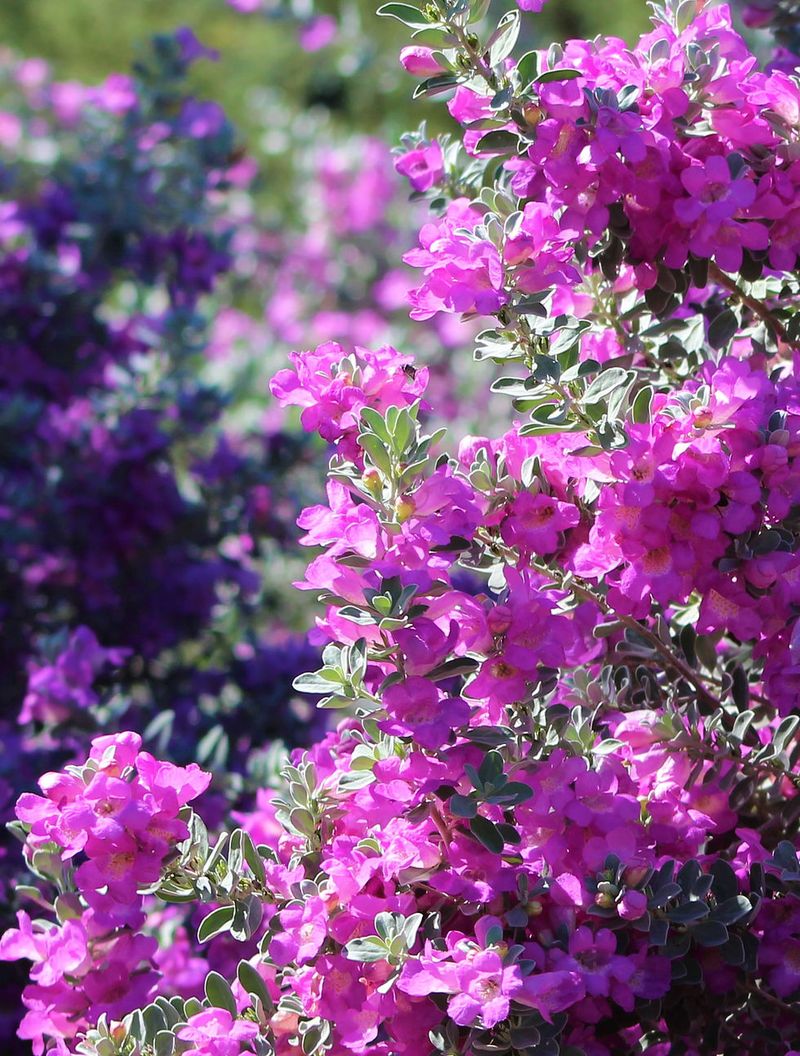
Locals swear they can predict rain by watching this shrub, and there is some truth to it. Texas Sage, also called cenizo, bursts into purple blooms when humidity climbs before a storm, earning it the nickname barometer bush.
Silvery-gray foliage reflects the brutal sun, and the roots dig deep enough to shrug off long dry spells. Once it settles in, you can practically forget it exists, which is exactly what you want during a watering ban.
It thrives in the rocky, alkaline soils that frustrate so many other plants across Central and West Texas. Bees and butterflies flock to the blooms, so a single hedge quietly turns into a pollinator buffet. If you want structure, color, and near-zero maintenance, cenizo earns its keep every summer.
2. Black-Eyed Susan
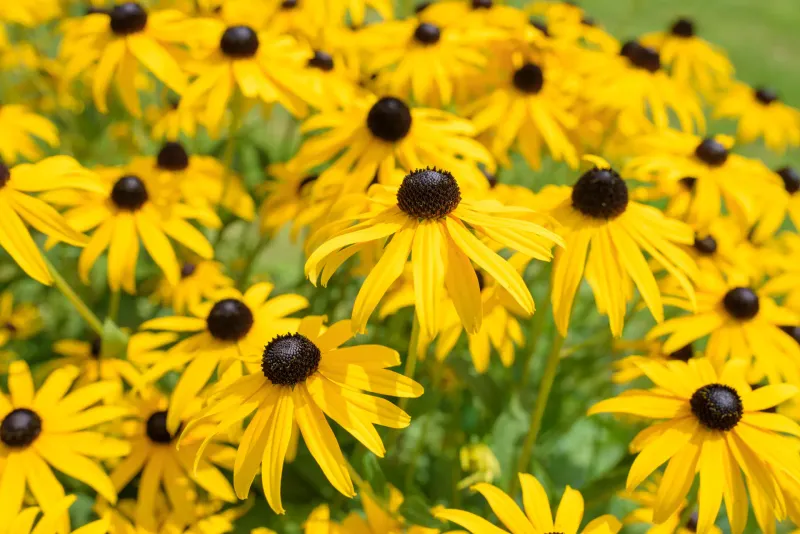
Sunshine got a plant form, and its name is the Black-Eyed Susan. Those cheerful golden petals ringing a dark chocolate center pop up along Texas roadsides and vacant lots because they genuinely do not need pampering.
Drought does not scare them, and heat only seems to make them bloom harder from late spring into fall. That long flowering window keeps your beds colorful long after fussier flowers have thrown in the towel.
Goldfinches love picking seeds from the spent heads, so leaving a few standing turns your garden into a snack bar for birds. Butterflies and native bees work the blooms all season long. Plant them in a sunny spot, water them while they establish, then let them naturalize into a happy golden drift.
3. Turk’s Cap
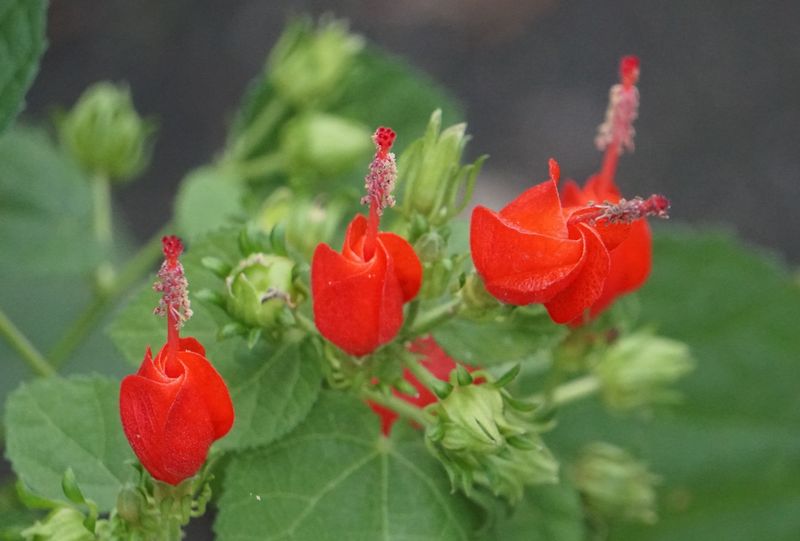
Shade-dwelling gardeners, meet your new best friend. Turk’s Cap produces quirky red blooms that never fully open, twisting like a little turban, and it does it happily in spots where most flowers sulk.
Hummingbirds obsess over the nectar, and few native plants pull them in as reliably during a scorching Texas summer. The small red fruits that follow are edible and get nibbled by birds too.
What sets it apart from the rest of this list is its tolerance for dappled shade under live oaks and along fence lines where sun is scarce. It dies back in winter and returns each spring without complaint. Drought-tough once established, it asks for almost nothing while giving your yard a steady stream of wildlife visitors.
4. Flame Acanthus
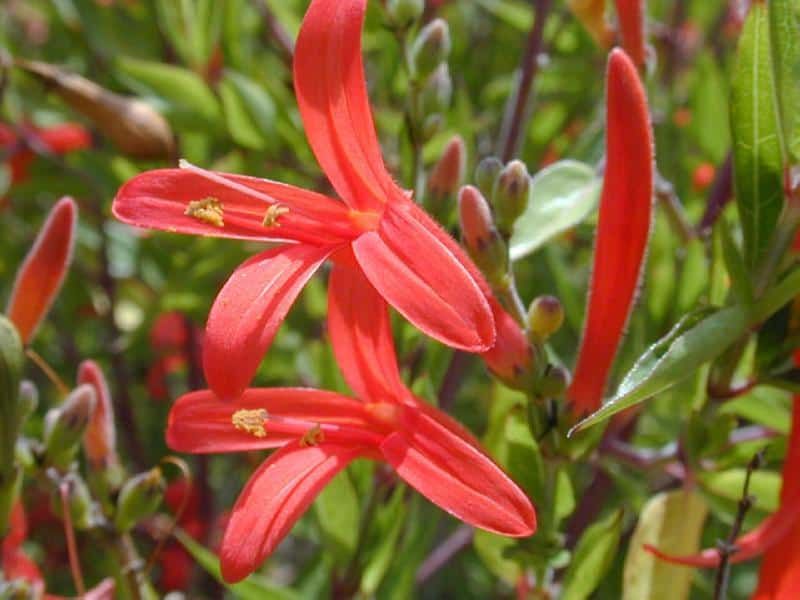
When August turns the yard into a furnace, Flame Acanthus keeps right on blooming like it never got the memo. Slender orange-red tubular flowers cover this shrubby plant through the hottest stretch of the year, which is exactly when most gardens go quiet.
Hummingbirds and butterflies treat it as a fueling station during their long migrations. The Hummingbird Bush nickname is well earned.
It handles poor soil, reflected heat off patios, and stretches between rains without missing a beat. Give it a hard trim in late winter and it comes back bushier and more floriferous than before. For anyone who wants late-season color that actually survives triple-digit afternoons, this one is hard to beat.
5. Gulf Muhly Grass
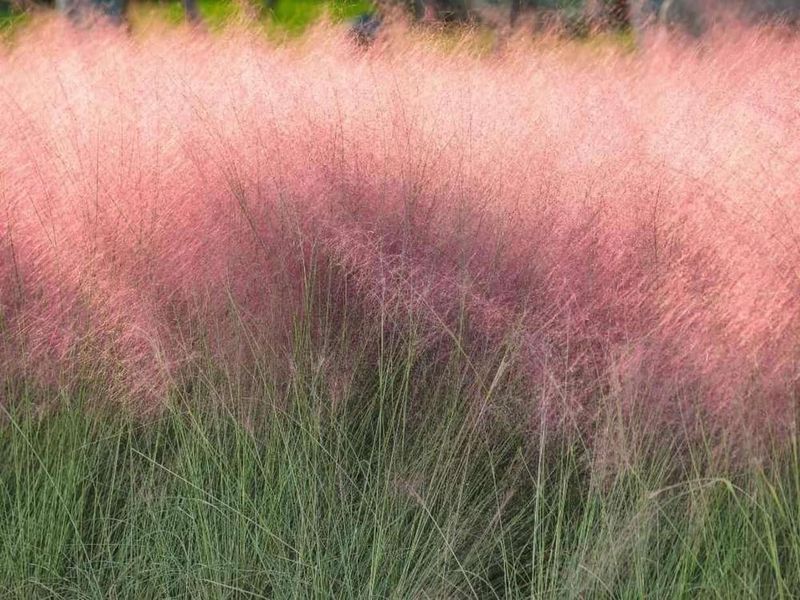
Picture a pink cloud floating just above the ground, and you have Gulf Muhly in autumn. For most of the year it sits as a tidy clump of fine green blades, then fall arrives and it explodes into airy purple-pink plumes that catch the light.
Native across the Gulf Coast and beyond, it laughs at sandy soil, salt spray, and the humidity that comes with storm season. Once rooted, it survives on rainfall alone in most years.
Grouping several together creates a shimmering mass that looks stunning against a sunset or a dark fence. It also gives songbirds cover and small critters a place to hide. Low water, high drama, zero fuss.
6. Texas Lantana
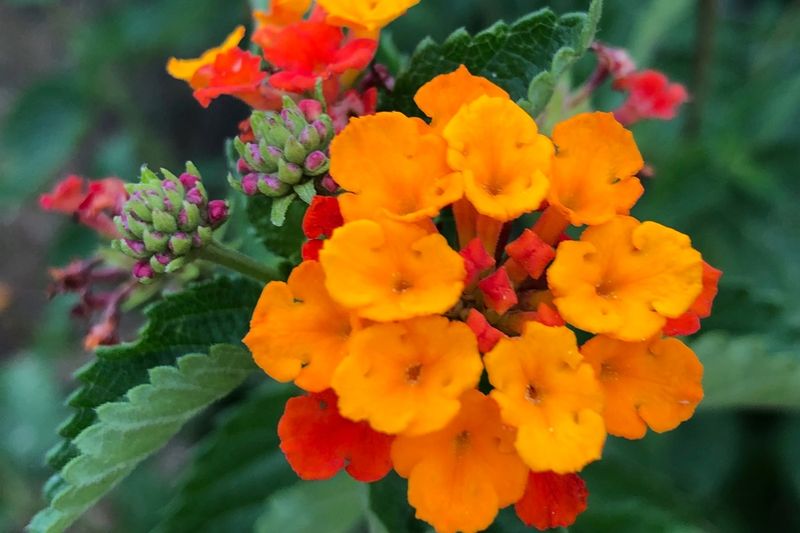
Butterflies apparently held a vote, and Texas Lantana won by a landslide. Clusters of tiny orange and yellow flowers cover this sprawling shrub from spring until the first frost, and the color show barely pauses even in peak heat.
Native to South and Central Texas, it thrives on neglect, poor soil, and skipped waterings. The tougher the conditions, the more determined it seems to bloom.
Fun fact: the flower clusters shift from yellow to orange to red as they age, so a single plant wears several shades at once. Swallowtails, monarchs, and skippers work the blooms nonstop. Just note the berries are toxic if eaten, so keep an eye on curious kids and pets while you enjoy the parade of pollinators.
7. Mexican Feather Grass
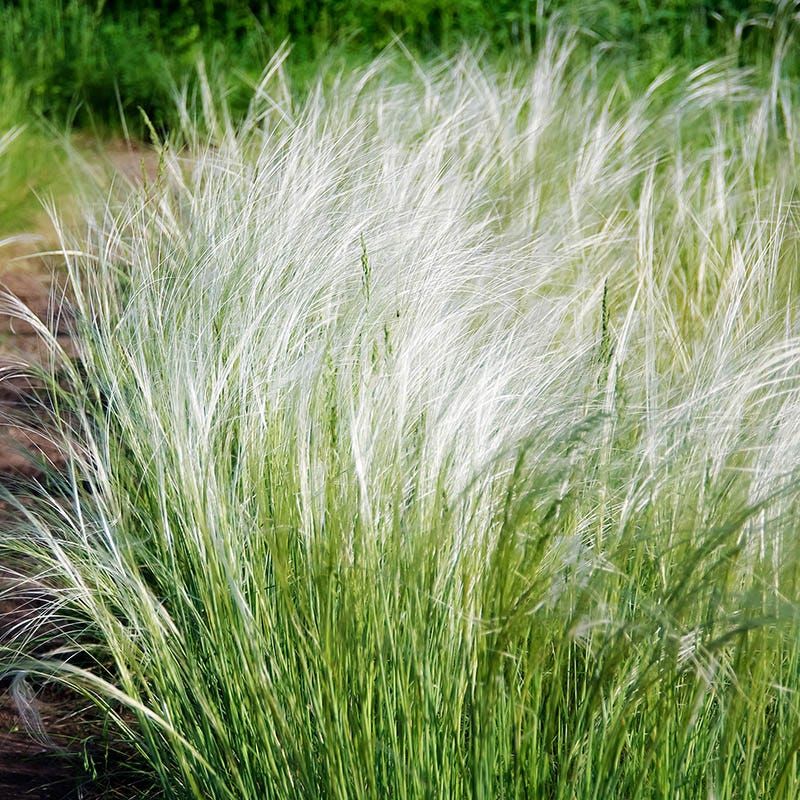
Run your hand across Mexican Feather Grass and it feels like silk, with fine threadlike blades that sway at the slightest breeze. That constant gentle motion adds a soft, calming texture that few other plants can match in a hot, hardscaped yard.
Golden and green tones shift with the seasons, and the whole clump moves like water when the wind picks up off the plains.
Drought is not a problem here, and it thrives in lean, rocky ground where richer plants would struggle. Keep it contained, since it can self-seed enthusiastically, and shear it back if it gets scruffy. For anyone wanting movement and softness without a big water bill, it delivers year-round appeal.
8. Coral Honeysuckle
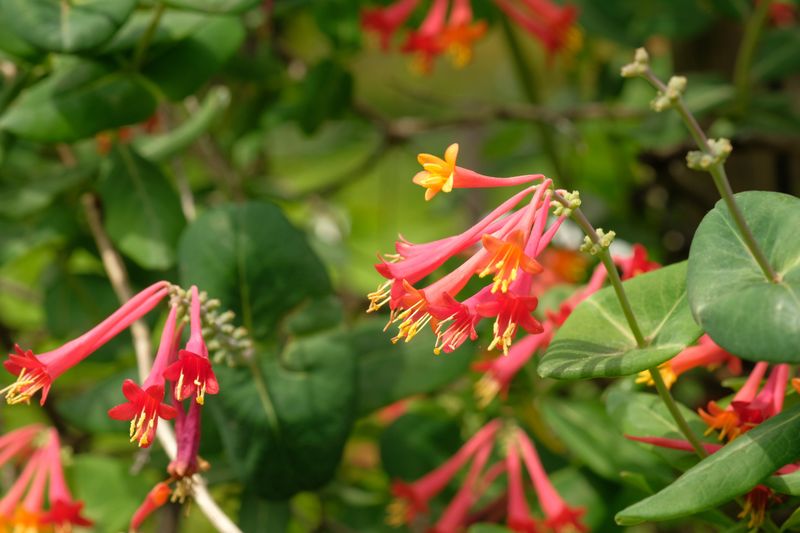
Not all honeysuckle is a garden villain, and Coral Honeysuckle is proof. Unlike its invasive Japanese cousin that strangles native plants, this well-behaved Texas native climbs politely and stays where you put it.
Slim coral-red trumpet flowers appear in flushes from spring through fall, and hummingbirds line up like it is opening day. Bright red berries follow and feed songbirds through the cooler months.
It scrambles up trellises, fences, and mailboxes with evergreen or semi-evergreen foliage, giving you a living screen that handles heat and drought once established. Give it a support to climb and a spot with sun to part shade, then let it soften a bare wall while it quietly runs a wildlife diner in your backyard.