
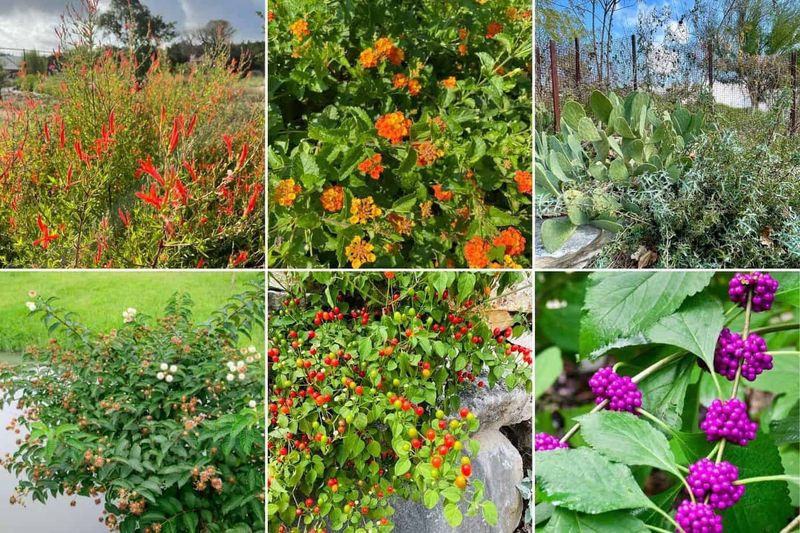
Crape myrtles show up in half the yards across Texas, but they are not actually from here, and our brutal summers can leave them stressed and thirsty. The good news is that Texas has its own lineup of tough native shrubs that shrug off triple-digit heat, drink very little water, and feed the birds and butterflies that make a yard feel alive. Swapping in a native shrub means less watering, fewer problems when the city announces water restrictions, and blooms that belong right here in our soil. Here are seven stunning Texas natives that can take crape myrtle’s spot and handle our heat like champs.
1. Texas Sage (Cenizo)
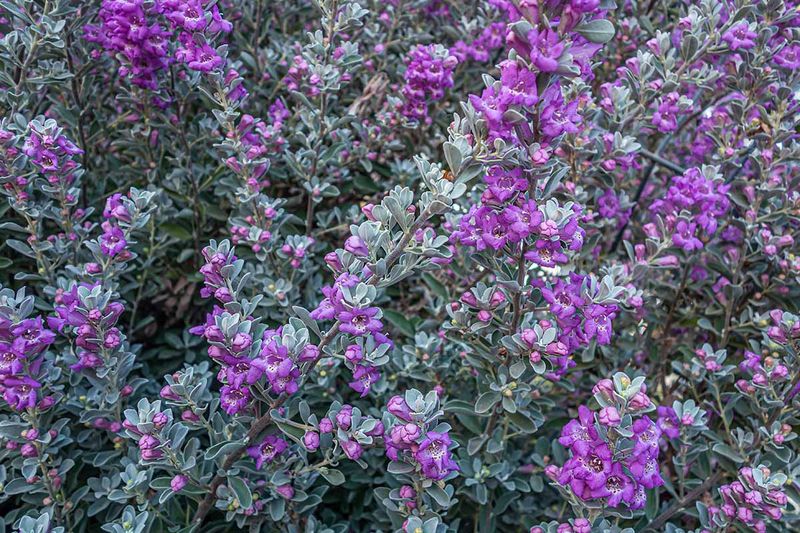
Folks around here call it the barometer bush because it bursts into purple flowers right before a rainstorm rolls in, almost like it can read the Texas sky. Cenizo grows wild across the dry parts of the state, so a July heat wave barely registers as a bad day for it.
Silvery-gray leaves cover the whole plant, giving it a soft, dusty glow that stands out against green lawns. When the humidity climbs, waves of lavender-pink blooms open up and pollinators show up in a hurry.
Once it settles into your yard, cenizo asks for almost nothing. Skip the extra watering, plant it in a sunny spot with good drainage, and let it do its thing. Overwatering is actually the fastest way to hurt it, which makes it a dream during water-restriction summers. It also handles poor, rocky soil without complaint, so those tricky spots where nothing else grows might finally have a winner.
2. Flame Acanthus
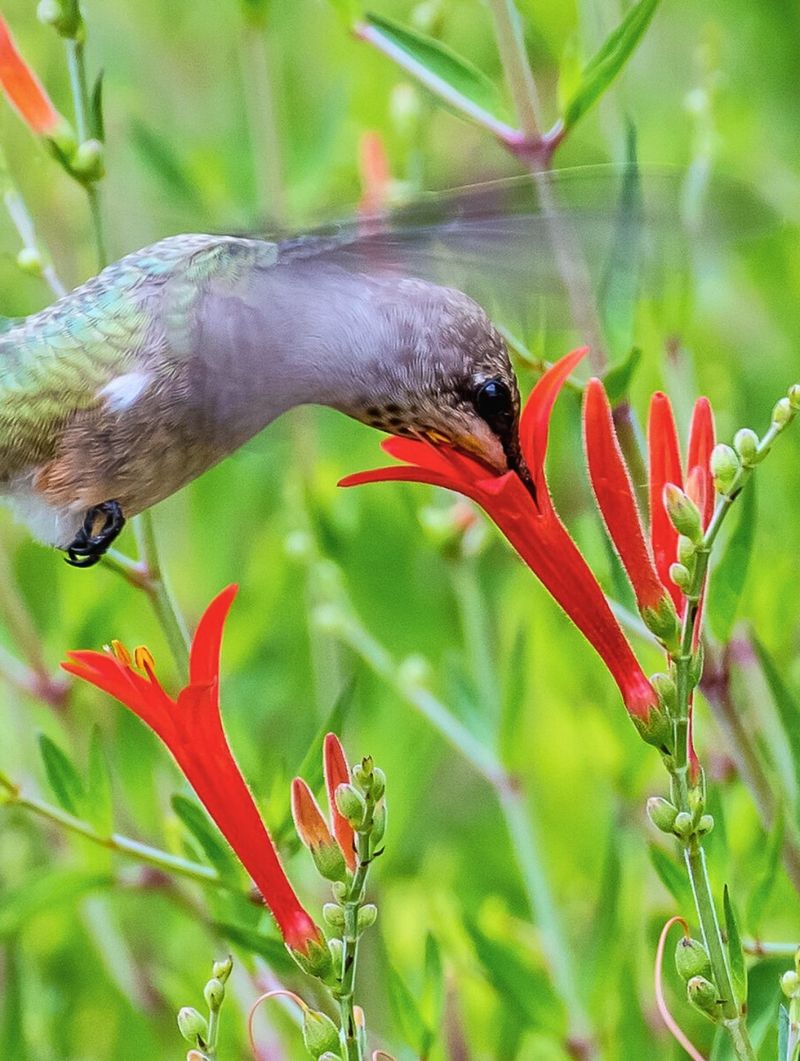
Hummingbirds treat this shrub like a roadside diner, zipping in all summer long for its slender orange-red tubular flowers. Flame acanthus keeps blooming through the hottest stretch of the year, right when a lot of other plants have given up and gone crispy.
Native to Central and West Texas, it laughs at drought and thrives in full, punishing sun. The airy, open shape gives it a wild and natural look rather than a stiff, manicured one, which suits a relaxed Texas yard beautifully.
Come the first freeze, it dies back to the ground, then springs right back up when warm weather returns, so you get a fresh, tidy plant every year without much effort. Gardeners who want a pollinator magnet that survives on rainfall alone will find this one hard to beat. Butterflies join the hummingbirds too, turning a single shrub into a small, buzzing wildlife stop in your own backyard.
3. Turk’s Cap
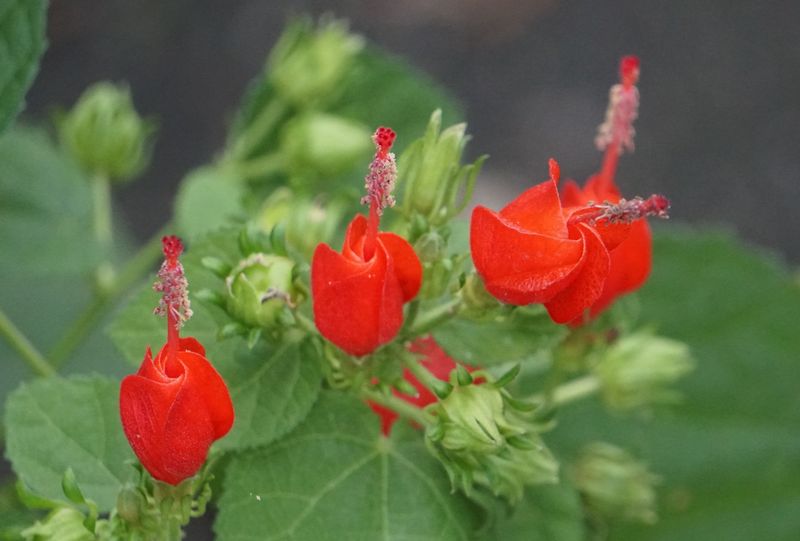
Bright red flowers that never quite open all the way give Turk’s Cap its playful, turban-like look, and that quirky shape is a favorite of both hummingbirds and butterflies. It happily grows where most flowering shrubs sulk, tucking into shady corners under trees where the ground stays dry and stubborn.
Heat does not faze it in the least. Through the worst of a Texas summer, it keeps pushing out blooms from late spring all the way to fall.
Here is a fun bit: the small red fruits that follow the flowers are edible and taste a little like watermelon apple, and birds gobble them up fast. That makes Turk’s Cap a two-for-one plant, feeding pollinators up top and songbirds down low.
Because it tolerates shade and drought at the same time, it solves a problem a lot of Texas gardeners struggle with, filling in those dim, thirsty spots with color instead of bare dirt.
4. Autumn Sage (Salvia greggii)
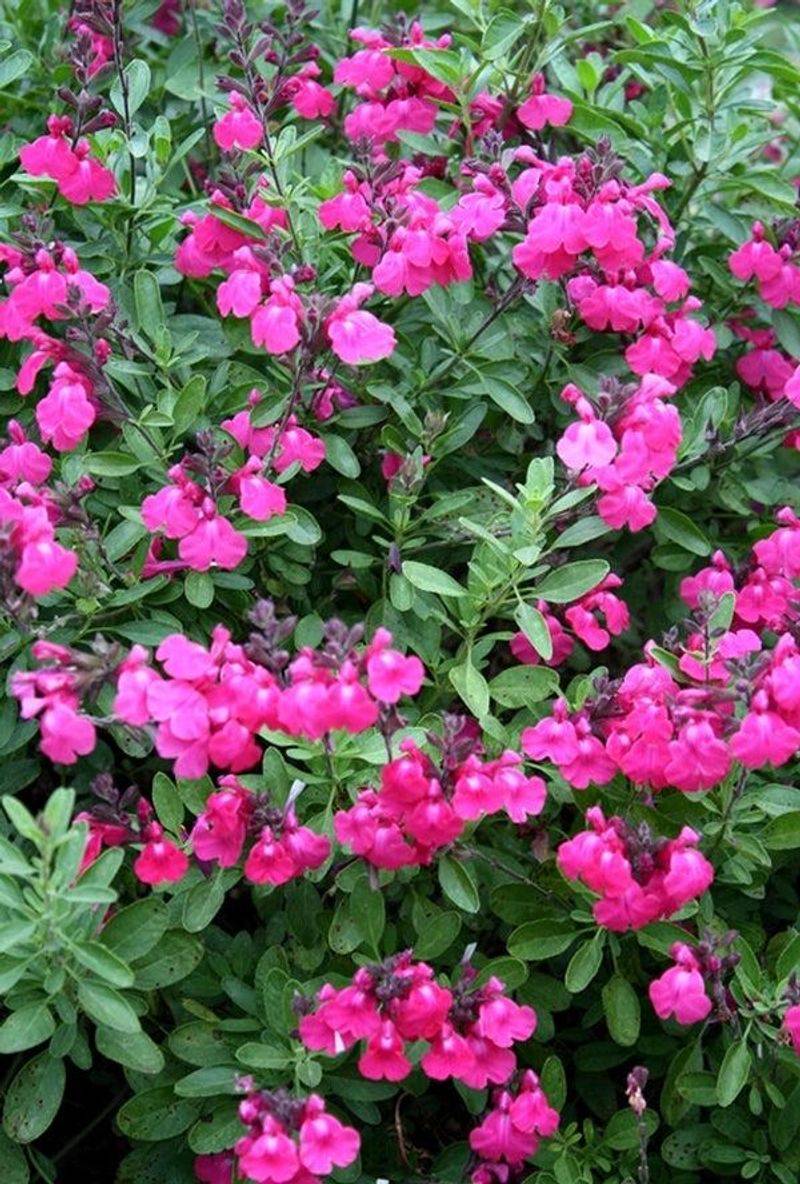
Small but mighty describes this little salvia perfectly, blooming almost nonstop from spring straight through fall in shades of red, pink, coral, and white. Autumn sage packs a huge amount of color into a compact, tidy shrub that fits neatly along walkways and flower beds.
Originally from the rocky hills of West Texas and northern Mexico, it is built for heat and drought right down to its roots. Give it sun and well-drained soil, and it rewards you with months of flowers and a steady stream of hummingbirds and bees.
A quick trim after a heavy bloom flush keeps it full and encourages even more flowers, but honestly it looks great even when you forget. Water-wise gardeners love that it barely sips from the hose once established.
If you want that constant crape-myrtle-season color but in a smaller, tougher, more wildlife-friendly package, autumn sage delivers all summer without the fuss.
5. American Beautyberry
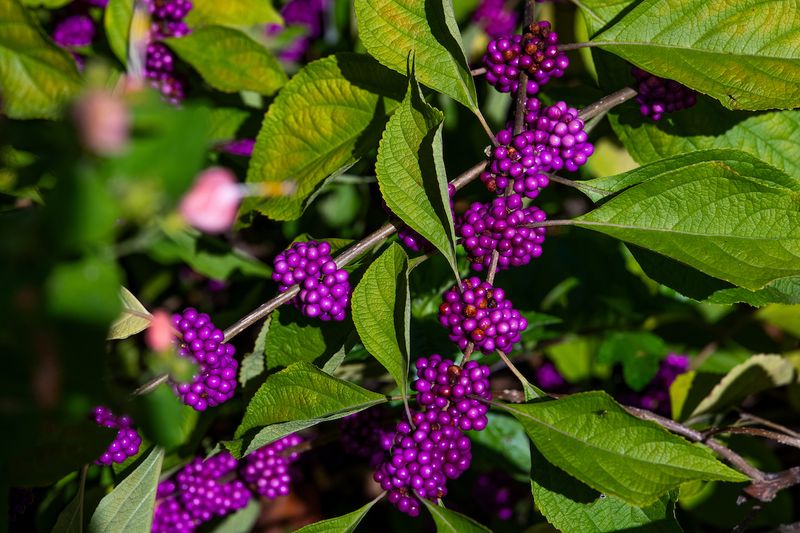
Late summer is when this shrub steals the show, lining its branches with clusters of jewel-bright purple berries so vivid they almost look fake. American beautyberry brings a color to the yard that few other native plants can match, and birds absolutely feast on those berries into the fall.
It grows naturally in the woodlands of East and Central Texas, so it handles heat while also tolerating a bit more shade and moisture than some of the desert natives on this list. That flexibility makes it useful in yards that have both sunny and dappled areas.
Worth knowing: crushed beautyberry leaves have long been used as a folk remedy that may help keep mosquitoes at bay, a handy bonus during those muggy Gulf Coast evenings. Plant it where you can watch cardinals and mockingbirds drop by for a snack, and you get a living ecosystem right outside the window, drama and wildlife rolled into one graceful shrub.
6. Agarita
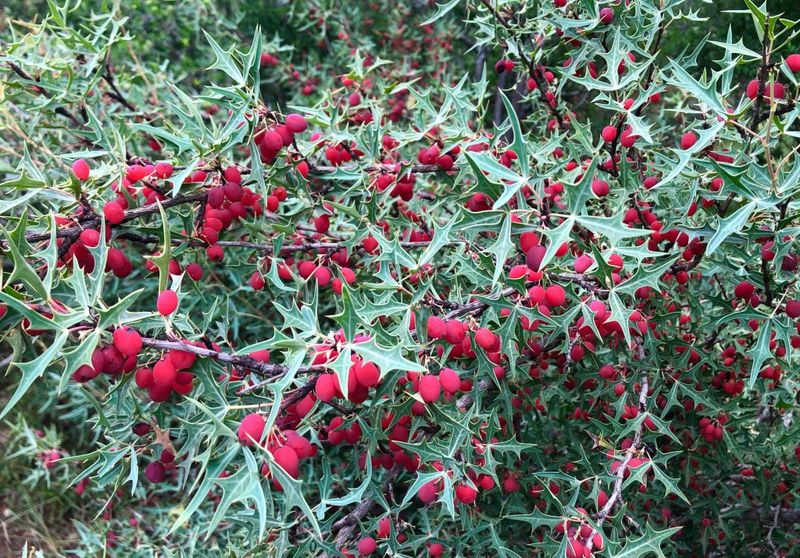
Tough as nails and prickly to match, agarita is the shrub that guards itself with spiny, holly-like leaves while feeding wildlife generously. In early spring it covers itself with fragrant yellow flowers that perfume the air, then follows up with tart red berries that Texans have turned into jelly for generations.
This evergreen native thrives in the harshest, rockiest, driest ground the Hill Country can offer, and it barely blinks at drought or heat. Once planted, it needs practically zero attention.
Those spiny leaves double as a safe haven, giving small birds a protected place to nest away from cats and hawks. So while it looks a bit fierce, agarita is quietly running a little wildlife sanctuary in your yard.
For gardeners who want a low-water, evergreen anchor that stays interesting in every season and shrugs off neglect, this rugged native earns its keep and then some.
7. Texas Mountain Laurel
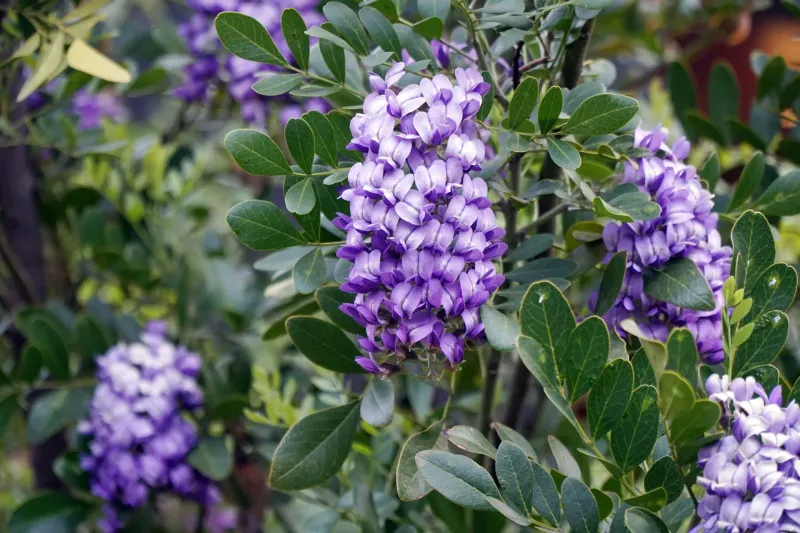
Grape soda in shrub form is how many Texans describe the springtime scent of mountain laurel, whose drooping purple flower clusters smell exactly like the sweet fizzy drink. That knockout fragrance drifts across the whole yard for weeks, and it is one of the most beloved sights of a Texas spring.
Evergreen, slow-growing, and impossibly tough, it holds its glossy dark leaves all year and thrives in the dry, alkaline soils that defeat so many plants. Full sun and sharp drainage are all it really wants.
A word of caution: the bright red seeds inside its pods are poisonous if eaten, so it is best kept away from curious little kids and pets who might chew on things.
Because it grows so slowly and stays neat, mountain laurel works beautifully as a specimen shrub or small tree in the exact spot where a crape myrtle might have gone. Plant it once, and you get decades of evergreen structure, spring perfume, and heat-proof toughness in return.