
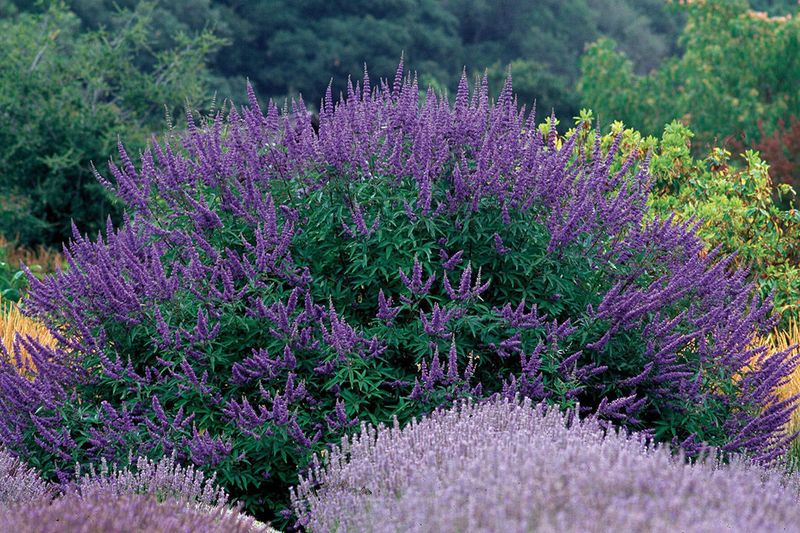
Knock Out roses get planted everywhere in Texas, but they often struggle once the triple-digit summers and water restrictions hit. Every spring, folks pull out the crispy survivors and start over, spending money on plants that just can’t take the heat. The good news is that Texas has a lineup of tougher shrubs that shrug off drought, laugh at the heat, and keep blooming long after the roses have called it quits. Here are eight hardy alternatives that will save you money, water, and a whole lot of replanting frustration.
1. Texas Sage (Cenizo)
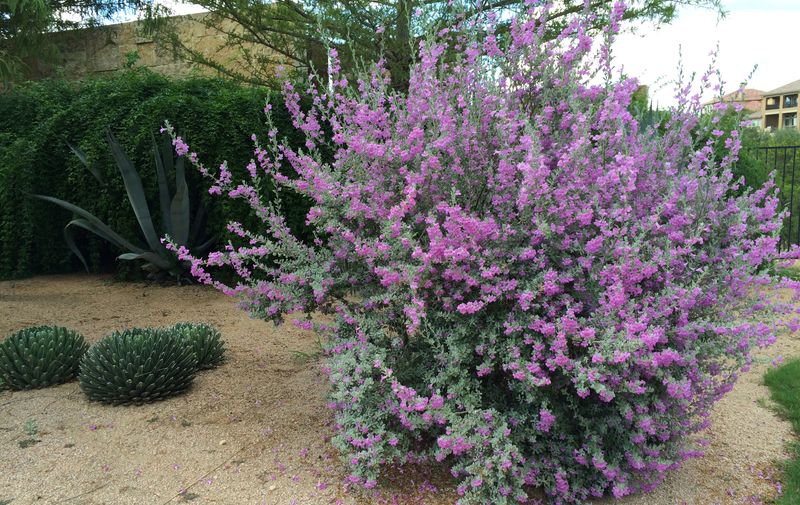
Ask any old-timer in West Texas what plant survives on neglect, and Cenizo usually tops the list. Its silvery leaves reflect the harsh sun, and it puts on a show of purple blooms right when the humidity spikes, earning it the nickname barometer bush.
Once established, this native barely needs a drink. It thrives in poor, rocky, alkaline soils that would kill a rose, which makes it a natural fit for the hardscrabble ground across much of the state.
Bloom cycles come and go all summer, often triggered by rain or a jump in moisture, so you get color from spring straight through fall. Deer tend to leave it alone too, which is a real bonus if you garden near the Hill Country. Give it full sun, skip the fertilizer, and let it do its thing.
2. Esperanza (Yellow Bells)
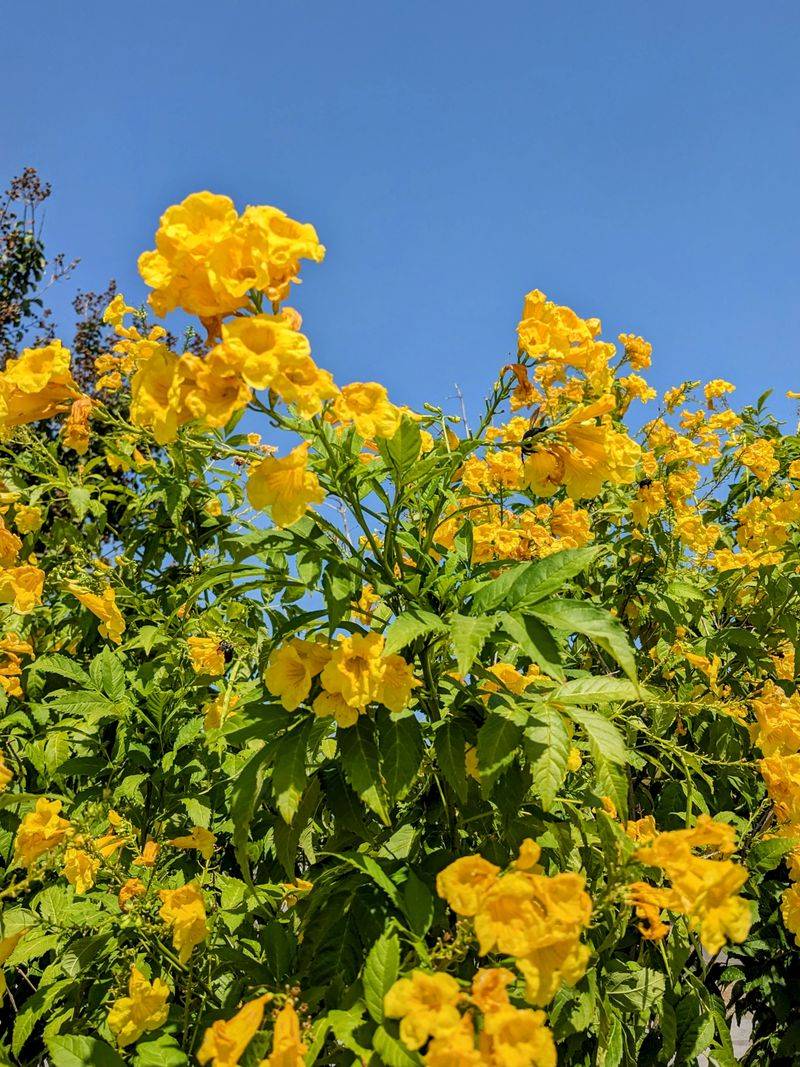
If you want a shrub that treats a Texas heat wave like a personal invitation to bloom harder, Esperanza is your plant. Bright yellow trumpet flowers keep coming from late spring until the first frost, and the hotter it gets, the happier it seems.
Hummingbirds and butterflies swarm the flowers, which turns a simple planting into a busy little ecosystem in your yard. That constant activity is part of why Texas gardeners keep coming back to it.
Drought tolerance runs deep with this one, and it handles the sandy or clay soils found across Central and South Texas without complaint. In colder parts of the state it may die back in winter, but it bounces right up once the warm weather returns. Plant it in full sun, water it while it settles in, and enjoy months of gold.
3. Turk’s Cap
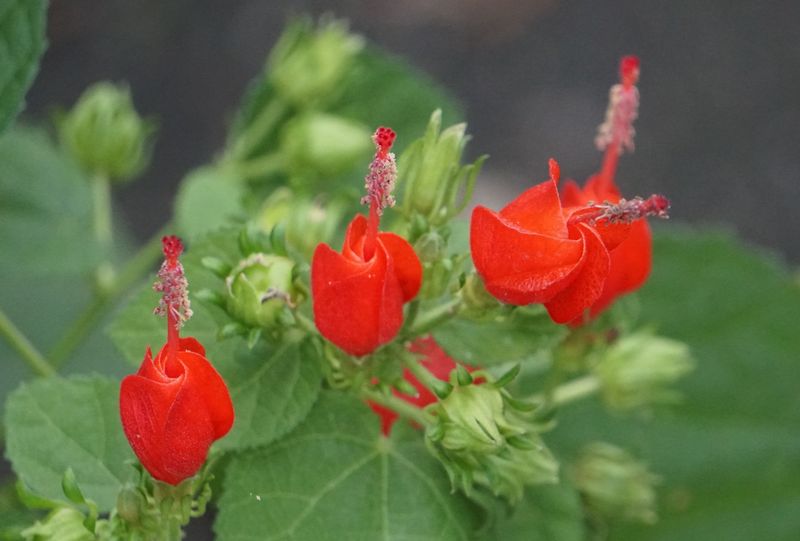
Tucked into a shady corner where roses would sulk, Turk’s Cap keeps churning out its quirky red swirled blooms that never quite open all the way. Those little turban-shaped flowers give the plant its name and a personality all its own.
Shade tolerance sets this native apart from nearly everything else on the list. It handles dry, dappled light under live oaks and pecans, spots that stump most flowering shrubs.
Blooms arrive from early summer well into fall, and they double as a magnet for hummingbirds and butterflies that will visit your yard daily. The plant also produces small red fruits that birds happily eat. Tough against drought once rooted, forgiving of clay soils, and needing almost no fuss, Turk’s Cap proves you don’t need blazing sun to get long-lasting color in a Texas garden.
4. Flame Acanthus
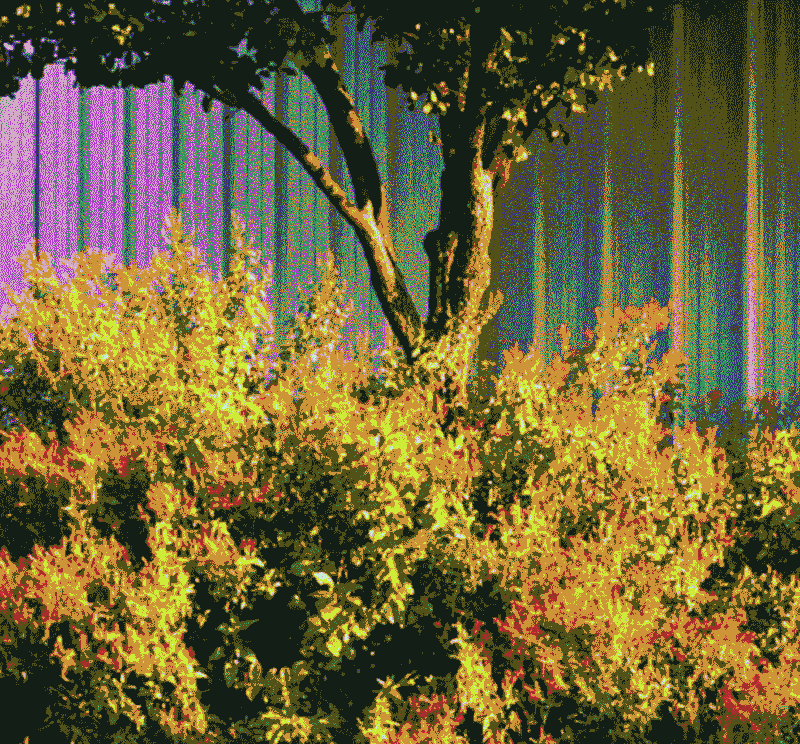
Hummingbirds practically write love letters to Flame Acanthus. Its slender tubular orange-red flowers appear when summer is at its cruelest, right when the birds are hungriest and most other blooms have wilted.
Originally found along the Rio Grande, this Texas native is built for brutal heat and long dry spells. It asks for very little water once it settles in, making it a smart pick during watering restrictions.
The airy, fine-textured foliage gives it a softer look than the bold shrubs on this list, so it slips easily into a mixed native bed. Flowering stretches from June through the first frost, a stunningly long window compared to the fussy roses it replaces.
Cut it back hard in late winter, and it returns thicker and more floriferous every year. For gardeners hoping to build a pollinator haven that survives real Texas conditions, this one earns its keep.
5. Pride of Barbados
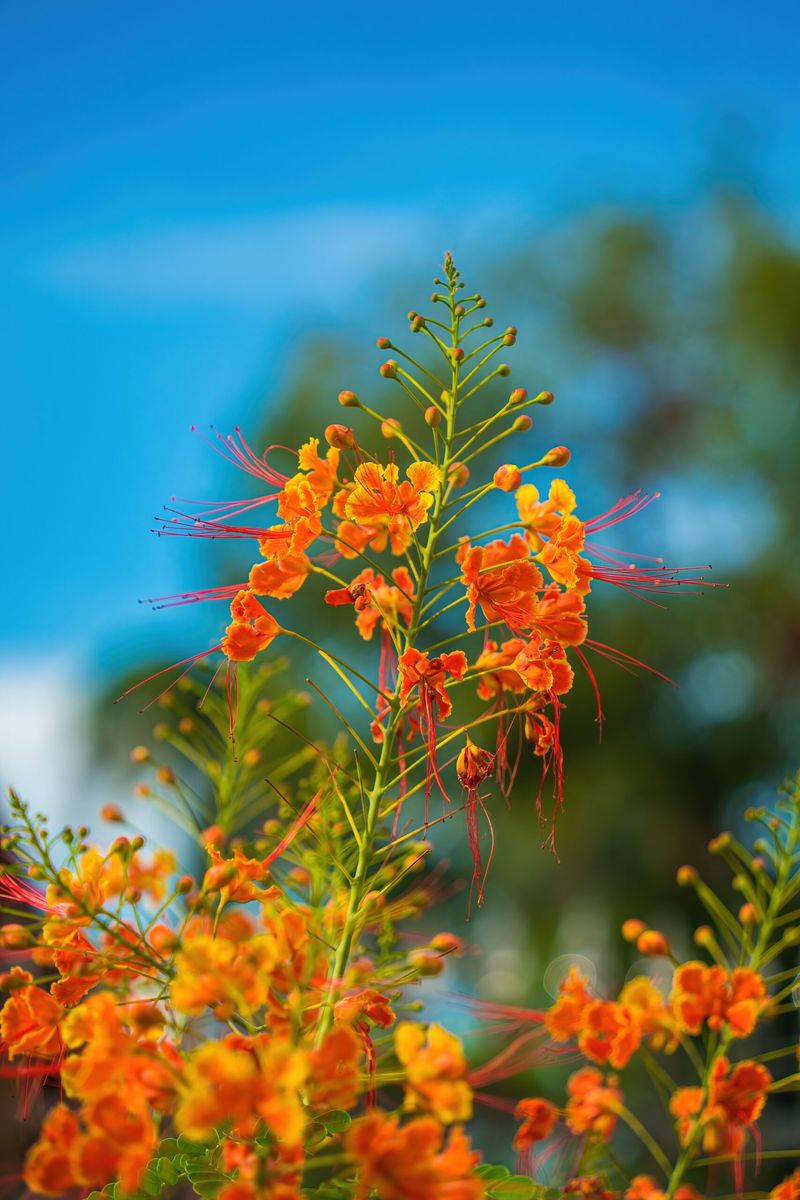
Nothing says a Texas summer quite like the fiery orange and red blooms of Pride of Barbados blazing in the July sun. Some folks call it the red bird of paradise, and it truly looks tropical while being surprisingly tough.
Heat is where this shrub shines. Triple-digit afternoons that fry other plants only push it to flower more, and it keeps that show going from late spring until frost.
Drought hardly fazes it once established, and it adapts to lean soils across South and Central Texas. In the northern reaches it dies to the ground in winter but reliably resprouts as the heat climbs.
Butterflies and hummingbirds flock to the flamboyant flowers all season. Give it full sun and room to reach five feet or more, and you get one of the most dramatic, low-maintenance replacements for a struggling rose you’ll ever plant.
6. Autumn Sage (Salvia greggii)
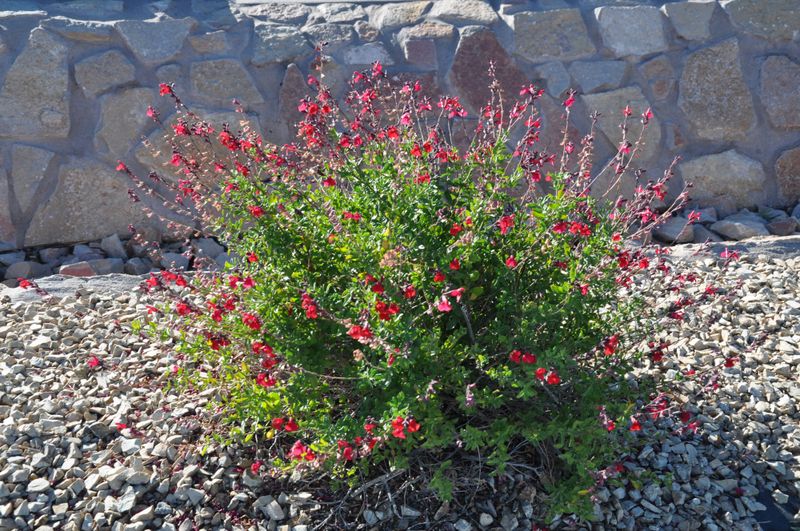
Small but mighty describes Autumn Sage perfectly. Despite the name, this compact salvia blooms in spring, powers through summer, and puts on a strong second act in fall, giving you color across three seasons.
Flowers come in a rainbow of choices, from hot pink and coral to red and white, so you can match nearly any garden palette. That flexibility, plus its neat rounded shape, makes it a favorite for borders and beds.
Native to the rocky hills of West Texas and Mexico, it drinks very little and prefers well-drained ground. Hummingbirds and bees treat it like a favorite diner, buzzing around it from morning to dusk.
A quick shearing after a heavy bloom flush keeps it tidy and encourages even more flowers. Where roses would demand spraying and coddling, this salvia just quietly gets on with the job of blooming.
7. Barbados Cherry (Manzanita)
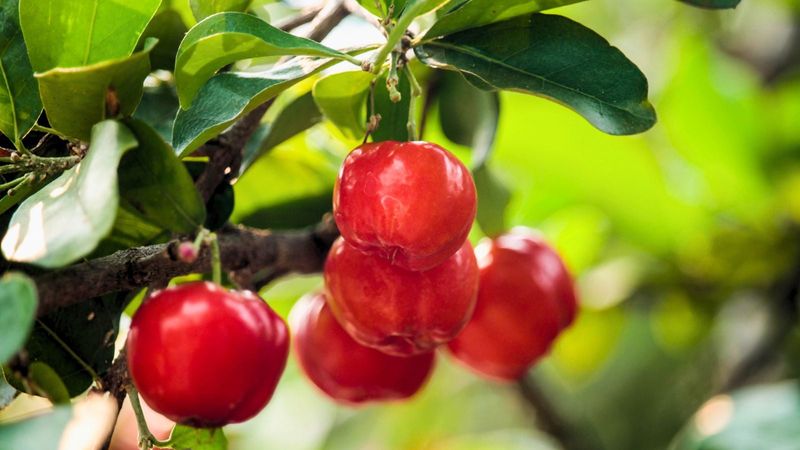
Here’s a shrub that feeds you and the birds while looking pretty doing it. Barbados Cherry produces delicate pink flowers followed by small red fruits loaded with vitamin C, a two-for-one deal you won’t get from any rose.
Heat and humidity along the Gulf Coast suit it just fine, and it tolerates the sandy soils common in South Texas. It flowers in flushes after rains, so you often get several rounds of blooms and berries through the growing season.
Wildlife value runs high with this one. Songbirds go after the tart cherries, and pollinators visit the blossoms, turning the plant into a working piece of your backyard ecosystem.
It handles pruning well and can be shaped into a hedge or left natural. For gardeners in warmer parts of the state wanting beauty, food, and toughness all in one, Manzanita is an easy yes.
8. Dwarf Yaupon Holly
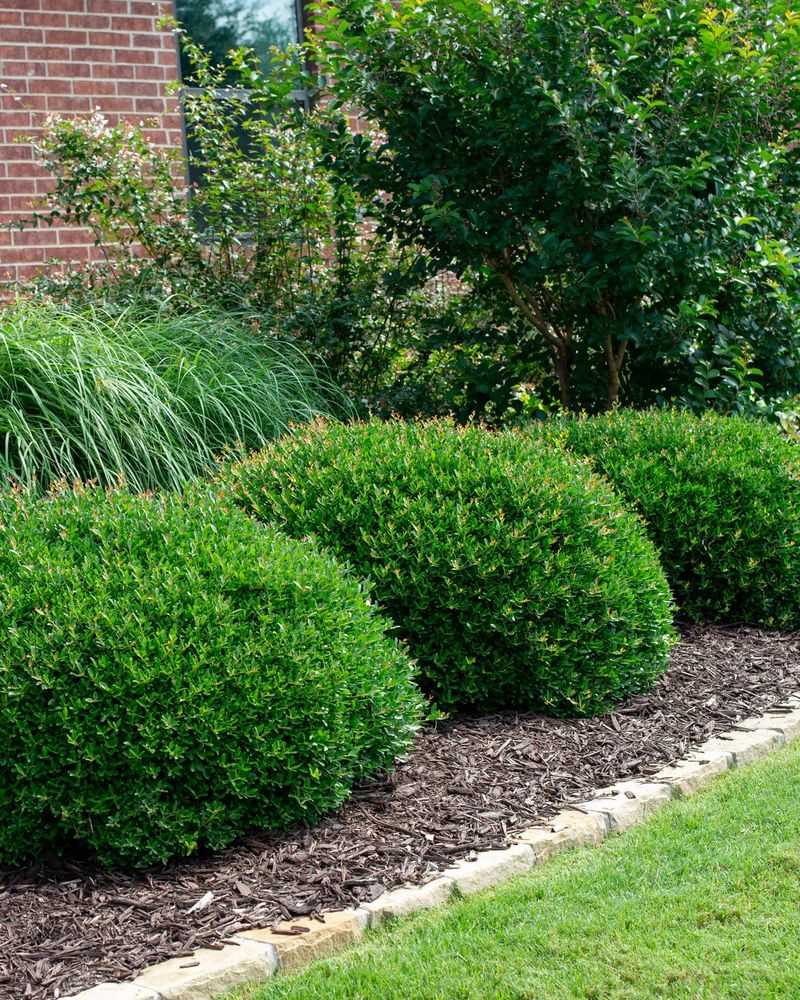
When you want structure that never quits, Dwarf Yaupon Holly is the quiet workhorse of the Texas landscape. It won’t dazzle you with big flowers, but its dense evergreen foliage holds up year-round while everything else fades.
Toughness is its whole personality. A true Texas native, it survives drought, poor soil, coastal salt spray, and the kind of neglect that would flatten a Knock Out rose in a single summer.
The tidy mounded form takes shearing beautifully, which is why landscapers lean on it for low hedges and foundation plantings that stay sharp with minimal effort. Female plants even produce small red berries that birds enjoy in winter.
Think of it as the reliable backbone that lets your flashier bloomers shine, all while sipping barely any water. If you’re rebuilding a bed after ditching the roses, start here and build outward.