
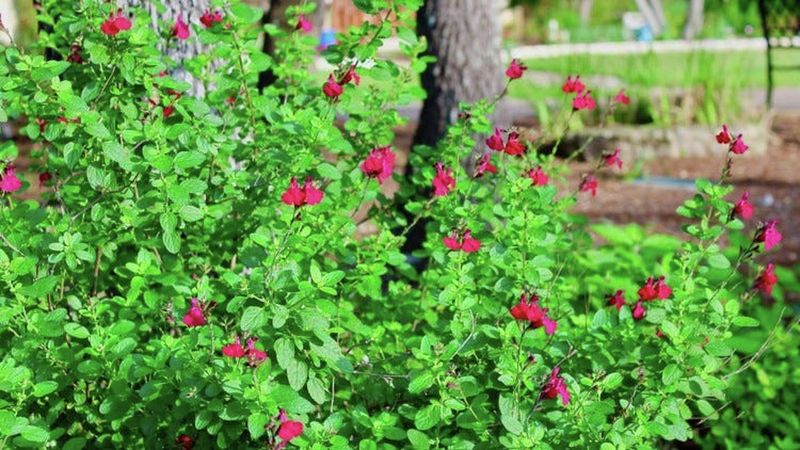
Your salvia looked great in spring, covered in flowers, and now it has gone quiet in the July heat. Before you assume something is wrong, know that a bloom pause is normal for many Texas salvias after a flush of flowers, but the reason it stopped is not always the same. Some plants need a simple trim to wake back up, while others are reacting to heat, drought, or something going on underground. Understanding what your specific plant needs makes all the difference.
A July Bloom Pause Does Not Have One Universal Cause
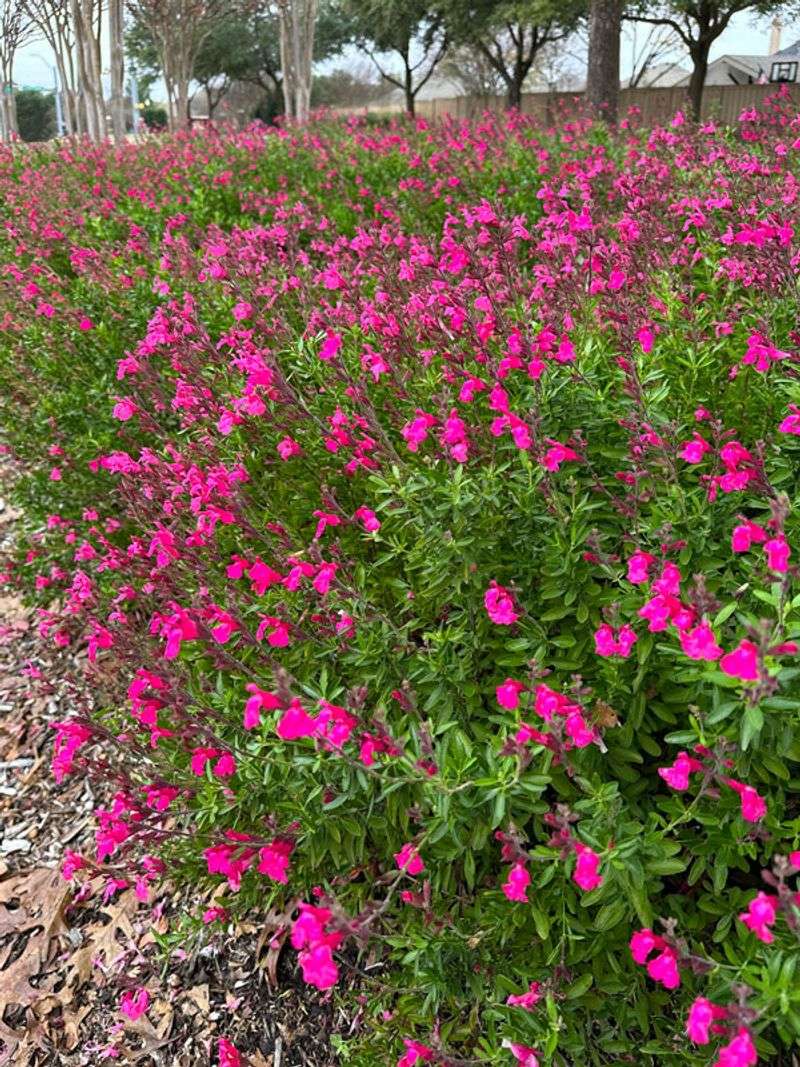
Salvia plants across Texas have a reputation for toughness, but that reputation covers a wide range of species that behave very differently from one another. The term “Texas salvia” might mean autumn sage (Salvia greggii), mealycup sage (Salvia farinacea), Mexican bush sage (Salvia leucantha), annual red salvia (Salvia splendens), or any number of ornamental hybrids. Adding to the confusion, “Texas sage” often refers to Leucophyllum frutescens, a completely different shrub that is not a salvia at all.
A bloom pause in July can mean several things. The plant may have simply finished a normal flush of flowers and is resting before the next round. Or heat stress, drought, waterlogged soil, insufficient sunlight, or disease could be limiting new bud development. University of Arizona Cooperative Extension guidance on drought and extreme heat makes clear that stressed plants enter a kind of protective slowdown, redirecting energy away from flowering and toward survival.
A 2014-2023 Chicago Botanic Garden evaluation of 49 hardy Salvia cultivars found that most entries showed very little late-season flower coverage compared to their primary bloom period, underscoring how much cultivar traits alone can shape what you see in summer. That trial was conducted in Chicago rather than Texas, so it serves as comparative evidence about variability rather than a direct measure of Texas performance.
Before reaching for the pruning shears, spend a few minutes looking at the whole plant. Check whether the flower spikes are simply spent and brown, or whether the foliage itself looks stressed, discolored, or diseased. University of Minnesota Extension’s salvia diagnostic tool lists wilting, yellowing, and discolored leaves as signs of problems that pruning alone will not fix. The right response depends on what you find, and the sections that follow will walk through each scenario.
Try a Post-Bloom Trim When Spent Spikes Are the Issue
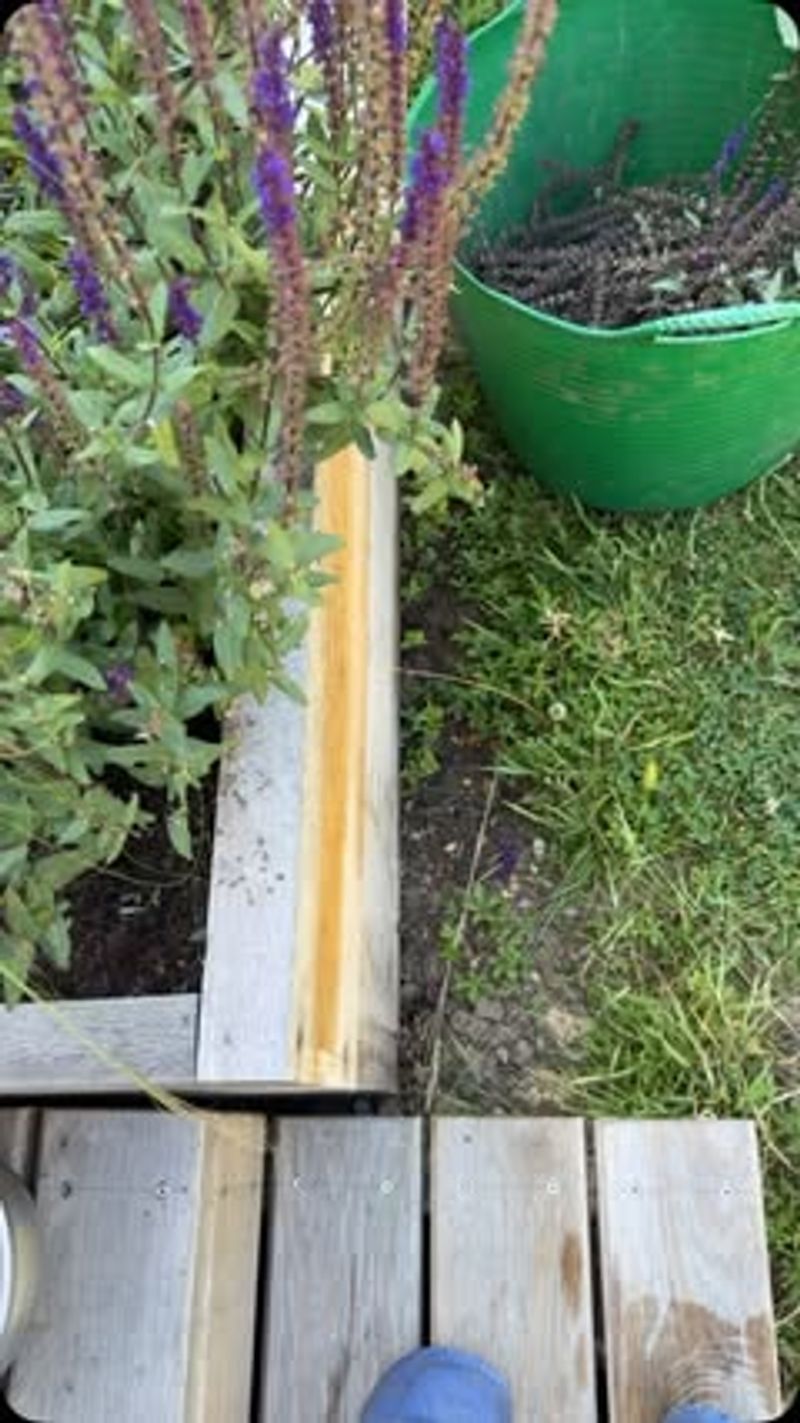
When a salvia has clearly finished a bloom cycle and the flower spikes are dry, brown, and done, removing them is a reasonable and often helpful step. Deadheading means cutting away those faded flowers or entire spent flower stalks. The idea is that the plant stops putting energy into developing seeds and may redirect that energy toward producing fresh growth and new flower buds.
Royal Horticultural Society guidance on growing salvia explains that deadheading can reduce seed production and may encourage additional flowers in repeat-blooming types. For shrubby salvias, the RHS recommends a light mid-summer trim just below faded flowers when flowering stops, with the goal of encouraging a late-summer or autumn flush. The key word there is “may.” Rebloom is a possibility, not a guarantee, and it depends on the species, cultivar, and growing conditions.
Two Texas-specific examples show how this works in practice. Texas SmartScape describes Gregg’s salvia as a low-water Texas native with spring, summer, and fall interest, and recommends shearing it to keep it growing vigorously. For mealycup sage, PlantAnswers recommends frequent shearing of ‘Henry Duelberg’ sage between bloom cycles specifically to promote rebloom. Both of these are cultivar-specific recommendations, not a blanket rule for every salvia in the landscape.
The post-bloom trim is most useful when the plant is otherwise healthy, growing in good conditions, and has genuinely completed a flowering cycle. If the plant is drooping in the afternoon heat, showing stressed foliage, or sitting in poorly drained soil, address those issues first before deciding that deadheading is the answer.
Make a Light, Targeted Cut
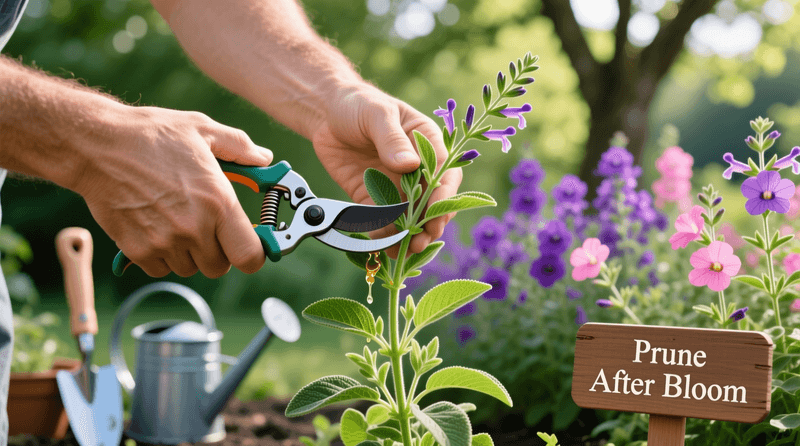
Knowing that a trim can help is one thing. Knowing exactly where to cut is what protects the plant from unnecessary stress. For individual spent flower stalks, trace the stalk back to where it meets a healthy leaf junction or node, and make your cut there. Cutting at a node gives the plant a clear point from which to push new growth, rather than leaving a bare stub that may die back further.
When a plant has accumulated many dried flower spikes or seed pods across its whole canopy, working stalk by stalk can take a while. In that case, a light, even shear across the top third of the plant accomplishes a similar reset more efficiently. University of Minnesota Extension’s salvia growing guide supports a trim approach for maintaining salvia appearance and encouraging continued growth. The goal with shrubby or woody salvias is a modest reduction, not a dramatic cutback.
Cutting into bare, leafless wood on a woody salvia can damage the plant or leave sections that struggle to regenerate.
For a fuller midsummer reset on a plant that has developed many dried seed pods, Texas xeriscape guidance from PlantAnswers suggests cutting the plant back to roughly half its height to encourage new growth and rebloom. That same source notes that some salvias may return to bloom in less than a month, which is an encouraging possibility rather than a reliable schedule. Cultivar differences, heat levels, and soil moisture all affect how quickly a plant responds.
PlantAnswers’ salvia care page reinforces frequent shearing between bloom cycles as the preferred approach for mealycup sage types, which aligns with keeping cuts moderate and repeated rather than severe and infrequent. A little off at the right time tends to work better than a hard reset under the Texas summer sun.
Match the Cut to the Salvia’s Growth Habit
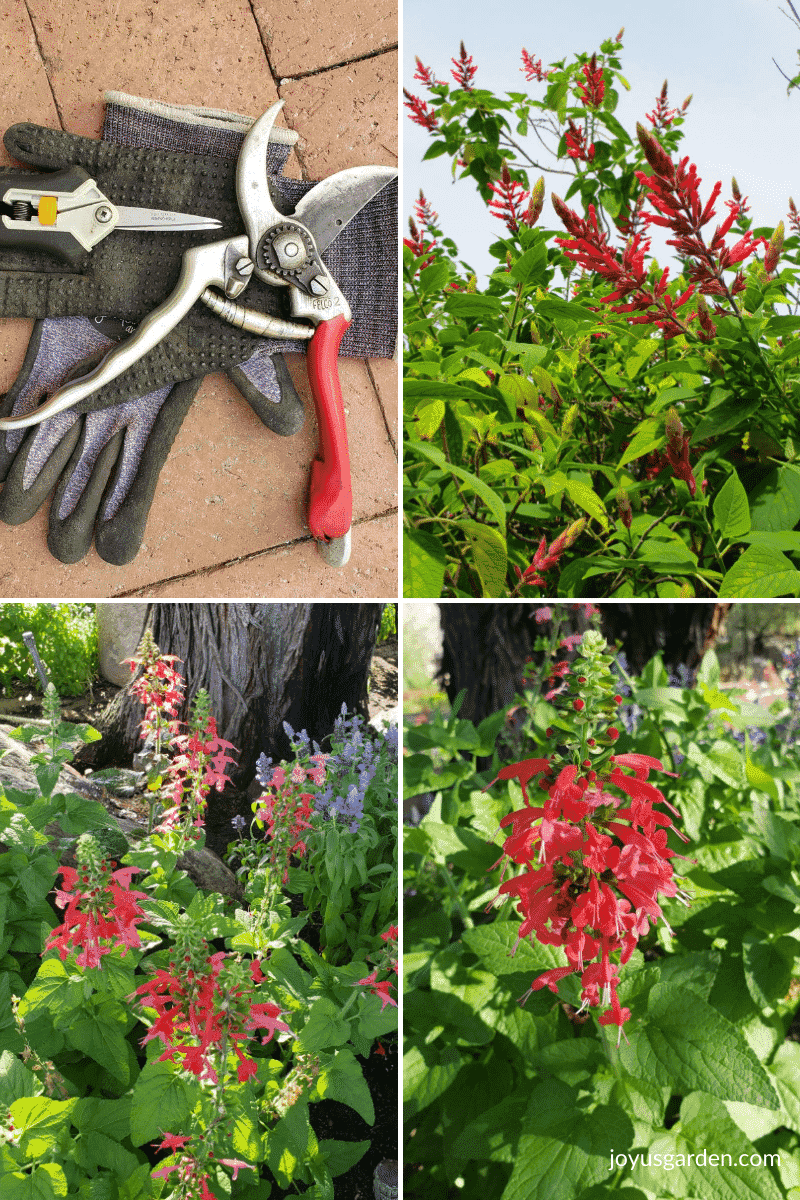
Not every salvia should receive the same treatment, and matching the pruning approach to the plant’s growth habit prevents unnecessary damage. Shrubby salvias, including Salvia greggii (autumn sage), Salvia microphylla (baby sage), and their ornamental hybrids, develop woody stems over time. These plants generally do best with a light trim just below the faded flowers, removing spent growth without cutting back into the older woody framework. Going too deep into bare wood on a shrubby salvia can leave sections that are slow to recover or that die back entirely.
RHS salvia growing guidance draws a clear distinction between shrubby types and herbaceous types. Herbaceous salvias such as Salvia nemorosa (woodland sage) and Salvia x sylvestris do not develop the same woody framework. After their mid-summer flush fades, these plants may be cut back close to ground level to encourage a fresh set of foliage and a possible second round of flowers. That is a very different instruction from what works for a woody autumn sage, and applying the wrong approach to the wrong plant can set it back rather than restart it.
Annual salvias, such as the common red Salvia splendens used in bedding displays, follow their own pattern. Removing spent flower heads encourages branching and continued bloom through the season, but these plants do not have a woody framework to protect, so the pruning calculus is simpler. Culinary sages and other evergreen shrubby types generally need less summer pruning and are not the focus of a post-bloom trim strategy.
University of Minnesota Extension also notes that salvia types differ in their care requirements, which reinforces the importance of identifying the botanical name before making a hard cut. If you are unsure which salvia you have, look up the growth habit based on the plant’s leaf shape, stem texture, and flower color before deciding how far to cut. Texas SmartScape’s Gregg’s salvia profile is a useful starting point for one of the most common Texas landscape salvias, and it confirms the shear-to-maintain approach rather than a hard cutback.
Treat Mexican Bush Sage as a Separate Timing Case
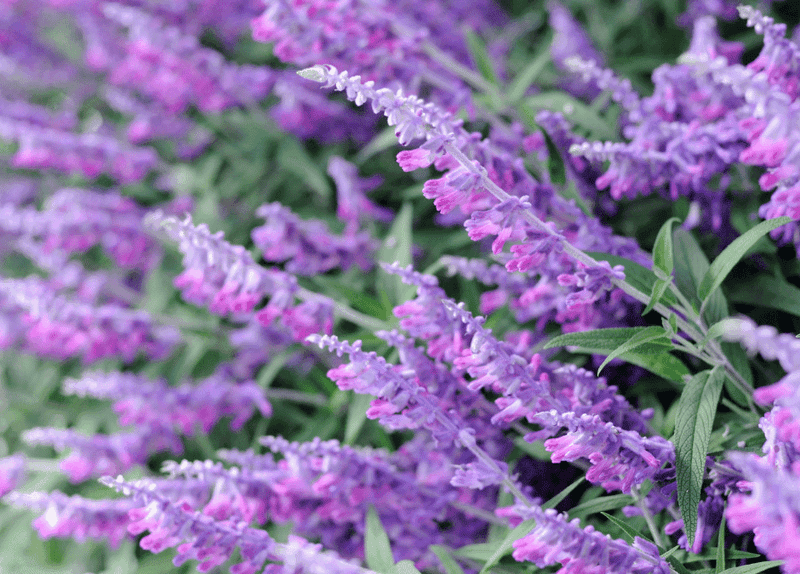
Mexican bush sage (Salvia leucantha) gets sold and grown across Texas, and it is easy to lump it in with other salvias when thinking about a July trim. That would be a mistake. Unlike autumn sage or mealycup sage, which often push a spring or early summer bloom flush, Mexican bush sage is primarily a late-summer and fall bloomer. Its flowering season is just getting started as summer deepens, not winding down.
PlantAnswers’ detailed profile of Salvia leucantha recommends shearing it several times during summer specifically to produce more flowering spikes and a sturdier, more compact plant by the time fall arrives. That summer shearing is not a post-bloom cleanup, it is a pre-bloom preparation. The goal is to encourage branching so that when the plant finally sets its flower spikes in late summer, there are more of them and the plant holds its shape without flopping over.
Applying a heavy post-bloom July cut to a Mexican bush sage that has not yet bloomed would remove the very growth that is building toward fall flowers. The timing cue for this plant is the plant’s growth stage and overall health, not the calendar month. If the plant looks healthy and is putting on good leafy growth in July, a light shear to encourage branching is appropriate. If it is already showing early flower development, leave it alone and let it build toward its main season.
RHS salvia guidance reinforces the broader point that bloom timing and pruning needs vary significantly across the salvia genus. Knowing which plant you have and where it sits in its bloom cycle matters far more than following a fixed July rule that was written with a different species in mind.
Do Not Prune a Heat-Stressed Plant Aggressively
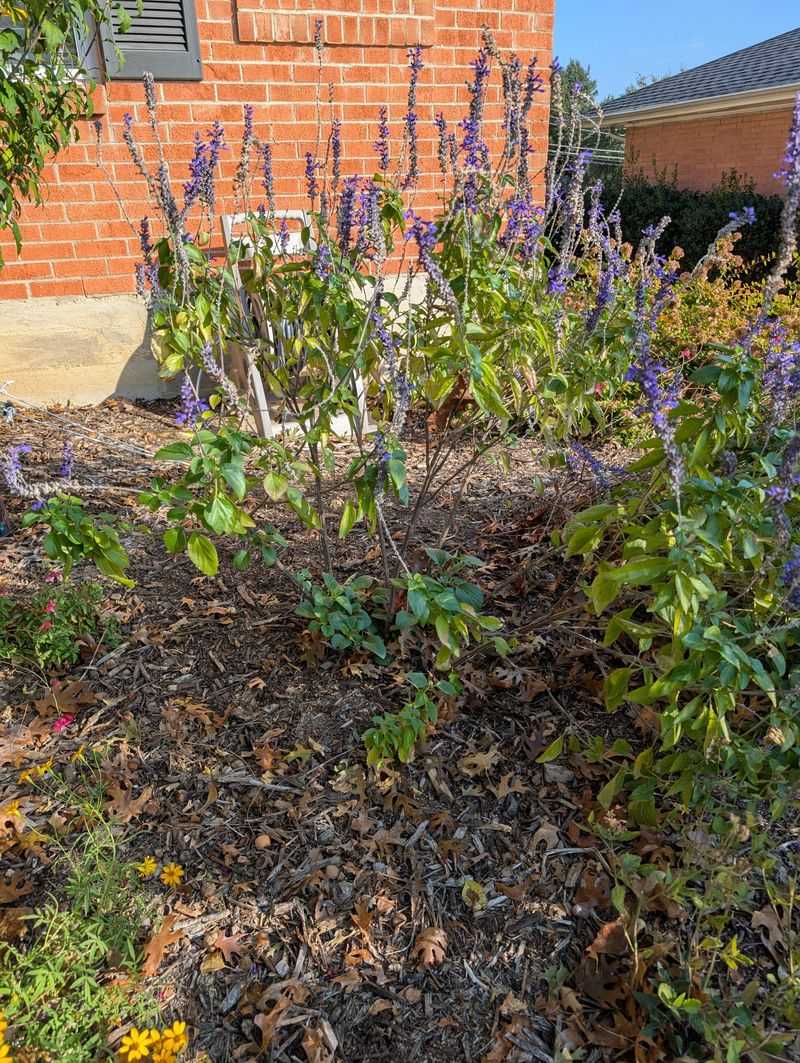
July in Texas is not just warm. Triple-digit temperatures, low humidity, and weeks without rain can push plants into genuine stress, and a stressed plant is not a good candidate for hard pruning. The calendar alone is not enough reason to cut. The plant’s actual condition has to be part of the decision.
University of Arizona Cooperative Extension’s guidance on drought and extreme heat specifically advises against shearing plants in dry, hot weather. Heavy pruning removes photosynthetic foliage, which is the plant’s primary tool for capturing the energy it needs to recover and grow. Strip away too many leaves during a heat event and the plant loses its ability to manage its own temperature and produce the sugars that fuel new growth. The result can be a plant that declines further rather than bouncing back.
Watch for specific warning signs before picking up the shears. A salvia that is wilting in the morning rather than just during peak afternoon heat is telling you it is already struggling. Scorched or bleached leaf edges, blackened stem tips, or foliage that feels dry and brittle rather than firm are all signals to stabilize the plant first. A light removal of clearly dead material is fine, but a major shearing session should wait until the plant shows signs of active, healthy growth again.
Watering practice matters here too. Texas AgriLife Extension’s EarthKind water guidance recommends thoroughly moistening the soil around established plants, then allowing the plant to use much of the available water before watering again. Mulch around the root zone helps the soil hold moisture longer between waterings. Watering every day on a fixed schedule can actually cause problems by keeping the soil too wet and preventing the roots from getting the oxygen they need.
Let the plant and the soil, rather than the clock, guide your watering decisions.
Check Water, Fertility, and Disease Before Cutting Hard
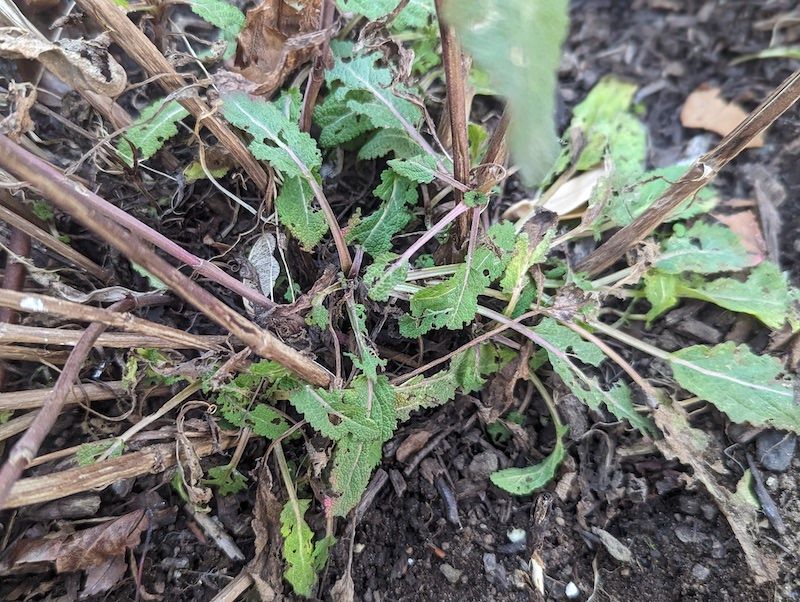
Spent flower spikes are easy to spot, but they are not always the reason a salvia has stopped performing. Before reaching for the pruning shears, rule out a few common problems that pruning will not fix and could actually make worse.
Water management is the first place to look. Both too much and too little water can shut down flowering. Salvias generally prefer well-drained soil, and roots sitting in waterlogged ground can rot or suffocate. Texas AgriLife EarthKind guidance recommends mulching established flower gardens to retain soil moisture and reduce watering frequency, which helps maintain the balance salvias prefer.
On the flip side, a plant in sandy or fast-draining soil during a dry July spell may be getting too little water to support bud development.
Fertility is another area where more is not better. Texas xeriscape guidance from PlantAnswers warns that excessive fertility can produce tall, leafy, sparsely flowering salvias. Too much nitrogen pushes vegetative growth at the expense of blooms. University of Minnesota Extension’s salvia guide notes that salvias generally do not need summer fertilization, though some annual cultivars may benefit from limited feeding.
Established Texas perennial salvias in reasonable soil rarely need a summer fertilizer boost and may actually flower less if they get one.
Disease can also quietly undermine a salvia’s performance. Powdery mildew is a common problem, showing up as a white or gray powdery coating on leaves and stems. University of Minnesota Extension’s powdery mildew guide recommends improving air circulation, thinning crowded growth, and avoiding excess fertilizer as management strategies. If foliage looks off, the University of Minnesota’s salvia diagnostic tool can help identify whether discoloration points to a disease, pest, or environmental problem.
Diagnosing the actual cause before cutting hard is always the safer path.
Expect Possible Rebloom, Not a Guaranteed Second Flush
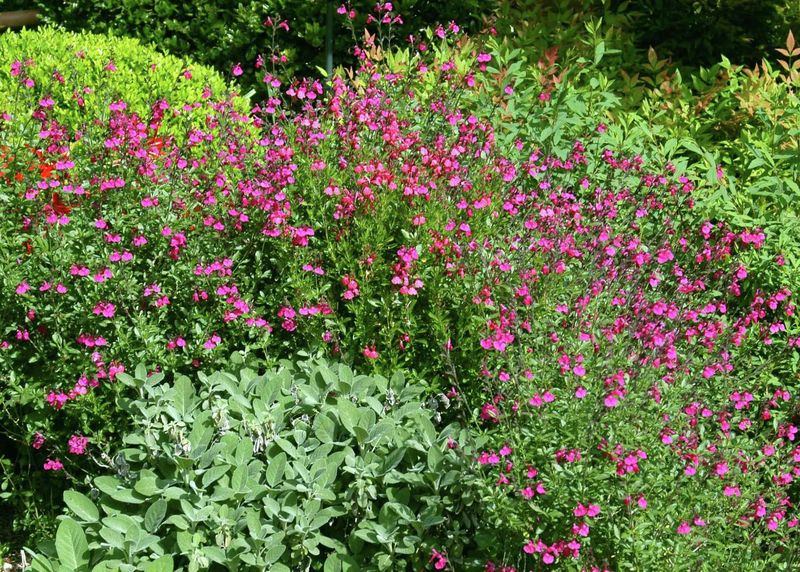
After a post-bloom trim, the most honest thing to expect is the possibility of more flowers rather than a certainty. Some Texas salvias respond strongly. A healthy Gregg’s salvia or a well-established ‘Henry Duelberg’ mealycup sage in good conditions may push a noticeable second flush of flowers in late summer or fall. Others may produce scattered blooms, fresh foliage without many flowers, or simply a tidier plant that holds its shape until cooler weather arrives.
Texas xeriscape guidance from PlantAnswers reports that some salvias cut back after developing many dried seed pods may return to bloom in less than a month. That is an encouraging data point, but it reflects a possible outcome for suitable plants in good condition, not a schedule that every salvia will follow. Timing of rebloom depends on the cultivar, the growing conditions, summer rainfall, and how much heat stress the plant is managing.
Evidence from outside Texas reinforces the variable nature of salvia rebloom. The Chicago Botanic Garden’s 2014-2023 evaluation of 49 hardy Salvia cultivars found that most entries showed limited late-season flower coverage compared to their primary bloom period. That trial also did not include a controlled comparison of deadheaded versus non-deadheaded plants, so it cannot confirm that removing spent flowers consistently increases production. The evaluation was conducted in Chicago rather than Texas, so its findings describe cultivar variability rather than predict Texas-specific performance.
Both Texas SmartScape’s profile of Gregg’s salvia and PlantAnswers’ mealycup sage guidance point to spring, summer, and fall interest as part of what makes these plants valuable in Texas landscapes. That multi-season potential is real, but it unfolds differently depending on the summer’s conditions. Give a trimmed plant a few weeks before drawing conclusions, and assess new growth and bud development rather than expecting an immediate burst of color.
Leave Some Spikes for Wildlife and Structure
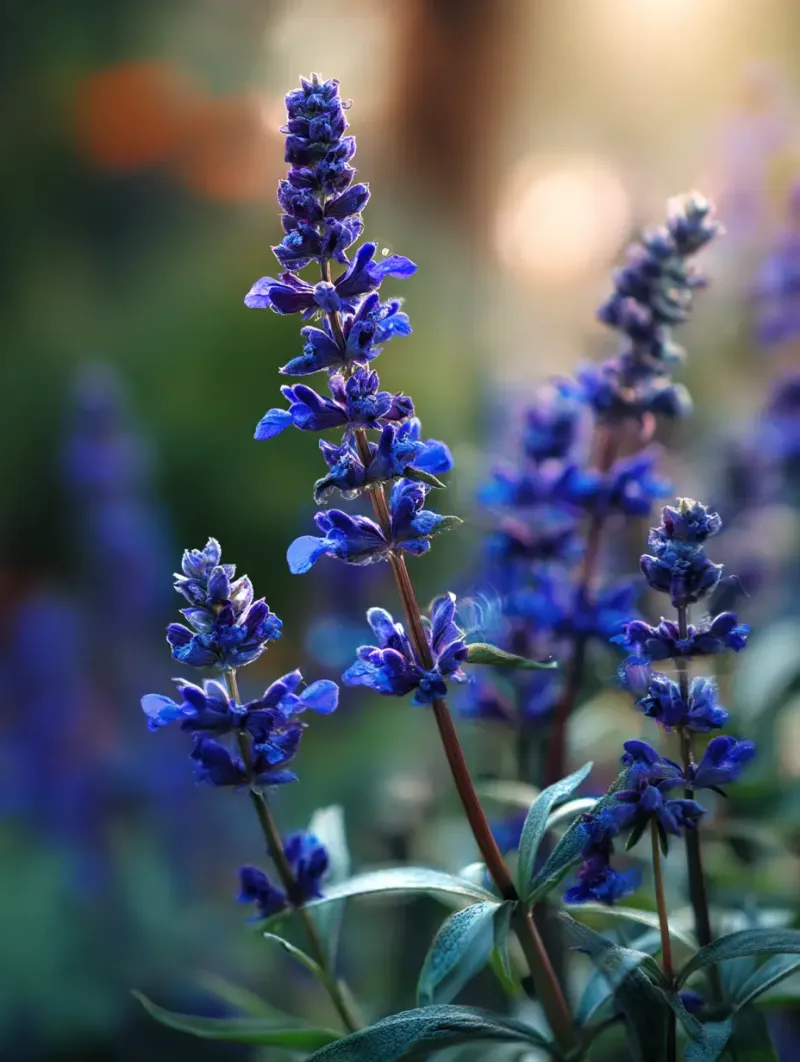
A practical approach to post-bloom salvia care comes down to a short checklist. First, identify which salvia you are growing. Second, confirm that a genuine bloom flush has finished rather than assuming the plant has quit. Third, remove spent spikes or make a modest trim only if the plant is healthy and not showing signs of heat stress, disease, or drainage problems.
Fourth, correct any underlying issues before cutting harder.
One more consideration often gets skipped: leaving some mature stems in place. Spent flower spikes that carry seeds are a food source for seed-eating birds, and the plant’s late-season structure provides shelter and foraging habitat for pollinators working through a sparse summer landscape. Utah State University Extension’s wildlife habitat principles note that leaving some plant structure intact supports native wildlife through lean seasons. The Chicago Botanic Garden’s salvia evaluation also acknowledged the value of leaving some stems for wildlife and garden form rather than removing every spent spike.
Trimming half the plant while leaving the rest untouched is a reasonable compromise that tidies the garden without eliminating all the habitat value.
RHS salvia guidance supports a similar balanced approach, encouraging gardeners to observe the plant’s response over time rather than following a rigid schedule. A timely, modest trim may help some salvias flower again later in the season, but the plants that thrive long-term in Texas yards are usually the ones tended with attention to their actual condition rather than the date on the calendar. A thoughtful gardener and a patient eye will always outperform a fixed rule.