
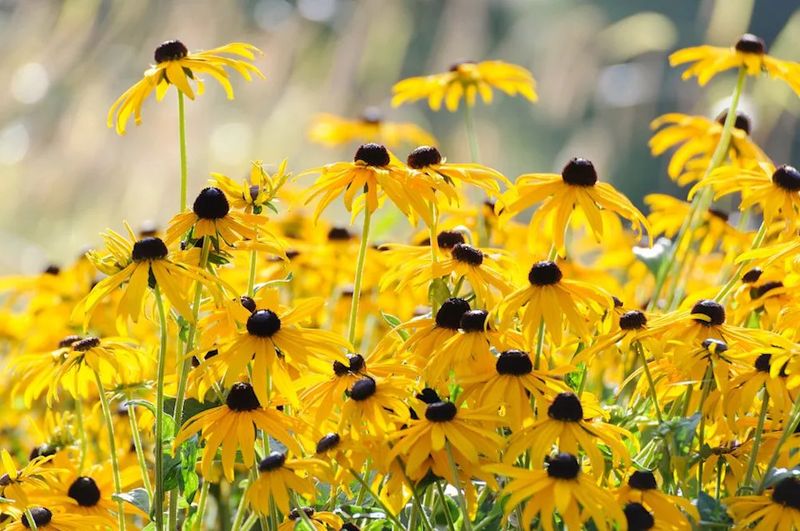
Texas gardens face some brutal conditions, from triple-digit summers to strict water restrictions that leave lawns thirsty. The good news is that certain yellow perennials handle all of that heat and dry soil like champs, and they come back on their own every single year. You plant them once, give them a little time to settle in, and they reward you with sunny blooms season after season. Here are nine tough, cheerful yellow perennials that belong in every Texas yard.
1. Black-Eyed Susan
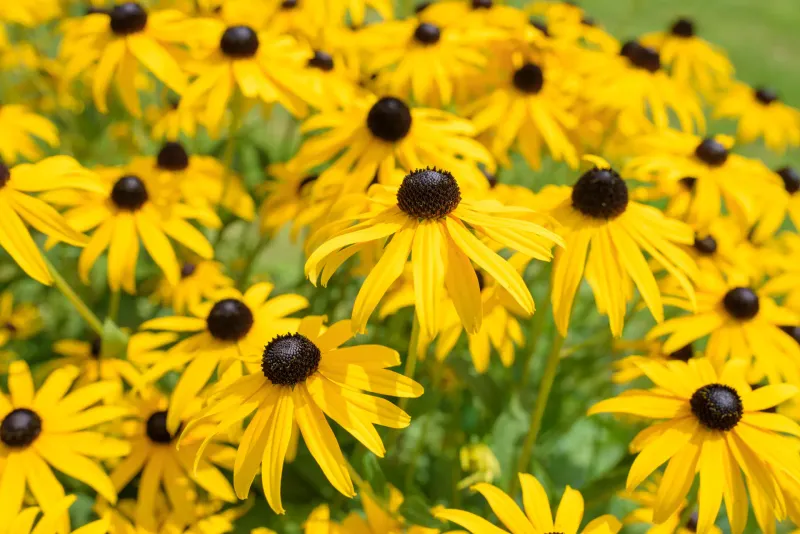
Drive down almost any Texas back road in summer and you will spot golden petals waving in the ditches. Black-eyed Susan is one of those native wildflowers that seems almost impossible to kill, which is exactly why it earns the top spot here.
The dark brown center gives each bloom a bold, friendly face, and pollinators absolutely adore it. Bees and butterflies show up in droves, turning your flower bed into a busy little ecosystem you can watch from the porch.
What makes it a standout is its stubborn toughness. It shrugs off clay soil, sandy soil, and the kind of heat that wilts weaker plants by noon. Once established, it needs very little water, so it fits right in with municipal restrictions.
Fun bit of trivia: this cheerful bloomer is the state flower of Maryland, but Texans have claimed it as their own for generations. Deadhead the spent flowers and it will keep pushing out new blooms well into fall, then return bigger the following spring.
2. Lanceleaf Coreopsis
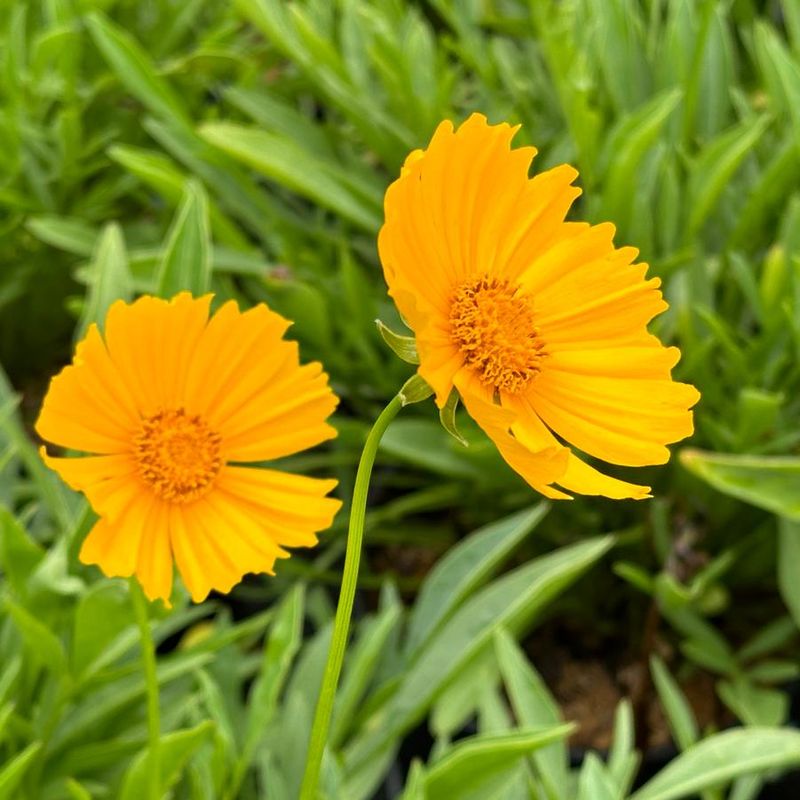
If you want a plant that practically plants itself, coreopsis is your friend. Also called tickseed, this Texas native scatters seeds so freely that a single clump can turn into a golden drift within a couple of seasons.
The blooms are bright, daisy-like, and sit on slender stems that sway in the slightest Gulf breeze. They start flowering in late spring and keep the color coming through the worst of the summer scorch.
Gardeners love how forgiving it is. Poor soil, drought, blazing sun, none of it fazes coreopsis, and deer usually leave it alone in favor of tastier snacks. That makes it a low-stress choice for anyone tired of babying finicky flowers.
Cut it back after the first big flush and you will often trigger a whole second round of blooms. Come next year, expect even more plants than you started with, all for free.
3. Yellow Bells (Esperanza)
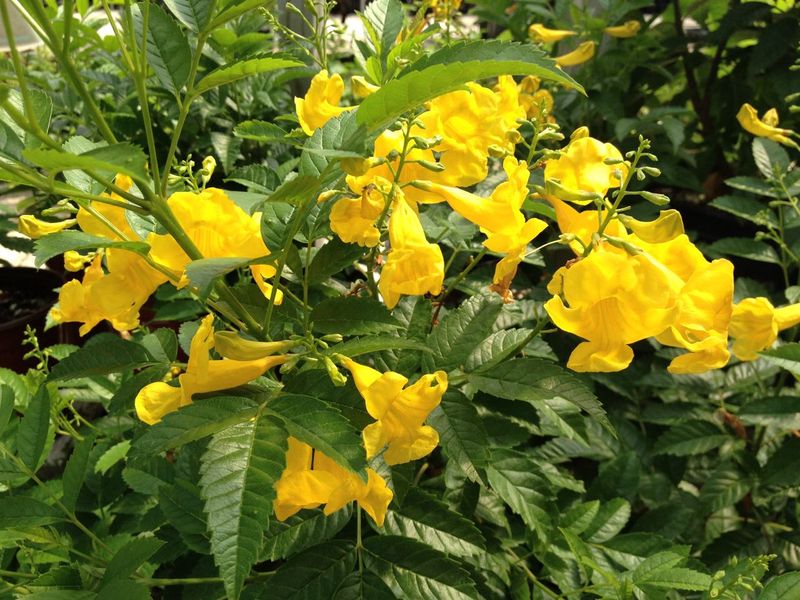
Few shrubs say Texas summer quite like esperanza, whose name means hope in Spanish. Clusters of trumpet-shaped yellow flowers cover this shrub from late spring until the first frost, glowing even in the brutal afternoon heat of July and August.
Hummingbirds treat it like a favorite roadside diner, zipping from bloom to bloom all day long. Butterflies join the party too, so you get a lively show without lifting a finger.
Heat and drought only seem to make esperanza happier. It thrives in full sun where other plants beg for shade, and it laughs off the dry stretches that come with summer watering bans.
In colder parts of the state it may die back to the ground in winter, but it bounces right back once the soil warms. Down along the Gulf Coast and South Texas, it often stays evergreen and grows into a big, showy centerpiece.
4. Damianita
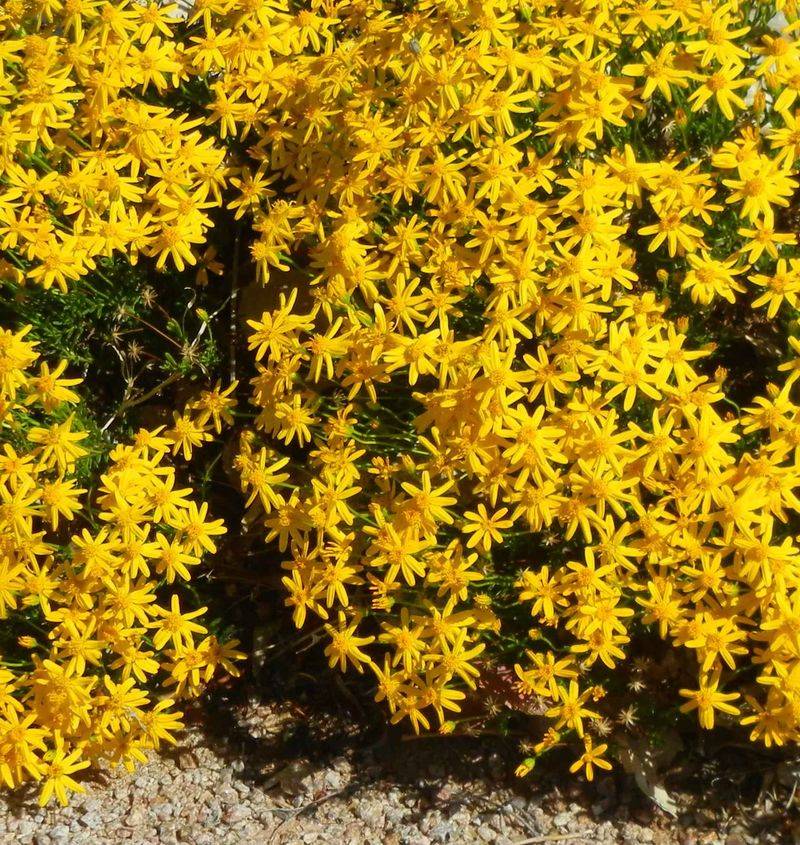
Small but mighty, damianita is the kind of tough little native that thrives on neglect. This low, mounding shrub covers itself in tiny golden daisies each spring, then repeats the performance in fall when the weather cools off again.
The fine, needle-like foliage is aromatic, releasing a resiny scent when you brush against it. That built-in fragrance helps keep browsing deer and rabbits at a respectful distance.
Native to the rocky limestone soils of the Texas Hill Country, damianita actually prefers lean, gritty ground over rich garden loam. Overwater it and you risk rot, so it is perfect for that dry, sunny spot where nothing else will grow.
Tuck a few along a rock border or a xeriscape bed and they will hold their evergreen shape year-round. It is a compact powerhouse that asks for almost nothing and gives back a wall of gold.
5. Zexmenia (Orange Zexmenia)
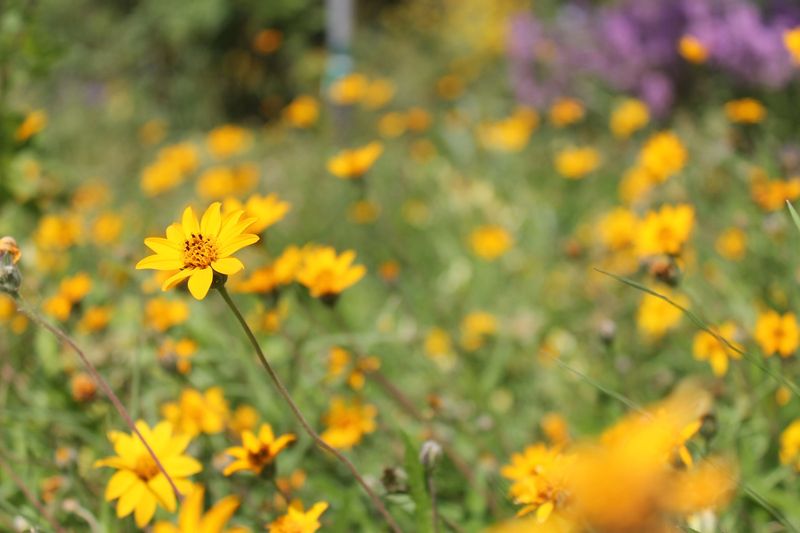
Here is a workhorse that rarely gets the credit it deserves. Zexmenia produces cheerful yellow-orange daisies from spring straight through fall, and it does it while barely sipping water.
The plant forms a tidy, sprawling mound with slightly rough leaves, giving flower beds a relaxed, natural feel rather than a stiff formal look. It blends beautifully into cottage gardens and native landscapes alike.
Pollinators find it irresistible, and it serves as a host plant for certain butterfly caterpillars, so it does double duty for your yard’s ecosystem. Feeding the pollinators while surviving a drought is a rare combination.
Native across Central and South Texas, zexmenia handles poor soil, reflected heat from walls and pavement, and long dry spells without complaint. Trim it back in late winter and it returns each spring stronger than before.
6. Four-Nerve Daisy
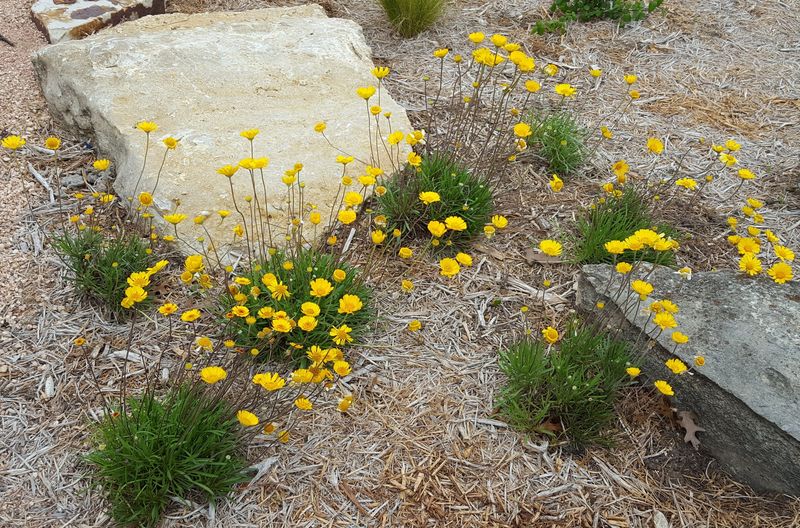
Blink and you might miss the moment four-nerve daisy stops blooming, because honestly it almost never does. In mild Texas winters this cheerful native can flower nearly year-round, sending up bright yellow blossoms on thin, wiry stems.
The plant itself stays small and grassy-looking, forming a neat clump of silvery-green foliage that pairs nicely with rocks and gravel. Each flower rises well above the leaves, giving it an airy, floating look in the breeze.
Tough as nails describes it well. It handles poor, rocky soil, intense sun, and drought conditions that would flatten most flowering plants, making it a xeriscape favorite from the Hill Country to West Texas.
Because it reseeds gently, you often find little volunteers popping up nearby the next year. Pull the ones you do not want and let the rest fill in the gaps.
7. Maximilian Sunflower
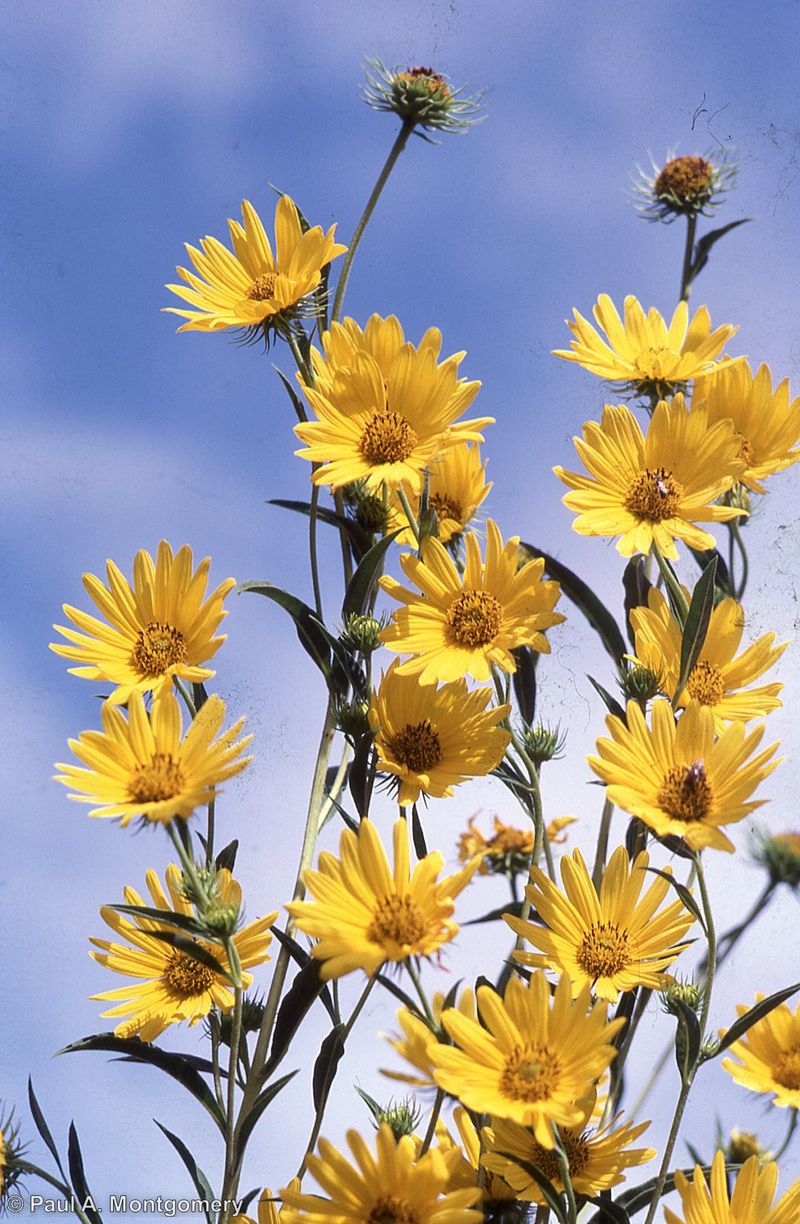
When late summer rolls around and other flowers are fading, Maximilian sunflower steals the whole show. Tall stalks shoot up several feet high, then burst into rows of golden blooms that look like a sunflower field packed onto a single stem.
Come fall, these towering natives become a magnet for bees, butterflies, and seed-eating birds. Songbirds especially love the seed heads, so leaving them standing through winter feeds your feathered visitors.
They spread by underground rhizomes, so give them room to roam or they will happily colonize a corner of the yard. A back fence line or the rear of a border keeps their height and spreading habit in check.
Drought is no obstacle for this prairie native, which evolved to thrive in Texas grasslands. Cut the stalks down after the birds finish the seeds, and a whole new cluster erupts the following year.
8. Golden Groundsel
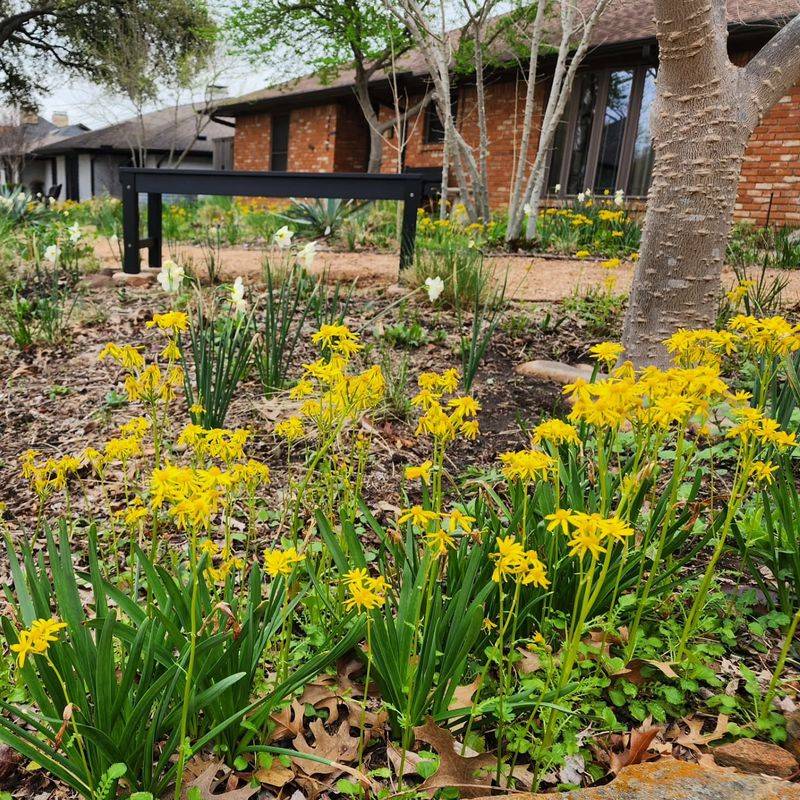
For the shady, tricky spots where most yellow bloomers refuse to grow, golden groundsel comes to the rescue. This native ground cover thrives under trees and along the north side of the house, spreading into a lush green carpet that erupts in yellow flowers each spring.
The scalloped, semi-evergreen leaves look good even before the blooms arrive, giving you year-round texture in areas that often look bare. Early in the season, tall stems of buttery-yellow daisies rise above the foliage.
It appreciates a bit more moisture than the desert-tough plants on this list, making it ideal for those low, damp corners of the yard. Blooming early also means it feeds pollinators when few other flowers are open.
Left alone, it slowly fills in bare ground, choking out weeds without much help from you. A shady problem area can become one of your prettiest spring features.
9. Yellow Columbine (Hinckley’s Columbine)
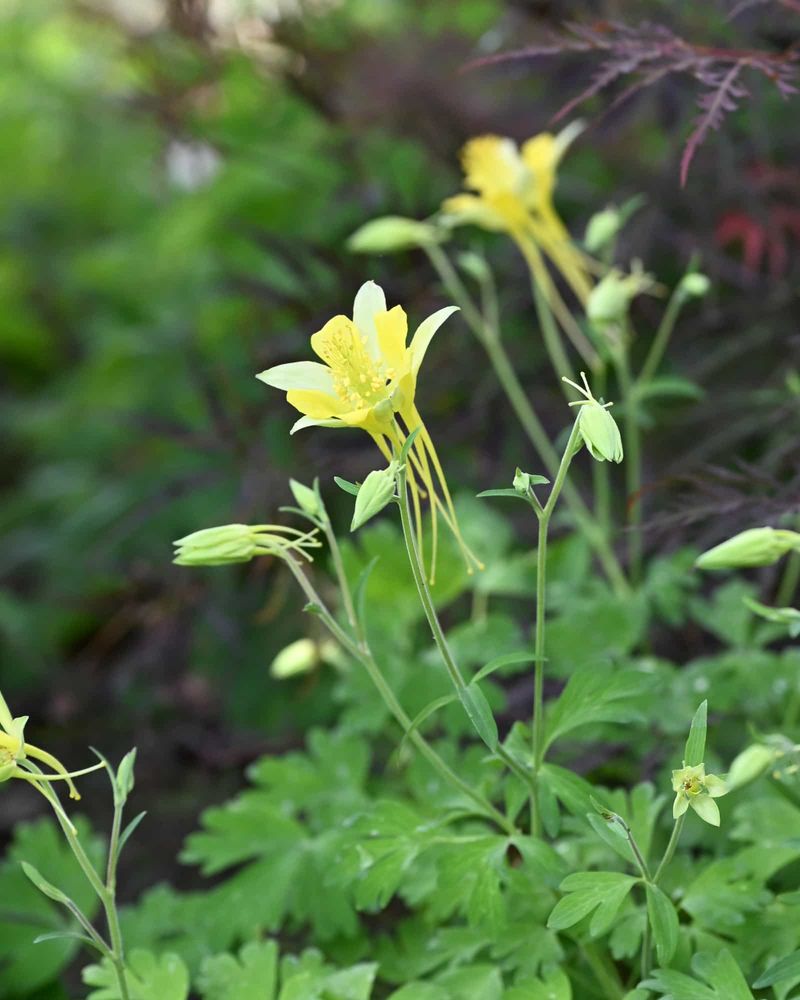
Delicate looks can fool you, and yellow columbine is proof. Its nodding, spurred yellow flowers seem far too dainty for the Texas climate, yet this native handles heat and dry shade with surprising grit.
Originally found clinging to canyon walls and spring-fed seeps in West Texas, it brings a touch of woodland elegance to shady beds where bold colors are hard to come by. The lacy blue-green foliage stays attractive long after the flowers fade.
Hummingbirds go straight for those dangling blooms in spring, drawn to the long nectar spurs. Planting it near a patio gives you front-row seats to the show.
It reseeds itself in spots it likes, so a single plant can slowly build a graceful colony over the years. Give it dappled light and decent drainage, and it will return faithfully each spring with almost no fuss.