
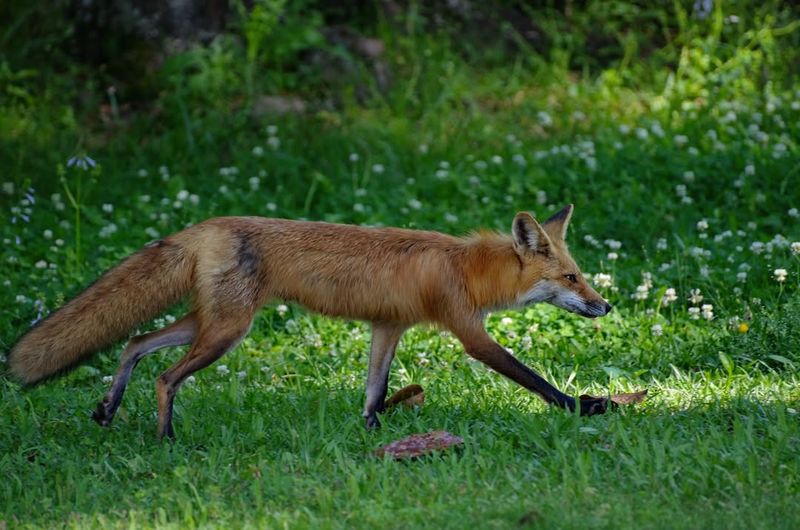
Spotting a fox slipping through your backyard as the sun goes down can feel alarming, but for most North Carolina homeowners, that moment is easier to misread than it is to understand. A fox at dusk is not automatically a sign of disease, a rodent problem, or a dangerous animal moving in. Knowing what the sighting actually signals, and what it does not, helps you protect your family and pets without overreacting to a wild animal that is usually just passing through.
Dusk is a normal time for a fox to cross your yard
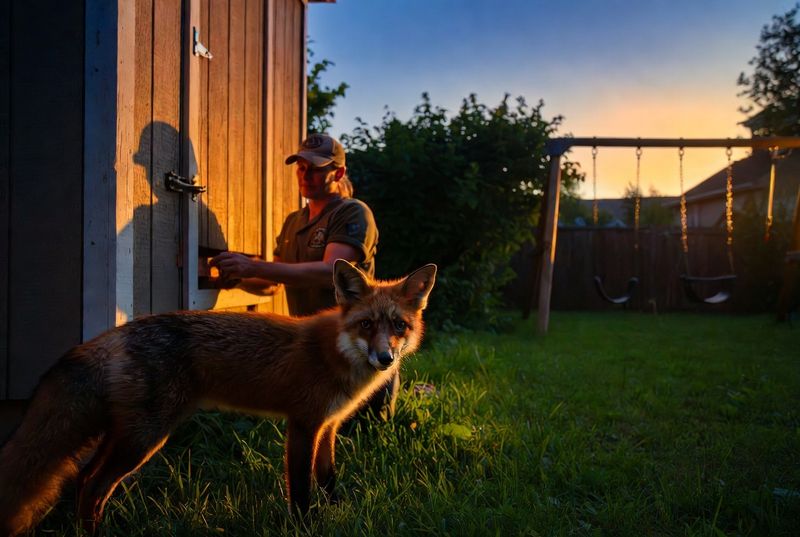
Most people see a fox at dusk and immediately think something is wrong. The truth is the opposite: dusk is one of the most predictable times to catch a fox moving through a yard. Foxes are crepuscular and nocturnal animals, meaning they are naturally most active around dawn and dusk and into the night. Extension wildlife guidance confirms that this twilight movement is routine behavior, not a warning signal.
The time of day alone tells you very little about whether an animal is healthy or dangerous. A fox trotting along a fence line or crossing an open lawn at 7:30 p.m. in July is behaving exactly the way foxes behave. What would actually warrant attention is not the hour but the way the animal moves and acts. Normal foxes are alert, purposeful, and quick to avoid people.
Abnormal behavior looks different: unprovoked aggression toward people, stumbling or loss of coordination, circling, paralysis, or an animal that cannot seem to move away. Those signs are worth reporting to animal control, but they are a separate conversation from a fox that simply crosses your yard and disappears into the hedgerow.
One more correction worth making early: seeing a fox, or having one cross your property, is not a rabies exposure. North Carolina public-health guidance on rabies is clear that exposure requires direct contact, specifically a bite, a scratch, or saliva or nervous-system tissue reaching an open wound or mucous membrane. A fox moving through your yard at dusk does not meet that threshold. The more useful question after a sighting is not “Is it rabid?” but rather “What is my yard offering that made this fox worth stopping for?”
Your yard is offering access, not delivering a diagnosis
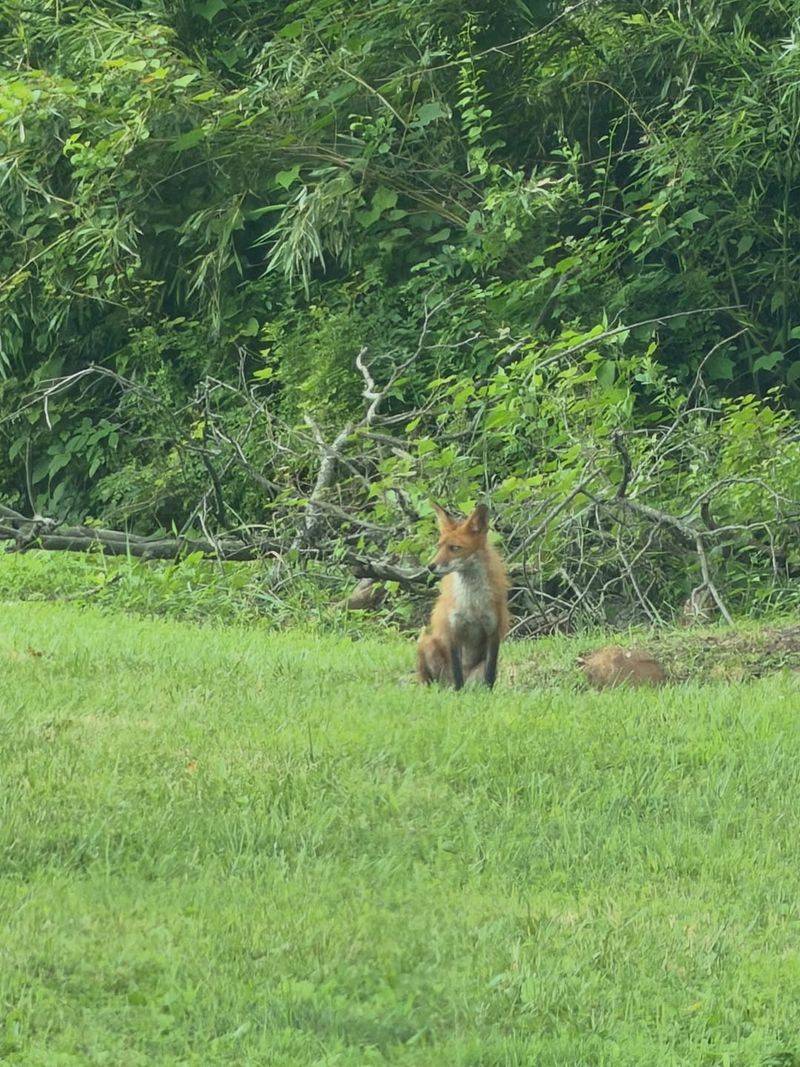
A fox does not wander through a yard at random. It is following a route that offers something useful, whether that is food, cover, a safe path between wooded patches, or some combination of all three. NC Wildlife’s red fox profile identifies residential areas as places that can supply food and denning cover, including pet food, garbage, fallen fruit, small prey, shrubs, crawl spaces, and decks. The sighting tells you that your property is permeable to wildlife and that the surrounding landscape has enough resources to support a fox using it.
The possible food sources are broader than most homeowners expect. Documented fox foods include mice, voles, rabbits, squirrels, birds, insects, fruit, vegetation, carrion, garbage, and pet food. A fox moving through your yard could be responding to any one of those, or to cover and travel routes rather than food at all. One sighting cannot tell you which resource the fox is using or how abundant any particular prey species is nearby.
A camera-trap study of Raleigh-area backyards found that human-provided food had the strongest influence on mammal activity among the resources tested, and that fences reduced detections of gray foxes, red foxes, and other mammals. That finding is practically useful: before assuming a fox is responding only to natural habitat, check whether there is an easier explanation sitting on your back porch or under your bird feeder.
What the sighting does not mean is equally important. A fox passing through your yard does not confirm a rodent infestation, does not measure how many foxes live nearby, and does not mean your property has been selected as a permanent home. NC Wildlife’s gray fox factsheet notes that fox densities are higher where habitat and prey are more productive, but a single observation cannot establish any of that. The honest interpretation is simply this: the property or the landscape around it is offering something a fox can use, and that fox found it.
North Carolina has two fox species that may use backyards
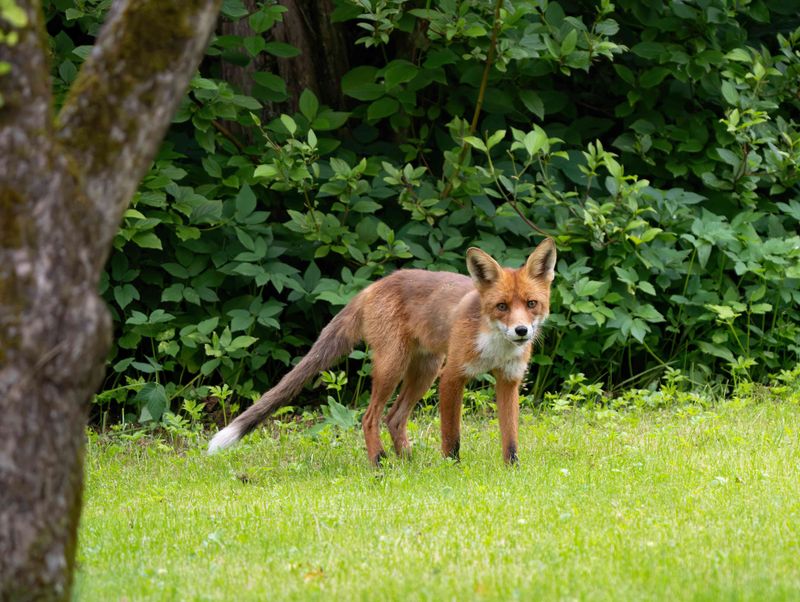
North Carolina is home to two fox species, and either one could be the animal crossing your yard. The gray fox is the state’s only native fox, present here long before European settlement. The red fox was introduced from Europe by fox hunters in the early 1700s and has since spread across the state. Both species occur statewide and both can adapt to landscapes that include residential neighborhoods.
NC State Parks’ gray fox profile describes the species as common statewide, at home in forests, brushy fields, farmland, and wooded residential areas. Gray foxes are primarily nocturnal but may forage during daylight when conditions favor it. The NC Wildlife gray fox page identifies the species as North Carolina’s native fox and notes that it uses a variety of habitats across the state. Red foxes, according to the NC Wildlife red fox profile, adapt readily to mixed and residential landscapes, drawn by food and denning cover rather than by the presence of houses specifically.
Telling the two apart in low light can be harder than field guides suggest. Gray foxes often show a salt-and-pepper or grizzled coat and carry a tail with a black tip. Red foxes typically show a more distinctly reddish or rusty coat and a tail with a white tip. Those are the standard field marks, but coat color varies between individuals, and at dusk or through a window, lighting conditions can make a gray fox look reddish or wash out the tail tip entirely.
WildWNC’s gray fox guide notes that the black-tipped tail is one of the more reliable identification features, but cautions that appearance alone can mislead. For most homeowners, the species identification matters less than understanding that both foxes are adaptable generalists capable of using the same kinds of residential resources. The practical response to a sighting is the same regardless of which species walked through.
The sighting does not promise rodent control or fewer ticks
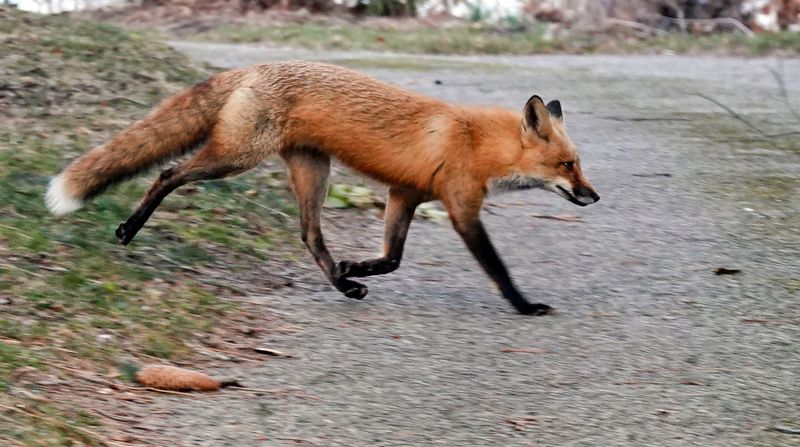
A fox in the yard is an easy animal to romanticize. Many homeowners assume the visit means their property is naturally controlling mice or that tick exposure is about to drop. Both ideas are worth setting aside before they shape how you manage your yard.
Fox diets are genuinely broad. Urban canid ecology research from the University of Wisconsin Extension documents that foxes eat small mammals, birds, insects, fruit, and human-provided foods depending on season and local availability. The NC Wildlife gray fox factsheet lists mice, rabbits, fruit, and agricultural crops as documented food sources. A fox moving through your yard may be responding to mice or voles, but it may just as easily be drawn by fallen crabapples, a compost pile, spilled birdseed, or the smell of pet food left outside.
One sighting cannot identify which of those the animal is using.
Even when foxes do eat mice and other small prey, that does not translate into reliable pest suppression in a single yard. A fox covers a large home range and is not a stationed predator working your property on a schedule. Prey consumption happens across a wide area, and the fox that visits your yard tonight may not return for days or weeks.
The tick question deserves a direct answer: foxes are not a meaningful source of tick control, and a fox sighting does not make your yard safer from tick-borne illness. Tick abundance and disease risk involve multiple host species, vegetation type, humidity, and pathogen cycles. NC Wildlife’s red fox profile describes the species as an opportunistic predator with a varied diet, not a pest-control service. Foxes may carry ticks themselves.
Treating a fox visit as a tick-management strategy is not a substitution for checking yourself, your children, and your pets after time outdoors.
Behavior—not the clock—shows when concern is warranted
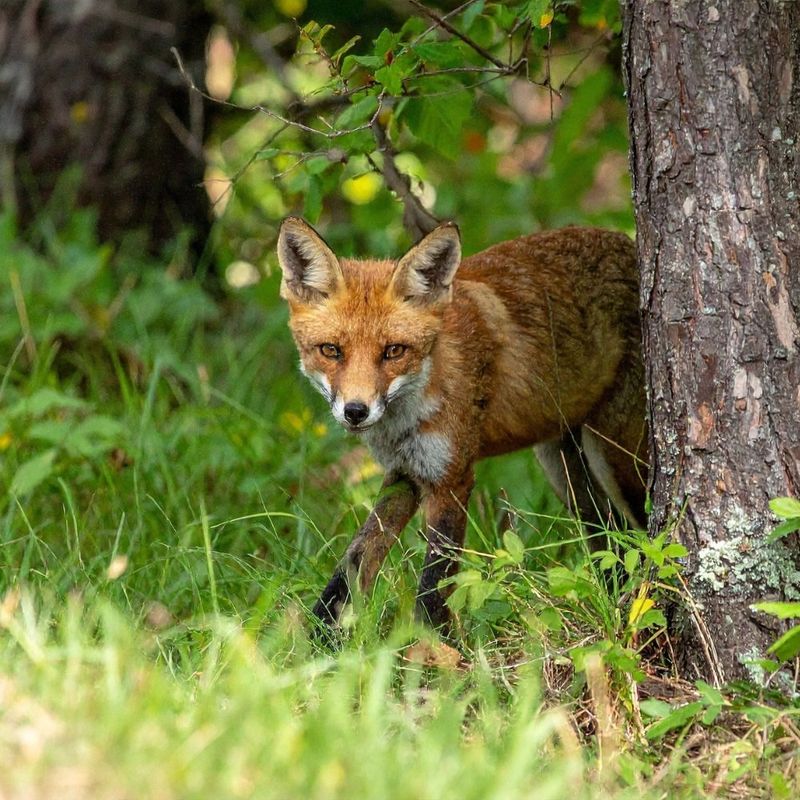
Once you know that dusk activity is normal, the next practical skill is learning what actually looks wrong. A healthy fox moves with purpose. It trots, pauses, sniffs, and moves on. It keeps its distance from people and typically retreats when it notices a human presence.
Seeing that animal cross your yard, even repeatedly over several evenings, does not by itself indicate a problem.
Behavior that warrants real concern looks different. NC Wildlife’s fox and coyote conflict guide identifies unprovoked aggression, stumbling, loss of coordination, paralysis, seizures, extreme lethargy, excessive salivation, and self-mutilation as signs that something may be wrong with an animal. If you observe any of those, keep people and pets indoors and contact your local animal control or the NC Wildlife Helpline. These signs are concerning, but they are not a confirmed diagnosis of any particular disease.
CDC guidance for veterinary professionals notes that clinical signs of rabies vary and that laboratory testing is required for confirmation.
Spring and early summer bring a reliable increase in fox sightings across North Carolina, and that seasonal pattern has a straightforward explanation. NC Wildlife’s spring wildlife guidance notes that foxes give birth from late February through April and that young begin exploring outside dens in late spring and early summer. Adults are moving more to feed their kits, and the young foxes themselves are testing their boundaries. A sudden uptick in sightings during May or June is far more likely to reflect a family foraging pattern than a population surge or a disease event.
Occasional daytime visibility follows the same logic. NC Wildlife’s red fox factsheet confirms that foxes may be active during daylight hours, particularly when they are provisioning young. Seeing a fox in the afternoon is not automatically a red flag; the behavior during that appearance is what matters.
A few yard changes can reduce conflict without punishing wildlife
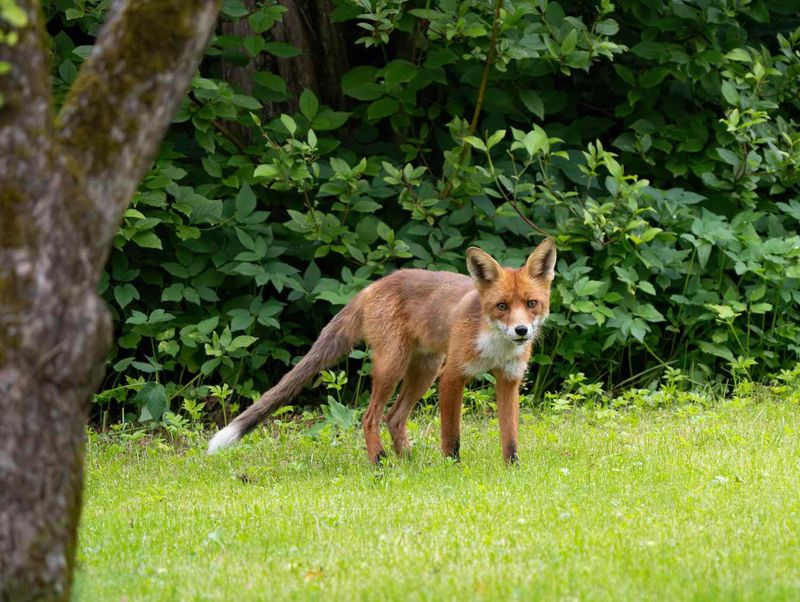
Understanding what drew a fox to your yard gives you a practical starting point for reducing future visits if they become a concern. The most effective first step is removing or securing human-provided food sources. NC Wildlife’s red fox page specifically lists pet food, garbage, and fallen fruit as resources that attract foxes to residential areas. Bringing pet food inside after meals, securing garbage cans with bungee cords or locking lids, and clearing fallen fruit from under trees are changes that cost little effort and remove easy incentives.
Birdseed deserves attention too. Ground-feeding setups and low platform feeders scatter seed that attracts mice and other small mammals, which in turn can attract foxes. If fox activity near your feeders becomes frequent, consider temporarily removing ground feeders or switching to tube feeders that limit spillage. Compost piles that include meat scraps or exposed food waste are another attractant worth addressing.
NC Wildlife’s conflict prevention guidance recommends securing compost in a closed bin rather than an open pile.
Pets and small livestock need direct protection. Keep dogs and cats supervised when outside, especially at dawn and dusk. Chickens, rabbits, and other small animals should be housed in fully enclosed structures with hardware cloth rather than standard chicken wire, because foxes can push through gaps and reach through openings. Latching mechanisms on coop doors matter as much as the fencing material.
Spaces beneath decks, porches, sheds, and crawl spaces can serve as den sites. NC Wildlife’s fox management factsheet advises confirming that no animals or dependent young are present before closing any access point. Sealing an occupied den can trap animals inside or separate kits from adults. When a den is active and close to the home, NC Wildlife’s spring guidance recommends nonlethal deterrents first: bright lights, a talk-radio station left playing nearby, loud periodic noise, or a motion-activated sprinkler.
These methods encourage the fox family to relocate on its own timeline without requiring you to intervene physically.
Direct exposure or property damage changes the response
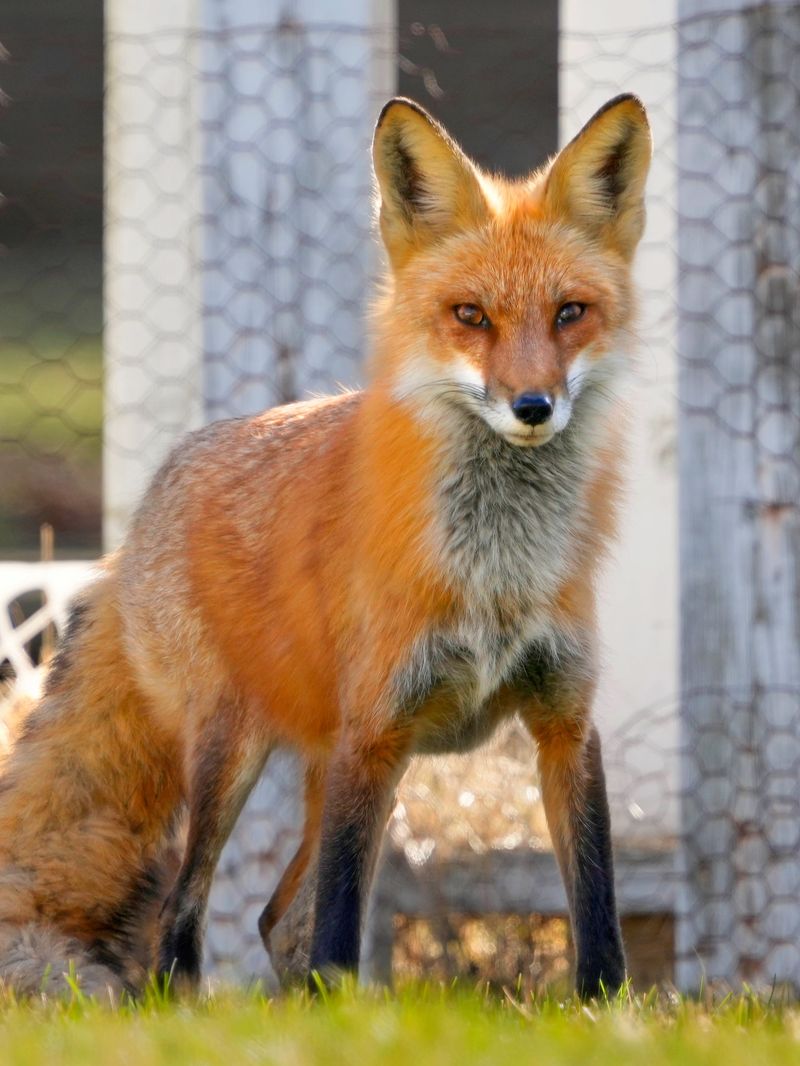
Watching a fox cross your yard is a wildlife sighting. A bite, a scratch, or direct contact between animal saliva and an open wound or mucous membrane is something else entirely, and the two situations call for completely different responses. North Carolina’s rabies epidemiology guidance is explicit: seeing a fox, or having one pass through your yard, is not a rabies exposure. Exposure requires that specific physical contact pathway.
If a person is bitten or scratched, or if saliva or nervous-system tissue contacts an open wound or mucous membrane, act immediately. Wash the affected area thoroughly with soap and water for at least 15 minutes. CDC rabies prevention guidance identifies prompt washing as the first critical step in reducing infection risk. After washing, contact your local health department or a medical professional without delay.
The NC State Public Health Laboratory’s rabies information and CDC clinical guidance both confirm that foxes are among the wildlife species that warrant a public-health assessment after a bite or scratch. A veterinarian should be contacted if a pet is involved.
Property damage is a separate category that also has a specific response path. Foxes occasionally take poultry, damage garden areas, or dig under structures. If the damage is ongoing and the attractant-reduction steps described earlier have not resolved it, the correct resource is a licensed professional, not a trap from the hardware store. Fox relocation is illegal in North Carolina.
NC Wildlife’s management factsheet directs homeowners with persistent damage to consult a licensed Wildlife Damage Control Agent or contact NC Wildlife directly. Attempting to trap and move a fox yourself creates legal risk, increases the chance of a bite, and typically does not resolve the underlying attractant that brought the animal to the property in the first place.
Read the fox as a clue, then manage the yard you control
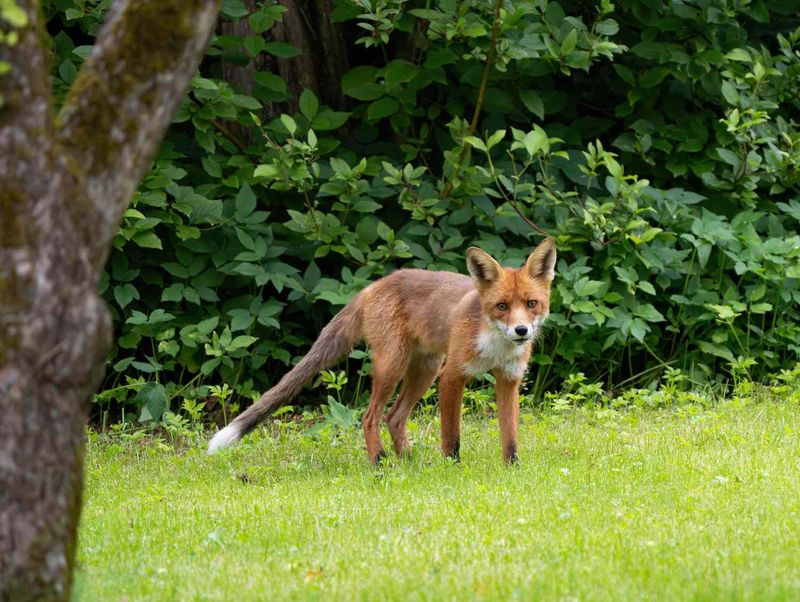
A fox moving through your yard at dusk is most accurately read as a clue about your property’s relationship to the surrounding landscape. NC Wildlife and its conflict-management guidance both point to the same conclusion: the property is accessible to wildlife and offers food, cover, or a usable route through the area. That is the signal. It is not a diagnosis of an infestation, a biodiversity score, or a disease warning.
The practical response follows directly from that reading. Observe from a distance and let the animal move on. Remove or secure avoidable attractants such as pet food, garbage, fallen fruit, and spilled birdseed. Protect dogs, cats, chickens, and rabbits with supervision and secure housing.
Leave any occupied den undisturbed and use nonlethal deterrents if the location creates a safety concern. Escalate only when there has been direct physical exposure, when behavior is clearly abnormal, or when property damage continues after attractants have been addressed. A fox passing through at dusk is wildlife doing what wildlife does. The exposure threshold for rabies concern is specific and physical, not visual.
The yard you manage is the yard you control, and small changes there tend to matter more than the fox’s behavior ever will.