
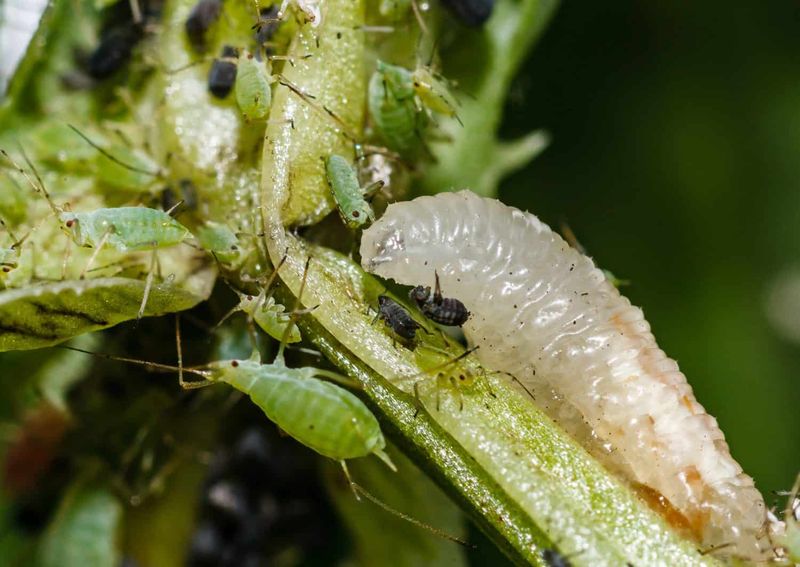
Small, bee-mimicking insects called hover flies may already be patrolling your roses and vegetable beds, and their larvae are some of the most underrated aphid predators in California gardens. Unlike the adults, which look striped and fly from flower to flower, the larvae hunt aphids directly on the plant.
Understanding what these insects actually need, and what can drive them away, gives gardeners a practical, pesticide-light way to manage aphid pressure without disrupting the rest of the garden’s natural community.
Hoverflies can help, but they will not guarantee an aphid-free garden
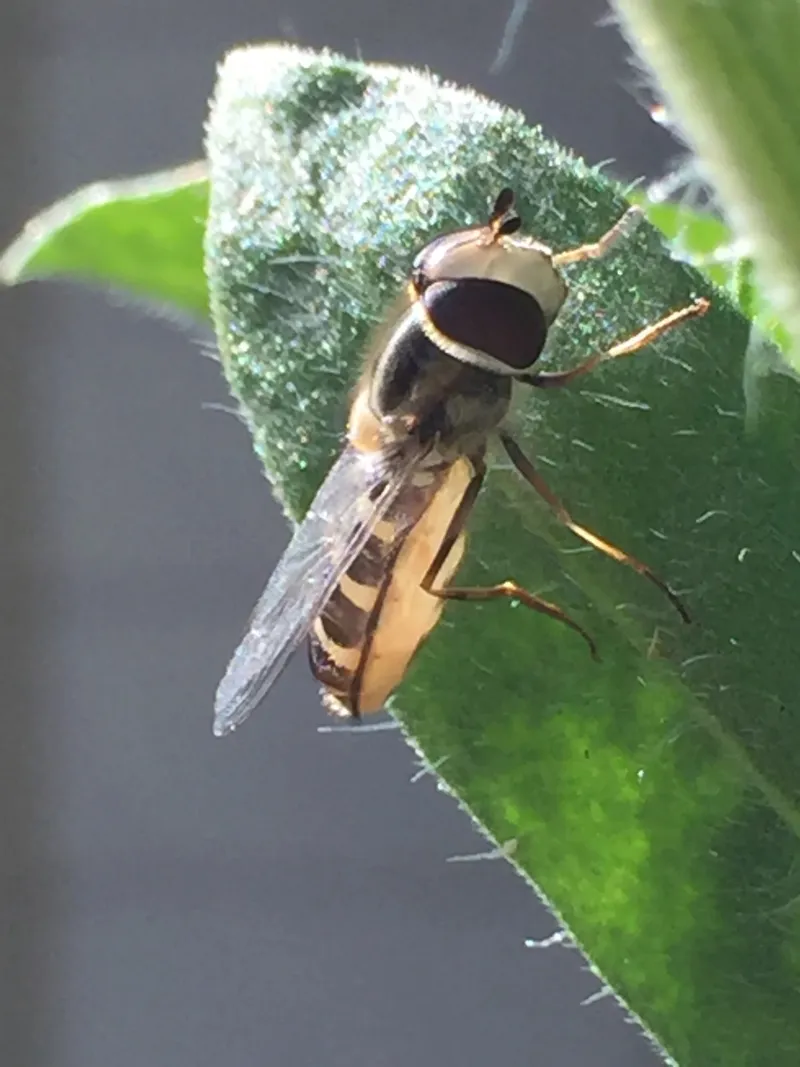
Somewhere between a bee and a myth lives one of California’s most useful garden insects. Hover flies, also called flower flies or syrphid flies, belong to the family Syrphidae and are true flies, not bees or wasps.
UC ANR’s guide to hover flies points out that adults have just two wings, short antennae, and no stinger, even though their yellow-and-black banding can make them look convincingly dangerous. Spotting one hovering near your tomatoes or roses is not a threat, and swatting them would be a mistake.
Seeing an adult hover fly in your garden is a promising sign, but it does not confirm that aphid-eating larvae are actively working nearby. Adults may be passing through in search of flowers, and different hover fly species use very different larval habitats.
UC IPM’s syrphid profile identifies these flies as common aphid predators in California landscapes, particularly on roses, but that description applies specifically to the larval stage of aphidophagous species, not to every adult visitor you see.
The promise of hover flies as natural pest control is real but variable. Larval predation can meaningfully reduce aphid numbers under the right conditions, but results depend on which hover fly species is present, which aphid species it encounters, local weather, and how the garden is managed.
Think of them as partners in naturally occurring biological control, not a guaranteed fix. UC IPM’s aphid management guidance consistently frames natural enemies as one part of a broader, monitored approach rather than a standalone solution.
Aphid control happens during the larval stage
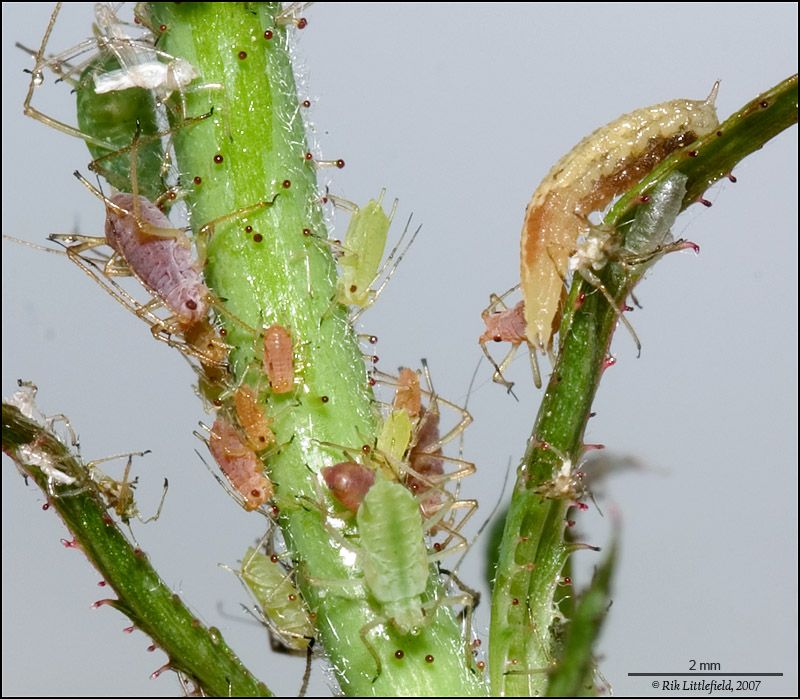
Adult hover flies get most of the attention because they are visible and interesting to watch, but the real aphid work happens at a stage most gardeners never notice. Larvae of many Syrphinae species, the subfamily that includes the most common aphid-eating hover flies, are legless, maggot-shaped, and often pale green, yellowish, or lightly striped.
They blend into aphid colonies so well that gardeners frequently overlook them entirely.
To find them, check new rose growth and the undersides of leaves where aphid clusters tend to concentrate. UC IPM’s pest notes on roses specifically list syrphid larvae as predators to look for within aphid colonies on new shoots.
A larva feeds by grasping aphids and consuming them one by one, working through a colony over the course of its development across multiple instars.
Some larvae can consume substantial numbers of aphids before pupating, and research on predatory syrphids in urban green spaces supports meaningful suppression potential under favorable conditions. That said, field performance tends to be lower than laboratory numbers because larvae must locate prey, navigate plant surfaces, and contend with changing temperatures and competition from other predators.
Consumption also varies by species, larval stage, aphid species, humidity, and temperature. A review of predatory hover fly ecology notes that not every hoverfly larva is predatory, so the larval diet depends entirely on which species laid the egg.
Larvae of decomposer or aquatic hoverfly groups will not help with aphids at all, which is why species-level awareness matters when interpreting what you find in the garden.
Flower visits do not prove that predatory larvae are breeding nearby
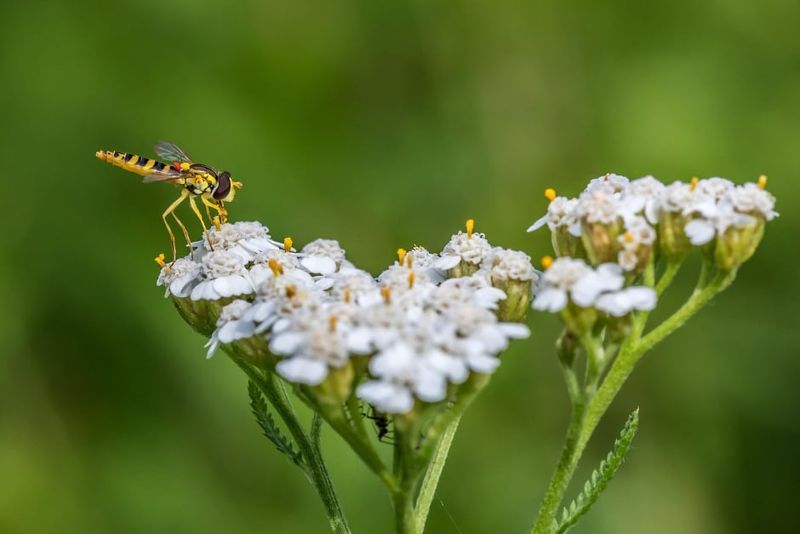
Watching hover flies drift from flower to flower in a California garden can feel like confirmation that natural pest control is underway. The connection is not that direct.
Adults visit flowers primarily to feed on nectar and pollen, and the species hovering over your yarrow may have larvae that live in rotting wood, wet organic matter, fungi, or stagnant water rather than in aphid colonies. The ecology of predatory hoverflies makes clear that larval habitat requirements differ widely across the family, and a flower visit tells you little about what that individual’s larvae need.
For the aphid-eating species that matter most to rose and vegetable gardeners, females select egg-laying sites based on aphid availability, plant structure, and a range of habitat cues. Research on the searching and oviposition behavior of aphidophagous hoverflies shows that females assess aphid colony size, plant species, and nearby cues before committing to a laying site, which means flowers alone do not trigger reproduction in predatory species.
Highly manicured yards may genuinely offer fewer opportunities for these insects. A landscape with little plant diversity, minimal aphid prey, closely trimmed vegetation, and few sheltered areas may support fewer of the conditions aphidophagous females look for when choosing where to lay eggs.
Cornell’s biocontrol resource on syrphid flies notes that aphid-eating larvae develop directly within aphid colonies on plants, which means the presence of accessible prey is a more direct requirement than any single habitat feature.
No single addition to a garden reliably functions as a universal hover fly nursery. The honest framing is that more diverse, less intensively managed yards tend to offer more of what multiple hover fly groups need across their different life stages.
Plant a succession of accessible flowers for adult hoverflies
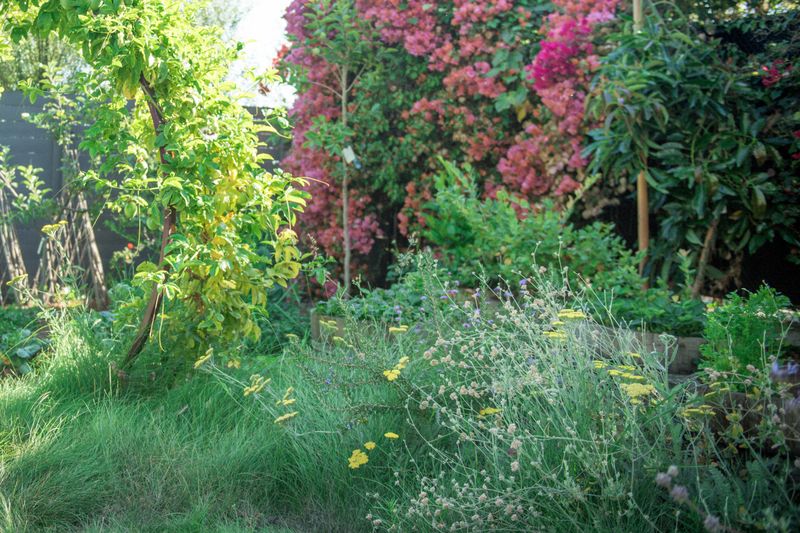
Providing pesticide-free flowers near roses and vegetable beds is the most defensible habitat step a California gardener can take for hover flies. Adults need nectar and pollen to survive and reproduce, and research on nectar accessibility and hoverfly fitness found that open or shallow flower forms, where nectar is easy to reach, support better hoverfly survival and abundance than deep tubular flowers that suit long-tongued bees.
Planting flowers with exposed nectar near your problem plants gives visiting adults a reason to stay in the area rather than pass through.
California buckwheat (Eriogonum fasciculatum) stands out as a strong regional choice. UC Master Gardeners describe California buckwheat as drought-tolerant, long-blooming from late spring into fall, and valuable to a wide range of pollinators and beneficial insects including hover flies.
Once established, it needs little supplemental water, which fits California’s summer-dry climate well. Yarrow (Achillea millefolium) offers similarly flat, open flower heads across a long season and handles both coastal and inland conditions reasonably well.
Succession planting matters because hover flies need food across the entire active season, not just during a single bloom period. Pair early spring bloomers with mid-season and late-summer flowers so the supply stays consistent from March through October in most California gardens.
UC ANR’s guidance on native plants for beneficial insects recommends mixing species with different bloom times rather than relying on one standout plant.
Before planting, match your choices to your specific site. California buckwheat and many native perennials need well-drained soil and may struggle in heavy clay or areas with summer irrigation from neighboring turf.
Coastal gardens can often establish natives with minimal watering after the first season, while inland valley and foothill sites may need supplemental water through the first summer or two. If your property falls in a fire-hazard severity zone, check local defensible-space rules before adding dense shrubby plantings near structures.
Monitor aphids before deciding they need treatment
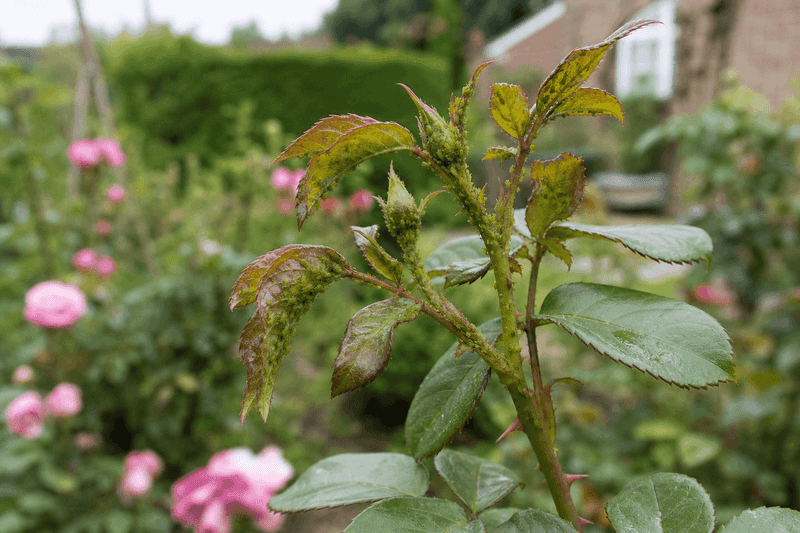
Regular observation changes how a gardener responds to aphids, and it is the step most people skip. Check roses and vegetable plants at least twice a week during periods of rapid new growth, focusing on stem tips and the undersides of young leaves where aphid colonies build fastest.
Bring a hand lens if you have one, because hover fly larvae, lacewing eggs, and parasitized aphid mummies are easy to miss with the naked eye.
What you are looking for alongside the aphids: legless pale larvae working through the colony, oval lacewing eggs on hair-like stalks, lady beetle adults or their spiky black-and-orange larvae, and aphids that have turned tan and papery, which signals parasitic wasp activity. UC IPM’s aphid management page emphasizes that natural enemies often increase in numbers as aphid populations grow, and that treating too early can interrupt that buildup before it has a chance to help.
Established plants, including mature roses and vegetable transplants that are well past the seedling stage, often tolerate light to moderate aphid populations without significant long-term damage. A small colony on an outer rose cane is not the same situation as a heavy infestation on a young tomato’s growing tip.
Calibrating your response to actual plant stress, rather than the presence of any aphids at all, keeps natural enemies working and avoids unnecessary interventions.
Ants deserve specific attention during your monitoring rounds. When ants are actively tending aphids, herding them away from predators and even carrying them to new growth, they can significantly reduce how effective hover fly larvae and other natural enemies are.
UC IPM’s ant management guidance recommends targeted interventions such as sticky barriers on rose canes or slow-acting ground baits placed away from flowering plants, rather than spraying ants broadly across the garden where beneficial insects could be harmed.
Protect hoverflies from disruptive pesticide choices
A single poorly timed spray can undo weeks of natural enemy activity. Broad-spectrum insecticides, including pyrethroids and organophosphates, kill beneficial insects along with the target pests.
UC IPM’s biological control guidance makes clear that protecting natural enemies means being selective about what you apply, when you apply it, and whether treatment is actually necessary given what your monitoring has shown.
When aphid pressure genuinely warrants action, a strong jet of water directed at infested stems and leaf undersides is often enough to knock colonies back without any chemical exposure. Pruning out heavily infested growing tips is another low-risk option.
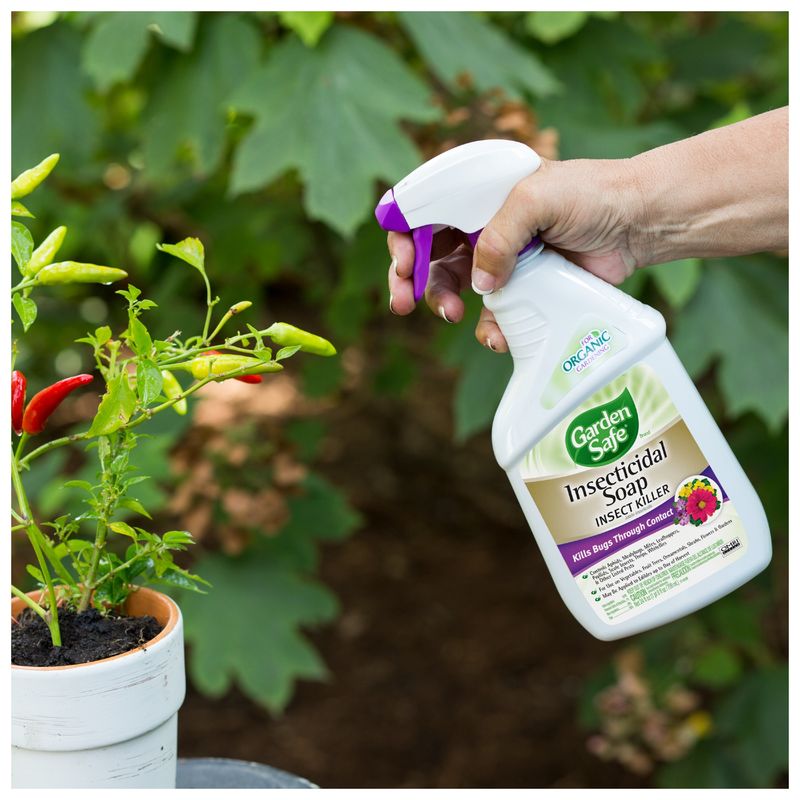
If contact sprays are needed, insecticidal soap or horticultural oil can be less disruptive to the broader beneficial insect community, but they are not harmless. UC IPM’s aphid page specifies that these products work only through direct contact, so thorough coverage of aphid-infested surfaces is required for any effect.
Both soap and oil can injure plants under stress. Avoid applying them to drought-stressed plants, and do not spray when temperatures are expected to exceed about 90 degrees Fahrenheit, as heat amplifies the risk of leaf burn.
Always read the product label before applying, and test unfamiliar or sensitive plants on a small area first and wait 48 hours before treating the whole plant.
Spinosad deserves a specific warning. Some gardeners reach for it as an “organic” option, but UC IPM notes that spinosad can harm bees and syrphid larvae when applied to plants while pollinators are present.
Never apply spinosad to flowering plants while bees or other beneficial insects are actively visiting, and recognize that even organically approved products can damage the natural enemy community you are trying to support.
Create a diverse garden, not a manufactured hoverfly breeding station
Adding a bucket of stagnant water or a pile of rotting wood to your garden will not reliably attract aphid-eating hover flies. Those materials can support other hoverfly groups, including semi-aquatic or decomposer species, but they are not what aphidophagous syrphids need to reproduce.
Cornell’s syrphid biocontrol resource confirms that predatory larvae develop within aphid colonies on plants, making accessible prey far more relevant than any constructed substrate feature. Stagnant water also creates mosquito breeding habitat, which is a genuine public-health concern in California.
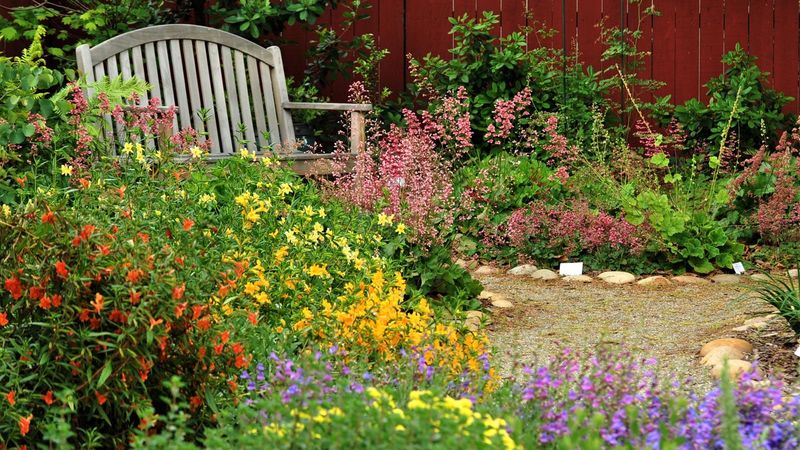
What the evidence actually supports is a combination of conditions rather than any single addition. Accessible flowers with open nectar give adults the nutrition they need.
Manageable aphid populations on roses and vegetables provide egg-laying cues and larval food. Plant diversity and some degree of sheltered, less-manicured vegetation offer structure that many beneficial insects use for resting, overwintering, and moving between feeding areas.
UC IPM’s syrphid profile and UC IPM’s broader biological control guidance both frame these conditions as supporting natural enemy activity, not as guarantees of pest elimination.
Regular monitoring, targeted ant management when ants are actively tending aphids, and restraint with pesticides complete the picture. None of these steps promise an aphid-free garden, and that is the right expectation to hold.
UC IPM reminds gardeners that healthy, established plants often coexist with light aphid populations without lasting damage, and that those populations can sustain the natural enemies that prevent bigger outbreaks later in the season.
A garden built for diversity and restraint gives hover flies and their allies more opportunities to do useful work. Success looks like fewer damaging outbreaks over time, not a yard where aphids never appear at all.