
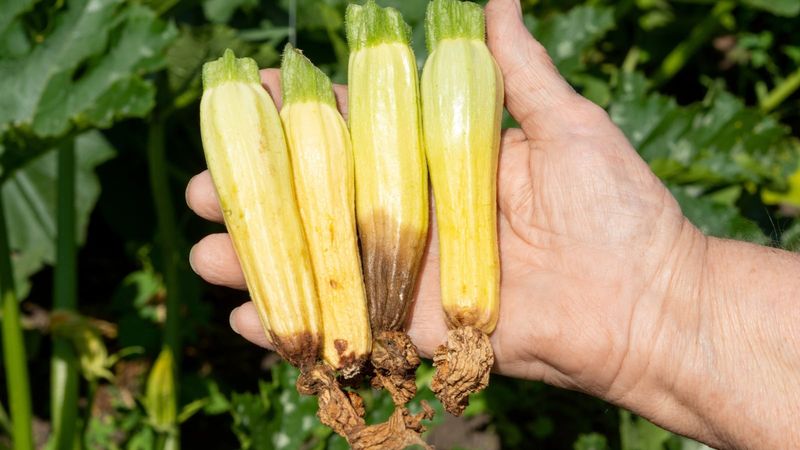
Walking out to your zucchini patch to find tiny fruits with dark, sunken tips can feel like the plant is giving up on you. That rotting blossom end is one of the most common summer surprises for home vegetable growers, and it shows up most often during the hottest weeks of August. The good news is that the symptom is a clue, not a verdict, and understanding what it actually signals can help you protect the fruits that are still forming.
Start with the lesion, not the fertilizer bag
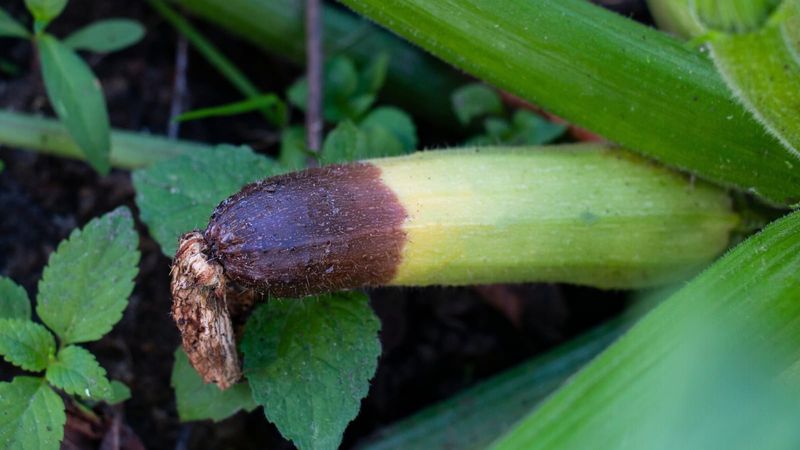
Before reaching for any amendment or spray, take a close look at where the damage actually sits. The blossom end is the tip of the fruit farthest from the stem, and that location matters. Utah State University Extension’s guide on blossom-end rot describes the disorder as beginning at that blossom end as a tan, water-soaked, sunken patch that gradually darkens and becomes leathery or even black as tissue breaks down.
That sequence is the visual signature you are looking for. The skin near the stem should still look healthy and green; the damage is localized to the tip, not spreading up the sides or appearing in random spots.
One thing that confuses growers is the black, wet, or moldy appearance that sometimes develops later. Secondary fungi or bacteria can move into already-damaged tissue and make it look soft or rotted, which can feel alarming. Illinois Extension’s blossom-end rot overview makes clear that the initial disorder is not caused by a pathogen; the microorganisms are opportunists colonizing cells that were already failing. Black or wet tissue alone does not prove an infectious disease is at work.
Confirming that the lesion starts at the blossom end and stays localized there is the first and most important diagnostic step before drawing any conclusions about cause or treatment.
A calcium problem does not automatically mean calcium-poor soil
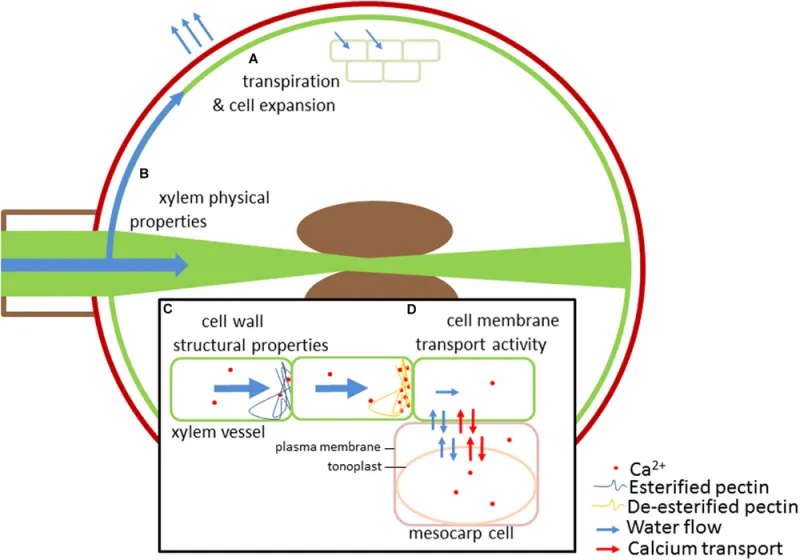
Most conversations about blossom-end rot eventually land on calcium, and calcium is genuinely part of the picture. The wrinkle is that low calcium in the affected fruit tissue does not automatically mean your soil is running short on calcium. University of Minnesota Extension’s review of common soil amendments points out that disrupted water movement, not an empty soil bank, is more often the practical trigger.
Calcium travels through the plant dissolved in water, moving upward through a system called the xylem. Developing fruits are fast-growing and have relatively poor xylem flow compared to leaves, so they can end up short on calcium delivery even when the surrounding soil contains plenty. Anything that interrupts consistent water uptake at the roots compounds that problem: drought stress, sharp wet-dry cycles, root damage from cultivation or pests, excess salts from over-fertilizing, and rapid leafy growth that diverts resources away from fruit all contribute.
The causal sequence is not completely settled science, either. Penn State Extension’s analysis of blossom-end rot in tomatoes notes that stress-related cell damage may sometimes precede a measurable drop in tissue calcium concentration, meaning the low calcium reading could partly be a consequence of cell breakdown rather than the sole starting point. Research reviewed in a 2023 PMC review of calcium physiology in fruiting crops reflects similar uncertainty about the precise order of events. The practical takeaway: treat calcium availability and environmental stress as linked problems, not a simple one-cause explanation.
August heat may point to pollination failure
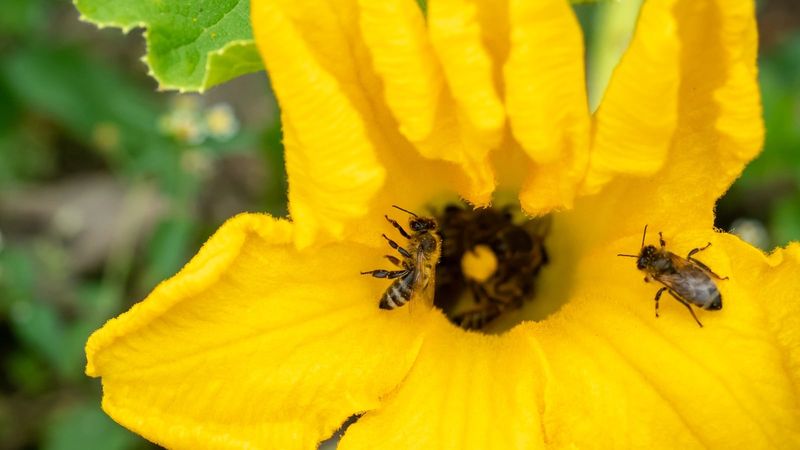
Not every tiny, rotting zucchini fruit has blossom-end rot. In August, heat-related fruit abortion and poor pollination deserve equal attention as suspects, and they can produce fruit that looks remarkably similar: small, yellowing, and collapsing before it reaches harvest size.
A properly pollinated female zucchini flower will show a small but visibly swelling fruit at its base within a day or two of opening. When pollination is incomplete or fails entirely, that miniature fruit stalls, yellows, and softens. University of Minnesota Extension’s zucchini growing guide notes that cucurbit flowers are open and receptive for only a short window, making timing critical. Hot, rainy, windy, or low-pollinator days can all cut off the transfer of pollen before it happens.
Heat adds another layer. Minnesota Extension’s IPM blog on heat and vegetable yields describes how high temperatures can interfere with pollen viability and flower set in cucurbits. A separate post on limited fruit set and fruit abortion in cucurbits cites daytime temperatures in the 90s and nighttime temperatures around 70 degrees Fahrenheit as warning ranges for fruiting problems – useful reference points, though not rigid cutoffs that apply to every variety or microclimate.
Protecting pollinators during bloom is practical and low-cost. USU Extension’s pollination guidance recommends avoiding insecticide applications while zucchini is flowering whenever possible, since insecticides can harm bees and other pollinators that the plant depends on to set fruit.
Stabilize moisture before changing the soil
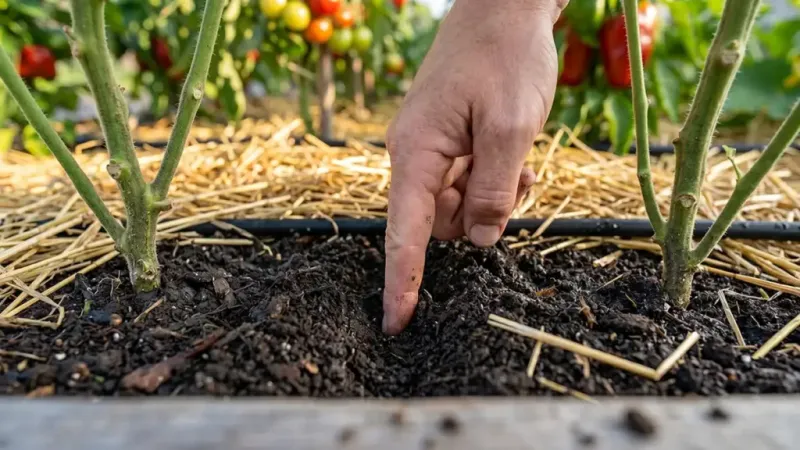
Once you have confirmed the lesion pattern or identified heat and pollination as possible factors, the most productive next step is a moisture check, not a trip to the garden center. Consistent soil moisture is the single most reliable lever for supporting calcium movement to developing fruit, and it costs nothing to evaluate.
Push a finger or a thin tool about 2 inches into the soil near the root zone. If it feels dry at that depth, the plant is likely running short on water. University of Minnesota Extension’s vegetable garden watering guide offers about 1 inch of water per week as a general starting point for vegetable gardens, with the explicit note that soil type, rainfall, mulch coverage, drainage, and heat all require adjustments to that figure. Treat it as a baseline to calibrate against your specific conditions, not a universal zucchini prescription.
Drought cycles are harmful, but so is the opposite extreme. USU Extension’s blossom-end rot guide cautions that waterlogged soil can damage roots and reduce their ability to take up oxygen and nutrients, including calcium. Heavy clay soils and poorly drained beds require particular care. The goal is a consistently moist root zone, not saturated ground.
Mulch is one of the most practical tools for achieving that stability. UMN Extension’s mulching guide recommends a 2- to 4-inch layer of organic mulch to reduce evaporation and buffer soil-moisture swings between waterings. Keep the mulch pulled back a few inches from direct contact with the stem to avoid creating a moist environment that could promote crown rot.
Extra fertilizer can make the imbalance worse
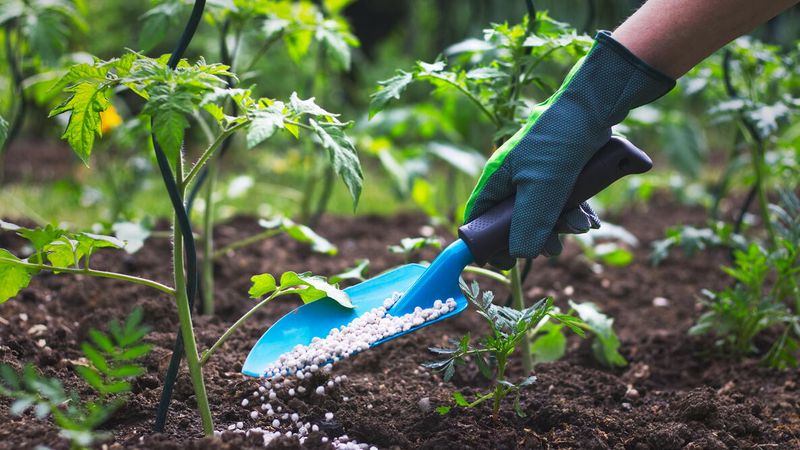
Seeing damaged fruit can trigger the impulse to feed the plant harder, as though a nutrient boost will compensate for what went wrong. That instinct is worth resisting. Heavy nitrogen applications push rapid leafy growth and can actually delay or reduce fruiting, pulling the plant’s energy away from the developing zucchini you are trying to protect.
The interference goes further than nitrogen alone. Excess ammonium, potassium, magnesium, or other salts in the root zone can compete with calcium for uptake, making a calcium-delivery problem worse even when the soil already has plenty of calcium present. UMN Extension’s review of common home soil remedies is direct on Epsom salt: it supplies magnesium, not calcium, and excess magnesium can actively interfere with calcium uptake. Foliar applications can also scorch leaves.
Epsom salt has no useful role in addressing blossom-end rot.
Eggshells come up frequently in the same conversation. Illinois Extension’s review of landscaping myths notes that unground eggshells break down very slowly in soil and are unlikely to provide meaningfully available calcium during an active fruiting season. They are not a practical fix for a problem happening right now.
If you genuinely suspect calcium or pH issues, a soil test is the right starting point. USU Extension’s vegetable soil preparation guidance frames soil testing as a decision tool before adding calcium or lime, not as a diagnostic test for the fruit disorder itself. If calcium is already adequate in your soil, adding more will not help and may shift the nutrient balance in unhelpful directions. Do not let the soil test delay the moisture and plant inspections that are more immediately actionable.
Inspect the whole plant for other causes
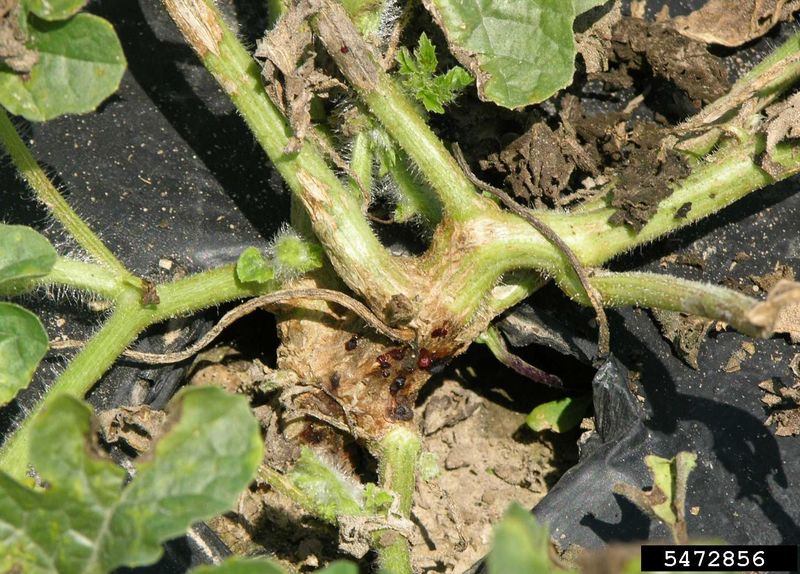
Blossom-end rot stays localized. The tan or dark lesion appears at the fruit tip, the rest of the plant typically looks healthy, and other fruits on the same vine may be developing normally. When the damage pattern does not fit that description, it is time to widen the search.
Fuzzy gray or white growth on fruit tissue, soft rot spreading rapidly from a point that is not the blossom end, lesions appearing mid-fruit or near the stem, discoloration or wilting at the crown, or a general decline across the whole plant all suggest something other than a localized physiological disorder. UMN Extension’s squash and zucchini guide identifies choanephora, gummy stem blight, and other fruit rots as possibilities in wet summer conditions.
Root and crown problems are a separate category worth checking. USU Extension’s cucurbit Pythium guide describes how root rots can cause wilting and poor plant performance that might look like a nutrient or moisture problem from above ground, while the actual damage is happening below the soil line.
Black tissue on fruit is not proof of a fungal disease by itself. As noted earlier, secondary microorganisms can colonize blossom-end rot tissue. Diagnosis should rely on where the damage starts, how fast it spreads, what texture the lesion has, and whether the rest of the plant shows any symptoms. A localized, firm, blossom-end lesion on an otherwise healthy plant reads differently than soft, spreading decay with crown symptoms and widespread yellowing.
Improve conditions for the next fruit
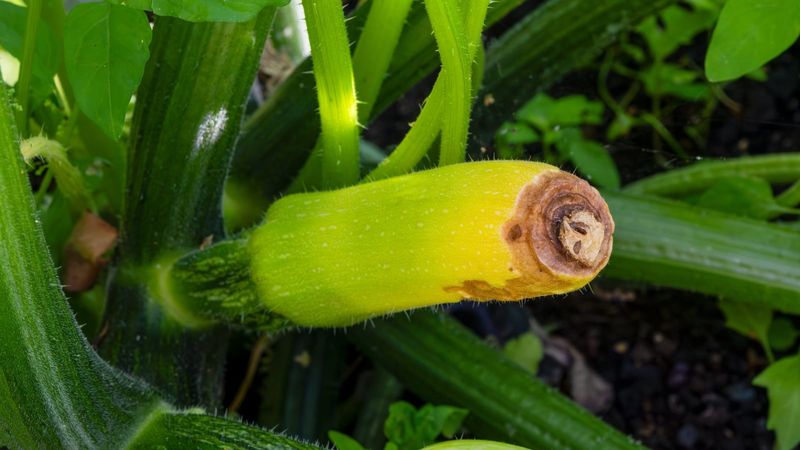
Fruit that already has substantial blossom-end damage will not return to normal. The tissue has broken down, and no fertilizer, spray, or watering adjustment will reverse that. Removing a badly affected fruit is reasonable for sanitation and because it has no useful recovery path, though the evidence that removal redirects meaningful resources toward later zucchini in home garden conditions is not firmly established for this specific crop.
The practical focus belongs on the fruits still forming. Maintain stable soil moisture using the checks described earlier, hold off on fertilizer applications that are not supported by a soil test, and watch new flowers closely for signs of pollination. A swelling at the base of a female flower within a day of it opening is a good sign. A flower that closes without that swelling, or a tiny fruit that yellows and softens within a few days, points back to pollination or heat stress as the active problem.
Protecting pollinators remains one of the most useful things a gardener can do during bloom. USU Extension’s pollination guidance recommends avoiding insecticide applications while cucurbits are flowering whenever possible. If you are considering a calcium spray, know that the guidance comes primarily from tomato research. Oregon State Extension’s tomato blossom-end rot fact sheet describes calcium chloride sprays as an emergency option in that crop, while Penn State Extension notes that sprays and specialty fertilizers are rarely effective on their own without correcting the underlying moisture and root conditions.
Zucchini-specific spray trials are limited, so any spray would need to be crop-appropriate and label-compliant, with moisture stabilization still leading the response.
Diagnose before you amend
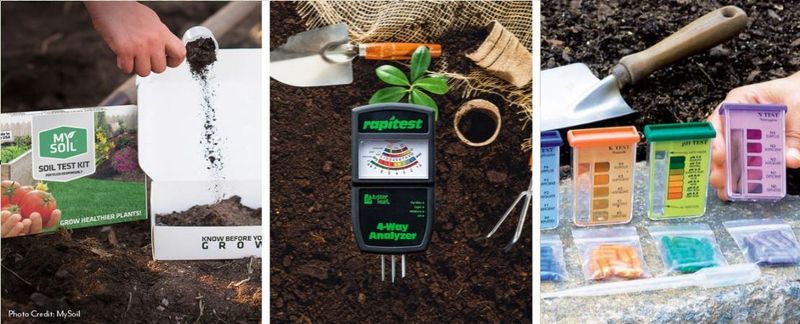
The clearest decision rule for this situation is also the simplest: confirm what you are actually seeing before adding anything to the soil. Check whether the damage starts at the blossom end and stays localized there. Stabilize soil moisture based on actual root-zone conditions. Consider heat and pollination as separate explanations if the pattern does not fit a classic blossom-end lesion.
Inspect the whole plant for signs of disease before settling on a physiological diagnosis.
A soil test belongs in the process before calcium or lime goes into the ground. UMN Extension and USU Extension both frame testing as a prerequisite to amendments, not a substitute for moisture management and plant observation. Steady, appropriate watering adjusted to your soil and conditions remains the most reliable first move. The plant’s ability to deliver calcium to the next set of fruit depends far more on consistent water movement than on whatever is sitting in the fertilizer bag.