
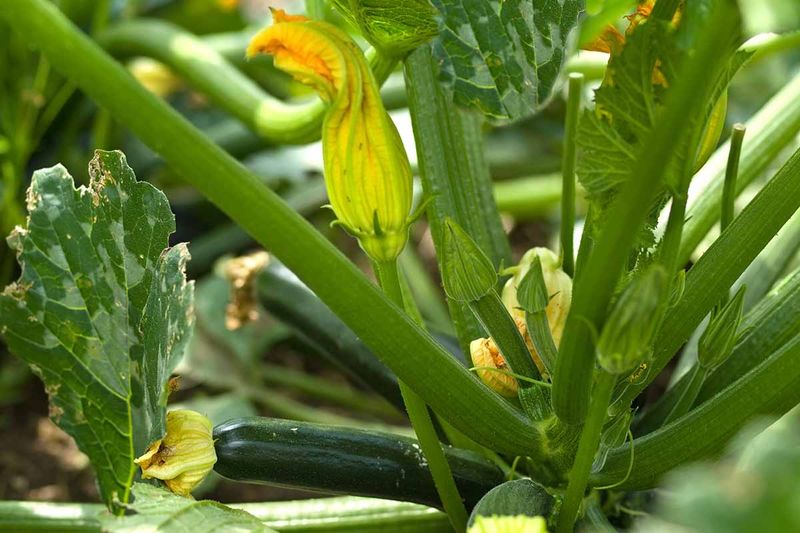
Your zucchini plant is covered in yellow blossoms, yet not a single zucchini is forming. Before you assume the plant is broken, there are a few things worth checking first. Zucchini produces two different kinds of flowers, and only one of them can ever become a vegetable. Knowing which flower you are actually looking at changes everything about how you respond.
Start by checking what each flower can become
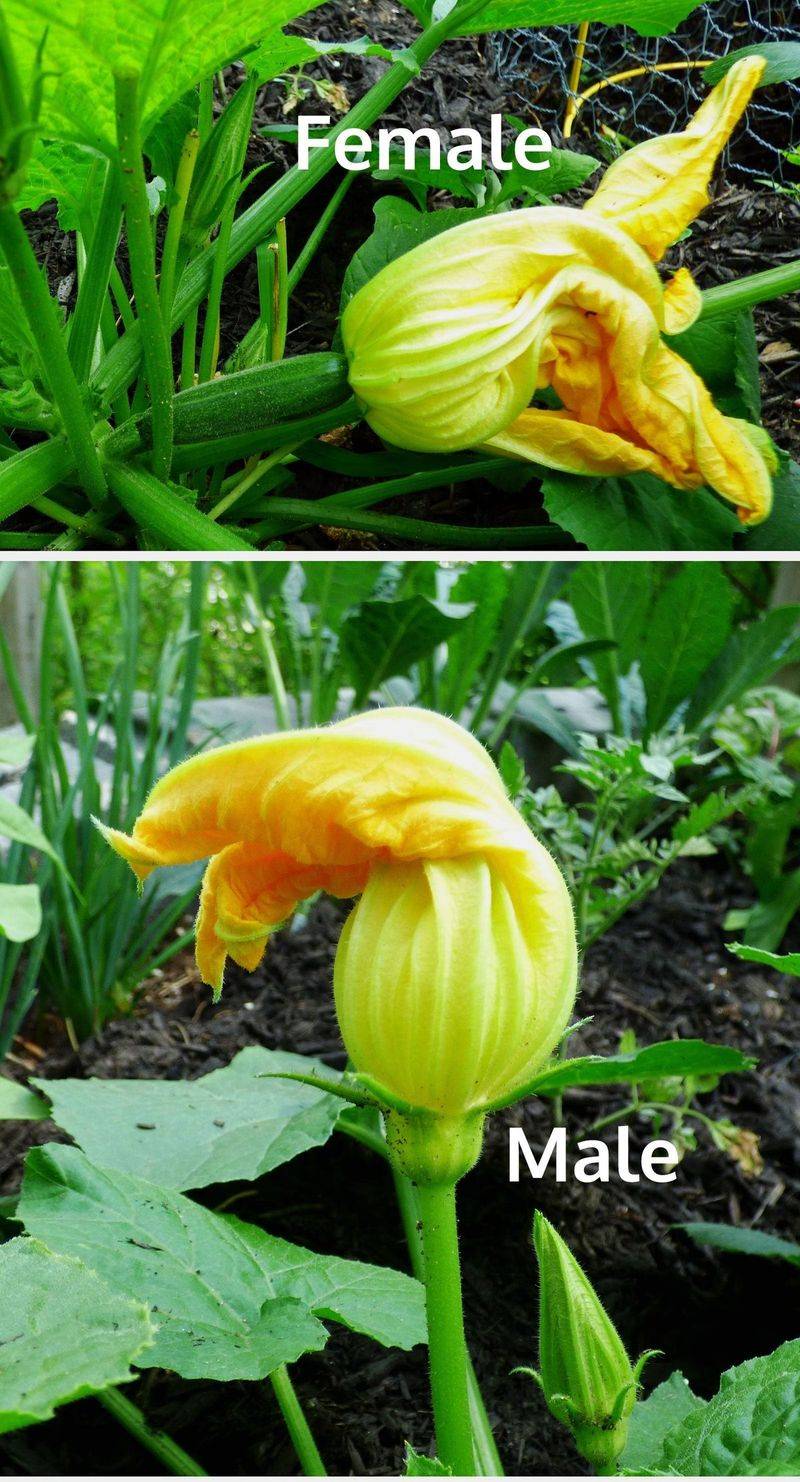
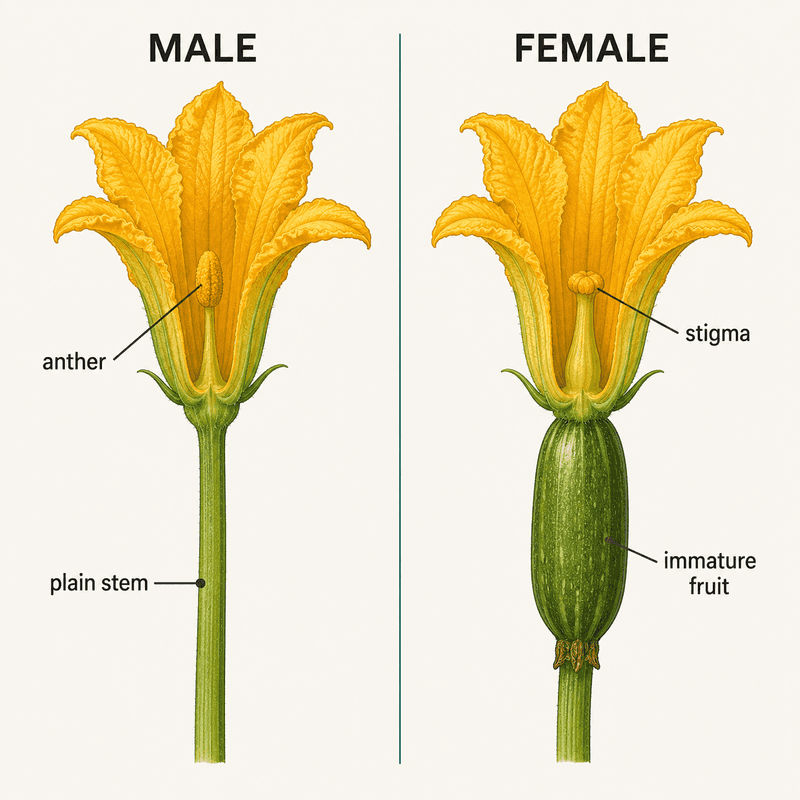
Pick a blossom and look at where it connects to the plant. That single detail tells you more than the color, size, or number of blossoms ever could. Male flowers sit at the end of a long, slender stem with no swelling at the base. Inside the male flower you will find the anther, a small pollen-covered structure that looks a bit like a tiny yellow column.
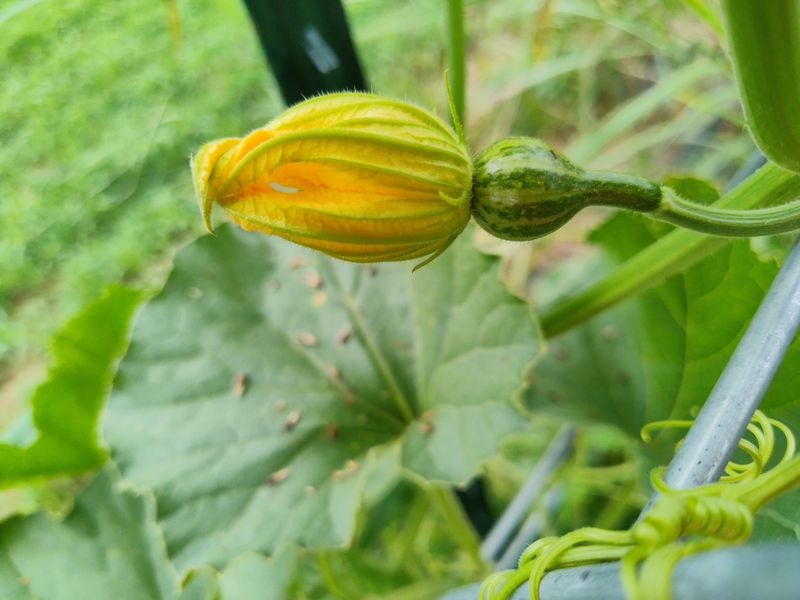
Female flowers are built differently. Between the base of the blossom and the main plant stem, there is a swollen, rounded bump that looks exactly like a miniature zucchini. That bump is the ovary, and it is the only part of the plant that can grow into fruit. University of Minnesota Extension guidance on summer squash confirms that zucchini produces separate male and female flowers on the same plant, and only the female flower’s ovary develops into harvestable fruit.
Once you know what to look for, walk the plant and count each type separately. Also check whether any small female buds are swelling with promise or quietly shriveling and dropping before they ever open. That distinction separates three very different problems, and solving the right one is the whole point of this diagnostic.
Early male flowers are normal, but heat can change the pattern
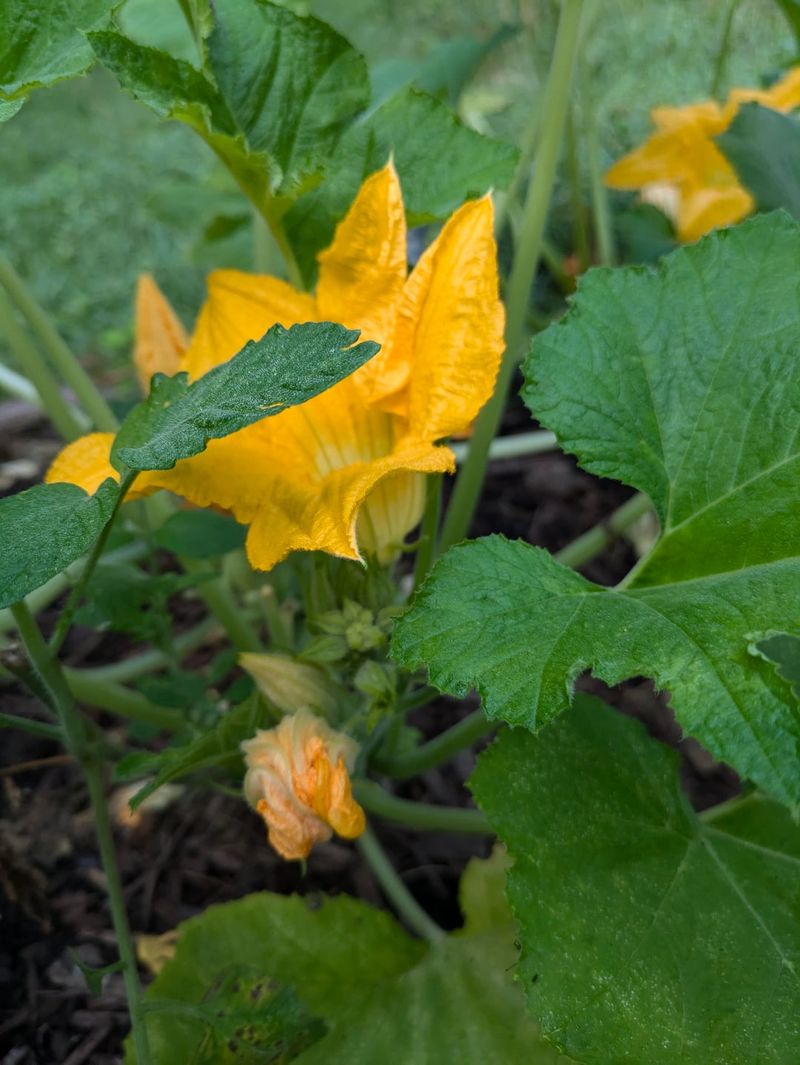
Zucchini plants almost always produce a wave of male flowers before female flowers appear. This is a normal part of the plant’s development, not a sign of failure. Utah State University Extension’s squash growing guide notes that this early male phase is expected, and female flowers typically follow as the plant matures. Seeing only male flowers during the first week or two does not predict that the plant will never fruit.
That said, sustained summer heat can push the ratio further toward male flowers and keep it there longer than normal. When daytime temperatures hover around 90 degrees Fahrenheit and nighttime temperatures stay near 70 degrees or above, University of Maryland Extension’s vegetable scouting tips identify these as approximate warning conditions for cucurbit heat stress. Think of those numbers as a rough signal rather than a precise trigger, because cultivar, plant maturity, light exposure, and water status all influence how a specific plant responds.
Heat can also reduce the quality of pollen produced by male flowers, cause female buds to drop before opening, or cause tiny developing fruits to abort. Research on temperature and sex expression in monoecious plants shows that these effects involve multiple biological pathways, not a single switch. Treating heat as one contributing factor rather than the guaranteed explanation keeps your troubleshooting accurate.
Use the female flowers to separate the likely problems
Three separate problems can all produce the same frustrating result: flowers everywhere, no zucchini. Sorting them out requires looking at the female flowers specifically, not just counting blossoms in general. The first problem is that the plant genuinely has no female flowers yet, or very few. The second is that female buds form but abort before or shortly after opening.
The third is that receptive female flowers are present but pollen never reaches them successfully.
University of Maryland Extension’s pollination resource explains that poor fruit set often happens even when female flowers are present, because pollen transfer depends on insect activity, weather, and timing. If a tiny zucchini starts to form but then turns yellow, shrivels, becomes misshapen, or drops within a few days, UC Agriculture and Natural Resources’ summer squash guidance points to inadequate pollination as a likely explanation rather than a flower-sex imbalance.
Timing matters too. A plant may carry many male flowers while female flowers are still in bud, meaning no pollination can occur simply because the two types are not open at the same time. Check whether male and female flowers are open on the same morning. Maryland’s scouting tips also recommend watching for female buds that swell and then drop before opening, which points toward heat or stress-related abortion rather than a pollination gap.
Hand-pollinate a receptive female flower in the morning
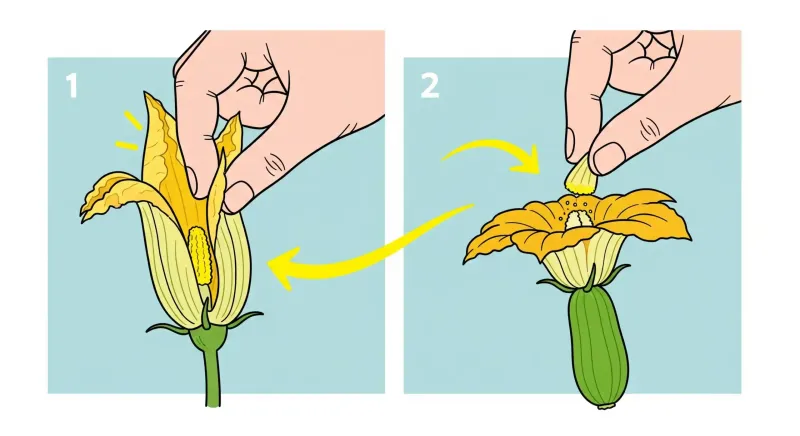
Hand-pollination is a targeted rescue for one specific scenario: a receptive female flower is open, but bees or other pollinators are not getting the job done. Zucchini flowers open for only a short window, typically a few hours in the morning, so timing is everything. University of Florida IFAS Extension’s pollination guide recommends working early in the morning while flowers are freshly open and pollen is most viable.
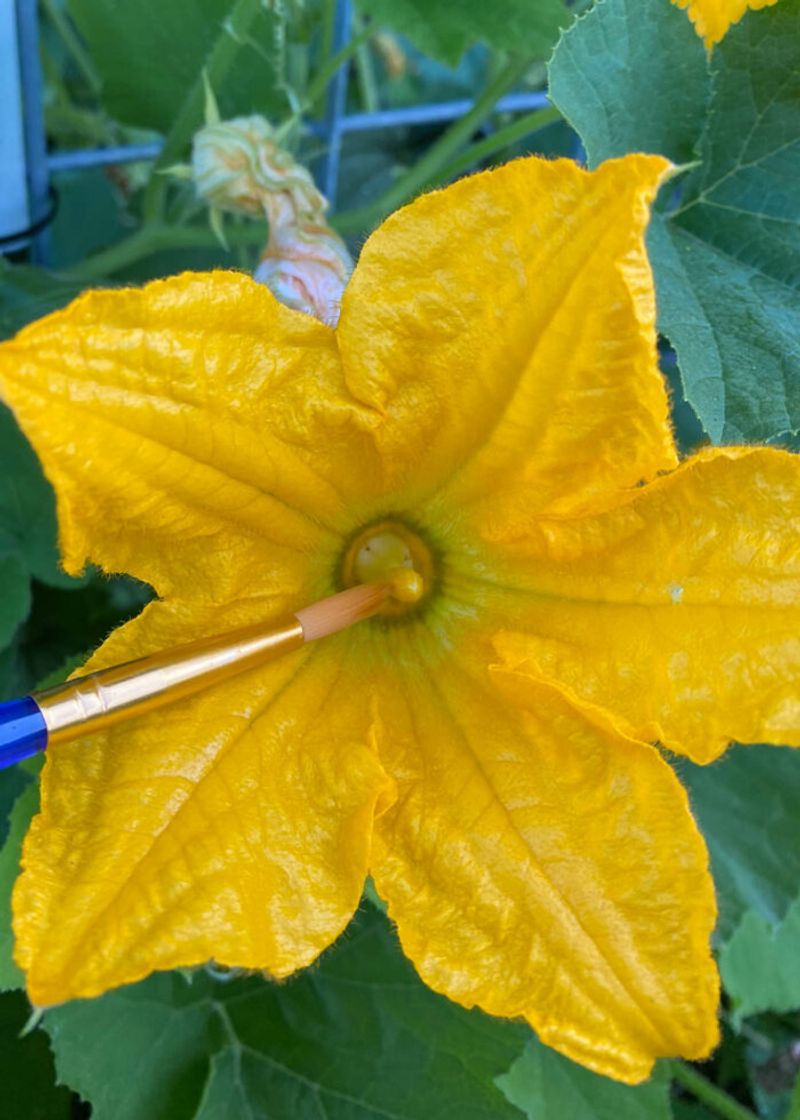
The method is straightforward. Pick a fresh male flower that is fully open, then gently remove its petals so the anther is exposed. Use that anther like a small brush and rub it directly against the stigma, the central sticky structure inside the female flower. A small artist’s paintbrush or a cotton swab also works well if you prefer not to sacrifice the whole male flower.
A single male flower typically carries enough pollen for several female flowers.
UC Small Farms Network’s summer squash resource reinforces that hand-pollination is only useful when a receptive female flower is actually present. Brushing pollen onto a male flower or onto closed buds does nothing. And if bees are already visiting and fruit is forming on some flowers, additional hand-pollination is unnecessary. Reserve the effort for mornings when you see an open female flower and no pollinator activity.
Reduce water stress without following a rigid schedule
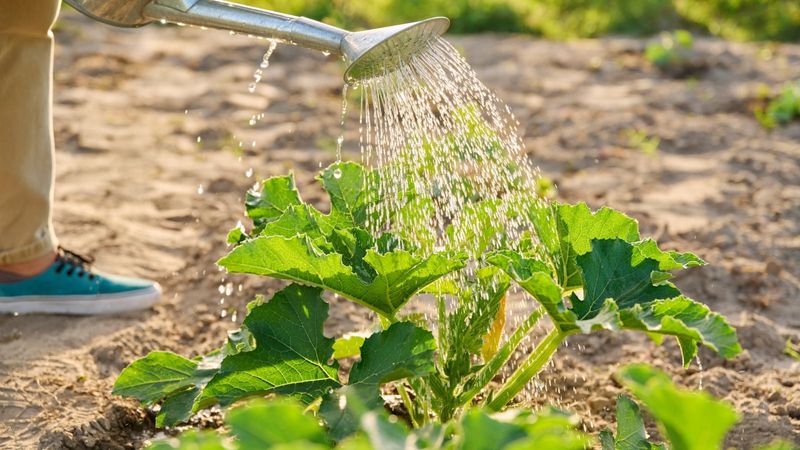
Water stress and heat stress often compound each other, and a zucchini plant running short on moisture during a heat wave is more vulnerable to flower drop and fruit abortion. Deep, consistent watering gives roots steady access to moisture without the swings that come from letting soil go bone dry between sessions. Utah State University Extension offers 1 to 2 inches of water per week as a general summer-squash guideline, adjusted for rainfall, soil type, and local conditions. That range is a starting point, not a prescription.
Container-grown zucchini dries out faster than in-ground plants and may need more frequent attention. Soil with high clay content holds moisture longer, while sandy soil drains quickly and may require more regular watering during a heat stretch. Mulch applied a few inches from the stem can slow evaporation significantly and buffer soil temperature, which helps during August peaks. Colorado State University Extension’s cucurbit guide notes that temporary afternoon wilting can occur even in well-watered plants during peak heat, so morning wilting is a more reliable signal of actual water stress.
Maryland Extension’s scouting resource confirms that heat stress worsens when drought accompanies high temperatures, and the combination can interfere with pollen quality and fruit development. Steady moisture management reduces one variable, though it cannot override extreme heat or correct a pollination problem on its own.
Skip fertilizer and flower-removal shortcuts
A plant that is flowering without setting fruit can make a gardener feel like something is missing, and the temptation to add fertilizer or take dramatic action is understandable. Most of the time, those responses do not help and can make things worse. University of Minnesota Extension’s fruit-set and abortion resource cautions that excess nitrogen pushes a plant toward producing more leaves and vines rather than fruit. Adding a general fertilizer or a bloom booster without knowing what the soil actually needs risks making that imbalance worse.
Soil testing is the safer path. A basic test from a cooperative extension service or a garden center can tell you whether nitrogen, phosphorus, or other nutrients are actually deficient before you add anything. Guessing at fertilizer type and dose based on symptoms alone is rarely accurate.
Removing male flowers is another shortcut that lacks good evidence and can backfire. Male flowers supply the pollen that female flowers need for fruit development. Minnesota Extension’s summer squash guide does not recommend removing male flowers as a way to stimulate female flower production. Taking too many away reduces the pollen available when female flowers do open, which creates a pollination problem on top of whatever issue you were trying to solve.
No pruning shortcut or single fertilizer product creates female flowers where none are forming.
Protect pollinators while you troubleshoot
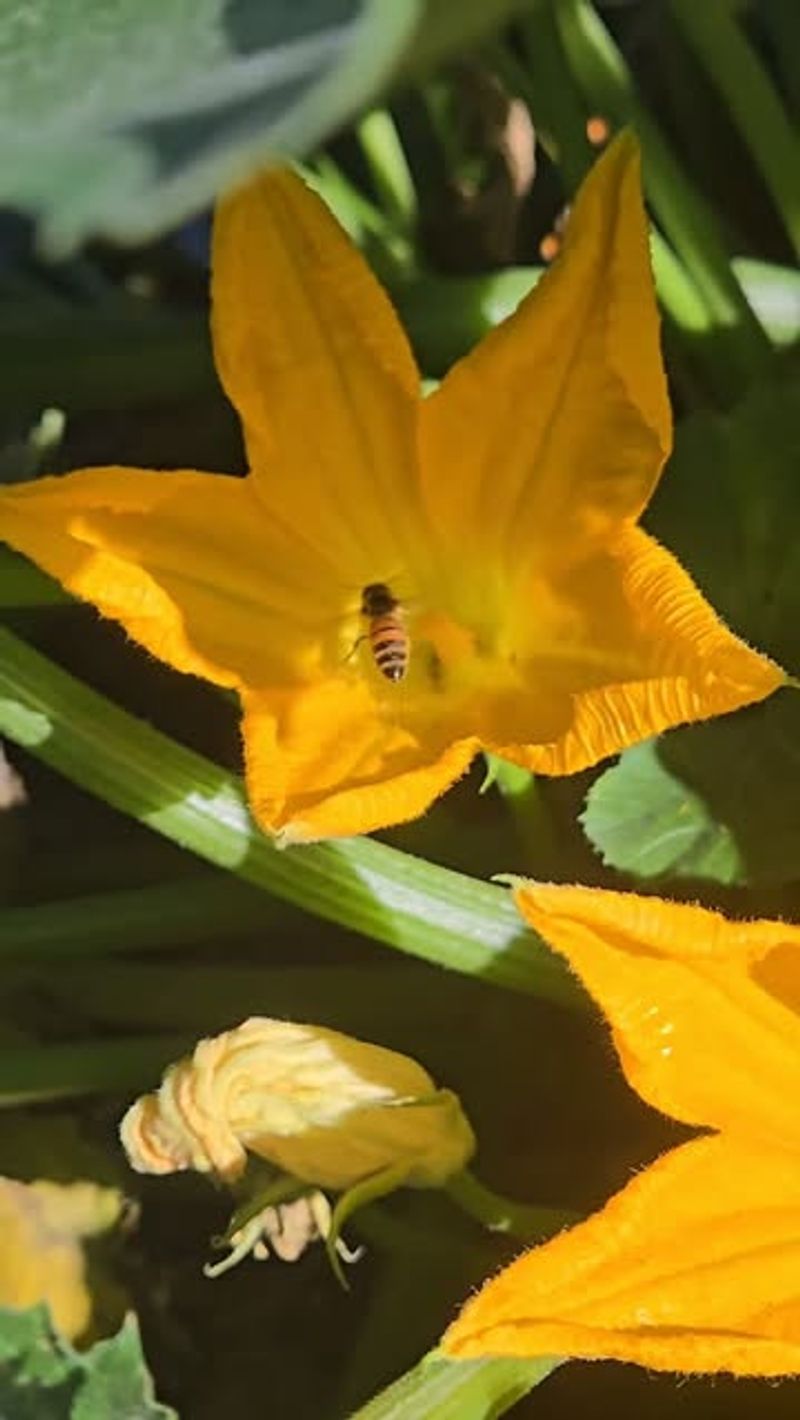
Pollinators do most of the work that makes zucchini fruit possible, so anything that reduces bee activity in the garden directly reduces fruit set. Pesticide applications during bloom are one of the clearest ways to undercut pollination without realizing it. Bees are most active in the morning, which is exactly when zucchini flowers are open, so the overlap between spray time and pollinator foraging time is significant.
University of Maryland Extension’s pollination guide specifically warns that products containing pyrethrum or spinosad can harm pollinators, and it notes that an organic label does not automatically make a product safe for bees. Organic certification addresses how a product is derived, not what it does to beneficial insects. Every pesticide label includes application timing and bloom-time restrictions for a reason, and following those instructions is not optional if you want pollinators in your garden.
EPA guidance on pollinator protection recommends avoiding insecticide applications when flowers are open or when bees are actively foraging, regardless of the product’s active ingredient. If pest pressure requires treatment, applying in the evening after flowers have closed and bee activity has dropped gives pollinators the most protection. Keeping squash bees and honeybees healthy during August is one of the most practical investments you can make in fruit production.
Follow a conditional plan instead of expecting a guaranteed recovery
What you do next depends on what you actually found when you looked closely at the plant. Each scenario calls for a different response, and matching the action to the diagnosis is what makes the difference between useful intervention and wasted effort.
When the plant has no confirmed female flowers at all, the priority is reducing stress. Steady moisture, shade cloth during peak afternoon heat, and patience while conditions moderate are the most defensible steps. University of Maryland Extension notes that fruit set may improve when temperatures ease, though repeated abortion or failed set warrants a closer look at drought, excess moisture, crowding, disease, poor soil, or pesticide exposure rather than a simple wait.
When a receptive female flower is open and pollinators are scarce, morning hand-pollination is the right move. When female flowers form but repeatedly abort or tiny fruits keep dropping despite pollination attempts, the problem likely goes beyond flower sex ratio or pollen transfer. Investigate whether roots are waterlogged, whether the plant is crowded, or whether nearby pesticide use has reduced bee visits.
Minnesota Extension’s zucchini guide also recommends harvesting any developing zucchini promptly once fruit does form, because oversized fruits left on the vine can slow continued production. Those early male flowers you started with do not mean the plant is permanently stuck – they are where almost every zucchini plant begins.