
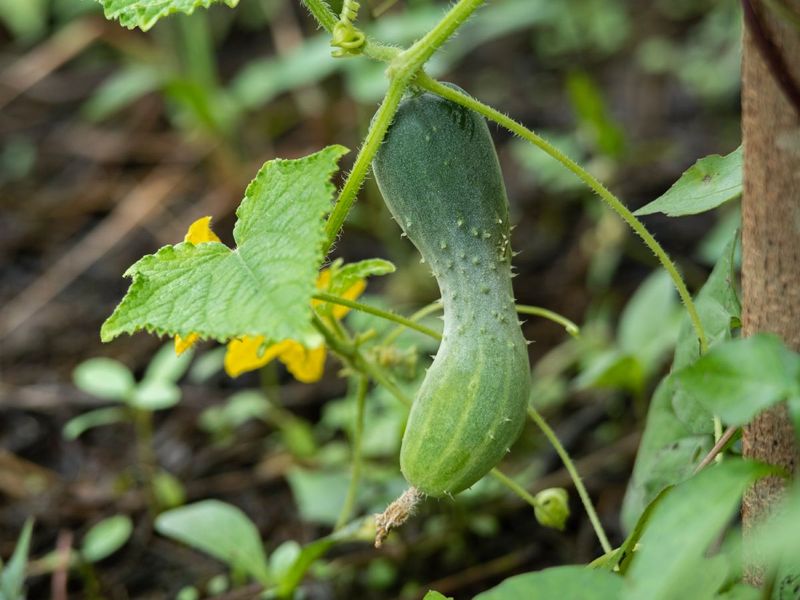
Your cucumber vines are covered in flowers, yet every fruit that forms looks stubby, crooked, or faded before it even gets started. Two problems are most likely behind this: moisture swings in the root zone and heat-related pollination failures, and either one can cause small, misshapen, or pale cucumbers even when the other is perfectly managed. Fixing your watering rhythm is a smart first step, but it works best when you also account for what August heat is doing to the bees and blossoms keeping those fruits going.
Two August problems can produce the same bad-looking cucumber
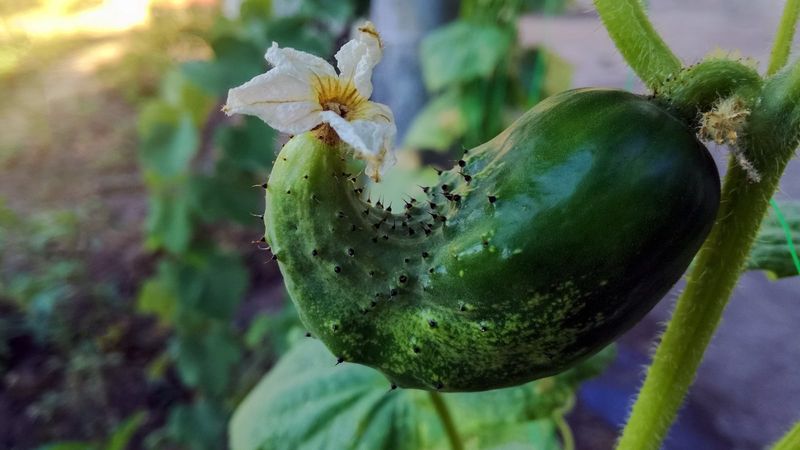
Stubby, tapered, or crooked cucumbers in August almost always trace back to one of two causes, and sometimes both at the same time. A root zone that repeatedly dries out and then gets drenched can interrupt how a young cucumber expands, leaving fruit that is pointed at the blossom end, unevenly filled, or unusually bitter. Penn State Extension guidance on cucumber production identifies moisture stress as a real contributor to misshapen fruit, but it also lists poor pollination as an equally important explanation.
Abundant flowers do not guarantee successful pollination. When temperatures climb into the 90s, bee activity can drop sharply, and University of Minnesota Extension notes that incomplete pollination in extreme heat can produce deformed, narrow-ended, or aborted cucumbers even when soil moisture is adequate. A vine covered in blossoms is a hopeful sign, not a promise of a full harvest.
Watering is a corrective step worth taking immediately, but treat it as a test rather than a confirmed fix. If fruit continues to come out misshapen after you stabilize moisture, heat and pollination deserve equal attention. Penn State’s cucumber pollination resource explains that both stresses can occur together during peak summer heat, making a single-cause diagnosis unreliable.
Moisture swings interrupt fruit expansion
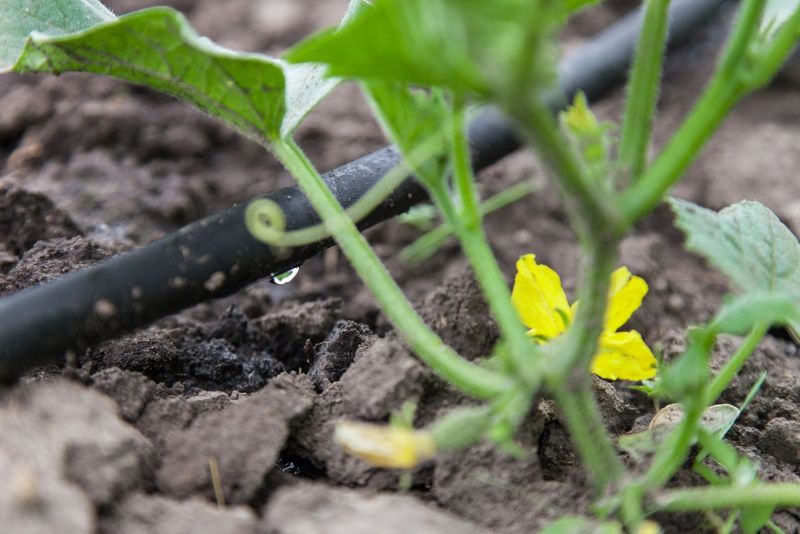
Cucumbers have a relatively shallow root system, and those roots depend on steady available moisture from the moment flowers open through the time young fruit reaches harvest size. When the root zone dries out significantly and then receives a heavy soaking, the plant cannot maintain the steady cellular expansion that produces a well-formed cucumber. Utah State University Extension explains that moisture stress during flowering and fruit development can result in bitter, pointed, tapered, or otherwise misshapen fruit.
A single emergency soaking after a long dry spell rarely undoes the damage already in progress. Worse, if that soaking leaves the soil waterlogged, root function can suffer further. USU’s irrigation management guide cautions that over-irrigation can reduce fruit quality and create conditions favorable to root disease, so the goal is never to push soil to saturation.
The practical target is evenly moist soil throughout the root zone, not a pattern of drought followed by flood. USU water recommendations for vegetables reinforce that consistency matters far more than any single large application, especially once a plant is actively setting and enlarging fruit.
Build a flexible watering routine for the root zone
A commonly used starting range for established outdoor cucumbers is approximately 1 to 2 inches of water per week, but that number shifts considerably based on your conditions. Sandy soil drains fast and may need water every two or three days in August heat, while heavier clay or loam holds moisture longer. USU’s vegetable water recommendations emphasize checking root-zone moisture rather than following a fixed calendar schedule, since wind, cloud cover, rainfall, and plant size all change daily demand.
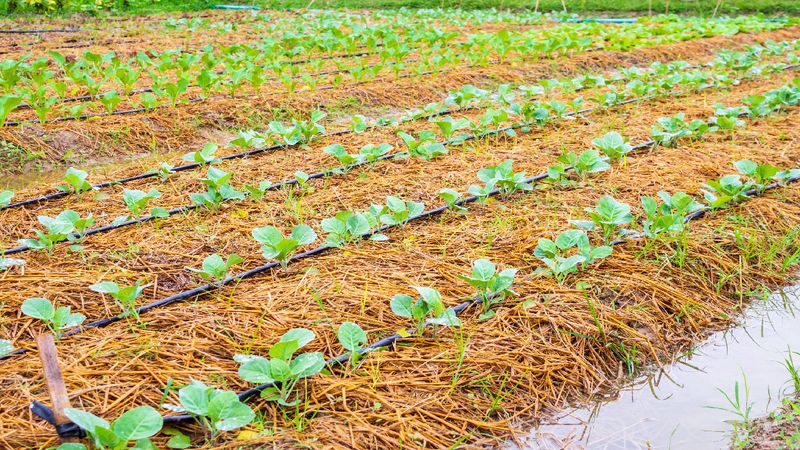
Drip irrigation or a soaker hose delivers water directly to the root zone, reduces evaporation, and keeps foliage dry. Penn State’s drip irrigation guide for vegetables offers practical run-time calculations based on emitter flow rate and soil type, which helps avoid both under- and over-watering. If you use overhead sprinklers, morning is a reasonable time to run them so foliage can dry before evening, but with drip systems the time of day matters much less.
Mulch is one of the most effective tools for keeping moisture consistent between waterings. Penn State’s mulch guide and USU both recommend roughly 1 to 2 inches of organic mulch around vegetable plants. Keep mulch a few inches away from direct contact with the stem to avoid creating a moist environment that invites rot. USU’s irrigation management resource also warns against shallow, frequent surface sprinkling, which wets only the top inch of soil and can encourage roots to stay near the surface where they are most vulnerable to heat and drought.
Check pollination before blaming the hose
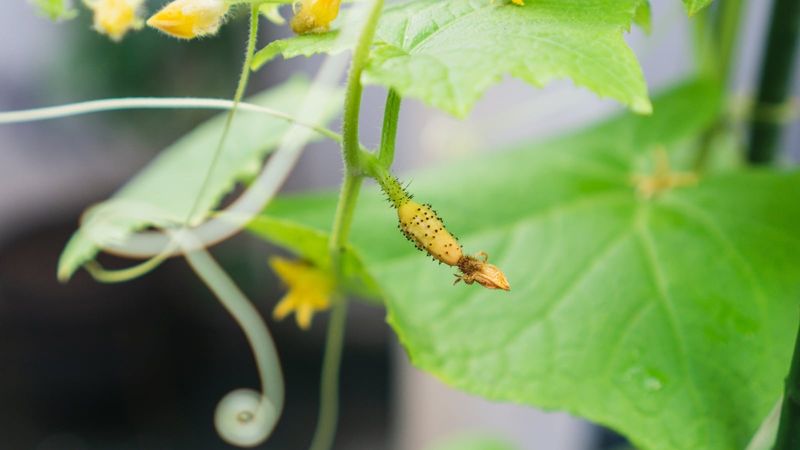
Heat does more than dry out soil. When daytime temperatures push into the low 90s and nighttime temperatures stay in the 70s, bee foraging activity can drop off significantly, and University of Minnesota Extension notes that these conditions can contribute to flower and small-fruit abortion independent of soil moisture. A cucumber flower that opens during a stretch of extreme heat may receive little or no pollinator attention, and the developing fruit reflects that.
Moisture-stressed cucumbers tend to show up as tapered, pointed, or bitter fruit with uneven fill from end to end. Poor pollination more commonly produces fruit that is crooked, lopsided, or narrow at one end, sometimes aborting entirely before it reaches finger length. UMN’s vining vegetable guide and Penn State’s cucumber pollination resource both describe these overlapping patterns, and both acknowledge that heat waves often bring moisture stress and poor pollination together.
Variety also matters here. Standard slicing and pickling cucumbers require insect pollination to set fruit. Parthenocarpic varieties, bred to set fruit without pollination, behave differently, and UMN’s pollination requirements guide explains that in some protected settings, actual pollination of a parthenocarpic variety can result in seeded or misshapen fruit. If you are growing a specialty or greenhouse type, check the variety description before assuming your watering is the problem.
UMN’s cucumber growing guide covers these variety distinctions in practical terms.
Pale or yellow fruit needs more than a color diagnosis
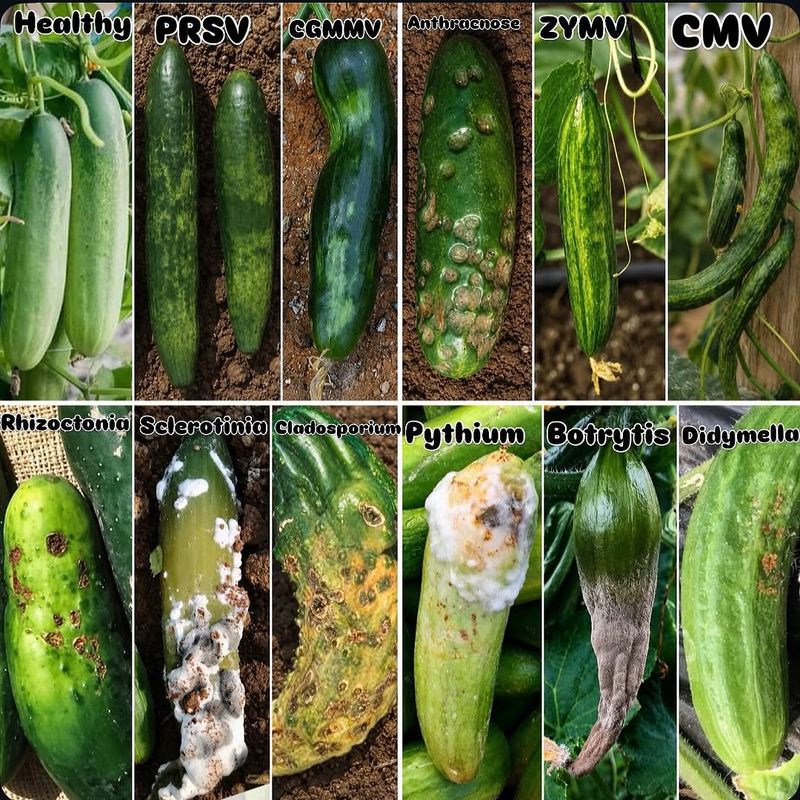
A pale or yellow cucumber can mean several different things, and irregular watering is only one of them. USU’s cucurbit harvest and handling guide points out that many cucumbers simply turn yellow when they are left on the vine too long, and that overmaturity is one of the most common reasons a gardener finds pale, soft, or off-flavored fruit. Some varieties also produce naturally light-colored or cream-toned skin, so color should always be judged against what your specific variety is supposed to look like at harvest.
Foliage loss from disease or pest damage can expose fruit to direct sun, causing bleached or pale patches that look like a nutrient or watering problem but are actually sunscald. Penn State’s cucumber mosaic virus page describes how viral infection can produce mottled, pale, or distorted fruit alongside distinctive mosaic patterns and puckered new leaf growth. Penn State’s downy mildew resource covers a fungal disease that causes angular yellow patches on leaves and can progress to affect fruit appearance.
Before concluding that your watering rhythm explains pale cucumbers, walk the vines slowly and look at the leaves. Mosaic mottling, distorted new growth, widespread yellowing, sudden wilt, powdery coating, stippling on leaf undersides, or lesions on fruit are all reasons to investigate disease or insect injury rather than adjust irrigation. USU’s cucumber growing guide reinforces that appearance alone cannot reliably confirm a virus or pin the blame on a single cause.
Remove fruit that cannot recover and harvest the rest early
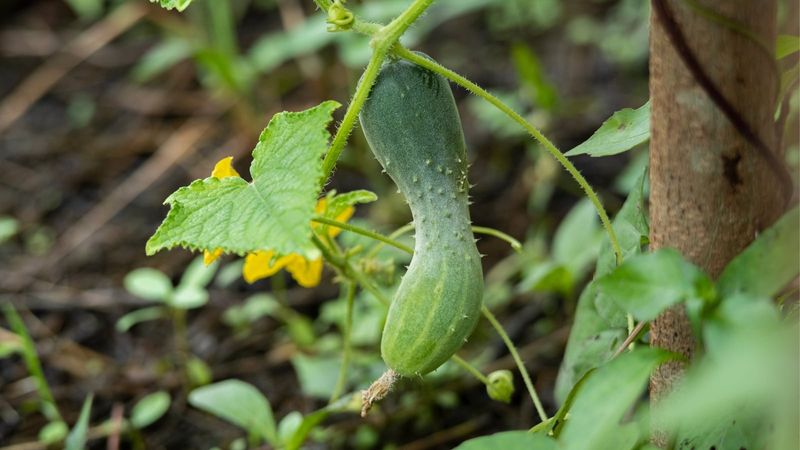
Once a young cucumber has set with a severe taper, crook, or narrow blossom end caused by early moisture stress or incomplete pollination, waiting longer generally will not correct its shape. USU Extension and University of Illinois Extension both recommend removing badly deformed young fruit rather than leaving it on the vine. Keeping those cucumbers in place diverts energy the plant could direct toward new flowers and better-formed fruit.
Steady moisture going forward supports the next round of development, not the repair of cucumbers already in progress. Think of removing the damaged fruit as clearing the runway for a better harvest rather than giving up on the plant. The vine will continue to flower as long as conditions allow, and improved root-zone moisture gives those new fruits a real advantage.
Frequent harvesting also matters for the cucumbers that are developing normally. USU’s harvest guide explains that leaving overmature cucumbers on the vine causes them to yellow, develop tougher skin, and produce larger seeds, while also signaling the plant to slow down new fruit production. Picking every two to three days during peak season keeps quality high and encourages continued flowering.
Use pollinator-safe practices when fruit set remains poor
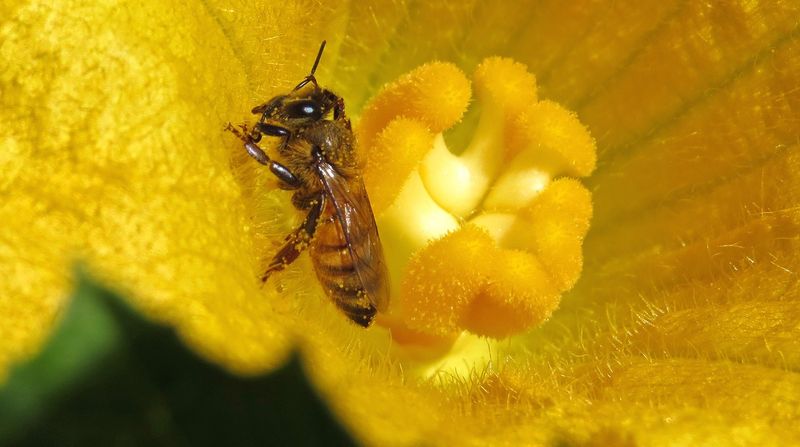
When fruit set stays poor despite better watering and cooler nights, the urge to spray for pests or try to force production is understandable. Standard slicing and pickling cucumbers depend on insect visitors to transfer pollen from male to female flowers, so applying insecticides during bloom to address a perceived insect problem can eliminate the very pollinators the plant needs. Penn State’s cucumber pollination guide makes clear that protecting pollinators during bloom is part of getting a good fruit set, not separate from it.
EPA pollinator protection guidance and EPA neonicotinoid labeling requirements both emphasize reading the product label fully before any application near flowering plants, avoiding sprays while bees are actively foraging, and observing any bloom-time restrictions listed on the label. These are legal requirements, not optional suggestions.
The practical diagnostic sequence when cucumbers continue to disappoint is straightforward: stabilize root-zone moisture first, then assess whether heat and pollination timing explain the pattern, and only then look carefully for signs of pest or disease injury. Stippling, lesions, distorted growth, or sudden vine collapse all point toward a problem that no watering adjustment will resolve on its own.
Steady moisture helps the next cucumbers, not the damaged ones
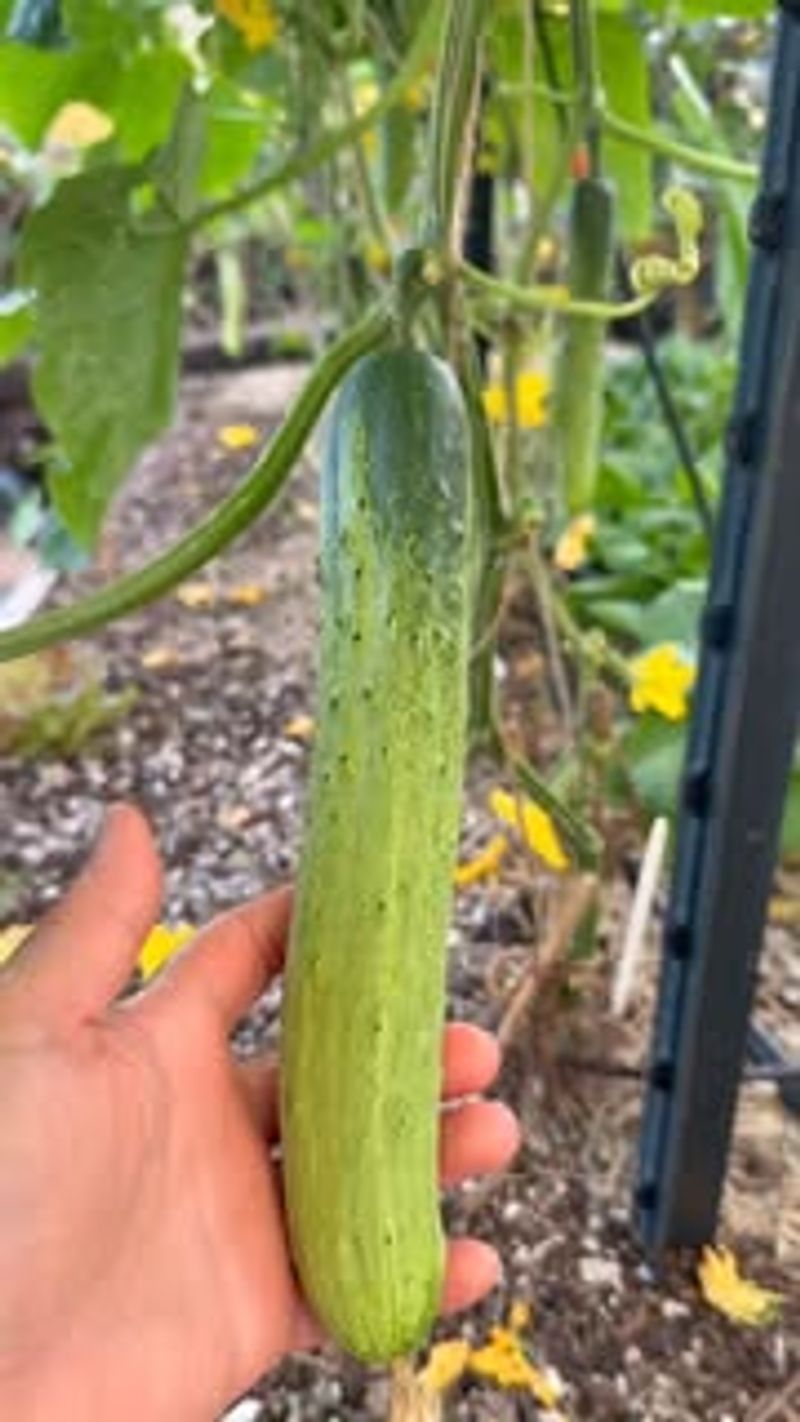
The most useful action right now is stopping the dry-then-drench cycle. Check the root zone by pressing a finger two inches into the soil near the base of the plant; if it feels dry there, water thoroughly and then mulch to slow the next round of evaporation. USU irrigation guidance and Penn State’s cucumber production resource both point back to root-zone consistency as the foundation of good fruit development.
Better moisture will support the cucumbers forming now and those still to come, but it cannot reshape fruit that has already set badly. USU’s cucumber guide is direct on this point: remove the deformed ones and let the plant put its energy into what comes next. If problems persist after moisture stabilizes, heat-related pollination failure, variety behavior, pest pressure, or disease deserve a fresh look. A garden that keeps asking questions usually has more than one answer worth finding.