
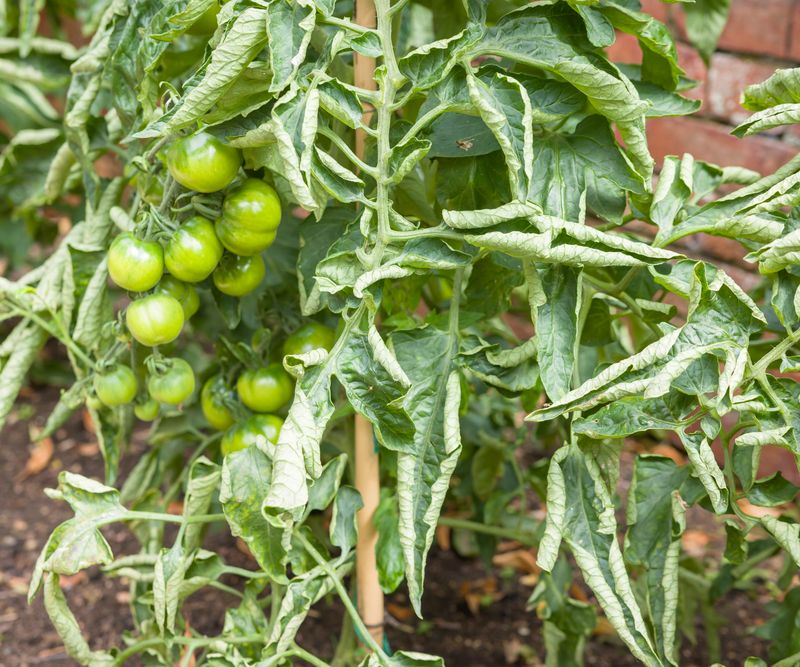
Walking out to your garden on a hot August morning and finding your tomato leaves curled up tight and feeling almost like dried leather can send your heart straight into your stomach. Before you panic, though, that specific pattern of symptoms has a name, and most of the time it is not a disease spreading through your plants. Knowing what is actually happening, and what to do about it, can mean the difference between a garden that recovers and one that suffers from well-meaning but harmful overcorrections.
What green, leathery upward curl usually means
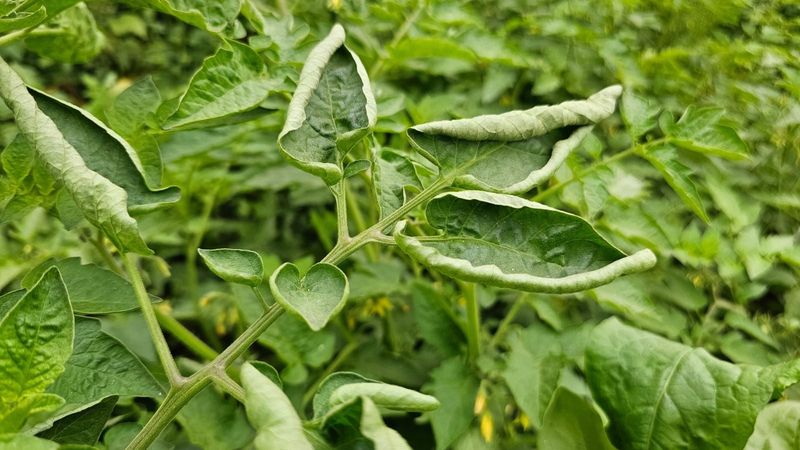
Older leaves on the lower part of the plant start cupping upward, then roll inward toward the center vein. They feel thick, firm, rough, or leathery to the touch, yet the color stays green and the leaf size looks basically normal. That specific cluster of symptoms, especially when it starts on the lower, older foliage and the rest of the plant looks otherwise healthy, fits a well-recognized condition called physiological leaf roll.
Physiological leaf roll is not a contagious disease. University of Minnesota Extension’s tomato leaf curl diagnostic guide notes that this pattern is a noninfectious stress response, meaning nothing is spreading from leaf to leaf or plant to plant. The plant is reacting to conditions in its environment, not fighting off a pathogen.
The symptom itself is usually cosmetic. Your tomatoes can continue growing and producing fruit even when some leaves stay curled. That said, this reassuring picture changes if you also notice yellowing between the veins, a mosaic or mottled pattern, obvious stunting, or leaves that look crinkled and distorted in shape. Those additional signals call for a broader investigation beyond physiological leaf roll.
Several kinds of stress can trigger physiological leaf roll
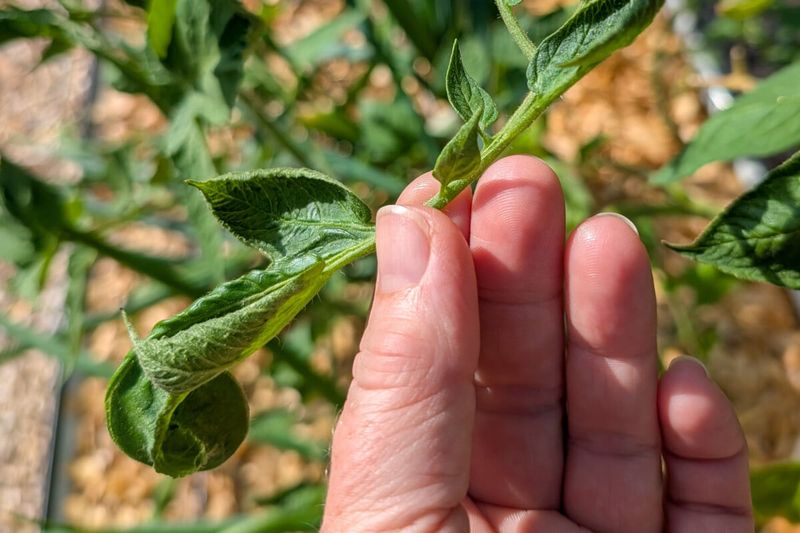
One of the most common misunderstandings about curled tomato leaves is that they automatically mean the plant is thirsty. The curl identifies a stress response, not a single precise cause. Clemson Cooperative Extension’s tomato leaf rolling factsheet lists heat, dry conditions, drought, rapid changes in soil moisture, excessive moisture, root damage, transplant shock, severe pruning, fast growth spurts, cultivar differences, and excess nitrogen as recognized contributors.
In August, heat and dry soil are the most obvious suspects, but the list matters because your response should match the actual cause. A plant sitting in waterlogged soil after a heavy rain can roll its leaves just as readily as one that has gone too long without irrigation. Overwatering and poor drainage stress roots in a different way, but the visible result on the foliage can look surprisingly similar.
Washington State University Extension’s guide on physiological leaf roll also points out that some tomato varieties are simply more prone to rolling than others, and that rapid growth periods can bring it on even when watering has been steady. Inspect what has changed recently in your garden, including pruning, fertilizer applications, heavy rain followed by dry days, or any root disturbance, before settling on a cause.
Check the root-zone soil before watering
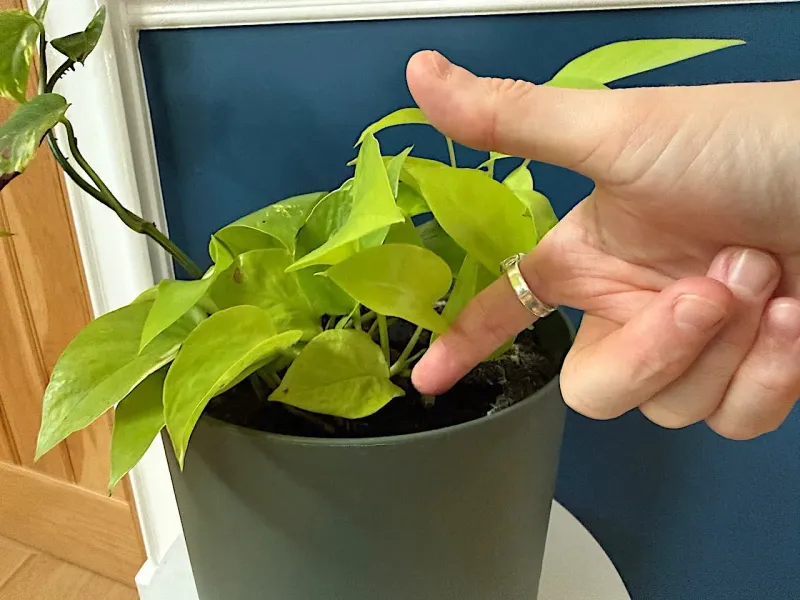
The single most useful thing you can do before reaching for the hose is to actually check the soil near the roots. Push a finger or a narrow trowel down about 2 inches into the ground close to the plant’s base. The surface can look bone dry while the root zone holds adequate moisture, and watering on top of already-wet soil can make conditions worse, not better.
Penn State Extension’s tomato growing guide recommends this kind of root-zone check rather than judging moisture by the look of the surface or the curl of the leaves. If the soil at 2 inches feels dry and crumbly, thorough watering is the right next step. If it feels moist or cool, hold off and look for other contributing factors such as heat load, recent fertilizer use, or pruning.
Wet or soggy soil at that depth is a signal to improve drainage rather than add more water. Containers and sandy soils are a separate concern: they can lose moisture quickly in summer heat, sometimes drying out completely within a day or two between waterings. A pot that feels light when you lift it is usually a reliable sign that it needs water, regardless of what the surface looks like.
Stabilize moisture and reduce heat stress
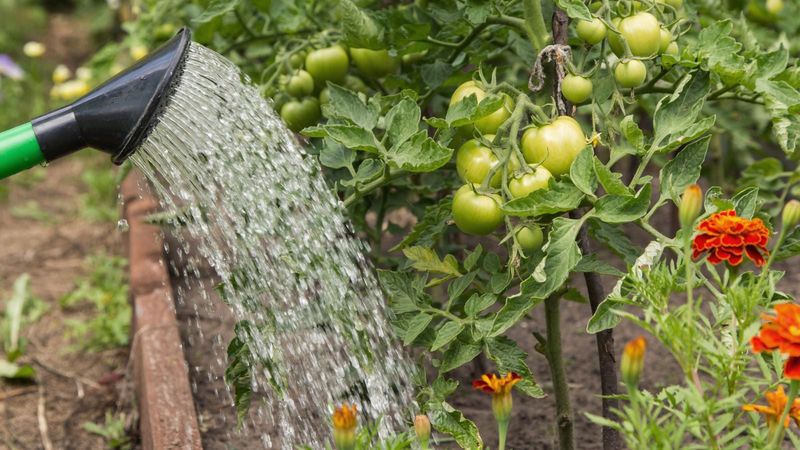
When a soil check confirms the root zone is genuinely dry, the goal is a thorough, deep watering rather than a series of shallow sips. Shallow watering encourages roots to stay near the surface, where they are most exposed to heat and rapid drying. Water slowly and steadily at the base of the plant so moisture can soak down to where the roots actually live.
A commonly cited starting point for established tomatoes is roughly 1 inch of rainfall or irrigation per week, but University of Minnesota Extension’s tomato growing guide makes clear that this figure needs adjustment for sandy soils, hot or windy weather, plant size, and containers. Think of it as a baseline, not a fixed rule. Sandy beds and pots may need more frequent attention than clay-heavy garden soil.
Mulch is one of the most effective tools for stabilizing soil moisture and temperature. Penn State Extension recommends about 2 to 3 inches of seed-free straw or bark mulch around each plant, kept a few inches away from the stem to avoid rot. For heat load, Penn State’s heat stress guidance supports using temporary afternoon shade cloth during extreme conditions as a mitigation measure. Water the soil rather than the foliage whenever possible, and aim for morning if the schedule allows, but do not leave a visibly drought-stressed plant dry simply to wait for the next morning.
For container plants, water until it drains freely from the bottom, then let the medium approach dryness before watering again, without letting it go completely dry.
Avoid fixes that add more stress
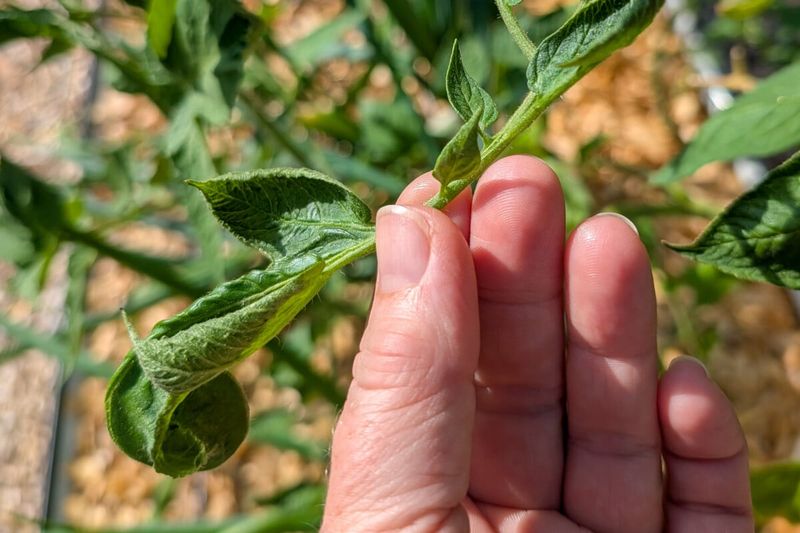
Reaching for a bag of fertilizer when your tomatoes look stressed is a natural impulse, but heavy nitrogen applications are one of the documented contributors to physiological leaf roll, not a cure for it. University of Illinois Extension’s guide on rolling tomato leaves explains that excess nitrogen pushes lush, fast, water-demanding growth, which can worsen the stress response rather than ease it. Fertilize based on what your soil actually needs, not as an emergency reaction to curled leaves.
Pruning is another tool that can backfire in August heat. Removing large amounts of foliage strips away the natural canopy that shades the soil and cools the plant’s environment. Illinois Extension also cautions against severe pruning during hot weather for exactly this reason. If you want to tidy the plant, limit yourself to removing clearly dead or diseased tissue.
Calcium supplements are sometimes suggested for tomato problems, but they are not a treatment for physiological leaf roll. Calcium-related guidance applies mainly to blossom-end rot, a fruit disorder linked to inconsistent water supply and calcium movement to developing fruit, not to green, leathery leaf curl. University of Minnesota Extension’s tomato disorders page reinforces that green rolled leaves do not need to be removed. Leave them in place unless tissue is dead, actively diseased, or you have a confirmed management reason to take it off.
Look for warning signs of disease, chemical injury, or insects
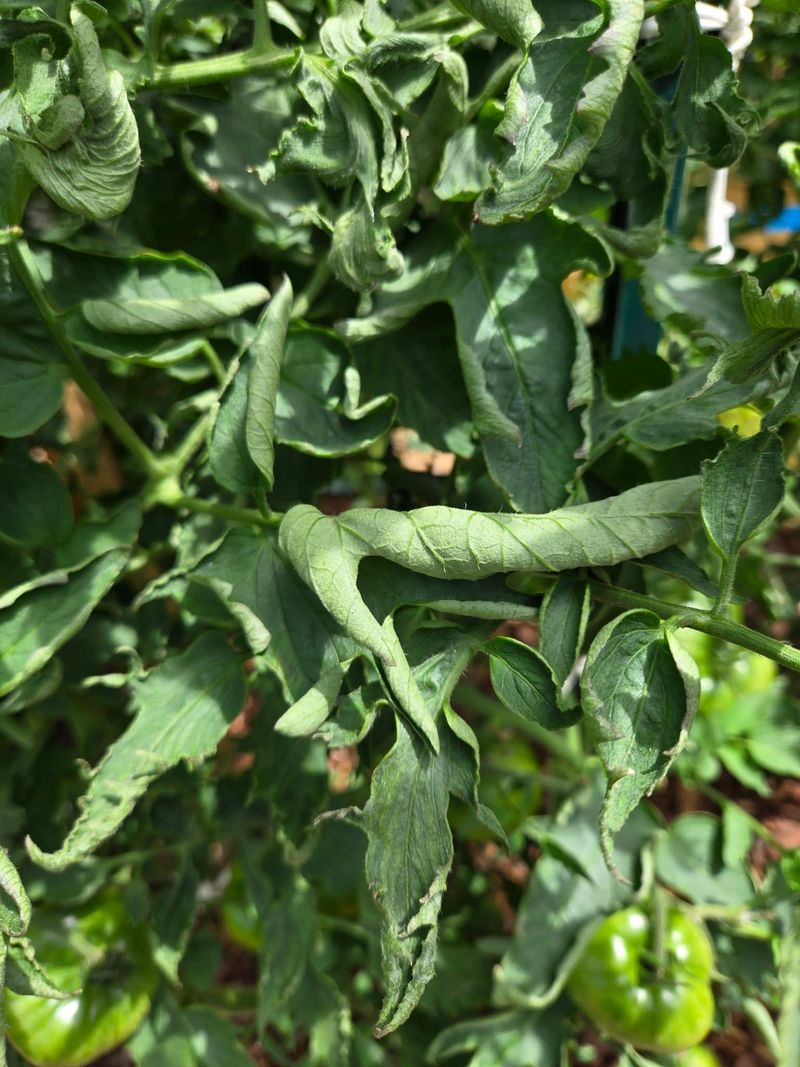
Green, firm, upward-curled leaves on the lower part of an otherwise normal-looking plant fit physiological leaf roll well. The picture changes when additional symptoms appear alongside the curl. University of Minnesota Extension’s tomato virus resource points to yellowing, mosaic or mottled patterns, crinkling, small or stiff leaves, stunting, shortened internodes, flower drop, abnormal fruit development, or poor fruit set as signals that a viral infection may be involved. Definitive virus identification often requires professional or laboratory testing, so contact your local cooperative extension office if that symptom cluster appears.
Tomato yellow leaf curl virus is a specific concern worth knowing. UC IPM’s tomato yellow leaf curl brochure describes small, strongly crumpled leaves with upward curling, yellowing between the veins, shortened internodes, stunting, and flower drop. That combination should not be dismissed as ordinary heat stress.
Herbicide injury is another important alternative, especially if symptoms appeared shortly after lawn or garden chemical applications nearby. Minnesota Extension’s tomato disorders guide describes warning signs including twisted or distorted new growth, narrow leaves with prominent veins, cupping, brittle or split stems, and a pattern concentrated toward a spray source. Sap-feeding insects such as aphids can also curl leaves, though insect-related curling tends to come with visible insects, sticky honeydew residue, distortion, or wilting. Colorado State University Extension notes that curly top virus, spread by beet leafhoppers, is a regional concern in parts of the West, and it produces stiff, purplish, yellowed, or crinkled leaves along with stunting.
Measure recovery by new growth, not by flattened old leaves
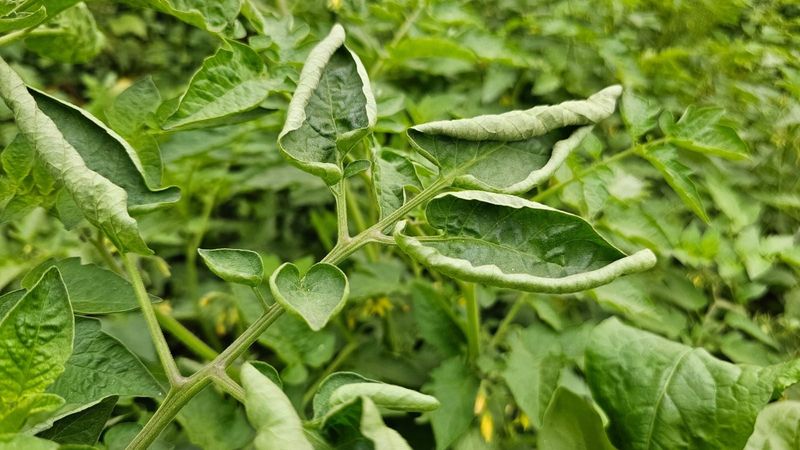
Once you have steadied the watering, added mulch, and reduced heat load, the most reliable sign that things are improving is not whether the curled leaves flatten out. University of Minnesota Extension and WSU Extension both note that established rolled leaves may remain rolled even after conditions improve. New foliage emerging at the top of the plant with a normal shape is the real indicator that stress has eased.
The action sequence worth keeping in mind: assess the curl pattern, probe the root-zone soil, water thoroughly or improve drainage as the soil check indicates, apply mulch, reduce heat load where practical, hold off on extra fertilizer and heavy pruning, and then watch new growth and fruit production over the following week or two. Penn State Extension’s heat stress guidance reinforces that recovery from heat and moisture stress shows up gradually in the plant’s newer tissue.
Return to the warning signs in the previous section if symptoms spread upward into new growth, if yellowing or mottling develops, or if the plant stops setting fruit and looks increasingly stunted. A tomato that is rolling its lower leaves in August heat is not necessarily in trouble, but one that keeps getting worse deserves a closer look. Healthy new growth at the top of the plant is your best signal that the plant has turned a corner.