
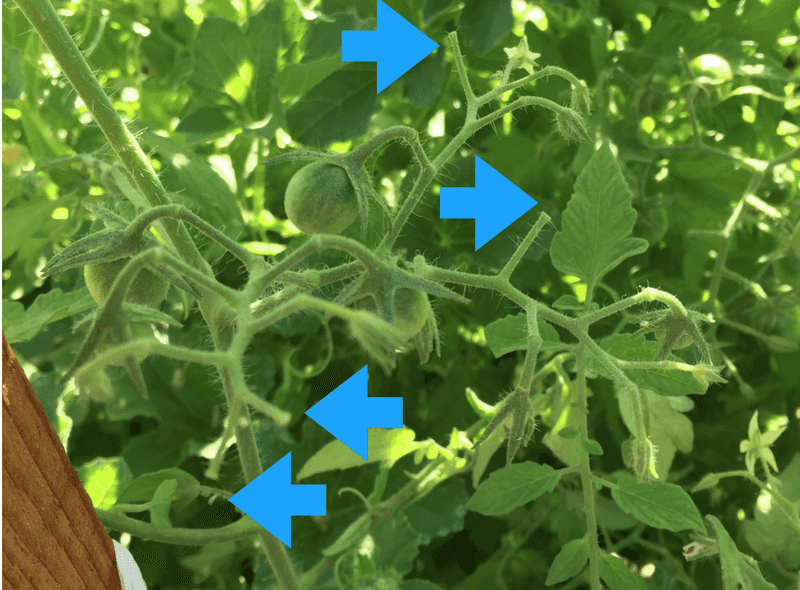
Pepper plants that flower all summer but drop every blossom before a single fruit forms can be genuinely frustrating, especially when the plants look otherwise healthy. Late-summer heat is one of the most common reasons this happens, but inconsistent watering can add to the problem and make a tough situation worse. Understanding what is actually going on in the soil and in the flower gives you a real chance to help your plants recover as conditions improve.
Heat is a common cause of poor pepper fruit set
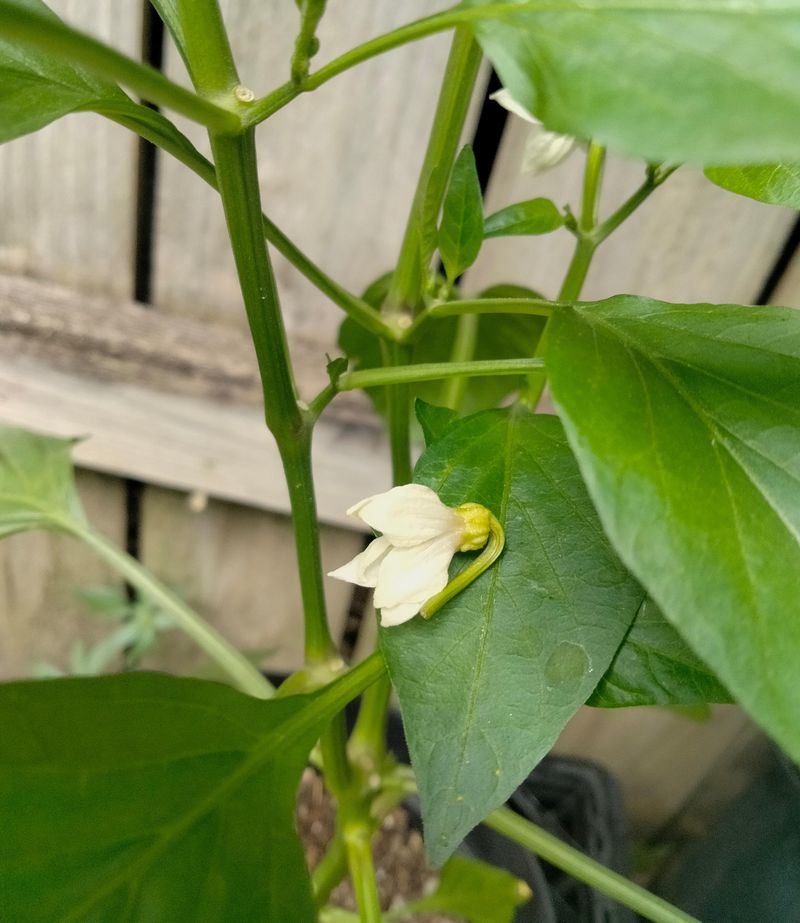
Pepper plants are warm-season crops, but they have a surprisingly narrow window in which their flowers can successfully form fruit. When daytime temperatures climb well above roughly 85 to 90 degrees Fahrenheit, or when nights stay unusually warm or dip below about 55 to 60 degrees, the plant’s ability to pollinate and fertilize those flowers can break down. Utah State University Extension guidance on peppers identifies both high daytime heat and cool nights as conditions under which flowers may abort. These ranges are useful warning signals, not hard cutoffs that apply equally to every cultivar or every region.
The flowers themselves can look perfectly normal right up until they fall. That is part of what makes this problem so confusing. The plant is not visibly sick, the blooms open on schedule, and then they simply drop without forming fruit. Peer-reviewed research on bell pepper heat stress found that high temperatures during flower development reduced pollen viability, fruit set, and fruit size, even when the plant appeared healthy.
Oklahoma State University’s pepper production guide notes that very little fruit typically sets when daytime temperatures exceed 90 degrees or nights fall below 60 degrees. The encouraging news is that production often improves once temperatures moderate, so the goal during a heat wave is to keep the plant healthy and ready for the next flush of flowers.
Identify blossom drop before treating the plant
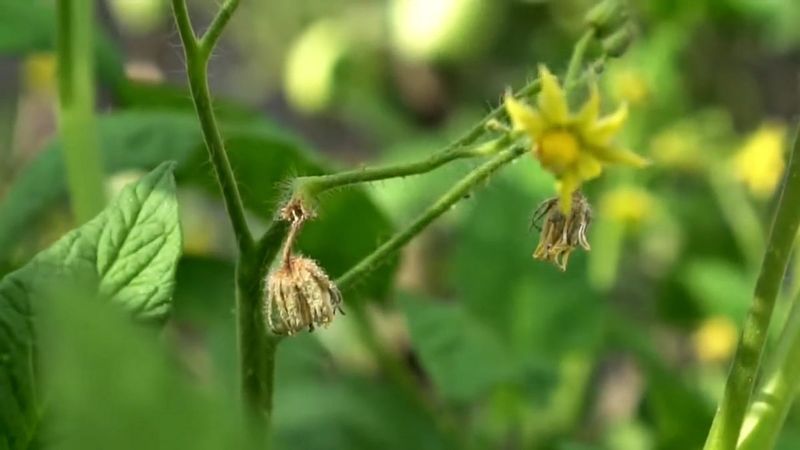
Before adjusting any care routine, confirm that what you are seeing is actually blossom drop and not a different problem that shows up later in the season. Blossom drop means the flower or a tiny, newly formed fruit aborts and falls from the plant before it has any real chance to develop. The flower simply detaches, usually at the base of the stem, without leaving anything behind except a small scar.
Blossom-end rot is a separate issue that looks similar in name but appears at a completely different stage of fruit development. It shows up as a dark, sunken, leathery lesion on the flower end of a pepper that has already been growing for some time. Utah State University’s plant health notes on blossom-end rot explain that irregular watering can contribute to this problem by disrupting how calcium moves through the plant’s tissues.
That connection to calcium movement sometimes leads gardeners to reach for calcium sprays, crushed eggshells, or similar amendments. University of Minnesota Extension’s review of coffee grounds, eggshells, and Epsom salts makes clear that these remedies are not well-supported as general cures and do not address the underlying moisture management issue. Getting the watering right matters more than adding supplements.
Check the root zone before adding water
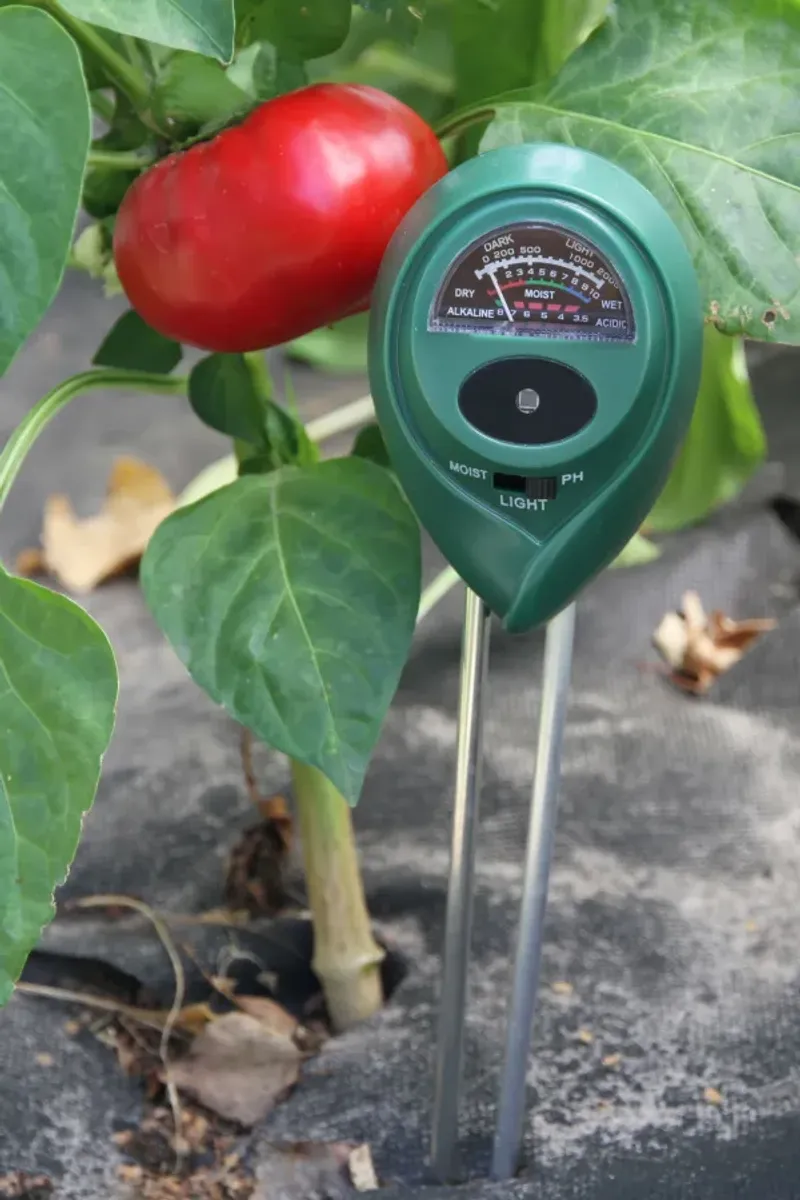
Afternoon wilting can feel like an obvious sign that a pepper plant is thirsty, but the soil may actually be holding plenty of moisture. Heat can temporarily cause leaves to droop even when root-zone moisture is adequate, because the plant is losing water through its leaves faster than its roots can replace it during the hottest part of the day. Watering in response to that kind of wilting can push too much moisture into the root zone and cause its own set of problems.
University of Minnesota Extension heat-wave garden guidance recommends checking the soil before deciding whether a plant actually needs water, rather than reacting to leaf appearance alone. Press a finger or a thin probe two to three inches into the soil near the base of the plant. If the soil feels moist at that depth, the plant likely does not need more water yet.
Genuinely dry soil is a real problem for flowering peppers. Oregon State University’s pepper growing guide notes that dry conditions can cause buds, flowers, and small developing fruit to drop. Warm, dry, and windy weather raises the stakes further because wind accelerates moisture loss from both the soil surface and the plant’s leaves, creating drought stress even on days when you watered recently. Checking the soil is the only reliable way to know what the plant actually needs.
Stabilize moisture instead of swinging from dry to flooded
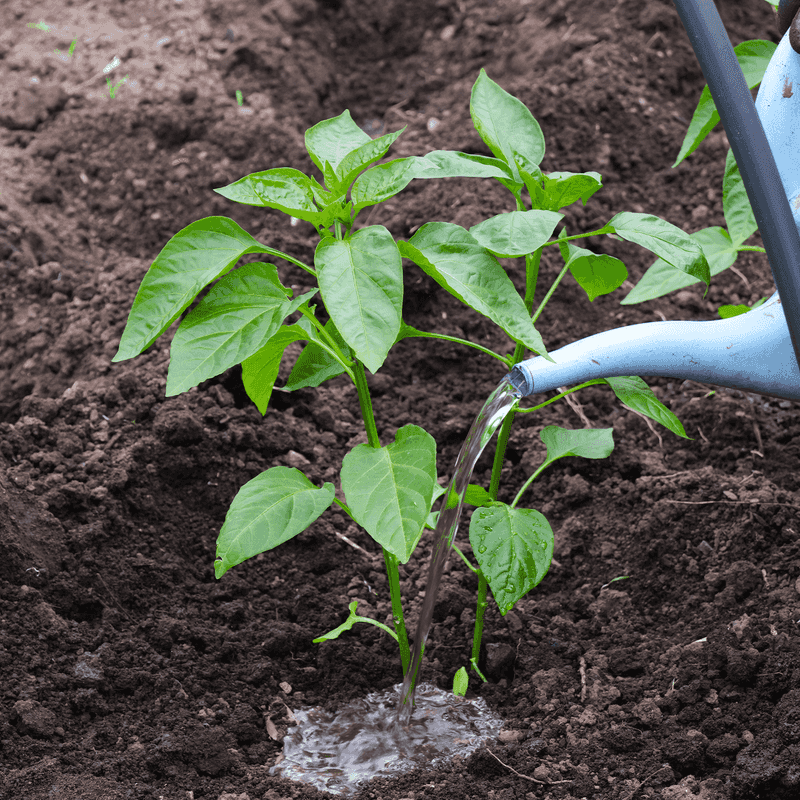
The most practical watering correction for peppers during flowering is replacing a boom-and-bust cycle with steady, consistent root-zone moisture. Letting the soil go bone dry and then flooding it with water is harder on pepper plants than either light underwatering or slightly overwatering would be on its own, because the sharp swing stresses roots and disrupts the steady supply of water and nutrients the plant needs to support developing flowers.
A commonly cited starting point for many in-ground peppers is roughly 1 to 2 inches of water per week from rain and irrigation combined. University of Minnesota Extension’s pepper growing page and their vegetable irrigation strategies guide both favor thorough watering at the root zone followed by monitoring, then watering again when the soil indicates it is needed. That approach does more for the plant than frequent, shallow surface wetting.
Utah State University’s irrigation guidance for peppers and related crops reinforces watering slowly and deeply enough to reach the root zone without creating standing water. Oklahoma State’s pepper production fact sheet also notes that excess irrigation can reduce fruit quality and increase the risk of root diseases, so the goal is consistent moisture, not saturation. Heat, wind, soil texture, drainage, and plant size all affect how often that threshold arrives.
Adjust the plan for mulch, containers, and foliage
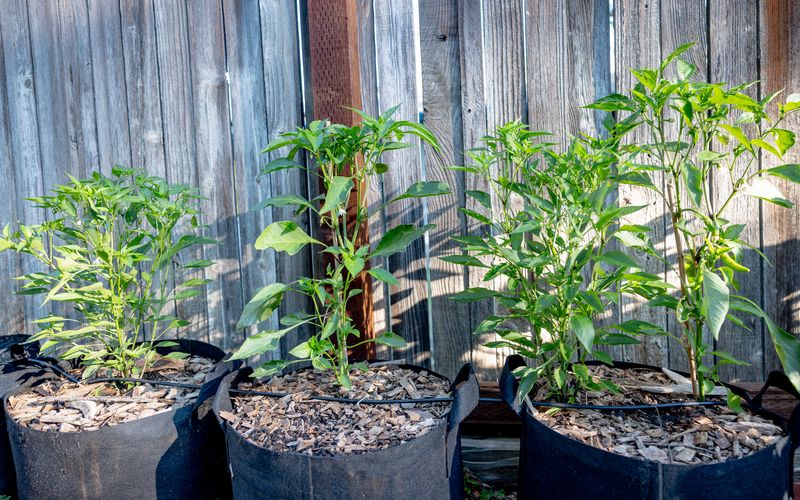
How you grow your peppers changes how you manage moisture. Organic mulch laid two to three inches thick around in-ground plants can slow evaporation from the soil surface and help buffer the swings between wet and dry. Keep mulch a few inches away from the main stem to allow air circulation and reduce the chance of rot at the base of the plant. Utah State University’s pepper garden guide and University of Minnesota Extension both mention organic mulch as a way to moderate moisture and support plant health during the growing season.
Container-grown peppers are a different situation entirely. Pots heat up faster than garden soil, hold less total moisture, and can dry out within a single hot afternoon. Oregon State University’s pepper guide notes that containers may need daily irrigation in warm weather and even more frequent attention during heat waves. Checking the pot by weight or by pressing a finger into the top inch of growing mix is the most reliable way to stay ahead of the drying cycle.
Where you aim the water also matters for disease management. Drip irrigation, a soaker hose, or careful hand watering directed at the soil surface keeps foliage dry and reduces the risk of fungal problems that thrive when leaves stay wet overnight. Overhead watering is not always avoidable, but making it a routine habit can create conditions that invite disease even while you are trying to help the plant.
Reduce heat stress while the flowers wait
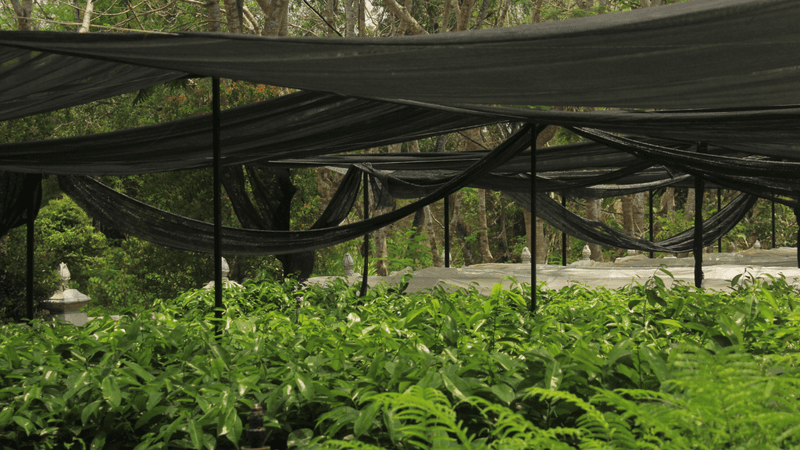
Consistent watering handles the moisture side of the equation, but heat stress calls for a few additional steps. Temporary afternoon shade from shade cloth or a strategically placed row cover can reduce the temperature around your plants during the hottest hours of the day. Protection from hot, drying wind can also help, since wind pulls moisture from both the soil and the plant faster than still air does.
Oregon State University’s heat-wave garden guide and University of Minnesota Extension’s heat guidance for home gardens both suggest shade and wind management as ways to reduce stress during extreme conditions. That said, these measures reduce stress on the plant; they cannot override the reproductive damage that sustained high temperatures can cause to pollen and flowers. Flowers that have already been exposed to damaging heat may still abort even after conditions improve slightly.
Harvesting mature peppers regularly is another way to support the plant during and after a heat stretch. University of Minnesota Extension notes that removing ripe fruit can encourage continued flowering and production. Think of it as reducing the plant’s workload rather than curing the heat problem. The most realistic expectation is that fruit set may not fully recover until overnight temperatures drop back into a range the plant can work with.
Broaden the diagnosis when symptoms do not fit
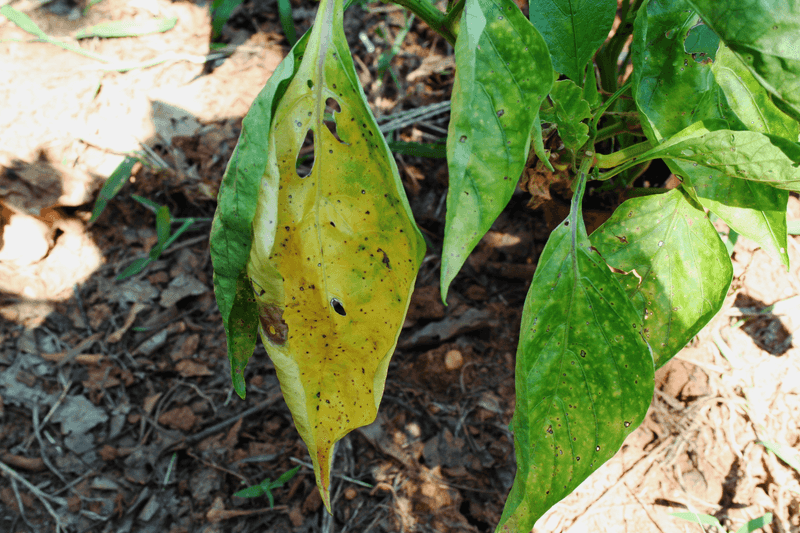
Heat and inconsistent watering explain a lot of August blossom drop, but they do not explain all of it. New Mexico State University’s pepper production guide lists strong wind, low humidity, insect damage, nutrient imbalance, disease, root injury, excessive nitrogen, and herbicide injury as additional stress factors that can cause blossom drop. If your plants have been getting steady water and temperatures have not been extreme, one of these other factors may be the real culprit.
Look at the foliage carefully before settling on a diagnosis. Leaves that are distorted, mottled, severely yellowed, or stunted point toward a problem beyond irrigation. Utah State University’s pepper guide notes that viruses, wilt diseases, insects, and herbicide injury can all affect pepper growth and fruiting in ways that look superficially similar to heat or water stress. Visible pest damage on stems or foliage is a clear sign that the investigation needs to go further than the hose.
Pepper type also plays a role in how plants respond to summer heat. Oklahoma State University notes that small-fruited and pungent peppers may handle high-temperature fruit-set challenges better than bell peppers do. If your bell peppers are dropping every flower while a nearby hot pepper is setting fruit normally, that difference is expected and is not a sign that something is wrong with your watering approach.
Keep moisture steady while temperatures recover
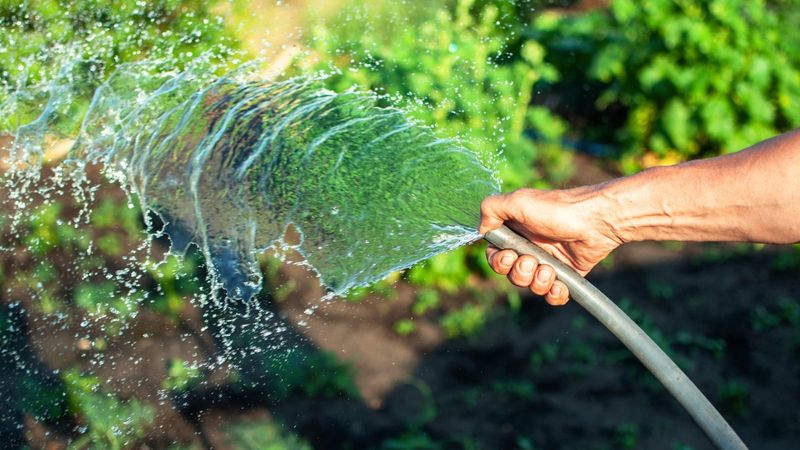
The action sequence from here is straightforward. Check the soil a few inches down before watering, and water the root zone thoroughly when it is dry rather than on a fixed daily schedule. Avoid letting the soil stay saturated. Keep mulch in place but away from the stem, and check container plants more often than in-ground beds since pots dry out faster.
University of Minnesota Extension’s vegetable irrigation guidance and Oklahoma State University’s pepper fact sheet both support this monitor-and-respond approach over rigid watering schedules.
Where possible, reduce afternoon heat exposure and block drying wind. Oregon State University’s heat-wave garden resource is clear that these steps can lower plant stress but cannot guarantee fruit set while temperatures remain outside the plant’s reproductive comfort range. One corrective watering will not reverse heat damage already done to existing flowers.
Watch the next flush of flowers and the foliage together. If new blooms begin to hold and set as nights cool down, steady moisture was doing its job. If leaves show distortion, mottling, or pest damage alongside continued flower drop, the diagnosis needs to widen. Getting the water right is a real and meaningful step; the rest depends on what the weather and the plant decide to do next.